Whispers of the Tikbalang: Curse of Sierra Madre
In the Sierra Madre mountain range on Luzon Island, Philippines, near the village of San Isidro in Quezon Province, a series of bizarre disappearances were initially dismissed as mere hiking accidents or land disputes. However, rumors spreading on social media and local online communities hinted at a different story. Three missing hikers, followed by entire families of 'Kaingin' (slash-and-burn) farmers who vanished without a trace. Police reports found no signs of struggle or forced entry; only their absence remained. Simultaneously, livestock like goats and pigs also began to disappear whole, and the footprints left at the scene were strange: enormous, bare-horse-like hoof prints interspersed with clear human footprints. These tracks sometimes led into dense bamboo groves or towards sheer rock faces—places utterly impassable for humans or animals.
Then, a video surfaced. It was captured accidentally by a farmer filming his field at dusk with an old smartphone. On screen, a long, dark silhouette moved with impossible fluidity at the edge of the forest. It stood upright for a moment, unnaturally elongated, then dropped to all fours and vanished into the darkness with astonishing speed, faster than any wild horse could manage. Terrified, the farmer posted the video to a private group, adding a short warning: 'Be careful. It's a Tikbalang.' Most dismissed it as a trick of light or a manipulation, but the series of disappearances, the inexplicable footprints, and the deeply ingrained fear of the locals combined, convinced me I had to see for myself. This was no mere folk tale; it felt like a growing, unresolved threat.
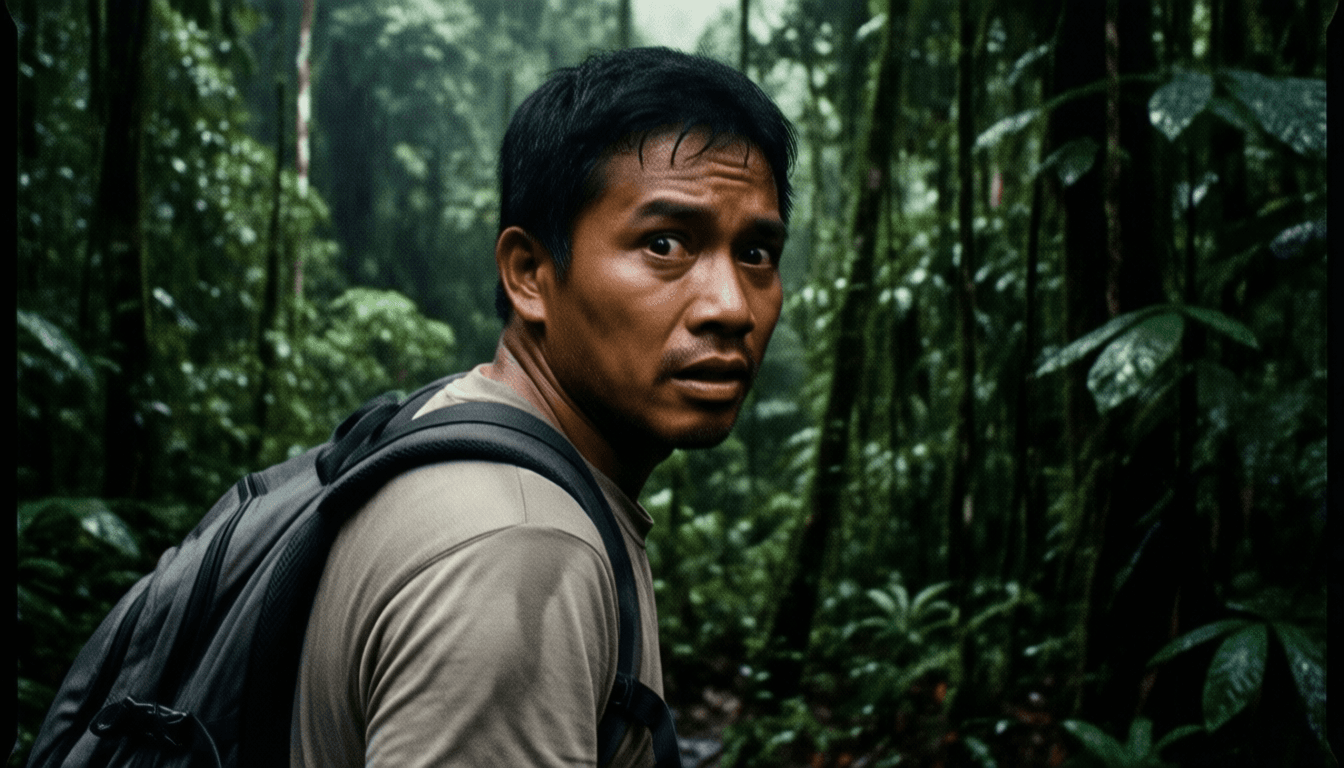
My journey began in San Isidro, a small village nestled on the lower slopes of the Sierra Madre. The air was heavy, humid, thick with the scent of earth, smoke, and distant cooking. The villagers eyed me with suspicion, unwilling to speak directly about 'it in the forest.' Yet, their fear was palpable, a heavy silence underscoring every conversation. Finally, an old shaman with a sun-weathered, wrinkled face directed me to a worn, almost unused path. He whispered in a hoarse voice, "Follow it. To where the Balete trees drink the sky. It plays there."
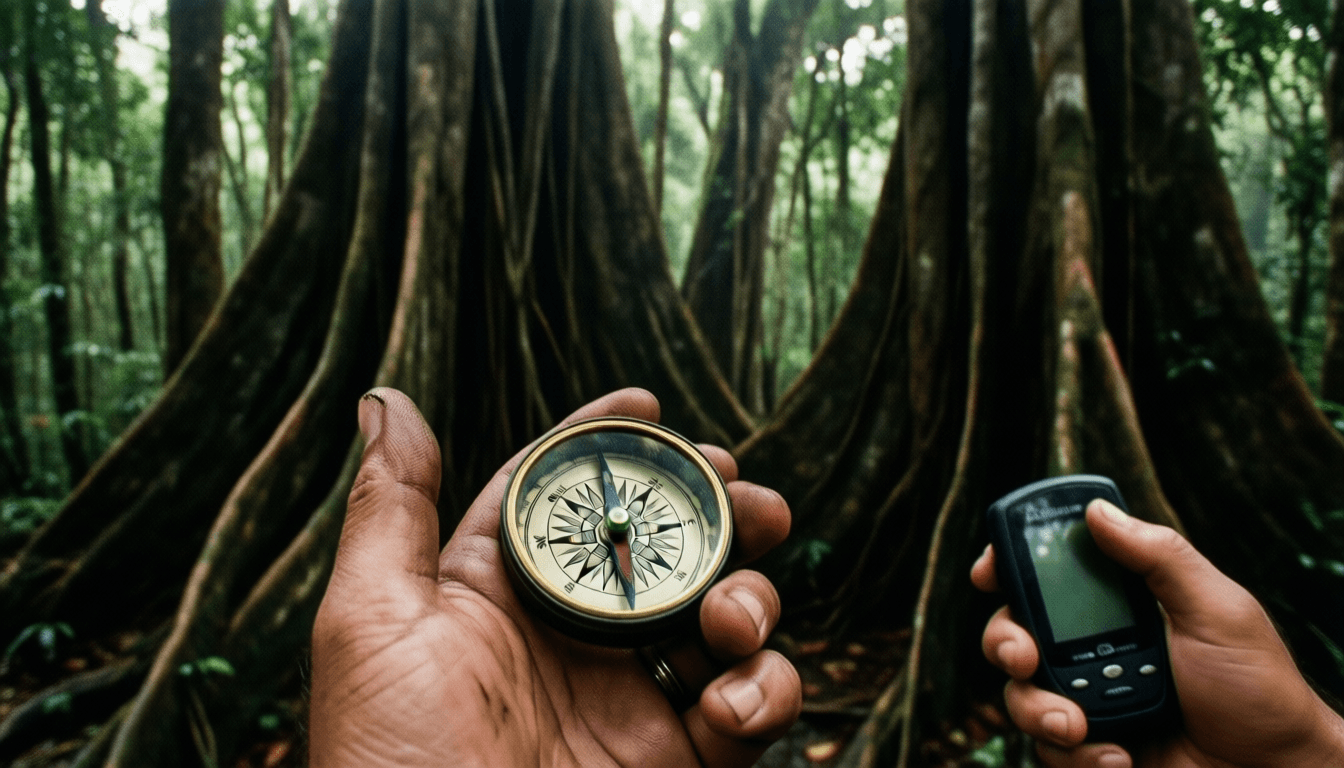
The path soon narrowed, swallowed by the jungle. Dense leaves obscured the sunlight, creating an eternal twilight. The trail, covered in roots and fallen leaves, was damp and slippery. The familiar symphony of the jungle—cicadas, birds, rustling leaves—was present but somehow subdued. My footsteps sounded unnaturally loud, their echoes seeming to delay or come from unexpected directions. Every few steps, I checked my compass, consulted my satellite phone's GPS, meticulously noting the terrain and trying to memorize the path. The thick humidity was a physical weight, but it was the true sense of isolation that began to press down on me then.
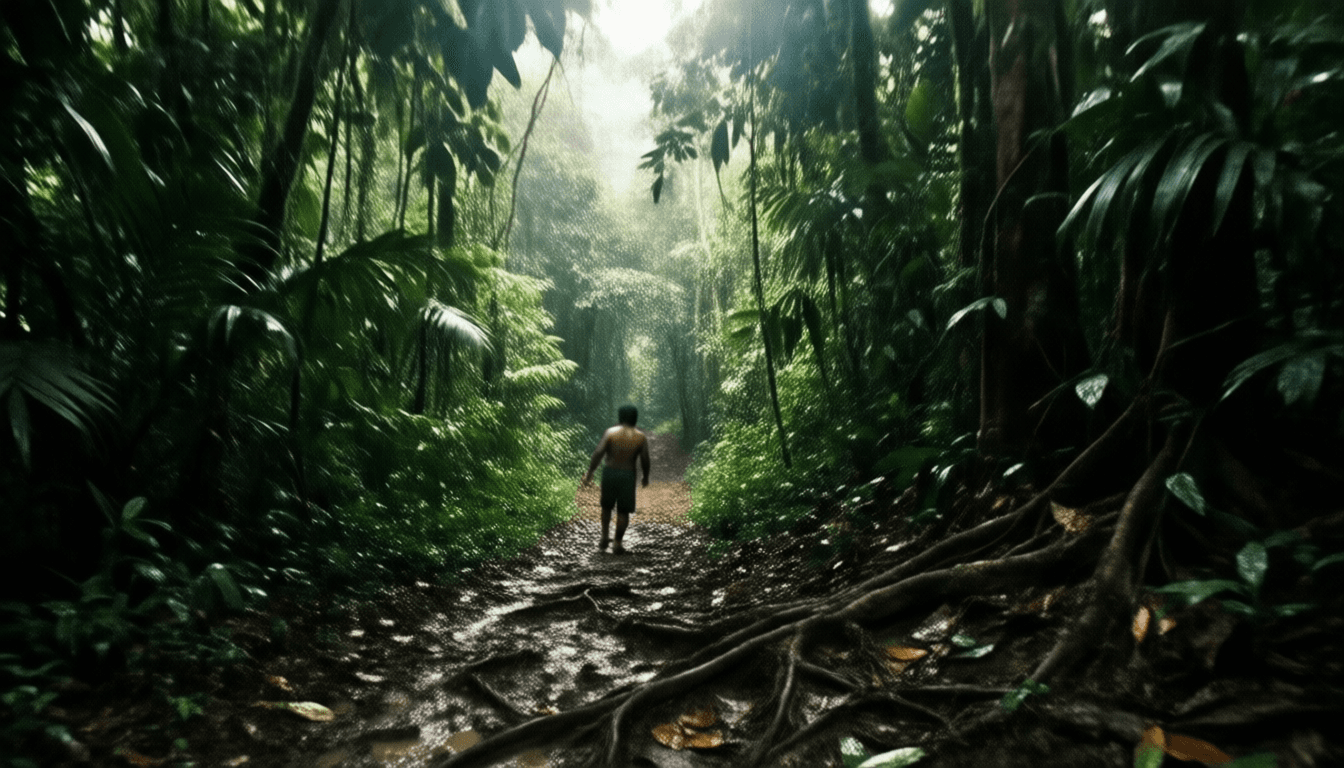
Deeper into what the old man called the 'Balete forest,' the atmosphere grew even stranger. The trees here were truly ancient. Their twisted roots soared skyward, forming grotesque, cathedral-like structures. The profound, unnatural silence I had felt earlier intensified. The usual jungle sounds vanished, replaced by an eerie whisper that seemed to absorb all ambient noise. My footsteps sounded unnaturally loud, yet their echoes seemed to delay or come from unexpected directions.
My compass spun wildly, pointing in random directions, then whirling again. The GPS failed to lock onto a signal, then indicated my position deep within an inaccessible peak. I tried to retrace my steps, but the carefully memorized path had vanished, blocked by an impenetrable wall of indistinguishable dense thicket. Familiar landmarks—a certain vine-draped rock, a uniquely scarred tree—appeared too quickly, or from different angles than before. I was going in circles. Or perhaps, the path itself was twisting.
Then the sounds began. Horse whinnies, sharp and clear, yet disembodied—ringing out directly behind me, then overhead the next moment, then deep within the earth. This was followed by a low, bestial chuckle that rippled through the air, vibrating in my chest. It was a deeply unpleasant sound, simultaneously human and animal. I caught glimpses of blurry movement at the edge of my vision: tall, dark shadows flitting between the trees. Too large for monkeys, too fast for people. Overlapping the damp earth smell was another scent: a strong, musty odor like an unwashed horse, yet sharper, more primal, even with a metallic hint of blood. My rational mind screamed 'disorientation,' but every instinct argued otherwise. I wasn't lost. I was being guided. No, I was being hunted.
I stumbled into a small clearing dominated by a colossal Balete tree, its roots forming a cavernous opening beneath it. The air was heavy, almost suffocating, charged with a strange, stagnant energy. The path I had entered by instantly vanished behind me, replaced by an impenetrable wall of thorny thickets. Trapped.
From the shadowed maw of the Balete roots, it emerged. Taller than any human, with a powerfully built, muscular body. Its disproportionately long limbs exuded a lean, predatory grace. Even in the dimness, its skin appeared rough, like dark leather. But what froze me was its head. Undeniably the head of a horse. An elongated snout, flaring nostrils, and ominously glowing crimson eyes that were both intelligent and utterly malevolent. It tilted its head, gazing at me, a low, guttural chuckle rumbling from its throat. The moment I saw its head, everything seemed to freeze.
Then it moved. Not a walk, not a run, but a sudden, impossible flash across the clearing. One moment it was by the tree, the next it was mere yards from me. Faster than any animal I had ever seen. A hoofed hand reached out. The ground beneath my feet seemed to shake violently, and I tumbled forward. I hit the damp earth hard and scrambled backward.
Its whinny no longer echoed in the air; it erupted from its throat, a deafening sound that vibrated through my bones, paralyzing me. It wasn't just a sound; it was an overwhelming sonic assault that rattled thought itself. A hoofed hand clamped onto my shoulder. A crushing pain, a force that dug deep. The feel of rough, leathery skin brushed against my face, and the stench of old earth and raw meat assaulted my nostrils. A hot, foul breath washed over me. I felt the immense power, the sharp pressure of those hoofed fingers. It wasn't playing. It was toying with me before the kill.
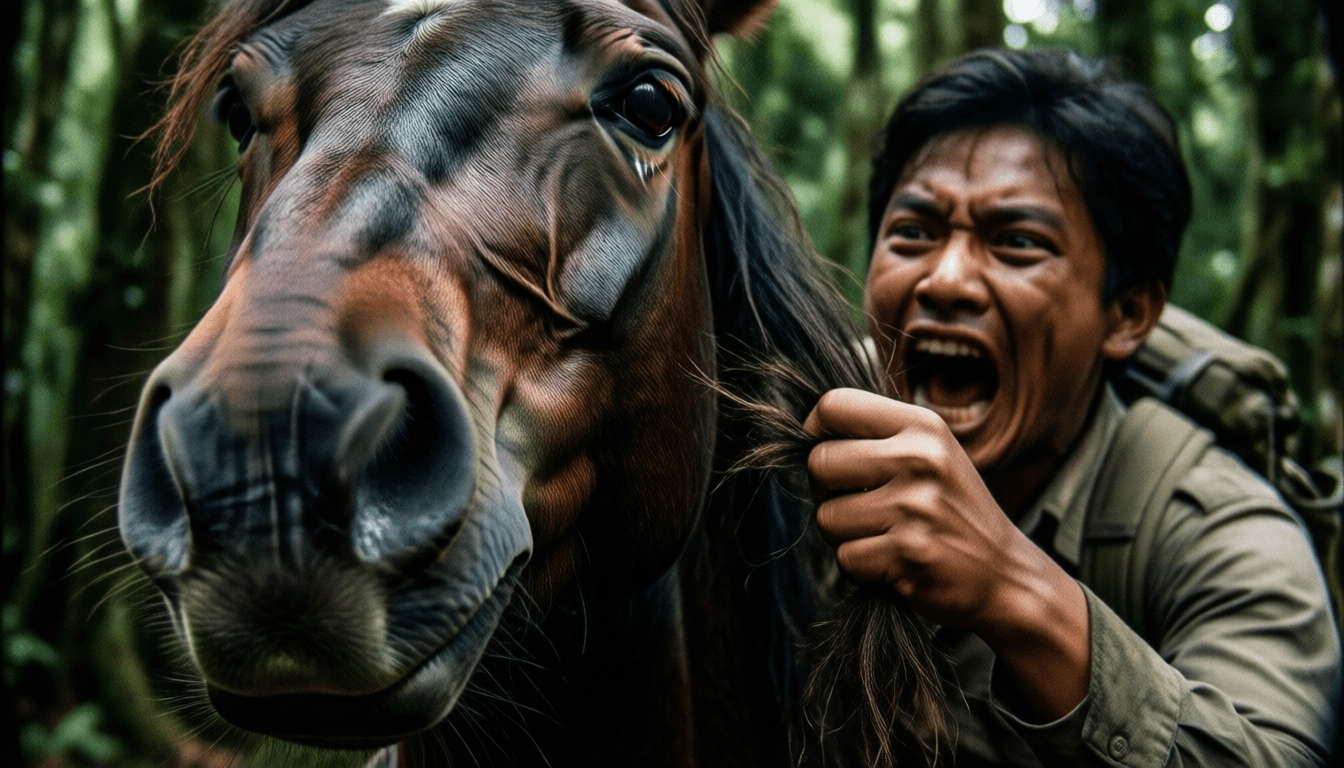
In primal terror, my wide eyes fixated on a single strand of coarse black hair clinging near the wrist of its hoofed hand, which held me. A desperate, irrational instinct, born from the very folklore I was investigating, surged through me. With a bestial yell, I twisted my body, raised my free hand, and with all my might, ripped out that strand of hair.
It recoiled instantly. Not from pain, but with a bestial cry of pure, ancient rage that shook the very ground. The sound was no longer just a whinny; it was a primeval roar that seemed to tear the fabric of the forest itself. That momentary shock, that instant of retreat, was all I needed. I rolled, scrambled desperately, running blindly, ignoring the burning pain in my shoulder, ignoring the impossibly shifting landscape. Behind me, its enraged roar echoed.
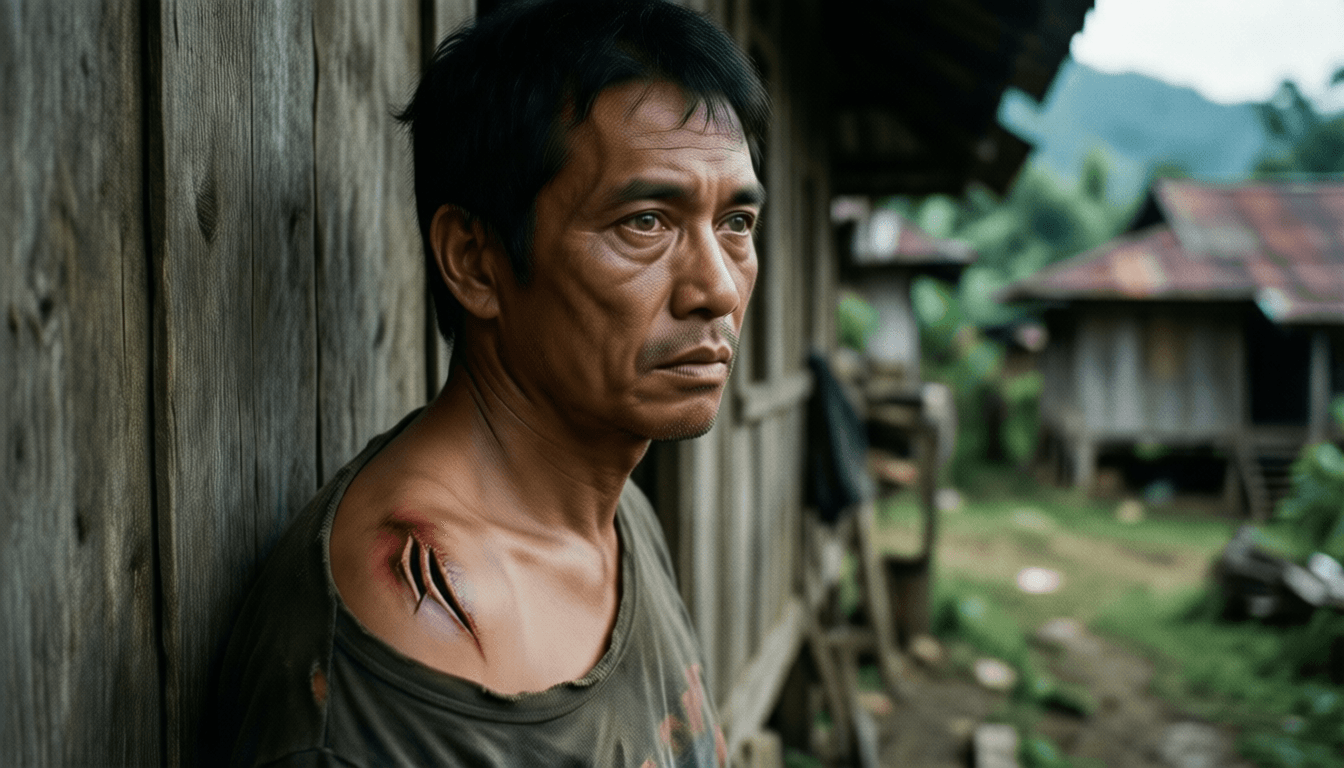
Hours later, I stumbled out of the jungle, disoriented, soaked in sweat, my clothes torn, blood still oozing from deep claw marks on my left shoulder. The villagers looked at me with dark, knowing eyes, offering water but asking no questions. My camera was shattered, the satellite phone dead, the compass needle permanently fixed on a random axis.
In my hand, I clutched a single strand of hair, thick, coarse, and black. Unlike any animal hair I had ever seen. Later, under the cold light of my desk lamp, I examined it. No magical properties were apparent. It just sat there, inert. Yet, throughout the night, it slowly, almost imperceptibly, crumbled into fine black dust that coated my palm, leaving only a faint, musty scent.
My shoulder healed, but the scars remained: three deep, parallel lines, testament to an impossible grip. Disappearances near San Isidro didn't stop, but their frequency diminished. Perhaps it hunts deeper, or further afield now. I now constantly check shadows, hear phantom horse whinnies in distant city noises, and catch tall, blurry shapes at the edge of my vision, especially at dusk. The jungle, the Sierra Madre, no longer feels like merely a geographical place. It feels like a breathing entity, and I merely brushed against something ancient and predatory within it. The true horror wasn't the physical encounter. I was allowed to leave. The questions that truly haunt me, still whispering deep in my mind, are simple: Why? And for how long?
[ CLASSIFIED VERDICT ]
[ACCESS LOG - SOURCE FILE]
In Philippine folklore, the Tikbalang is described as a tall, humanoid creature with the head and legs of a horse, said to inhabit dense forests like the Sierra Madre mountains. They are known to lead travelers deep into the woods, causing them to get lost and sometimes inducing fear and confusion. According to legend, pulling a single hair from a Tikbalang's mane can break its spell.