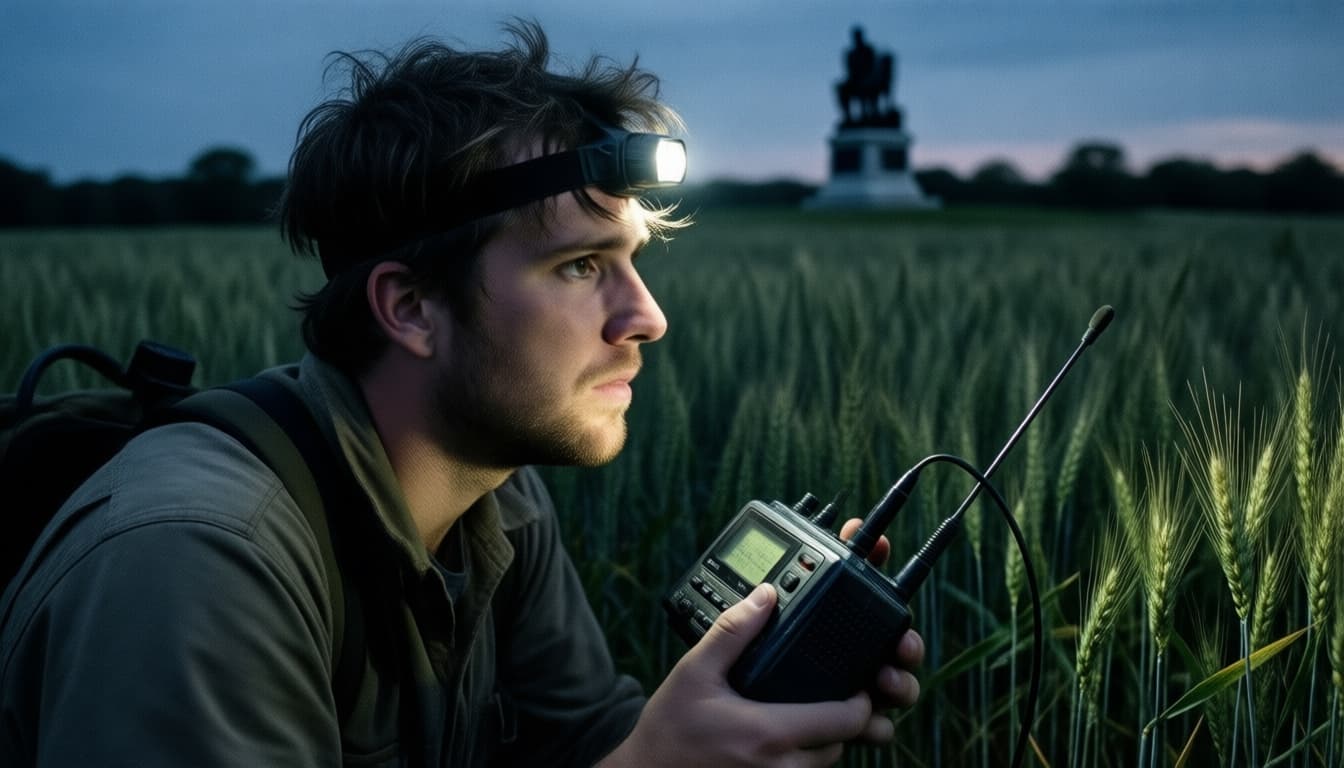
The Screams of Gettysburg Wheatfield
Last fall, an unsettling post appeared on 'Gettysburg Ghost Archives,' an online forum known for its ghost sightings and local folklore. The file uploaded by an anonymous user named 'PrairieGhost' was a single, unedited audio recording. The accompanying text was brief: "Wheatfield, October 17th, 6:37 PM EST. Something... was wrong. There was nothing there." Initially dismissed as static or manipulation, the file soon captivated amateur audio experts. What was recorded wasn't tourist chatter or natural sounds. It was a bizarrely faint yet impossibly clear sound, like distant musket fire and human shouts echoing in layers.
Crucially, several independent analysts used forensic audio software and found no evidence of artificial overlay or external insertion. The sounds appeared to originate within the recording itself, at frequencies and timbres inconsistent with any modern sound sources near the Gettysburg wheatfield. Subsequent local news reports briefly covered a recurring pattern: visitors in that specific area becoming disoriented, unaware of several hours passing despite remaining within a relatively small vicinity. The question wasn't 'what' was recorded, but rather, 'what' it truly signified, and why it occurred at that precise location.
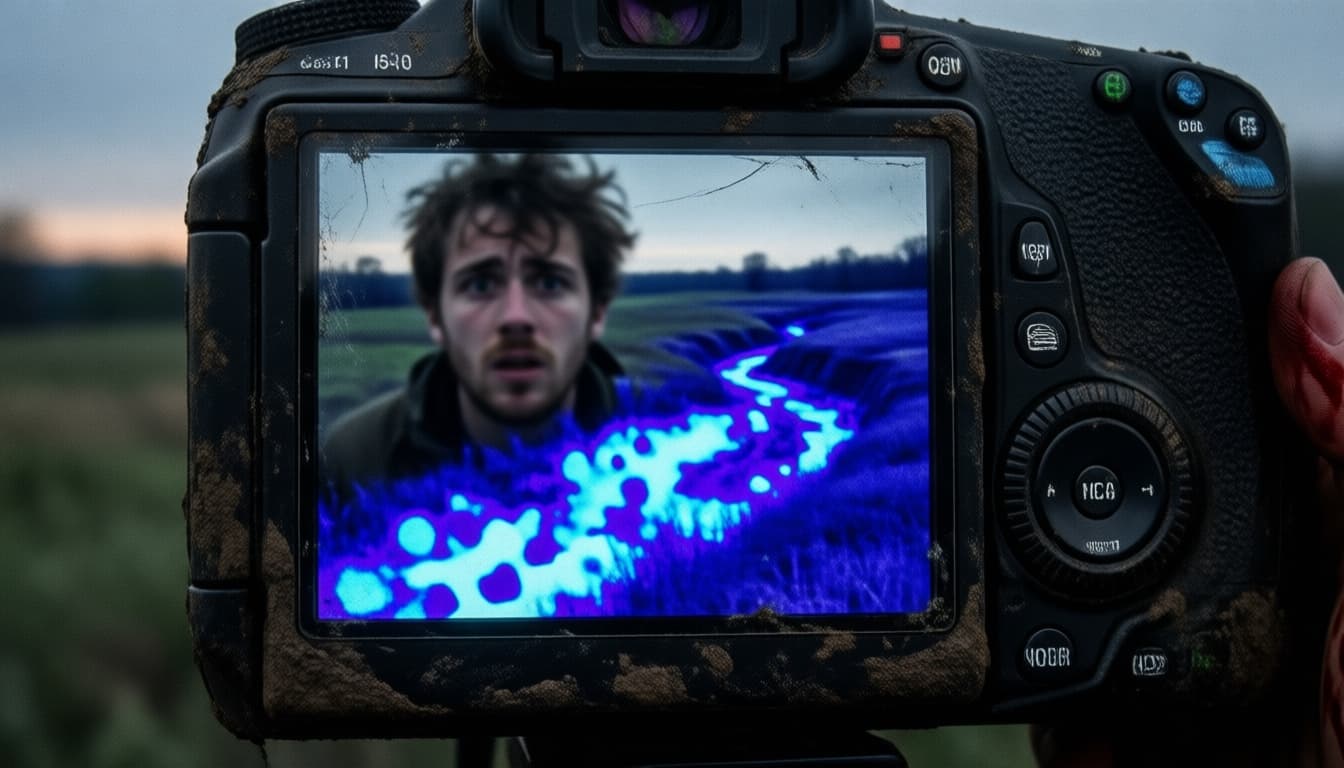
Armed with the publicly available audio analyses and unofficial reports of localized time distortions, my objective was clear: to systematically document the wheatfield, specifically the irregular terrain bordering the historic Rose Woods. I entered the site at dusk, similar to the time of 'PrairieGhost's' recording. The air was still, thick with the scent of damp earth and decaying leaves. I carried equipment selected for its sensitivity to environmental changes: a multi-spectrum audio recorder, an array microphone, a precise thermal imaging camera, and a localized atmospheric pressure sensor. The terrain was uneven, with subtle undulations, depressions, and dark rocks that seemed to swallow even faint light.
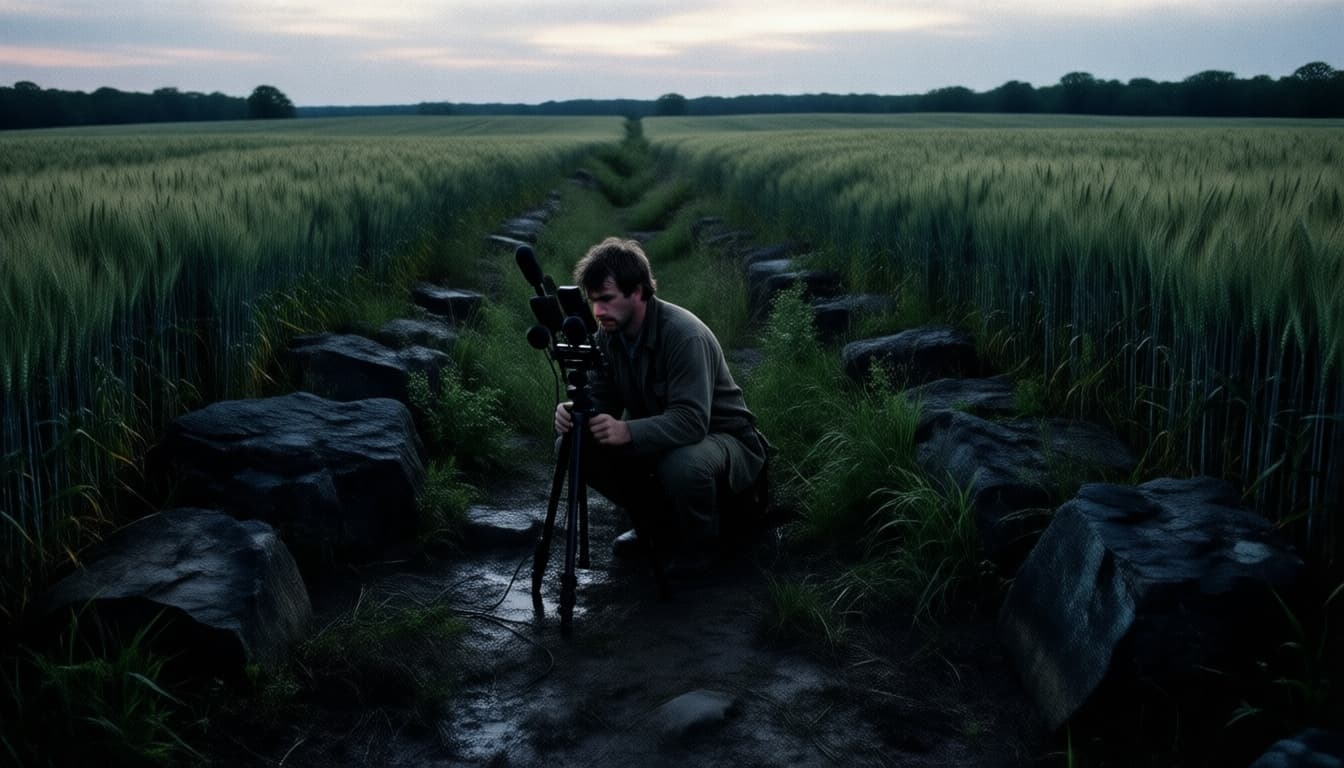
I moved slowly, marking precise coordinates, and set up a stationary recording point deep within a particularly narrow gully, historically documented as a site of some of the most intense and chaotic combat. The only sounds I heard were the faint hum of vehicles from the distant road. I meticulously noted even this ambient noise, intending to filter it out later. My initial thermal camera scan showed expected temperature variations across the landscape—cooler depressions, warmer rock surfaces—all within normal parameters.
The first anomaly was subtle, almost imperceptible. My usually stable atmospheric pressure sensor began to show minute, rapid fluctuations. These readings far exceeded typical ambient climate shifts and were confined solely to the gully where I stood. Then came the sounds. Not the musket fire of the original file, but something far more chilling. A faint metallic 'clink' seemingly emanating directly beneath my feet, followed by a wet, sucking sound, as if something heavy was being dragged through deep mud. Nothing was visible.
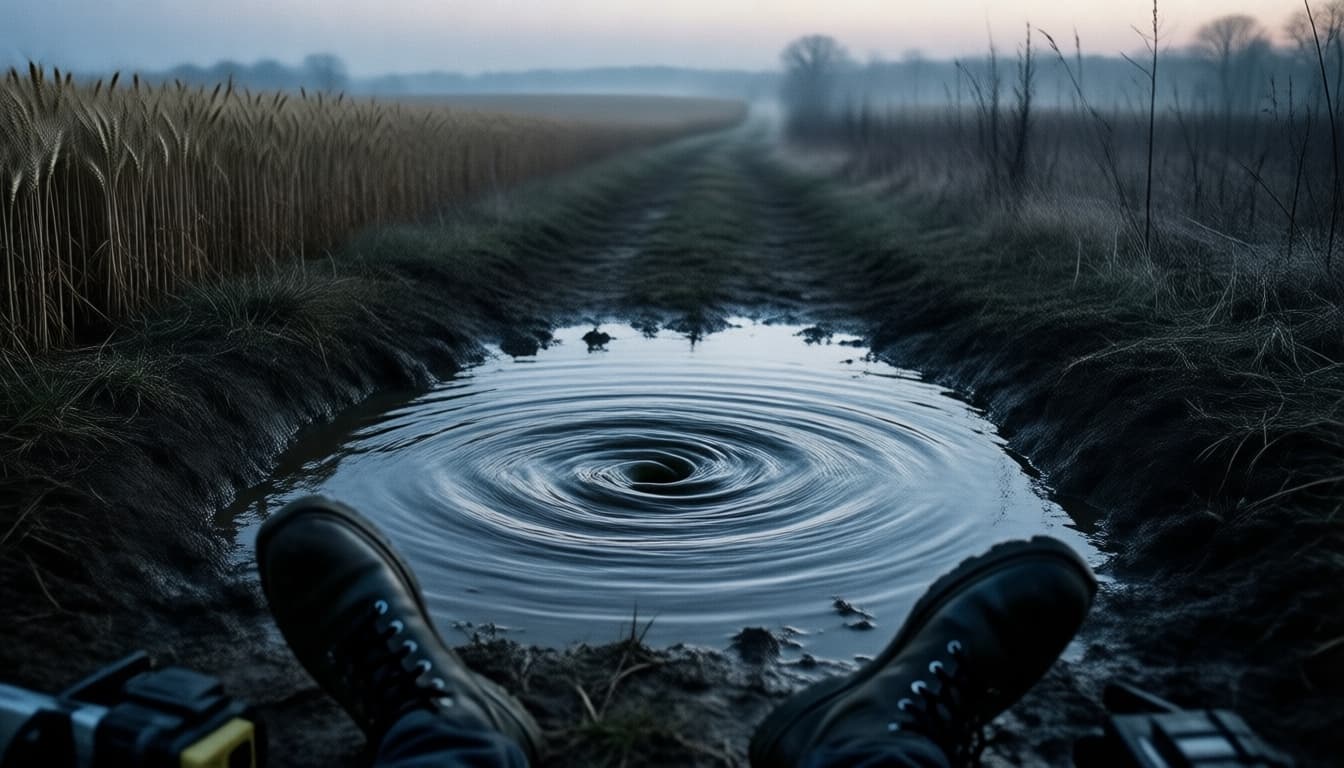
The air grew noticeably colder, but only within a two-meter radius around me. A handheld thermometer registered an almost eight-degree Celsius drop, contrary to the stable temperatures of the surrounding field. The most unsettling part: a shallow puddle beside me, filled by recent rain. Its surface rippled *inward* against gravity for ten seconds, forming a distinct vortex before settling again. My perfectly positioned, high-sensitivity audio recorder captured nothing but static during this phenomenon. The ensuing silence was absolute, suffocating. Deeper than any natural quietude, broken only by the frantic, irregular thumping of my own heart.
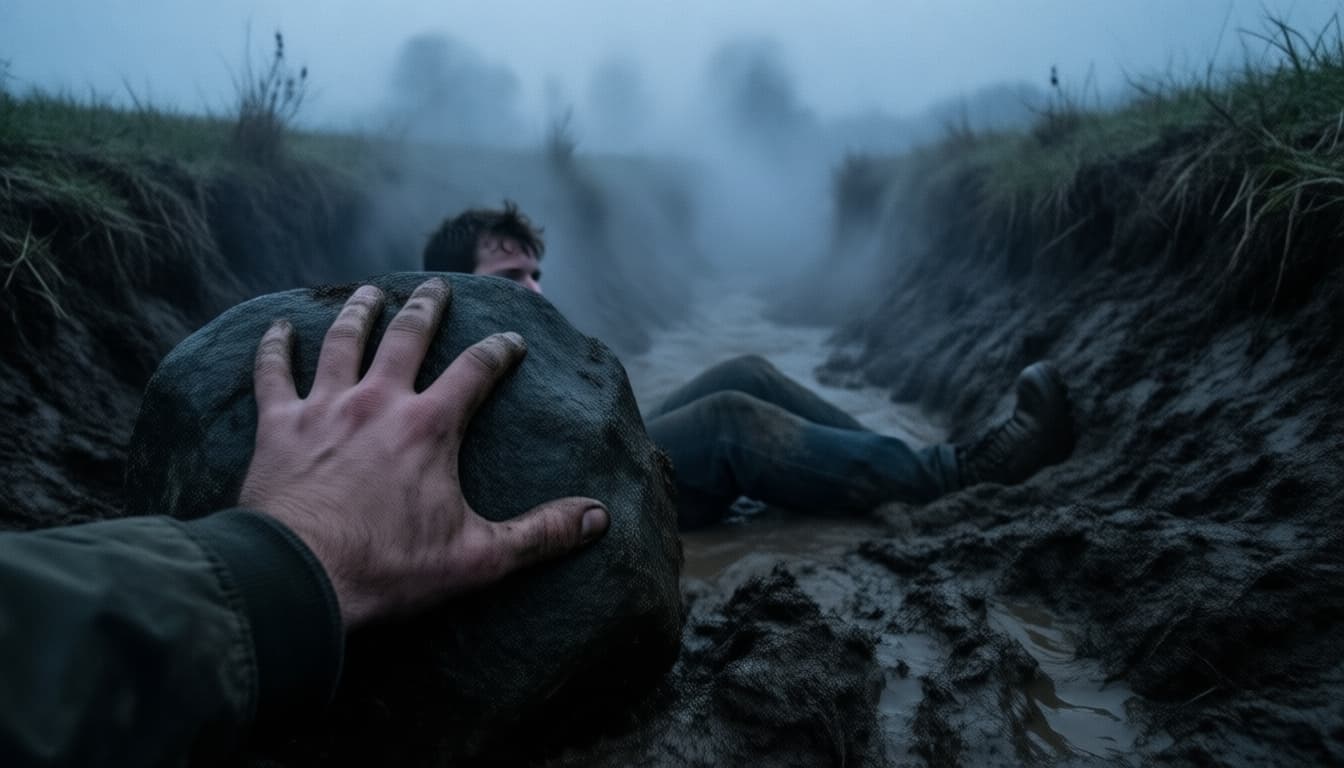
The quiet shattered. The ground beneath me *heaved*. Not an earthquake, but a localized, violent upheaval, as if the earth itself was twisting like a living organism. I lost my balance, tumbling into the muddy gully. A rock rolled down, painfully pinning my leg. Panic set in as the mud seemed to cling to my skin, pulling me deeper with an abnormal suction. Above me, the air grew heavy and dense, visibly shimmering with an unknown energy, distorting the last vestiges of twilight. And then came the sound. Not distant, but *right beside me*, overwhelming. Cannon fire, bone-shaking gunshots, and the horrific screams of men in agony erupted from all directions simultaneously, yet with no visible physical source. It was a localized pocket of absolute auditory terror.
A cold, immense pressure bore down on my chest. A formless force pinning me deeper into the mud, yet undeniably *there*. A cold, crushing weight that stole my breath. I struggled, feeling the soft, pliable earth around my trapped leg solidify into something hard and unyielding, ensnaring me. The pressure intensified. A truly icy, tangible embrace of suffocation. My vision wavered as the formless entity—there's no other word for it—made contact. An unimaginable coldness, deeper than anything I'd ever experienced, permeated my skin from the unseen pressure points, spreading like a toxin. It wasn't merely cold; it was the *absence* of all warmth, all life, a direct absorption. I thrashed desperately, feeling the invisible grip tighten, pulling me closer, deeper, into the source of the screams, into the impossible, frozen void. As primal terror surged, I forcibly tore my leg from the suddenly pliable mud, leaving behind fragments of pant fabric and skin, and blindly scrambled out of the gully. The screams and pressure faded the moment I exited that immediate zone of anomaly.
I made it out of the wheatfield. My leg was skinned and bleeding, and the chilling pressure had receded but left a persistent, profound ache deep in my chest. Yet, my equipment held undeniable evidence. While my audio recorder files were corrupted, filled with a cacophony of white noise and digital artifacts, one distinct segment remained. 'PrairieGhost's' musket fire recording was now unsettlingly *clearer*, imbued with the distinct, horrifyingly vivid screams of dying men, each individually discernible. My thermal imaging camera, upon review of its corrupted data, showed an impossible anomaly: localized negative temperature readings, true cold spots below absolute zero, moving with a precise, almost predatory trajectory into the gully where I had been trapped.
But the most disturbing evidence wasn't recorded by any device. It manifested within myself. Deep within my skull, a persistent, low-frequency hum now resonates. A sound no doctor or audiologist can detect or explain, yet it is undeniably there. A constantly vibrating echo of the impossible roar. Furthermore, my internal sense of direction and time has been subtly, irrevocably warped. Simple tasks like reading a map or gauging a few minutes now come with a persistent, disorienting lag—a faint echo of the localized time distortion I had witnessed. I no longer fully trust the ground beneath my feet or the firm nature of physical reality. I understand now that the wheatfield isn't merely haunted; it is a rift in existence itself, and I carry a piece of that rift within me. A silent, vibrating testament to the eternal, consuming agony that still remains there.
[ CLASSIFIED VERDICT ]
[ACCESS LOG - SOURCE FILE]
This story unfolds in the wheatfields of Gettysburg, a fierce battleground of the American Civil War. This location is rife with rumors of ghost sightings and time distortion phenomena, particularly in specific areas where intense combat occurred, leading to unexplained voices and occurrences. Based on such local folklore and urban legends, this narrative explores the horror of how past tragic moments can impact the present.