The 60-Foot Depth Survey Log of Bell Witch Cave
On November 14, 1994, an unclassified field log left by a hydrologist from the Tennessee Department of Environment and Conservation contained a chilling sentence. While measuring the subterranean drainage system connected to the Red River, directly beneath the 19th-century homestead of John Bell, an acoustic void was discovered within a 40-foot limestone cavity where natural sound attenuation was four times higher than normal. At the 14-minute and 22-second mark of a portable cassette tape recovered from a nearby sinkhole in 2018, a sharp drop of 40 Hertz in atmospheric pressure accompanied a voice whispering directly against the microphone diaphragm. There was no intake or expulsion of breath. It was merely the sound of dead air being artificially compressed into phonemes. Much like the unidentified black liquid that ended John Bell's life in the winter of 1820, the anomaly remained buried deep within the subterranean karst bedrock beyond the walls.
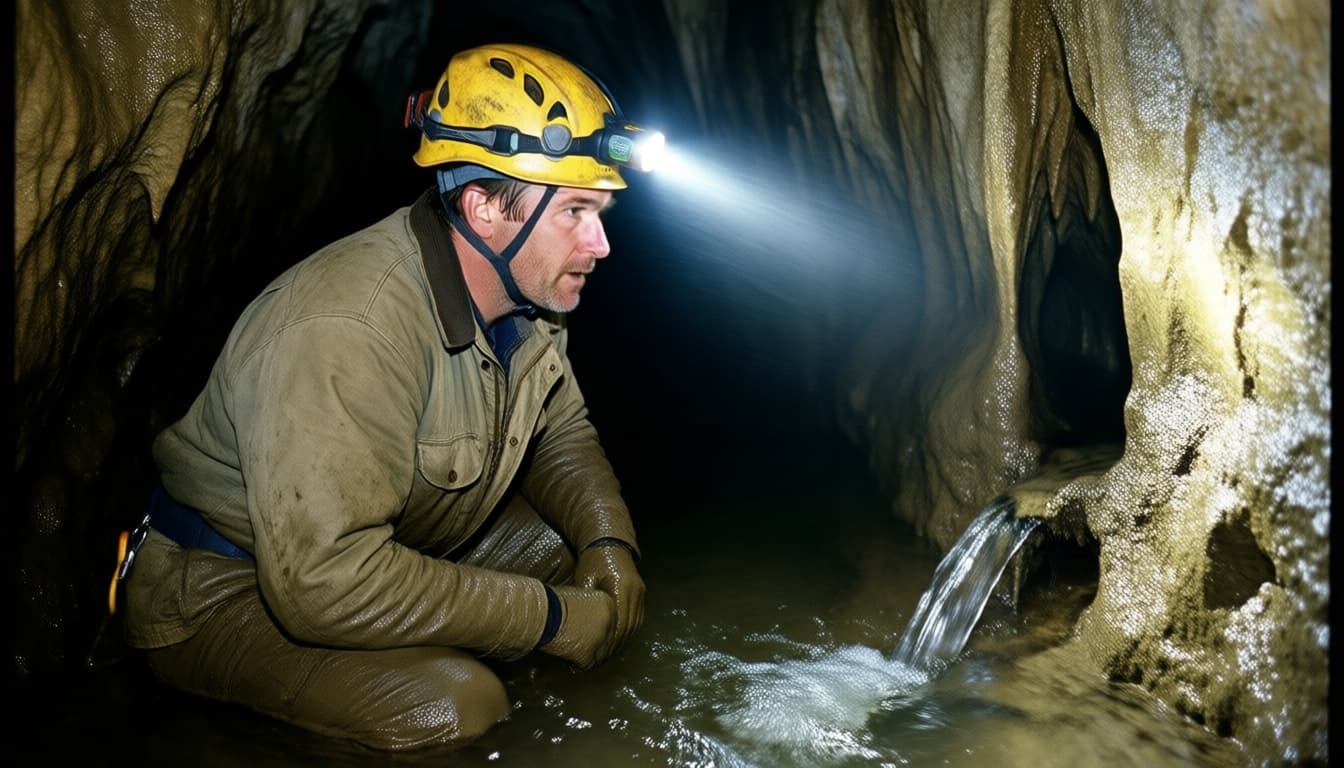
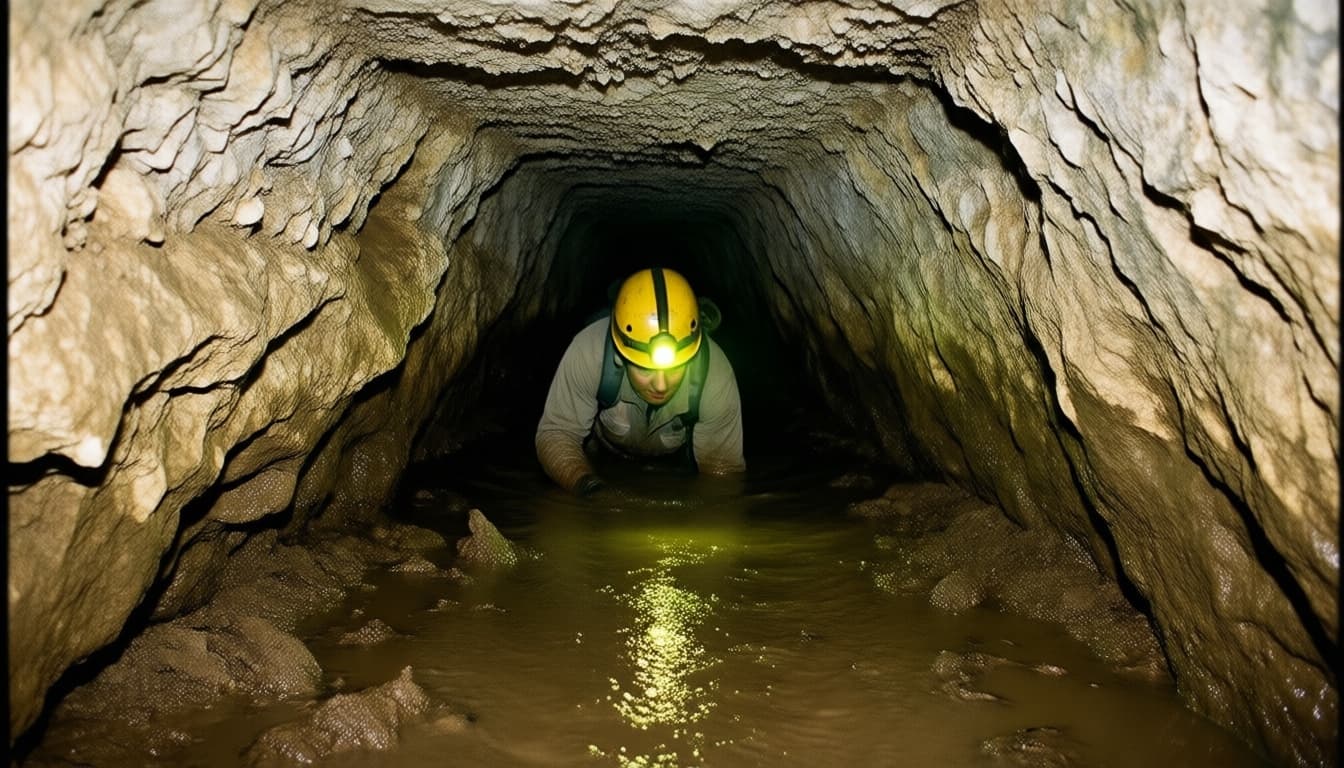
Deviating from the commercial tourist path of the Bell Witch Cave, I squeezed my body into an unauthorized, narrow fissure. It was a claustrophobic crawl through wet limestone and chilly mud at 12 degrees Celsius. Fragments of razor-sharp chert tore through my heavy wool trousers, shredding my knees, while the narrow passage reeked of dry pulverized bat guano and the rotten-egg stench of sulfur from underground aquifers. The only sounds filling my ears were my own ragged breathing and the distant, dry spatter of alkaline droplets plunging into a vertical siphon forty feet below.
Upon reaching an unmapped cavity sixty feet beneath the surface, the needle on my handheld precision manometer wavered ominously. To gauge the volume of the chamber, I tapped a limestone column lightly with a steel pry bar. The dull thud of metal striking stone ceased, but nearly two seconds passed before the echo returned. The wall stood barely four meters ahead, yet the reflected sound felt distant and delayed, as though crawling up from an abyss miles away.
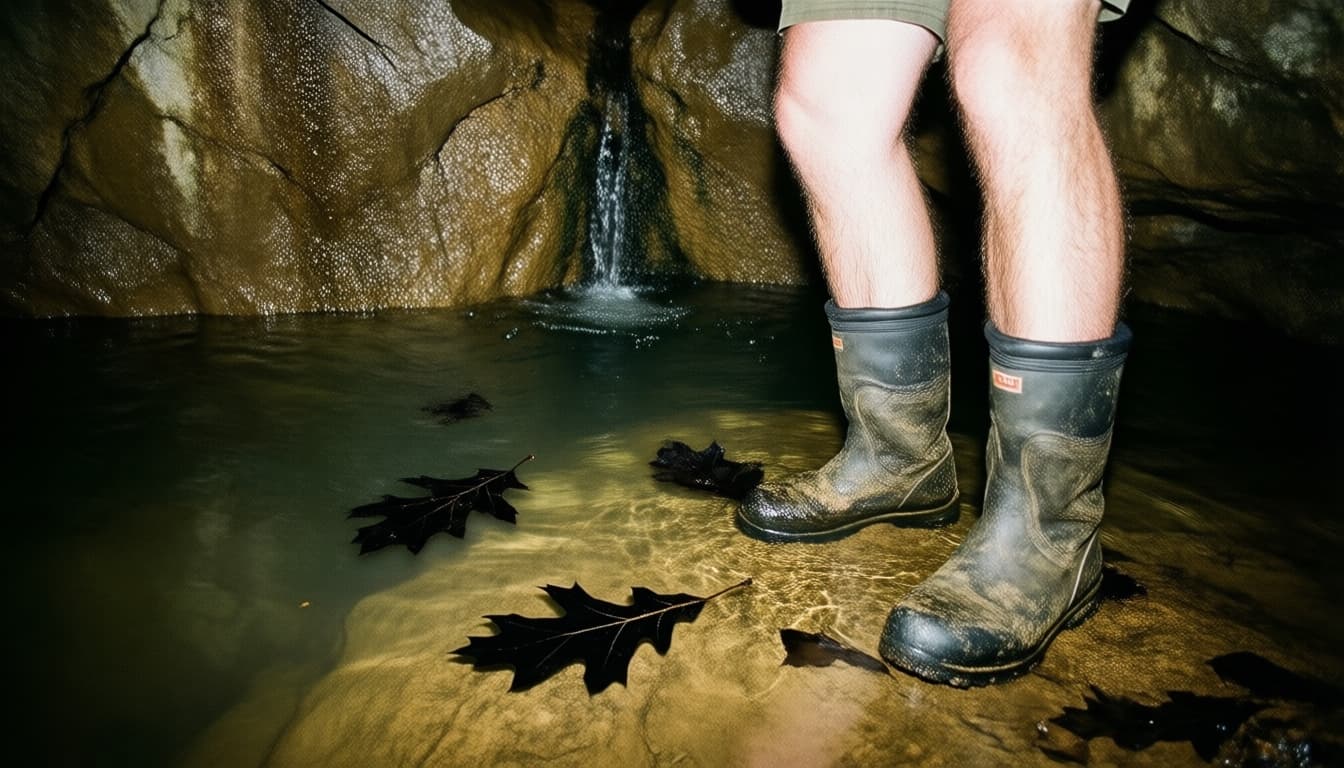
When I shone my headlamp on the shallow subterranean stream running ten centimeters deep at my feet, a sudden chill drained the warmth from my body. Decayed oak leaf fragments floating on the water's surface were traveling against the natural gradient, surging backward toward a tightly sealed fissure in the bedrock. The digital barometer spiked instantly from 29.92 to 32.10 inHg. It felt as though I had plunged dozens of meters into deep water; my eardrums bulged agonizingly, popping with a dull rupture inside my skull.
The sound did not travel through the air. The moment my waterproof-gloved knees touched the damp bedrock, a horrific vibration shot directly up my tibia and straight into my jawline. It was a rhythmic, low chant driven directly into the interior of my skull through bone conduction, bypassing the air entirely. ‘John, 1820… Elizabeth, 1820…’ The bedrock itself was vibrating against my jaw, dryly reciting the names and death dates carved onto the Bell family headstones.
Behind me, a thunderous crash detonated as a massive limestone slab sheared from the ceiling, completely pulverizing and sealing the crawlway I had just exited. The subterranean water, unable to escape, backed up instantly and engulfed my thighs. It was eight-degree cold water. Hypothermia would stop my heart in less than twenty minutes.
In the encroaching dark, my headlamp beam faded rapidly. It was not fog. What began suspending itself in the stagnant air was a microscopic oily mist emanating the acrid scent of burnt copper and bitter apricot seeds—the very same toxic vapor said to have permeated the room of the dying patriarch in 1820. Through the shimmering oil film, the empty air warped with the outline of a massive, dense entity bearing down on me through sheer atmospheric distortion.
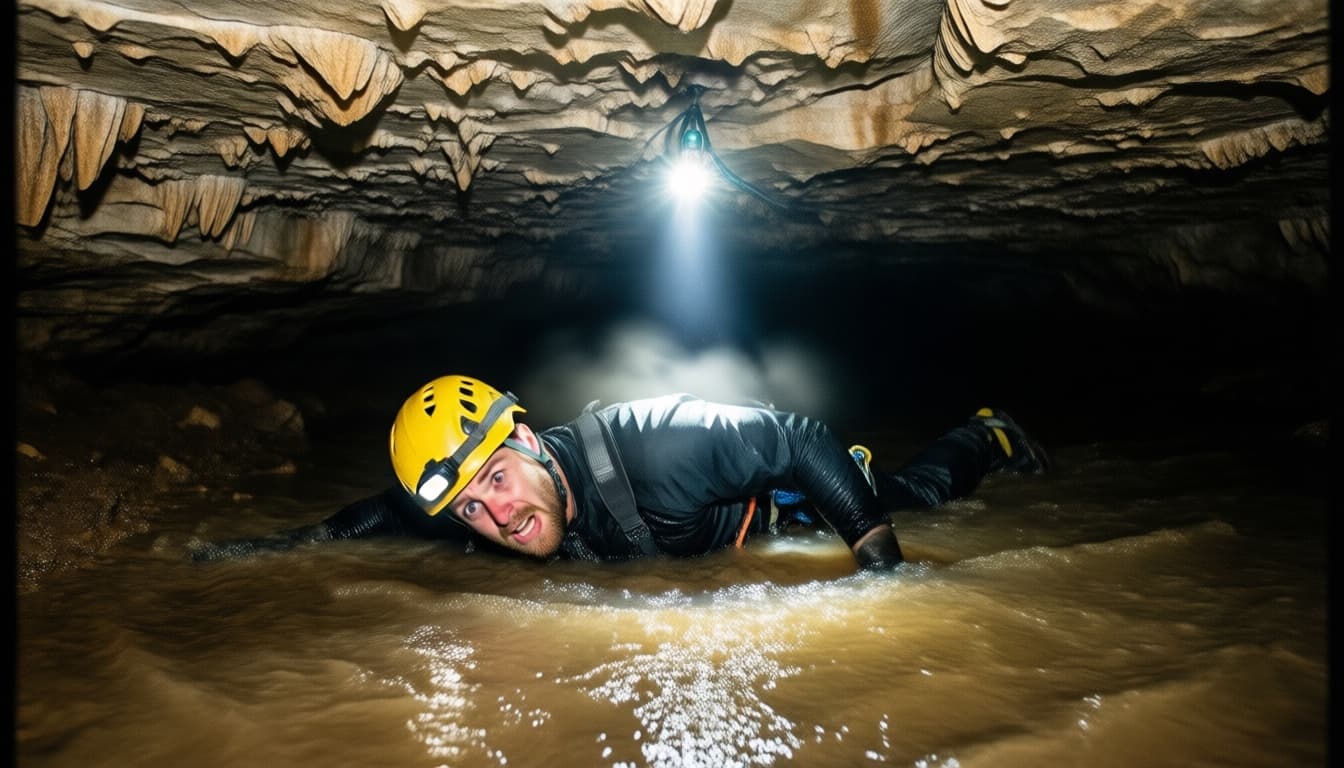
An invisible mass crushed my chest. A crushing weight easily exceeding a hundred kilograms pinned my ribcage, forcing the residual air from my lungs before I could even muster a scream. Pinned to the stone and unable to twitch a finger, something made physical contact inside my ear canal. It did not vibrate the air. Like a wet, coarse tongue licking across the inner ear, a humid, rasping breath scraped directly against the bone. “Try to breathe.” A freezing pressure shaped like an elongated hand—four fingers and a thumb—dug violently beneath my jaw, crushing inward toward the hyoid bone.
At the verge of asphyxiation, I jammed my steel pry bar into a narrow vertical chimney crevice overhead. The sheer pressure differential between the cavern and the surface was violently pulling air upward through the crack. Enduring the agony of tearing flesh and a dislocating shoulder, I dragged my torso into the chimney. Only after a tremendous grip seized my ankle and tore my insulated boot completely off my foot was I able to scramble up through the mud shaft.
At 3:14 AM, I crawled out unconscious into an abandoned soybean field sinkhole roughly 800 meters from the cave entrance. The contusions recorded on my neck at the emergency room were baffling. Distinct finger imprints gripped my trachea, yet the impressions on my skin bore no loops, whorls, or arches. It was the abnormal mark of skin so worn down from centuries of rubbing against rough subterranean rock that the fingerprints had ceased to exist.
The most terrifying evidence came from the acoustic analyzer strapped to my chest harness. The microphone had registered no falling rock, no monstrous roars, and no physical sound waves during the attack. The playback consisted of twenty-two minutes of absolute, dead silence while I lay pinned in the dark. Except for one anomaly.
At the exact moment of strangulation, the recorder clearly captured my own vocal cords vibrating mechanically, even though my crushed trachea could not draw breath. Squeezing out the last traces of gas within my lungs against my will, my voice was clearly chanting an old hymn sung exclusively at funeral services by northern Tennessee Methodists in 1820.
After returning home from the hospital, I leaned over the bathroom sink to wash my face. I looked up into the mirror. I lowered my hands. But the man in the glass lowered his hands half a beat too late.

[ CLASSIFIED VERDICT ]
[ACCESS LOG - SOURCE FILE]
This story is based on the infamous early 19th-century American folklore of the Bell Witch, which tormented and ultimately poisoned farmer John Bell in Robertson County, Tennessee, combined with persistent real-world rumors of unnatural acoustic vacuums and suffocating subterranean anomalies inside the Bell Witch Cave system along the Red River.