The Watching Ruins: Delhi's Living Archives
Beyond official statements on the Indira Gandhi assassination or theories of foreign intervention, in the deepest corners of the web—old archive forums, encrypted chat logs, and eventually, the quiet whispers of certain revisionist history podcasts—rumors began subtly, almost imperceptibly. They honed in on a specific location on the outskirts of Delhi: an old government annex building, long closed and slated for demolition. Legend claimed it was not merely an abandoned structure, but the true nexus of a deeper, more insidious conspiracy. A final, unspoken agreement had been made, and a crucial piece of evidence, a "safeguard," was hidden there, only to vanish without a trace. The most unsettling part was the insinuation that anyone truly seeking "the missing piece" within its walls would not only find nothing but would, instead, be found by it.
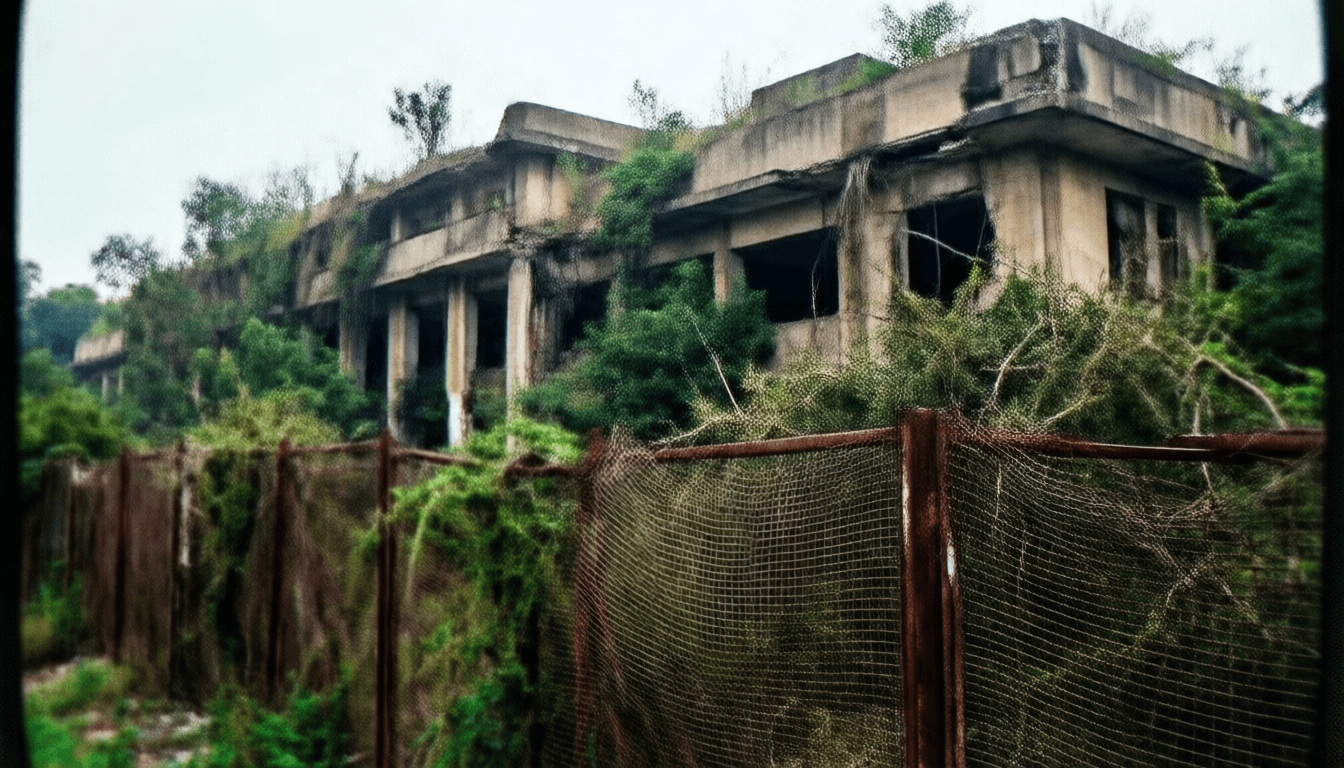
Rohan, an amateur historian with a persistent, almost obsessive fascination with unresolved aspects of major historical events, had dedicated the past six months to this particular thread. Using old municipal blueprints and cross-referencing faint aerial photographs, he pinpointed a section of the closed annex—partially collapsed and overgrown with weeds—that had once housed a secure communications hub. Whispers suggested a "control room" lay hidden deep underground.
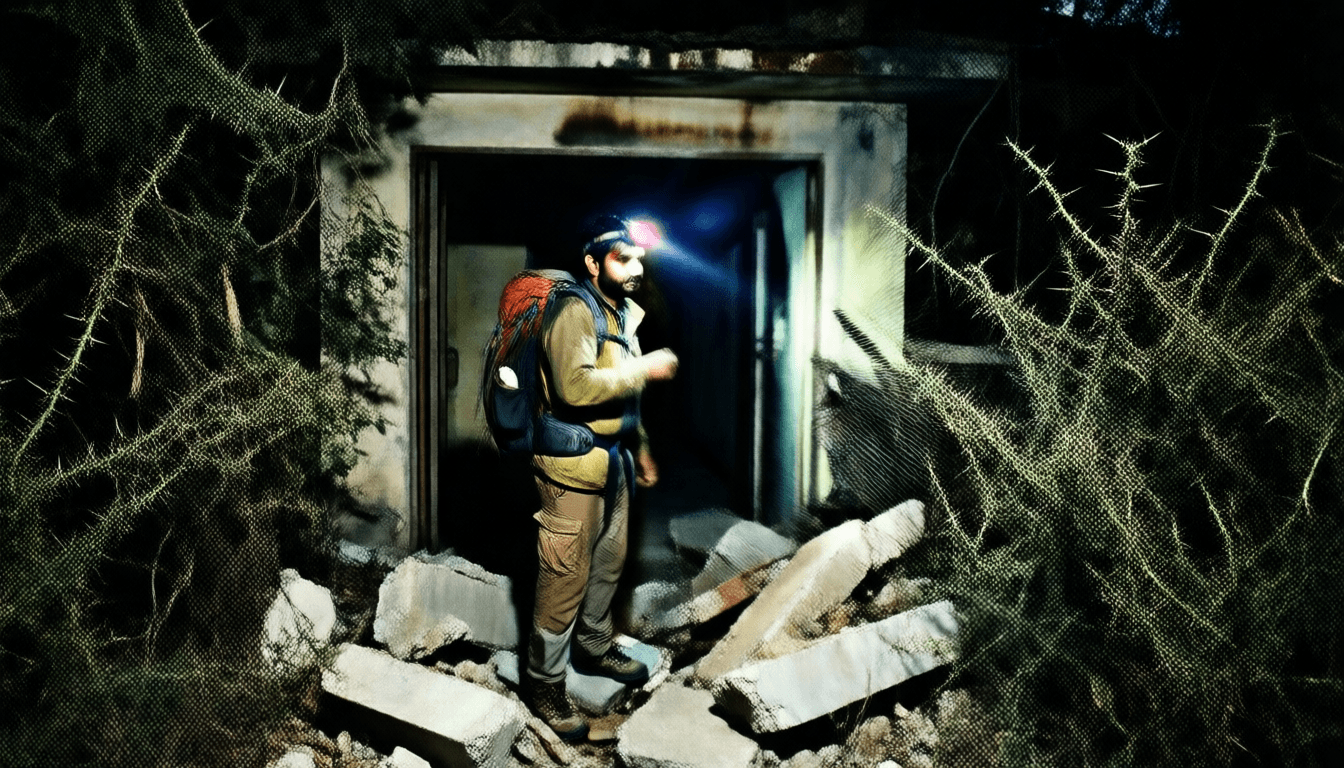
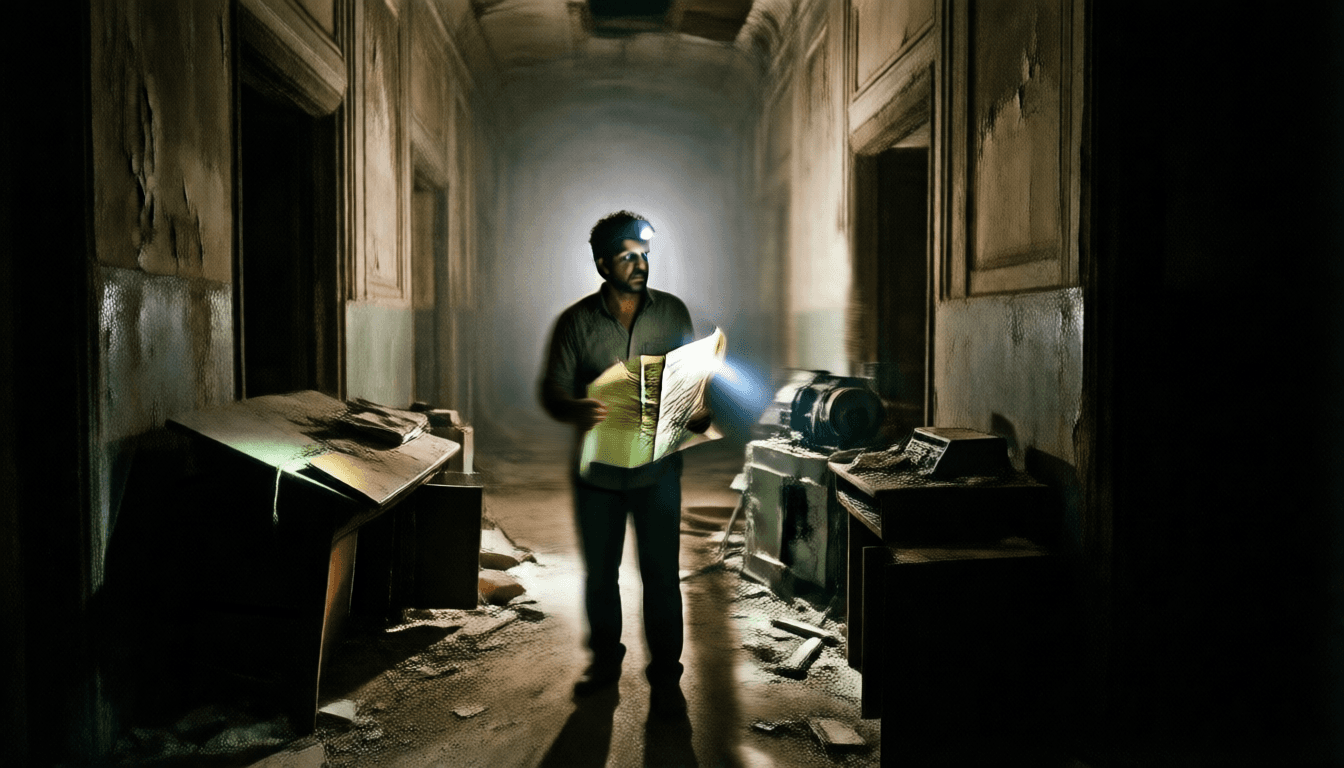
Access was a challenge. He navigated through dense thorny bushes, bypassed rusty fencing, and eventually found an entryway half-buried beneath debris. The air inside was thick with dust, heavy with the scent of decaying metal, and sound itself seemed utterly stagnant, absorbed by the crumbling concrete. His powerful headlamp cut through the oppressive darkness, illuminating unsettlingly symmetrical corridors. Each doorway was like a gaping maw filled with rust and shadows.
As Rohan ventured deeper, the building seemed to respond. His footsteps on the debris-strewn floor created unnervingly asynchronous echoes. Sometimes a faint metallic 'click' would resound before his foot even landed. Other times, his voice, uttered to reassure himself, would return a fleeting moment too soon, or in a subtly modulated tone, as if mocking him from an impossible distance.
He navigated a maze of similar-looking rooms, filled with overturned desks and gutted machinery. His meticulously drawn map, based on blueprints, seemed to betray him. Corridors that clearly led east now veered north; characteristic cracks he'd noted on walls vanished, only to reappear in entirely different sections. An abnormal chill raised goosebumps on his arms, followed by sudden, suffocating heat where the air felt incredibly dense. On a shelf, he found a bundle of official files, their contents long decayed. As he touched them, an old photograph slid out—a blurry, unidentifiable figure in a shadowed corner. He carefully replaced it, only to find it again, face down, twenty minutes later in a different room he swore he hadn't entered. The building felt less like an abandoned structure and more like a predator's maw, subtly shifting its teeth to enclose him.
Finally, he found it. Deep underground, through a collapsed ventilation shaft, lay a small, strangely preserved room. The walls were lined with soundproofing panels, and at its center, on a cracked console, sat an old reel-to-reel tape recorder, covered in decades of dust. This was it—the rumored "control room."
With trembling hands, Rohan inserted the blank reel he'd brought and pressed 'play' on the console, hoping to activate anything, something. Instead of static, a low, distorted murmuring filled the small room. It wasn't a human voice. Rather, it was a chilling cacophony of his own inner thoughts, twisted and mocked, overlaid with countless whispers.
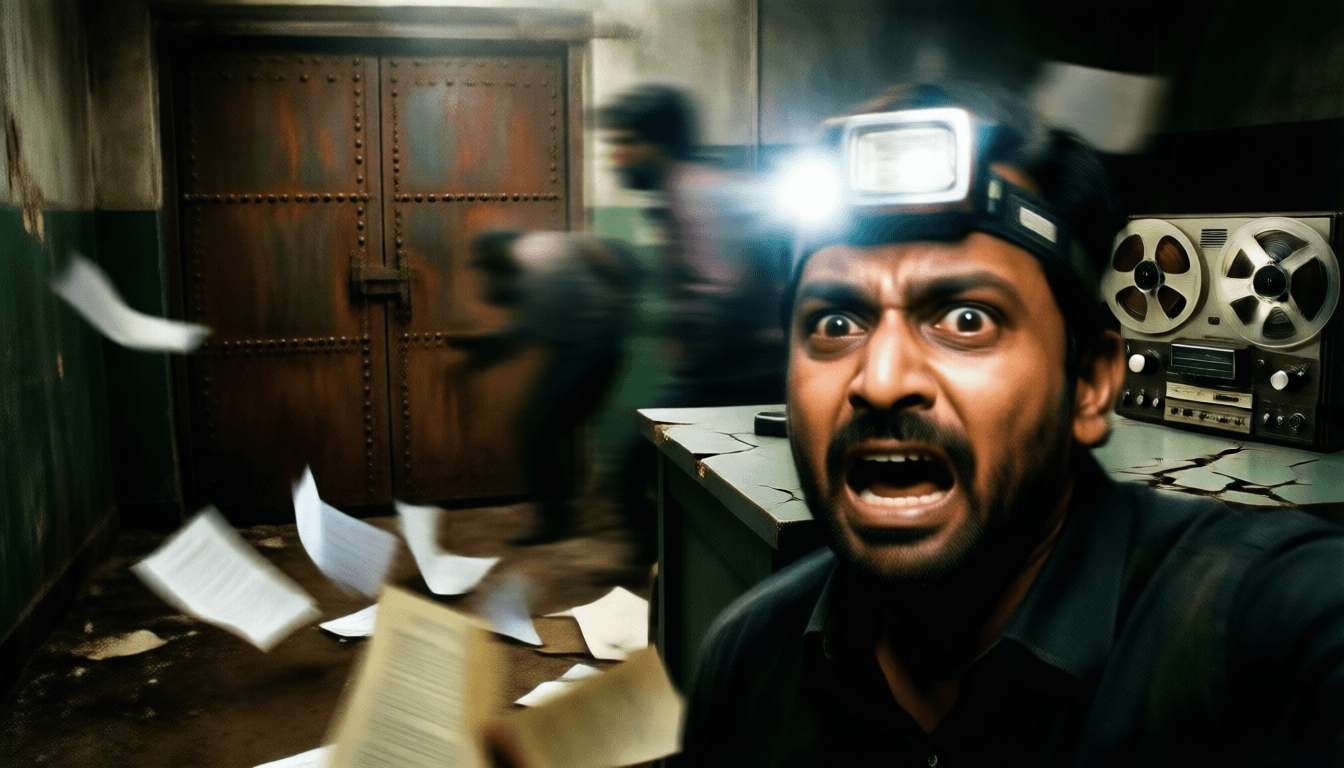
The heavy iron door, which he'd left slightly ajar, slammed shut with an immense boom. The sound seemed to vibrate directly through his bones. Rohan yanked at the handle, but the door was sealed tight. The air in the room became incredibly oppressive, pressing down on him, making it hard to breathe. The recording grew more intense, the whispers coalescing into a crescendo of specific phrases he'd encountered in his research: "the unseen hand," "untraceable influence," "buried truth"—direct references to the deeper conspiracy he was chasing.
His headlamp flickered erratically, bathing the room in violent flashes, synchronized with the frantic pounding of his heart. Then came the physical sensation—an invisible pressure pushing against him, trying to force him into a corner. Papers on the dusty floor swirled and rustled, lifted by impossible drafts that tugged at his clothes. Shadows, cast by no discernible light source, detached themselves from the walls, elongating, twisting like columns of smoke, advancing towards him. They were formless, yet felt maliciously purposeful.
It lunged.
Rohan felt an extreme, bone-chilling cold, immediately followed by a violent impact, as if something invisible had slammed hard into his ribs. His breath hitched. He fell, dropping his headlamp, plunging the room into near-total darkness, with only a frantic light flashing in his mind's eye. He scrambled blindly, feeling unseen presences brush past him. The air itself buzzed with malice. His hand found a loose inspection panel—a service duct—on the wall. He tore it open and forced his way into the narrow opening. The formless "shadows" seemed to coalesce again, pressing in on the gap, tugging at his legs, trying to drag him back into the swirling darkness.
He barely made it out. Beaten and disoriented, his mind a swirl of confusion and terror. He clutched the old reel-to-reel recorder, but in the harsh daylight, the tape was either blank or completely damaged, yielding only static. On his side, where he'd been hit, was a deep, icy bruise that wouldn't fade for weeks, eventually leaving behind a faint, geometric pattern.
He tried to share his findings online, but his posts were dismissed as delusional, his collected files corrupted, and the few photographs too dark, too grainy, too ambiguous to prove anything. He was isolated, his credibility shattered.
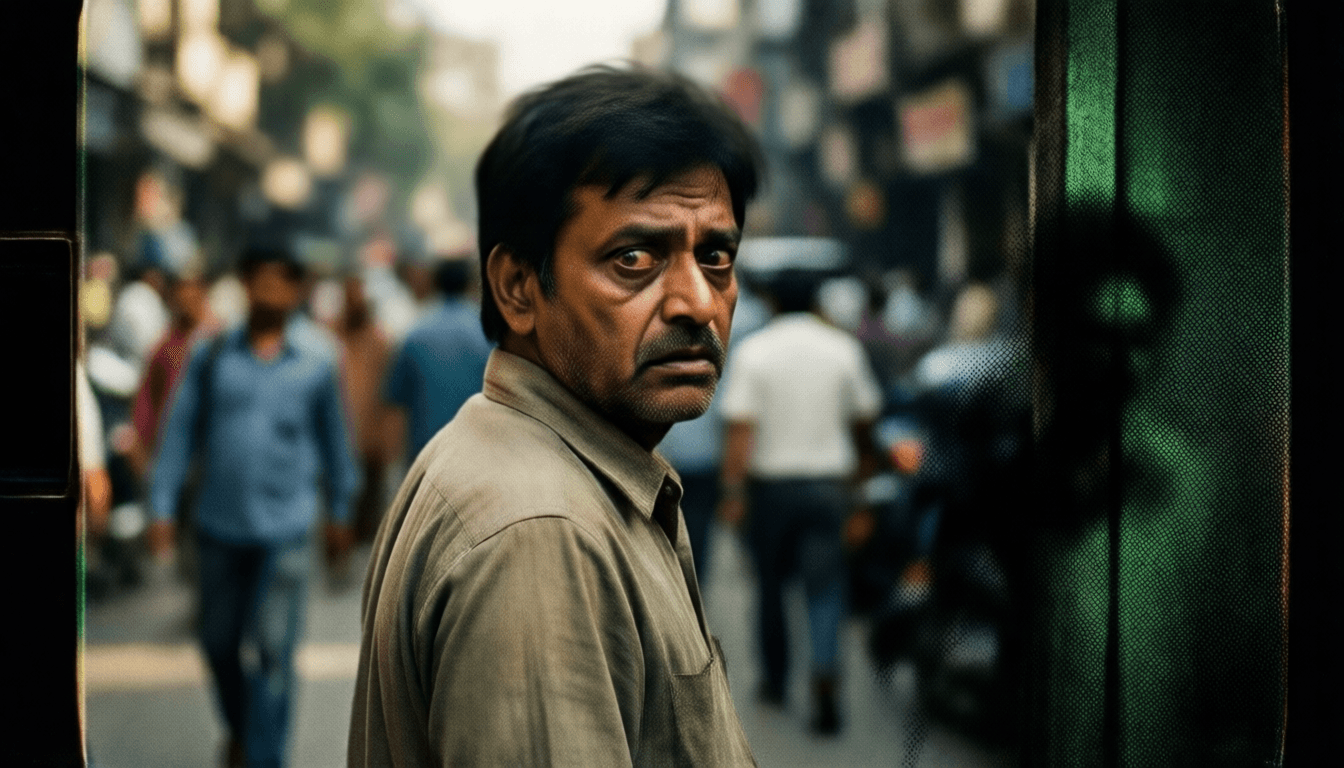
Now, Rohan sees it. The shadows. Flickering at the edge of his vision—a brief, unnatural darkening at a street corner, a stain on a wall that seems to writhe when he doesn't look directly. The whispers follow him. No longer confined to the echoes of an abandoned building, but woven into his daily life: the static on the radio, the rustle of leaves, the unintelligible murmurs of a crowd. They never form coherent sentences, never reveal the "truth" he sought, but they are always there, a constant, chilling reminder. He didn't find definitive proof of a conspiracy, but he found definitive proof that the conspiracy itself is alive, sentient, and remembers those who try to unearth it. And now, it watches him. He unearthed not a secret, but a hunter, and he has become its prey, targeted, unable to escape its insidious periphery.
[ CLASSIFIED VERDICT ]
[ACCESS LOG - SOURCE FILE]
An urban legend exists concerning a hidden truth related to the Indira Gandhi assassination. According to this rumor, crucial evidence was hidden in an old government annex building on the outskirts of Delhi but has since vanished. Furthermore, the chilling tale suggests that this building is not merely abandoned, but is itself a sentient entity that 'finds' and hunts those who seek the truth within its walls.