The Unrecovered Film of the Babushka Lady
Across the three films documenting the tragedy at Dealey Plaza in Dallas on November 22, 1963, a chilling common thread persists. While gunfire echoed and panicked crowds threw themselves to the pavement, a lone woman stood motionless on the Elm Street grass, camera pressed firmly to her face, filming continuously: the so-called 'Babushka Lady'. Immediately after the fatal bullet struck the President, she calmly turned and walked toward the railroad yards, melting into the crowd. For decades, the FBI officially maintained that neither her identity nor her footage had ever been found. Yet in 2021, a declassified internal FBI logistics ledger (Record Series 104-10179-10042) revealed a single inexplicable receipt entry: 'Stored in Annex 4, Dal-Tex Building Sub-Basement. 1 reel of 16mm film unofficially processed by Kodak Dallas Lab.'
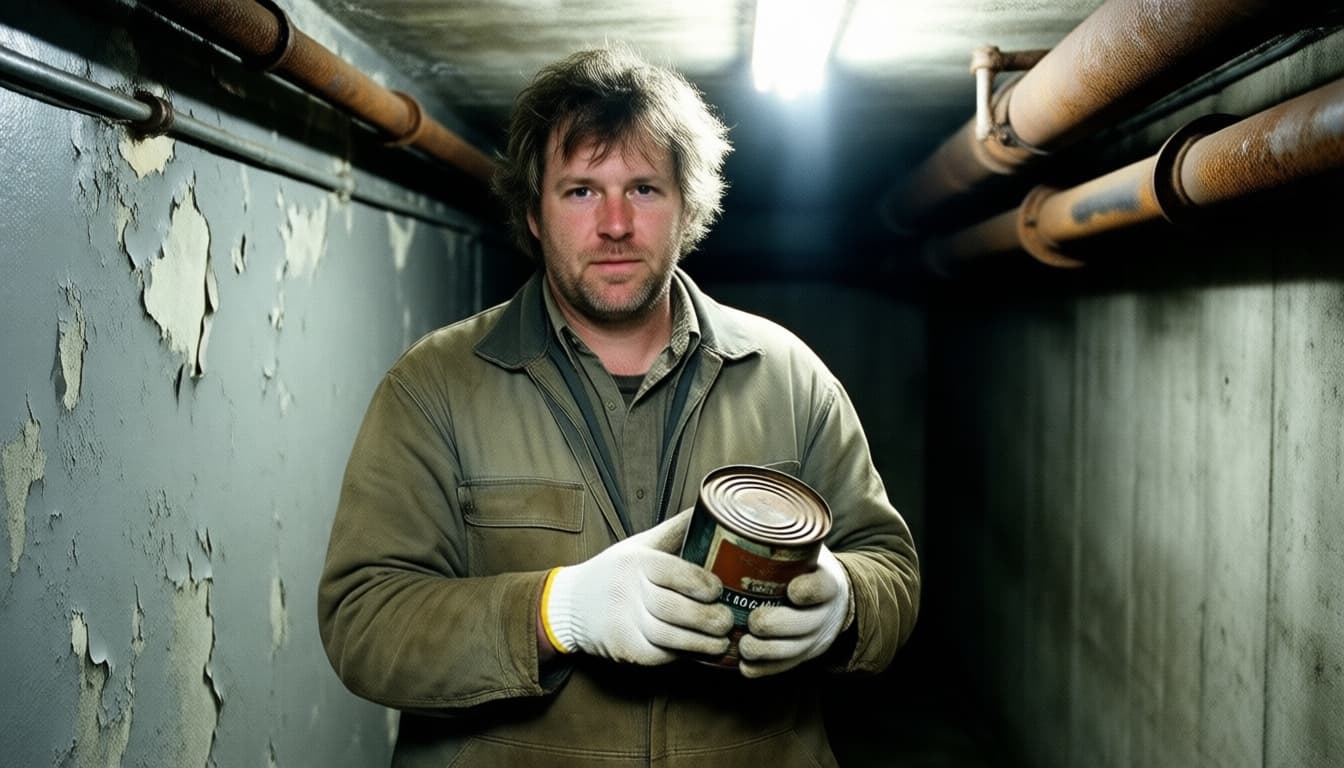
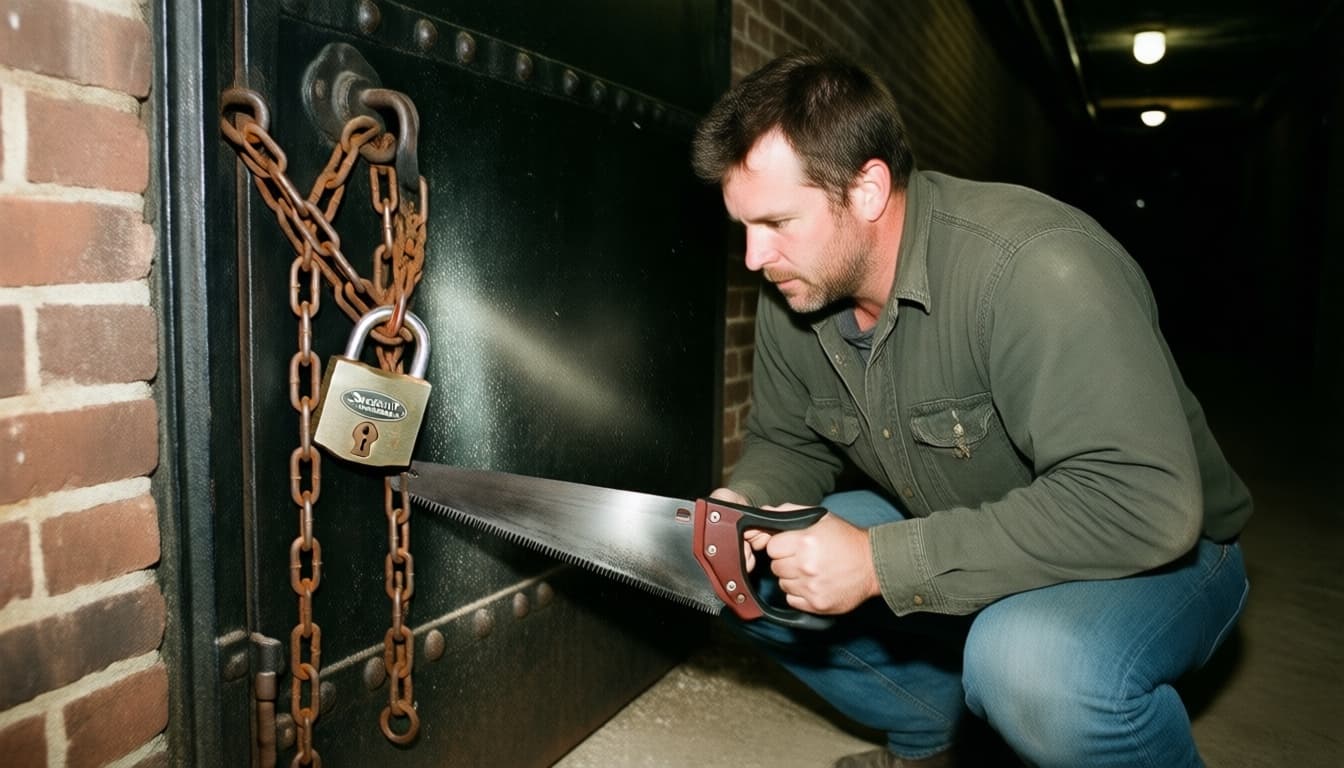
Julian Finch, a nitrate film preservation specialist, was hired to survey underground archives beneath the Dal-Tex Building across from Dealey Plaza prior to seismic retrofitting. Built in 1903, the industrial warehouse's third basement level had been completely excised from modern architectural blueprints. Breathing in the suffocating stench of oxidized iron and damp lime powder in the pitch-black darkness, Finch discovered a cast-iron door sealed with a 1960s tamper-proof Sargent & Greenleaf padlock. After sawing through the corroded chains with a diamond-edge hacksaw, he stepped into Annex 4—an eerily dry vault maintained by an antique, humming dehumidifier still drawing power. On a metal shelf in the center of the room sat an unpainted lead canister bearing a penciled label: 'Target: Spectator 04. Lens: Optic-Credence 35mm f/1.8. Status: Unrecovered.'
Finch set up his portable inspection kit and, wearing cotton gloves, mounted the 16mm black-and-white reel onto a manual viewer. What struck him first was the acoustic anomaly of the room. Despite sitting directly beneath the intersection of Elm and Houston Streets, not a vibration of the heavy street traffic penetrated the floor. When a pair of steel tweezers slipped from his hand and struck the floor, there was no sharp metallic ring; the floor bricks seemed to swallow the sound entirely, yielding only a dull, muffled thud. The harsh cadence of his own breath was the only noise echoing through the tomb-like air.
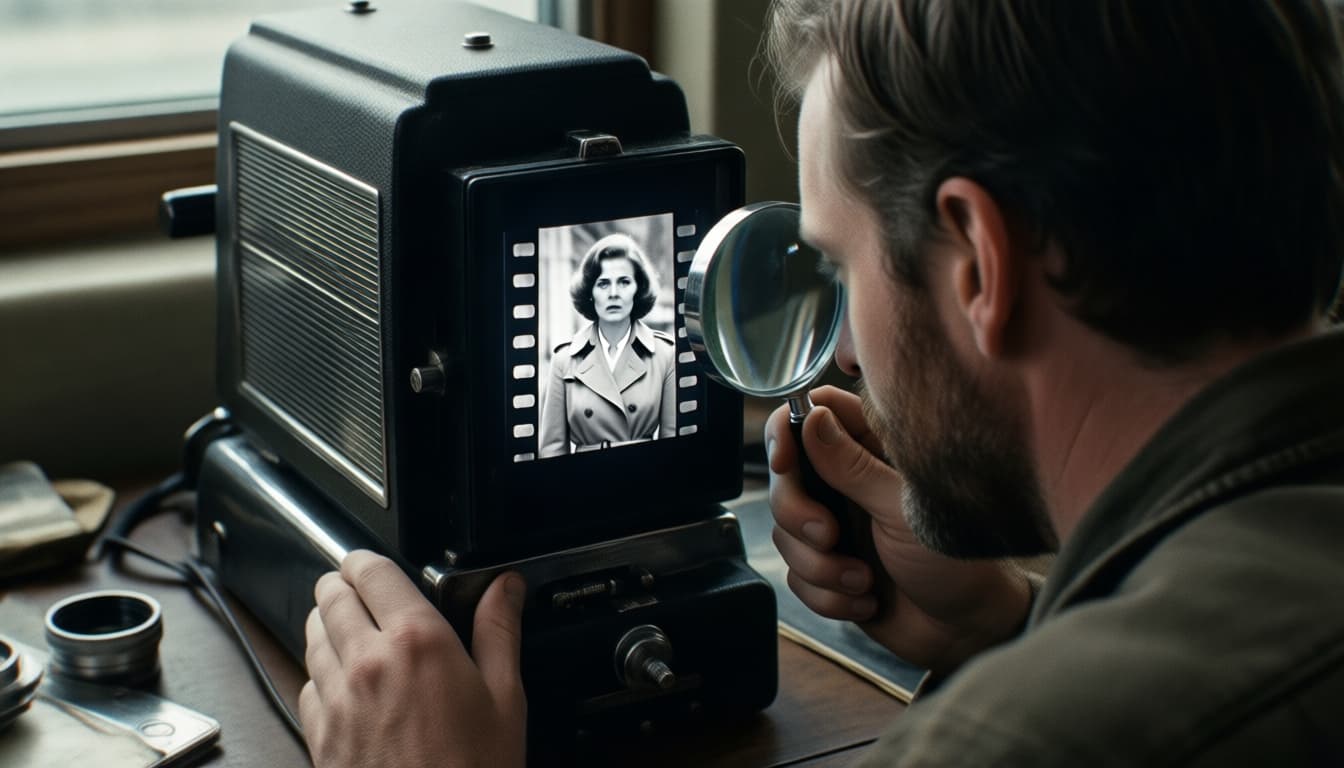
Pressing his loupe to the lens and slowly turning the hand-crank, an icy chill crept down his spine. Floating in the viewer's pale white beam was an impossibly close, high-clarity angle of the presidential limousine. Yet something was profoundly wrong. The natural tremors and shakes inherent to any handheld amateur film from 1963 were entirely absent. Every frame remained dead-level with the horizon, locked with the rigid precision of a hydraulic mount.
Even more horrifying was the reflection caught in the chrome bumper of the limousine. Finch adjusted the focus with trembling, numb fingertips. The woman in the brown trench coat visible in the reflection was not holding a camera. Her arms hung limply at her sides, motionless like a deactivated machine. The lens was not held to her face; it was embedded directly into the chest of her coat, fitted seamlessly between the buttonholes behind a metal ring. And the lens was not tracking the limousine. It glanced past the occupants of the car, steadily and rhythmically panning across specific individuals standing within the crowd on the opposite curb.
A heavy grinding sound resonated behind him. In the draft-free vault, the cast-iron fire door swung smoothly shut on oiled hinges. Clang. A massive deadbolt locked into place with a dry click. Instantly, the lithium battery pack on Finch's work light began to overheat, giving off the acrid stench of scorched plastic. A faint, sweet chemical odor permeated the air. An obsolete Halon 1301 fire suppression system—originally installed for nitrate film vaults—was silently discharging without an alarm. With no smoke to impair vision, the colorless gas displaced the oxygen in seconds, constricting Finch’s lungs while his pulse hammered violently against his temples.
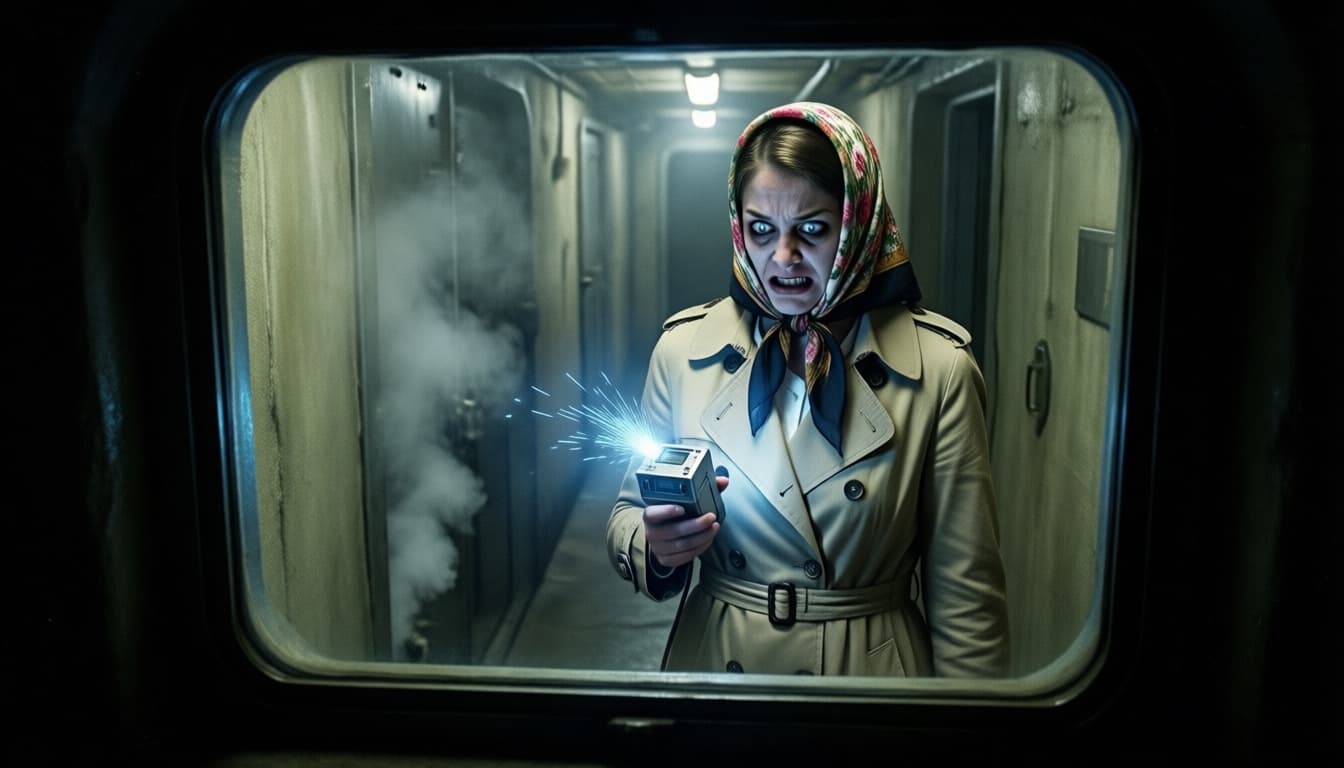
Whirling toward the small wire-reinforced glass window in the fire door, Finch froze. Something was standing in the pitch-black corridor outside. It was not his own reflection. It was the silhouette of a woman, dressed impeccably in an aged poplin coat, a floral headscarf tied tightly beneath her chin. Though she possessed the frame of an elderly matron, her posture against the door was unnervingly rigid, devoid of any human sway or stiffness of age.
She uttered no words, nor did she reach for the handle. Slowly, she drew a matte military-grade optical transmitter from her pocket and aimed it through the reinforced window. There was no sound, but the moment the device emitted a cold blue pulse, the 16mm film strip on Finch's desk began to hiss and bubble, sending up foul white smoke. An invisible wave of thermal radiation passing through the glass was melting the silver halide emulsion right off the film base in real time.
Suffocating and fighting a blinding headache, Finch seized the heavy lead canister and smashed it against the reinforced glass. The glass did not break, but the violent impact jarred open the rusted latch of an old coal chute recessed into the corner wall—a derelict shaft venting straight into the city storm drainage system. As Finch threw himself toward the narrow opening, a leather-gloved hand shot out from the shadowy conduit pipe.
It seized his collarbone with crushing, mechanical force. Bone groaned under immense pressure, and just as his consciousness began to fail, Finch drove his spare steel tweezers deep into the assailant's wrist joint. The sensation beneath the torn glove was not blood, muscle, or tendon; it was the unyielding resistance of tightly coiled synthetic fibers and woven steel cable. No gasp, no reflex of pain followed. Twisting violently, Finch tore his coat free and tumbled three meters downward onto the wet gravel bed of the Elm Street underground runoff culvert. Above him, the iron hatch of the coal chute slammed shut with a definitive thud.
At 3:15 a.m., Finch pushed open a stormwater grating near the Triple Underpass and crawled onto the asphalt. Coughing up caustic Halon residue, he lost consciousness before a sanitation crew found him and called an ambulance. By daylight, city authorities investigating the scene flatly denied that 'Annex 4' had ever existed in the Dal-Tex basement. Official records produced by the municipal archive showed the entire lower sub-level had been backfilled with solid concrete slurry during a 1988 infrastructure overhaul.
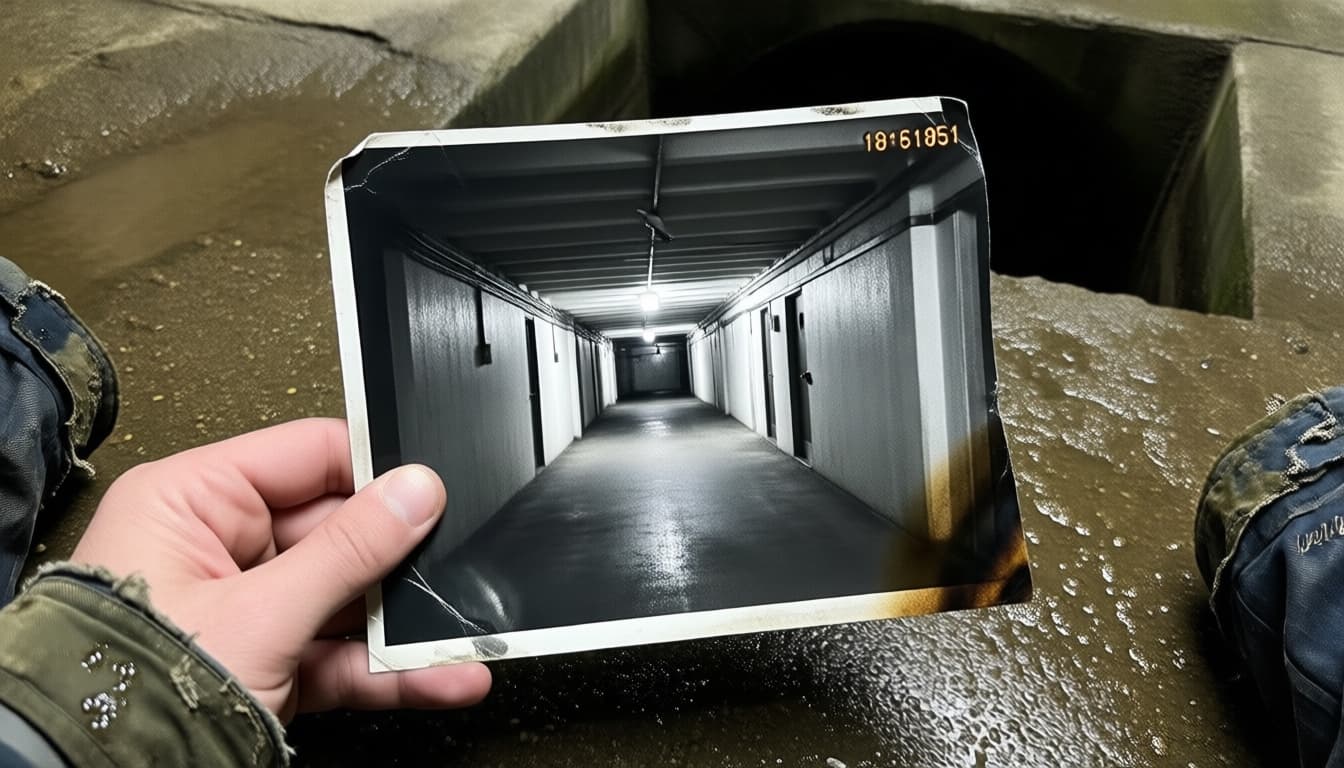
His inspection gear and the original reel inside the lead canister were entirely gone. Yet tucked inside the waterproof inner pocket of Finch's work overalls, pressed between the pages of his field notebook, seven frames of film had survived. Developed in a private darkroom under an enlarger, the sixty-year-old Kodachrome silver grains revealed no footage of Dealey Plaza in 1963.
The high-resolution prints showed the damp underground corridor directly outside the fire door, looking straight down into Annex 4 from a high wall-lamp angle. The camera's burned-in timestamp matched exactly four minutes before Finch had cut the padlock on the door. The watcher who documented the plaza had never left.
[ CLASSIFIED VERDICT ]
[ACCESS LOG - SOURCE FILE]
Based on the real-world mystery of the 'Babushka Lady,' an unidentified woman who calmly stood her ground and filmed the entire 1963 assassination of President John F. Kennedy while panicked crowds fled. Neither her identity nor her footage has ever been officially recovered, sparking decades of conspiracies regarding Cold War surveillance operations and cover-ups.