Spandau's Shadow: The Strangling Silence
On August 17, 1987, the official record surrounding Rudolf Hess's death at Spandau Prison remained a mystery for a long time. The official cause of death was declared a suicide by a power cord in a small garden shed within the prison. However, the medics, former guards, and family who had cared for him for many years argued that suicide was impossible given his advanced age of 93, severe arthritis, and general debilitation. What was even more suspicious was the unprecedented rapid demolition of Spandau Prison within weeks of Hess's death. This act effectively erased a historical landmark, preempting any potential crime scene investigation or forensic examination. Coupled with the refusal to release documents related to Hess, the following question persists: What was so urgently hidden within the walls of Spandau Prison, especially inside that small garden shed?
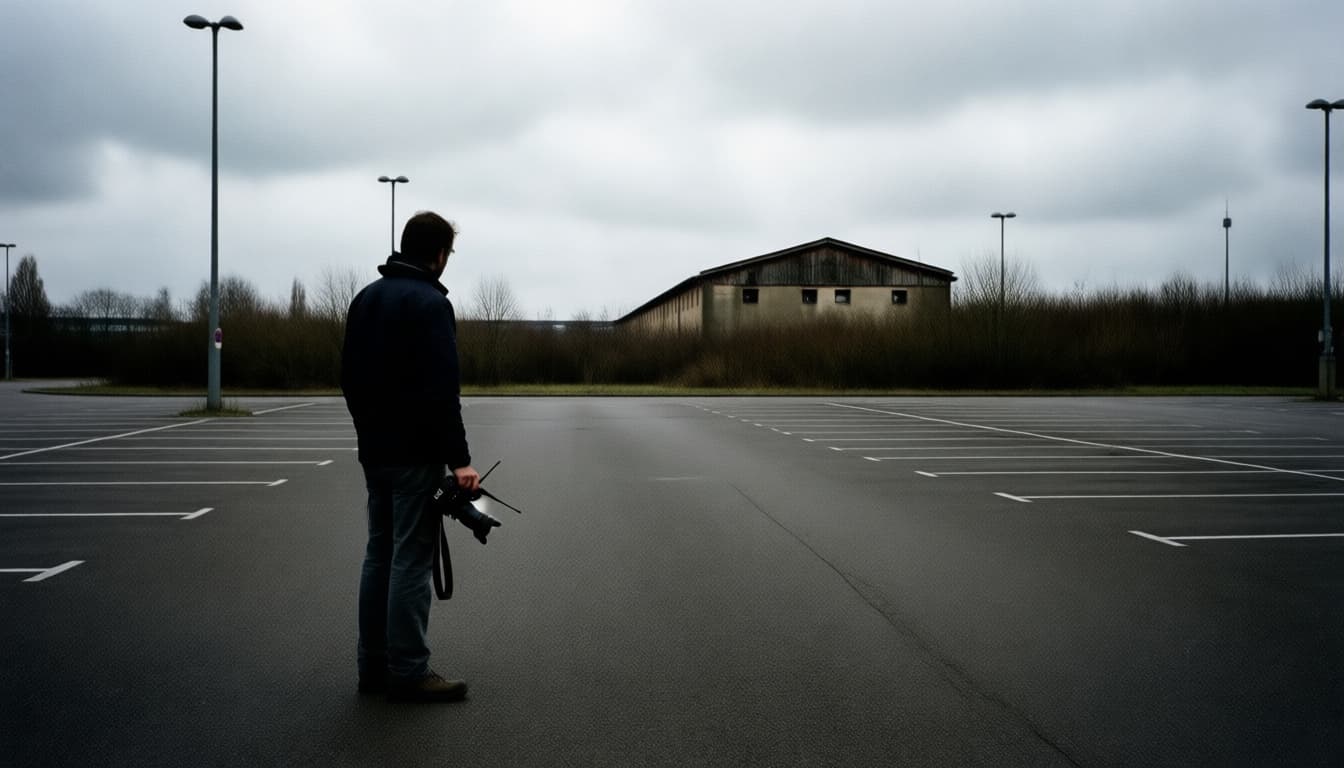
My investigation began shortly after the prison's demolition, at the site now occupied by an ordinary large shopping mall in Berlin. The objective was not to find physical remnants but to observe the psychological residue, the 'void,' left by the deliberate erasure of history. I acquired the original prison blueprints and meticulously overlaid them onto current satellite images. The approximate location of the infamous garden shed now lay within the vast asphalt parking lot of the shopping mall, specifically in a desolate section, next to drought-resistant shrubbery.
Initial visits were unremarkable, filled with the usual hum of consumerism. However, one late afternoon, as the last shoppers dispersed and the ambient air grew colder, I was drawn to the shed's estimated coordinates. At this specific spot, the surrounding city noise seemed abnormally distant. My field recorder, calibrated for environmental sound capture, registered only a low, persistent hiss. The asphalt here felt permanently cool, unlike the surrounding pavement, even under a weak autumn sun.
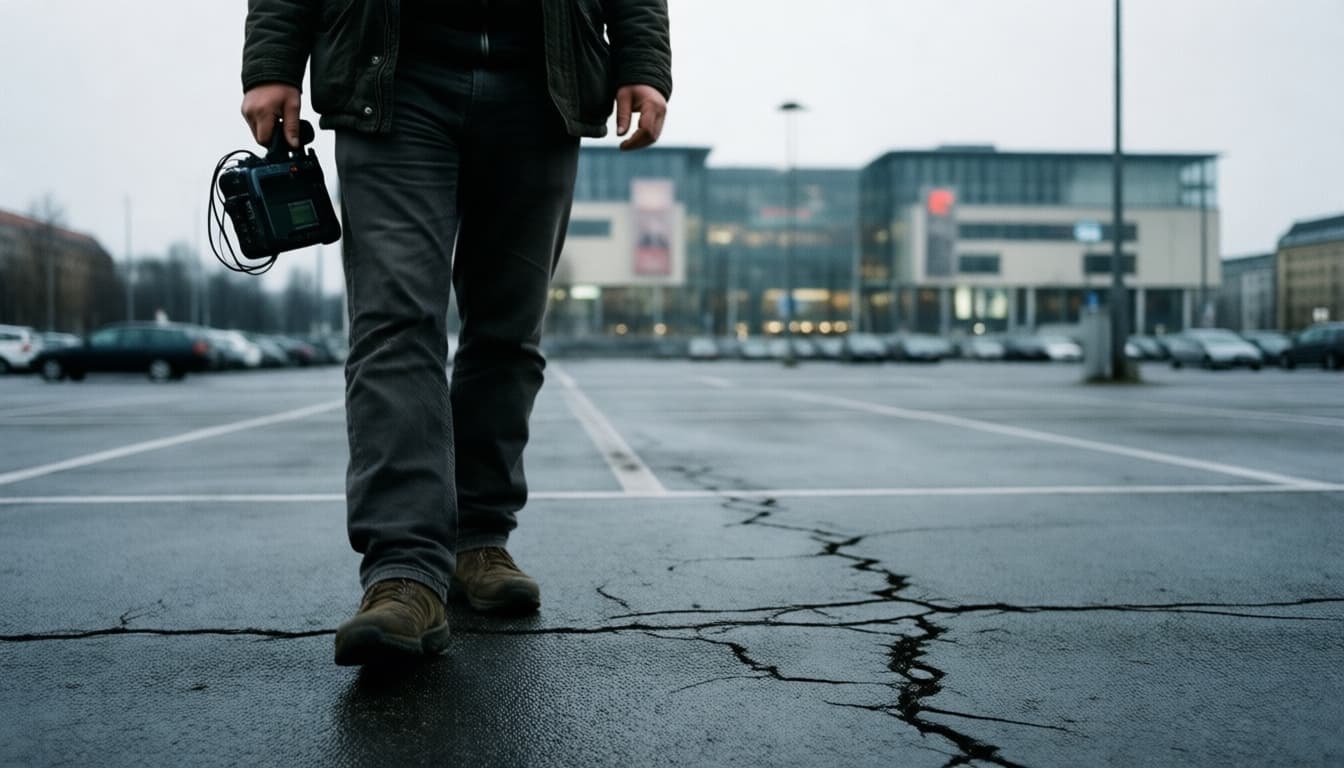
Subtlety became the hallmark of the developing anomaly. During subsequent visits, especially at liminal times like dawn or dusk, the localized silence at the old shed's location became more pronounced. It wasn't merely the absence of sound; it was an active absorption. Distant car horns or seagull cries, clearly audible meters away, vanished completely the moment I stood precisely on the shed's footprint. My digital recorder frequently malfunctioned or captured distorted, almost inaudible whispers accompanied by peculiar percussive thumps that could not be attributed to external sources.
I also began to experience localized temperature drops. Sometimes, it was severe enough to see my breath in the cold air, concentrated within a two-meter radius around the specific target coordinates. My gloved fingertips felt numb, as if submerged in icy water. The psychological intensity escalated with a constant sense of pressure. It was a dull, persistent weight, pressing down on my chest like stagnant, heavy air, even on windy days. While purely physiological, I noticed that swallowing became increasingly difficult when I was within this anomalous zone. The silence, initially intriguing, now felt oppressive, as if the air itself was too dense to transmit sound, or perhaps, unwilling to let any sound escape.
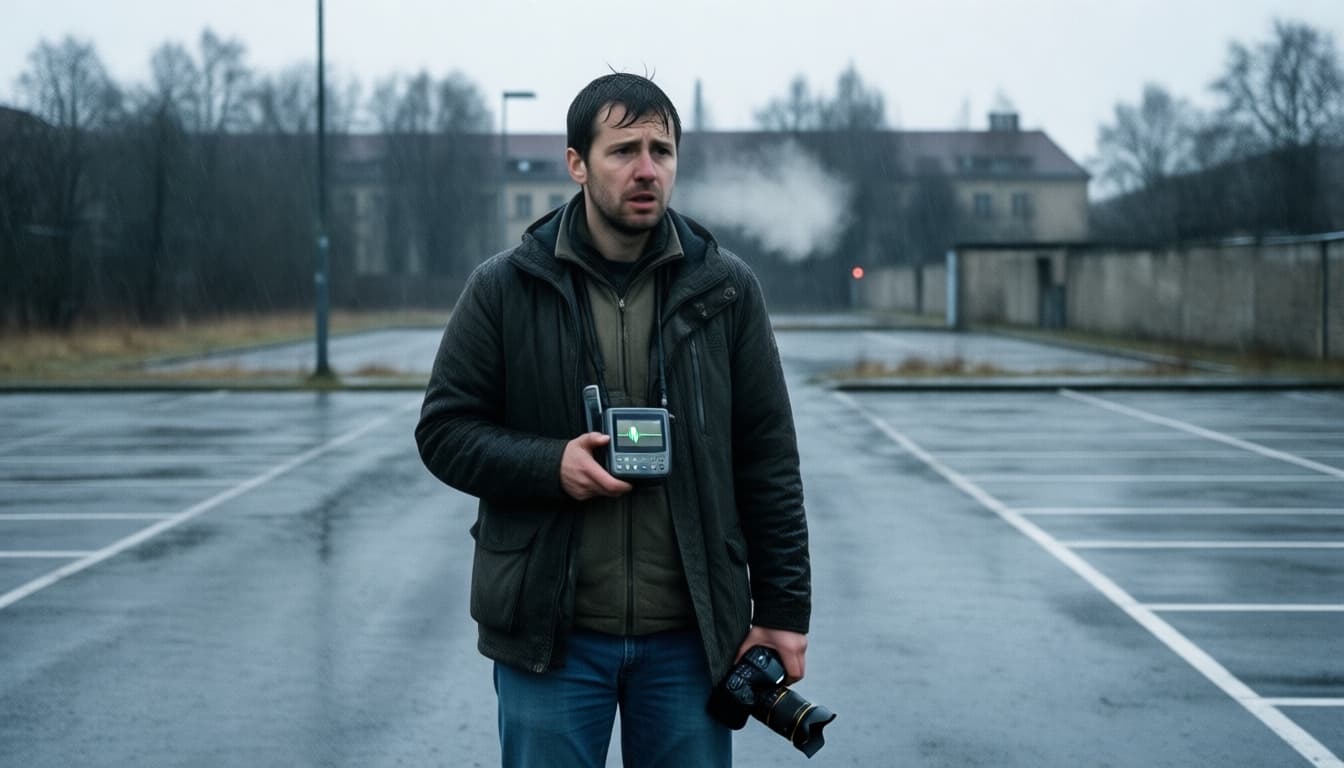
Driven by an ominous premonition, I chose a late night. The parking lot was desolate. Rain slicked the asphalt, and a thin fog rolled in, blurring distant streetlights. I stood over the exact coordinates of the shed, my recorder running, the ambient air already thick with its familiar, unnatural stillness. The cold was profound, piercing through multiple layers of clothing.
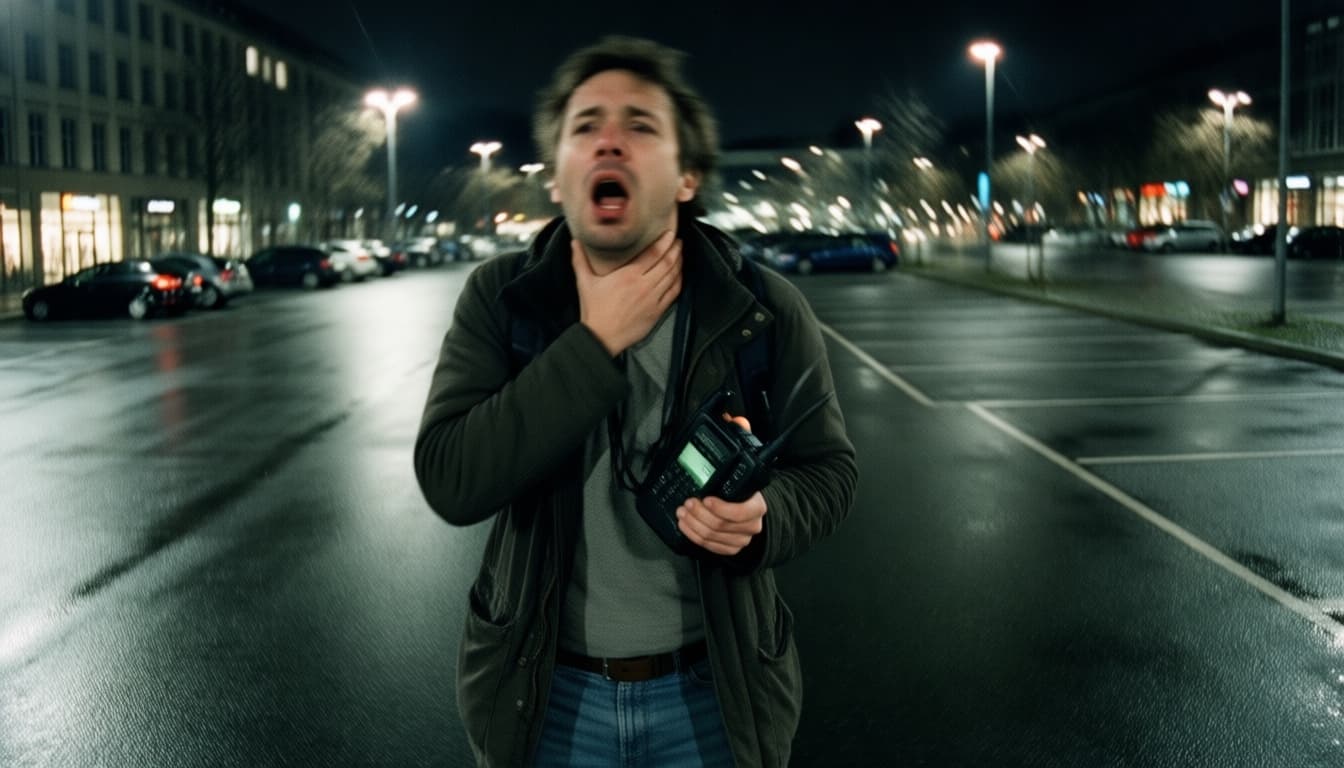
The transition was abrupt. The low hiss on my recorder flatlined. The already dim ambient light seemed to darken further, as if an invisible curtain had descended. Then, an internal pressure began to build, originating from my throat. It wasn't a choking sensation from outside; it was from within. Muscles constricted, an involuntary tightening as if my own body was working against itself. My hands flew to my neck, tearing at my collar. My vision blurred, and nausea welled up. I gasped, but no air seemed to enter my lungs. There was effort, but no result.
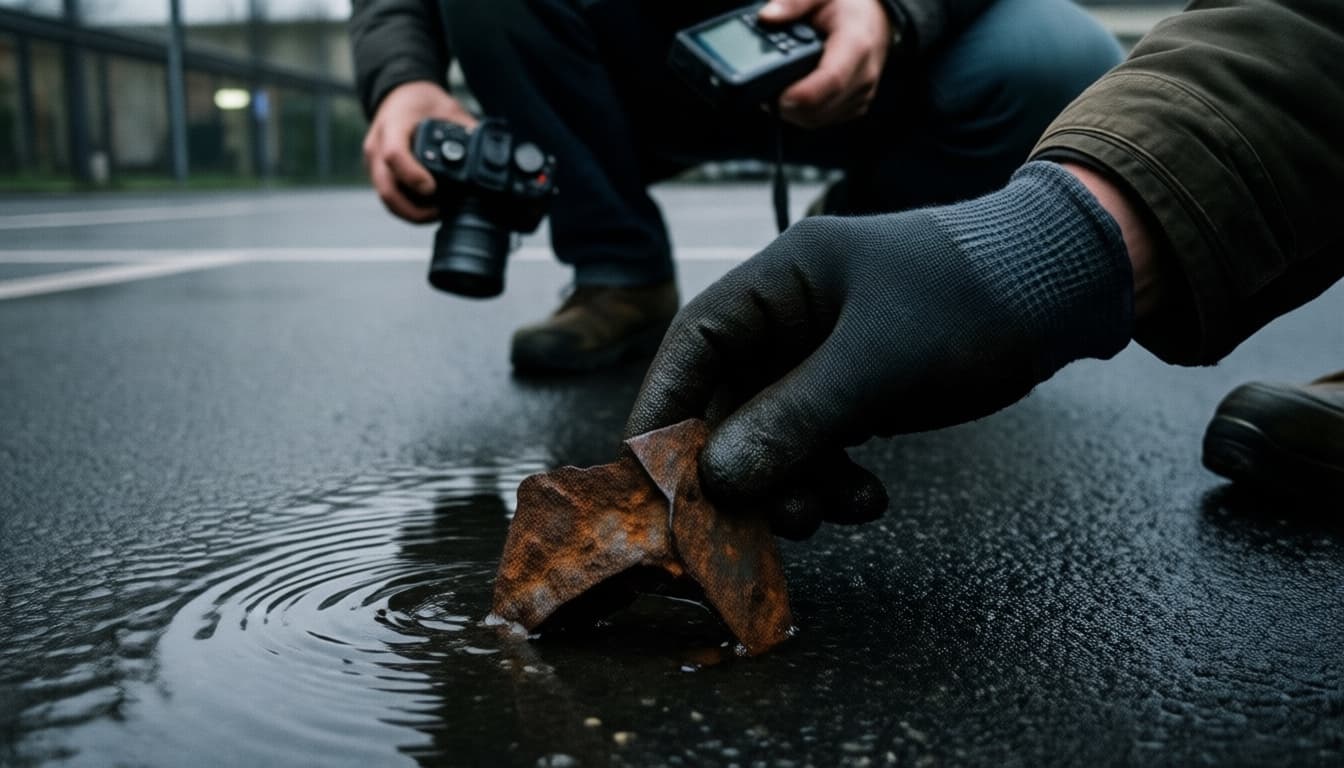
A cold, sharp terror pierced my professional detachment. This was no hallucination. The pressure intensified. It was a precise, insistent grip tightening around my windpipe, yet there was nothing to see, nothing to grasp. My feet slipped on the wet asphalt, and I stumbled backward. A desperate, animalistic sound tried to escape my lips but was cut short. As I fell, the sensation became overwhelmingly clear: it was a distinct, cruel compression, as if a colossal, invisible hand was squeezing the life out of me. My body convulsed, struggling for air, my vision turning grey. My fingers, scraping on the cold, damp ground, clutched a small, sharp object. The absence of air was absolute. Just as consciousness threatened to slip away, the pressure vanished as suddenly as it had appeared. I lay there, gasping, soaked by the rain, my throat raw from the involuntary struggle, tears streaming from my eyes.
I slowly pushed myself up. My throat burned, and a distinct red mark was visible where the grip had been most severe. The absolute silence was gone, replaced by the mundane hum of the city and the gentle patter of rain. Yet, my recorder stubbornly remained flatlined, registering only static from the moment the attack began.
Clutched in my fist was a small, rusted metal fragment. It was a piece of an old industrial object, with faint, almost imperceptible etchings that suggested a serial number or part designation. It was certainly not from the shopping mall era. Its origin was obscure, but its presence after the incident was undeniably clear.
Returning to my archives, a meticulous review of photographs taken that night at the shed site
revealed a subtle, localized distortion in the rain-slicked asphalt at the exact moment I was incapacitated. It was a ripple, an almost imperceptible shimmer that could not be explained by typical lens flare or atmospheric phenomena. My final report on the Spandau incident remains unfinished. The official conclusion of suicide
still stands. My own observations are anecdotal and unquantifiable, save for the vivid, phantom sensation of an invisible cord tightening around my throat and the small, corroded metal fragment carefully filed in a sealed evidence bag. Some truths, it seems, are not merely buried or paved over. They remain active, vigilant, guarding their own silence.
[ CLASSIFIED VERDICT ]
[ACCESS LOG - SOURCE FILE]
This story is based on the urban legend surrounding the suspicious death of Rudolf Hess at Spandau Prison in 1987. Officially ruled a suicide, those who cared for him and his family claimed it was impossible. The prison's swift demolition immediately after Hess's death fueled suspicions of evidence destruction. The narrative delves into this hidden truth and the mystery surrounding the site.