The Ghost Frequency
The official narrative surrounding the 1968 capture of the USS Pueblo has always been consistent: a lightly armed American intelligence vessel ambushed by North Korean forces, its advanced signal intelligence capabilities seized. This account focuses on defensive failures, poor communication, and political embarrassment. Yet, in the thick archives of Cold War intelligence documents and the fringes of amateur radio communities, a persistent, low-frequency whisper has circulated for decades. It's not about what the Pueblo carried, but what it inadvertently discovered. In certain online forums dedicated to Cold War mysteries, unsubstantiated claims occasionally surface about an anomalous, almost 'harmonic' signal detected days before the capture, not from external sources, but from the ship's own sophisticated listening apparatus. This was speculated to be a 'feedback loop' in experimental advanced listening equipment, or something far more uncanny.
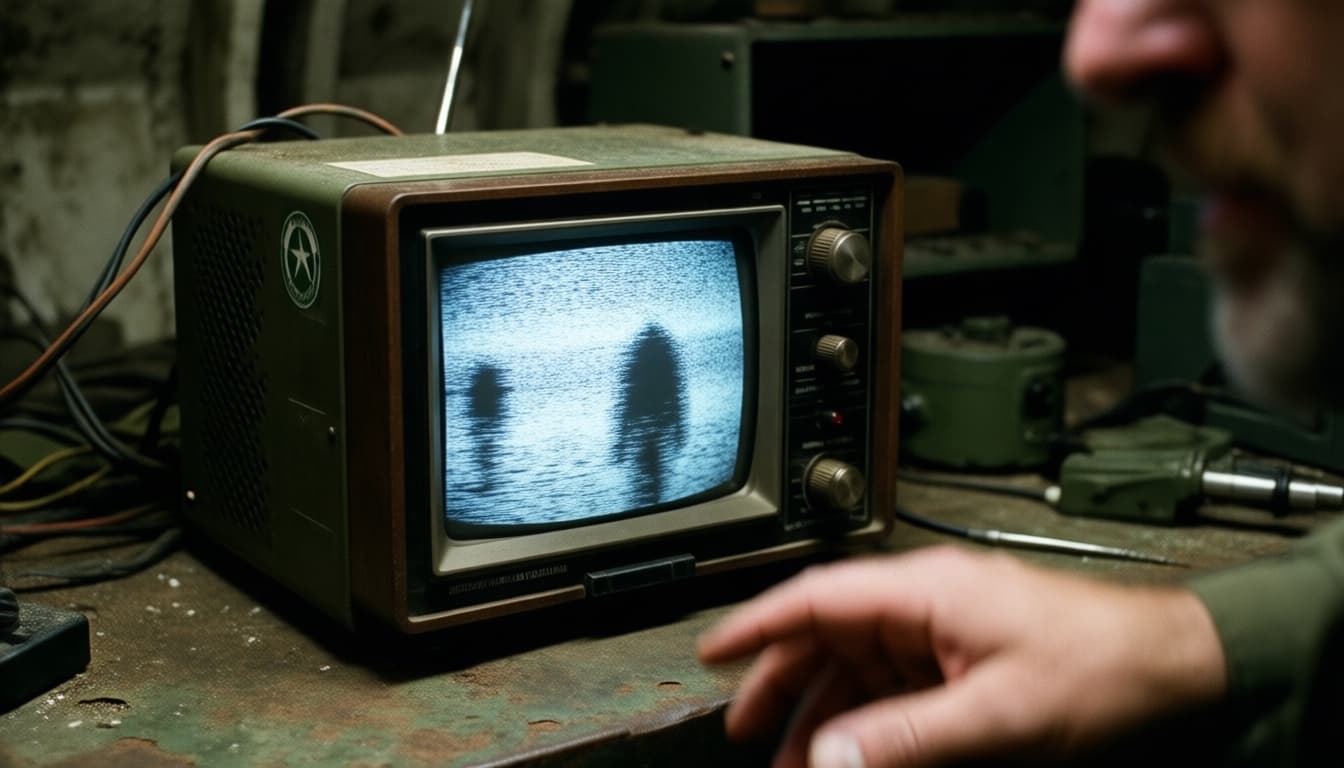
The most compelling 'evidence' I encountered was a blurry photograph posted in a defunct blog entry from 2007. It depicted a seemingly abandoned, custom-built radio receiver, purportedly found in a naval scrap yard near San Diego. The receiver reportedly bore manufacturer code prefixes directly linked to classified Pueblo communication equipment. The poster, claiming to be a retired Navy communications officer, detailed how this receiver was inexplicably locked onto a specific ultra-low frequency, occasionally emitting 'ghost signals.' It was a sustained, almost 'musical' hum, impossible to localize, and accompanied by an inexplicable cold spot in the room. He speculated it was 'a recording of something not meant for human ears,' or 'the sonic signature of pure dread.' The post concluded with a chilling handwritten addendum: "They said they destroyed it. But some signals… never die." The photo itself was unsettling, not for its clarity, but for the strange, almost 'alive' texture of the static in a still frame captured on the receiver's small monochrome screen, static that seemed to hold the form of something, some presence, on the verge of decoding.
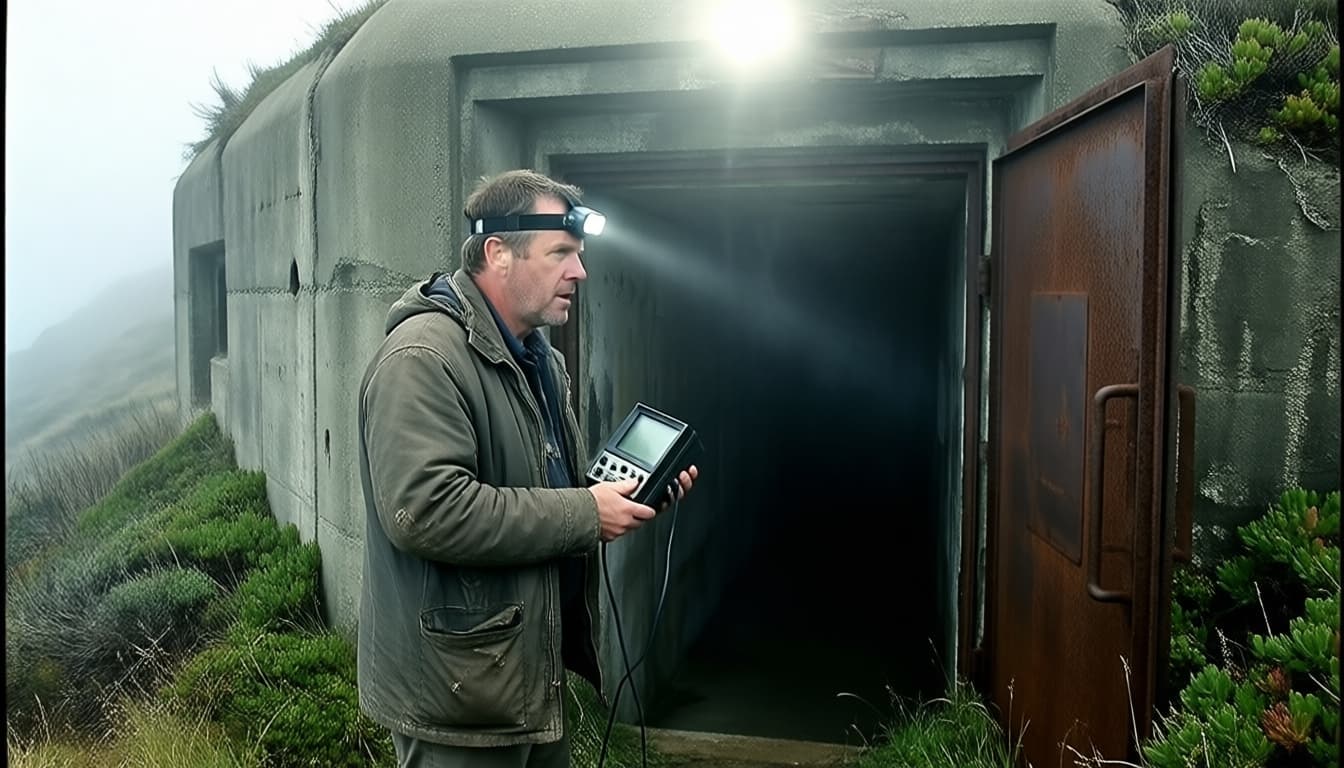
Drawn by this digital phantom and the inconsistencies in the official Pueblo narrative, I, Dr. Elias Thorne, a research archivist specializing in Cold War intelligence anomalies, secured permission to investigate a decommissioned Alpha Section of the Point Reyes Naval Communication Base in California. Official records indicated that parts of the Pueblo's pre-deployment system testing, specifically of its experimental SIGINT package, occurred here. The foggy, isolated peninsula offered a skeletal landscape of rusted antennas and concrete bunkers, slowly being consumed by harsh coastal vegetation. My contact at the Naval History and Heritage Command, accustomed to my peculiar historical interests, granted me access under the guise of a 'structural integrity assessment for historical preservation.'
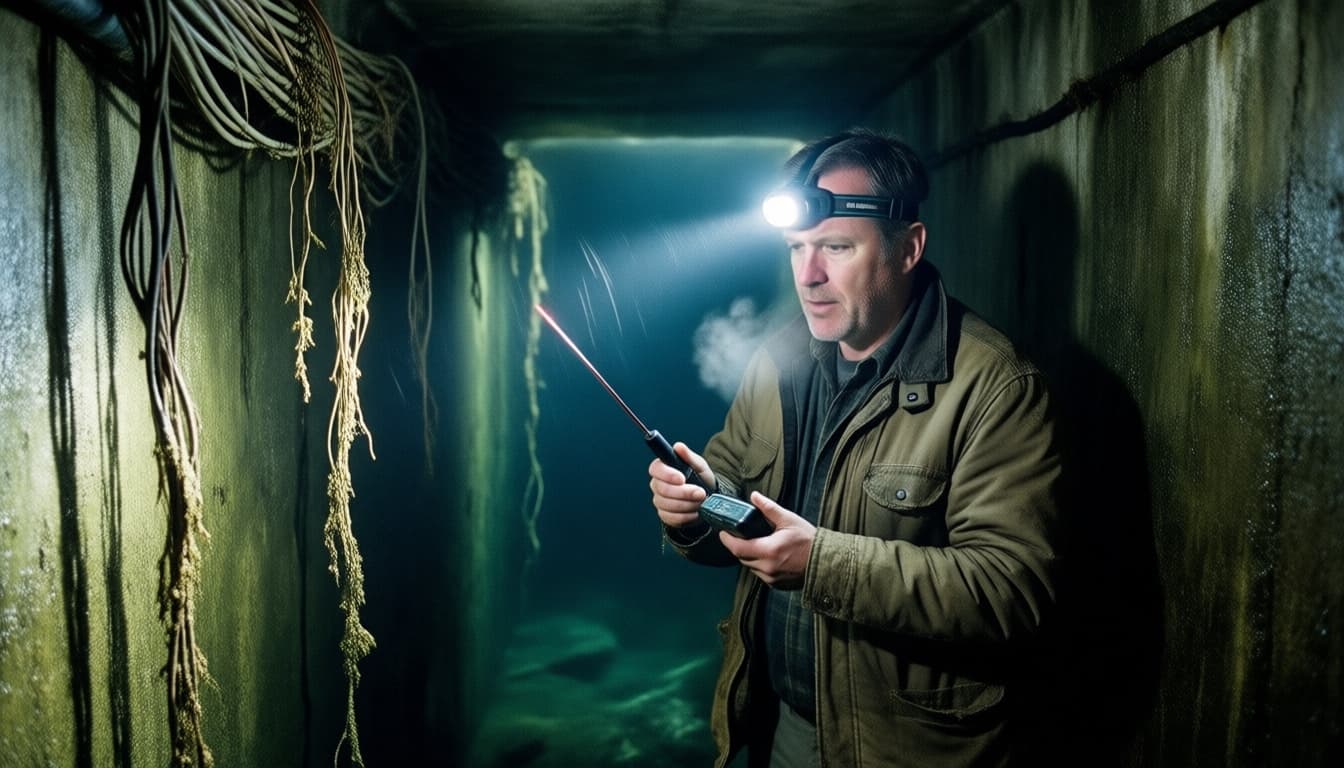
Inside the main structure, the air was heavy with the scent of mold, salt, and decaying electronics. The Alpha Section itself was a subterranean bunker, requiring considerable force to open its heavy, rusted vault door. Stepping inside, the concrete walls were stained with moisture and mineral deposits, cable bundles hung like rotting vines. An immediate, profound silence enveloped me, broken only by the distant, mournful wail of a foghorn lost in the Pacific mist, and the drip of groundwater from deeper within. I powered up a portable generator, coaxing a faint, weak hum from old server racks, but screens remained stubbornly blank. I discovered specific, heavily shielded alcoves, seemingly designed for equipment far more sensitive than standard communications gear. One alcove, deep within the bunker, was noticeably colder than the surrounding humid air – a pocket of utter alien chill.
As I ventured deeper into the bunker, the silence transformed, becoming an oppressive, almost physical presence. Even my footsteps, which should have echoed off the bare concrete, felt strangely muffled, absorbed into the oppressive void. Then, a faint, almost subliminal sound began. A low, sustained hum, impossible to locate, felt more as a vibration within my chest than heard by my ears. It was the wrong frequency, reminiscent of the 'ghost signal' described in the blog post.
Dust motes in the light of a single, barely functional bulb momentarily formed geometric patterns before vanishing. The air in the colder alcove I had identified earlier became even more frigid, my breath misting faintly despite the bunker's ambient temperature of around 13 degrees Celsius. I attempted to power up a nearby residual console. It flickered to life, displaying only static noise. But within the grey swirl, momentary, almost subliminal images appeared—faint faces, undecipherable symbols—before dissolving before I could focus. My signal detector, designed to measure conventional electromagnetic fields, began picking up erratic, high-frequency bursts at levels inconsistent with old equipment, directly correlated with the inexplicable hum. The needle of my EMF meter didn't move randomly, but violently, in a regular, almost deliberate pulse. Then, very faintly, like whispers heard through thick glass, there was the sound of distant, jumbled voices. They weren’t human voices, not precisely. They were distorted, elongated, unnatural. A harrowing chorus of static at the very edge of hearing.
Deep within the Alpha Section, I found a hidden, heavily shielded room, disguised as a utility closet. Upon entering, a single, incredibly intact console hummed with a faint internal blue light, despite being completely disconnected from the main power supply. This was no dim glow of old capacitors; it was a concentrated, deep, vibrant blue, emanating an inexplicable energy.
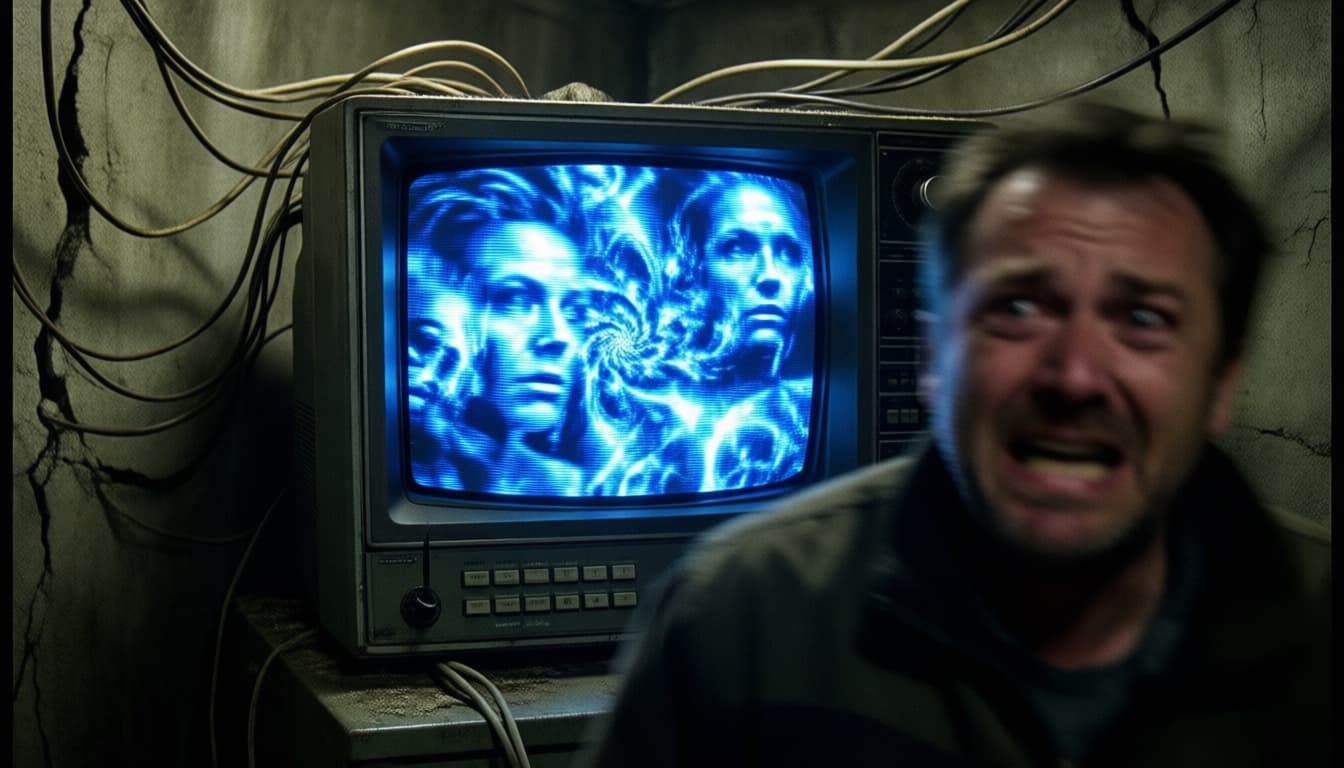
As I cautiously approached, the hum intensified, becoming a tactile pressure in the air. The unconnected console activated, its display screen flickering not with static, but with incredibly complex, rapidly shifting abstract patterns. The fractal patterns twisted, resolving into recognizable, yet horrifying, forms: distorted human faces, impossible geometric structures pulsating with a sickening rhythm from within. The hum coalesced into a single, agonizing frequency. The very air warped, visibly vibrating around me. The sonic emissions from the console were no longer merely auditory; they became physical. The concrete walls began to groan, fine dust rained down from the ceiling. Loose cables whipped violently as if struck by an unseen force. I felt immense pressure in my chest, my eardrums felt ready to burst. My measuring equipment, resting on a nearby workbench, began to melt, components fusing and smoking, emitting a sour stench. I was pinned against a corroded server rack by the sheer force of the sound, my bones aching with the vibrations. On the console screen, a single, horrifying image now resolved: a distorted, gaunt face with impossibly large, black eyes, superimposed over the blueprints of the USS Pueblo. The face was clearly in agony, its mouth agape in a silent scream. Then, a high-pitched metallic shriek cut through the pressure, and I convulsed and fell, a blinding pain in my head as my nervous system was assaulted. The heavy steel door to the long-rusted and sealed room began to bow inwards from an unseen external force, groaning as if something was desperately trying to escape the internal pressure, or push its way in.
I tried to crawl away, but the vibrating floor undulated beneath me, turning my stomach. My hand brushed against a corroded metal conduit. I felt a burning tingle, not from electricity, but from pure, concentrated cold, burning deeper than any current, momentarily paralyzing my arm. The face on the screen twitched, and the shriek intensified, pushing me towards unconsciousness, the air around me thin and metallic. Desperately, I fumbled for a heavy metal bar, one of the supports from a rusted ventilation shaft. Fighting against the immense pressure and the burning cold in my arm, I mustered a final surge of strength, wedged it into the console housing, and twisted. With a final, earth-shattering 'CRACK,' a blinding blue flash erupted, followed by absolute darkness, and I was plunged into perfect silence. The pressure abruptly vanished.
Hours later, I was found by my contact, unconscious but alive, suffering severe internal bruising, temporary hearing loss, and strange, deep tissue burns on my arm that even doctors couldn't explain. The inner room was a wreck; the console utterly shattered, radial stress cracks across the concrete walls, yet no sign of fire or conventional explosion. My equipment was a melted slag heap.
Official briefings dismissed my account as concussion-induced hallucinations, a stress reaction to the desolate environment. I was advised to take medical leave. But I knew. I had recovered a tiny, unidentifiable fragment of the console screen, no bigger than my thumb. It still glowed faintly with that internal blue light, almost imperceptibly pulsing. On it, permanently etched into the synthetic material, was a single, still visible pixelated frame: the screaming, distorted face. There were no other identifiable traces of its presence or phenomenon, no other evidence that couldn't be explained by 'structural fatigue' or 'electrical short-circuits.'
I wrapped the fragment in lead foil and buried it deep in a forgotten safe. Sometimes, in deep silence, I feel that familiar, painful pressure behind my eyes, and hear the phantom hum in my chest. I have developed an intense, almost pathological fear of silence, of the void where that signal might lie dormant. And sometimes, in the dead of night, I find myself humming an odd melody without realizing it. A low, sustained note, almost identical to the ultra-low frequency signal I heard in that abandoned communication base. When analyzed by my personal equipment, the hum registers as a pure, untraceable ultra-low frequency emanating from within me. It feels less like a memory and more like an alien presence I now harbor. I never speak of the hum or the fragment. I merely observe, living with the chilling realization that some signals, once received, can never be forgotten. I now understand that the USS Pueblo wasn't captured because of its secrets, but because its secrets were a conduit, waiting for the right frequency for something that was always there to transmit itself. And now, I am just another receiver, humming quietly in the dark.

[ CLASSIFIED VERDICT ]
[ACCESS LOG - SOURCE FILE]
This story is set against the backdrop of the 1968 USS Pueblo incident, where the U.S. Navy intelligence ship was captured by North Korea. While officially known as a straightforward intelligence vessel seizure, this narrative is based on an urban legend that the Pueblo inadvertently discovered an unknown, supernatural signal. Rumors suggested this signal was not merely an electromagnetic anomaly, but rather a trace of a horrifying consciousness from the abyss.