The Volta River's Hunger: The River's Embrace
For the past three years, maritime authorities and local fishing cooperatives have documented a bizarre and inexplicable pattern along a 40-kilometer stretch of the lower Volta River, between Sogakope and Ada Foah. Reports consistently describe small fishing vessels or commercial canoes suddenly losing power and capsizing without any discernible current, obstruction, or adverse weather. More disturbingly, in 87% of the 14 recorded incidents, not a single body was ever recovered. Personal effects—wallets, cell phones, even solitary shoes—would surface kilometers downstream, yet, despite the river's turbulent nature, they were often astonishingly dry and sometimes undamaged. Local residents, particularly the elderly, speak of this phenomenon as 'The River's Embrace', whispering about the Volta River's 'hunger'. It has become a familiar, yet still unsettling, idiom for the inexplicable misfortunes that occur on the water, more than just an ominous warning. These consistent yet defy-explanation reports prompted this investigative documentation.
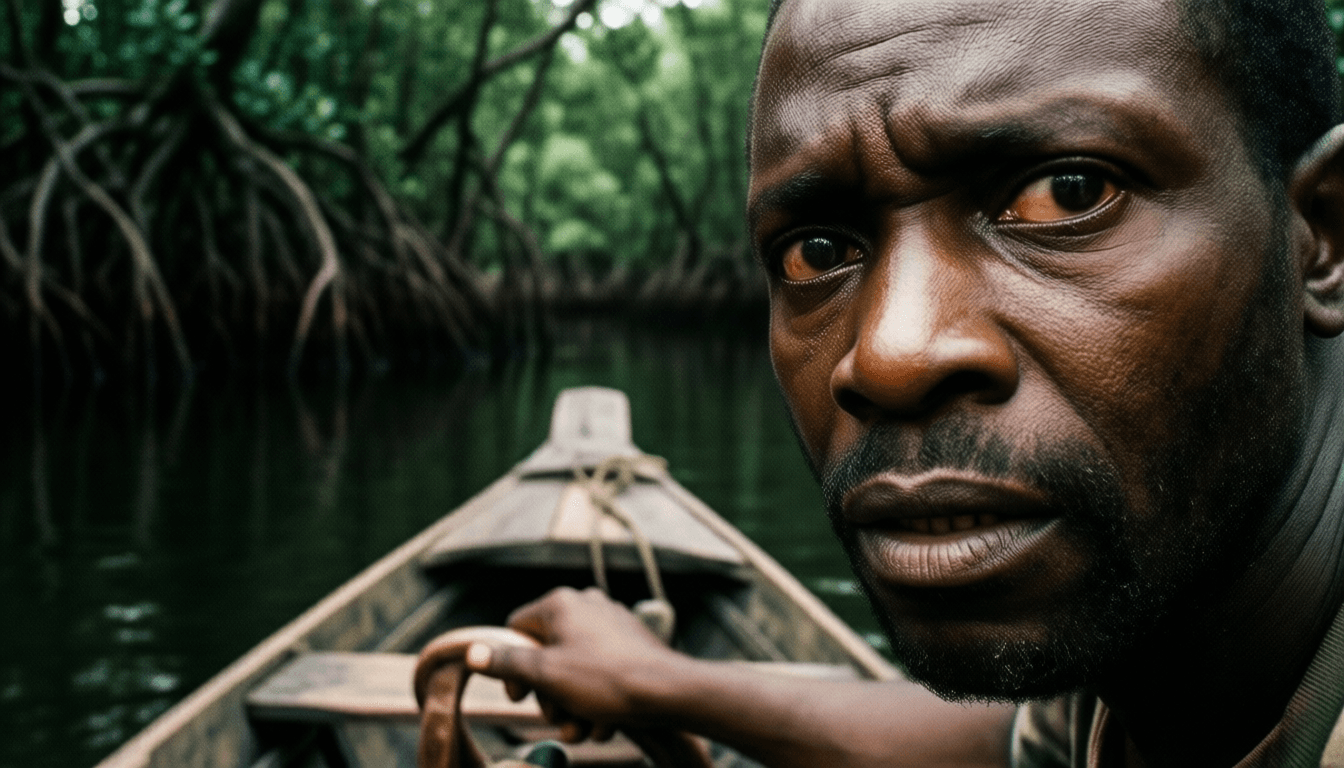
I began my journey in Sogakope, where a bridge spanned the wide, majestic Volta. The air hung thick with the damp smell of earth and the faint hum of unseen insects. I hired a local named Kojo and rented a small skiff; his eyes held a deep, unshakeable weariness. His instructions were short and precise: "No loud noises. No sudden movements. We must respect the river." As we moved deeper downstream, the sporadic houses soon gave way to dense walls of mangrove forests and trees, their roots snaking into the murky water. The river itself was a colossal, indifferent entity – wide, fast-flowing, and impressively deep with opaque brown water. The sun bore down, making the air a stifling blanket, yet Kojo wore a thick, handmade amulet around his neck. Our destination was a spot called 'Mawu's Turning', a location that had seen three capsizing incidents in six months. As we ventured further, the familiar sounds of human activity faded, replaced only by the persistent slapping of water against the hull and the occasional cry of an unseen bird.
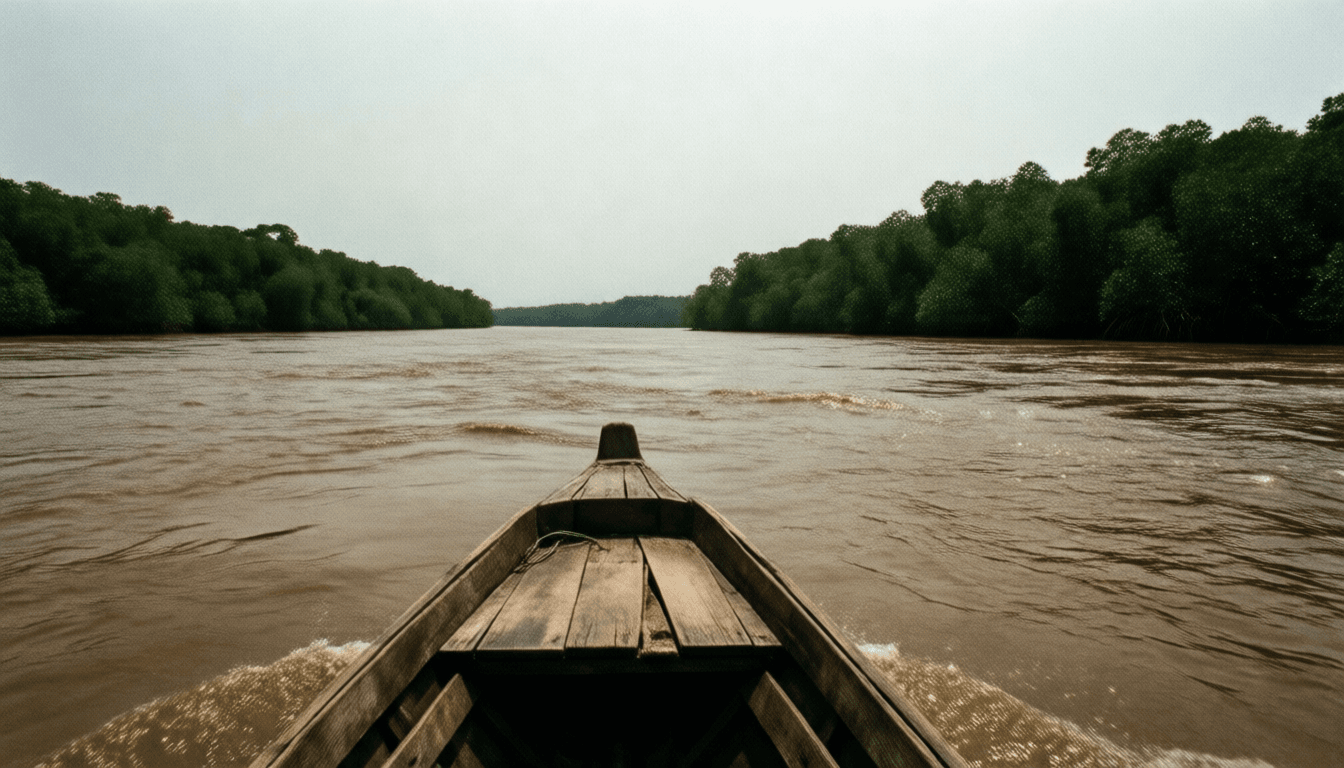
As we neared 'Mawu's Turning', a subtle shift became apparent. The oppressive heat of the afternoon intensified, as if localized around us, but simultaneously, a strange, almost imperceptible cold began to emanate from the river itself. Kojo's face hardened. The distant bird calls seemed to become muffled. The very air felt thick, viscous. Then came the first anomaly: the rhythmic slap of the river against the gunwales, a constant companion, began to delay. It wasn't an echo; it was as if the sound waves themselves struggled to penetrate an invisible resistance. The boat, despite Kojo's steady hand on the tiller, subtly swayed as if battling an unseen counter-current, a movement inexplicable given the river's wide, downstream flow.
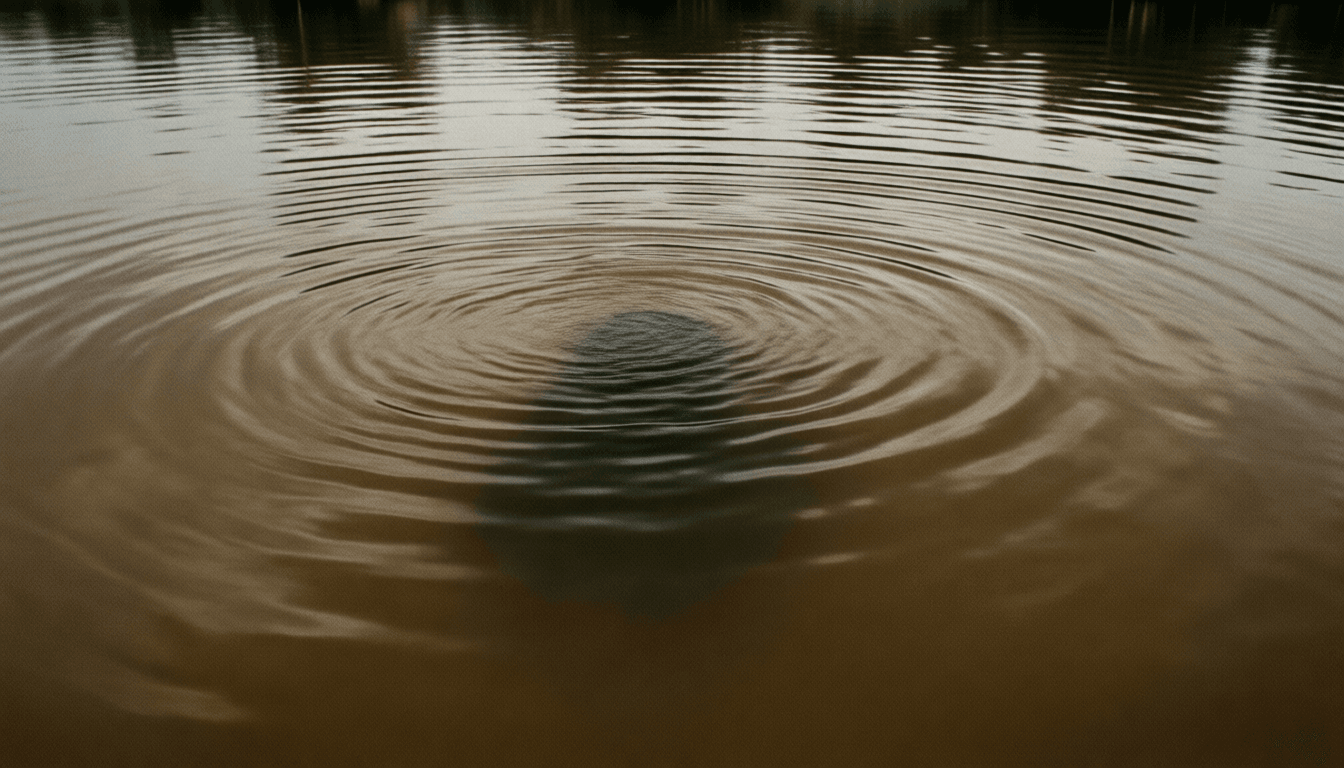
Kojo cut the engine. The boat drifted in silence. The silence that followed was absolute, unnatural. The sounds of the water, the distant insects, even the creaking of the boat—all were swallowed. It wasn't merely quiet; it was an *absence* of sound, a vacuum. Then, tiny, perfectly concentric ripples appeared on the glassy surface of the water. They did not spread from something but erupted from nothing, as if pinned onto a perfect mirror. They pulsed briefly, then vanished. I peered over the gunwale into the brown water, but saw nothing. A fleeting shadow, too large for any fish, too fluid, seemed to momentarily coalesce deep beneath the surface before dissolving. Kojo, his knuckles white as he gripped the tiller, whispered, "It is watching."
The ripples intensified, transforming spontaneously into perfect, dinner-plate-sized whirlpools around our skiff's hull. The boat began to tilt. Not taking on water, but as if being pulled down from below. Kojo desperately tried to restart the engine. It coughed once, then died completely. The electric starter whirred mournfully, as if bereft of power. The air around us became incredibly heavy. Breathing became difficult, as if it were filled with an invisible, crushing pressure.
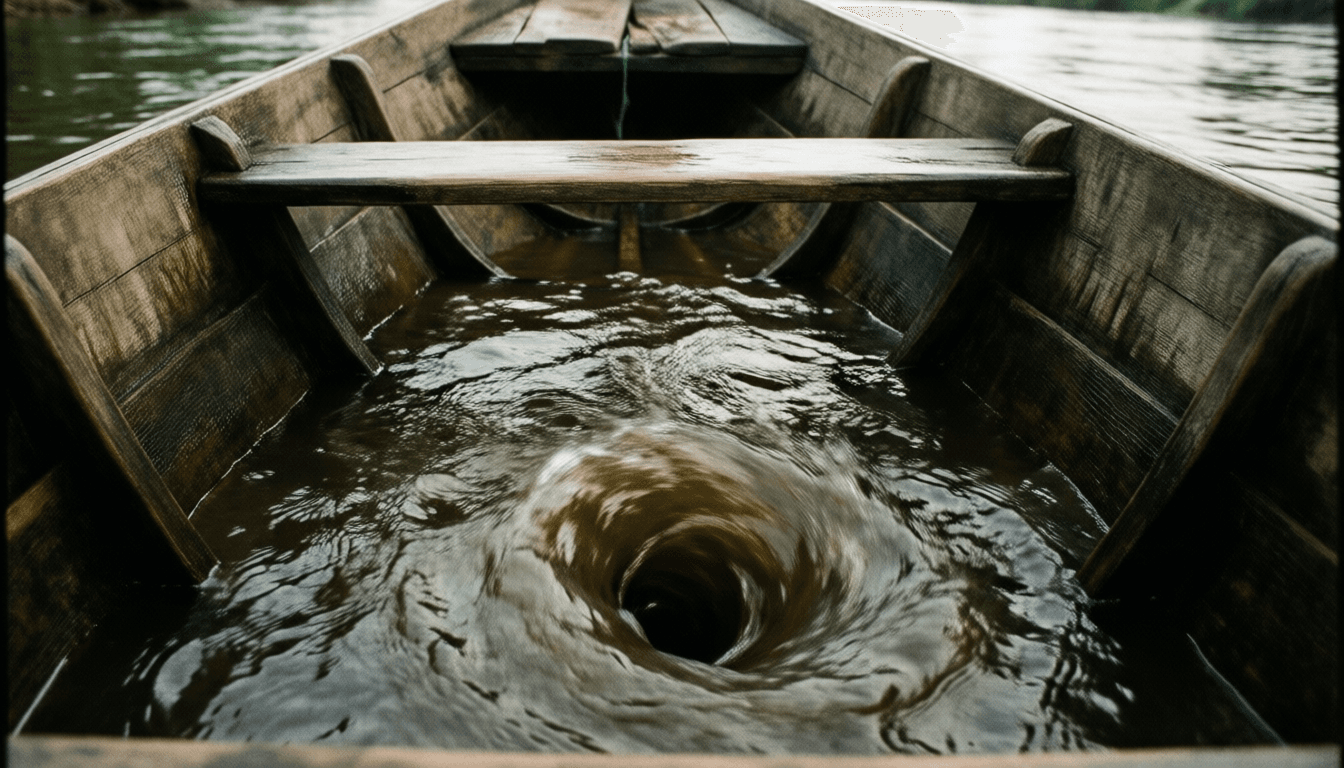
At that instant, water began to rise from the floorboards of the skiff. There was no hole, no visible leak. It simply welled up from beneath the floorboards, calmly and chillingly, defying gravity and logic. The water rose steadily, silently. As it reached my knees, then my shins, something impossible and irresistible coiled around my right leg, just above the ankle. It wasn't a current. It was a physical, incredibly strong force—cold, slimy, boneless yet purely muscular. It had reached out *from within* the rising water. It tightened, trying to drag me down, into the depths of the boat, into the river that was now invading our space. I thrashed, instinctively grabbing the edge of the seat, digging my fingers into the damp wood. The force was immense, persistent, a silent, powerful tug that meant to consume me. My breath hitched. I felt the pressure on my chest, the cold seeping into my bones, the certainty that I would be pulled into that opaque, hungry embrace. I kicked wildly, but only churned water, the grip unyielding. In a last, desperate surge of adrenaline, I slammed my free foot against the gunwale, leveraging my weight to twist violently. The grip, eerily, tightened for a moment more, then abruptly, unnaturally, released. I gasped, collapsing back onto the seat. Kojo, chanting wildly, threw the contents of a small, decorative calabash—a black, viscous liquid—onto the rising water. Immediately, the whirlpools outside the boat vanished, and the water inside the skiff began to recede as silently as it had risen, leaving only damp streaks. The engine gave a single, sputtering cough, then roared back to life.
Kojo navigated us back to Sogakope in a silence deeper than any I had experienced. His river-fixed eyes held an understanding of something truly ancient and malevolent. My right ankle ached with a deep, persistent coldness. An phantom pressure, lodged in the bone, responded to neither heat nor massage. There was no bruising, no visible wound—only the memory of that impossible grip.
Back on land, my field notebook, safely tucked into its waterproof bag, was inexplicably damaged. The outer case was dry, yet several inner pages, specifically those detailing local accounts of 'The River's Embrace,' were completely waterlogged, the ink blurred beyond legibility. Surrounding pages were pristine and untouched. And among my spare camera batteries, there lay a small, perfectly smooth, obsidian-like black river stone—one I had never seen on the riverbank, and certainly not present when I packed my bag.
I never filed an official report about what happened in the skiff. How could I accurately document the silent invasion of water, the invisible, suffocating grip, or the engine that simply lost its will to power? Local authorities would dismiss it as a hallucination, a stress-induced delusion. But the phantom chill in my ankle remains. The inexplicable damage to my notebook stands as its own chilling evidence. And whenever the people who live beside the Volta speak of "The River's Embrace" in hushed, fearful tones, I no longer ask why no bodies are found. I understand. They weren't merely drowned. They were pulled. And the Volta River, ever patient, ever hungry, is simply waiting for its next offering.

[ CLASSIFIED VERDICT ]
[ACCESS LOG - SOURCE FILE]
For the past few years, a strange phenomenon has been occurring in the lower Volta River region: fishing boats capsizing without cause and people disappearing. Local residents call this 'The River's Embrace,' believing the river is hungry and takes people. The belongings of the missing are found far downstream, but bodies are almost never recovered, adding to the sinister nature of this legend.