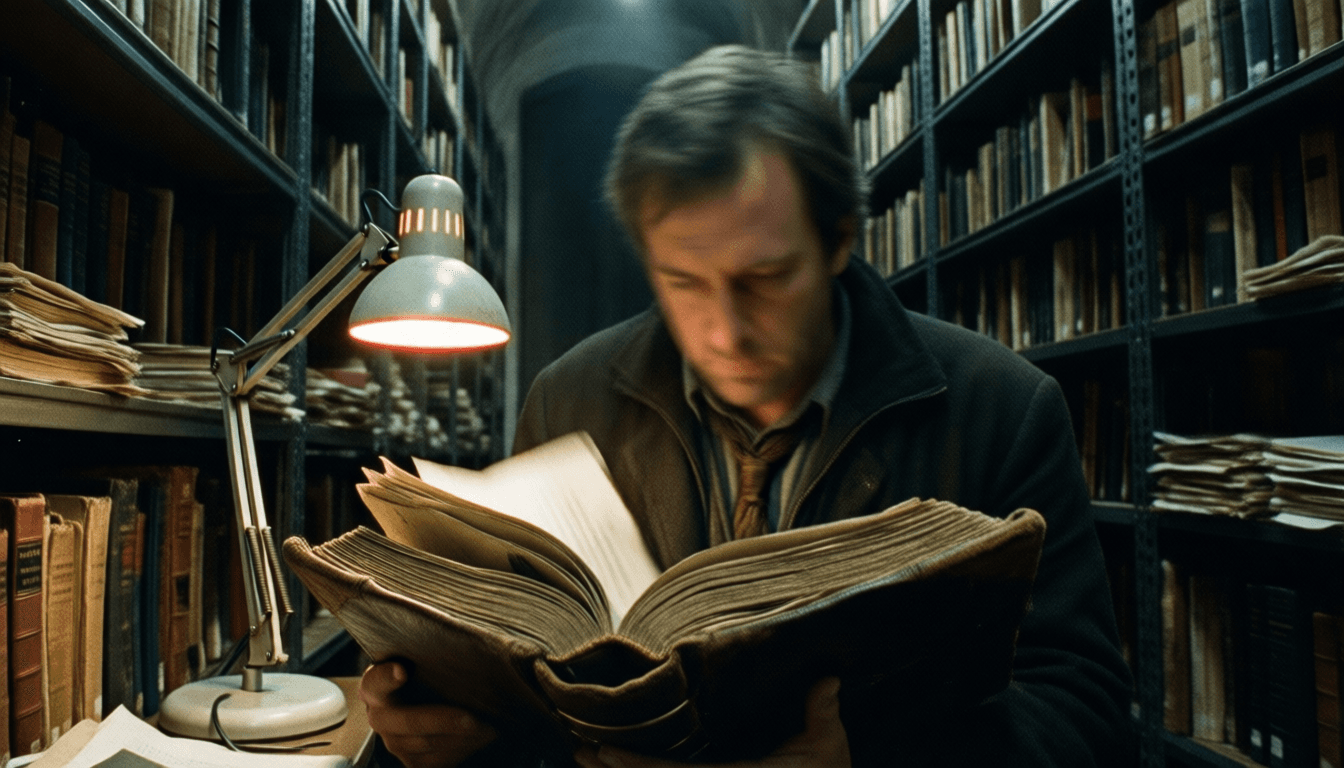
The One Who Saw Too Much
In September 1978, Pope John Paul I's incredibly brief 33-day papacy ended in his death, which continues to spark countless speculations to this day. While the official cause was heart attack, whispers of 'poisoning,' the 'Vatican Bank scandal,' and 'Masonic conspiracy' have never ceased. The lack of an autopsy, inconsistent statements from the first discoverer of the body, and reports that his private documents and even his bedside glasses disappeared, all fueled this sinister narrative.
Among these old rumors, one particularly chilling fragment is a 1978 BBC radio broadcast. Shared in digitized form on certain online history forums, this broadcast features a reporter outside the Vatican, who, in a precise and understated tone, highlights the immediate confusion. "Reports on His Holiness's exact time of death and the identity of the person who first discovered him were inconsistent and almost deliberately vague." The broadcast abruptly cuts off just as it was about to delve into questions regarding "certain financial reforms" initiated during the Pope's short reign. Shared with the caption "They silenced him, and covered everything up," this audio file became an ominous cornerstone for this investigation.
Dr. Elias Thorne, an independent archivist specializing in the transitional period of the late 20th-century church, managed to secure temporary access to a restricted auxiliary collection within the Vatican Apostolic Archives. His ostensible purpose was to research Vatican administrative reforms of the era, but his true goal was to uncover any minor document that might shed light on John Paul I's final weeks.

The archival section assigned to him was a labyrinth of metal shelves stretching into endless darkness. The stagnant air was thick with the scent of old paper and chalk dust, and the silence was unfathomable. Only the scuff of his shoes and the rustle of his movements broke it. Dim artificial lights, barely piercing the gloom, cast long, wavering shadows that seemed to writhe at the edges of his vision, deepening the sense of profound space. The sheer volume of material was overwhelming: thousands of unindexed boxes, each a potential tomb.
Days blurred into a monotonous cycle of meticulous searching. Dr. Thorne found nothing overtly incriminating—just mundane administrative documents. Yet, as his focus narrowed to the specific period of August and September 1978, a subtle oppression began to manifest. The profound silence, initially a natural part of the archives, deepened unnaturally. His own breathing seemed to lose its echo, the air itself feeling hollow around him. When he whispered notes to himself, the sound didn't dissipate normally into the air. Instead, it slowly reverberated from behind him, from an impossible direction, then repeated once more.
A growing atmospheric pressure bore down on him. Not merely heavy air, but a tangible weight. The pressure made even the simple act of turning a page feel like battling resistance, and his ears intermittently popped, despite no change in altitude. In the deep corners of the shelves, shadows writhed, coalescing into indistinct shapes, only to vanish when he directly turned his gaze. He attributed it to fatigue, the dim lighting, and the oppressive silence.
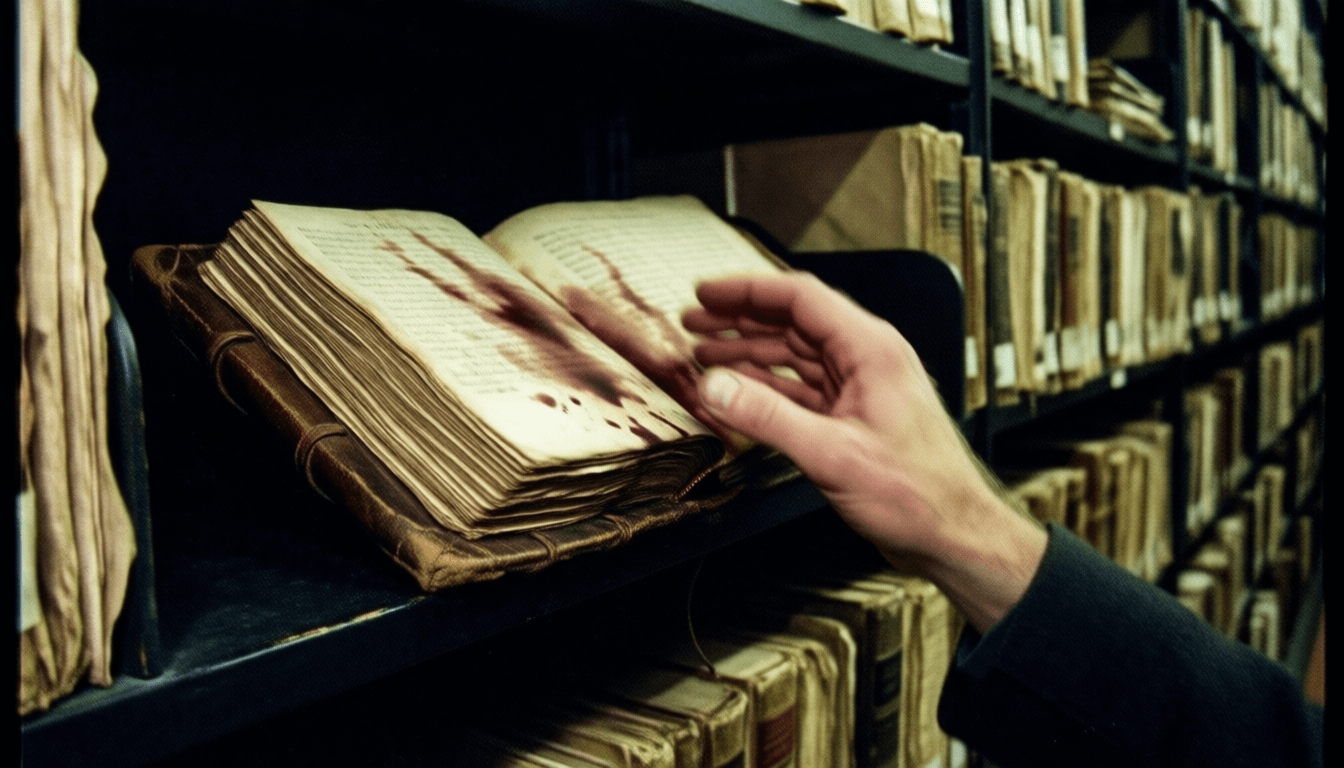
He retrieved a particular ledger dated late August 1978. The ancient pages, despite the bone-dry air, felt unusually cold and damp. On a page detailing papal residence maintenance expenses, a faint, inexplicable stain seemed to bloom and recede before his eyes, like dried blood. Its pattern subtly shifted. He rubbed at it, but the stain seemed to be under the paper's surface. A trick of the light, he thought, or perhaps a hallucination.
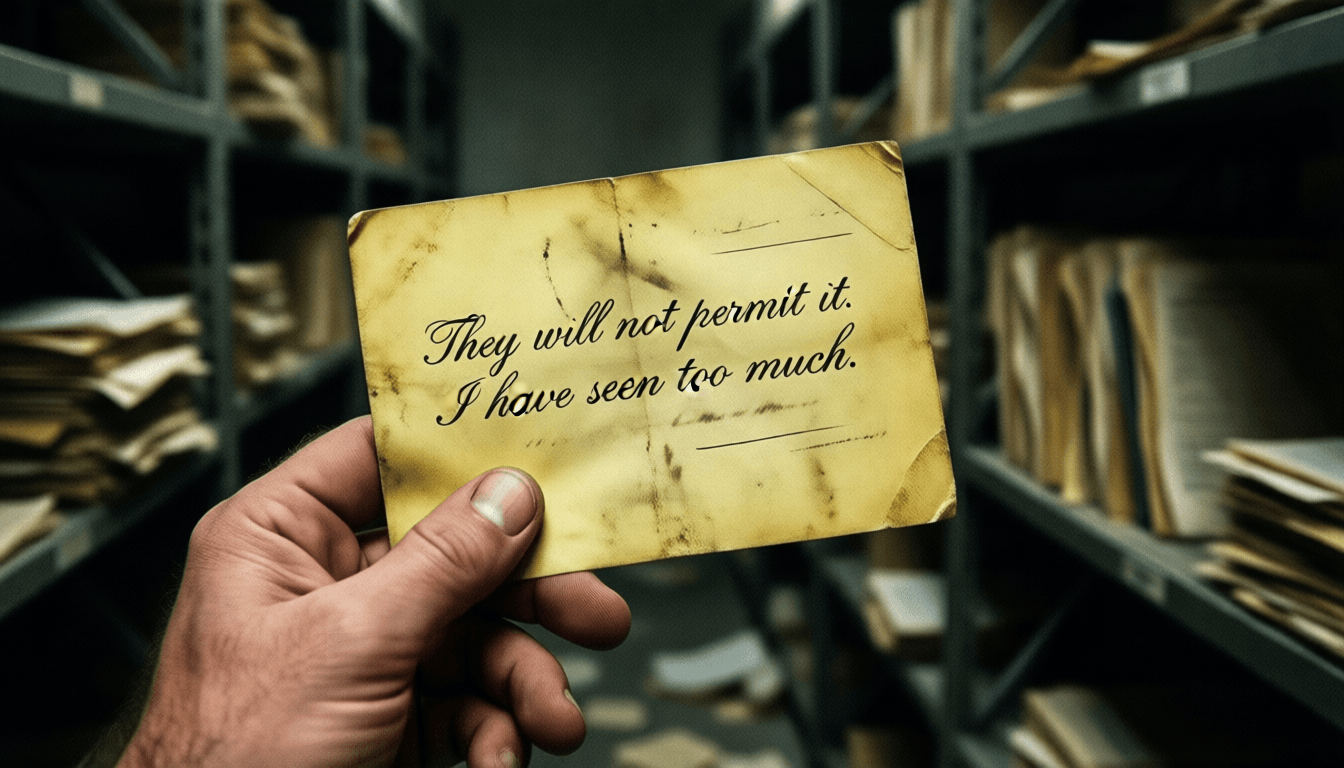
Extremely unnerved, Dr. Thorne pulled out a box labeled 'Miscellaneous Correspondence - Papal Chambers.' Beneath a stack of mundane memos, a single unsent letter lay loosely. Addressed to an anonymous cardinal and dated the day before John Paul I's death, the letter – undoubtedly in John Paul I's trembling hand – spoke of "impending changes," "unacceptable practices," and contained a spine-chilling line: "They will not permit it. I have seen too much."
The moment he read that last line, the archives reacted. The heavy metal shelves surrounding him began to groan as if under an immense, unseen pressure. Then, with an eerie slowness, they started to tilt inwards, funneling his section into a trap. Metal shrieked with sounds impossible for static structures. The dim artificial lights flickered wildly, then died, plunging everything into absolute darkness save for the faint glow of his phone's flashlight.
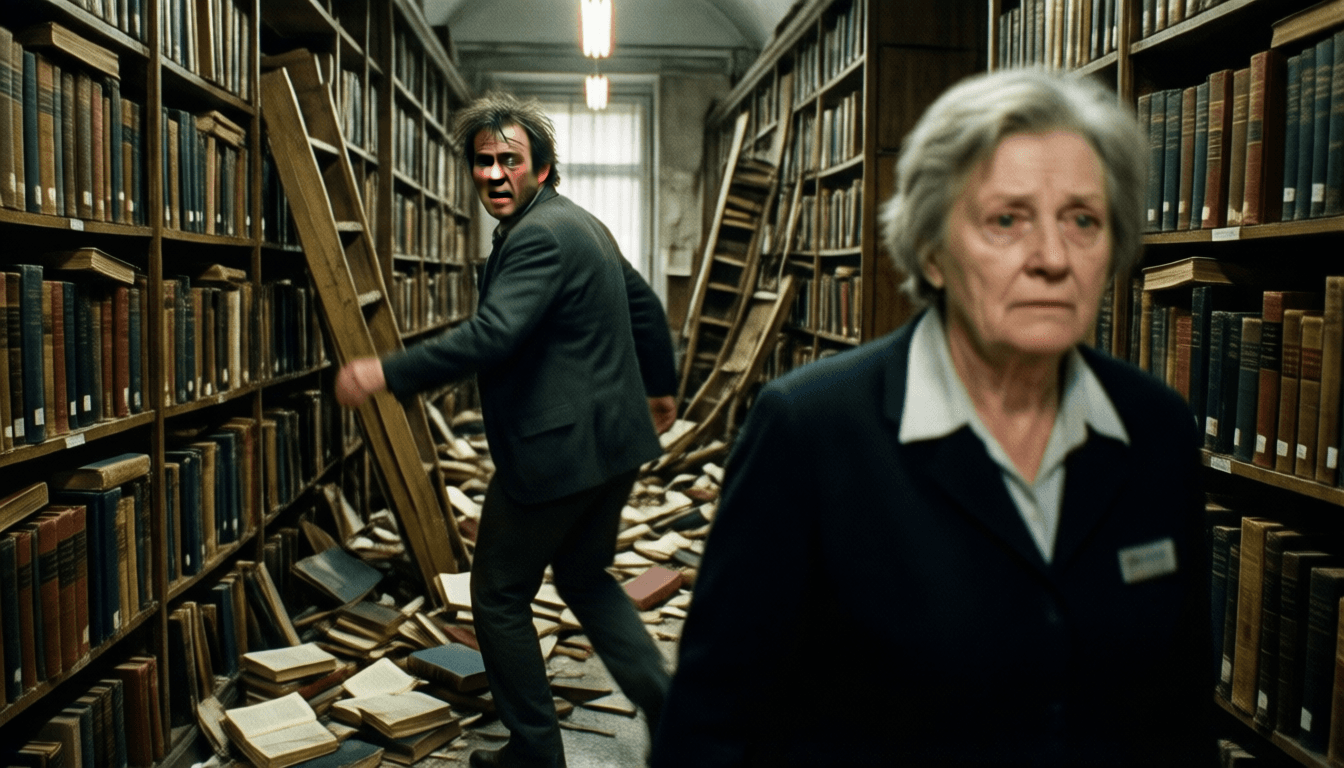
An unnatural silence returned, his heartbeat impossibly loud, disorienting him. From the deep darkness of the narrowing corridor, without breath or echo, a whisper sounded right in his ear: "You saw too much." It was like an actual touch, a cold pressure pressing against his temple. A massive, ancient tome tumbled from a collapsing shelf, narrowly missing his head before thudding to the floor with a bone-jarring sound. He was trapped. The tilted shelves blocked his exit. The air pressure became unbearable, crushing his chest. He could barely breathe. The very walls of the archives seemed to actively contract, tightening. As another shelf collapsed, pinning his leg beneath the debris, he crawled desperately. The cold whisper repeated: "Too much."
Leaving the letter behind, Dr. Thorne managed to pull himself free. He crawled over piles of ancient books, his legs scraped and bleeding, his lungs burning. As the unnatural pressure receded, he stumbled, gasping, into a relatively 'normal' section of the archives. An elderly archival assistant, making her rounds, found him. She looked at his disheveled state, then cast her gaze towards the section he had emerged from. Her expression was unreadable. She offered no help, only a slow, understanding nod and an ancient, resigned look in her eyes before continuing her rounds.
He was never explicitly questioned about the 'incident.' His access was quietly revoked the next day, without explanation.
Back home, his scraped legs healed, but Dr. Thorne developed a persistent, faint tinnitus. A subtle, unending whisper resonated in his ears. In extreme silence, or when focusing on the details of his research notes, he began to notice ambient noises unnaturally fade, and the temperature drop. He could no longer be in a room with the door fully closed; there had to be a gap. While there was no physical evidence of the letter, its exact phrasing and the trembling handwriting were seared into his memory. He tried to reconstruct it, but every time he wrote the sentence, "They will not permit it. I have seen too much," his hand would begin to tremble uncontrollably, and the cold, faint pressure would brush his temple once more, as if a shadowy, warning hand reached out to gently caress him from the depths of the shadows. The true archives, he knew, were not just made of paper and stone. They were made of silence and secrets, remembering everything, and keeping their own.
[ CLASSIFIED VERDICT ]
[ACCESS LOG - SOURCE FILE]
The sudden death of Pope John Paul I in 1978, contrary to the official cause, spawned numerous unofficial suspicions including poisoning, the Vatican Bank scandal, and Masonic conspiracy theories. The absence of an autopsy and inconsistencies in testimonies have kept this event a mystery to this day. This story is inspired by these suspicions.