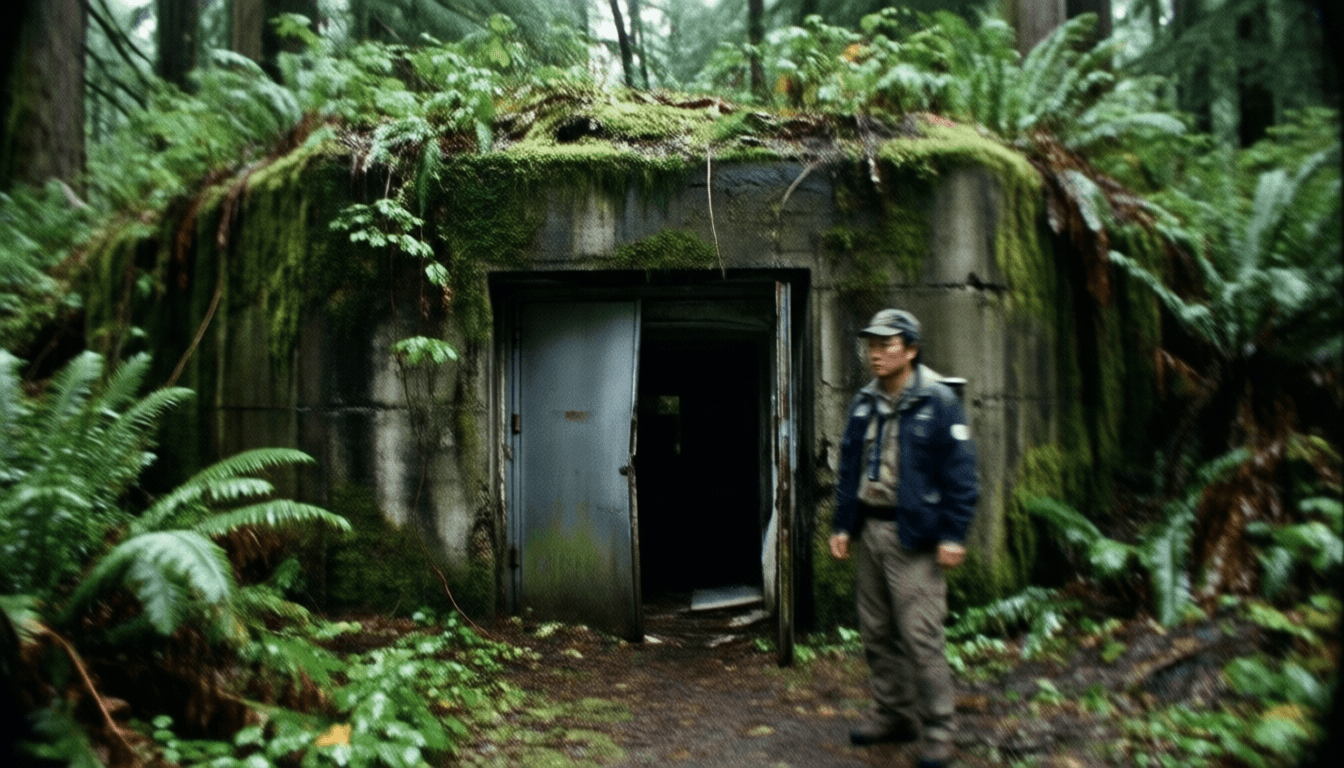
Site Delta-Four: The Lingering Horror
The first instance of this anomalous phenomenon surfaced not as mere whispers, but as documented evidence, found within the aseptic records of the national archives. Among declassified supplementary documents related to the 'Phoenix Program' within 1970s CIA internal review papers, lay a seemingly innocuous, heavily redacted paragraph. Through the black bars, a single unredacted geographic coordinate stood out clearly: North 47.7803°, West 123.8690°. A remote forested area, deep within the Olympic National Forest, officially designated as a wilderness zone.
Concurrently, on an obscure online forum dedicated to military history and 'black site' theories, recurring discussions surfaced about a secret Pacific Northwest facility dubbed 'Site Delta-Four'. Cryptic, often quickly deleted posts from former intelligence operatives hinted at 'unexplained residual phenomena' stemming from 'deep cover operations during the Phoenix era.' More chilling were older posts from local hiking communities: reports of strange disorientation, sudden equipment failures, and even permanent disappearances experienced by urban explorers who ventured 'too deep' into that particular Olympic Peninsula sector. A common thread was a pervasive sense of dread, and an oppressive, unnatural silence.
My investigation began at those very coordinates.
Driven by the compelling and unsettling coincidence of official documents and eerie rumors, I, Dr. Elias Thorne, an archivist and independent investigator, embarked on a long journey. The designated wilderness area lived up to its name. For hours, I dissolved into the oppressive embrace of ancient, old-growth forest. The air was heavy, damp, and charged with an almost preternatural silence. No birdsong, no rustle of small animals; only the dull thud of my boots on the sodden moss, amplified to an unnerving degree in that vacuum.
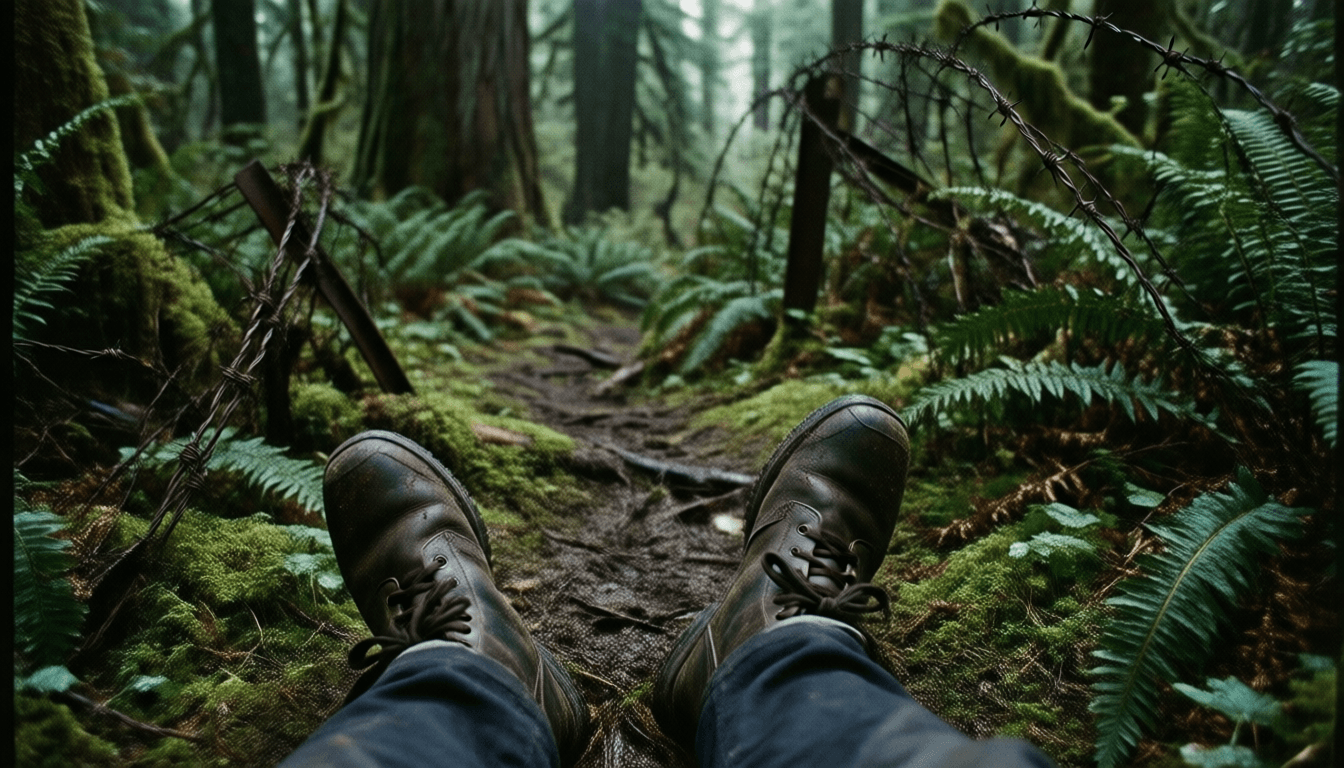
Finally, through a thicket of ferns and moss-draped branches, their outlines emerged. Decayed concrete structures, besieged by sixty years of relentless vegetation. There were no official markings. Only the skeletal remains of barbed-wire fences and rusted watchtowers, their metal groaning softly in the occasional breeze. The ground around the structures was unusually sodden, even for a rainforest, and carried a faint, metallic, briny smell. I found the main entrance: a windowless, massive concrete block, its heavy steel door half-fallen. It clearly led to an underground bunker or fortified interrogation cells. Despite the external dampness, the air thickened further inside, cold and stagnant. This place wasn't merely abandoned; it felt actively 'erased.'
Stepping into the main structure, the true nature of Site Delta-Four began to unfold. The corridors were a labyrinth of cracked concrete and dripping water. The silence was absolute, yet layered. I could have sworn I heard faint, subconscious whispers, like distant static or choked moans, emanating from no discernible source. I tried to rationalize them as residual acoustics or perverse sound effects of the decaying structure, but the feeling of being acutely observed intensified.
Shadows played tricks on my eyes, stretching or contorting independently of my headlamp's beam. I caught fleeting movements in dark recesses, only for them to vanish the moment I turned my gaze. Standing water puddles on the floor reflected distorted visions of the crumbling walls, which seemed to subtly ripple. The pervasive smell shifted from damp decay to something more unsettling: a metallic tang, like old blood, mingled with a faint, sharp chemical odor.
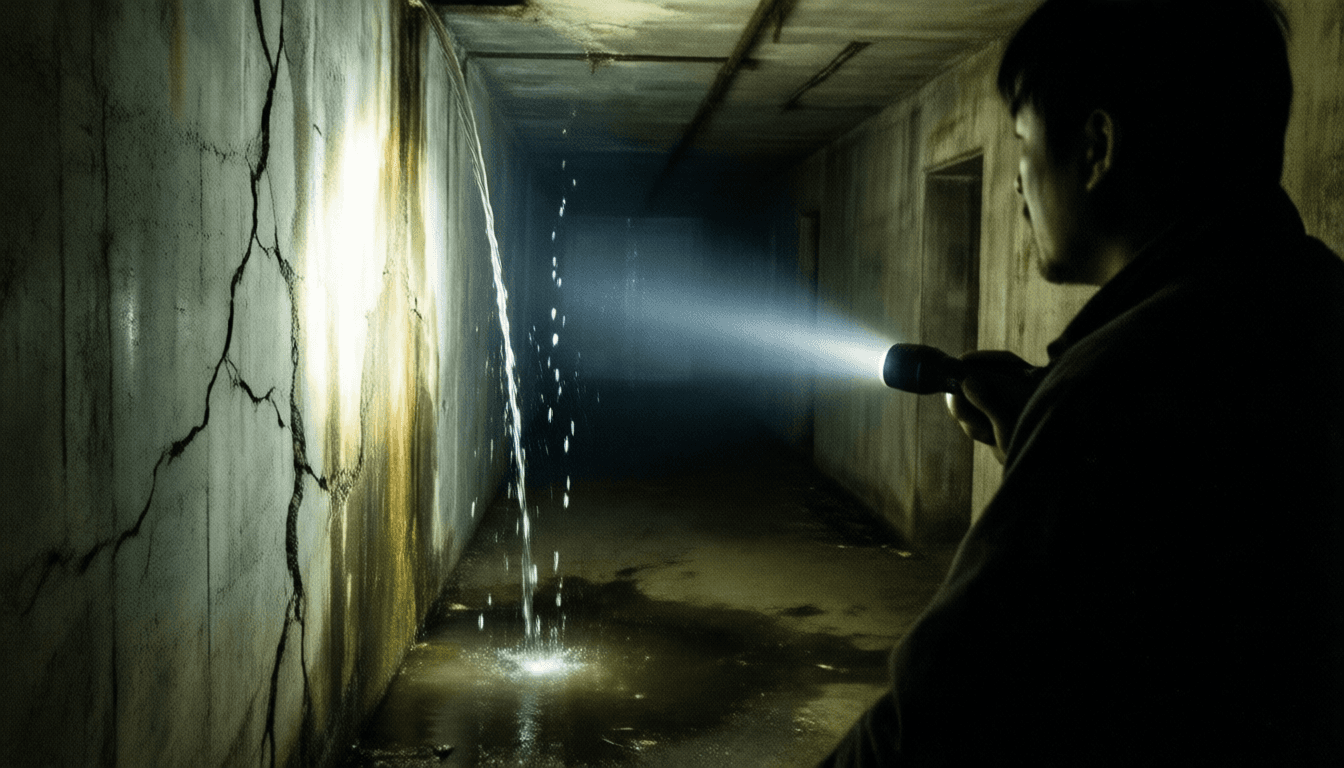
And then, the physical laws of the environment subtly began to betray me. In one section, water droplets falling from the ceiling would momentarily pause, suspended in the air for a fraction of a second just before hitting the floor. In another, I witnessed a thin stream of water defying gravity, flowing 'up' a hairline crack in the concrete for several meters before dropping normally. My compass, accurate just minutes before, spun erratically, refusing to settle in any direction. The air in specific rooms grew abnormally cold, despite the external dampness, a localized chill that pierced the skin. I found a corroded piece of equipment in a sealed room: a bulky, box-like device with archaic dials, unlike any conventional recording apparatus I knew, its purpose unclear yet clearly linked to the site's original function. Every rational explanation I tried to construct shattered under the weight of accumulating impossibilities.
My investigation led me to a particular room deeper within the bunker. Smaller and more insulated than the others, its walls were eerily smooth and featureless—perhaps a soundproofed interrogation chamber, or a sensory deprivation cell. On the far wall, there was a faint, almost imperceptible stain. Compelled by an inexplicable urge, I reached out to touch it.
The moment my fingers made contact with the hardened residue, the room plunged into an absolute, suffocating darkness, beyond the mere absence of light. My headlamp, perfectly functional moments before, instantly died. The air became impossibly dense, a crushing weight pressing against my chest and limbs, physically resisting every movement. It felt as if an unseen hand pushed against me, pinning me against the very wall I had just touched.
And then the sounds erupted. The subtle whispers I had dismissed earlier exploded into a cacophony of layered screams, desperate pleas, and distorted, guttural commands. They weren't just loud; they were inside my head, vibrating through bone and skull, inflicting a physical agony beyond mere noise. A burning cold surged into my left forearm, followed by an intense, bruising pressure on my back. I screamed, fighting against the unseen force holding me, struggling to breathe in the impossibly dense air.
The floor beneath my feet writhed, not structurally, but as if the concrete itself became fluid, rippling. The walls seemed to breathe, distorting the spatial reality around me. Disoriented, I stumbled, falling hard onto the solid floor, my head striking something sharp. Trapped, deprived of light, sound, and even physical coherence, I was being actively drawn into a localized vortex of pure suffering. This was no hallucination; it was a physical, malevolent imprint, grasping me, forcing me to experience its past echoes. With desperate, animalistic urgency, I tore free from the crushing pressure, blindly scrambling through what felt like tearing flesh and shifting stone. I found a precarious exit through a suddenly widened, crumbling doorway. I gasped, bruised and bleeding, my mind reeling, into the relative sanity of the main corridor.

I barely made it out of Site Delta-Four, collapsing at the edge of the structure, retching onto the damp earth. The 'normal' forest silence, once unnerving, now felt like an eerie, mocking void. Every rustle of leaves was a whisper, every shadow a shifting wall.
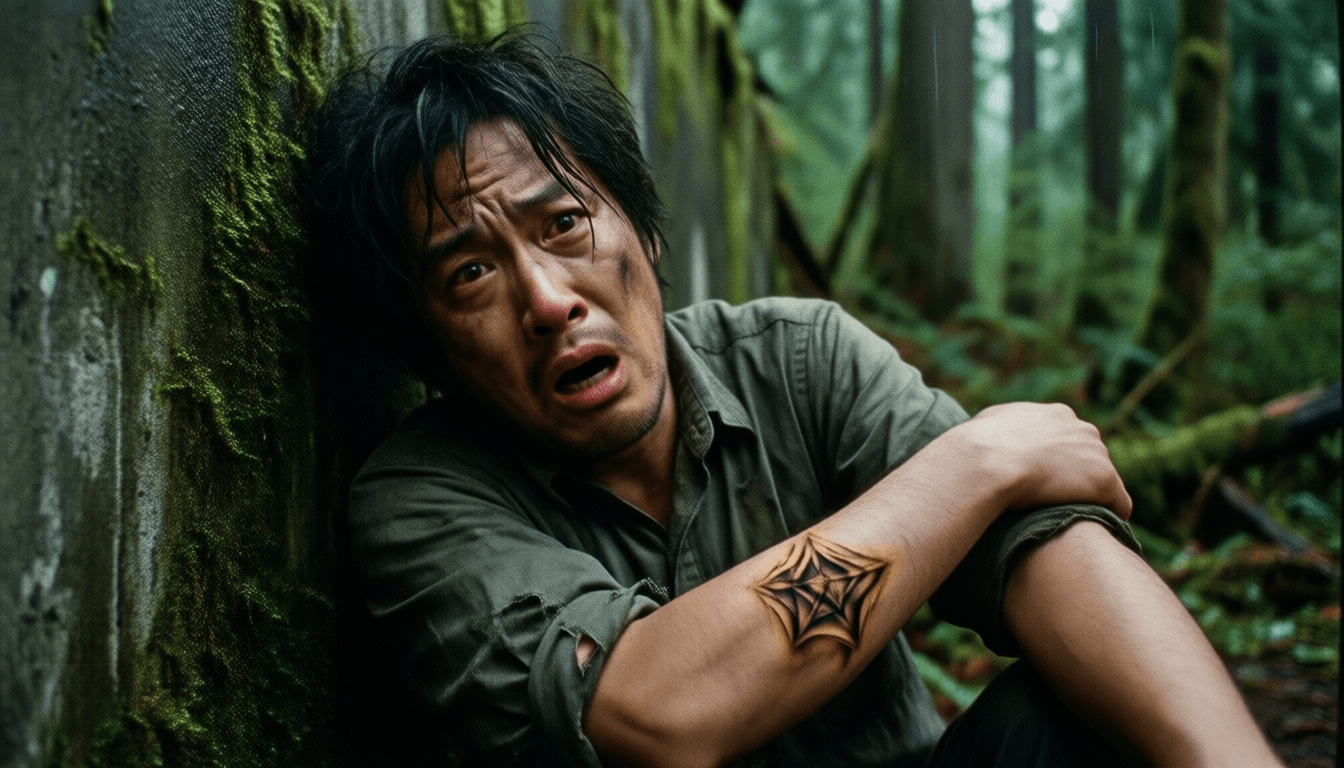
Even back in civilization, the physical marks were clear. Deep, symmetrical burn marks, distinct like a brand, etched clearly onto my forearm, unlike any other impact injury. Their pattern was intricate and geometric, unlike any wound I could have acquired. My field recorder, retrieved from the chaos, was irreparably damaged, yet when a technician attempted data recovery, a brief, chilling audio file emerged: not an identifiable voice, but layered, impossible sounds—tearing metal, human agony, and a deep hum, combined in a context entirely alien to nature. A blurry photograph taken in the room during my struggle showed only chaotic, violent distortion, yet within it, a faint, indescribable shadow seemed to writhe. A void where light should have been.
I never published a direct account of my findings. The 'truth' I sought wasn't a conspiracy to be exposed with documents and interviews. It was an experiential horror, a residual trauma embedded in every fiber of that place. I now understand 'disappearances' and 'unexplained residual phenomena.' The Phoenix Program sought to neutralize threats, to erase individuals. At Site Delta-Four, it achieved a terrifying, unintended permanence. The silence of the Olympic wilderness, once comforting, now holds a different meaning for me. It is an echo of the void, a place where suffering, etched into the walls and the very air, continues to exact its toll. The psychological cost of such programs, I now realize, is not merely historical, but a living, lingering horror, a wound in reality festering, unseen and unheard, awaiting the next curious soul.
[ CLASSIFIED VERDICT ]
[ACCESS LOG - SOURCE FILE]
The 'Phoenix Program' was a secret CIA operation during the Vietnam War aimed at neutralizing Viet Cong, notorious for rumors of brutal, unorthodox interrogation methods. This story is based on an urban legend suggesting that the program's legacy left a permanent, supernatural imprint at a secret facility, 'Site Delta-Four', deep within the Olympic National Forest. It is said that in this abandoned site, the suffering and violence of the past linger, actively distorting reality.