1975.4.9: The Shadow of Building 3
In 2007, starting from the year the Supreme Court of Korea declared the 1975 conviction and execution of 8 individuals related to the Inhyeokdang (People's Revolutionary Party) incident as “judicial murder” and acquitted them, strange rumors began to spread online in earnest. Particularly on urban exploration and local history forums on platforms like DC Inside and Naver Cafe, persistent and chilling stories were shared about an abandoned annex of a former correctional facility on the outskirts of Seoul, known as “Building 3.”
The reports were consistent: an extreme cold that permeated only specific areas within the facility, an inexplicable metallic smell like a mixture of old blood and rust, and most chillingly, the date “1975.4.9” appearing etched or discolored on the walls, visible only under certain conditions. When these stories were mentioned to local elders, they often recounted hushed legends of “restless spirits” associated with political prisoners who had “disappeared” during the authoritarian era. The official declaration of innocence, which came after a long wait, brought justice, but it also seemed to have stirred something deeper within the very walls that once held those condemned prisoners.
Jihoon, a freelance investigative journalist renowned for persistently delving into the darker aspects of Korean history, found the convergence of online testimonies and historical records too powerful to ignore. Official records stated that the 8 individuals linked to the Inhyeokdang incident were executed on April 9, 1975, a mere 18 hours after their final appeal was rejected. That shocking speed and secrecy had always remained a trauma in the national consciousness. Jihoon surmised that Building 3 might have been where they spent their final moments.
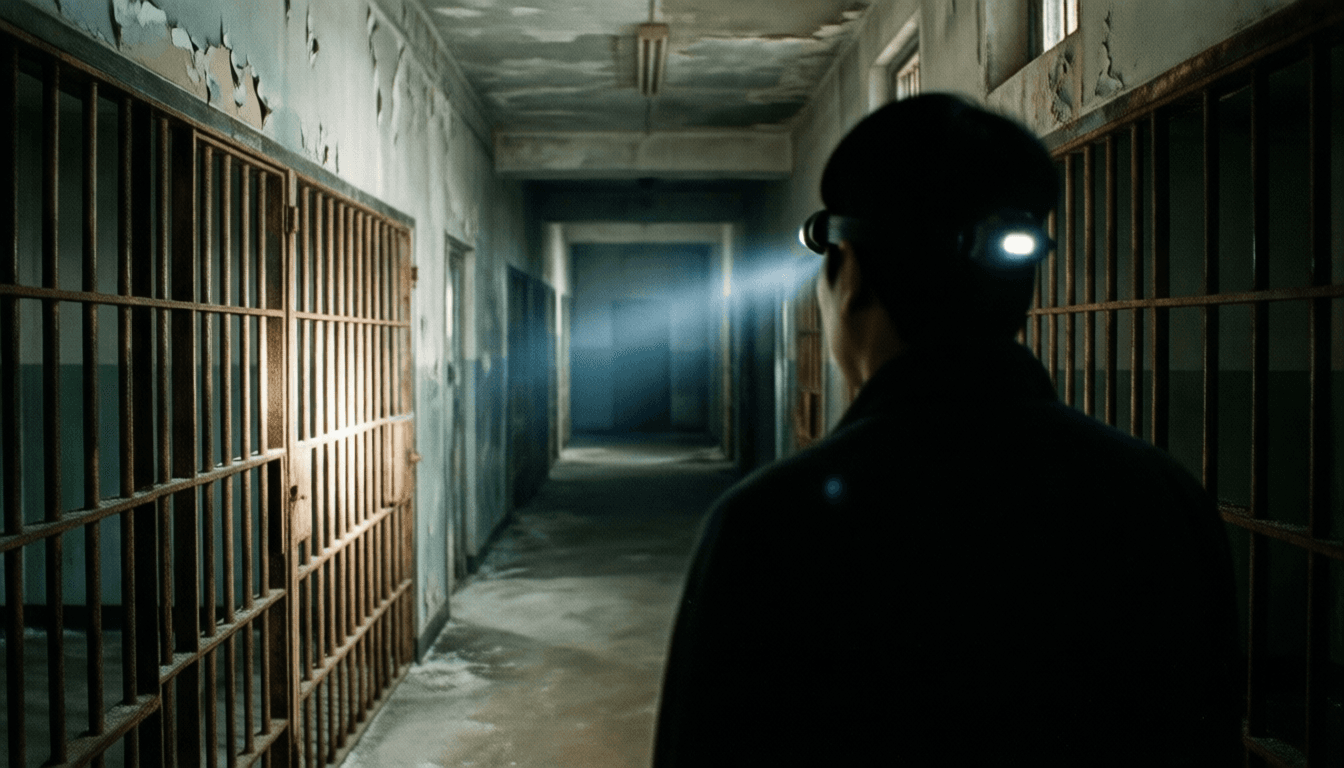
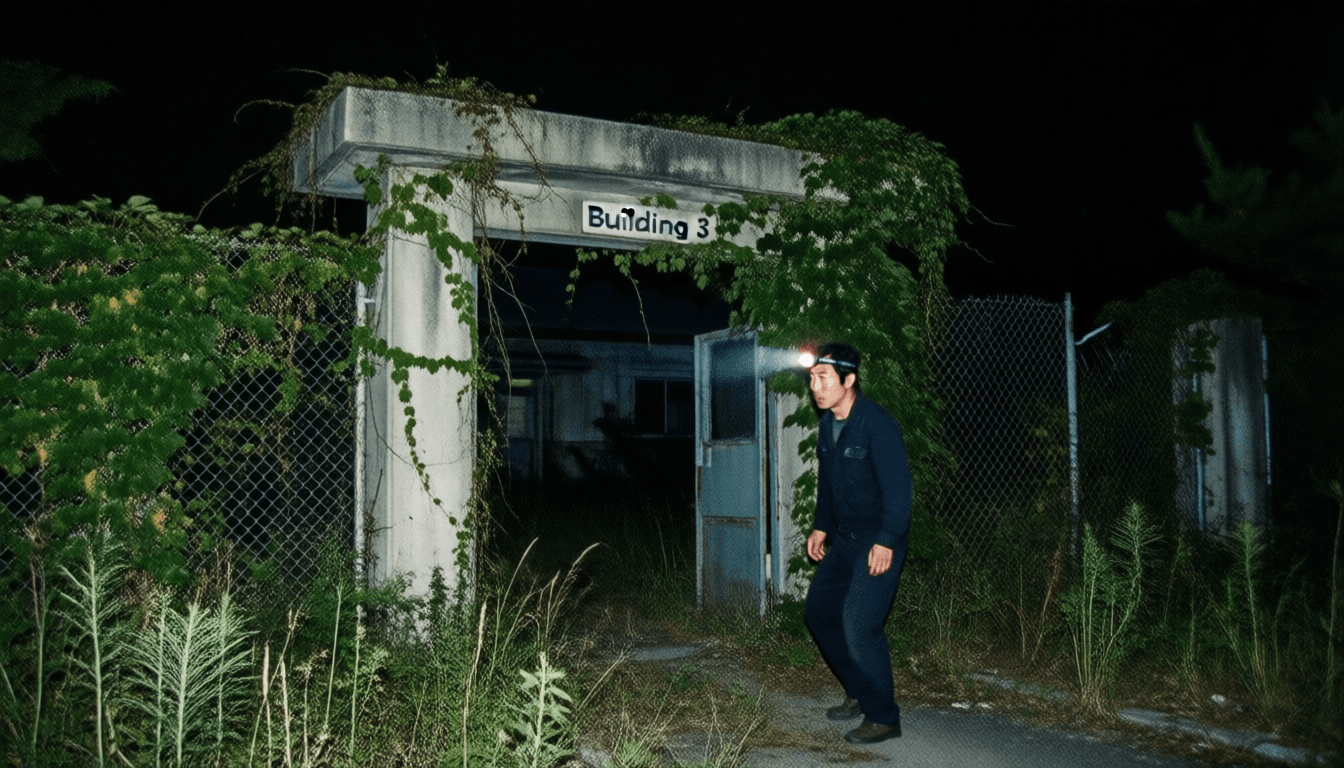
He found a broken perimeter fence and, under the cover of a moonless night, slipped through a gap in the barbed wire. The building was a massive concrete structure, standing grotesquely, overgrown with lush vines. The moment he stepped inside the main entrance, the temperature immediately dropped several degrees, and the air was heavy with the smell of damp concrete, mold, and that peculiar, persistent metallic odor. His headlamp beam cut through the stifling darkness, revealing peeling paint, rusty bars, and corridors that seemed to stretch into infinite blackness. The silence here was not an absence of sound but an active force that swallowed everything, even the crunch of his own footsteps on the debris-strewn floor. He noticed a low, dull hum that seemed to emanate from beneath the concrete, dominating the space.
As Jihoon ventured deeper into Building 3, the environmental anomalies became more pronounced. The low hum intensified, vibrating directly in his chest, making his own heartbeat feel somehow out of sync. He passed through specific cellblock areas where, unlike the relatively mild night air outside, the temperature plummeted so sharply that his breath visibly plumed. The cold was damp and pervasive, chilling him to the bone.
The sporadic sound of dripping water from the ceiling echoed for too long or seemed to come from impossible directions, disorienting his sense of space. His headlamp beam, usually a sharp white cone, struggled against the darkness in certain corners, its light dulling and appearing almost absorbed by the gloom. Shadows, too, moved erratically, lengthening or shortening without any moving light source.
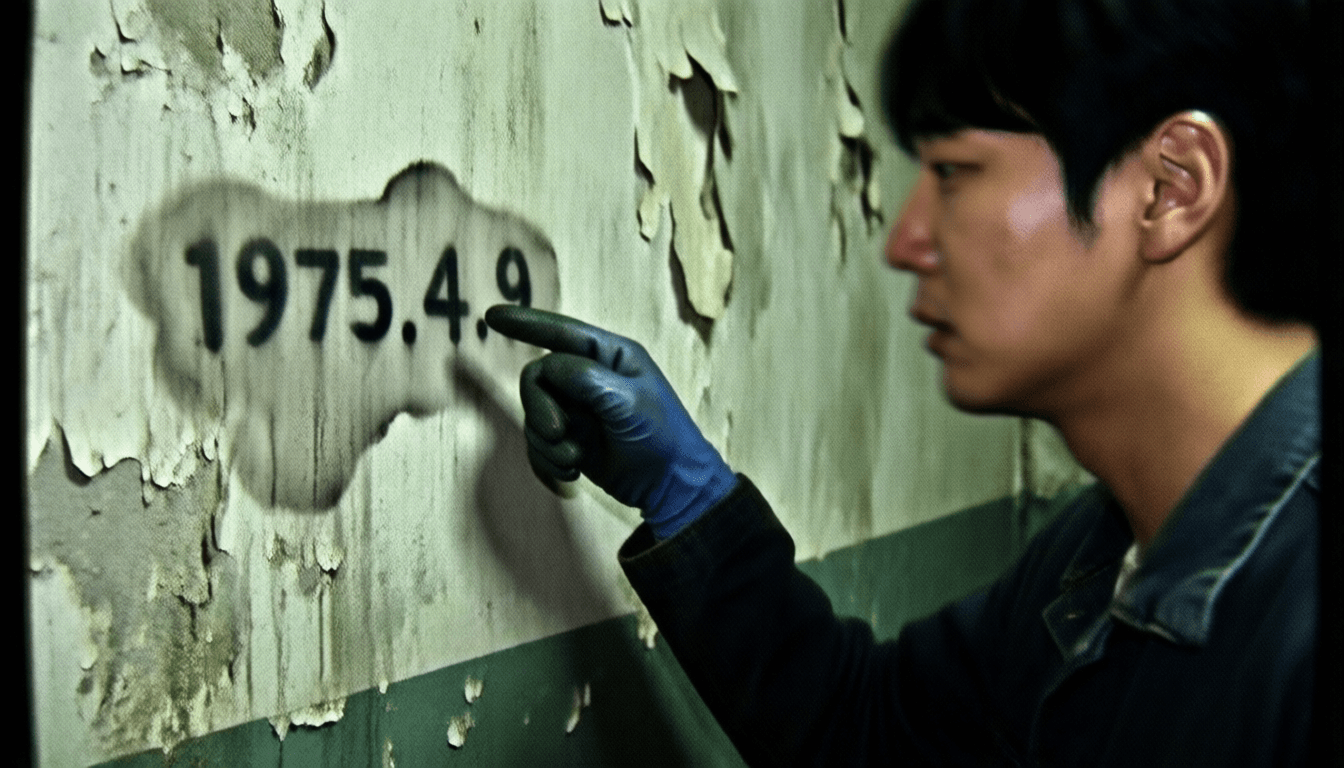
Then, on the wall of a solitary cell, he found it. A faint, almost transparent black mark, like a deeply absorbed stain, coalesced into the numbers “1975.4.9”. Touching it with a gloved finger, he realized it wasn't graffiti but seemed to be ingrained in the very fabric of the wall. A deep, overwhelming sense of despair pressed down on him, and an inexplicable, unjust guilt ached in his shoulders. And then the sounds began: whispers like dry leaves scraping concrete, countless sad, suppressed voices hovering at the edges of his hearing. They weren't decipherable words, but they carried an unbearable weight of sorrow.
Shaking off the encroaching fear, Jihoon was drawn by a chilling intuition towards a small, isolated room at the very end of the corridor. It was smaller than the other cells, with unusually thick, sturdy walls and no windows — clearly a solitary confinement or interrogation room.
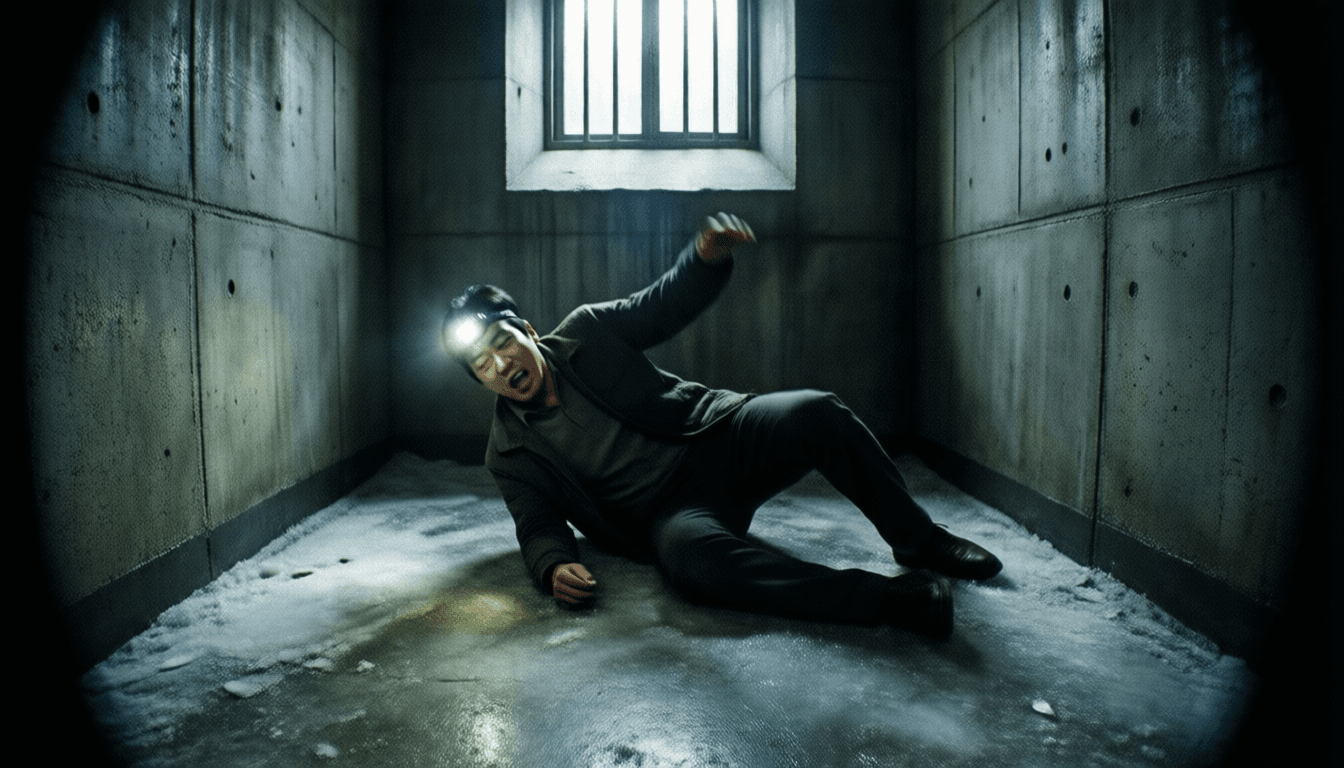
The moment he fully crossed the threshold, the low hum from the floor abruptly ceased, and the room plunged into a perfect, suffocating silence. His ears violently clogged, and simultaneously, the atmospheric pressure in the room suddenly intensified, pressing down on him, making it hard to breathe. The temperature plummeted to a painfully bone-chilling cold. His struggling headlamp flickered wildly, then diminished to a faint, blurry glow, as if the darkness itself was consuming the light.
The thick concrete walls around him seemed to distort. Not actually melting, but his perception itself twisted. The room appeared to narrow in a pulsating illusion, leaning inwards, as if an overwhelming weight was crushing him. And then, an overwhelmingly cold, damp pressure clamped onto his wrists and neck. It wasn't a physical grasp; it was an intense, localized environmental force that perfectly mimicked the sensation of being bound by iron. Jihoon gasped, struggling against unseen, unyielding restraints, his muscles rigid, his legs giving way. He collapsed onto the frozen concrete floor, trapped by the crushing pressure.
A cacophony of sounds erupted. Not in the air, but inside his head, and all around him. It was a massive wave of urgent, agonizing whispers, sobs, and wails that pierced his eardrums. Within that vortex, words tore through: "Framed!" "Unjust!" "Save me!" He was submerged in a maelstrom of collective despair. The raw, unfiltered terror of eight men unjustly sentenced to death. The air in his lungs became impossibly thick, as if he were breathing water. His vision narrowed to a tunnel, and the dim lamp light vanished into complete darkness. He wasn't merely witnessing the past; in that forgotten room, he was experiencing the judicial murder. Manifested in physical, overwhelming reality. He was completely, irrevocably trapped in that memory.
He had no conscious memory of escaping. One moment he was trapped and suffocating, the next he was outside, violently shivering and gasping for air under the indifferent stars. Driven by a primal need for distance, he stumbled back to his car.
Hours later, safe but deeply traumatized, Jihoon shivered uncontrollably under three layers of blankets. The metallic, damp cold and the smell of old blood and concrete clung to him, an invasive presence that no amount of showering could wash away. There were no visible marks on his wrists and neck where he had felt the pressure. But for several days, the skin in those areas remained abnormally cold, and a faint purplish discoloration, like an old bruise, appeared and then vanished without explanation.
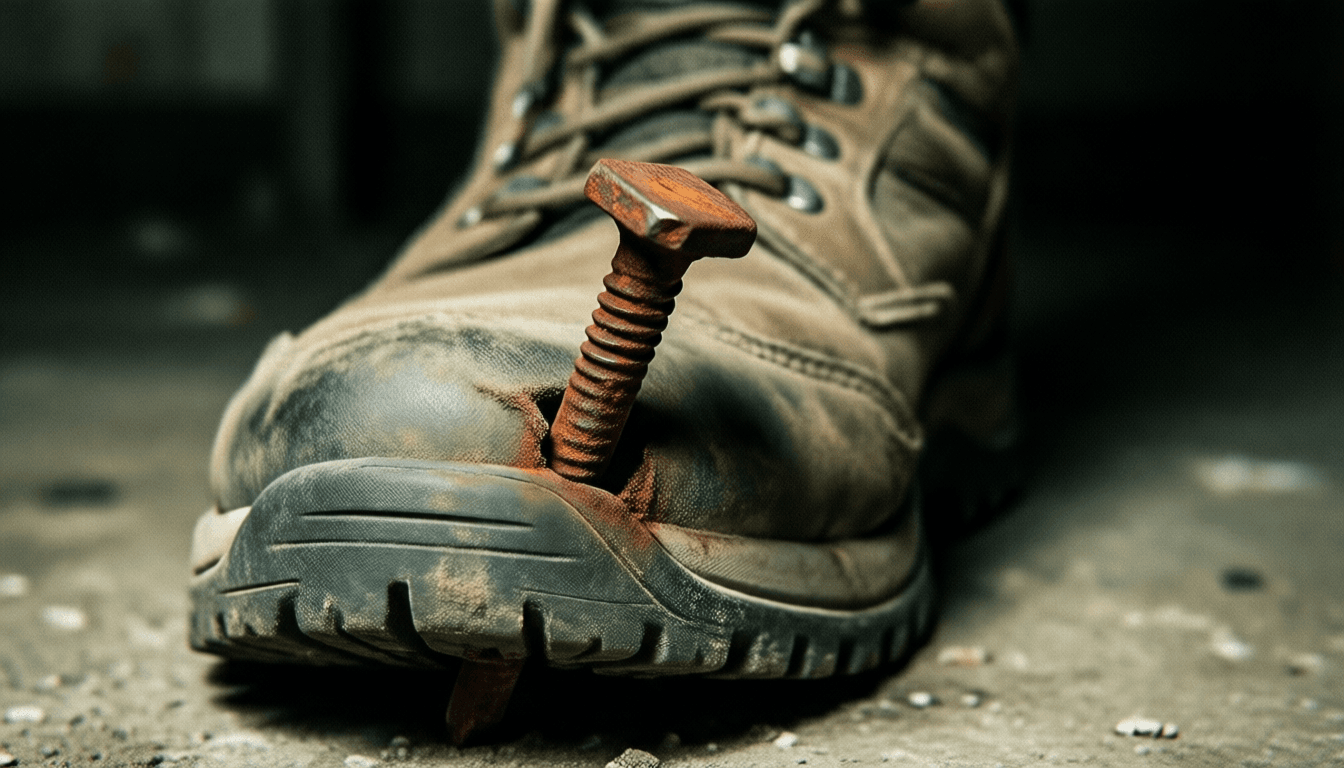
The most chilling thing was this: While cleaning his hiking boots, he found a small, square-headed, severely rusted nail embedded in the sole of his left boot. It was of an antiquated design, completely out of place with any modern architecture. He distinctly remembered the cell floor being bare concrete. There was no way to explain how it got there. He had a chilling certainty: it was from *that place*. The voices, the cold, the pressure, and the nail — they weren't figments of a tired mind. They were the building itself. A physical manifestation of profound wrong, saturated with injustice. Marking him, remembering him. Jihoon never wrote the article he had initially intended to publish. He now realized that some truths were too heavy, too real, too dangerous to merely report. They were alive. And they held on.
[ CLASSIFIED VERDICT ]
[ACCESS LOG - SOURCE FILE]
The Inhyeokdang Incident is a tragic historical event where eight innocent individuals were executed by judicial murder on April 9, 1975. Following their exoneration in 2007, rumors began to circulate about 'Building 3,' an abandoned correctional facility on the outskirts of Seoul, where the restless spirits of the victims are said to linger, marked by the date April 9, 1975, intense cold, and a pervasive sense of injustice.