Mokili Ya Malili: The Curse of the Cold Land
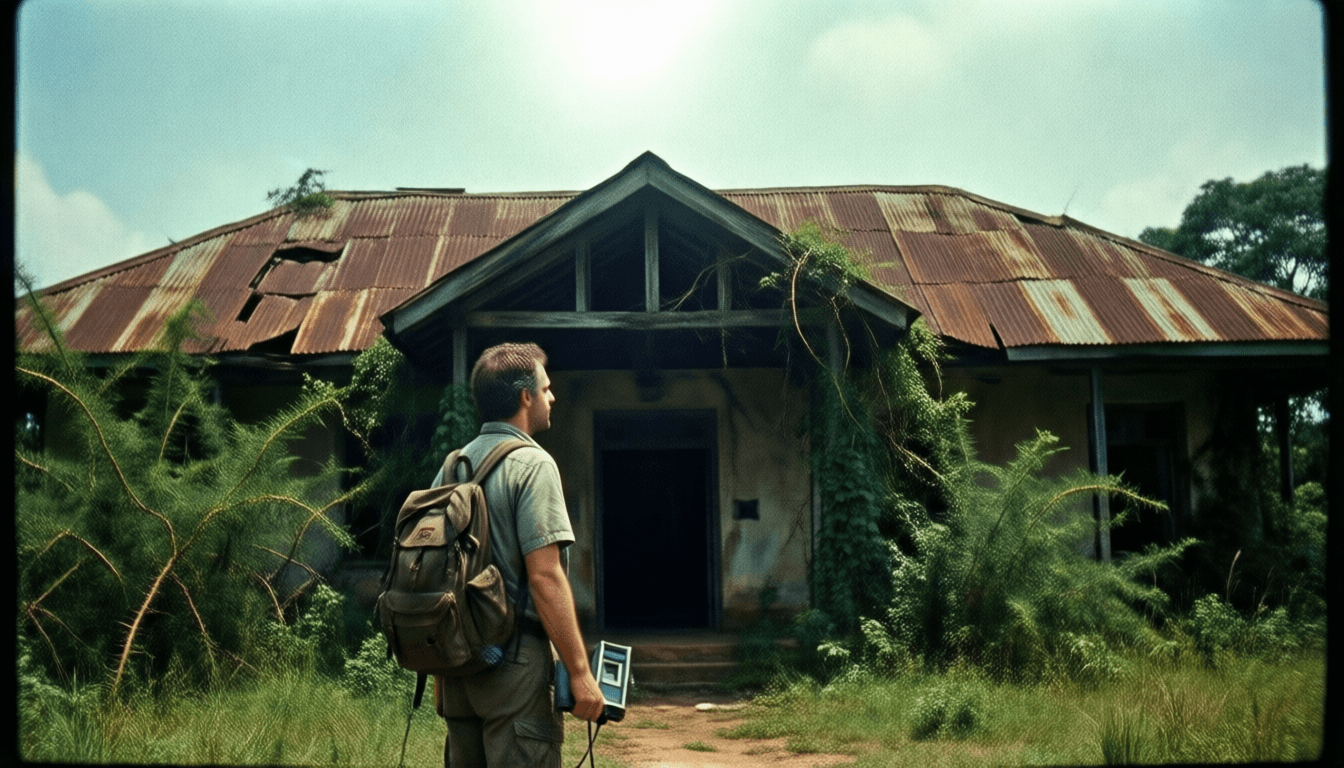
In a remote region of the former Katanga Province of Congo, approximately 120km southeast of Kolwezi, lies an abandoned colonial-era hunting lodge or mining outpost. According to geological survey records from the early 1960s and re-examined in recent niche history forums, Belgian expedition members reported inexplicable gravity fluctuations and localized temperature drops – a 'cold spot' phenomenon. At the time, it was dismissed as equipment malfunction, but locals had for generations called this place 'Mokili Ya Malili', meaning 'The Cold Land', and stayed far away. Their whispers spoke of unnatural silence, disorientation, and a bone-deep cold that intensified particularly around mid-January, the anniversary of Patrice Lumumba's death. Independent researchers cautiously speculate that these anomalous atmospheric phenomena might be a deep energetic scar from the immense repressed violence associated with the secret disposal of Lumumba's remains.
Dr. Elias Vance, a historian specializing in post-colonial African political oppression, became fascinated by 'Mokili Ya Malili'. Driven by a quiet academic obsession with the unconfirmed details surrounding Lumumba's final hours, he paid a hefty sum to hire a local guide. The guide, upon dropping him off at the designated point, promptly turned his vehicle around, refusing to go any closer.
Elias ventured forward. The decayed buildings were completely consumed by the harsh wilderness. Rusty corrugated iron roofs had collapsed, concrete crumbled underfoot, and thorny acacia bushes burst through the walls. The air was eerily still. The usual sounds of insects, distant animal cries, and wind rustling through leaves were completely absent. The sky was vast and oppressive, the equatorial sun a dim, bleached disk. He carried a portable gravimeter, a directional microphone, and a high-resolution thermal camera. He immediately felt a temperature significantly lower than during his walk, and the gravimeter began showing subtle but consistent fluctuations within the margin of error.
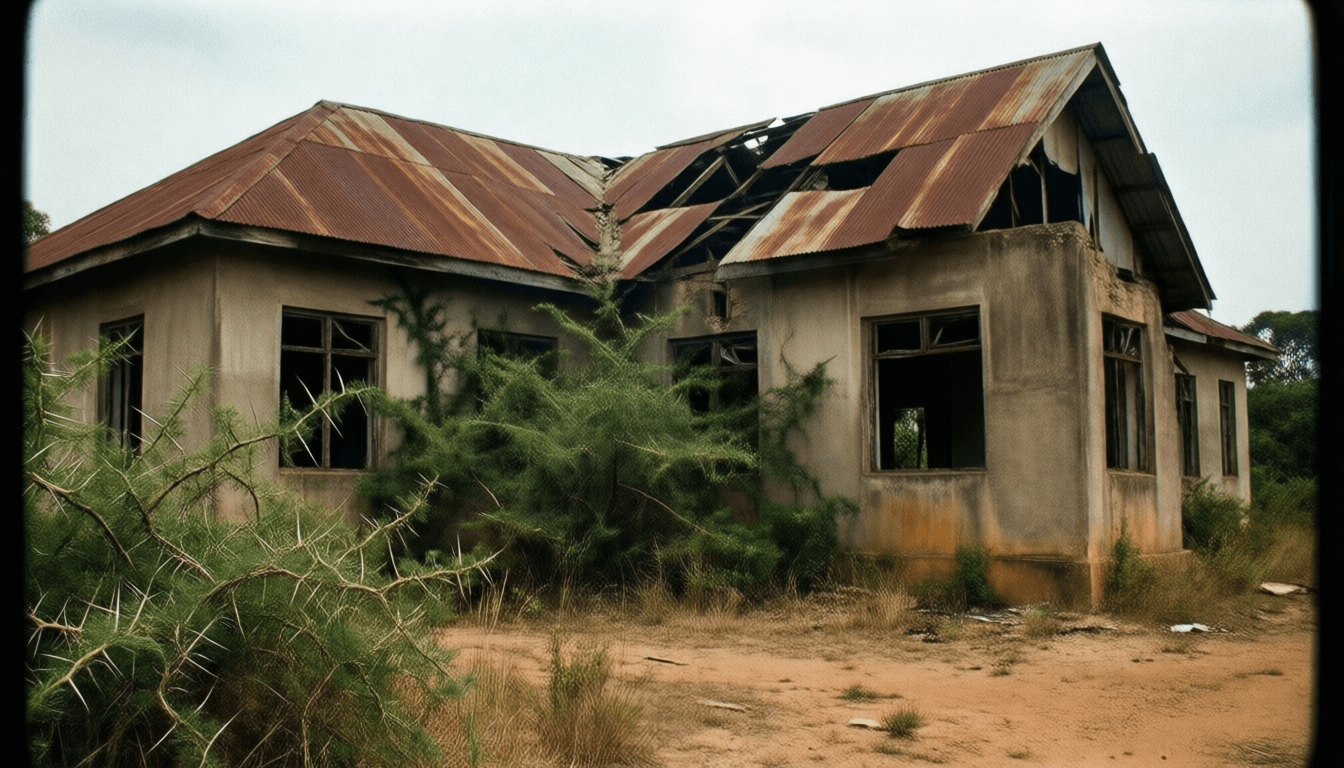
Entering the main lodge building, the silence deepened, becoming a physical pressure. His footsteps in the enclosed space were strangely amplified, yet at the same time, the air seemed to absorb sound, making them dull. He attempted to record ambient sounds, but only flat static played back. However, if he listened closely, he thought he could discern almost imperceptible, distant whispers, which would vanish as soon as he concentrated.
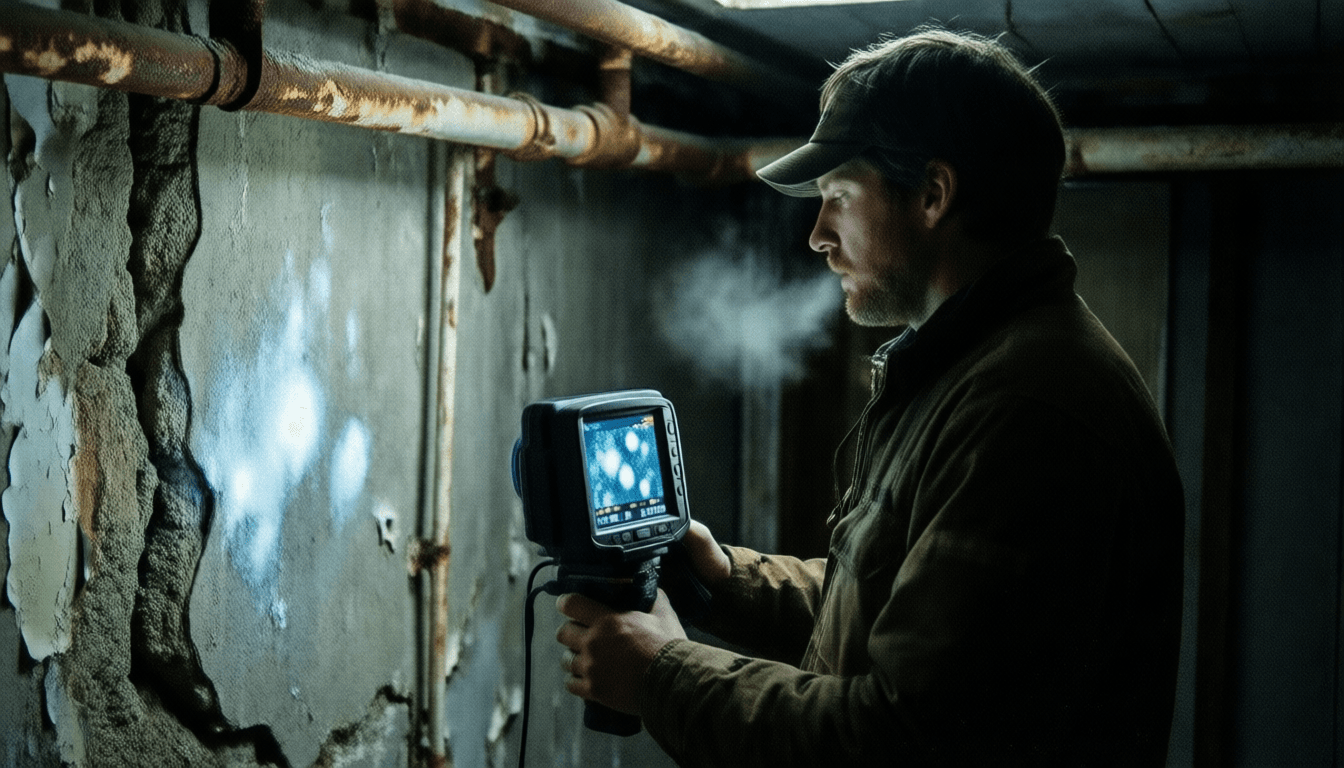
Stepping into a small, windowless room—perhaps a former cold storage unit or temporary detention cell—the gravimeter readings became extremely erratic. A profound sense of disorientation set in, his balance subtly wavered, and the floor beneath his feet felt unstable. He nudged a rusty bucket with his foot; it seemed to hesitate momentarily in mid-air before falling to the floor with a much softer, duller thud than expected. The air in the room was chillingly cold, contrasting starkly with the heat outside, and his breath faintly fogged. The thermal camera clearly displayed localized 'cold spots' that could not be explained by drafts or insulation.
Brief visual distortions appeared in his peripheral vision—non-existent shadows or walls that seemed to subtly breathe. He tried to rationalize them as fatigue or optical illusions. But the pressure in his ears intensified, giving him a sensation akin to a rapid descent. He replayed the audio recording. This time, the whispers seemed to coalesce into a distinct, rhythmic pattern of distress. Choked sounds, as if emanating from a human throat, followed by an abrupt cessation. The gravimeter display flickered, beginning to show impossible negative micro-readings.
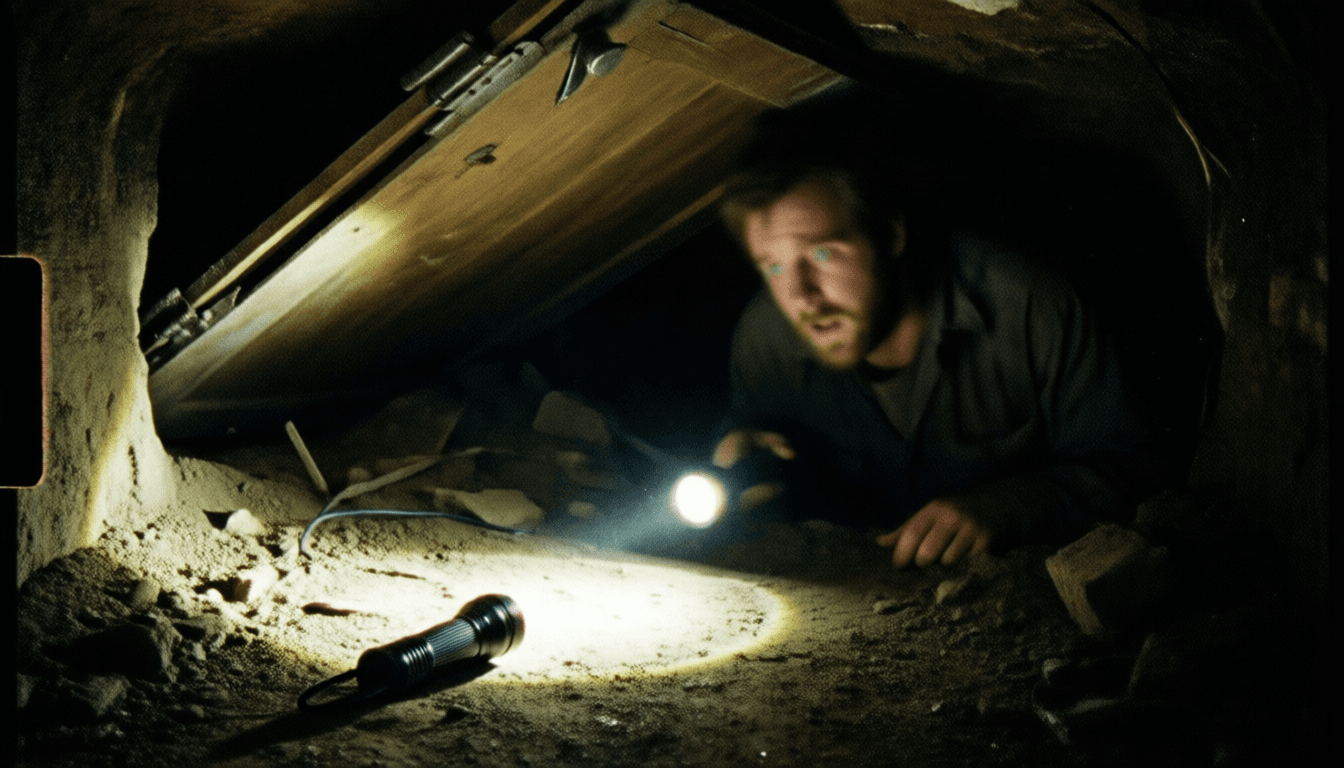
Consumed by a growing, inexplicable, unsettling compulsion, Elias discovered a small hidden room beneath the main floor—a barely noticeable, dilapidated trapdoor. The moment he descended, the flashlight in his hand slipped from his grasp. It plummeted into the impenetrable darkness below.
The small room became a stage of fragmented reality. Localized gravitational anomalies amplified with terrifying force. He was violently thrown to the dirt floor, then just as violently pulled upwards. It was a bizarre sensation of his limbs being simultaneously heavy and light. An immense pressure crushed his chest, stifling his breath, not from an external force, but as if collapsing from within. He heard no sound with his ears, but felt a choked, animalistic scream reverberate deep within his bones. It felt like his own scream, yet it was distinctly not. His ears rang furiously with a painful silence. Time fragmented and scattered. Burning heat immediately followed by flesh-searing cold enveloped him. He felt distinct, brutal impacts like punches and kicks, yet there were no marks on his skin, only agonizing, deep internal pain.
He struggled to move, but his muscles betrayed him. They stiffened, then convulsed uncontrollably. His body felt like it was being torn apart by unseen, opposing forces. The air became viscous, sticky, resisting his desperate breaths. The cold, metallic taste of blood filled his mouth, but his tongue found no wounds. Then, a sharp, piercing pressure behind his left eye. It felt as if something impossibly sharp was entering his skull. The taste of blood intensified… and then darkness.
Elias regained consciousness, lying sprawled on the dry dirt outside the building. His body ached as if crushed, he was disoriented, and his equipment was scattered. He couldn't clearly recall anything after dropping the flashlight. Only fragmented residual images of crushing darkness, immense pressure, and an unspeakable, primal terror remained. His body was sore, but there were no visible external injuries. He found his shattered gravimeter. Though the display was broken, the last recorded data point was still readable: an impossible negative value defying known physics, a profound annihilation.
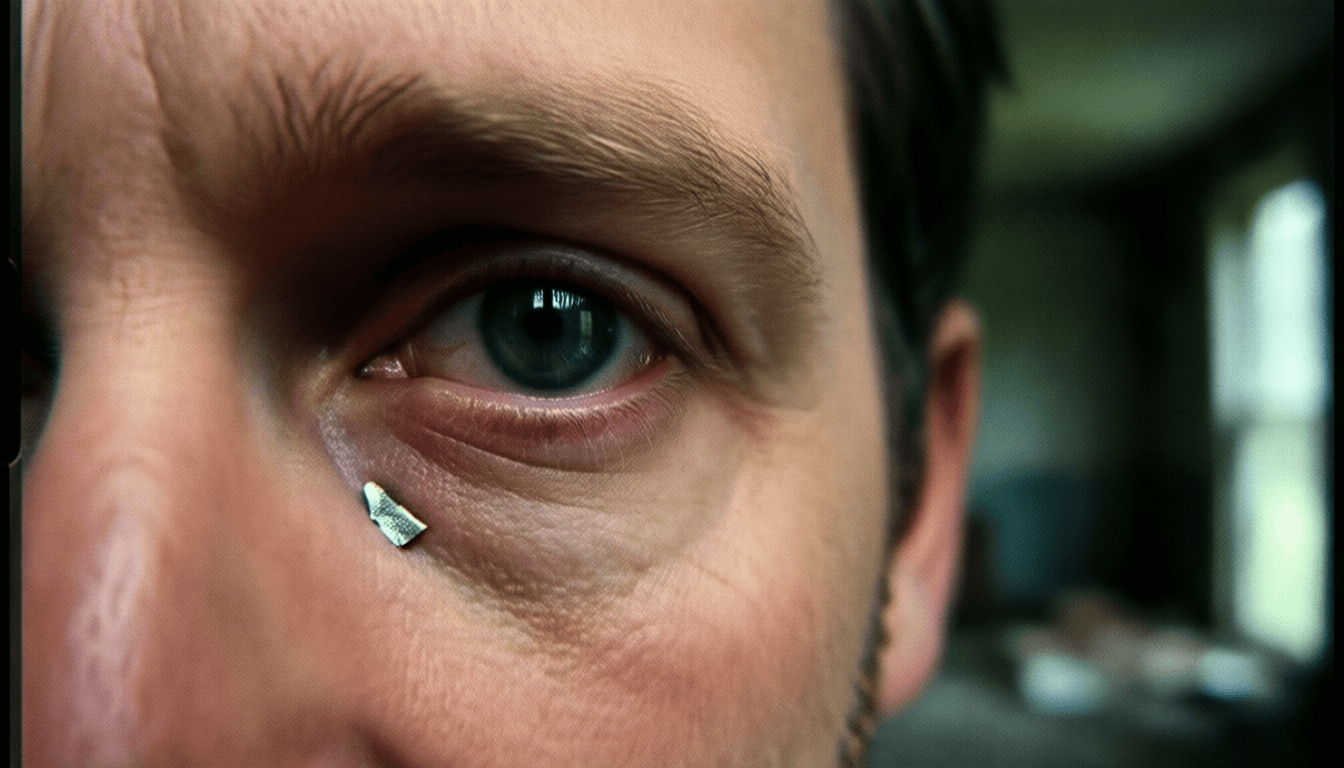
He staggered towards the road. Days later, back in the relative safety of civilization, a subtle, constant high-pitched hum began in his left ear. Looking in the mirror, he discovered an almost microscopic, metallic fragment embedded under his left eyelid, near the tear duct. When touched, it was abnormally cold. Subsequent covert pathological analysis concluded it was a minute fragment of human bone, its age and specific origin indeterminable.
Elias never truly explained what happened in 'Mokili Ya Malili'. But sometimes, when he closes his eyes, he still feels that crushing weight, the silent screams, and the metallic taste of blood. He now carries 'The Cold Land' within him. An indelible mark left by history's unutterable brutality, like a piece of truth permeating his very existence, refusing to be buried.
[ CLASSIFIED VERDICT ]
[ACCESS LOG - SOURCE FILE]
In a remote region of Congo, an abandoned colonial outpost known as 'Mokili Ya Malili' (The Cold Land) is home to strange phenomena. Locals have long avoided its unnatural silence and persistent cold, and old geological surveys reported inexplicable gravity fluctuations. Researchers speculate these anomalies might be an energetic scar from the repressed violence linked to the secret disposal of Patrice Lumumba's remains.