Nightmare on Hornet: The Cold Grasp of the Ghost Ward
Reports regarding the retired aircraft carrier USS Hornet (CVA-12), docked in Alameda, California, and serving as a museum, are endless across online forums and paranormal communities. It's not merely known as 'haunted'; there's an abundance of detailed, corroborating testimonies collected from staff, volunteers, and visitors. These range from minor auditory disturbances—unexplained voices or footsteps echoing in empty cabins—to distinct cold spots utterly detached from ambient temperatures, objects moving without cause, and the chilling sensation of being touched, pushed, or having one's hair pulled by an unseen presence.
Perhaps most compelling are the accounts concerning the ship's sickbay and engine rooms. Staff describe tools self-rearranging, medical equipment shifting from its place, and an pervasive, oppressive sense of foreboding. According to one former volunteer who posted a detailed account online, in the sickbay, heavy, antique medical cabinets were repeatedly found slightly ajar during morning checks, despite no one entering the room overnight. Each time, the internal latch remained secured, defying simple explanation. These are not isolated anecdotes but a consistent pattern suggesting independent intelligences remain within the steel leviathan. Due to this persistent, documented anomaly, this chronicler embarked on a solitary, sober investigation.
On a late autumn night, after the last visitor had departed and the minimal night crew had retreated to the upper decks, access for the investigation was finally granted. My intention was not merely a 'hunt,' but a systematic environmental scan, designed to detect measurable deviations from baseline conditions at known points of activity.
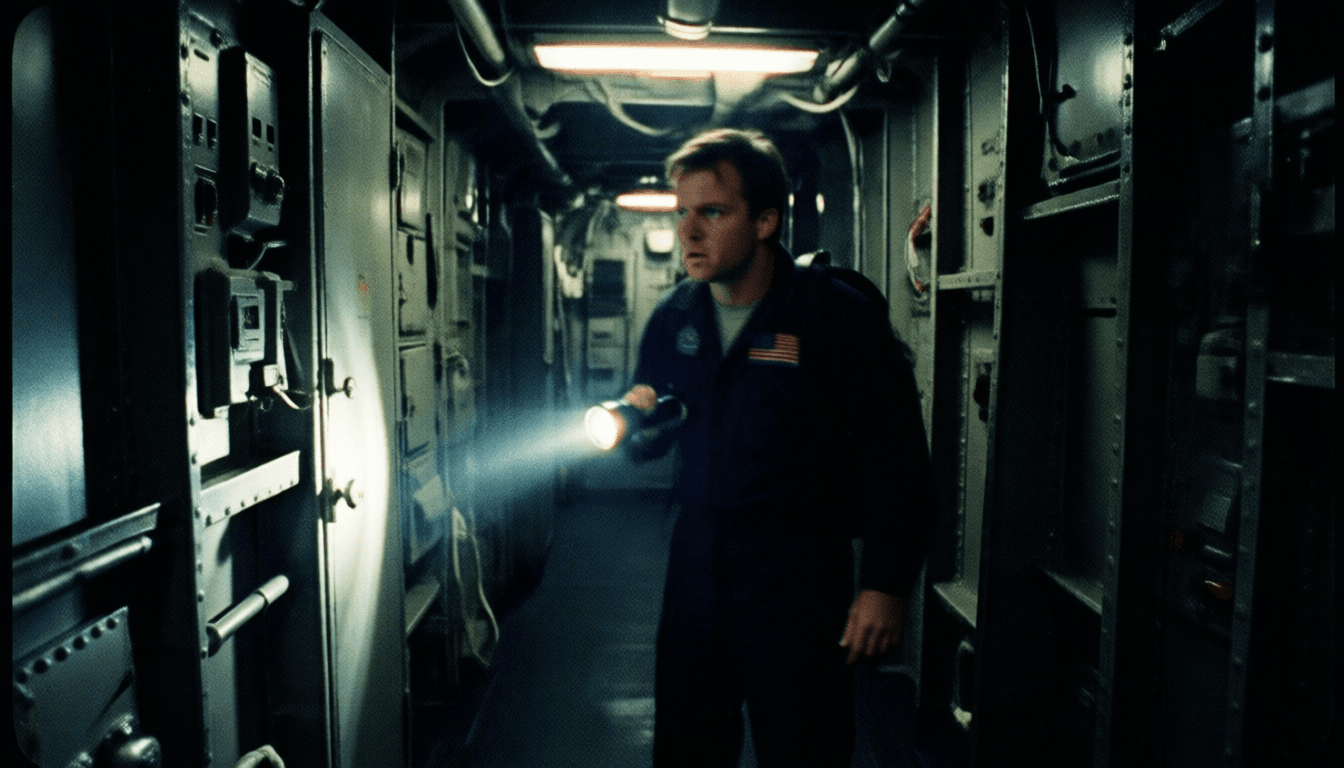
Even at rest, the USS Hornet was a beast of steel and rivets. Stepping onto the main deck, the sheer scale of the vessel was overwhelming, and the air was thick with a faint salinity, the smell of aged metal, and a subtle, acrid, almost ozone-like tang. The silence was profound, broken only by the rhythmic lapping of water against the hull in the distance, a sound that seemed to swallow itself rather than echo.
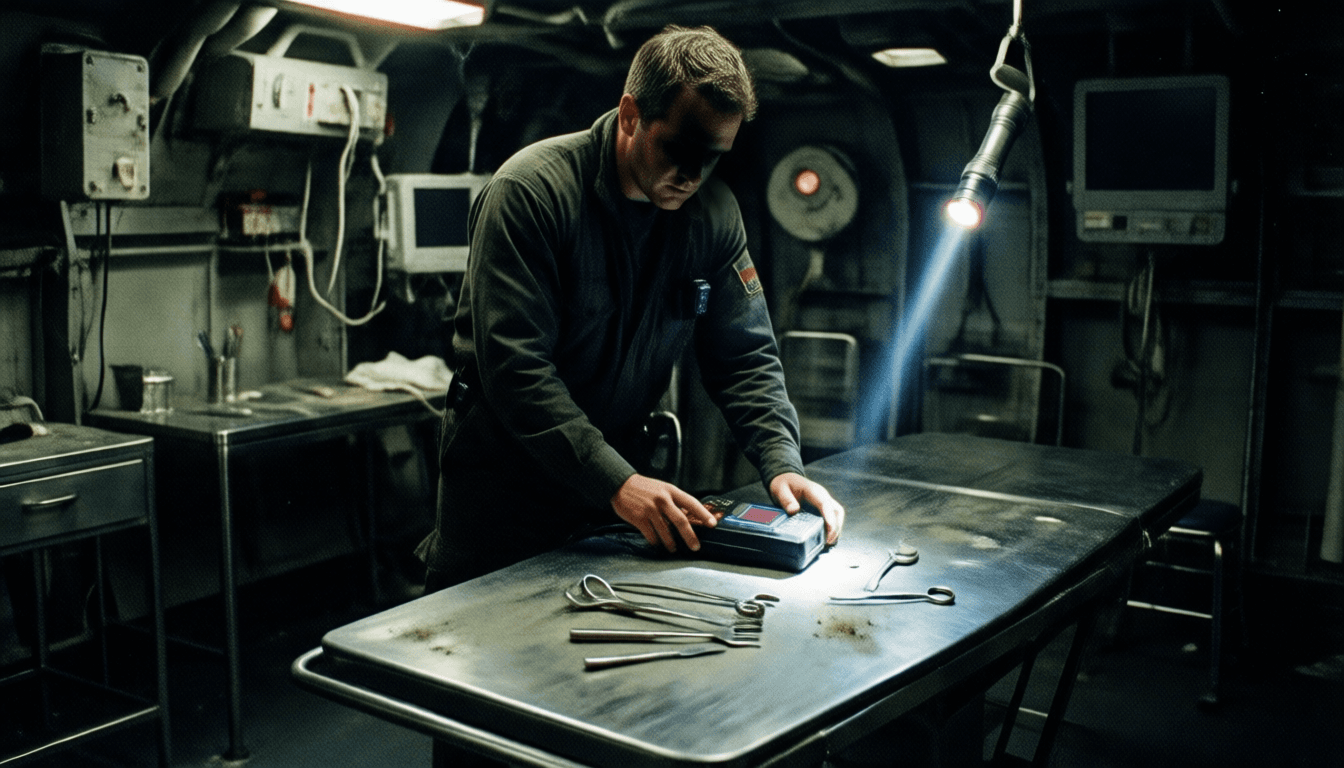
My primary destination was the sickbay, a confined environment known for its high frequency of activity reports. A flashlight was necessary to navigate the labyrinthine corridors, my footsteps unnaturally loud against the linoleum, a stark contrast to the oppressive quiet experienced on the upper decks. The sickbay itself was a tableau frozen in time: antique examination tables, surgical instruments glinting dully in the beam of light, and rows of empty beds for the ship's casualties. The predominant smell was a chemical ghost—a mixture of disinfectant, dust, and something indefinable, metallic, and cold. I systematically set up my equipment: thermal imager, high-sensitivity microphone, EMF detector. I noted the massive, hinged medical cabinet in the corner. The latch was firmly secured.
Initial readings were, as expected, stable. However, the environment began to subtly warp. Near the entrance to the operating theater, an intensely cold pocket of air distinctly manifested. It was 15 degrees Fahrenheit below ambient temperature, appearing a vivid blue on the thermal imager, yet inexplicable by any draft or external factor. My breath plumed white.
Then the sounds began. Added to the regular 'thump-thump' of my own heart in my ears, faint, erratic echoes came from the corridor beyond the sickbay. They didn't align with my pulse. They would cease when I paused, only to resume as I recommenced movement. More unsettling was the auditory data: the parabolic microphone picked up a high-frequency hum, almost imperceptible to the human ear, that pulsed in and out of existence, disconnected from any ship system.
I re-checked the medical cabinet. The latch was still engaged, but the heavy door now stood exactly three inches ajar, revealing a sliver of dark interior. I closed it again, ensuring the latch clicked firmly into place. My rationalizations of ship-listing or vibrations grew increasingly unconvincing.
The air grew heavy. A distinct, cold pressure settled on the back of my neck. It wasn't a draft, but a localized contact, as if a hand had been placed there. I whirled around, my flashlight beam cutting through the stale air, illuminating only sterile emptiness. The metallic smell intensified, now sharp and coppery, almost overwhelming. Like blood. My previously unshakeable psychological composure began to fray at the edges.
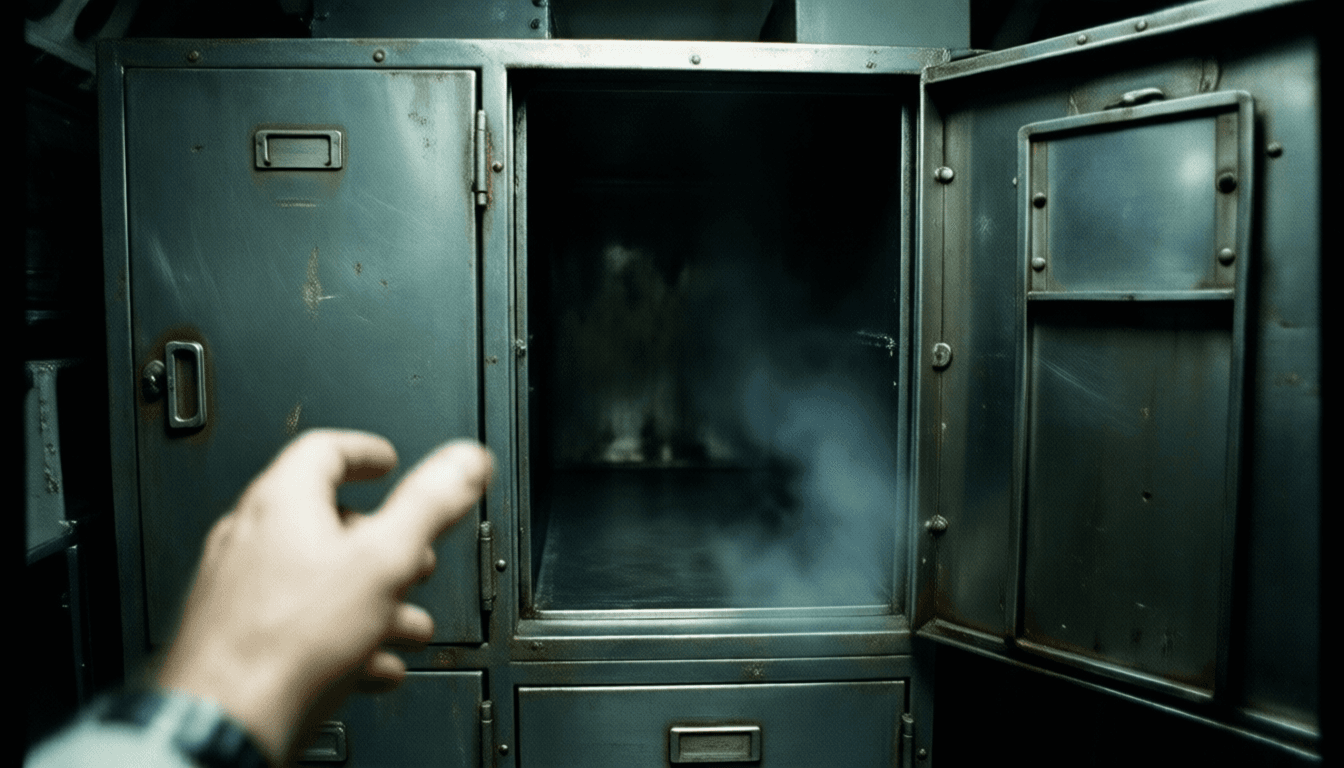
As I reviewed the thermal readings of the cold spot in the main sickbay area, a ferocious, singular jolt struck the ship. Not the gentle roll of a docked vessel, but a sharp, concussive lurch that rattled the steel deck beneath my feet. Before I could process the anomaly, a deafening 'CRASH' erupted behind me.
The massive, hinged medical cabinet I had twice firmly secured had not merely opened. It had flown outwards with incredible velocity, colliding with devastating force against the opposite bulkhead. Old glass bottles shattered on the deck, instruments scattered like shrapnel. As I instinctively spun, flashlight beam wildly flailing, the colossal steel cabinet, defying gravity and inertia, moved back inwards with equally crushing power. It struck my left arm, slamming it against the bulkhead with an intense, breath-stopping pain.
Pure, arctic cold radiated from the cabinet itself. Simultaneously, a thin, skeletal, cold, and powerful grip seized my forearm, twisting with bone-breaking force. It was not the cabinet's pressure, but a distinct force within. From the dark confines of the cabinet, a rasping, guttural wheezing, a sound of pure, ancient malevolence, resonated. My mind screamed, but no sound escaped my throat.
With a surge of primal adrenaline, I wrenched my arm free, skin tearing on the cabinet's rough edge. I stumbled backwards over fallen instruments, my heart hammering against my ribs, blood thudding in my ears. As I struggled to regain my footing, the heavy watertight door leading out of the sickbay, which I had wedged firmly open, slammed shut with a deafening thud. This was followed by the slow, deliberate metallic creak of the internal locking handle turning, sealing my exit. Trapped.
A cold, absolute terror seized me. I pounded on the unyielding steel door, yelling, but my voice was swallowed by the ship. Then, from the other side of the now-locked door, I heard it. Heavy footsteps, 'thump-thump-thump,' fast, and growing steadily louder. Right there, just beyond the thick steel. As the presence exerted pressure from the other side of the door, an impossible shock of force spun the massive locking handle for me. With a final, desperate surge, the door burst open, and without a thought of turning back, abandoning my equipment, my composure, everything, I stumbled and ran into the dark main corridor.
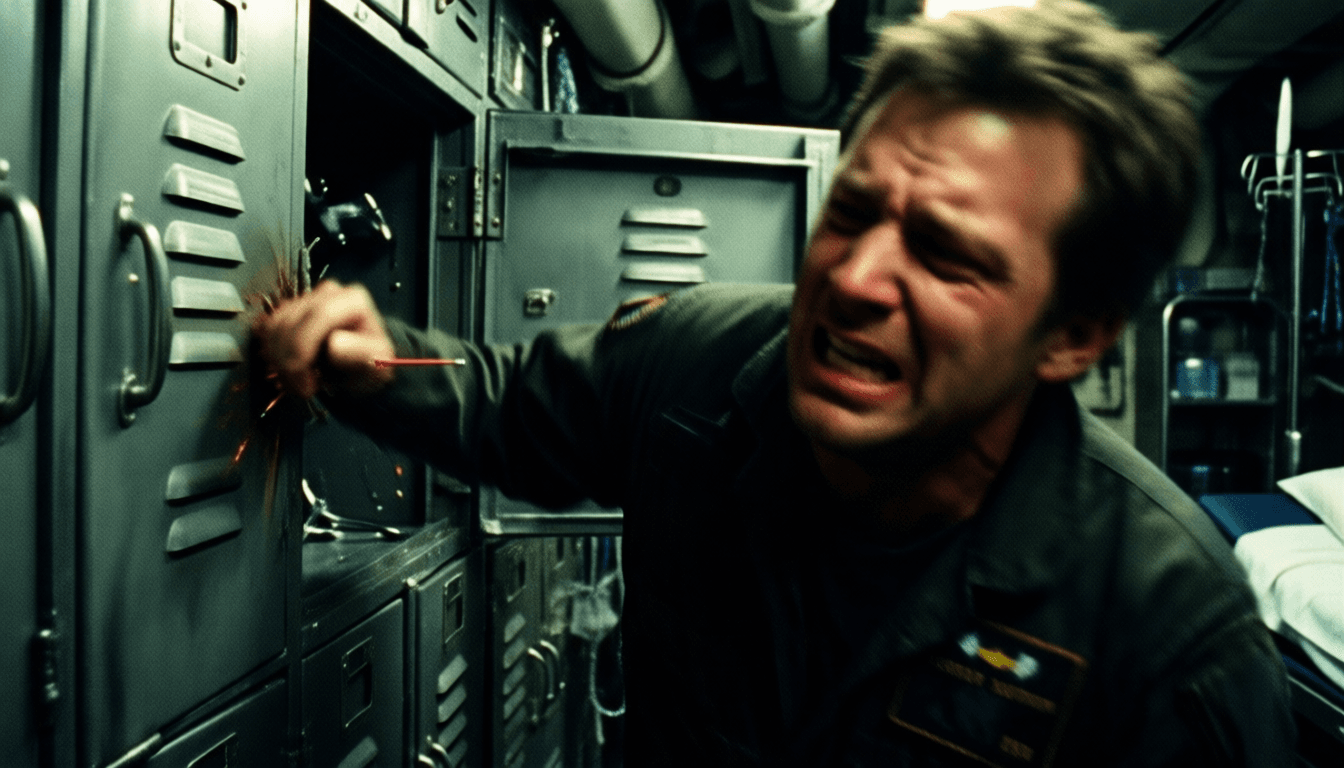
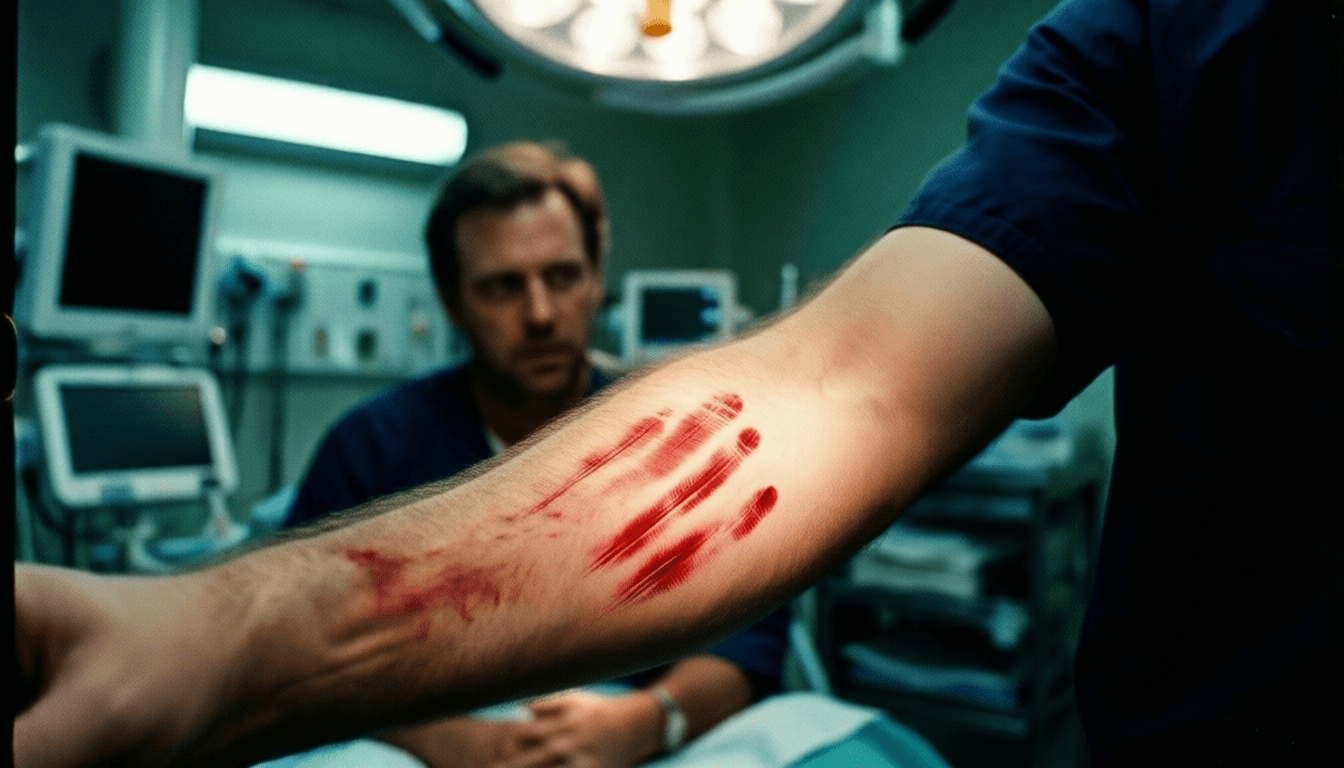
I didn't stop until I was off the USS Hornet, the cold night air of Alameda filling my lungs. The next morning, under the sterile lights of the hospital emergency room, doctors examined my left forearm. There were deep, red abrasions. Four distinct, parallel lines, running from my wrist to just below the elbow, clearly resembling finger marks. The attending physician could offer no more precise explanation for their peculiar pattern than "unusual blunt force trauma against a metallic surface." I offered no explanation either.
In the weeks that followed, a faint, phantom odor clung to me. The same coppery, metallic smell I had encountered in the sickbay. Subtle and almost imperceptible to others, but for me, always present, clinging to my clothes and skin, a constant, chilling reminder of that cold grasp.
Days later, Hornet staff recovered the equipment I'd abandoned. The audio recorder held several minutes of static, followed by a single, perfectly clear, brief sound. It was a raw, agonizing scream, unmistakably human yet distorted and ancient, abruptly cut off just before the point where I'd been trapped. It was not my scream. It belonged to the ship, and perhaps to something else entirely.
I closed my case file on the USS Hornet. Not with clear answers, nor with a dismissal of the unexplainable. But with a new, profound understanding of the thin, eerie veil between the living and that which refuses to die. I have not returned to the Hornet. But the ship, it seems, has never truly left me.
[ CLASSIFIED VERDICT ]
[ACCESS LOG - SOURCE FILE]
This story is based on the real-world urban legend of paranormal phenomena aboard the retired aircraft carrier USS Hornet (CVA-12), docked in Alameda, California. The ship is notorious for numerous ghost sightings, including unexplained voices in empty cabins, moving objects, and the sensation of being touched by unseen entities. These phenomena are particularly concentrated in the ship's sickbay and engine rooms, suggesting it is a hub of actual supernatural activity rather than mere folklore.