The Thaw Bed: The 4.3Hz Pulse Beneath Churchill
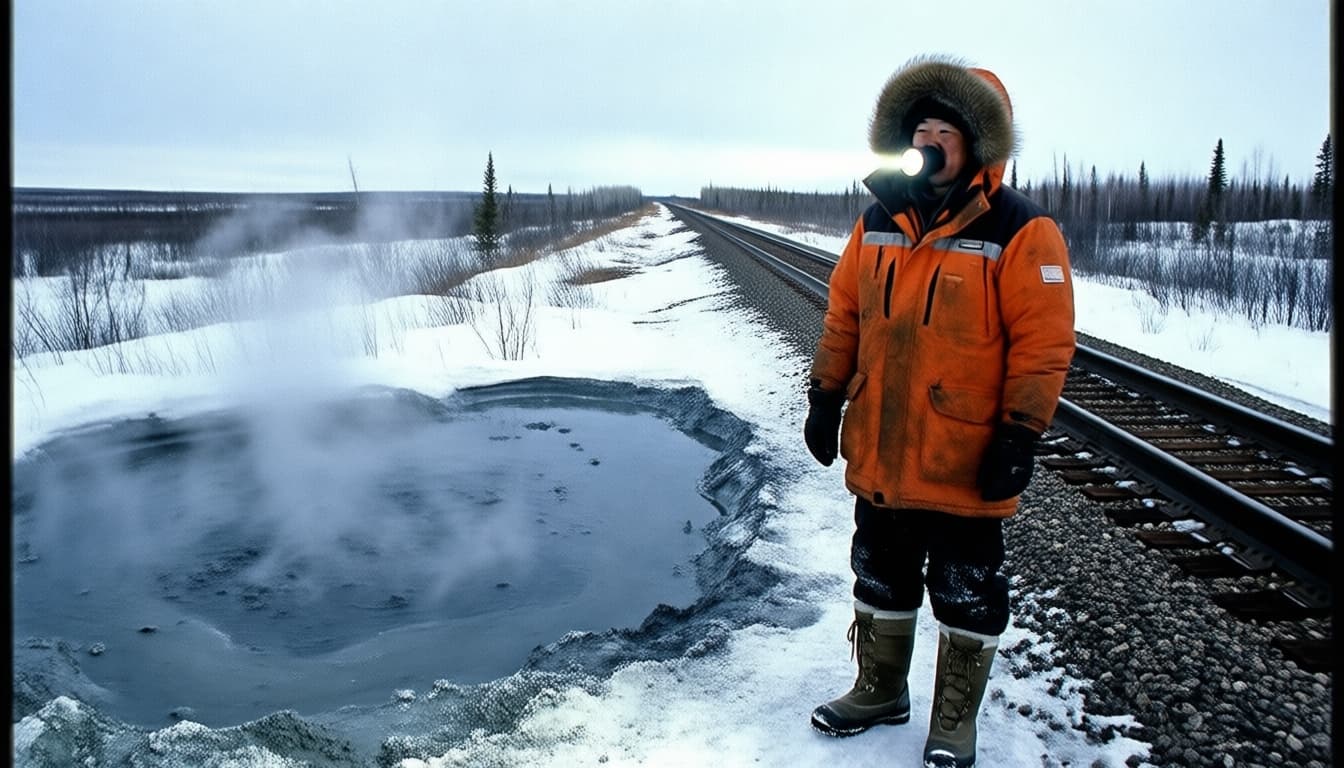
In the classified archives of the Churchill Seismological Observatory (CHR), operated under Natural Resources Canada (NRCan), lies a bizarre dossier that has not been updated since 1981. Coded #B8-1981-T, it concerns a six-mile stretch of tundra along the Hudson Bay Railway between Mileposts 482 and 488—known colloquially among trackmen as the 'Thaw Bed'—that never freezes, even in the brutal sub-zero depths of minus forty degrees. Railway crews have long obeyed an unwritten rule never to bring a locomotive to a halt atop this bubbling, blackened mire. Then, in late 2023, an unauthorized radio frequency south of Cape Churchill intercepted raw shortwave transmissions registering a rhythmic 4.3 Hz shockwave pulsing relentlessly from deep within the bedrock.
When our snowcat entered the anomaly during a ground subsidence survey, the texture of the earth changed without warning. The crisp, brittle crunch of frozen permafrost under the tracks dissolved instantly into a dull, squelching resistance. Crushed beneath the treads was not pristine northern snow, but an oily, ash-colored sludge. In the freezing polar night, my breath crystallized instantly against my collar, yet from the stunted spruce ahead rose plumes of sulfurous steam reeking of boiled mineral oil.
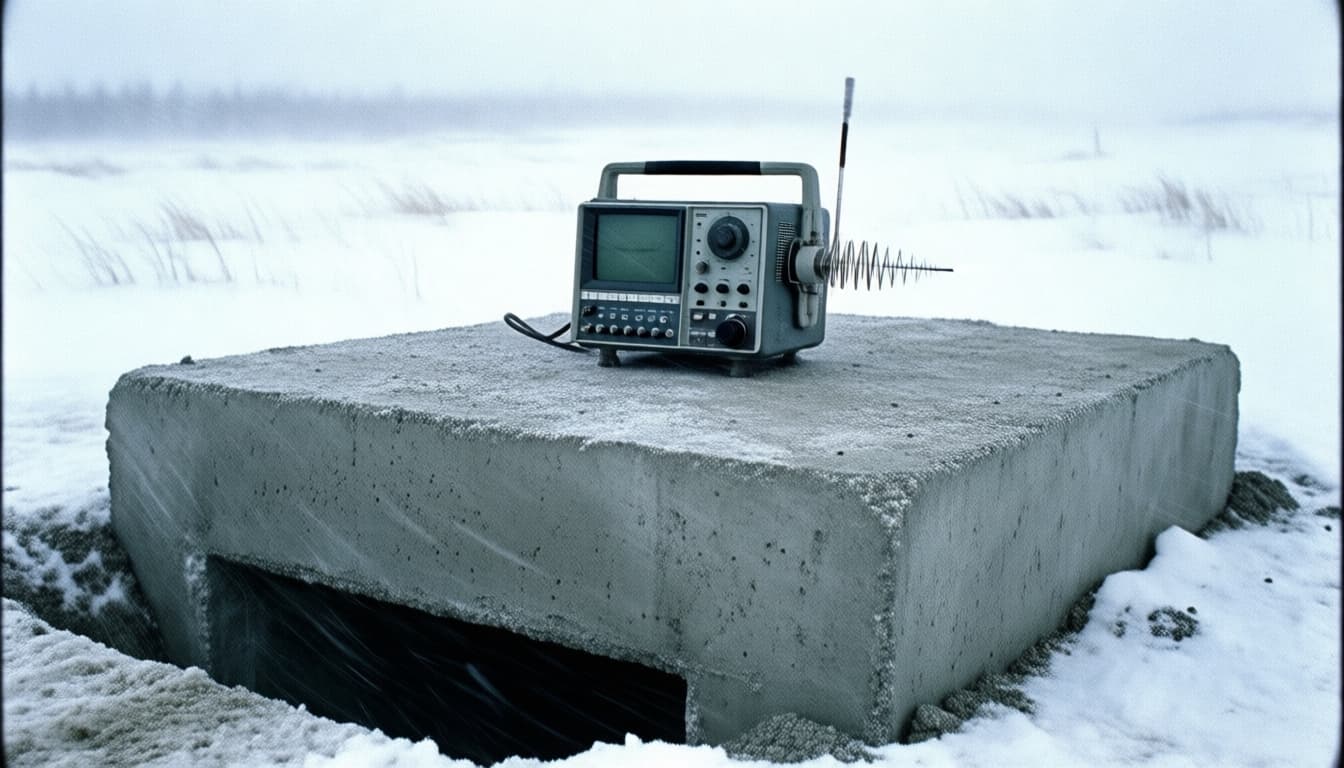
Ground-penetrating radar traced a concrete bunker embedded deep into a granite fault line, cleverly disguised beneath layers of till. In place of a national emblem or military crest, a single tarnished brass plaque had been eroded by acidic seepage: NRC-TERRA-6 (1972). Snow around its ventilation towers was completely melted, wavering in thermal mirages. Using a heavy pry bar to wedge open the frost-welded blast hatch, a damp, lukewarm exhalation rushed up from the deep throat of the shaft, choking our lungs.
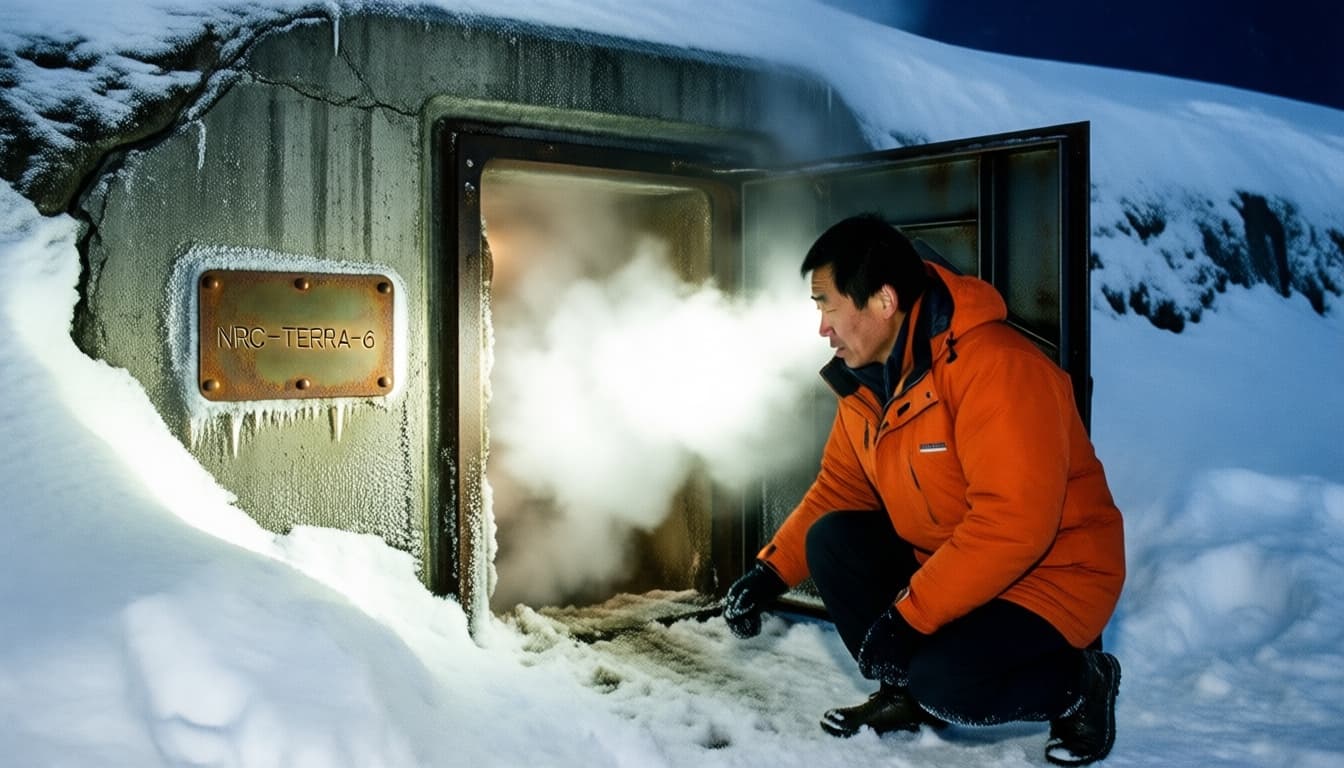
Descending the vertical maintenance ladder rung by rung, the temperature spiked impossibly by nearly ten degrees Celsius with each subterranean level. Eighty meters down, I had long shed my heavy parka; my skin glistened with slick sweat. Tapping a maintenance conduit brought a cold chill down my spine: instead of echoing outward, the metallic clang rebounded along the dense rock face and struck my eardrums before the strike even finished. The acoustic physics of the chamber were turned inside out.
Beyond a wire-mesh catwalk, in the belly of an immense subterranean cavern, crouched a Cold War relic—a four-story counterweight apparatus known as the 'Seismic Harvester,' resembling a gargantuan, mechanized lung. It was originally engineered to absorb seismic friction along the fault line to power early-warning radar arrays. But when I checked the analogue pressure gauges, my breath hitched. The machine was not harvesting energy. Trapped in a catastrophic inverted feedback loop, the mechanism was violently driving its massive tungsten piston into the bedrock, manufacturing artificial earthquakes. It was shattering the earth just to feed on the resulting friction.
Deep inside my skull, the 4.3 Hz infrasound resonated through my skeleton. A violent, gut-churning nausea took hold as my eyeballs vibrated microscopically within their sockets. Objects at the periphery of my vision blurred into smeared dark trails, rendering balance impossible.
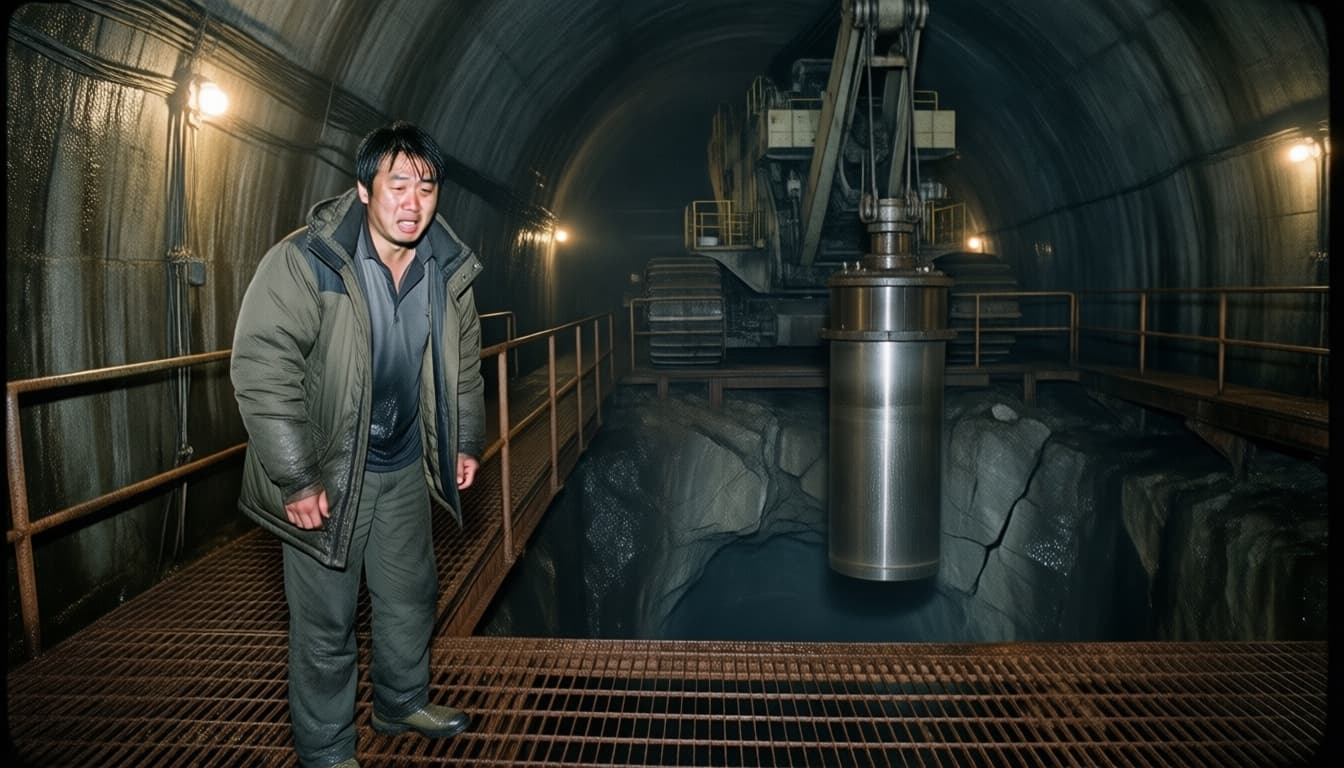
A harsh mechanical click of an aging hydraulic trip-switch tore through the subterranean hum. Misinterpreting the weak thermal signature of my lantern as a drop in chamber temperature, an automated shutoff valve snapped. A forty-ton tungsten alloy cylinder plunged into the bore-shaft with a ground-splitting roar.
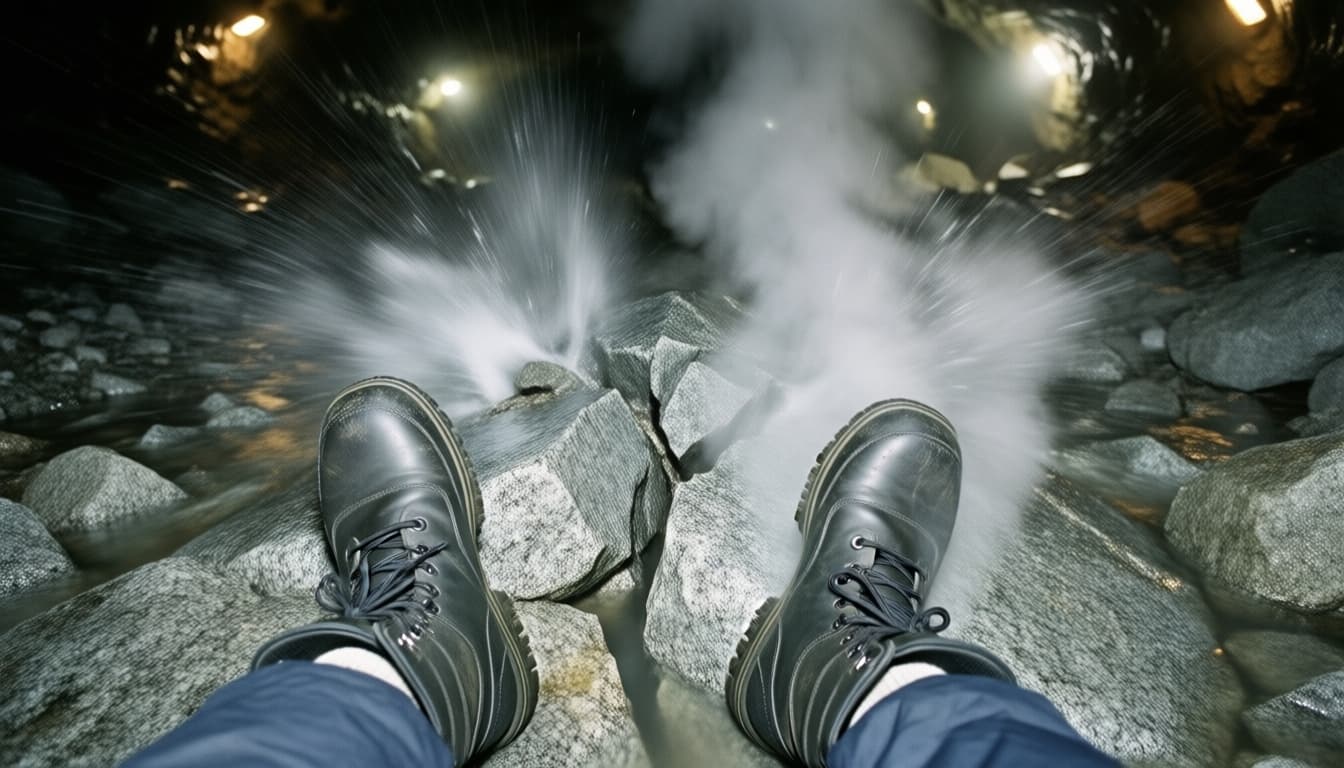
The impact was not merely a tremor. The solid granite floor beneath my boots was no longer solid. At the absolute peak of acoustic resonance, the dense igneous rock liquefied like churned water. My boots sank mid-shin deep into a freezing, gray slurry that had been unyielding stone seconds prior. The sheer primal horror of solid matter evaporating beneath my feet paralyzed my chest.
Superheated geothermal steam exceeding sixty degrees erupted from freshly fissured walls, blinding the chamber in thick white mist. As the vibration cycle shifted and the liquefied stone began seizing back into rock, I tore my legs free with agonizing force, ripping the skin of my shins. Lunging for the ladder, I heard the machine spiral into complete madness behind me, pulverizing granite with frenzied, deafening strokes. Rungs sheared away beneath my boots, falling into the roaring abyss below.
Tumbling through the surface blast door onto the snowpack, the sudden vacuum depressurization of the shaft belched a geyser of scalding vapor that ripped the heavy iron hatch from its hinges. I never looked back. I simply ran into the arctic dark to escape the scalding breath of the earth.
When rescuers found me wandering the tracks three days later, my eardrums were permanently ruptured, leaving the 4.3 Hz pulse scarred forever into my brain. The Transportation Safety Board logged the incident as a shallow permafrost natural gas pocket eruption, and the coordinates were promptly sealed beneath four hundred tons of rapid-setting hydraulic concrete.
Yet weeks later, sitting in an audiology clinic in Winnipeg hundreds of kilometers south, I placed a pocket seismograph onto the medical office's concrete slab. The needle never rested. Across the digital readout, a faint but razor-sharp waveform spiked in identical, rhythmic pulses. The four hundred tons of cement had not silenced the tremor. It had merely provided the most perfect acoustic conductor to shake the entire Canadian Shield.
[ CLASSIFIED VERDICT ]
[ACCESS LOG - SOURCE FILE]
Based on real-world geological anomalies along the Hudson Bay Railway in Churchill, Manitoba—where specific stretches of tundra permafrost mysteriously slump and resist freezing in minus-forty-degree weather—combined with Cold War folklore alleging secret subterranean acoustic and seismic radar installations beneath the Canadian Shield.