The Glowing Shadow of Chiang Mai: Ngao Rueang Saeng
In November 2021, the body of a freelance geological surveyor was discovered inside an unregistered underground drainage tunnel on the outskirts of Doi Suthep-Pui National Park, west of Chiang Mai, Thailand. The official cause of death documented in Thailand's Department of Disaster Prevention and Mitigation (DDPM) internal autopsy report was acute asphyxiation caused by fine crystalline spores obstructing the respiratory tract. However, leaked details from the pathological report raised disturbing questions. Self-luminous, unknown mycelial filaments were detected inside his ocular vitreous humor, and microscopic abrasions forming a precise hexagonal grid—identical to an optical micro-lens array—were etched onto the back of his retinas. It was the moment that the 'Ngao Rueang Saeng' (Shining Shadow), an anomaly mountain villagers had warned about for decades, finally left its trace in official records.
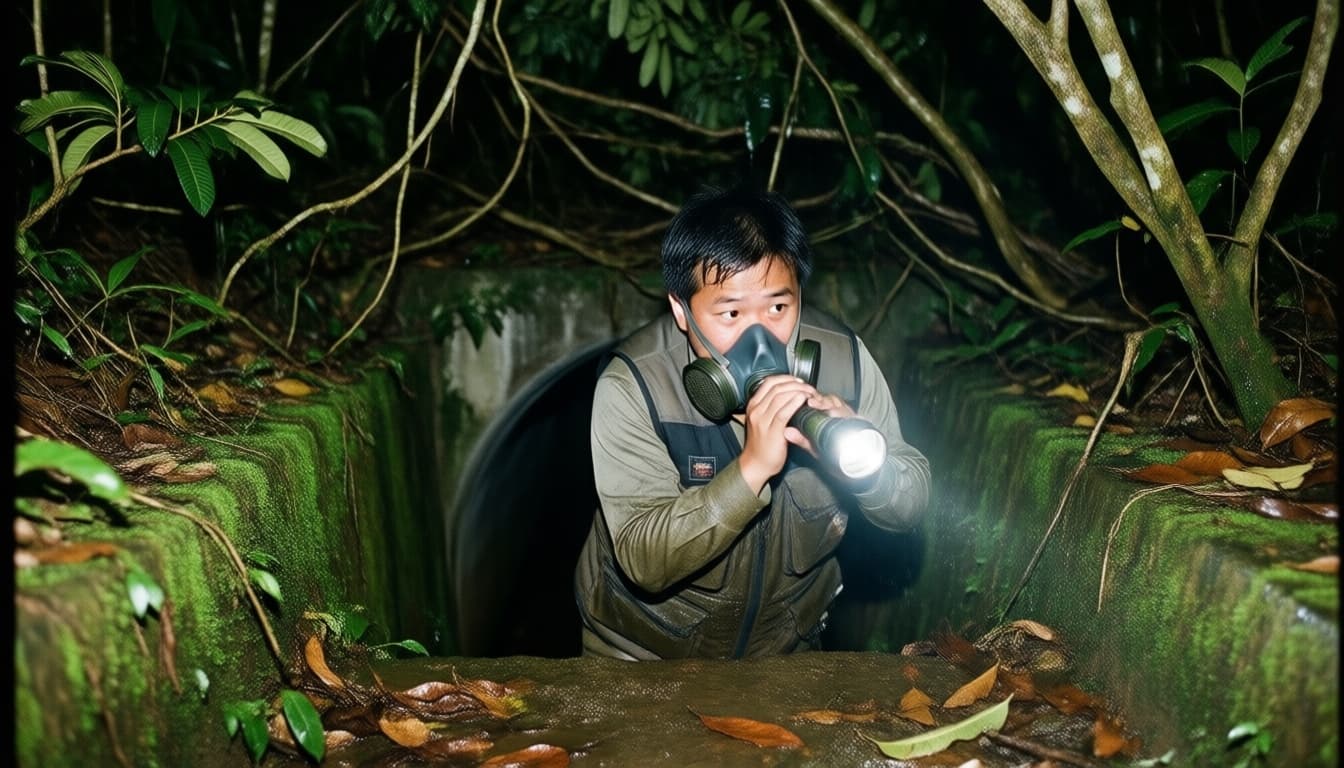
To investigate the source of this silence, I headed toward a World War II Japanese-era concrete sedimentation basin concealed behind an overgrown longan orchard. Barely 1.2 meters wide, the drainage channel cut through solid granite bedrock, angling down toward the underground water table at a gentle six-degree incline. Past the 50-meter mark, the engine noise from the distant road severed abruptly, as if cut by a blade. Only the labored sound of my breath through a P100 respirator mask ground heavily against the damp, echo-less air.
At the 180-meter point, where modern concrete gave way to rough-hewn granite rock, I found it. Packed tightly into every fracture was a dense, charcoal-black velvety fungal mat. It showed zero reaction to regular white LED light, but the moment I directed an ultraviolet spectrometer across its surface, cold blue sparks crackled across the texture. What hovered in the air was even stranger. Spores dislodged by vibration did not settle to the floor; they remained suspended in mid-air, held rigid by an unseen electrostatic field.
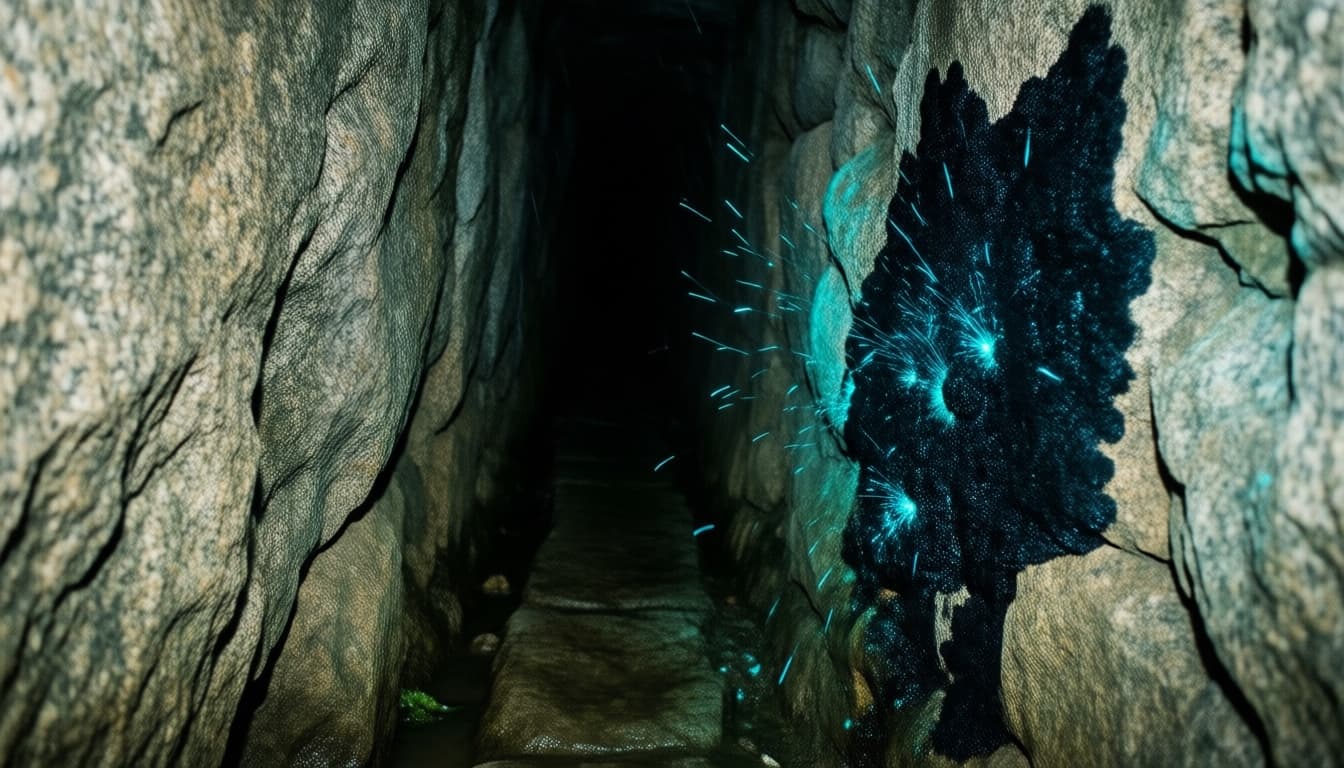
The thermometer plummeted vertically to 16 degrees Celsius. Along with the chest-crushing chill came a sensory lag. The click of my respirator's exhaust valve reached my eardrums half a beat late, vibrating in my jaw before it sounded in my ears, while the leachate trickling beneath my boots flowed in rhythmic, staggered pulses rather than smooth ripples. Cold sweat slid down my temples.
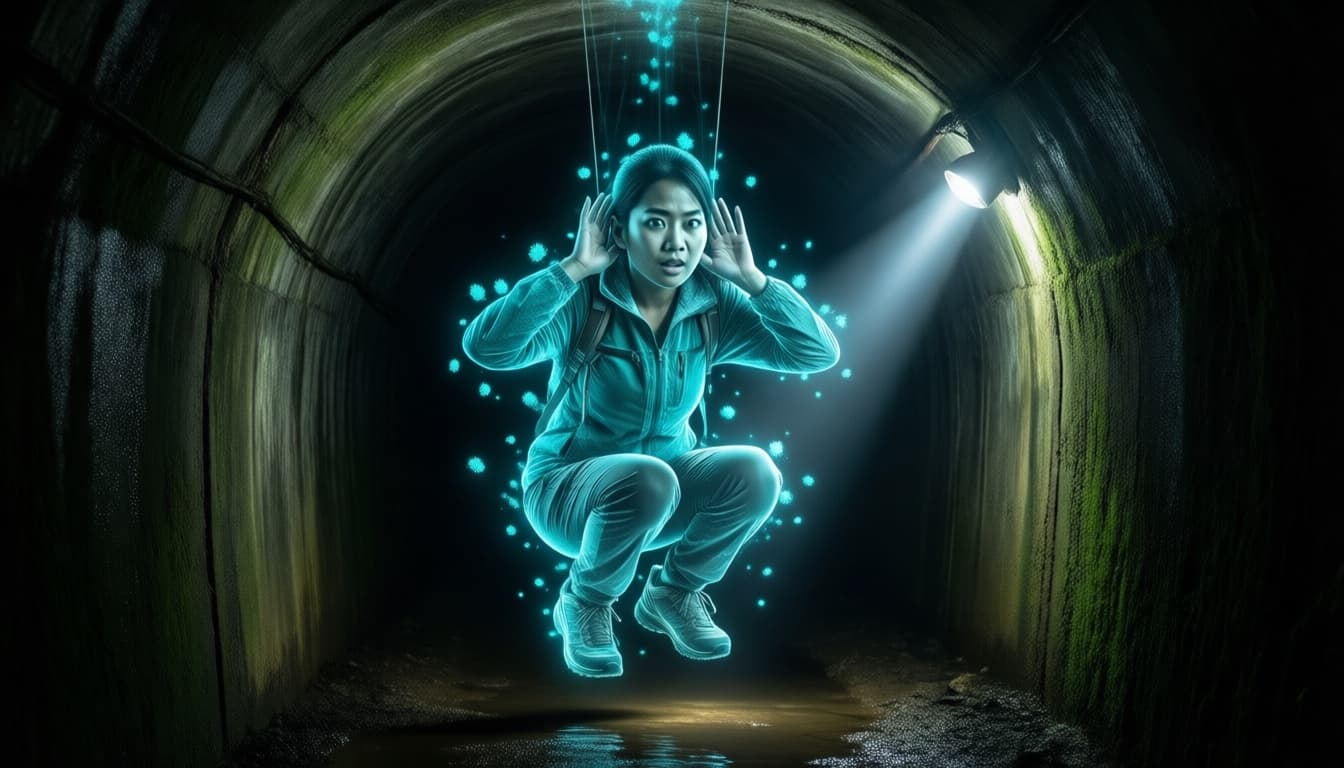
My headlamp flickered erratically as if drained of voltage. In that split-second of pitch darkness, the suspended blue particles instantly rearranged themselves. Three meters ahead on the tunnel floor, a figure of a woman wearing early-2000s hiking apparel sat huddled, clamping her hands over her ears. It was no condensation trick or hallucination. When I stepped two paces to the left, the hidden profile of her cheek and jawline revealed itself with stereoscopic depth. Millions of bioluminescent spores hovered in precise three-dimensional parallax.
This was no static recording of the past. The moment I took a step, the crouching figure's head snapped toward me at an unnatural, mechanical angle. The suspended spore web rippled, actively tracking the exact focal point of my retinas in real-time. It was an optical handshake, attempting to close a biological circuit between my eyes and the geometry of the tunnel. The stench of intense ozone mixed with metallic, copper-tinged blood saturated the stagnant air.
The fungal mass reacted violently to the carbon dioxide escaping my mask seal. Coarse fibrous tendrils burst from fissures in the calcified rock walls, instantly knitting across the corridor behind me. Turning chalky white upon contact with the draft, the calcified mycelial web sealed my retreat. Simultaneously, dozens of glowing blue afterimages rose in the gloom—miners, past forestry workers, and the surveyor who vanished in 2021. They did not walk. Like dropped frames in a corrupted video file, they jumped forward several centimeters per second, closing the distance in stuttering lapses.
My breath hitched as the foremost projection surged through my outstretched arm. It was not intangible. A frigid, physical drag, like churning through sub-zero viscous fluid, seared my skin. Under the crushing pressure, the intake valve of my respirator buckled, and glowing cyan dust forced its way past the silicone gasket and flooded my nasal cavity.
A sensation like frozen needles plunging into my optic nerves flared behind my throat. My brain screamed as my vision fractured into two disparate feeds. With my eyes open, I saw the suffocating underground drain; but when I slammed them shut in terror, the blazing midday sun over the 1984 Doi Suthep jungle unrolled before me. Stolen memories, the final suffocating gaze of a laborer whose airway was crystallizing with fungal glass, struck my visual cortex directly.
Gripped by violent convulsions, I snatched an industrial degreaser aerosol can from my utility belt and clicked a lighter beneath the nozzle. What filled the confined tunnel was not an explosion, but a blast of blistering, dry heat. As the shockwave tore through the chamber, the electrostatic field holding the spores collapsed. The three-dimensional apparitions instantly disintegrated into gray ash, raining onto the stone floor. Throwing my weight against the heat-brittled calcified barrier, I smashed through the crust and crawled bleeding into the open orchard above.
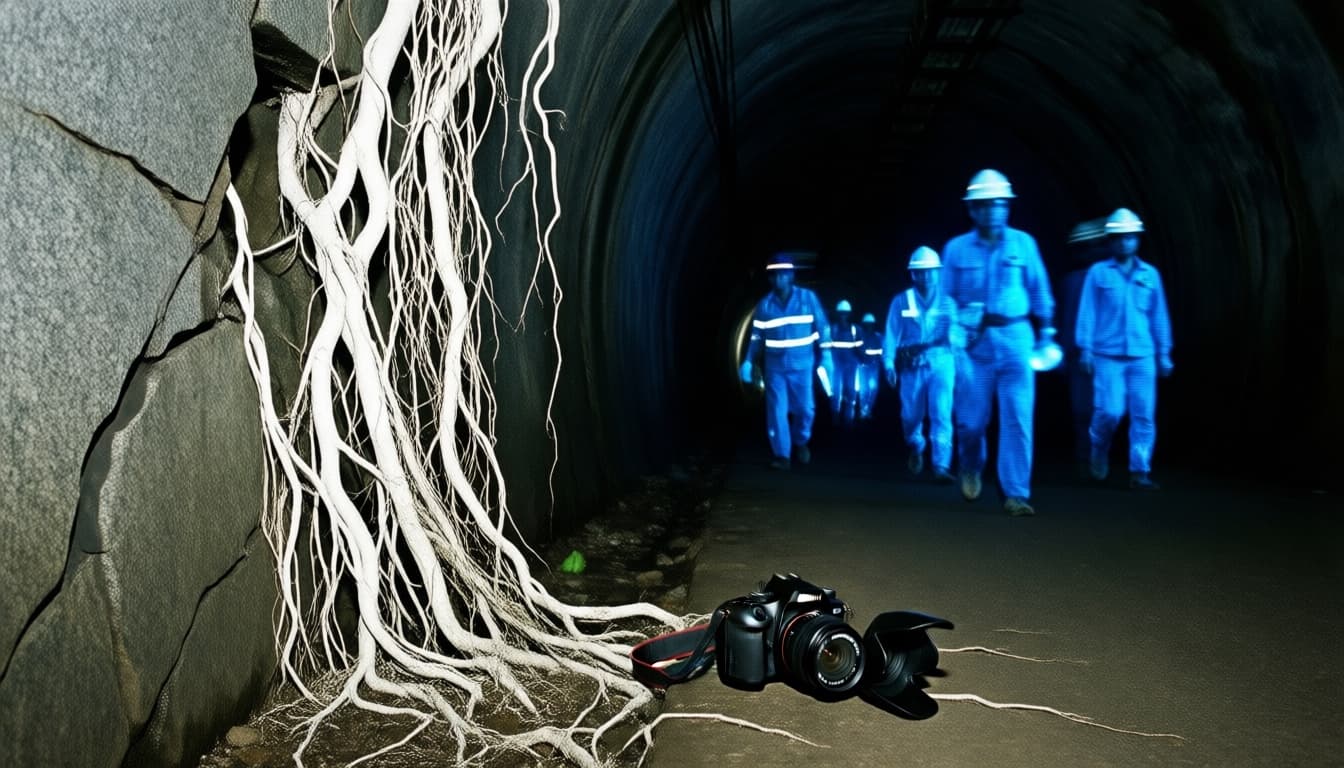
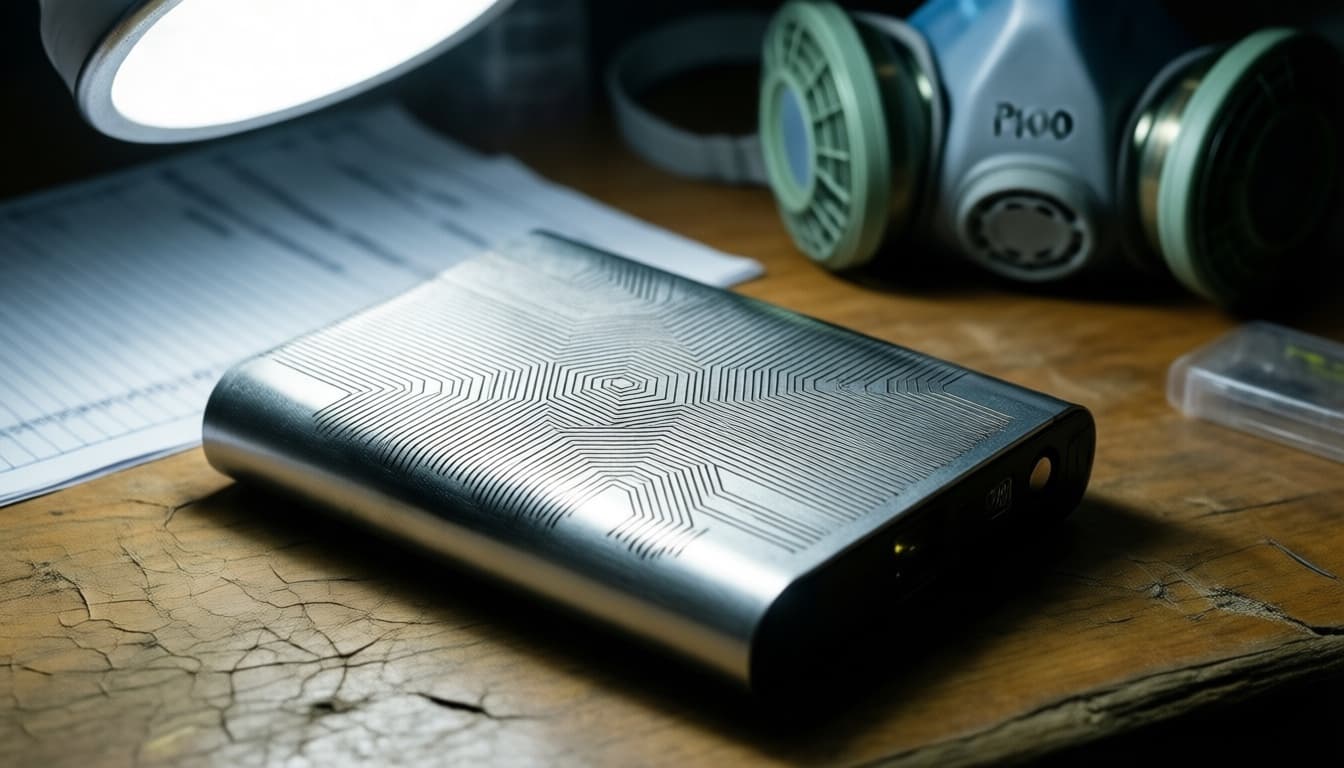
The gear retrieved at dawn contained impossible telemetry. Digital image sensors displayed nothing but purple noise and absolute blackouts, but on the aluminum casing of the lithium-ion camera battery, tens of thousands of microscopic circuits were burned into the metal—an intricate, razor-sharp hexagonal matrix as if etched by a laser. It was the physical remnant of the swarm discharging its electric field, attempting to burn its spatial image directly into the battery plate.
Subsequent chest X-rays and CT scans at the university hospital came back pristine. The spores could not survive inside warm human tissue, dissolving into inert silica that flushed harmlessly out of my bloodstream. But the real anomaly remained outside my flesh. Every night, exactly ten minutes after extinguishing all lights in a completely pitch-black room, a cold cyan hexagonal grid manifests directly in the center of my field of view. And beyond those sharp, glowing geometric lines, the crouching woman from the drainage tunnel slowly lifts her head, advancing toward me frame by frame.
[ CLASSIFIED VERDICT ]
[ACCESS LOG - SOURCE FILE]
This story is inspired by northern Thai urban legends surrounding Doi Suthep-Pui National Park in Chiang Mai, specifically rumors of abandoned Japanese WWII subterranean drainage systems and unexplained suffocations linked to bioluminescent subterranean fungi. It synthesizes the local myth of 'Ngao Rueang Saeng' (Shining Shadow) with a biomechanical concept where suspended crystalline spores form electrostatic optical arrays that reproject the memories and forms of past victims.