The Sinking Zone of Glastenbury Mountain
Between 1945 and 1950, five hikers vanished without a trace near Mount Glastenbury in Vermont, USA. Only one body was ever recovered—found in an unnervingly pristine condition only after search teams had already swept the exact spot dozens of times. Then, in November 2021, an emergency SOS signal from a missing amateur trekker's handheld satellite communicator (Garmin inReach) began transmitting from the mountain's eastern slope. The distress beacon pulsed uninterrupted for 72 hours. Yet when the State Forest Rangers reached the precise coordinates, they found nothing but dry pine needles—no footsteps, not even a snapped twig. The satellite log's barometric altimeter data, however, defied reality: while horizontal coordinates remained entirely stationary, the altitude reading had steadily decreased by exactly 5 centimeters per hour. The device was sinking into the earth without fracturing the solid granite bedrock beneath it.
On the late afternoon of October 24, 2022, geospatial surveyor Julian Vance entered Bickford Hollow carrying an acoustic geophone and an analog Nagra reel-to-reel recorder to conduct soil density tests for a telecommunications relay. The late autumn deciduous forest was parched, dyed a brittle, dead gray. The woods felt unnatural—not merely quiet, but an absolute acoustic vacuum devoid of highway noise from Route 9 three miles southwest, birdsong, or the rustle of foraging squirrels. Despite weeks of severe drought, the ground felt ominously spongy beneath his boots, as if treaded upon a vast subterranean sponge over an open void.
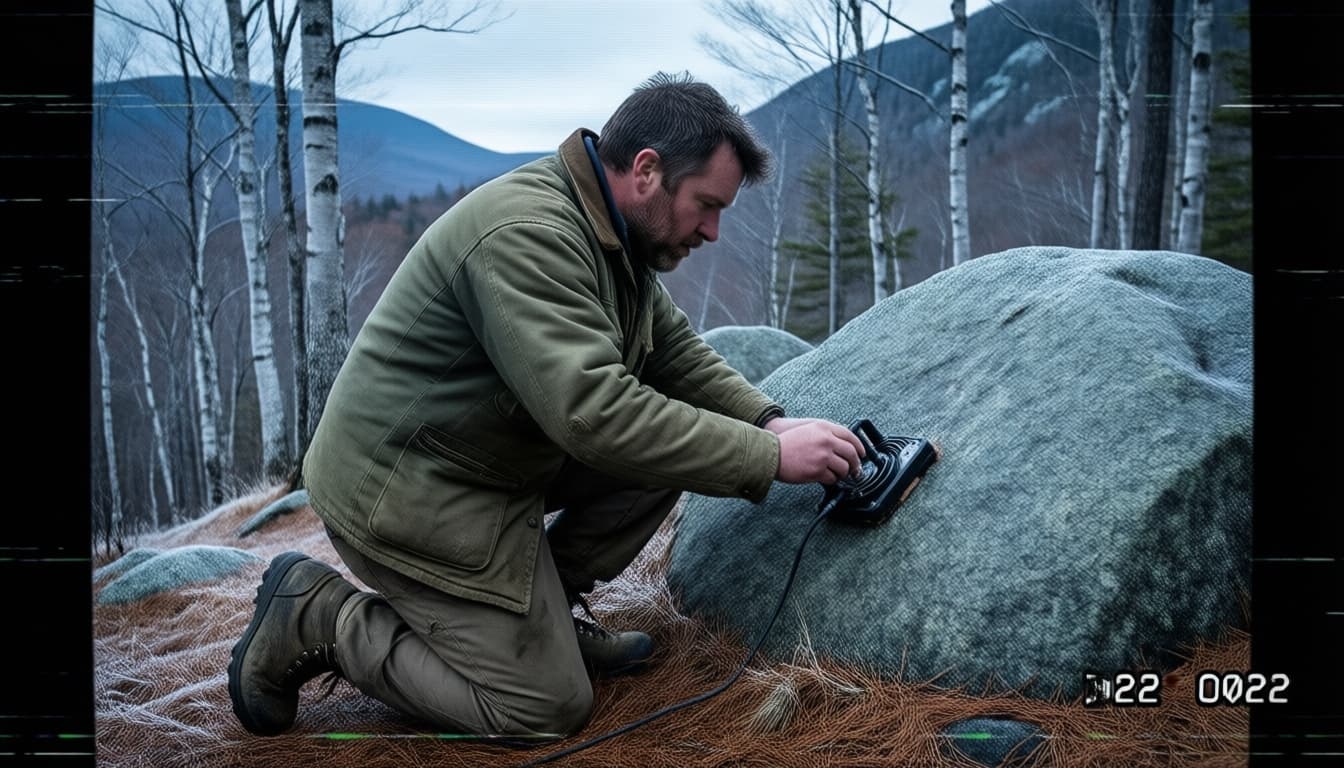
Anchoring seismic sensors to a rock outcropping to calibrate low-frequency vibrations, Vance struck a protruding boulder with a six-pound sledgehammer. He clearly saw the visual impact of steel slamming against stone. Yet no sound followed. Exactly four seconds later, a dull metallic clang struck his ears—not an echo, but the delayed primary sound wave itself. In this pocket of atmosphere, acoustic waves were crawling at less than a quarter of their normal speed. A cold shiver rippled down his spine.
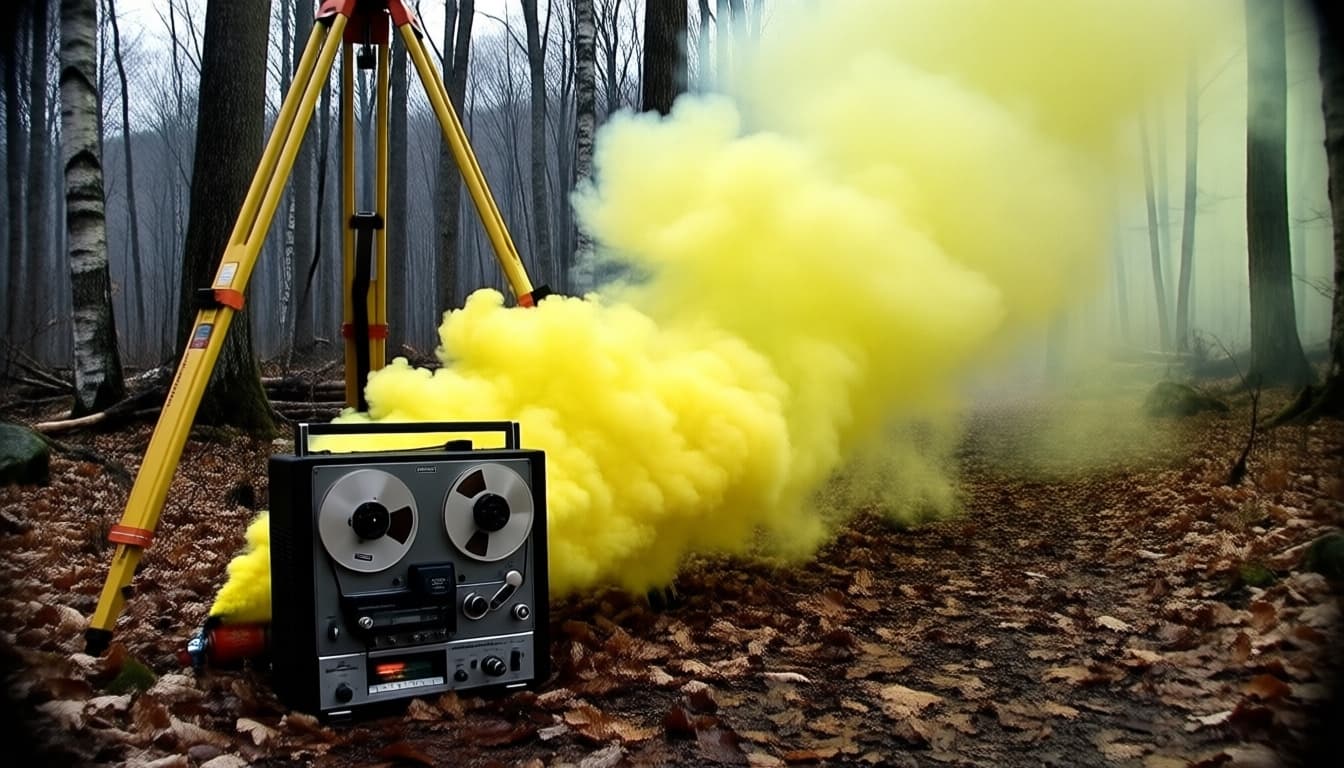
The anomalies cascaded. The needle of his pocket aneroid barometer spun frantically counterclockwise. While the ambient air remained dead still and frozen at -2°C, the gauge indicated atmospheric pressure typical of a high-altitude hurricane eye. When he lit a yellow smoke grenade to trace fissure drafts, the smoke refused to rise; it pooled like a viscous liquid over the dry leaf litter, dragging itself unnaturally uphill against gravity.
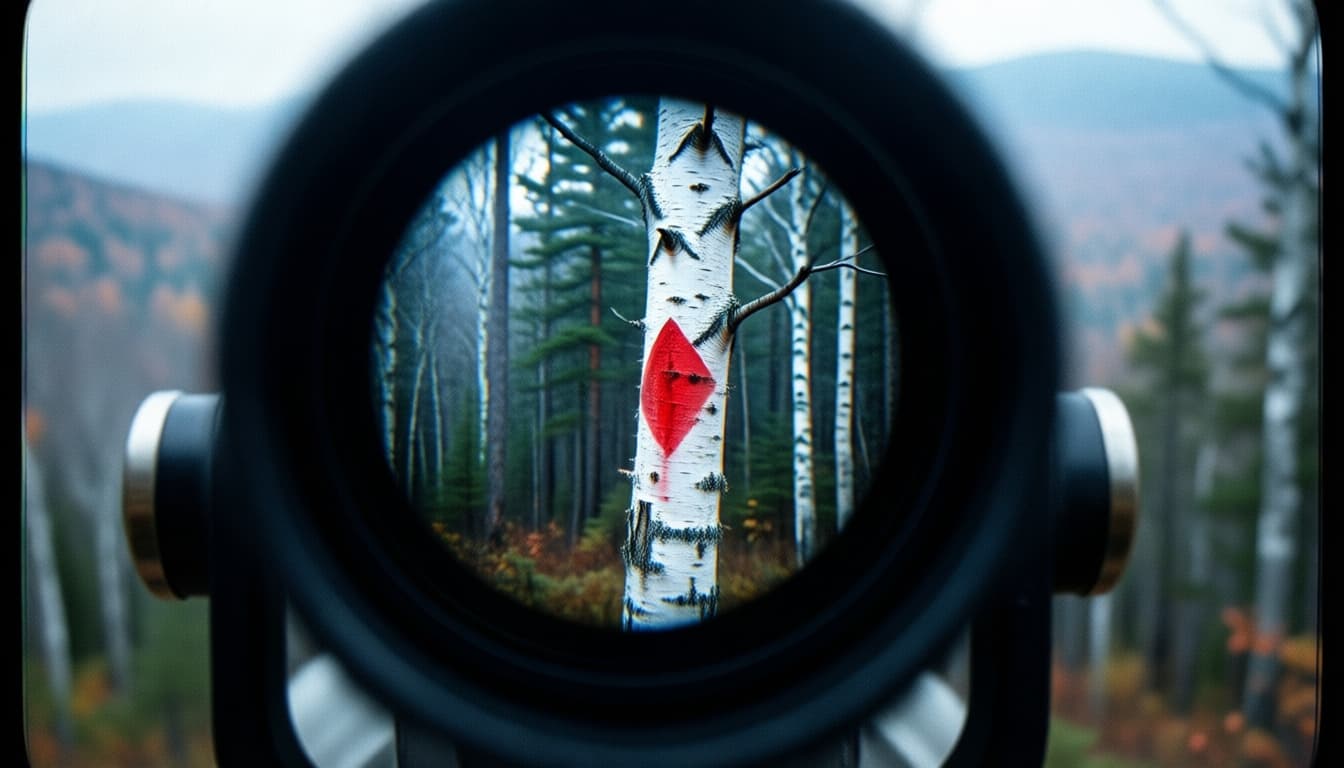
Looking through the optical transit's crosshairs at a red trail blaze on a birch tree sixty meters away, Vance’s field of vision warped. With every breath he took, the crimson paint mark refracted eight centimeters to the left. Space itself seemed to be congealing into a colossal, frigid prism. His fingertips numbed from the unnatural chill. Terrified, he packed his gear to retreat.
As darkness swallowed the forest, sounds Vance had produced earlier in the day began replaying in reverse chronological order. The strike of the hammer against the boulder and the crunch of his boots ascending the slope echoed out of empty air. Then, layered beneath them, came a sound he had never made: the crisp, rhythmic snapping of twigs and dead leaves, closing in on his survey station simultaneously from three directions in an encircling sprint.
Vance raised his laser rangefinder toward the trail leading to the highway, but the digital display surged uncontrollably: 50 meters, 80 meters, 200 meters. Without his feet moving an inch, the physical terrain was stretching, wrenching his escape route into impossible distance. The temperature plummeted more than 10 degrees in ninety seconds. Hoarfrost bloomed in reverse—crystallizing not on top of the dead leaves, but creeping upward from the bare dirt beneath them.
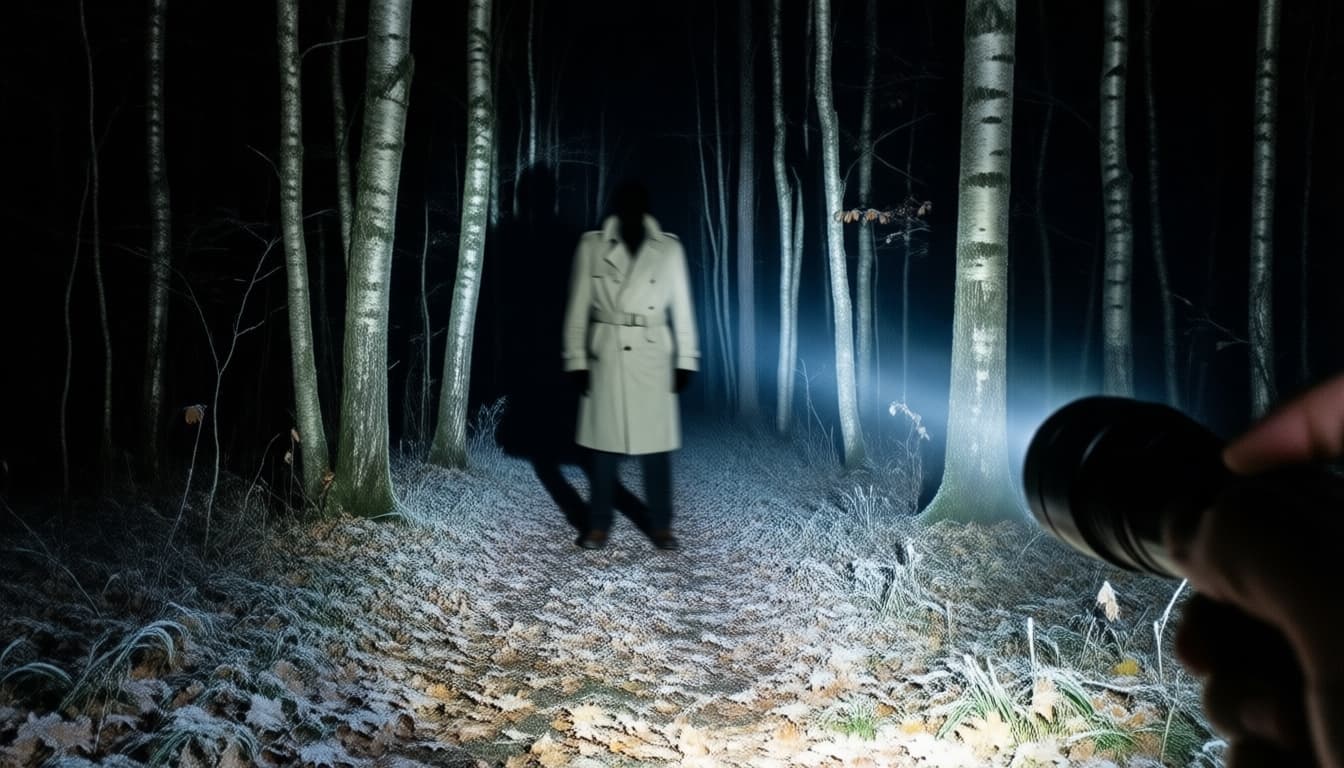
There was no kinetic blow, but a massive block of localized hyper-pressurized air slammed into Vance like a solid wall, driving him face-first into the frozen mud. The air was violently wrenched from his lungs. In the shivering beam of his headlamp, at the edge of the birch grove just eighteen meters up the slope, stood a figure. It was a person dressed in an antique woven wool coat, completely motionless. The apparition cast no shadow across the frosted earth. The sickening realization that it was not physically present pierced his core.
Vance tried to scream, but not even a ragged gasp escaped his throat. Instead, his scream echoed inside the geophone headset around his neck—muffled and hollow, as if it had been recorded and broadcast from dozens of meters beneath the bedrock hours prior. At that instant, the frozen stony soil beneath his chest liquefied. The solid earth behaved like a non-Newtonian fluid, slowly pulling his hands and heavy pack down into the dense bedrock.
With agonizing pressure rupturing his eardrums, Vance drove his ice axe into the exposed root of an anchored tree resisting the sinkage. Slicing through his sinking backpack straps with a field knife, coughing up blood from the violent barometric shift, he dragged his upper torso out of the quagmire-like earth.
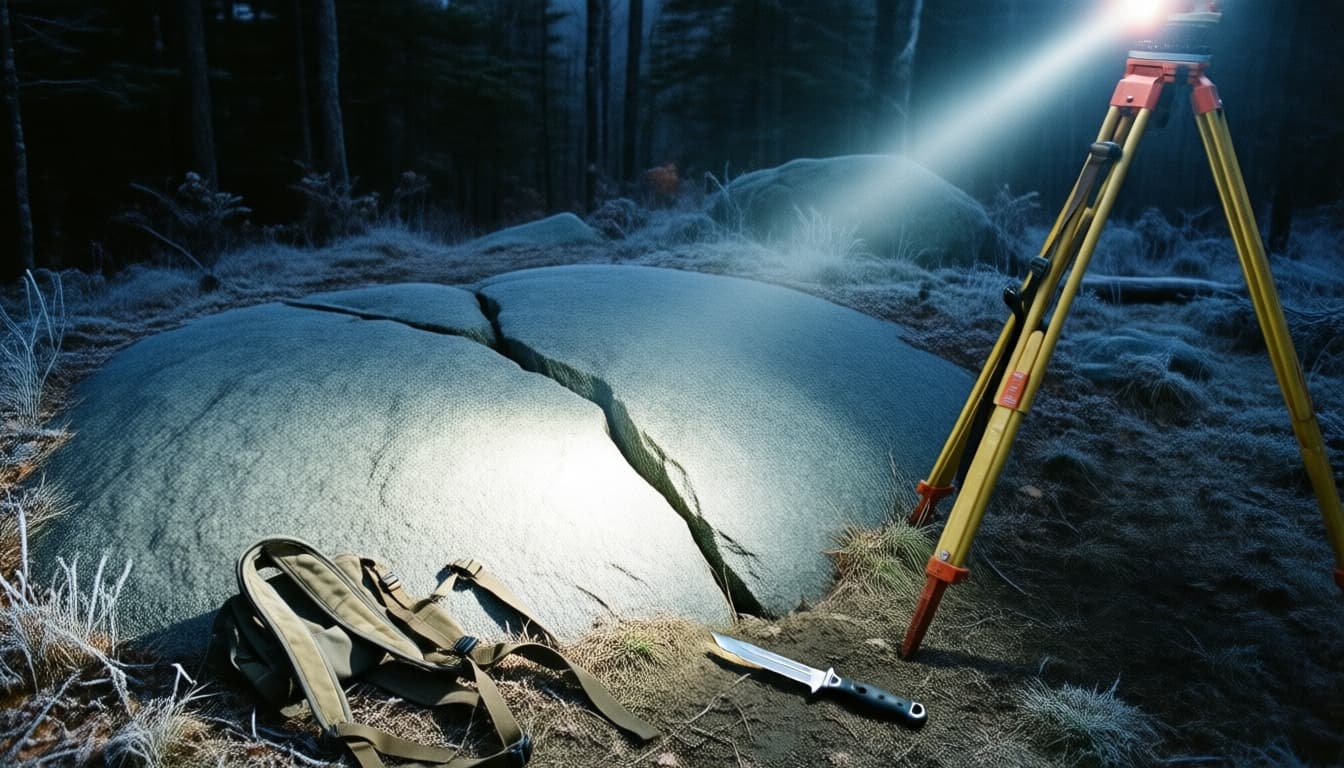
At 4:15 AM, Vance crawled on bloody elbows out of a drainage culvert along Route 9 and collapsed onto the asphalt. Two days later, State Police searched the area and documented inexplicable physical evidence: the surveyor's heavy tripod was found buried vertically 45 centimeters into unbroken, solid granite—a depth impossible to achieve without hydraulic rotary drills.
The recovered Nagra recorder had continued running until its tape ran out. Captured on the microphone, preserved in the -15°C silence after Vance’s escape, were three full hours of audio recording a steady breathing pattern. At an unwavering 14 breaths per minute, the rhythm precisely matched that of a resting young girl. Vance’s right forearm, which had been submerged up to the elbow during the incident, has lost all tactile and thermal sensation. Medical imaging revealed that the microcapillaries within his dermis have hardened into perfectly parallel, linear alignments—resembling the annual growth rings of century-old timber—showing neither cellular regeneration nor signs of tissue necrosis.
[ CLASSIFIED VERDICT ]
[ACCESS LOG - SOURCE FILE]
This story is inspired by the mysterious real-world disappearances in Vermont's 'Bennington Triangle' between 1945 and 1950, where several people, including college student Paula Welden, vanished without a trace around Mount Glastenbury. Local Indigenous folklore and Appalachian legends describe cursed spots where the earth swallows travelers whole, accompanied by localized temporal and spatial distortions.