The 40-Minute Vacuum: Below Lemp Mansion
In the subterranean archives of the Missouri Historical Society lies a 1983 St. Louis Department of Public Safety inspection log (Ref: BLDG-83-0941) bearing a bizarre omission. Arthur Vance, a structural technician surveying the bedrock along Cherokee Street connected to the decommissioned Lemp Brewery caves, discovered an inexplicable 8.8°C (47.8°F) draft venting continuously from the wall of a coal cellar that should have been sealed with solid concrete in 1949. This was the lowest level beneath the Lemp Mansion, where four members of the beer dynasty had taken their own lives with revolvers between 1904 and 1949. Vance's final log entry made no mention of spirits or apparitions: 'At 40-minute intervals, a blunt concussive blast identical to a black-powder detonation is registered through the sealed partition.' Three days after writing this, Vance suffered a fatal hemorrhagic stroke inside the tunnel.
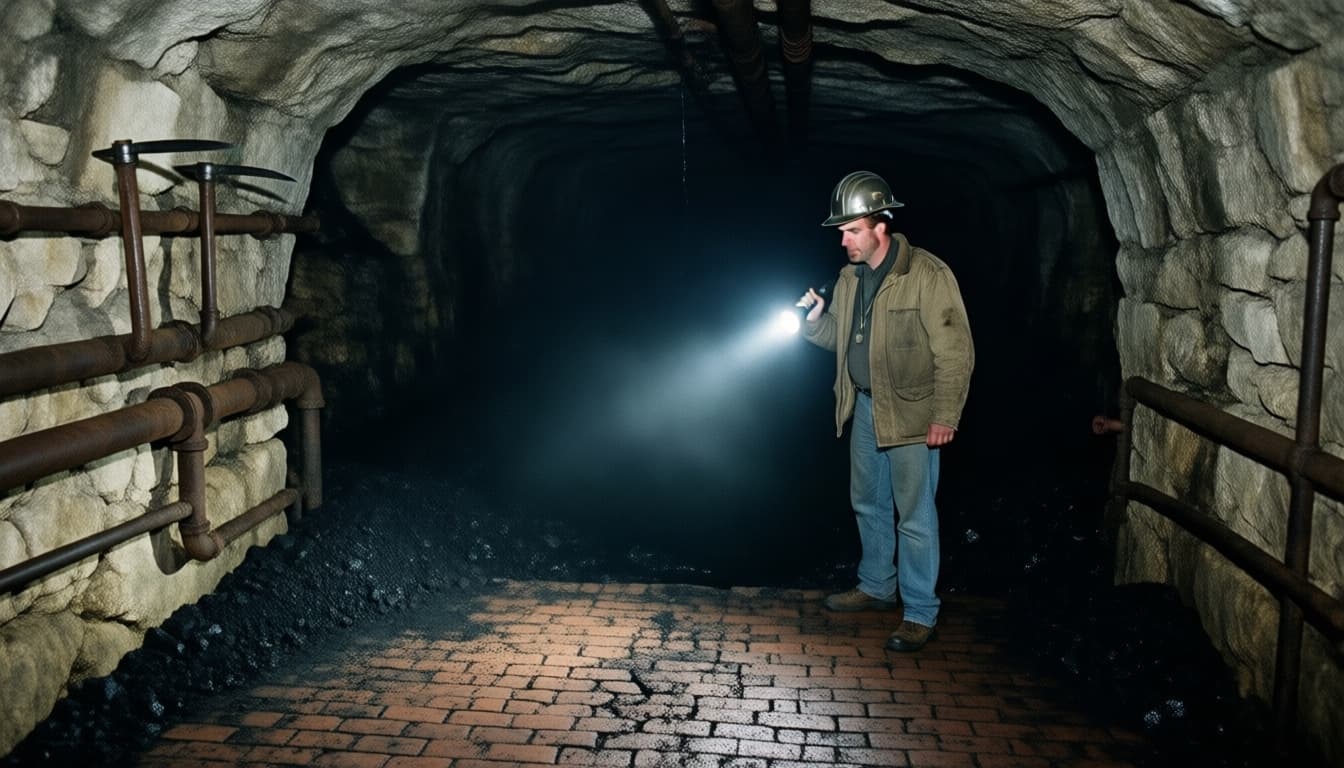
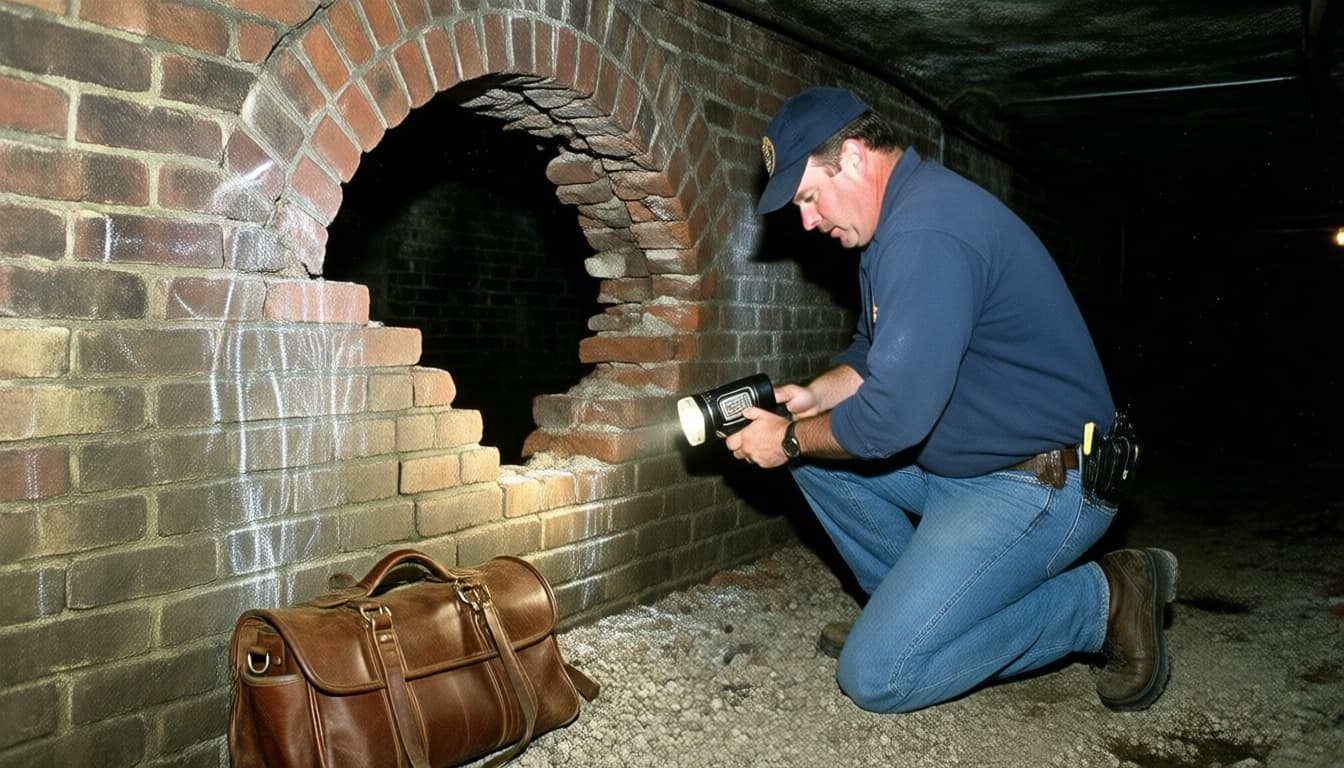
In late November, under the cover of loose surveillance during foundation repairs, I slipped past the restricted barriers and descended the basement steps. The radiator heat of the upper floors vanished the moment I crossed the threshold into the pantry corridor. Over a century of coal soot embedded in lime plaster mingled with the sour, nauseating tang of fermented malt, burning my throat. The descent revealed clear historic strata: past the modern tiled wine storage lay the jagged limestone walls hand-hewn by pickaxe laborers in the 1870s. And tucked in the far corner was the 1.2-meter-high collapsed arched fissure Vance had documented.
I accidentally dropped a steel square ruler from my tool bag onto the bedrock floor. Visually, the metal struck the stone and bounced. Yet, no sound followed. Only half a second later did a sharp, deafening 'clang' pierce my eardrums. The air was compressed to an unnatural density that physically delayed acoustic propagation. Pointing an infrared thermometer forward, the reading plummeted from 58°F to 41°F in a mere two paces. It wasn't a draft. It was a vacuum orifice violently siphoning thermal energy from the environment.
Crawling through the jagged coal chute into the natural karst cavern, physical laws warped further. Stagnant groundwater pooled on the floor was not draining downward. Flakes of floating grime were creeping upward against gravity, slowly dragging across the surface toward a claustrophobic crawlspace where the ceiling dipped under three feet. Inside my chest cavity, an infrasonic vibration at roughly 17.4 Hz began to compress my heart. My Eustachian tubes ruptured in rapid succession, exactly like the cabin of a plane in an uncontrolled dive.
My headlamp scanned the rock face. Inches beside Arthur Vance’s faded white chalk marks from 1983 were dozens of deep, parallel grooves gouged into the stone with the lead tip of a bullet. This was the precise coordinate where William J. Lemp had paced nervously during the winter of 1904 before taking his revolver upstairs to his bedroom. Through my directional microphone, a sharp sound cut in. There was zero cavern reverb. As if someone had pressed a dry gun barrel flush against the microphone windscreen and squeezed the uncocked trigger, a dry, brittle metallic snap echoed inside my skull. Click. Thud.
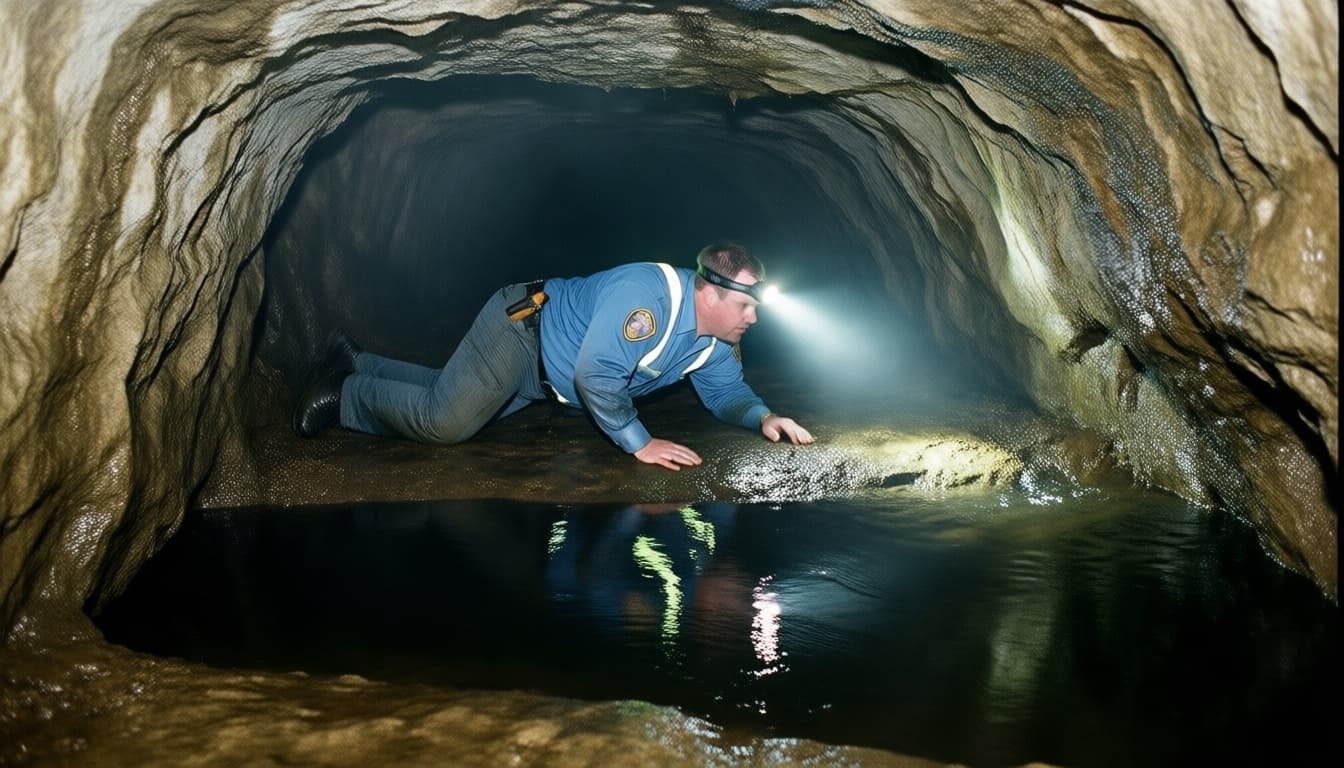
As I crawled flat on my stomach through the lowest limestone seam, the acoustic delay shattered. Sound accelerated violently into an ear-splitting tinnitus. Behind me, the heavy cast-iron fire door of the coal room slammed shut with a concussive BOOM, sucked in by an overwhelming negative pressure differential. The crawlway was sealed airtight. The beam of my headlamp began to fail—not from a drained battery, but because the air between the lens and the limestone had condensed into a thick, gelatinous gray vapor that actively swallowed the light.
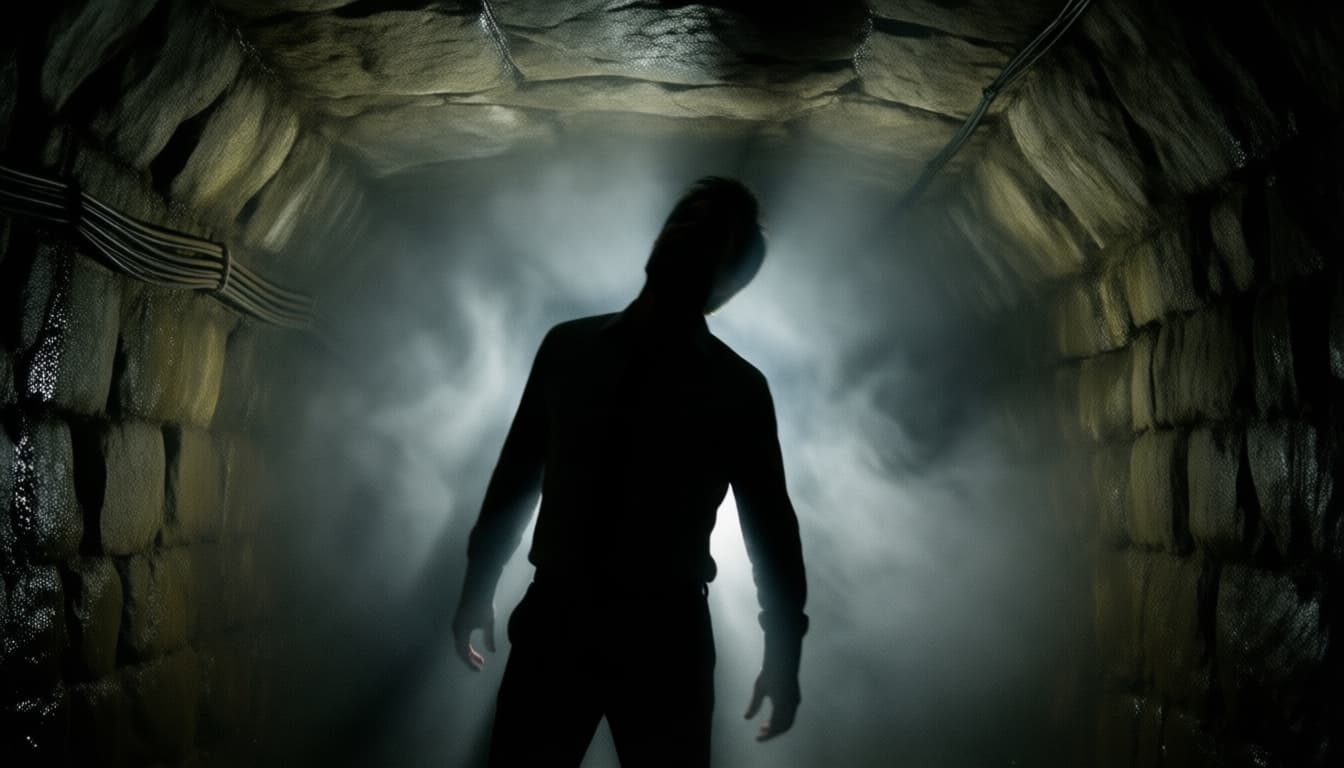
The inverted puddle on the floor began boiling without heat, releasing toxic sewer gas as my portable air monitor screamed a 14% oxygen deficiency alarm. Yet the true horror was the kinetic flow. While all air was being sucked backward toward the sealed iron door, a colossal wall of pressure was advancing toward my face from the front. It was not a crawling human form. It was a void cut out of the floating gray smog in the precise silhouette of a man, its head cocked sideways at a snapped, impossible angle—a missing fragment of three-dimensional space. Defying physics, this hollow incision of nothingness gouged its way through the tunnel toward me.
I tried to scream, but my ribs buckled under the weight of an invisible boulder crushing my chest. The bitter tang of spent black powder and rotting yeast forced itself down my trachea, triggering violent laryngeal spasms. Just as the severed contour prepared to pass directly through my torso, my hand struck a rusted drainage hatch leading into the carriage house above. Jamming my pry bar into the seam, I threw my entire weight against it. The hatch popped open, and a violent updraft sucked my body upward as the crawlspace below snapped shut behind me with the concussive boom of a collapsing lung.
At the emergency room, doctors diagnosed me with bilateral outward tympanic membrane rupture—an injury identical to acute decompression sickness in deep-sea divers, caused when internal pressure vastly exceeds ambient surroundings. The digital recorder recovered from the coal chute lip contained zero footsteps or voices. Instead, at exact 40-minute intervals, ambient room noise dropped to absolute zero—a dead flatline of complete silence lasting exactly four seconds—followed by the dry, metallic strike of a single firing pin striking a spent primer.
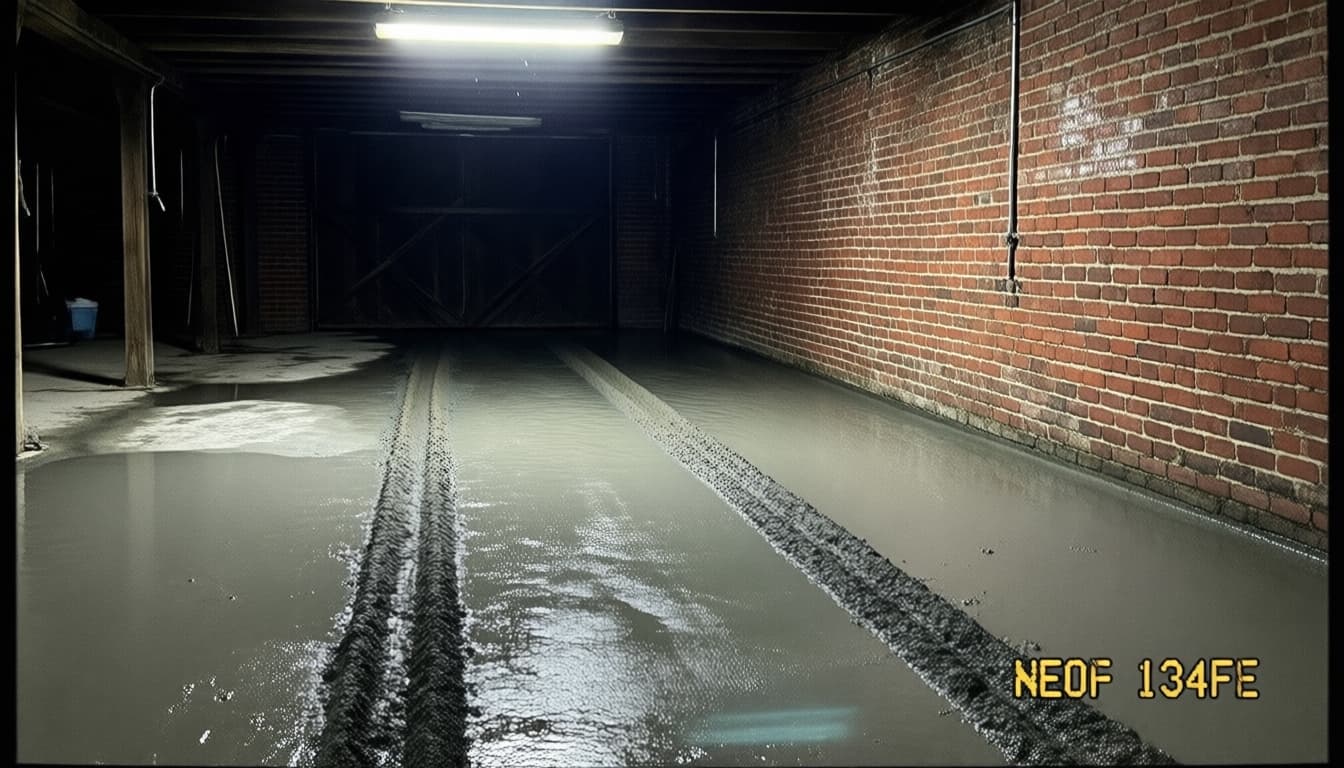
Two weeks later, the City of St. Louis permanently sealed the subterranean fissures beneath the mansion with tons of rapid-setting hydraulic grout under the guise of sinkhole remediation. Yet during a recent inspection of the carriage house floor, the center of the newly poured eight-inch concrete slab remained wet and uncured. Emitting a faint odor of sour grain mash, the unyielding black moisture traced two distinct drag lines—as if heels had been pulled across the floor, leading straight into the solid brick wall.
[ CLASSIFIED VERDICT ]
[ACCESS LOG - SOURCE FILE]
The Lemp brewing dynasty of 19th-century St. Louis, Missouri, was plagued by a catastrophic curse, with four family members committing suicide using handguns across several decades. The historic Lemp Mansion sits atop a labyrinth of natural limestone caves once used for lagering beer, where urban legends report unexplained drops in air pressure, severe cold spots, and phantom gunshots echoing from deep within sealed basement vaults.