The Silent Archive
In December 1948, the body of a man found on Somerton Beach in Adelaide tormented forensic and historical communities for decades. His identity remains a mystery. All that was found in his pockets were an unsmoked cigarette, a train ticket, a comb, and a small piece of paper with 'Tamám Shud' – 'finished' – printed on it, torn from a rare edition of Omar Khayyam's Rubaiyat. Speculation ranged from a heartbroken lover to a Cold War spy.
Early investigations hit a wall, and public tips yielded no results. Then, last year, a post by a user named 'Prospere' on an Australian history forum caught my eye. He claimed to have stumbled upon declassified Australian Security Intelligence Organisation (ASIO) documents from 1951. While the documents made no direct mention of the Somerton Man, they described an 'incident' in 'Commonwealth Records Annex, Sector B' and the 'closure and permanent sealing' of the area. Crucially, one phrase remained unredacted: "...atmospheric movement within the room completely ceased, coinciding with the anomalous dissolution of all organic samples." In subsequent posts, Prospere hinted at finding a digital scan of a Rubaiyat edition among recently digitized Cold War government records. It was almost identical to the book associated with the Somerton Man case, with several folded pages, and precisely the 'Tamám Shud' page was missing. Prospere vanished from the forum a week later. And that's when the whispers began. Sector B wasn't merely closed; it was sealed by something.
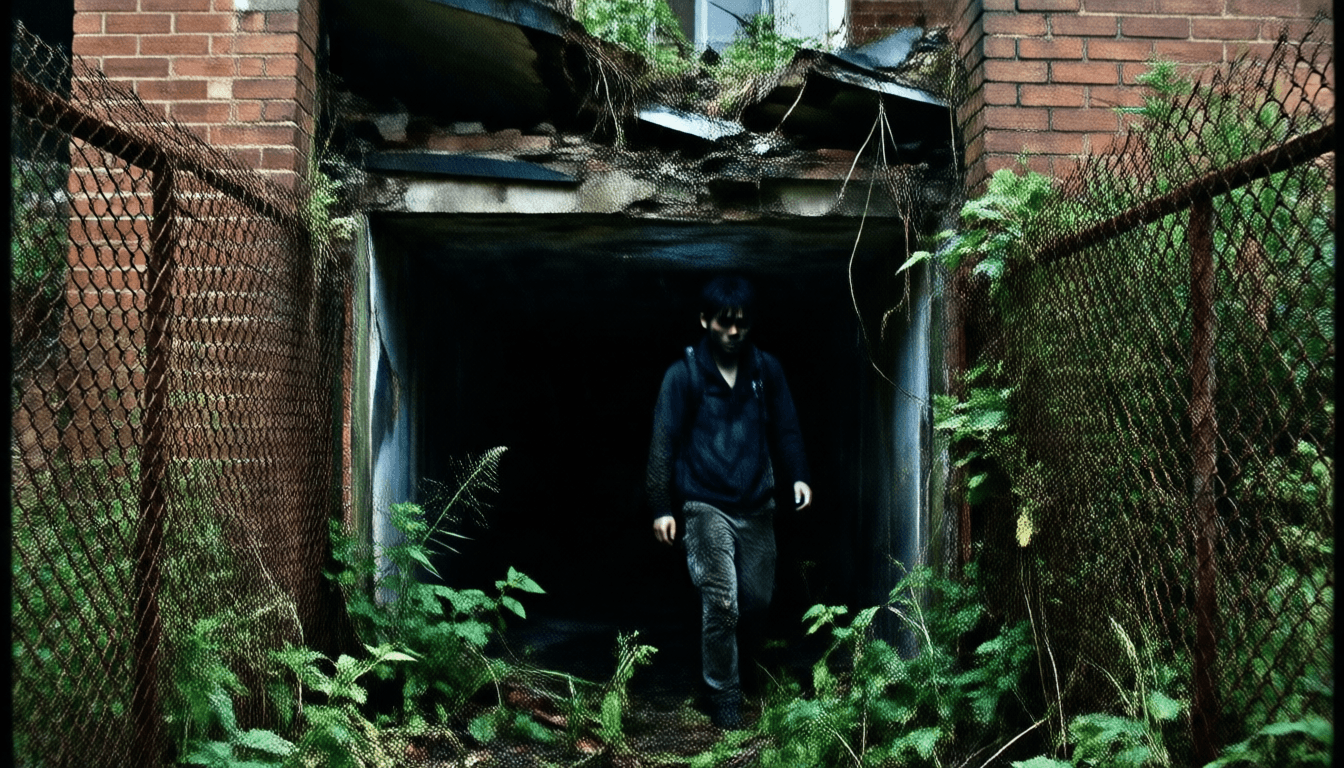
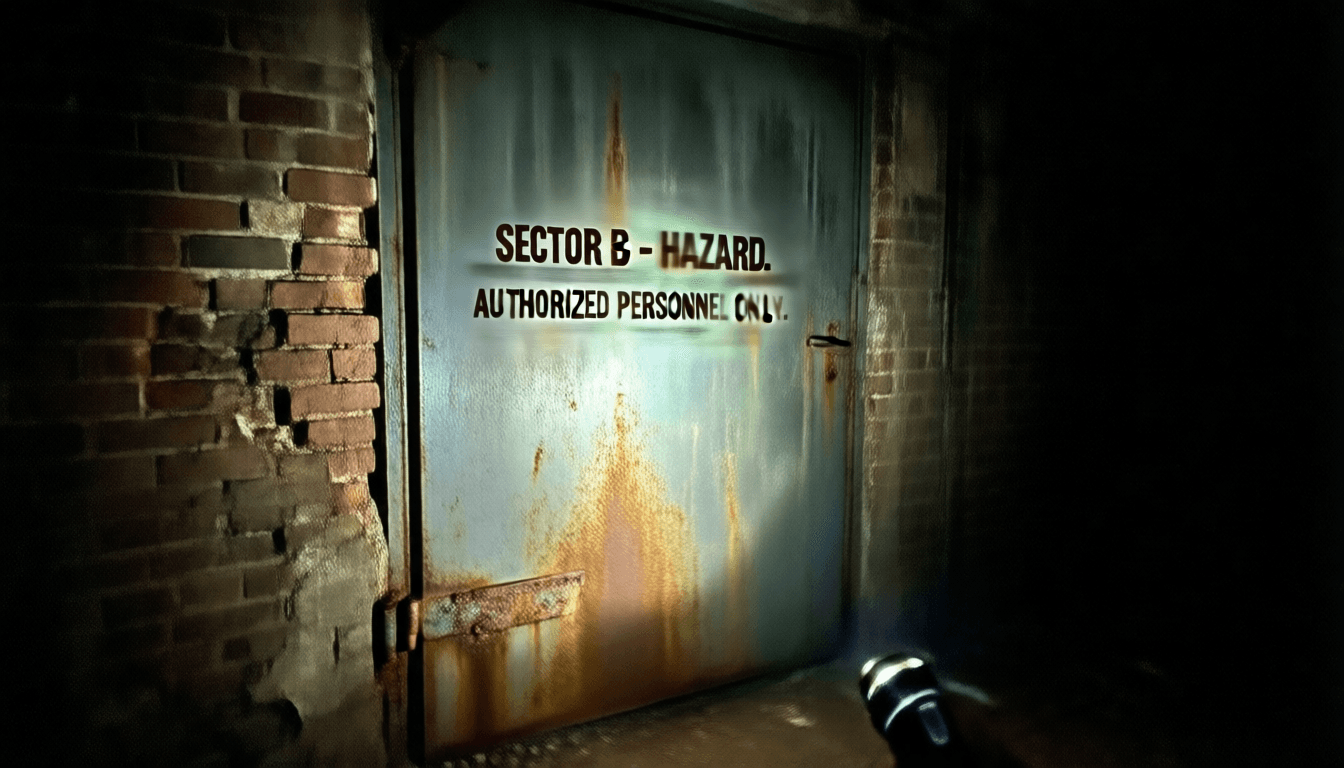
Commonwealth Records Annex, Sector B didn't exist on any map. My investigation led me to an old brick building on the outskirts of West Adelaide, a forgotten place once known as a small government administrative office. It was as if it had been erased from public memory. Entry was only possible through a collapsed storm drain running beneath the building, its mouth choked with weeds and rusty wire mesh. The air in the tunnel was cold and clammy, carrying the scent of damp earth. Navigating a labyrinth of abandoned pipes and supports, I finally found it: a reinforced concrete door, noticeably newer than the surrounding brickwork. Faintly, it read: "SECTOR B - HAZARD. AUTHORIZED PERSONNEL ONLY." The heavy steel door was rusted shut, but the lower hinge was corroded. Carefully, I leveraged it open, and a gap appeared.
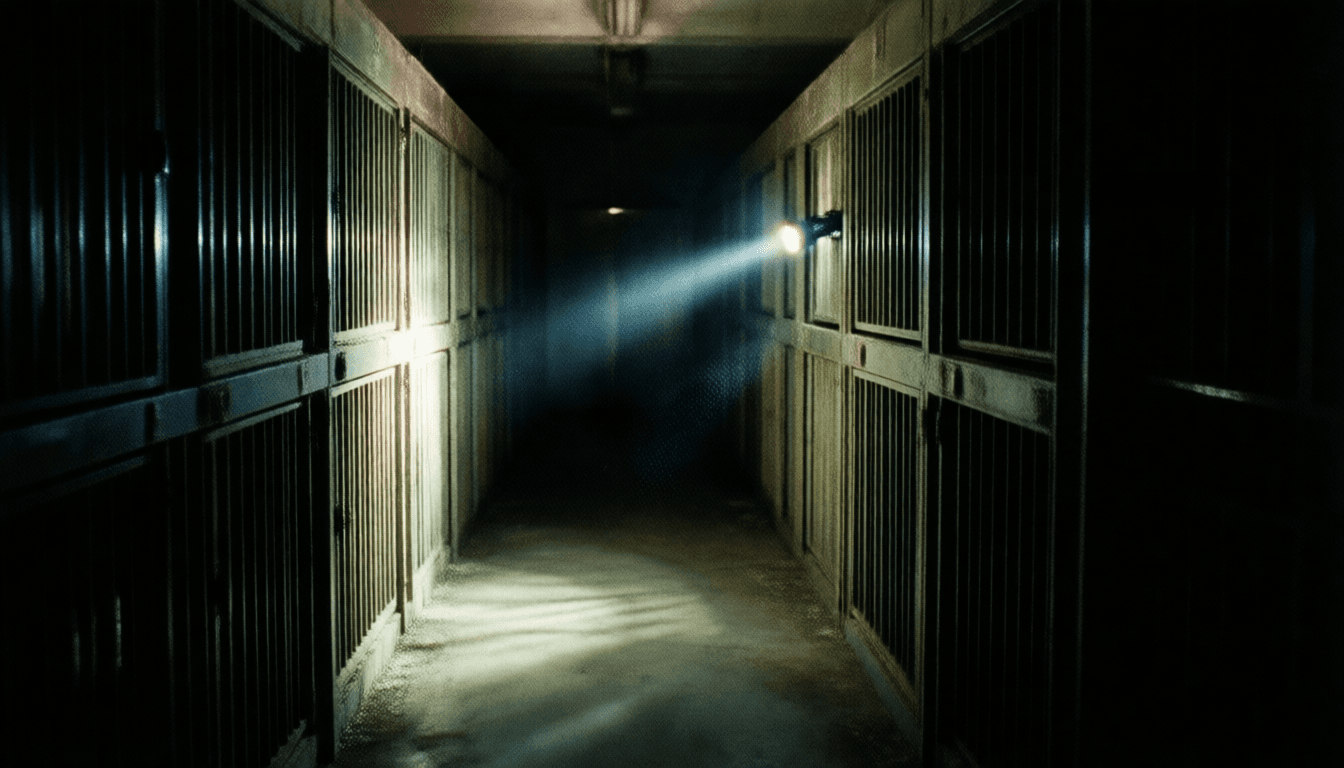
The moment I stepped inside, a profound, deathly stillness overwhelmed me. It wasn't merely the quiet of an empty room but the absence of sound itself. The air itself was unnaturally still, as if it might shatter. The single bulb of my headlamp pierced the oppressive darkness. I saw a short, narrow corridor, lined on both sides by sealed steel compartments. The temperature was uniformly cool and dry, devoid of even the musty odor common in abandoned places. It was as if the air had been wiped clean.
I walked down the corridor. My footsteps were audible only to my own ears, swiftly absorbed by the surrounding void. The sealed compartments felt cold and featureless. The deeper I went, the more intensely the perfect silence pressed in. I clicked my tongue. The sound was sharp and immediate, but it vanished instantly, without even an echo. It wasn't mere quiet; it was a physical phenomenon. The air seemed to grow heavier, and a subtle pressure built in my ears. There was no visible breath in the cold air that would normally show it. It simply disappeared.
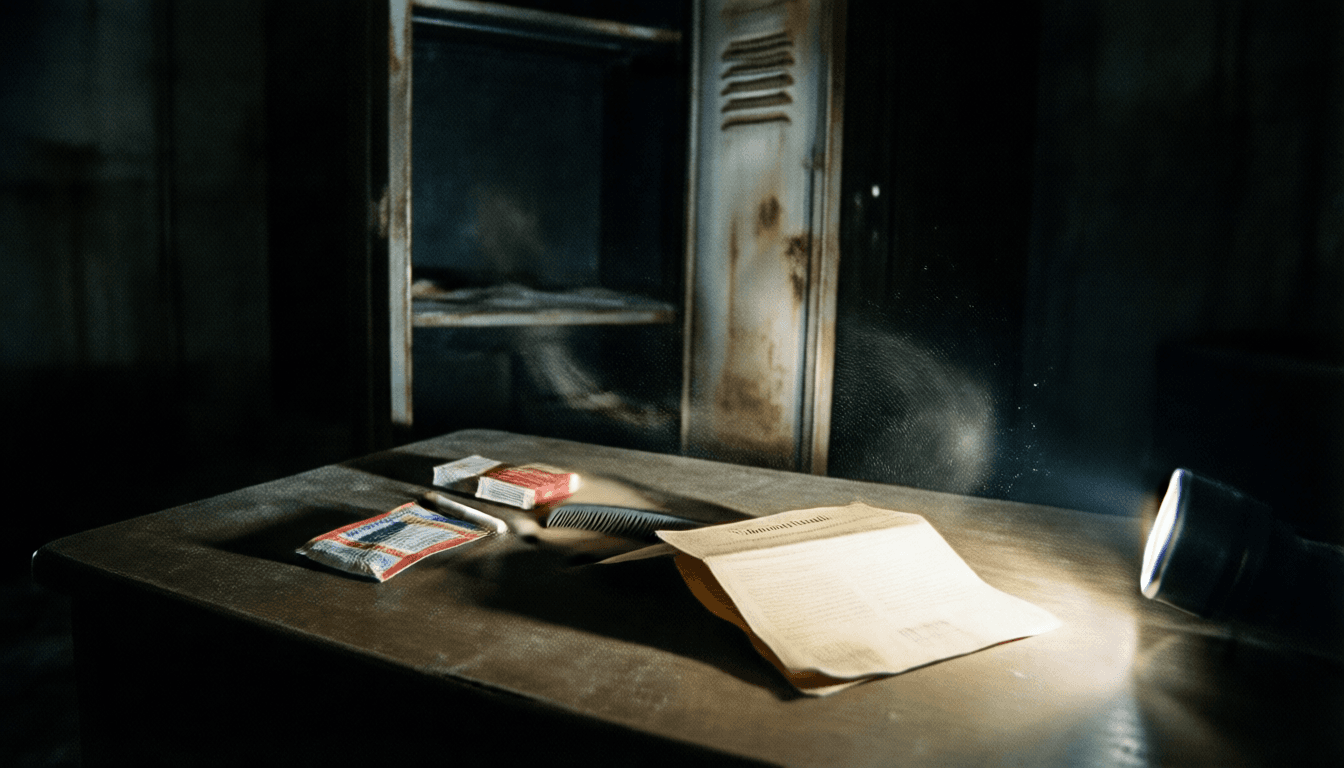
Ahead, a door stood slightly ajar. Beyond it was a small room. My light revealed a simple desk, a pushed-back chair, and what appeared to be a personal locker. But the locker was open, its contents strewn across the desk and floor. Not files or papers. A specific brand of cigarette (Turkish, Sobranie style), a small comb, a train ticket to Somerton, and a folded piece of paper. My heart began to pound violently. Not from exertion, but from a cold, chilling certainty. I reached for the paper.
At that instant, the room's temperature dropped impossibly fast. My still-invisible breath hitched in my throat. A faint, almost imperceptible humming sound began to resonate. It wasn't from the air, but seemed to vibrate from the very structure of the walls. A low-frequency, heavy thrum that flowed through my bones, causing a deep, disorienting unease. My headlamp flickered, then dimmed. In the deepening gloom, the objects scattered on the desk seemed to move subtly. As if arranging themselves by an unseen force. The cigarette rolled the tiniest fraction, the comb rotated on its axis.
And then the impossible anomaly: fine dust on the desk, rather than scattering, began to gather into tiny, almost invisible vortices, distinctly moving against any logical airflow. It was as if the air itself was under intelligent command. The humming grew more intense, shifting into a low growl. It emanated from everywhere, and nowhere, simultaneously. The silence was still present, but the growl seemed to resonate internally, vibrating my skull rather than being an external noise.
The scrap of paper lay on the desk. As my trembling fingers touched it, the paper itself seemed to resist, clinging faintly to the old wood. The subtle resistance turned into a faint pull, drawing my hand forward. I saw the words. "Tamám Shud." Not typeset. Handwritten, meticulously, on the aged paper. A perfect match to the Somerton Man's. And beneath it, an intricate arrangement of numbers and letters—a cipher. The 'presence'—this pervasive, unidentifiable force—was now fully focused on me, and on the knowledge I was about to uncover.
The temperature plunged further, and the air grew agonizingly thin, sucking warmth from my body and light from my lamp. The humming shifted to a growl that resonated inside my head, crushing my eardrums. I tried to pull my hand back, but suddenly an immense pressure slammed down, pinning my hand to the desk. It wasn't a visible force, but an oppressive, localized weight, like an anvil. The air wasn't just thin; it was being actively removed from the room. My lungs burned; I couldn't breathe properly.
The cipher on the paper began to rearrange itself. The ink seemed alive, bleeding and shifting into new, incomprehensible arrangements. The objects on the desk lifted an inch, then slammed down repeatedly, with increasing force. The sound, in the absolute silence of everything else, was deafening. The previously open locker door began to creak shut. Slowly, persistently, as if being pulled by an unseen hand. My headlamp died completely, plunging the room into total, suffocating darkness. I was trapped, crushed, drowning in the absence of air.
The feeling of being pressed from all sides intensified. Not just the air, but the walls themselves seemed to be closing in. A faint, dry, rustling whisper, not heard but felt, brushed against my ear. The language was incomprehensible, but the intention was clear: You do not belong here. This truth is not yours. I screamed. A choked, sharp sound, immediately swallowed. My vision narrowed. As bone-crushing pressure enveloped me and the last oxygen left my lungs, one final, impossible event occurred. A faintly glowing green script flashed onto the far wall. Identical to the cipher on the paper. Then it morphed into a distorted, unrecognizable face of a man, his eyes wide in silent agony. It was only for a fraction of a second, but it was seared into my mind. I realized then that Sector B was not merely an archive; it was a tomb actively guarding its secrets.
That horrifying vision fueled a last, desperate surge of adrenaline. I tore my pinned hand free, screaming in the pain of my skin tearing. I scrambled backward, crawling, fighting against unseen forces that seemed to scratch at my clothes and grasp at my ankles. The pressure lessened, imperceptibly. As if the room had decided to release me, but barely. I stumbled through the door into the corridor, gasping for the thin, alien air. Away from that destructive void.
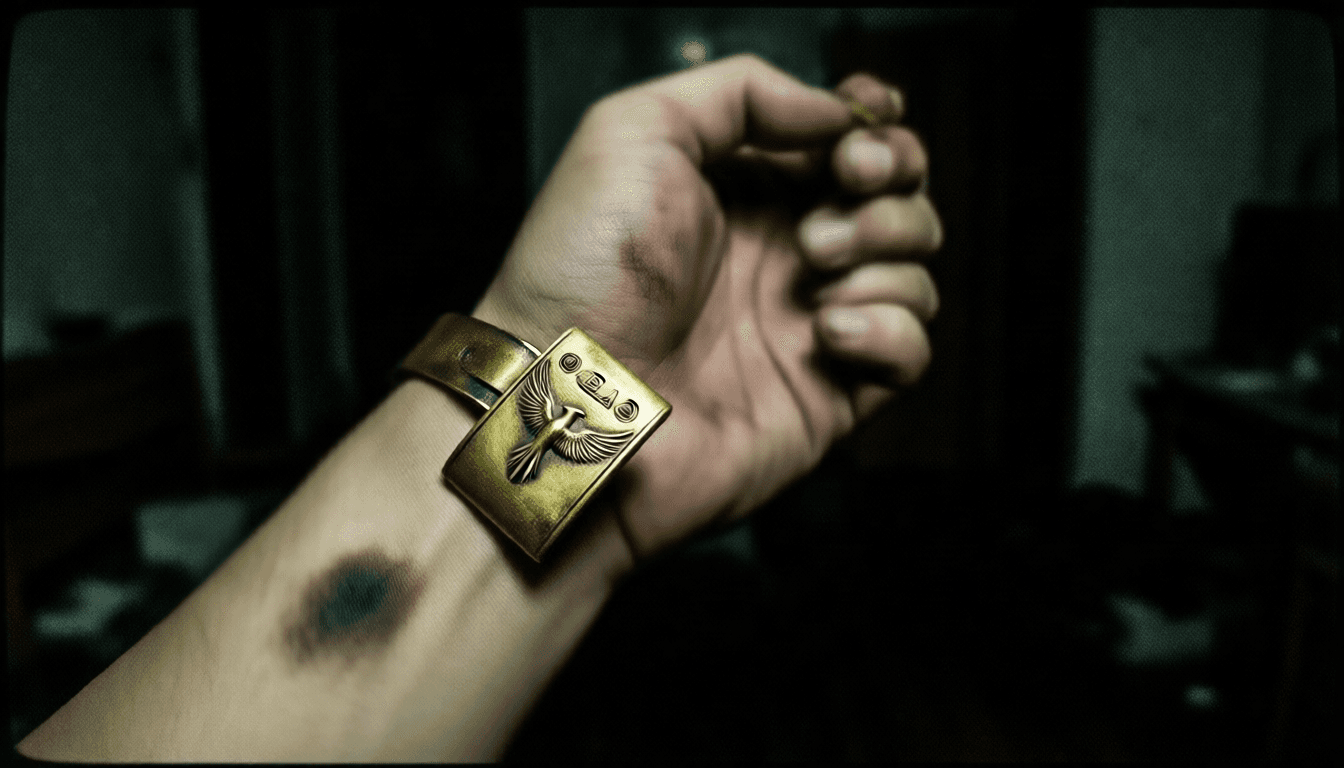
I burst out of the utility tunnel and didn't stop until I was outside, vomiting in the cold night air. My body trembled uncontrollably. The bruises on my wrist, where the unseen pressure had slammed down, were dark and perfectly shaped like human palm prints. The camera, clutched in my other hand, was dead, its memory card corrupted. But the distorted, suffering face of the man was etched vividly in my mind.
The 'Tamám Shud' paper, the cipher—I didn't bring them out. But something else was in my pocket. Later, when I emptied my pockets with shaking hands, a worn gold cufflink clattered out. It was heavy, intricately engraved, unlike anything I'd ever seen. On the reverse, minute, almost invisible script read: "C.B.A." And a tiny symbol that looked like a bird with impossibly long wings. I've since scoured every known detail of the Somerton Man case. This cufflink doesn't match anything found on him, nor was it on his list of possessions. But the letters "C.B.A." – a name, an organization, a code? And the bird? I've searched archives, historical records, intelligence files. Nothing. It feels like a piece of another, perhaps much larger, picture.
Sometimes late at night, in the deep silence of my apartment, I feel that absolute absence of air again. The invisible pressure, the low, internal growl. I catch phantom whiffs of old paper and the coppery tang of something not quite blood. And I see the man's face. His mouth open in a silent scream. Whatever the secrets of Sector B, they didn't remain sealed in that impossibly quiet room. They clung to me. A cold, constant reminder that some truths are not meant to be known, and the price of unearthing them is the weight of an unresolved end. Tamám Shud. The End. But for whom?
[ CLASSIFIED VERDICT ]
[ACCESS LOG - SOURCE FILE]
This story is based on the real-life unsolved mystery of the Somerton Man, whose unidentified body was found on Somerton Beach, Adelaide, Australia, on December 1, 1948. He became famous for a scrap of paper found in his pocket with the words 'Tamám Shud – The End,' torn from a poetry book by Omar Khayyam. For decades, his identity, cause of death, and background have remained unknown, leading to various speculations, including theories of a Cold War spy.