The Silence of Frame 352: The Bluff Creek Classified Report
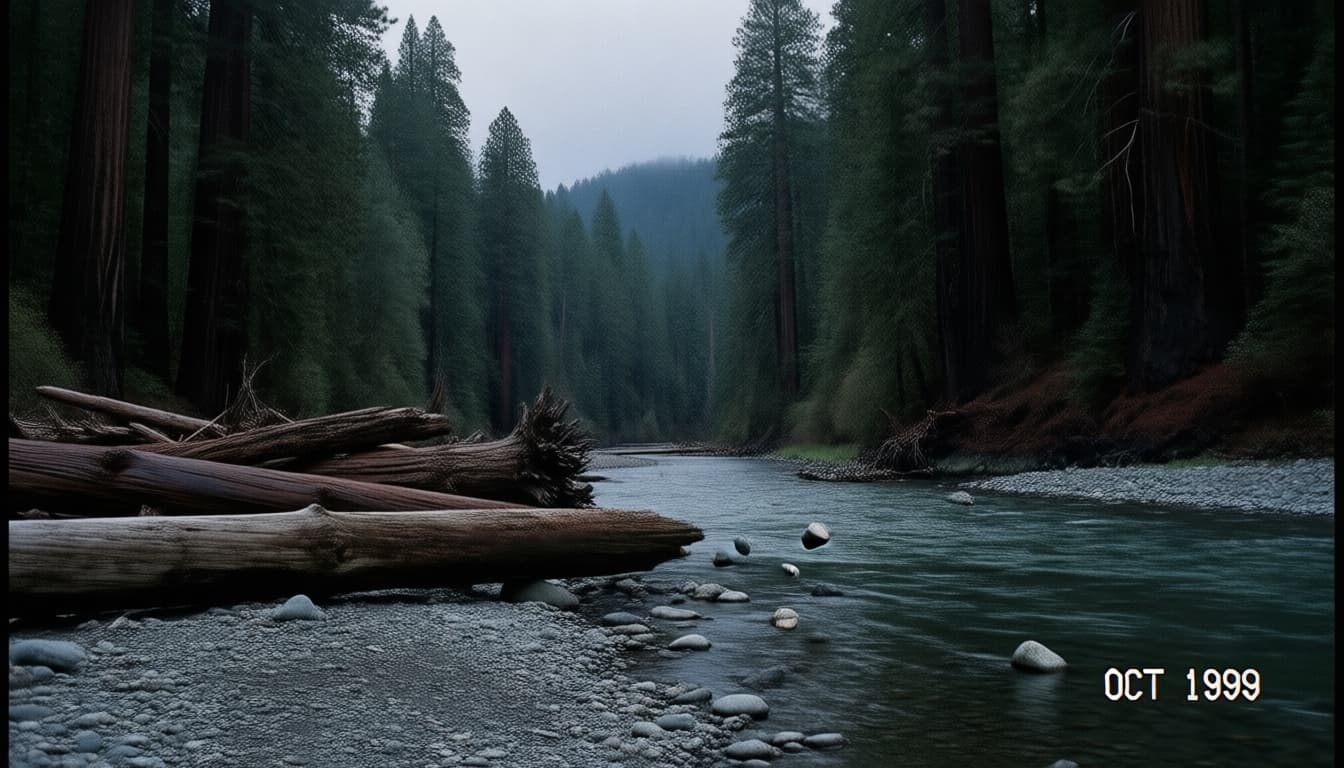
On October 20, 1967, a 59.5-second reel of 16mm Kodachrome film shot in Bluff Creek, California, became the center of half a century of ridicule and debate. The public fixated solely on whether the creature captured on screen was a man in a fur suit or an unclassified primate. However, a classified 1969 internal report exchanged between the U.S. Forest Service and the California Department of Fish and Wildlife focused on something entirely different: the final four frames, excised during the restoration process. Although the creature had already vanished past the edge of the frame, the gravel and riverbed sediment left behind were levitating four inches above the creek bed. It was localized acoustic levitation.
Marcus Vance, an acoustic terrain analyst with the National Park Service, entered the Bluff Creek ravine in late October, when atmospheric pressure and water levels mirrored those recorded over fifty years prior. The canyon, scarred by the catastrophic flood of 1964, was arid and sheer. Cross-referencing logging maps left by the original survey team with high-resolution LiDAR scans, Vance pinpointed the fallen Douglas fir visible in the background of the infamous Frame 352. The moment he crossed the perimeter of the gravel sandbar, the roar of the rushing stream that echoed throughout the valley vanished instantly—as if severed by a blade.
The air grew as dense as lead. Vance instinctively attempted to speak, but the sound could not travel beyond his lips, dying in a muffled vibration behind his teeth. Even as he trod upon the cold river stones, there was no sound of gravel grinding together. Instead, a sluggish, blunt hydraulic vibration surged through the soles of his boots and rattled up his skeleton. An eighty-yard radius was locked within a colossal sound-deadening insulator.
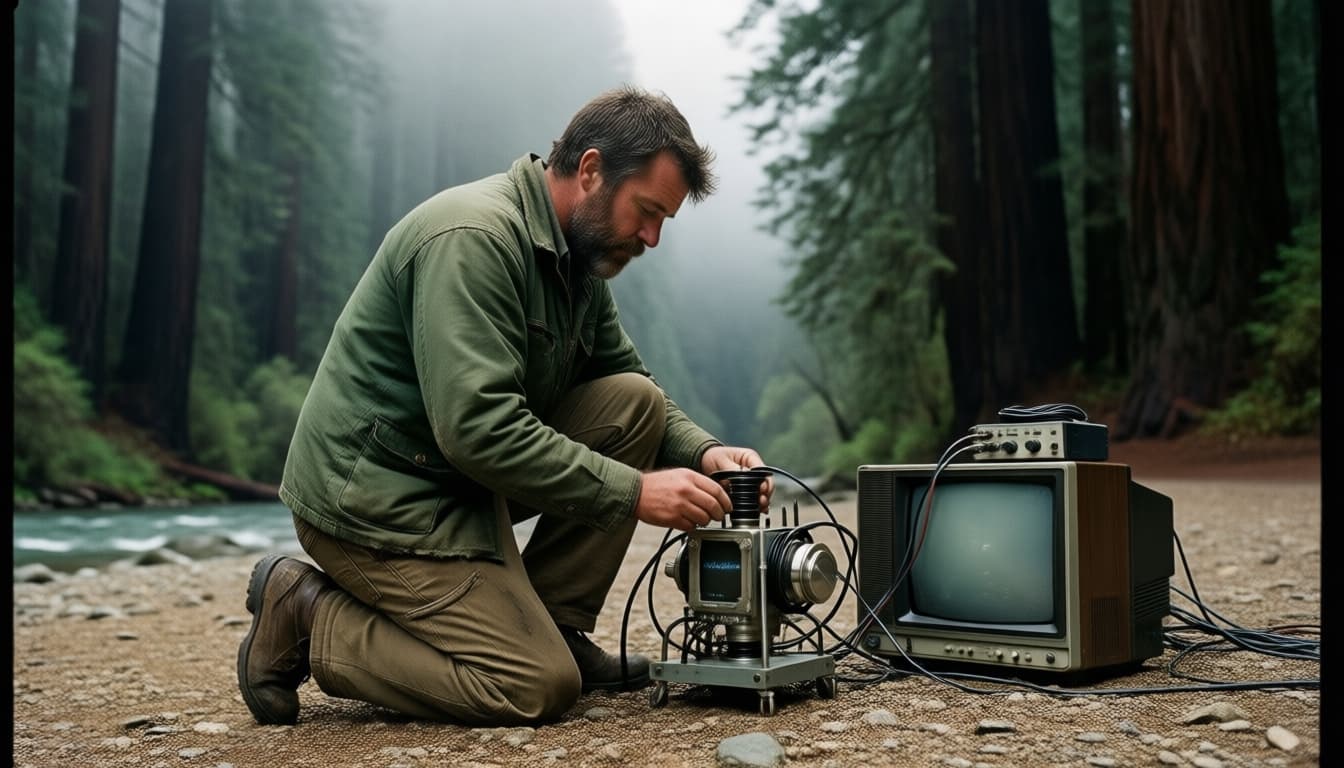
The needle of the low-frequency geophone installed along the gravel bar began to twitch violently. The liquid-crystal display of the monitoring unit logged an unbroken burst of infrasound between 9 and 12 Hertz, far below human hearing limits. As Vance's eyeballs were forced into resonance with the specific frequency, the contours of his vision dissolved into loose blurs. Nausea hit him along with a pungent taste of copper at the back of his tongue. Vance glanced up at the eleven-foot-tall trees. The dead branches had not snapped under the weight of winter snow; they had been torn against the grain and peeled downward along with their bark.
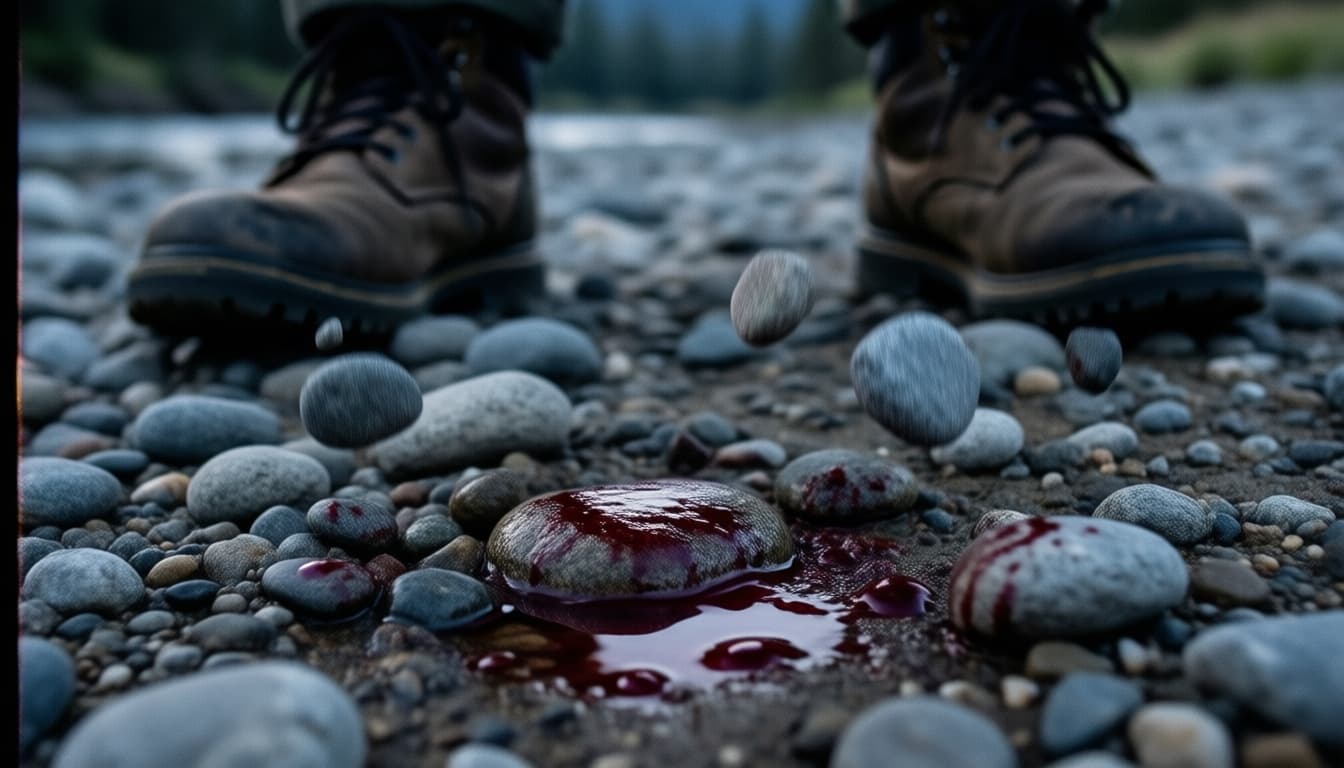
As dusk sank into the canyon floor, the temperature plummeted below freezing. While the frequency of the infrasound remained unchanged, its amplitude swelled exponentially. A dry, rhythmic clicking spread beneath his feet. Thousands of stones blanketing the riverbed began bouncing minutely into the air in perfect unison. In an instant, the internal diaphragm of the directional shotgun microphone ruptured with a dull pop, unable to withstand the immense acoustic pressure. The capillaries inside Vance's nasal cavity burst simultaneously, sending dark red blood streaming down the tip of his chin.
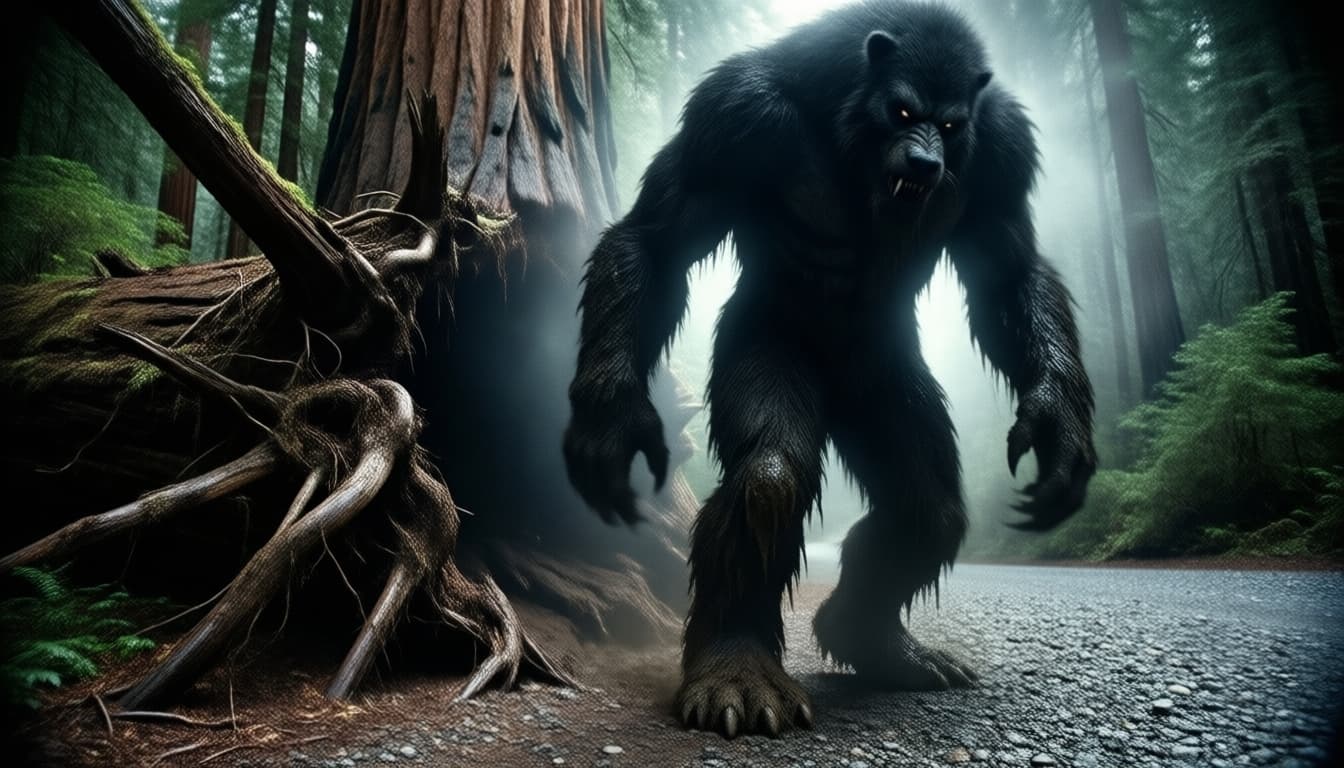
Parting the dry willow thickets upstream, something strode out. Its movement bore no resemblance to the waddle of an ape or the heavy trudge of a human. Despite navigating a chaotic field of boulders, its massive center of mass glided down like a spirit, perfectly level as a carpenter's rule. It was not merely walking: the ground seemed to be drawn beneath its crushing mass. There was no roar, no breath of a beast. Instead, the moment its chest expanded and compressed, driftwood ahead of its path was pulverized by a silent shockwave.
Vance hurled himself into the tangled root mass of a fallen redwood. The gravel bank directly above him collapsed under an impossible weight—a load that no quadruped nor four-hundred-pound primate could ever exert. An unnatural pressure bearing down on the entire crust of the earth pulsed through the soil like a hydraulic ram, fracturing two of Vance's ribs. Gasping through excruciating pain, Vance peered through the gaps in the roots.
There was no primitive humanoid face, nor bare skin beneath parted fur. Beneath thick black hair caked in wet mud, the muscles did not ripple; they shifted against one another like tectonic plates. What assaulted his nostrils was not animal musk, but the corrosive, suffocating stench of concentrated copper and bile. Yet what truly paralyzed Vance's limbs was the depression in the soil. In the enormous footprint where the creature had just lifted its foot, pulverized gravel remained suspended in midair, defying gravity.
It did not stop. Scaling an eighty-degree vertical cliff face that no human could ascend without mountaineering gear, it climbed at an unyielding, rhythmic pace without slowing down, vanishing over the ridge. Vance crawled back to his truck, vomiting blood. The magnetic tape recovered from the geophone was scorched black at the margins from ultra-high electrostatic discharge, and the digital backup file, despite registering zero audible signals, was completely clipped at maximum output across the entire duration.
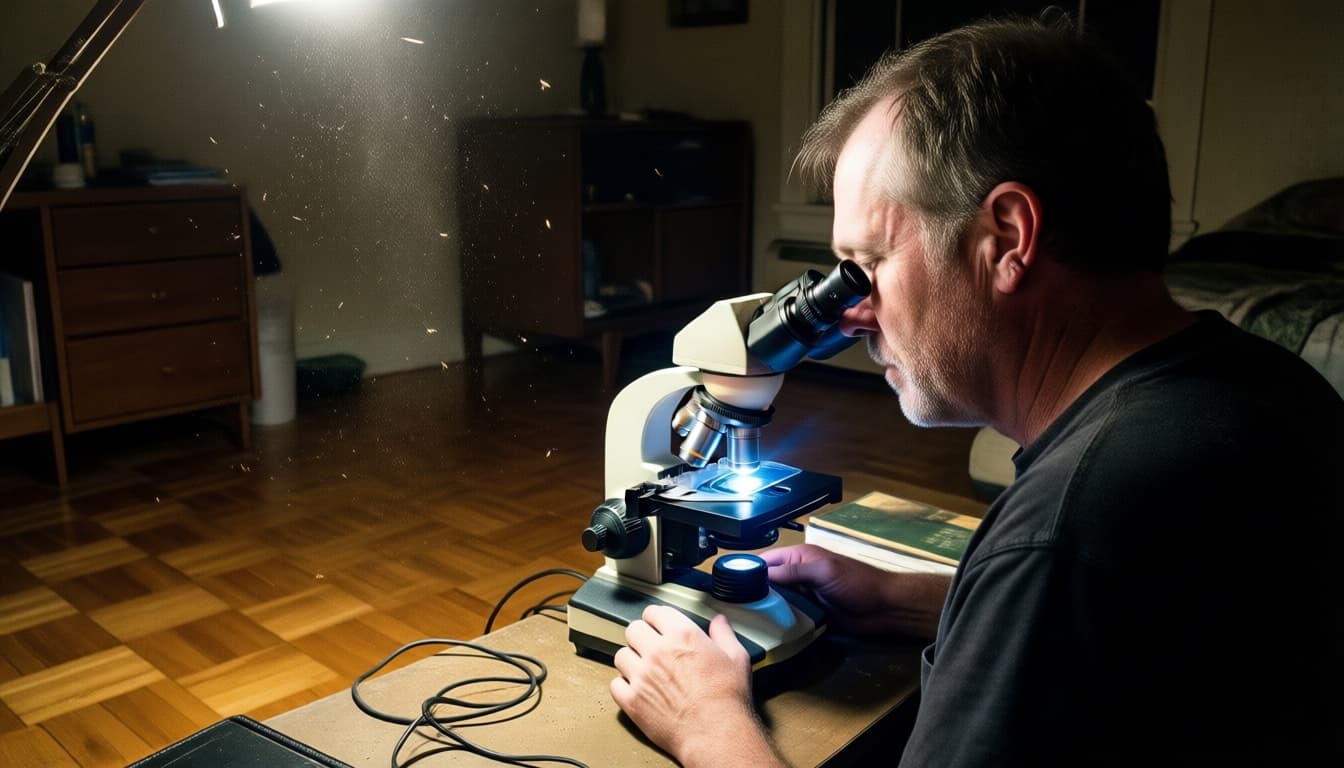
Treated for cracked ribs and ruptured eardrums, Vance returned to the archives in San Rafael and placed Frame 352 under a microscope. It was the notorious still where the subject, dubbed 'Patty,' glances back over her right shoulder toward the camera. Vance's permanently damaged ears could no longer filter ambient noise. As he magnified the monitor, he froze.
Beneath the subject's slightly parted jaw, a violent thermal distortion of high-pressure air was etched into the grain of the film. It had not looked back out of curiosity or fear. In the wake of the kinetic pressure wave it left behind, it was checking whether the two men standing on the sandbar had survived. And if they were still breathing, to return and trample them into the gravel once and for all.
Even decades later, whenever total silence falls over Vance's apartment, the tinnitus simmering in his damaged ears settles into a heavy, viscous 10-Hertz thrum. And between the cracks of the aged hardwood floor, dry dust motes slowly begin to lift into the empty air.
[ CLASSIFIED VERDICT ]
[ACCESS LOG - SOURCE FILE]
This story is inspired by the legendary 1967 'Patterson-Gimlin film' shot in Bluff Creek, California, one of the most famous pieces of Bigfoot footage in history. It reimagines the classic cryptid mythos with hard horror elements, incorporating classified military findings, weaponized low-frequency infrasound, and localized acoustic levitation.