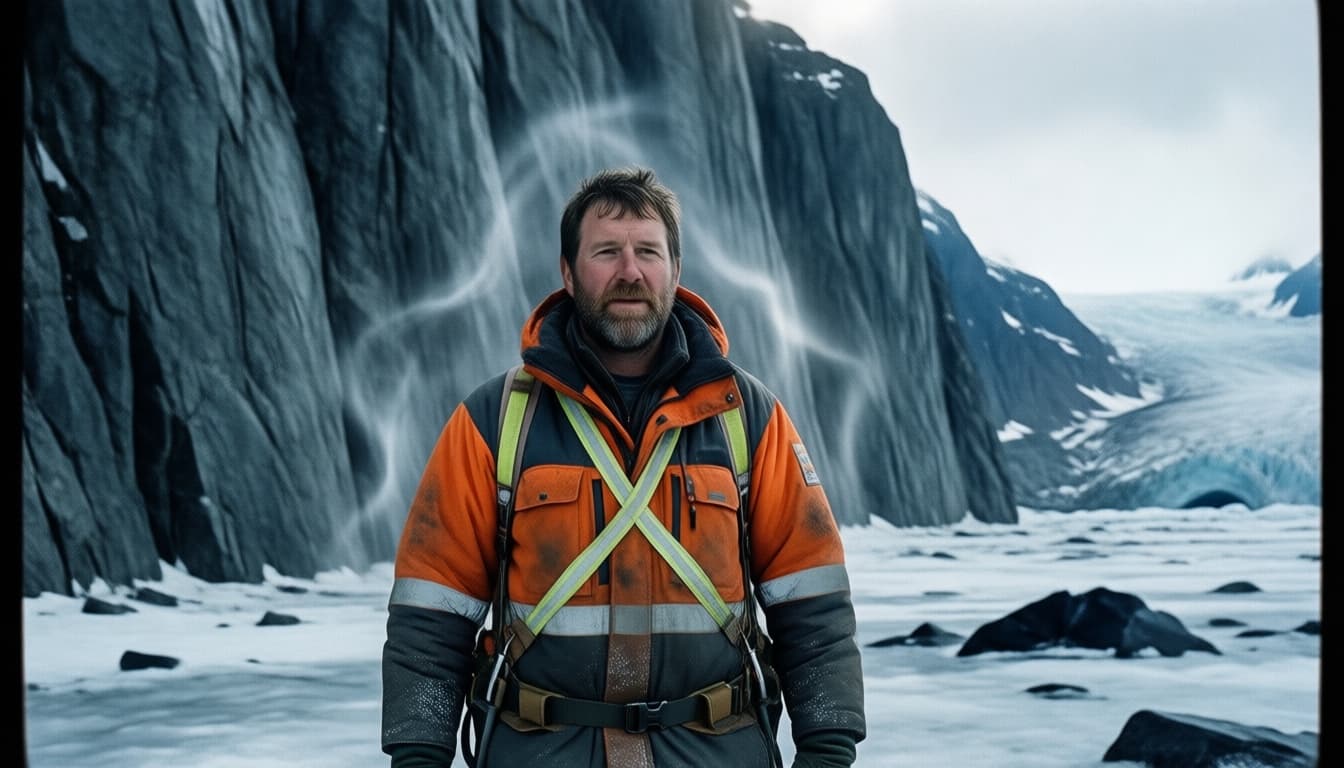
The Granite Fusion of the Alaska Triangle
In Alaska's infamous 'Missing Persons Triangle'—stretching from Anchorage and Juneau up to Utqiaġvik—roughly four out of every 1,000 residents vanish without a trace each year. While the state government officially attributes this to severe subarctic climates and predatory wildlife, confidential recovery logs held in the state archives document incidents that defy the laws of natural mortality. In July 2021, a glaciology team extracting ice core samples along an interior wall of Knik Glacier recovered an obsolete Trimble GPS device belonging to a Department of Natural Resources surveyor who disappeared in November 1999.
The unit's flash memory remained remarkably intact. The 12-hour tracking route logged on the day of the disappearance showed that for the final eight kilometers, the surveyor did not circumnavigate ridges or valleys. Instead, the signal traveled in an impossibly straight, horizontal path through the solid granite bedrock of Mount Gannett at a constant velocity of five kilometers per hour, finally terminating 195 meters deep within an impenetrable subterranean rock mass where no natural cavern exists.
Daniel Lowe, a veteran contract surveyor for the United States Geological Survey (USGS), ventured out to Knik Glacier to verify these anomalous spatial coordinates prior to deploying an early-warning seismic sensor array. It was late October; the ground was barren permafrost thinly veneered with black ice, and the air was razor-sharp. Entering the glacial gorge, the atmosphere felt less like desolate wilderness and more like a crushing, pressurized chamber. With every breath, he tasted a briny, metallic tang reminiscent of ozone and copper wiring exposed to high-voltage currents.
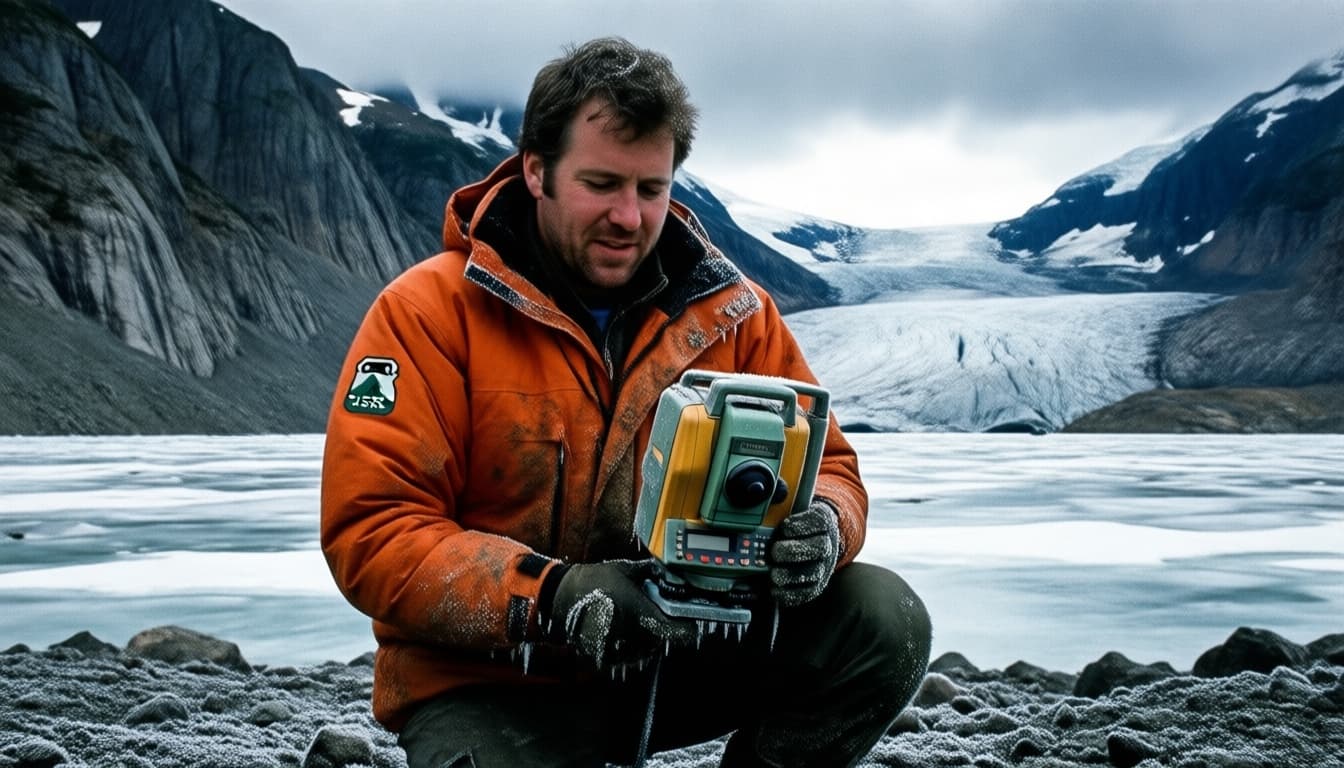
Advancing six kilometers along the exact latitudinal axis recorded in 1999, his satellite-synchronized surveying instruments began to fail catastrophically. The internal quartz chronometer began ticking backward in sub-second intervals, and the lithium battery pack secured inside his thermal pouch instantly dropped over 40 percent without any corresponding drop in temperature. His fingertips grew uncharacteristically numb and ice-cold.
As he entered an unmapped alluvial cleft framed by two colossal granite spires, the basic acoustics of the natural world dissolved. The crunch of his heavy crampons crushing scree vanished into total, absolute silence. Yet, the wet, slipping friction of snow shifting along a ridge five kilometers away struck his eardrums with needle-sharp, deafening clarity. The severe sensory disorientation triggered intense bouts of nausea.
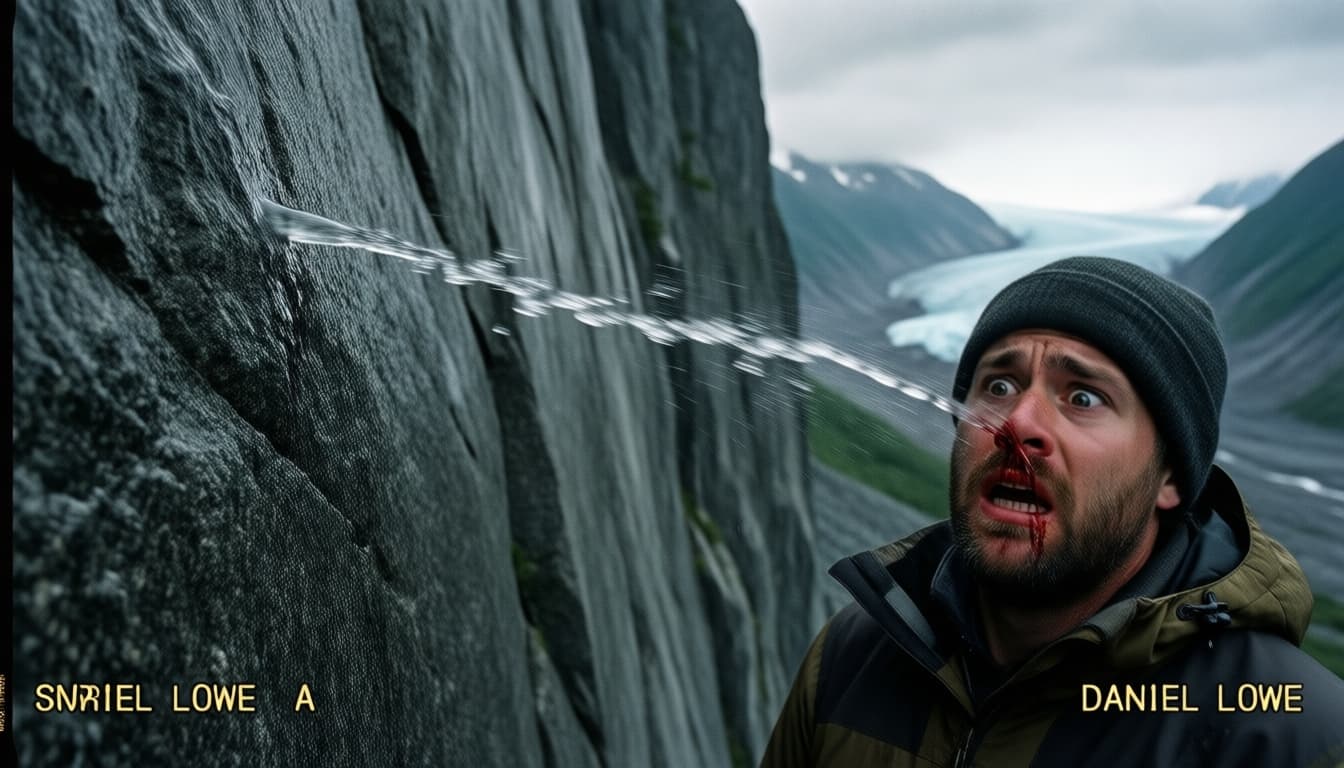
After taking merely five steps onto a flat expanse of bedrock, his analog barometer plummeted by 90 millibars. Unable to withstand the violent pressure plunge, blood burst from both of his nostrils. Above him, the Alaskan sky remained dead calm, yet meltwater dripping from an overhead ice shelf did not fall downward. The droplets veered at a sharp 15-degree angle, cutting horizontally across the air toward the colossal rock wall, sinking directly into the solid granite without leaving so much as a wet stain.
Daniel raised the thermal lens of his optical theodolite to his eye and froze. The sheer rock wall blocking his path did not maintain the sub-zero baseline of the surrounding glacier. A horizontal band of solid stone, perfectly matching the height and stride of an adult human male, was radiating an organic warmth of 20 degrees Celsius, gently pulsating amidst the freezing gale.
The UHF two-way radio mounted on his tactical shoulder harness erupted in harsh static. What cut through the white noise was not a dispatcher's transmission. It was the terrified, ragged panting of Daniel Lowe himself. A chill sank into his spine: it was the frantic rhythm of breaths he had not yet drawn—breaths he would not take for another two minutes.
Suddenly, the permafrost beneath his boots surrendered its structural shear strength without melting. The rigid bedrock turned beneath him not into mud, but into a heavy, freezing mineral slurry resembling liquid mercury. Lowe's right leg was swallowed up to mid-thigh in a fraction of a second. Panicking, he tried to haul himself out, but within a heartbeat, the fluid stone snapped back into crystalline granite. His boot, tactical trousers, and living flesh fused seamlessly into the mineral lattice of the rock. It was not the agony of a fracture; it was an excruciating horror, as if his biological cells were being atomic-level substituted by freezing mineral grain.
The air near the cliff's fissure buckled. From beneath the overcast sky, a flat, darkened spatial fold crawled forward against the howling wind. Looking into that optical abyss, his heart stopped cold. Suspended inside the density of the granite were foreign objects: the threadbare fabric of a vintage yellow parka popular decades ago, and the corroded aluminum rudder pedal of an aircraft, floating inside the solid rock as if suspended in water.
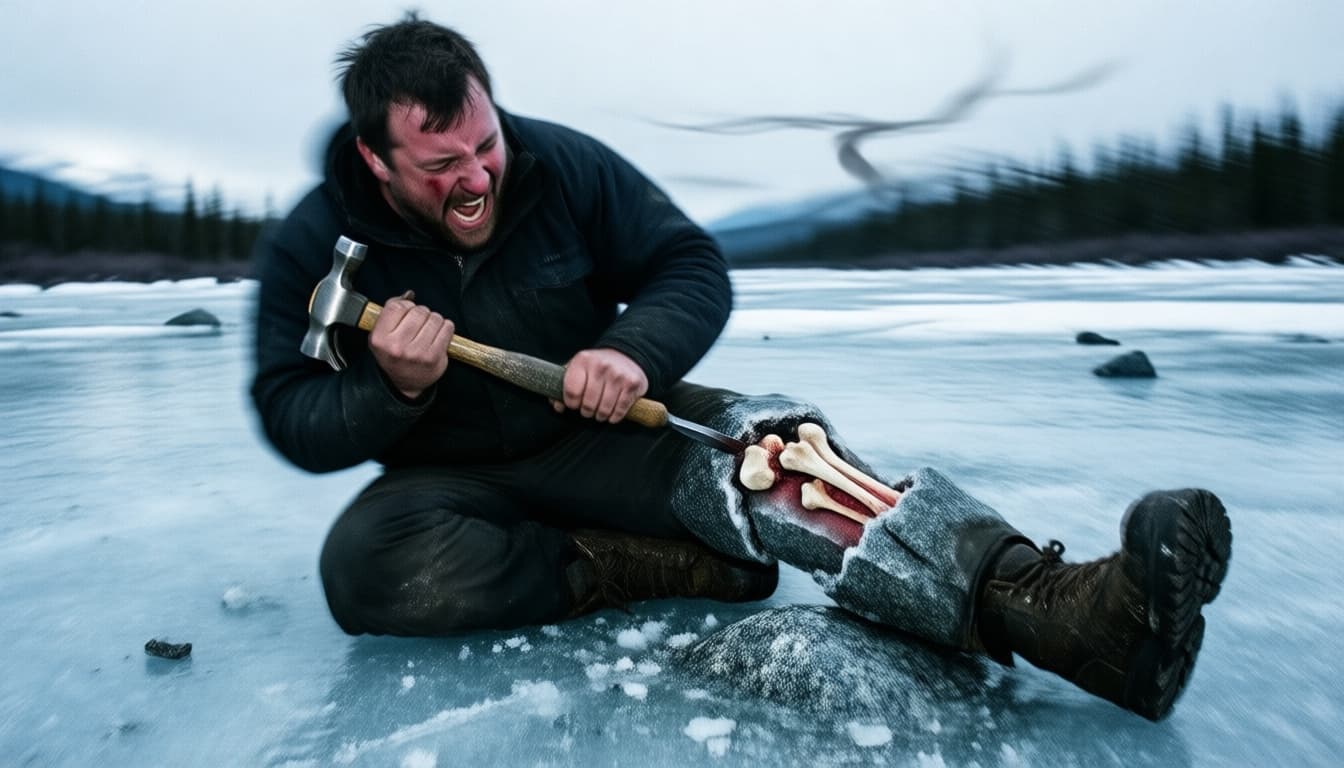
As the distortion drew nearer, oxygen dissipated rapidly and ambient temperatures plunged past flash-freezing levels. Physically pulling his leg out of the fused stone was impossible. With frantic resolve, Lowe ripped a cold chisel and a heavy drilling hammer from his field kit. Without hesitation, he began shattering his own tibia and fibula where they bonded with the granite. Amidst flying bone fragments and hot blood, he threw his upper body backward just as the seam in the bedrock snapped shut with a hollow, concussive boom—like a steel vault door locking in the deep sea.
Applying a combat tourniquet and activating his emergency beacon, Lowe was extracted six hours later by an Alaska National Guard helicopter. Surgeons at Providence Alaska Medical Center recorded bizarre findings while dressing the below-knee amputation stump: the soft tissue and exposed bone exhibited no signs of tearing, crushing, or standard frostbite necrosis.
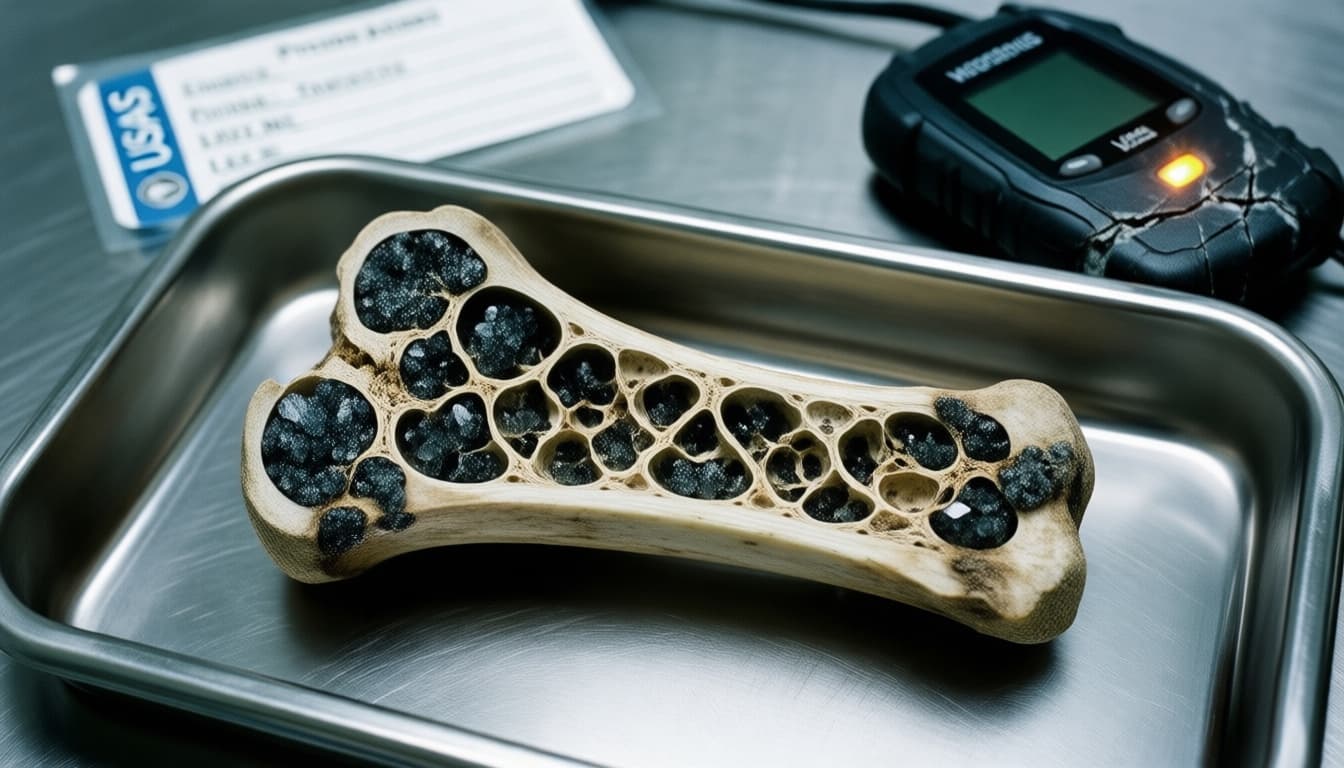
Under microscopic analysis, the medullary cavity within his severed bone revealed fine mineral veins of metamorphic granulite—typically formed deep within the continental crust—flawlessly interwoven with human osteocytes at a molecular scale. Three weeks later, the auxiliary GPS terminal he had abandoned before the rock wall suddenly pinged the USGS automated telemetry array. The signal was still broadcasting from six kilometers past the mountain barrier and 210 meters below sea level, buried deep inside the impenetrable bedrock of the continental crust, pulsing a rhythmic signal back to the surface.
[ CLASSIFIED VERDICT ]
[ACCESS LOG - SOURCE FILE]
The Alaska Triangle, spanning Anchorage, Juneau, and Utqiaġvik, is notorious for the unexplained disappearance of thousands of people—including U.S. House Majority Leader Hale Boggs in 1972—earning it the moniker of 'America's Bermuda Triangle.' While officially explained by rugged topography and extreme subarctic conditions, widespread folklore and conspiracy theories suggest the existence of localized electromagnetic anomalies and subterranean vortices that warp space.