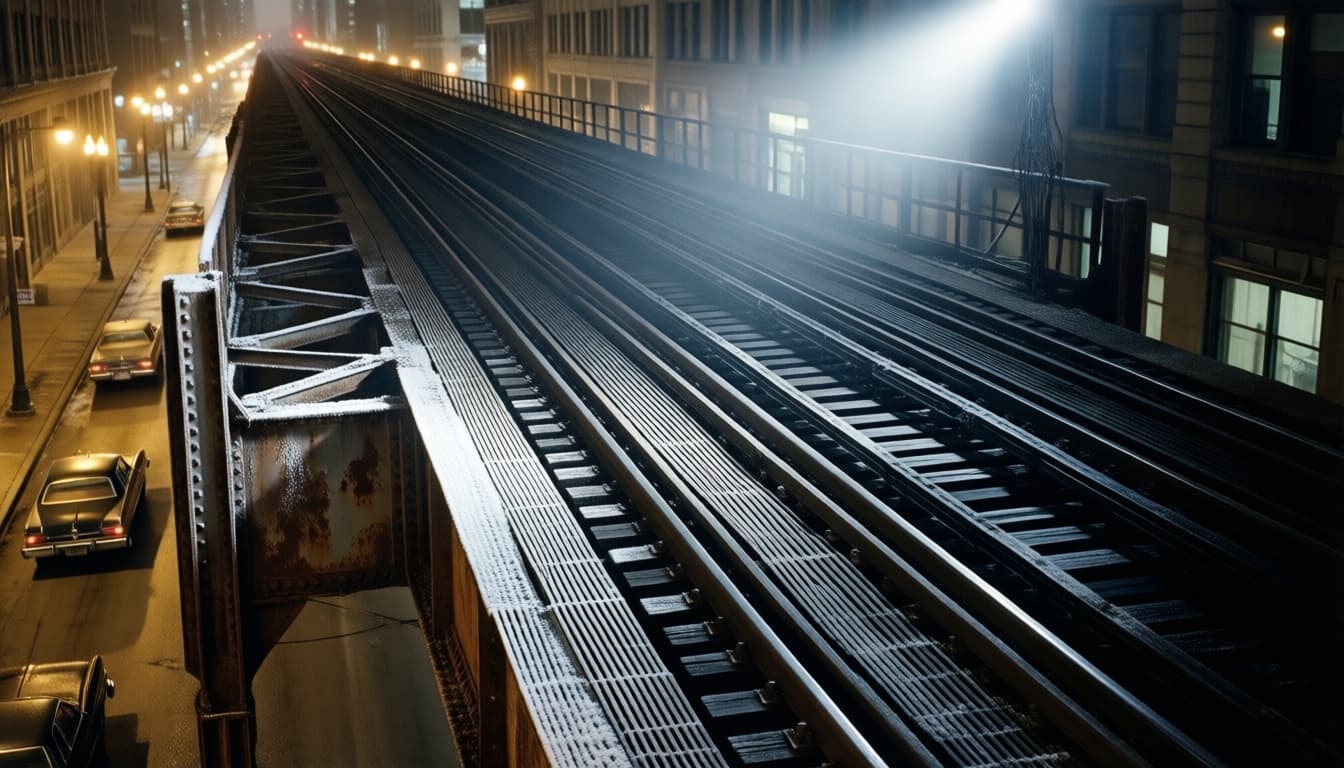
The Phantom Train of the Severed Tracks: The Chicago CTA 414 Curse
A strange record survives in Signal Log #77-04A of the Chicago Transit Authority (CTA), preserved in the Illinois Railway Historical Archives and declassified under a 2018 Freedom of Information Act request. At the Tower 18 control station in the heart of the Loop, dawn-shift operators have reported an identical, unexplained error code for over fifty years: '414 - Loop Track Occupied'. It was a signal indicating an eight-car train traveling at 35 miles per hour over tracks that had been physically torn down following the deadly 1977 derailment, leaving only an empty drop into thin air. Strangest of all, whenever the signal flared, the mechanical track-level emergency buffer lever—the iron trip-arm, which only triggers when physically trampled by heavy steel railcar wheels—would slam downward, crushed under massive invisible tonnage. Yet not a single surveillance camera ever caught the outline of a train.
It was 2:15 AM when Ellis Vance, a private track forensics inspector assessing structural fatigue, climbed the decaying maintenance stairs of the 43rd Street elevated trestle. Perched forty feet in the air, the open-deck steel bridge reeked of Chicago’s freezing November river winds, creosote preservative, and decaying iron dust. Every step across the twenty-inch-wide cedar planking known as the 'dead walk'—sandwiched between the active northbound track and an abandoned bypass severed in the late 1980s—sent a bone-deep chill shivering through his frame.
As he crouched to gauge the oxidized plating of the disused rail, ambient sounds began to distort. The roar of traffic from the Dan Ryan Expressway below had not vanished; rather, the acoustic vibrations traveling through the steel frame reached his ears delayed by precisely two seconds. Despite being suspended forty feet above open street-level air, a sudden barometric drop—the kind that occurs only when a roaring train compresses air through a tight tunnel—stabbed violently into his eardrums. Rusted metal flakes and track ballast scattered across the ties began sliding backward against the wind, rattling toward the Loop.
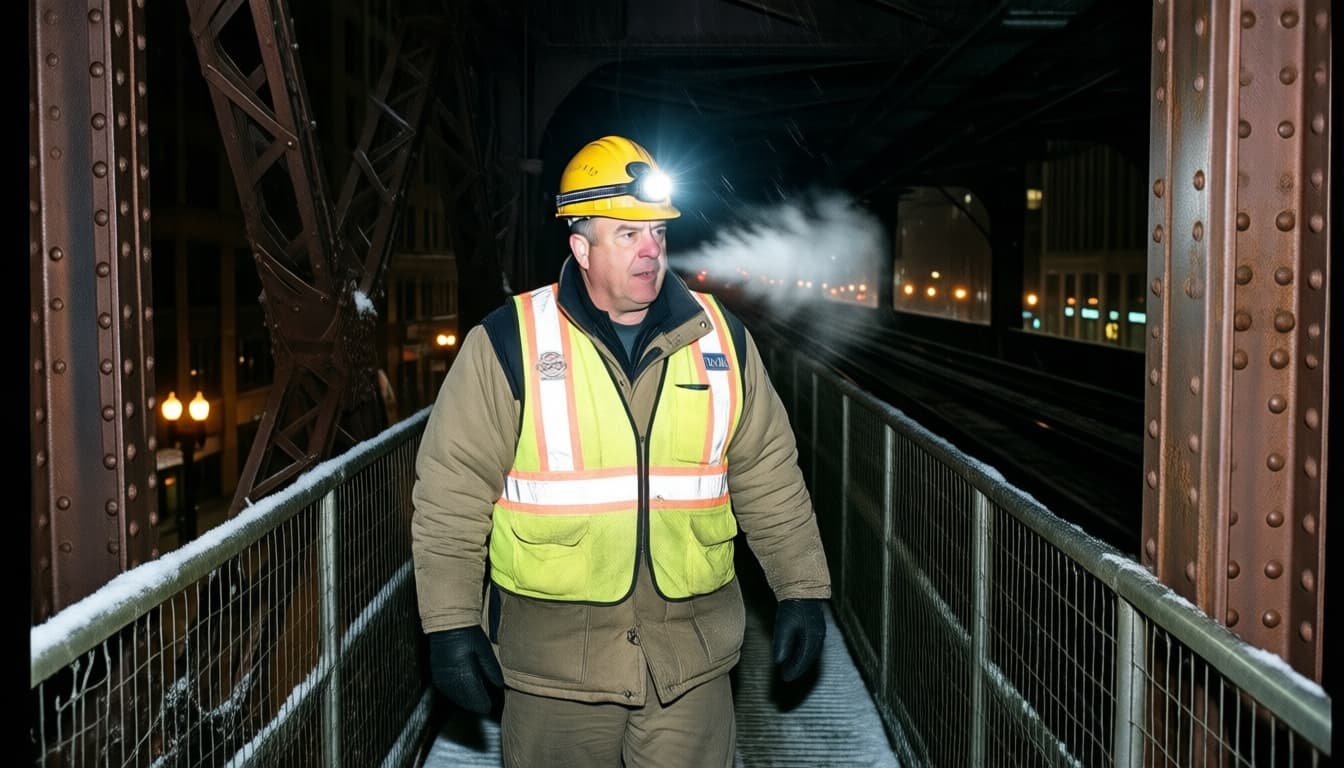
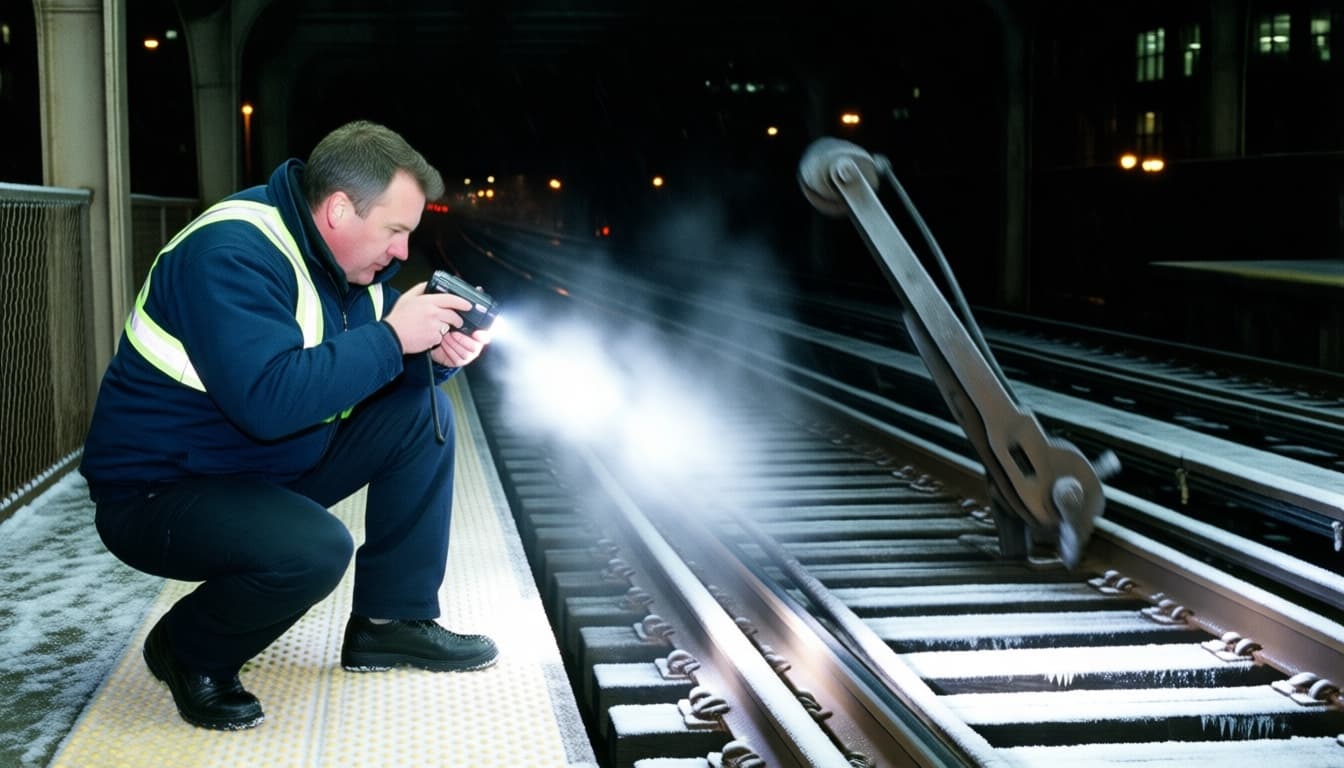
Vance aimed his infrared thermometer at the abandoned rail, which had been stripped of third-rail power three decades ago. The surrounding structural steel read minus 2 degrees Celsius, but the twin dead rails registered minus 24. A living crawler of white rime frost slithered along the railhead, belching thick plumes of cold vapor. Then, fifty yards ahead, right at the boundary of his headlamp's beam, a mechanical trip-arm collapsed downward with a violent, deafening clank.
Vance’s fingertips went numb. He whipped around toward the escape gangway, but his safety harness carabiner caught fast inside a jagged expansion joint. At that exact second, the entire elevated bridge beneath him shuddered with a dull, 45-hertz low-frequency thrum: the unmistakable harmonic vibration generated when heavy steel wheels mash into rail joints.
There was no engine roar. Instead, the wet shriek of steel grinding dry iron filled the night air, accompanied by a sickening stench of smoldering cotton insulation and horsehair upholstery—materials banned from passenger interiors since the 1960s. Plunging out of the darkness was not a blinding headlight, but a monolithic mass of pure pitch-black that blotted out the city streetlights below, tearing a hole straight through physical space as it surged down the dead tracks.
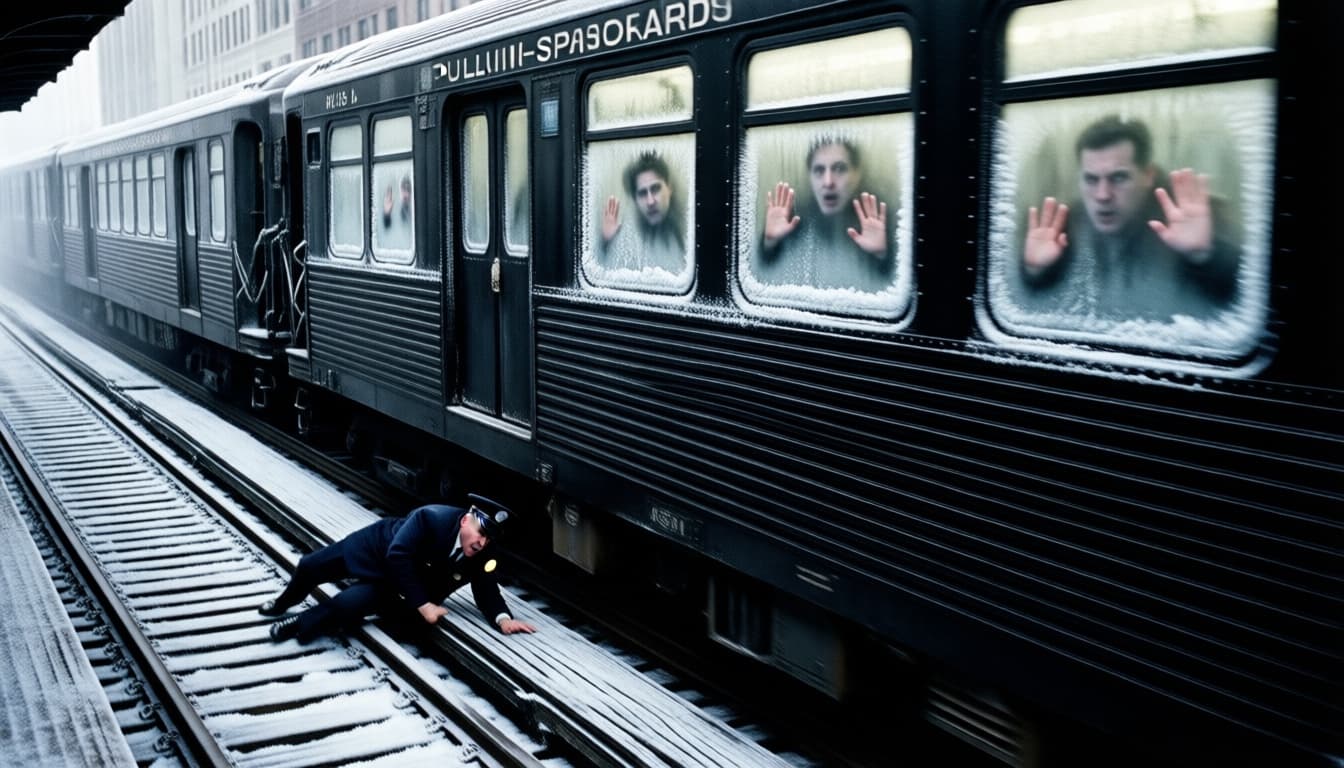
The passenger car windows were frozen over from the inside with thick rime. Pressed hard against the frosty glass were dozens of pale, distorted faces and splayed palms. The faces behind the sealed panes were not passengers peering out. Even as the carriage barreled forward at high speed, those frozen silhouettes remained welded to the glass like fossils embedded in glacial ice, without shifting a single millimeter.
Ahead lay nothing but forty feet of empty air. There was no escape route. Vance threw himself flat into the meager sixteen-inch trench between the ties and the 600-volt third-rail guard, slamming his spine into the wood. The crushing vacuum of the passing train sucked violently at the back of his canvas coat, dragging him toward the undercarriage. In that split second, a severed underbody safety chain dragging beneath the phantom cars whipped through the air and slammed into his arm. A sickening crack of splintering bone echoed through his body.
Reaching the sheared edge of the overpass, the train did not plummet to the pavement below. The razor-sharp gale of air instantly evaporated over the precipice as if it had never existed, leaving only a deadening silence that pounded against his eardrums. Barely freeing his snagged lifeline, Vance crawled down to the street and was rushed to Mercy Hospital, diagnosed with compound fractures and localized frostbite. The transit authority's official incident log simply noted his injuries as 'an accidental slip on an icy maintenance scaffold.'
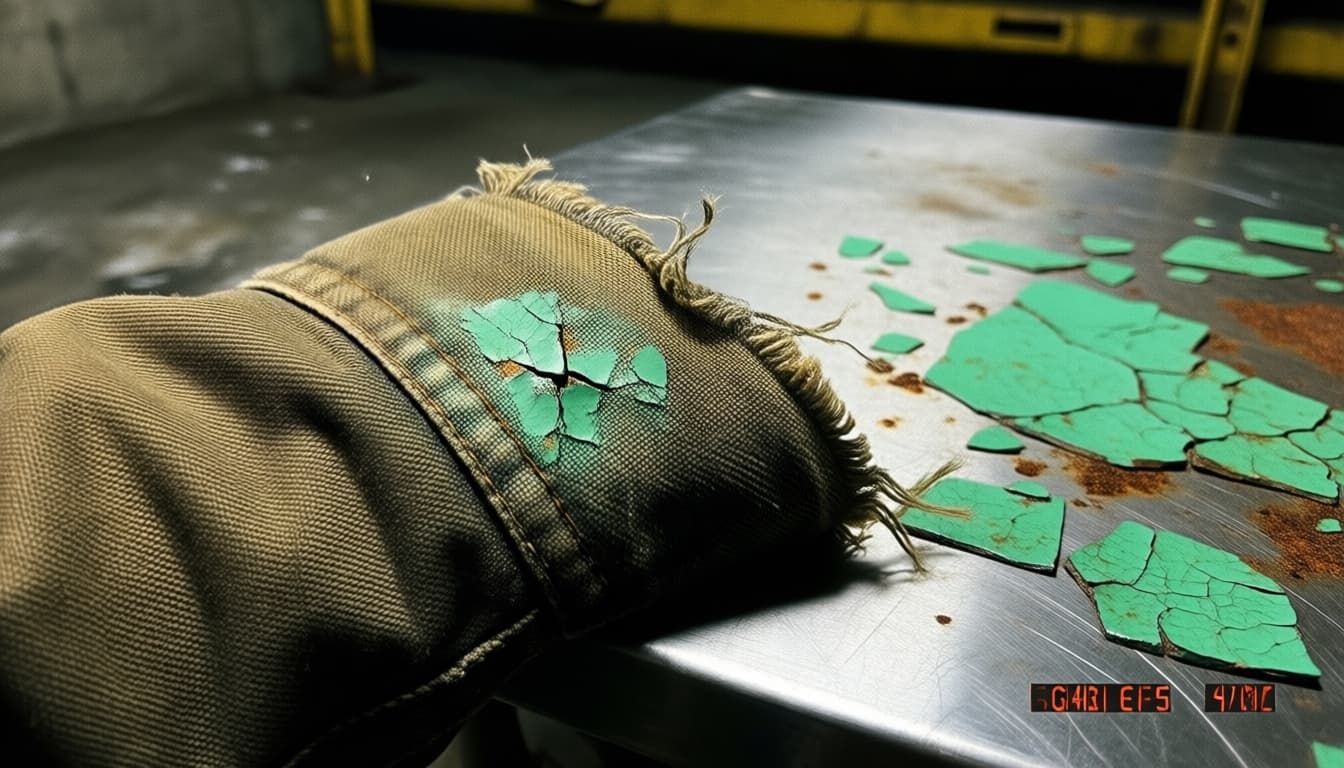
Yet embedded within the shredded fibers of Vance’s canvas work jacket was evidence no fall could explain: microscopic chips of oxidized lacquer. Spectroscopic analysis confirmed the pigment was 'CTA Mint Green,' an industrial formula exclusive to the interior panels of 1948 Pullman-Standard 4000-series railcars, all of which had been scrapped and melted down in a South Chicago foundry forty-four years prior. And in the final three seconds of his audio inspection recorder, which had run continuously throughout the ordeal, a mechanical conductor's chime rang out, followed by an automated station call for a stop demolished in 1973:
"Next stop, Wabash-Madison. Wabash-Madison. Please move toward the center of the car..."
[ CLASSIFIED VERDICT ]
[ACCESS LOG - SOURCE FILE]
Based on the catastrophic 1977 Chicago 'L' train derailment in the Loop and long-standing urban legends among CTA signal tower operators claiming phantom train occupancies repeatedly trigger sensors on tracks demolished decades ago.