The Signature of Nahanni Valley
The Nahanni Valley in Canada’s Northwest Territories has maintained an eerie reputation for centuries. Indigenous Dene legends speak of malevolent spirits and a place that permits few to return. European explorers and gold prospectors, particularly during the Klondike Gold Rush era, added their own grim testimonies. The name 'Headless Valley' was no romantic flourish; it directly referred to the chilling frequency with which the bodies of missing persons were found, most often decapitated. My investigation ventured beyond regional superstition to understand the persistent nature of these reports, towards a more grounded yet equally unsettling hypothesis.
In 1908, the McLeod brothers, William and Frank, ventured into Nahanni seeking gold. Three years later, their remains were discovered near what would become known as 'Headless Creek.' Both bodies were headless and strangely upright. Their campsite was undisturbed, food still simmering. There were no signs of struggle, no evidence of robbery. This was not an isolated incident. Over decades, prospectors, trappers, even geological surveyors were found in similar, often headless, states or simply vanished. Local folklore attributed these occurrences to 'mountain spirits' or 'Sasquatch,' but the consistent absence of struggle, lack of theft, or evidence of typical predatory activity hinted at something far more insidious. My entry point wasn't the fantastical, but forensic anomalies that consistently appeared in documented historical records and the hushed whispers of isolated bush pilots and trappers. One now-deleted post from a wilderness survival forum, in particular, detailed a solo climber experiencing 'unnatural currents' in the seemingly tranquil Flat River, accompanied by an 'unbearable pressure' in their head, instinctively fleeing. The post was deleted within hours.
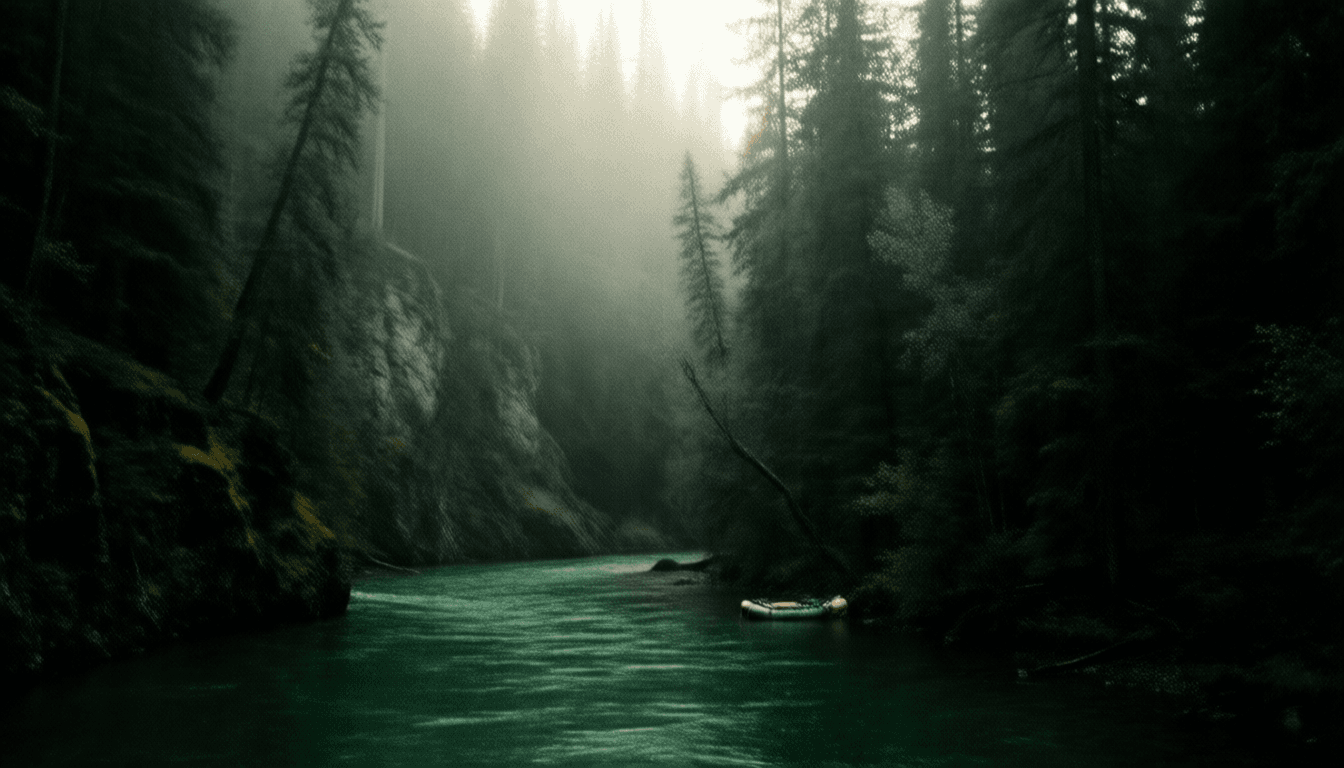
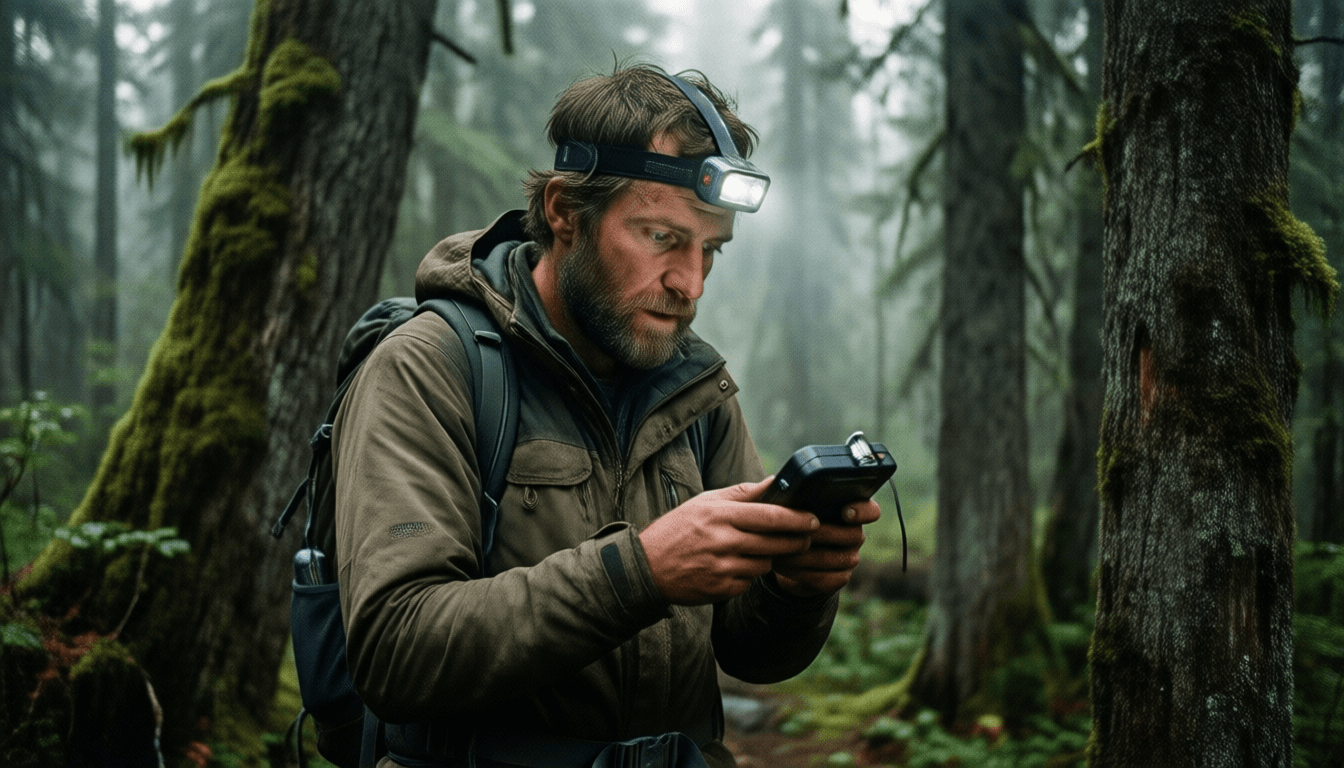
My chosen entry point was a narrow tributary leading to the Flat River, an area historically associated with several disappearances, including the McLeod brothers. The journey itself was brutal. Days of floatplane travel were followed by arduous portages through dense, jungle-like forests. An oppressive silence reigned, broken only by the distant roar of the river. Damp earth and pine scented the air, but a faint, almost imperceptible metallic odor persisted, like old blood mixed with ozone. The vast landscape dwarfed everything, and sunlight barely penetrated the canopy, casting an eternal twilight. The terrain was treacherous, riddled with sinkholes hidden by moss and ancient fallen trees. The river, when finally reached, was an emerald ribbon, deceptively calm in stretches, then suddenly surging with foam. My primary objective was to deploy hydro-acoustic detectors and localized atmospheric sensors to detect environmental anomalies that might correlate with historical disappearance sites.
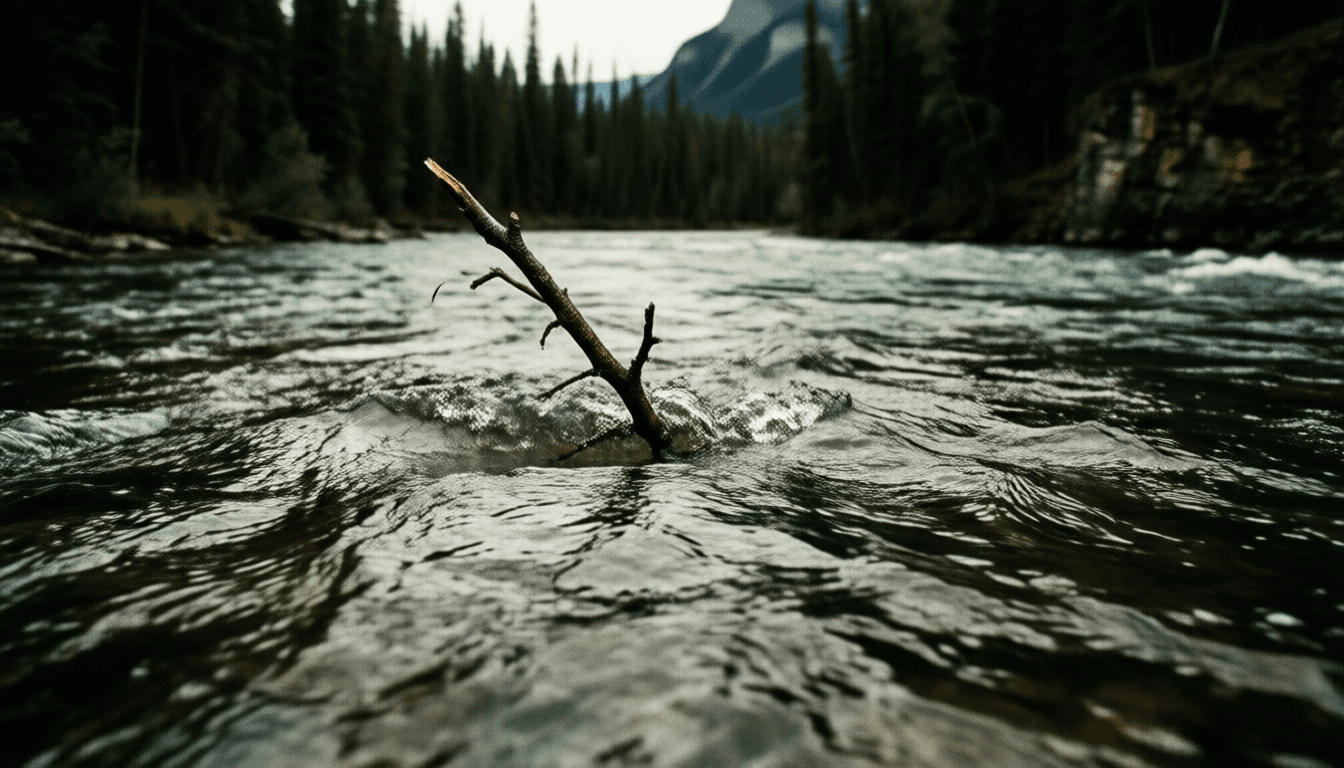
The initial days were characterized by a heightened psychological intensity. The silence wasn't merely an absence of sound; it pressed in like an active force, making my own breathing impossibly loud. There were no birds, and even insects seemed to avoid the deepest parts of the valley. Yet, my sensors began to register subtle, unexplainable anomalies. Hydro-acoustic detectors, deployed in relatively calm stretches of the tributary, reported intermittent, powerful sub-surface currents – localized, intense vortices appearing and vanishing without surface disturbance or known geological cause. On one occasion, I witnessed a small branch inexplicably move several meters upstream against the dominant flow before resuming its downstream trajectory. My atmospheric sensors picked up localized pressure and temperature fluctuations contrary to meteorological explanations: chilling pockets of cold in humid air, or sudden, almost painful cranial pressure. Deep, shapeless shadows seemed to shift at the periphery of my vision. The metallic odor in the air intensified, becoming almost acrid. And despite this apparent desolation, I began to feel an inexplicable sense of concentrated observation, like a cold weight on my back.
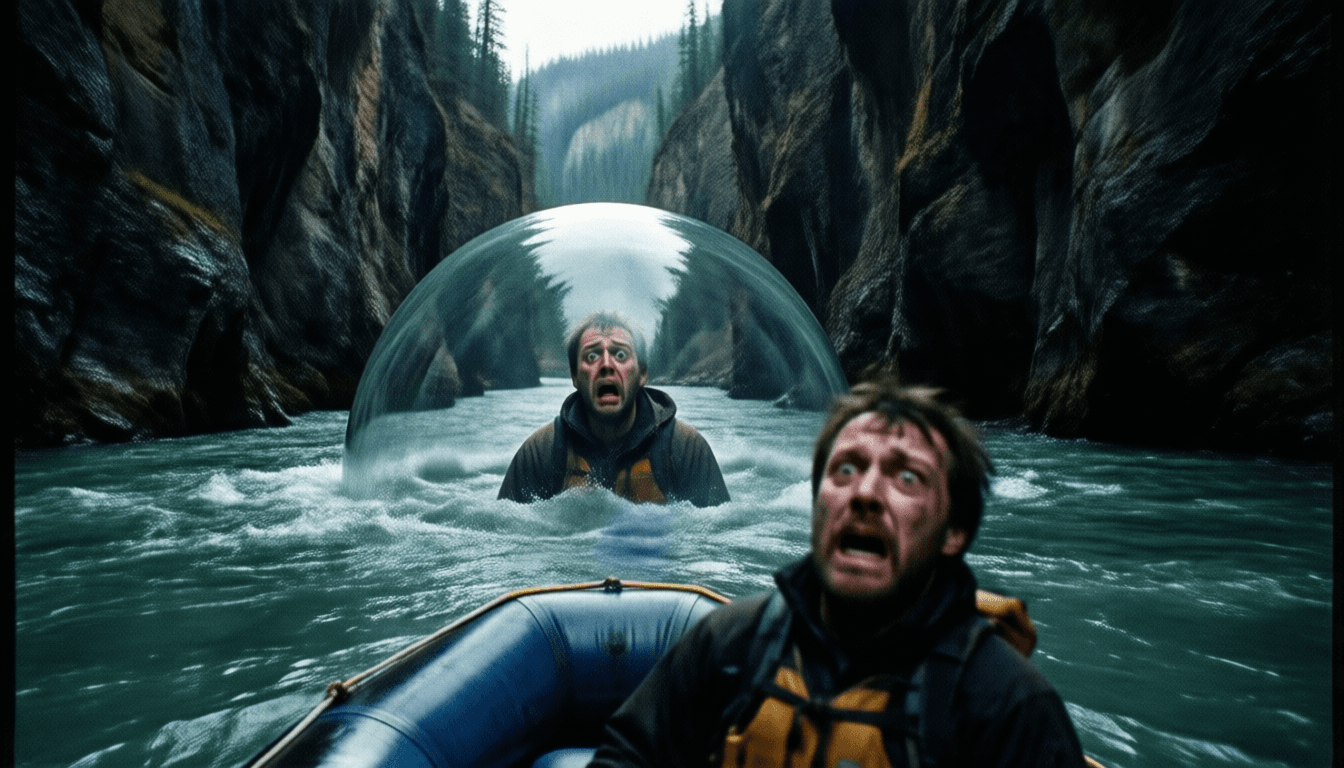
I was navigating a particularly narrow and deep section of the river, where canyon walls hundreds of feet high trapped the sunlight, creating perpetual gloom. My small raft drifted into an impossibly still pocket. The water around me flattened completely, reflecting the overcast sky like polished obsidian. My hydro-acoustic detector shrieked with incomprehensible data, then went dead. The air grew impossibly cold, the metallic scent overpowering. My mouth filled with the taste of coins. And then, physics broke. The river water directly in front of my raft began to defy gravity, rising upwards to form a perfect, glass-like dome. The dome reflected my horrified face. A localized, deafening silence descended, erasing the creak of the raft, my own frantic breathing. A vast, invisible force pressed down on my head and shoulders – an overwhelming, bone-crushing weight. My vision blurred.
Suddenly, the serenely risen dome of water collapsed inwards, not outwards, creating an impossible vacuum. My raft was furiously sucked towards the imploding water, spinning me violently. Before I could react, I felt a sharp, impossible tug at the back of my neck – as if physically grasped by an unseen hand. My head slammed with terrible force against the raft's crossbar, and the world exploded in pain and dazzling flashes. My vision blurred as the invisible force tried to drag my head downwards, towards the impossibly smooth surface of the water that seemed to be pulling light inwards. I clawed desperately at the raft, muscles screaming, fighting against a focused, unseen strength that tried to twist and sever. Only a desperate, animalistic kick towards the canyon wall broke its hold for a fleeting second, flinging me into a savage rapids beyond the tranquil trap. I was battered, concussed, and swept downstream, losing consciousness before I could fully process the force's intent.
Days later, I was rescued from the river miles downstream by a passing geological survey team, hypothermic and severely injured. My raft was shattered, but my emergency beacon was active. My skull bore a deep, ragged wound where my head had struck the raft, and a severe concussion left me disoriented for weeks. The survey team noted its unusual severity for a raft impact. After a difficult physical recovery, I examined my equipment. The atmospheric sensor was irreparably damaged, but one detail remained: embedded deep within the tough plastic casing of my satellite phone, strapped to my chest, was a perfectly smooth, jet-black, teardrop-shaped piece of obsidian. Nahanni Valley is not a volcanic region. Geologists later confirmed the stone was unlike any naturally occurring rock in the area, exhibiting impossible density and an almost artificial smoothness.
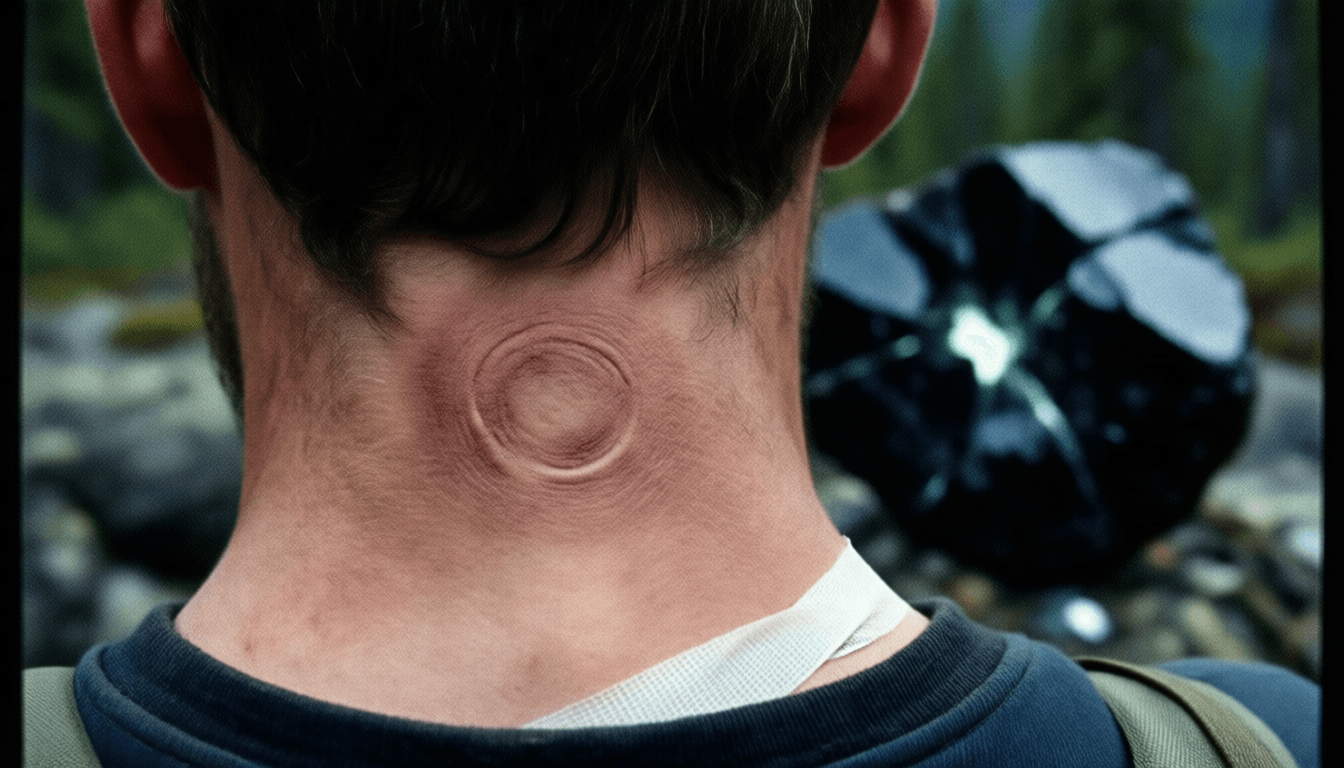
Even more unsettling, when the bandages came off my neck, a faint, almost imperceptible circular abrasion remained directly above my spine – precisely where I had felt the unseen grasp. It wasn't a wound from impact; it was too regular, too precise, as if something had been pressed there, applying immense, localized pressure. I meticulously documented it but found no explanation. The memory of the impossible currents, the downward pulling force, and the metallic taste remains vivid, an indelible mark not just on my body, but on my understanding of reality. Nahanni doesn't just take lives; it leaves a signature. And sometimes, it leaves fragments of itself. A chilling reminder that some truths are not meant to be uncovered, and some forces operate with an intelligence that transcends known physics. The metallic scent sometimes still catches in my throat.
[ CLASSIFIED VERDICT ]
[ACCESS LOG - SOURCE FILE]
The Nahanni Valley in Canada's Northwest Territories is infamous as the 'Headless Valley,' where over centuries, numerous people have gone missing or been found decapitated. This story follows an explorer who ventures into the valley to uncover these mysteries and experiences strange, supernatural phenomena.