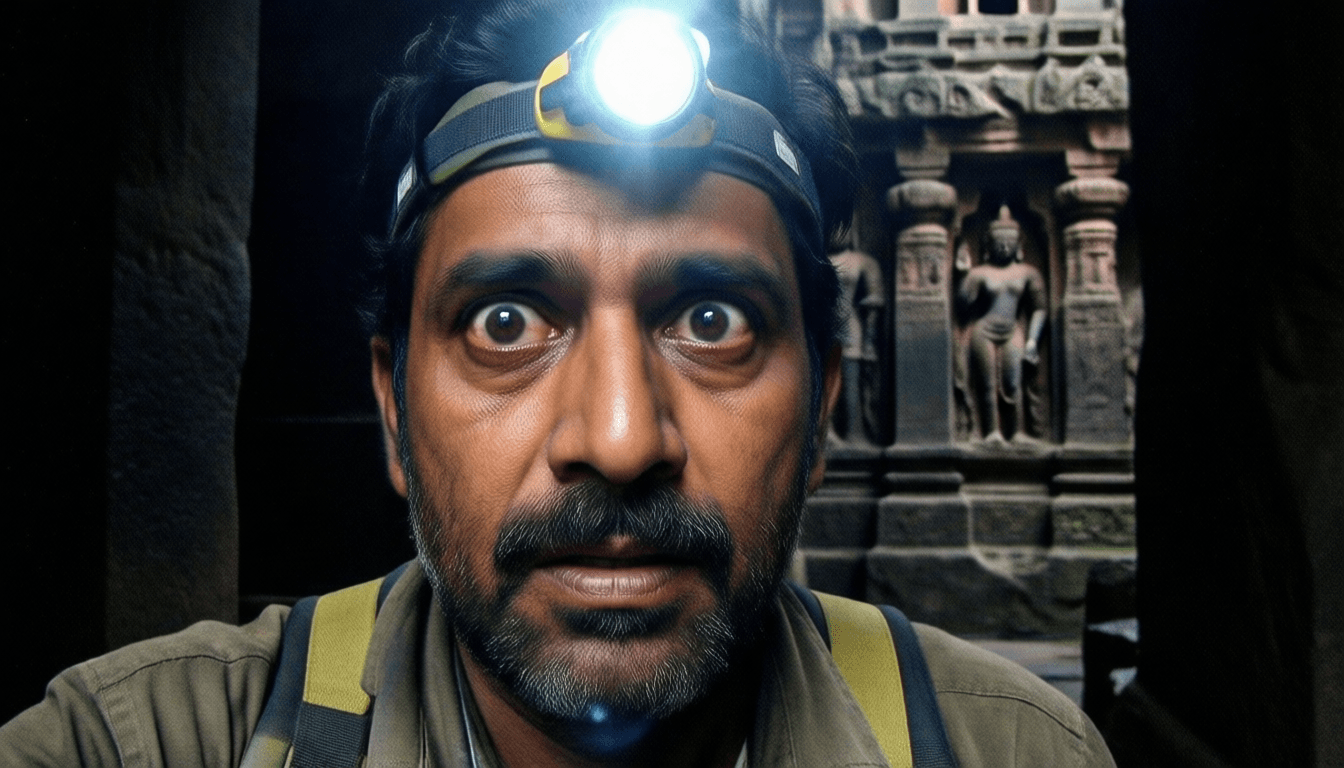
Kailasa's Heart: The Awakening Silence
The Kailasa Temple (Cave 16) in the Ellora Caves, India, remains an enigma unexplainable by human architectural prowess. Carved from a single massive rock mountain from top to bottom, it is estimated that a staggering 400,000 tons of basalt were removed. Mainstream archaeology attributes it to the marvelous achievement of the Rashtrakuta dynasty in the 8th century CE, but even modern engineers question the precision and speed, finding it hard to comprehend. Beneath this official explanation lie the ancient whispers of local residents, often dismissed as mere superstition. They speak of experiencing "unnatural silence" and "a chill untouched by sunlight" deep within the temple, along with an unsettling sensation "as if the rock itself is watching them."
More specific evidence can be found in an online forum dedicated to ancient mysteries and earth sciences, in a thread titled "The Inner Hum of Kailasa." Scattered accounts recorded there include: In the early 20th century, a British surveying team reported inexplicable compass deviations and "peculiar atmospheric pressure" in certain lower passages. Modern drone operators experienced sudden signal loss and battery drain near the central spire. The most compelling testimony came from a retired temple night guard named Vishnu Sharma. Until his death, he repeatedly asserted, "The temple is never truly finished. It merely stopped being carved. But it has never stopped moving." Sharma often heard faint, rhythmic scratching sounds from within the solid rock walls after midnight. Too deep and regular to be natural erosion, too precise to be animal noises. He attributed his chronic headaches to "the pressure of the untouched rock, as if it were still thinking." These reports, individually dismissed, form an ominous pattern: the temple's marvel lies not simply in its construction, but in something disturbed, or perhaps, awakened.
Drawn by Kailasa's architectural impossibility and these strangely consistent reports, Dr. Aris Thorne, a structural archaeologist specializing in ancient megalithic construction, secured unprecedented access. He obtained night entry permits to conduct in-depth acoustic and atmospheric investigations in the temple's lowest, rarely visited, partially excavated sections – narrow, unadorned passages known to be the starting points of initial vertical excavations. Dr. Thorne was a scientist who believed only in precise measurements and observable phenomena. He harbored a healthy skepticism towards the 'unexplainable' and equipped himself with portable, high-sensitivity gear: a parabolic microphone, thermal imaging camera, seismic sensors, and a barometer. His goal was to find rational explanations for anecdotal anomalies, avoiding mystification. At dusk, he entered the labyrinthine structure, leaving behind the colossal statues of gods and beasts receding into deepening shadows. The air immediately grew heavy, becoming noticeably colder as he descended. The silence within was profound and oppressive, seeming to absorb sound rather than reflect it – a distinct vacuum that pressed on his ears.
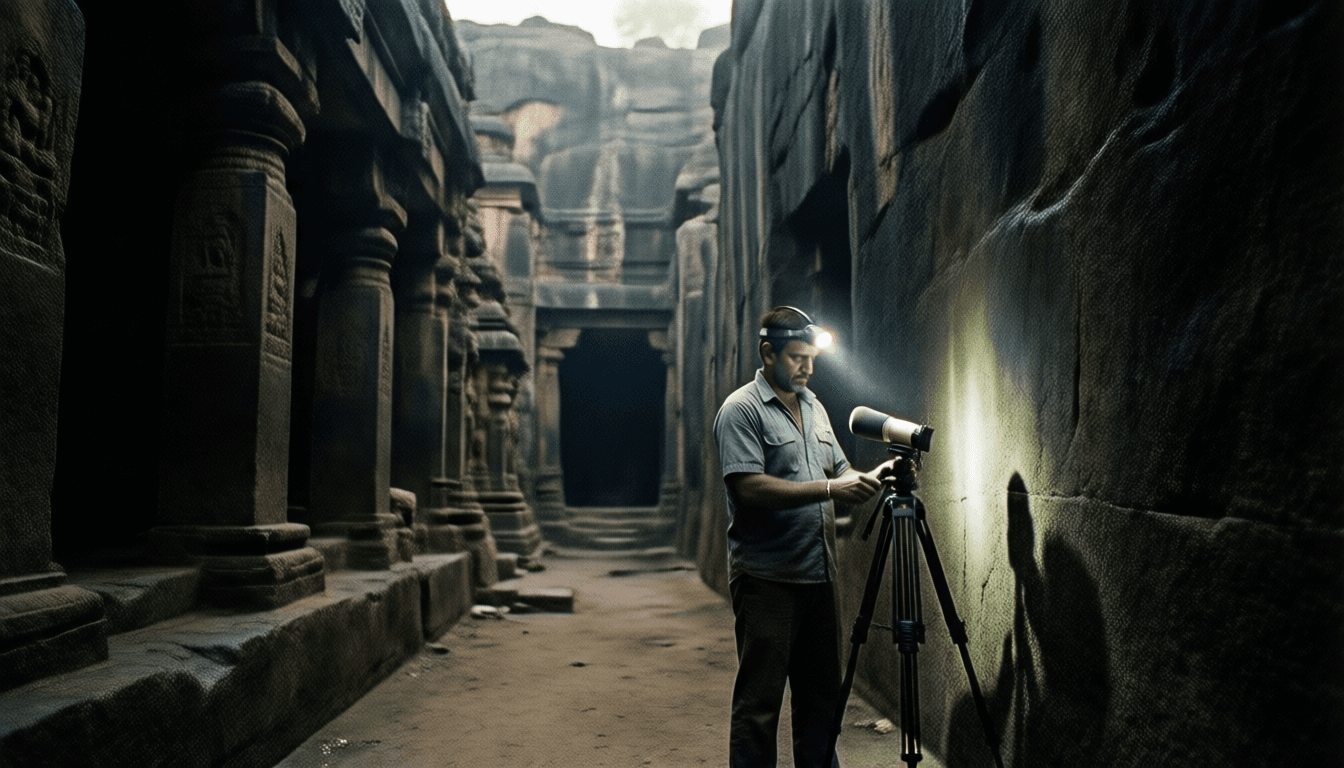
As night deepened, the anticipated silence was subtly broken. Dr. Thorne's parabolic microphone, aimed at the vast basalt walls, began picking up faint, irregular scratching sounds. Not continuous, but intermittent, like slow, deliberate friction occurring deep within the rock. Too rhythmic to be natural rock expansion, too resonant for surface erosion, too heavy for any animal. Simultaneously, his thermal imaging camera revealed inexplicable cold spots within the solid rock walls. These cold spots faintly pulsed and shifted their positions, as if extreme cold was radiating from nothingness. The light from his powerful headlamp, designed to penetrate any darkness, seemed strangely attenuated in certain areas. It appeared as if the light was *absorbed* by the rock, creating deeper, impenetrable masses of shadow that moved unpleasantly slowly as he passed. The pressure in the chamber intensified, adding a suffocating sensation that weighed on his chest and ears.
Then, a true physical anomaly was witnessed. He observed a small, naturally carved drainage channel in the floor, designed to carry rainwater, where a thin trickle of water flowed. Yet, over a specific three-meter section, the water seemed to flow *against* a subtle, slight downhill gradient. Almost imperceptible ripples pushed upstream before returning to the natural flow. He rubbed his eyes, rationalizing it as an optical illusion or a tiny eddy, but the image persisted. It was a blatant violation of observed physical laws, a small tear in the fabric of reality.
The scratching intensified. Now it echoed from the adjacent wall. The cold spots on the thermal camera bloomed, appearing to *push outwards* from the rock face, forming rough, distorted patterns as if unseen fingers were trying to break through the surface. The pressure was crushing. A low, guttural growl vibrated *from the rock itself*, shaking his boots and rattling his spine. Not an earthquake, but a deep, resonant sound of immense scale. The scratching became furious, accelerating, turning violent.
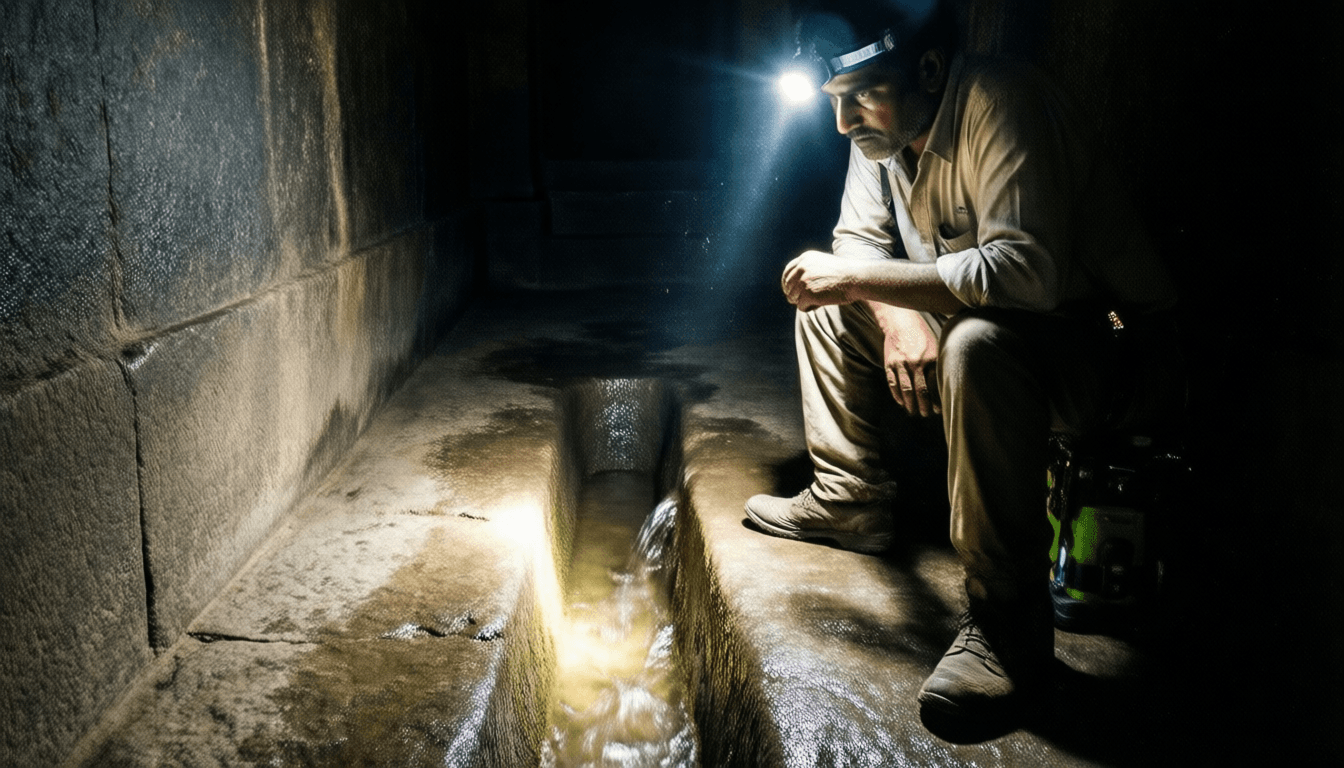
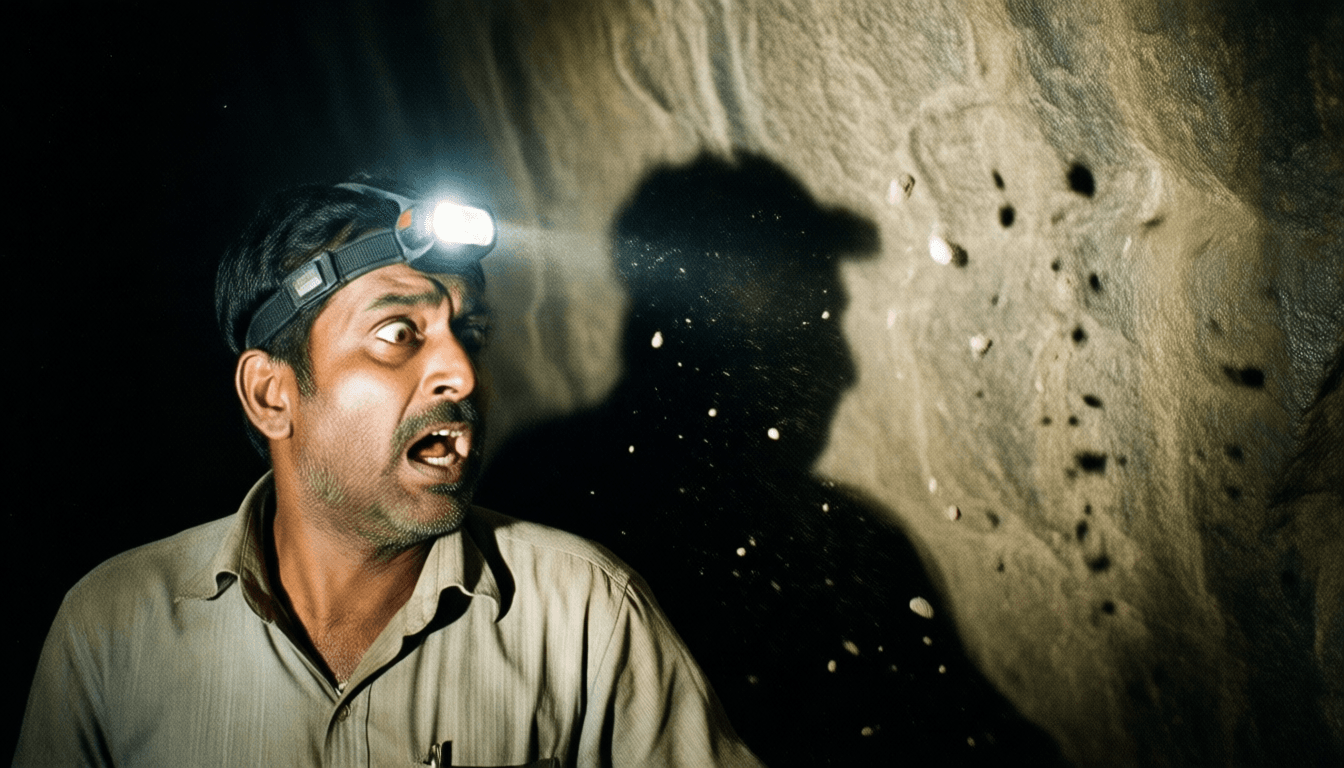
The thin trickle in the drainage channel now clearly flowed in reverse for several meters, pushing piles of dust and small pebbles that seemed to be sucked *into* the wall from the floor, defying gravity. Then, directly in front of him, a section of the previously solid, unyielding smooth rock face began to *indent inwards*. It didn't crack or crumble; it simply depressed, as if a colossal, living lung was inhaling. The edges of this depression shimmered not with light, but with an active distortion of the air, as if space itself was actively warping.
Then, a shapeless shadow, deeper than any natural darkness, *detached itself* from the shifting rock face. It didn't move through the air but slid along the rock, consuming the light of his headlamp. It stretched and elongated with an ominous fluidity, then *slammed* into the narrow passage behind him, his only escape. It solidified into an impenetrable wall of pure darkness, blocking his way. He was trapped between the rapidly contracting front wall and the deepening void behind him.
The air immediately turned glacial, sucking the warmth from his skin. The pressure became unbearable, pushing him forward, crushing him against the contracting wall. A sandpaper-like, absolute zero cold, dry friction scraped against his exposed arms. For one terrifying moment, he saw a deeper void within the shapeless shadow – a hungry, utterly empty space. He struggled against the overwhelming pressure and an inexplicable suction pulling at his backpack and gear. With desperate force and tearing pain in his flesh and muscle, he wriggled free, shedding his equipment, and squeezed through a barely visible, sharp fissure in the rock he hadn't noticed before. He was out of the immediate, localized phenomenon of the chamber, but not out of the temple itself.
Aris Thorne crawled out from the depths of Kailasa Temple just as the first rays of dawn touched its upper spires. He was disoriented, his clothes torn, his skin scraped and bloody from the unforgiving rock. The lone temple guard dozing at the main entrance barely registered his disheveled appearance, seemingly attributing it to a night of intense research. Thorne stumbled into the morning light, gasping for the thin outdoor air after the overwhelming internal atmosphere.
He had lost most of his specialized equipment in his desperate escape: thermal imaging camera, seismic sensors, his backpack – all gone into the closing, hungry darkness. But clutched tightly in his hand was a small, worn digital voice recorder.
In the uncertain safety of his guesthouse room, his hands trembled. He played the recorder. First, static, then his own ragged, terrified breaths. Then, the faint, rhythmic scratching. It continued. The deep, resonant growl, his own choked cry of terror, the frantic, violent friction of rock. And then a brief, unsettling silence. His own desperate gasps for air broke that silence as he fled. But then, after his sounds faded, clear and distinct, came the rhythmic scratching of rock. *Scratch, scratch, scratch*. But it sounded impossibly *closer*, as if recorded *after* he had physically vacated the chamber. Following this, a faint, deep, resonant *hum*. It was not mechanical, nor human. It was organic, utterly alien, chillingly, completely *satisfied*.
Thorne sat paralyzed. Now he understood. The Kailasa Temple was not merely carved; it was *emptied*. And what had been revealed, what had been disturbed by the monumental removal of hundreds of thousands of tons of living rock, was something that should never have seen the light of day. It was not a structure built to contain a god. It was a wound in the earth, and something ancient, indifferent, and itself a void, had merely begun to stir in its newly acquired space. The scratching was not building; it was *reclaiming*. The temple hadn't just *stopped* being carved; it had merely paused. And now, in the depths of its emptied heart, it continued its slow, patient work. The backward-flowing water, the cold spots, the disappearing light – these weren't just anomalies or malfunctions. They were the slow, unfolding *breath* and *presence* of something vast, ancient, and terribly hungry. It had finally begun to stretch. The temple wasn't just standing there; it was an organism. A monument to the hunger of absence, slowly, eternally, consuming itself from within. And for a brief, terrifying moment, it had perceived him.
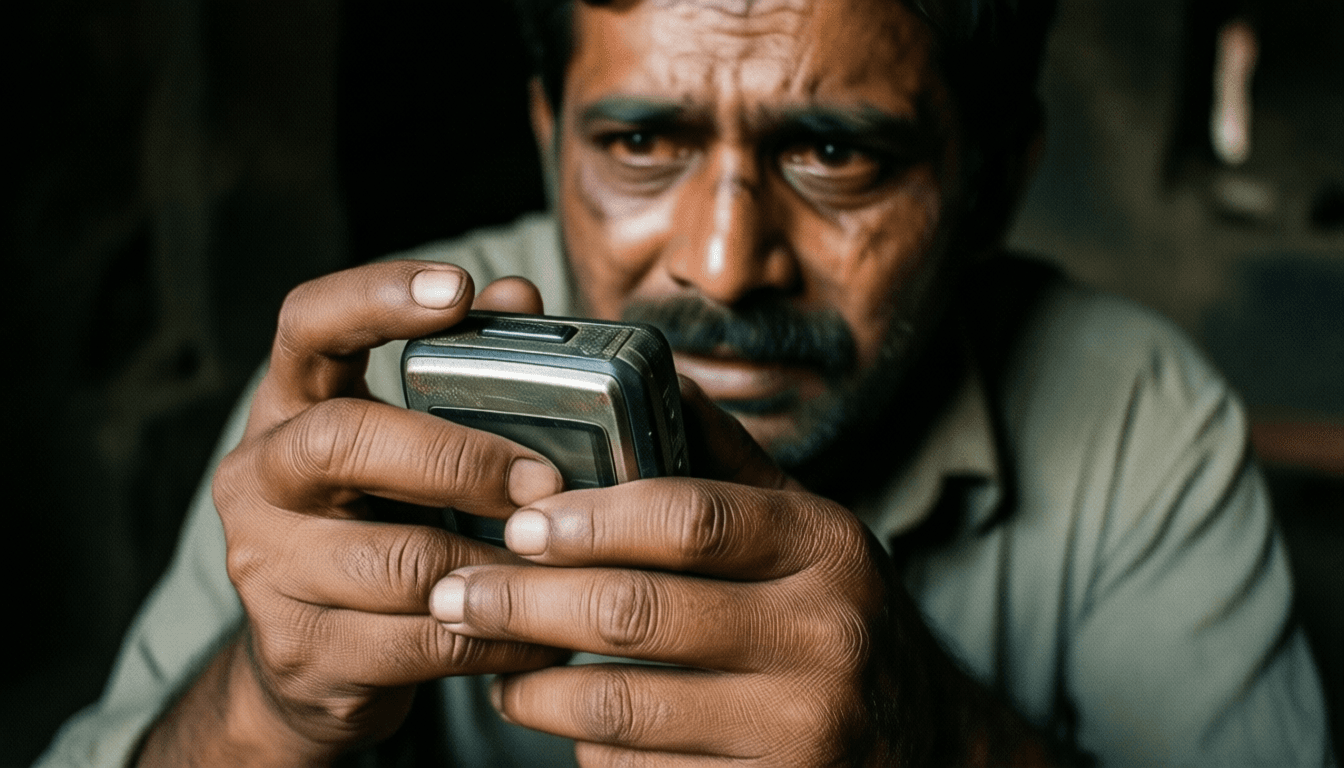
[ CLASSIFIED VERDICT ]
[ACCESS LOG - SOURCE FILE]
The Kailasa Temple in India's Ellora Caves is considered an enigma, difficult to explain by human architectural technology, as it was carved from a single massive rock mountain. Despite an estimated 400,000 tons of basalt being removed, its precision and speed baffle even modern engineers. This has given rise to ancient whispers among local residents, often dismissed as mere superstition, that an unnatural and unsettling aura resides within the temple.