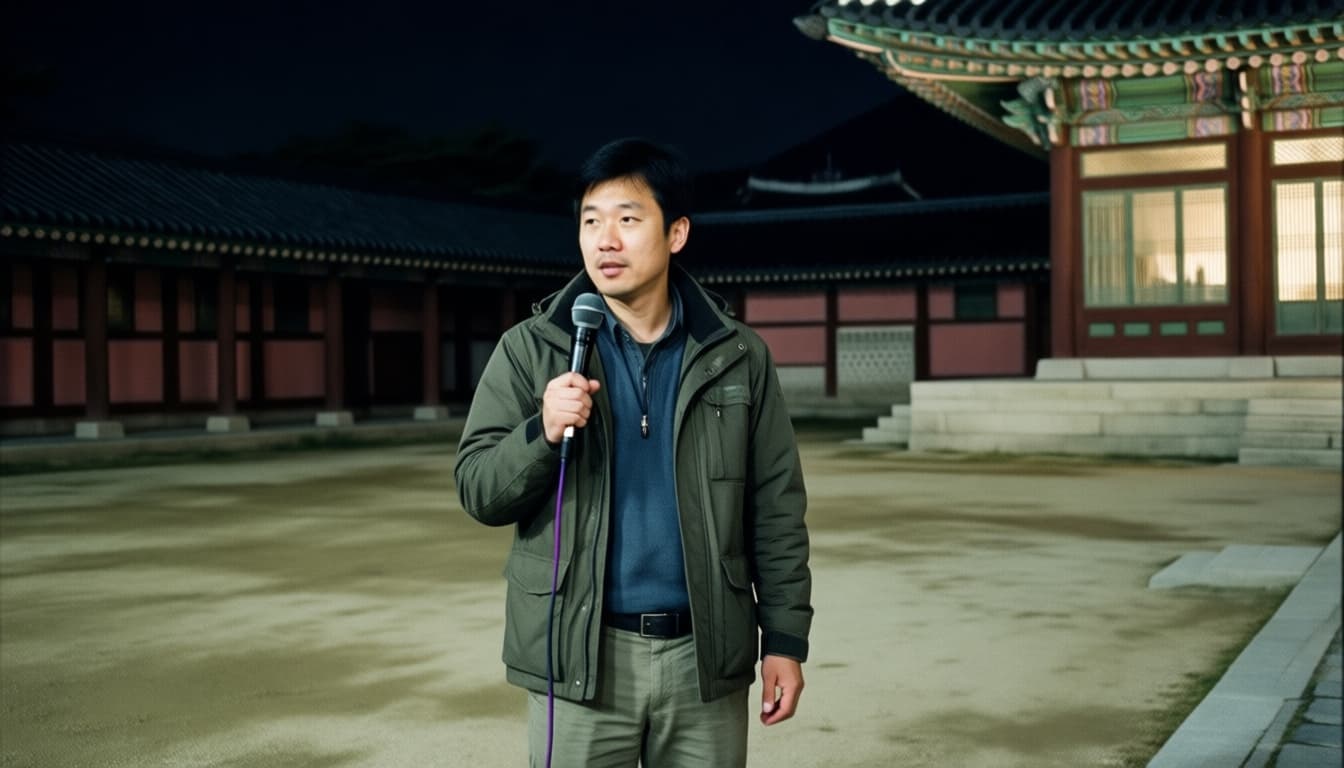
The Nocturnal Elegy of Gyeongbokgung
For years, online forums dedicated to Seoul's hidden history consistently featured discussions about Gyeongbokgung Palace. Beyond typical tourist anecdotes, a recurring theme, often dismissed as superstition or simple acoustic phenomena, was the "night palace sounds." Maintenance crews, former security personnel, and even early morning photographers had quietly reported specific auditory anomalies after the palace closed. It wasn't the wind or distant city hum. It was a distinct, almost musical rustling, as if heavy silk hanbok skirts brushed against the ground, accompanied by a faint, high-pitched elegy. These sounds would echo through hallways where no living soul resided, primarily originating from the inner quarters of Geunjeongjeon or residential spaces like Gyotaejeon. Notably, a now-deleted anonymous post from 2017 by a former palace guard meticulously described an experience near Amisan Garden after hours, mentioning an elegy "closer than any echo, yet leaving no trace," which he claimed led to his resignation shortly thereafter. This was merely the latest prominent account among many such stories, and for me, these consistent reports were enough to spark a deep, personal investigation.
I was intrigued not by sensationalism, but by the consistency of the reports. Armed with directional microphones, a thermal camera, and calibrated atmospheric sensors, I secured a rare nocturnal research permit for specific sections of Gyeongbokgung, ostensibly for acoustic studies of historical architecture. Passing through the massive Gwanghwamun Gate, and deeper still across the vast, silent expanses of Heungnyemun and Geunjeongmun, the air grew colder, laden with centuries of weight. The granite courtyards, bustling by day, lay empty, reflecting the faint ambient glow from distant Seoul. The initial silence was broken only by the low hum of my equipment and the distant, almost imagined whisper of wind through Geunjeongjeon's eaves. I made my way towards Gyotaejeon, the Queen's residence, and the adjacent Amisan Garden – the area most frequently cited in the whispered accounts. Here, the air felt denser, the silence more absolute; it seemed to absorb sound rather than reflect it.
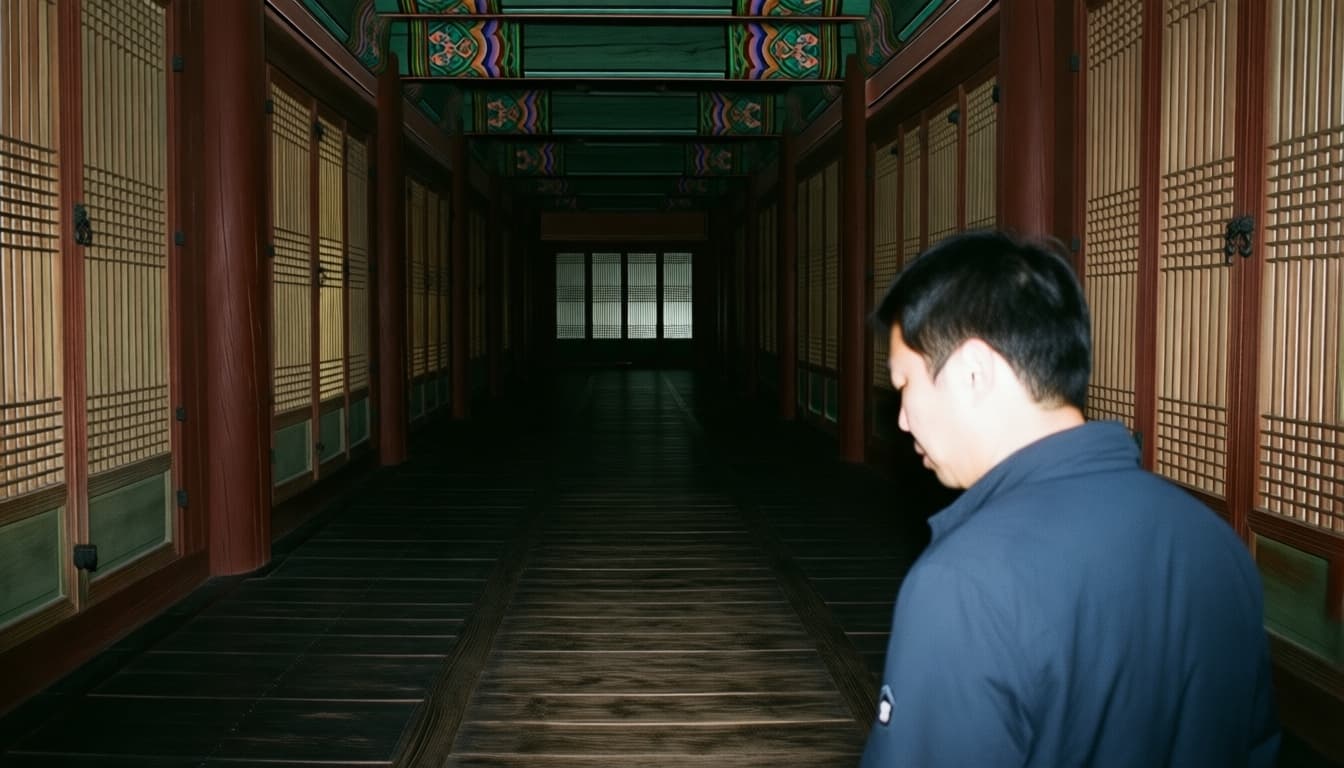
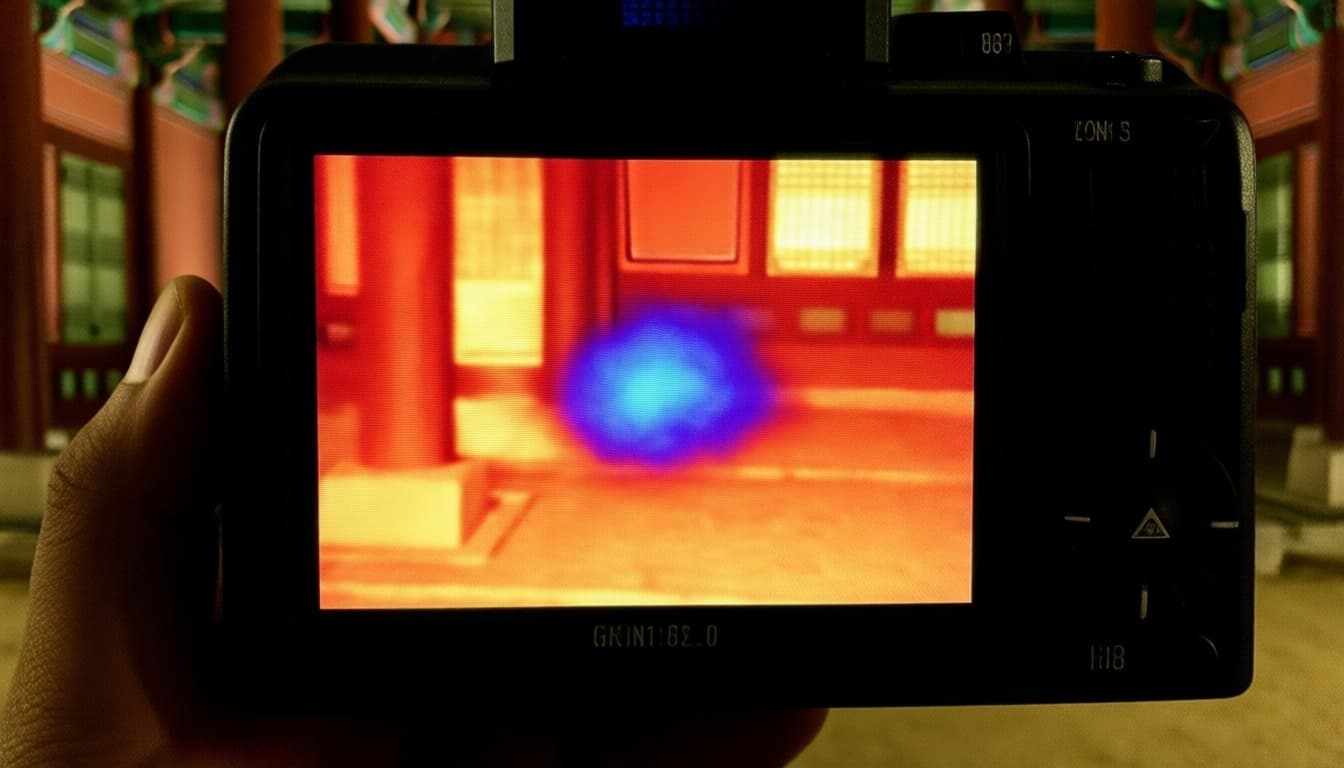
The thermal camera began to pick up anomalous cold spots: pillars of cold air that appeared and vanished without external wind or temperature shifts, primarily around the wooden corridors leading to the Queen's private quarters. And then, it began. A faint, almost imperceptible 'srrk-srrk' sound emanated from within Gyotaejeon. It was precisely as if heavy silk was being dragged across polished wooden floors. I tracked it with the directional microphone, but the moment I adjusted my position, the source seemed to *move*. It wasn't an echo; echoes fade or reflect. This sound maintained a consistent volume, an unceasing, untraceable presence. I followed it, navigating the intricate structures. The air grew noticeably colder, despite external sensors recording stable ambient temperatures. A high, thin, almost musical hum, a wordless elegy, joined the rustling. It wasn't loud, but it resonated with an unnatural clarity, seeming to emanate from the very walls, or even directly behind me when I pressed close to a solid pillar. My normally steady heart rate began to accelerate. All logical explanations—settling wood, harmonics of distant traffic, my own auditory pareidolia—crumbled before the sound's precise, unwavering nature. The elegy seemed to *react* to my movements; it would soften as I approached, then reappear, startlingly immediate, directly behind me.
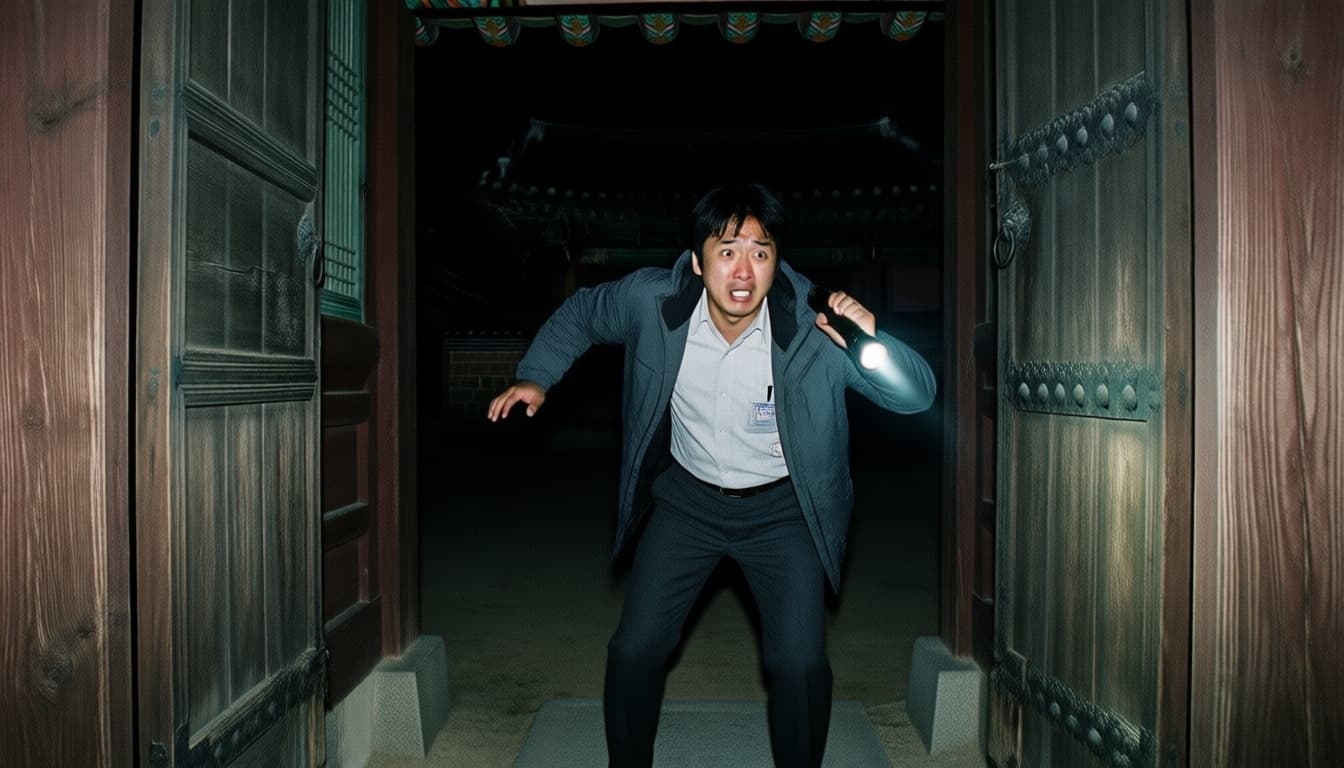
Suddenly, the elegy intensified. No longer a hum, but a sharp, wailing scream that seemed to vibrate through my very bones. I found myself in a narrow, dark passage behind the residential quarters, drawn by the relentlessly moving source. The rustling was deafening. It was no longer auditory; it was *tactile*. As if unseen, heavy silk fabric was wrapping around my legs, binding my ankles. My flashlight beam flickered erratically, as if resisting an unseen interference. A cold, sharp terror pierced through scientific objectivity. I tried to move, but my feet were entangled in nothingness. The air became impossibly thick and oppressive, making it hard to breathe. The old wooden door at the far end, heavy and secured with a sturdy internal bolt, slammed shut with a deafening thud, defying the laws of inertia with impossible speed, without any visible force. The bolt shrieked metallic into place. I was plunged into complete darkness, my only light a rapidly dying flashlight. The air grew colder, suffocating. The elegy sharpened into a wordless scream right at my ear, simultaneously accompanied by the distinct, heavy pressure of invisible fabric on my face. I could feel the intricate weave, the cool, slick texture of silk, and a faint scent of dried chrysanthemums and decay. My oxygen monitor blared an alarm. It detected a rapid drop in ambient oxygen, as if the very air was being consumed or displaced. My lungs burned. This was no shadow or echo. This was a real, lethal presence, intent on suffocating me in the forgotten spaces of the palace.
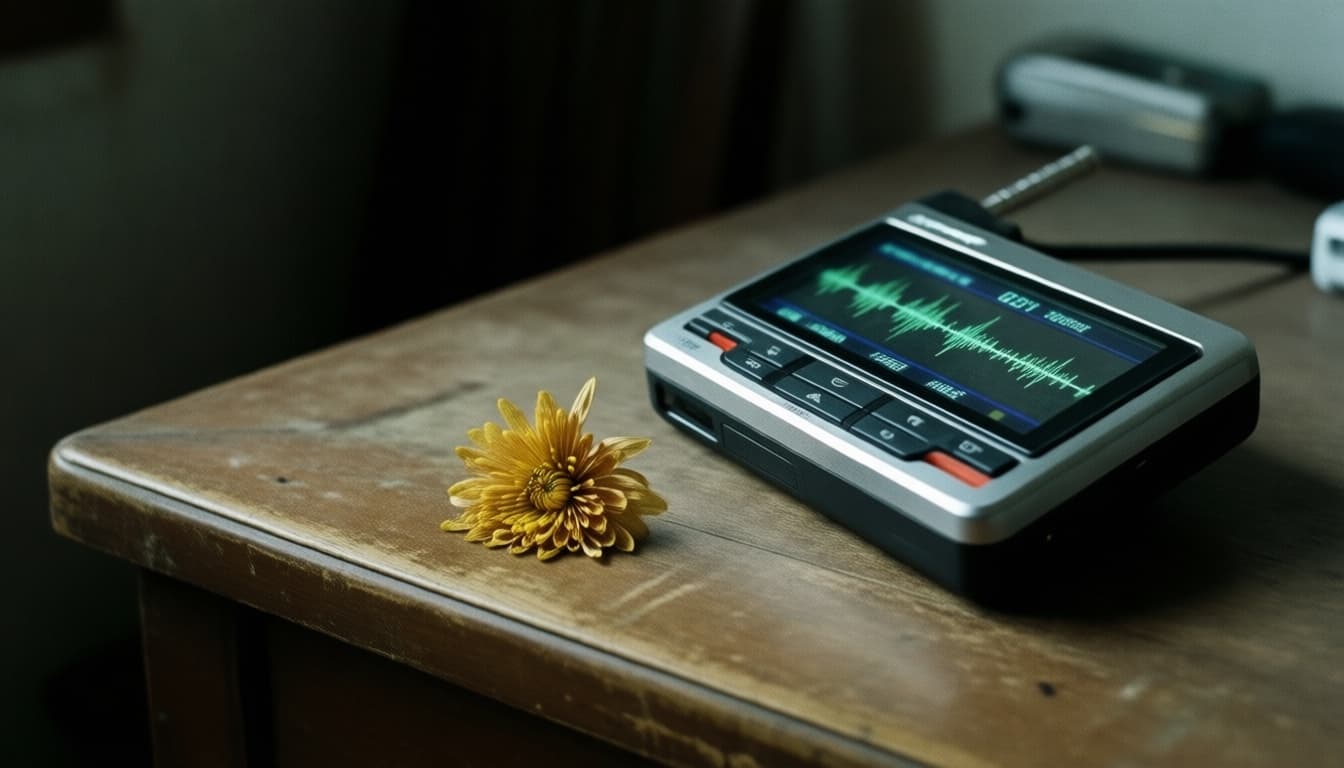
I remember a desperate struggle, the effort to tear at invisible bonds, my gasping breaths. I remember an inexplicable release, a sudden rush of cool, unobstructed air, and stumbling out into the pre-dawn palace courtyard as the first rays of morning light just touched the eaves. The thermal camera data was irrecoverably corrupted; a jumble of static and impossible temperature spikes. But the voice recorder yielded an eerie artifact: a five-second clip, recorded just before I was trapped, captured the elegy no longer faint, but sharp and high-fidelity. And over it, ragged breathing—my own—and the breathing of something else, incredibly close, ending in a sharp, inhuman hiss. There was no rational explanation for that door, bolted from the inside. I obsessively reviewed the last few blurry, static-filled frames from the camera just before its corruption. In one, at the very edge of the frame where the unseen silk seemed to bind me, there was a faint, shimmering distortion. It wavered like heat haze over asphalt, yet it was localized, and impossibly cold on the thermal readout. I left the palace that morning with no answers, only an indelible trace of terror and the lingering scent of chrysanthemums. Sometimes, in the quietest hours, I still hear that faint rustling, at the edge of my hearing. And I wonder if it isn't the wind, or a memory, but a quiet, patient observer that followed me out of the shadows of a lost palace, from the shadows of a civil war. Occasionally, even without chrysanthemums in my apartment, I find a single dried chrysanthemum petal inexplicably resting in the fold of a coat or on my desk.
[ CLASSIFIED VERDICT ]
[ACCESS LOG - SOURCE FILE]
In old Korean palaces like Gyeongbokgung, it is common to hear rumors that the sorrowful spirits of royal women from the past appear every night, emitting sad cries or the rustling sounds of silk robes. These stories are deeply connected to the vengeful spirits of those who met tragic deaths or were unjustly sacrificed within the palace.