The Oakville Blobs: What Never Decayed
On August 7, 1994, across a twenty-square-mile radius in Oakville, Washington, an unidentified translucent gelatinous substance fell from the sky in six distinct downpours. Local clinics were overwhelmed by residents suffering from severe inner-ear vertigo and acute respiratory distress, while dozens of livestock and domestic pets died suddenly. In an intake ledger from the Washington Department of Ecology (WDOE) declassified in 2021, an entry remains for sample #339-B, submitted by a local resident. The box reserved for the standard Biosafety Level (BSL) stamp was left blank, replaced only by a hastily scrawled note: 'Chain of custody transferred to USAMRIID contractor. Delisted per authorization of Dr. J. Allen.'
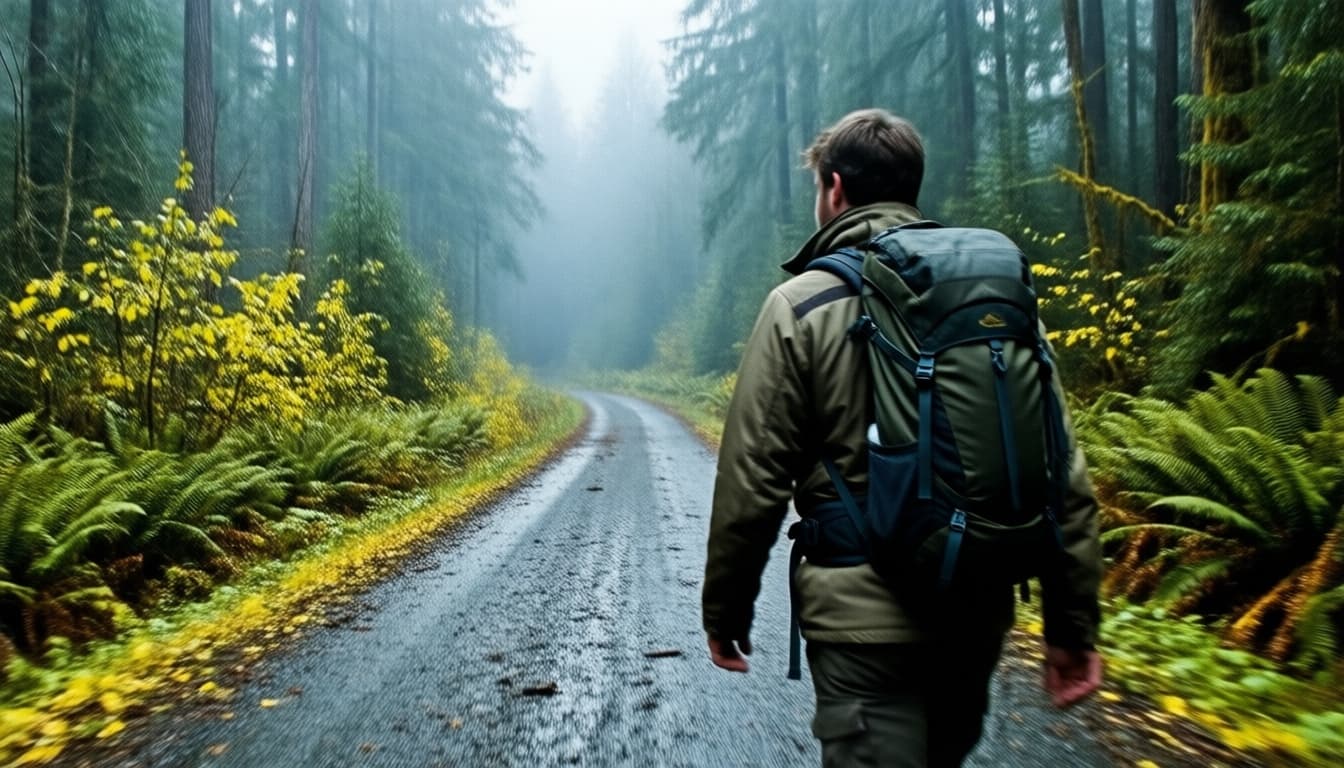
Thirty years later, I traveled to the Gibson Creek watershed, the epicenter of the initial fallout. The abandoned logging road branching off State Route 12 was dead and frozen in stillness. The forest vegetation was grotesquely warped. Instead of thriving, the ferns and salal underbrush grew stunted and sickly, stripped of their chlorophyll in twisted yellow hues. Footsteps pressing into the wet gravel did not scatter into the ambient air, but deadened into a dull, muffled thud beneath my soles. Within a radius of several hundred meters, not a single sound of bird or insect could be heard.
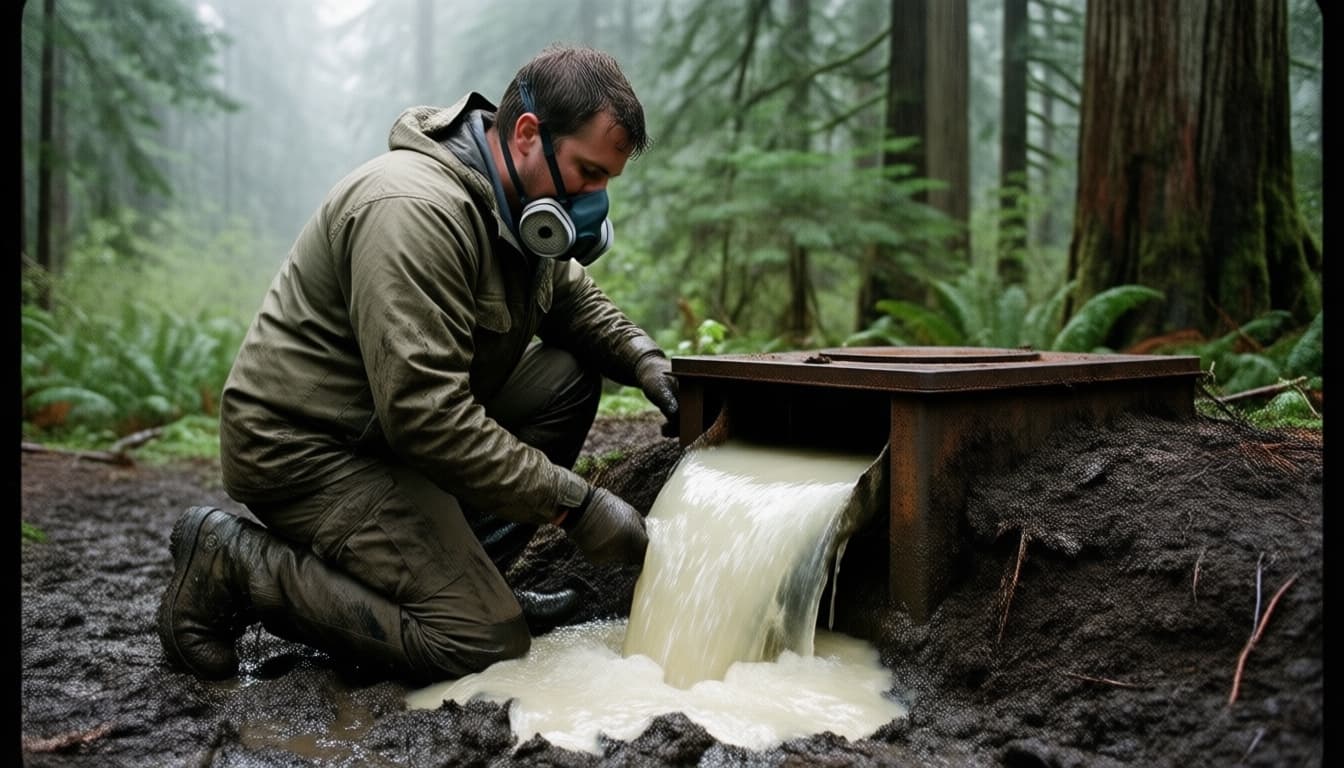
A groundwater monitoring well lay half-buried in the eroded sediment of the creek bed. Beneath a corroded steel hatch secured with non-standard tamper-proof bolts, a PVC drainage pipe, ruptured by ground pressure, gaped open like an exposed wound. When my fingertip brushed against the water droplets clinging to the steel plate, an eerie sensation crawled up my hand. The condensation did not form spherical beads. Void of all surface tension, it stretched sideways like a sheer rubber membrane, sliding toward the ground heavier than syrup. Even with an N95 respirator firmly sealed against my face, a metallic copper taste bled into the back of my throat.
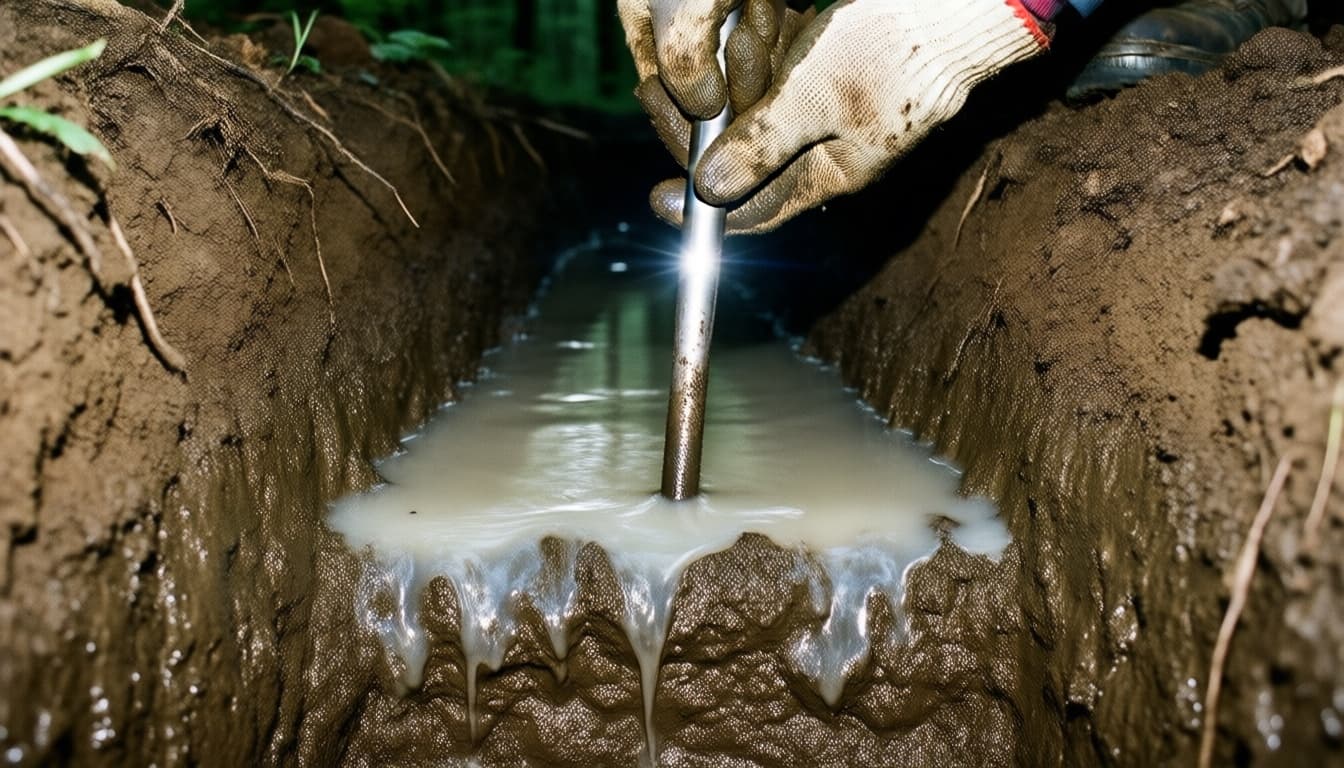
Excavating roughly forty centimeters into the soil around the fractured pipe revealed a distinct stratigraphic anomaly: an eight-centimeter-thick layer of milky, translucent gelatin wedged between layers of dark humus. Despite thirty years having passed since the rain fell, the substance had neither integrated with the surrounding earth nor decomposed; it preserved its original physical form with uncanny perfection. The moment I pressed a core sampler into it, a sharp tension tightened around my temples. My eyes began to twitch left and right in rapid, microscopic nystagmus. The ground was visibly level, yet the balance centers in my brain screamed that my body was plummeting headlong into the ravine.
At that instant, accompanied by a low, hollow rumble from upstream, a sudden torrential downpour tore through the canopy. Normal soil would have allowed the water to wash away loose sediment. But the moment the muddy runoff struck the exposed gelatin layer, the substance did not repel the moisture; it began absorbing the water at an alarming rate, expanding aggressively. Unable to withstand the surging hydrostatic pressure, a heavy rupture detonated from inside the monitoring well. It was not mud that erupted. A compressed, surging emulsion of translucent slime backflowed violently into the narrow ditch.
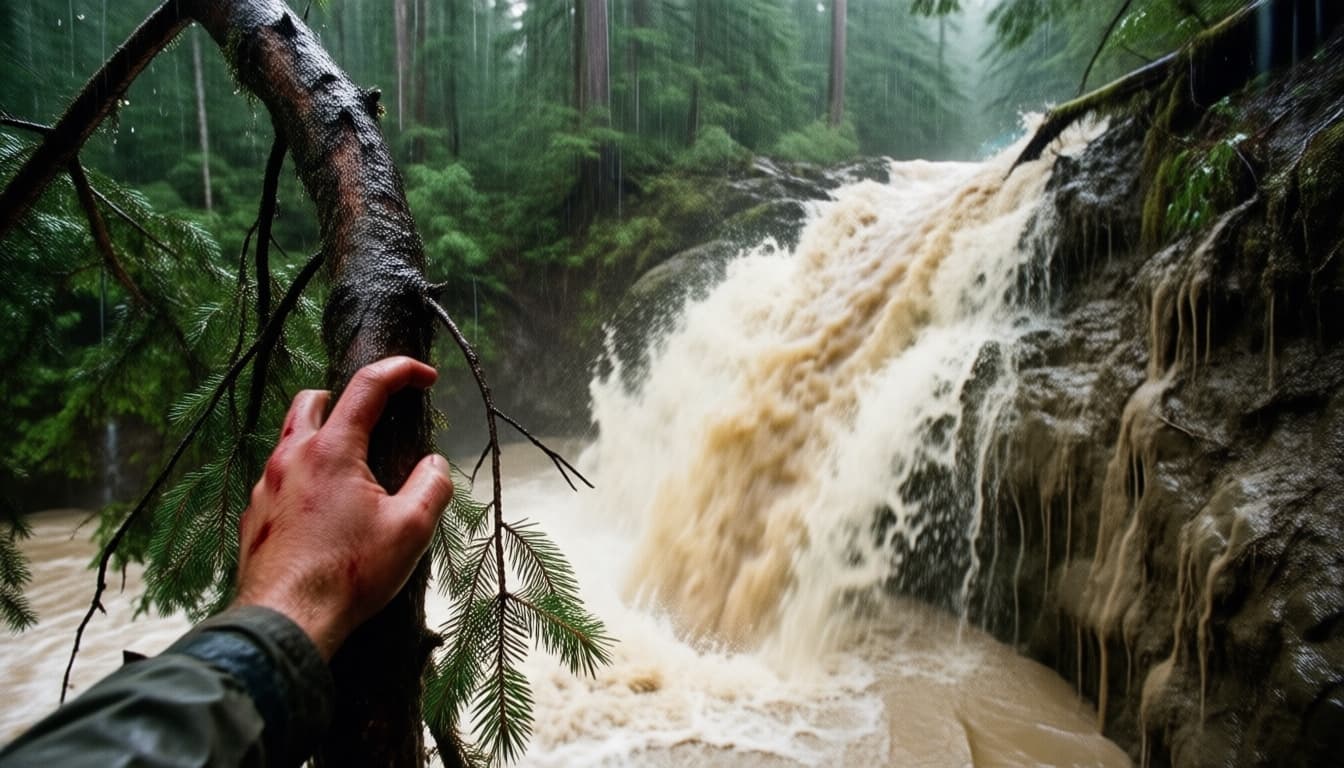
The muddy floor of the trench lost all friction in an instant. I tried to brace my hands against the embankment to scramble out from the rapidly rising slime, but my wet palms slipped uselessly down the slick mud. Volatilized vapors from the disturbed gel seized my respiratory tract. My peripheral vision blackened into a suffocating tunnel. Direction dissolved; floor and wall became indistinguishable.
Desperate, I lunged toward an outcropping on the embankment. I reached out and shoved my hand against what looked like solid mud, but the texture under my palm was not cold earth. Freezing in terror as I looked down, I realized it was not the earthen wall, but a thin membrane rhythmically pulsing and contracting at a temperature subtly warmer than my own. The slime was not dissipating; it was coalescing into a single colossal organism, wrapping around my fingers and squeezing them with hydraulic force.
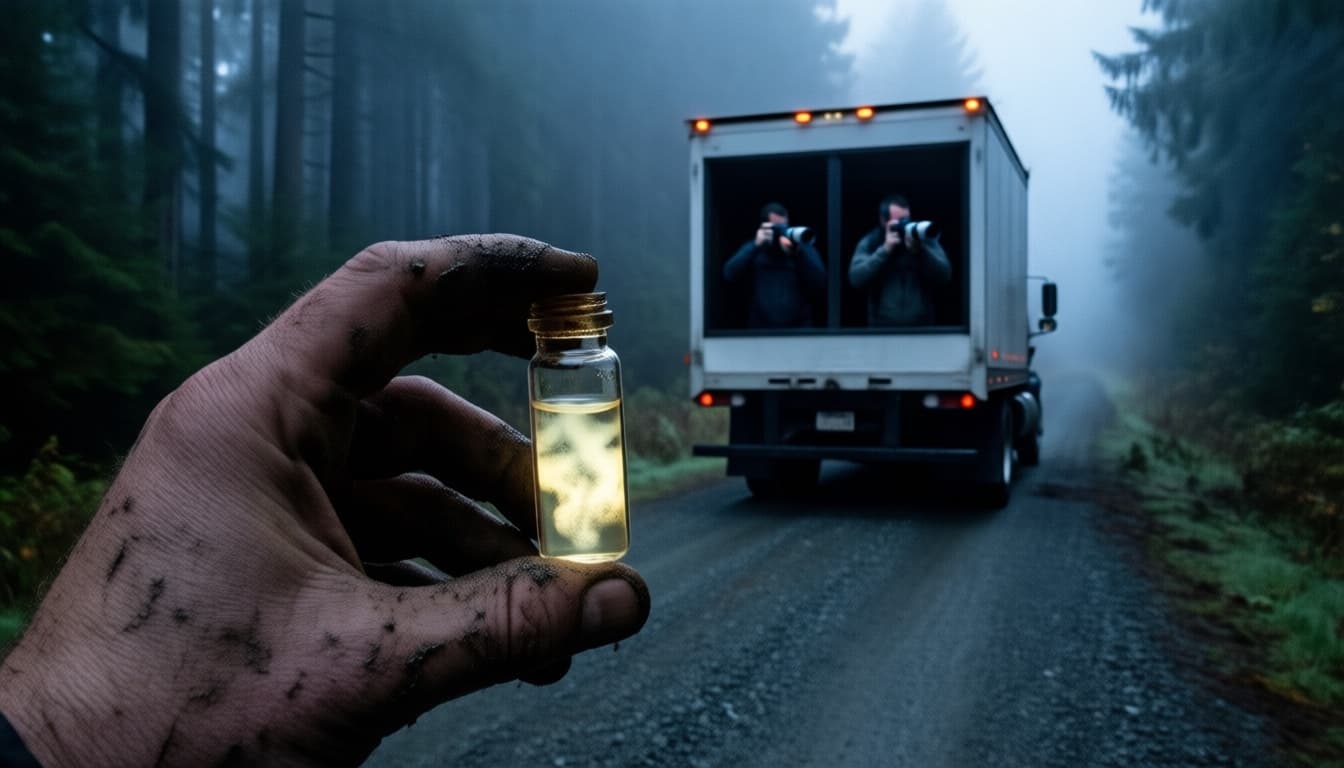
Abandoning all reason, I gripped an exposed Sitka spruce root above me. Skin tore from my palms and blood smeared the bark, but that agony and raw friction were my only lifeline. Just as the dense sludge pressed against my chest like heavy silicone, choking my breath, my bloodied hands hauled me over the lip of the ravine. Collapsed in the mud and gasping for air, I looked through the freezing fog toward the decommissioned logging road. Parked silently with its taillights off was an unmarked commercial box truck. Dark silhouettes inside sat motionless, aiming infrared lenses directly at the trench I had just clawed my way out of. They had no intention of rescuing anyone. They were merely timing the rate of dispersion.
I have no memory of driving to the emergency room at Providence St. Peter Hospital in Olympia. The medical chart listed acute vestibular neuritis, chemical pneumonitis, and atypical dysplasia of the mucosal epithelial cells. The diagnosis matched, letter for letter, the clinic records filed in Grays Harbor County in August 1994.
The fifty-milliliter vial that survived in my jacket's inner pocket was turned over to a private mass-spectrometry laboratory. The final analysis revealed neither a conventional biological pathogen nor industrial runoff. It was a matrix of synthetic human serum albumin, pooled blood fractions, and an engineered polysaccharide scaffold designed specifically to stabilize airborne aerosol particles. Even after resting thirty years beneath the soil, no autolysis had occurred. Exposed to room temperature, the liquid was consuming oxygen at an infinitesimal, yet continuous and unyielding rate.
Following that day, I relocated far inland, turning my back on the Pacific coast. But the low-frequency humming in my inner ear has never stopped. Whenever atmospheric pressure drops steeply and the air carries the scent of rain, that chilled copper taste blooms at the base of my tongue. And beneath the damp soil of Oakville, that unwithering layer of slime continues to creep toward the Pacific Ocean—fifteen centimeters every ten years, with absolute, calculated precision.
[ CLASSIFIED VERDICT ]
[ACCESS LOG - SOURCE FILE]
Based on the real-world 1994 Oakville Blobs incident in Washington State, where mysterious translucent gelatinous globs rained down six times over a 20-square-mile area. Numerous residents suffered from severe inner-ear vertigo and respiratory sickness while domestic animals died, spawning enduring theories of secret military biological weapons dispersal tests.