The Silence of Vault 4-B at BWI
Late on the night of November 14, 1996, all runways at Baltimore/Washington International Airport (BWI) were abruptly shut down for 43 minutes. The Federal Aviation Administration's (FAA) official report attributed the shutdown to a routine 'de-icing fluid leak inspection and taxiway rubber removal operation.' However, the air traffic control communications from that window remain permanently classified under Department of Transportation non-disclosure clauses. The only crack in the official facade surfaced in a site log left behind by Arthur Vance, an Anne Arundel County plumbing technician who died of acute pulmonary fibrosis in 2004. His final entry detailed pipe replacement work within the subterranean drainage plenum beneath Concourse C. Noting that standard-gauge copper pipes had corroded into brittle, malachite-green crystalline husks in just two days, he scribbled heavily with a dull lead pencil: "Not jet fuel. Not antifreeze. It's creeping upstream against the drainage grade, reeking of wet battery plates and rotten swamp grass."
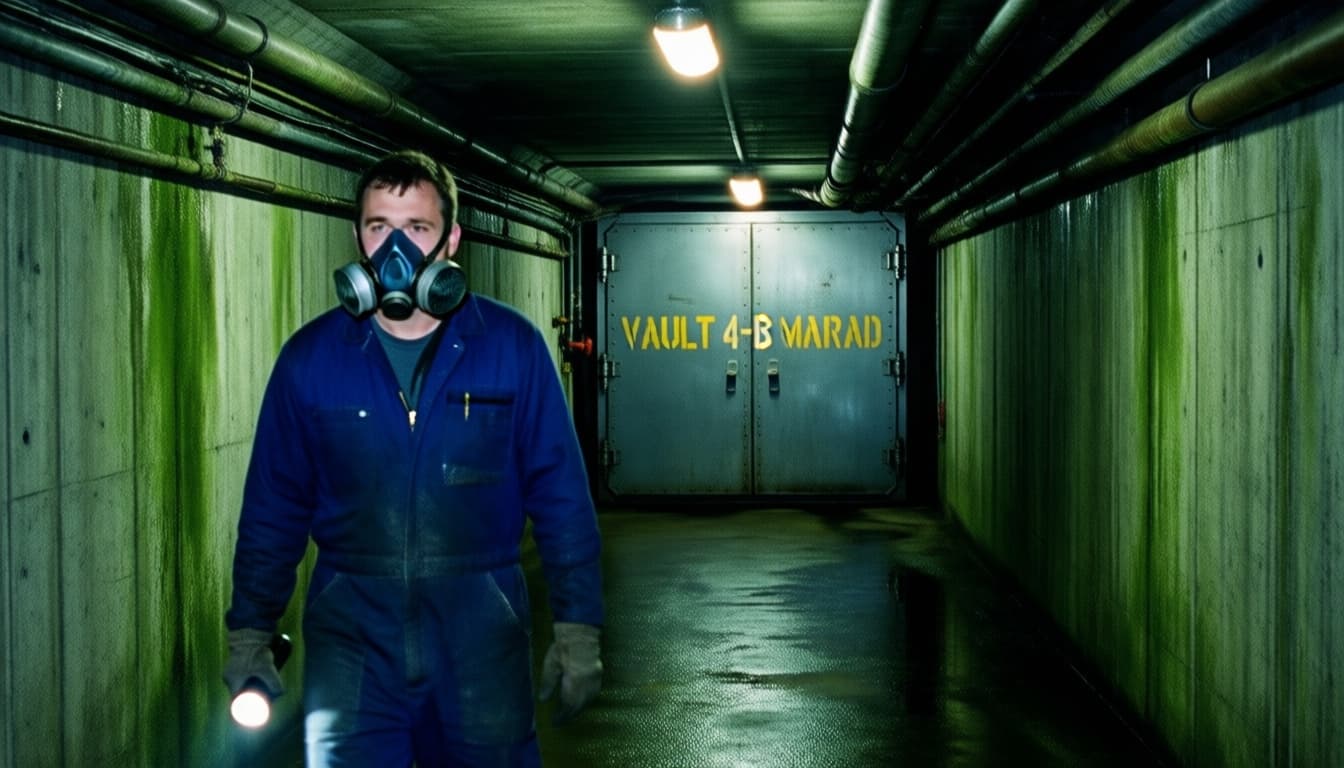
Armed with an inspection pass timed to match renovation works below Concourse D and clutching Vance’s decades-old schematics, I descended into the narrow utility conduits snaking beneath the baggage conveyor systems. Overhead, the low-frequency drone of a CFM56 turbofan engine vibrated through the reinforced concrete slab, rattling my skull. The stench of vaporized Jet A fuel mingled with the clammy moisture of subterranean runoff, scraping down my throat. The passageway—marked on the blueprints as a military stormwater retention artery—did not terminate in earth and bedrock. Instead, it was barred by a massive blast bulkhead reinforced with thick sheets of lead. Stenciled across the flaking industrial paint was a stark designation: [VAULT 4-B — U.S. DEPT OF COMMERCE / MARAD SECURE HOLD]
The instant I stepped within three feet of the bulkhead, the deafening engine roar overhead cut out completely, as if severed by a blade. It was a suffocating, ear-popping vacuum of absolute silence. I dropped my steel pipe wrench onto the diamond-plate deck. Instead of a sharp metallic clang, a muffled, deadened thud reached my ears—half a second after the wrench had made impact, like striking waterlogged cotton. The spatial density inside the pocket defied basic physics. The digital thermometer display clearly read 18 degrees Celsius, yet every ragged exhalation billowed out in thick, frosted plumes that chilled my alveoli. The bare skin around my wrists stung with a dry-ice burn.
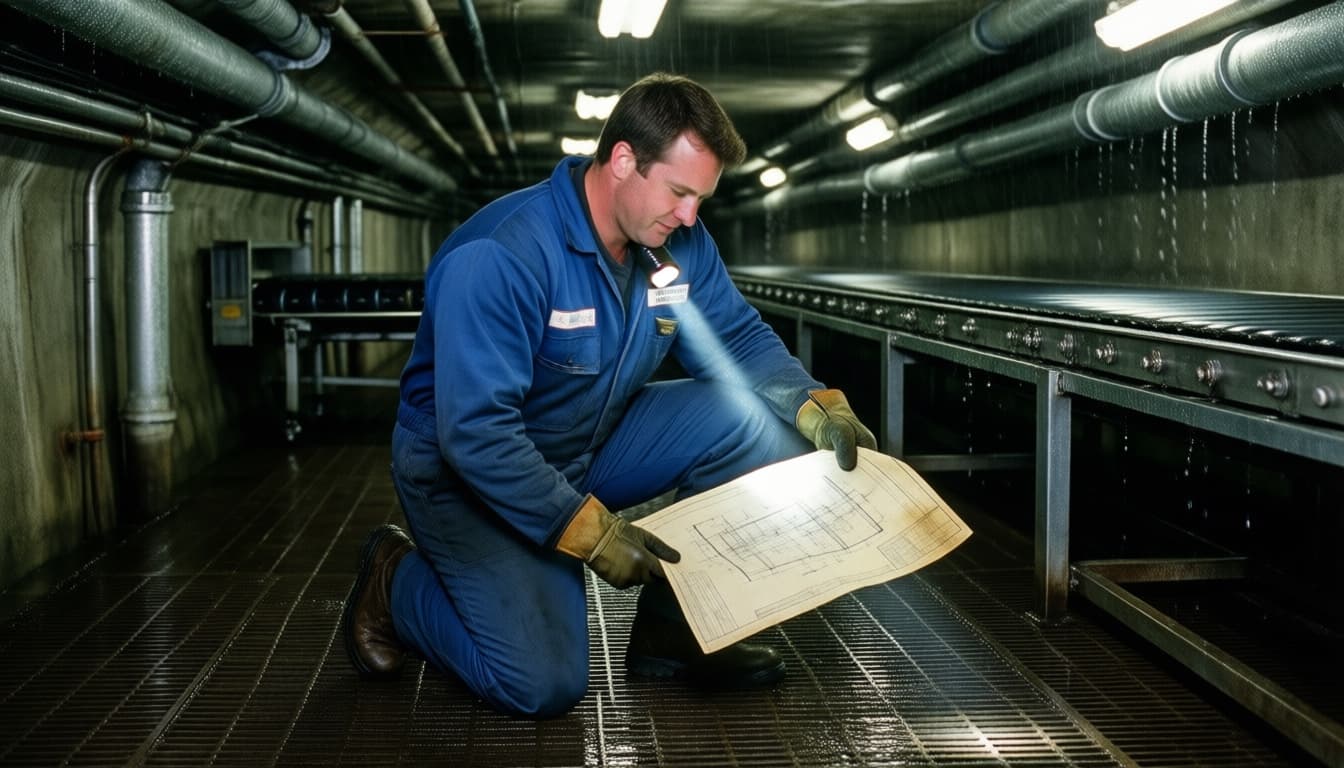
I aimed my high-output LED flashlight down into the expansion joints. A crust of vivid, dry green powder clung along the seam with grotesque thickness. This was no simple copper oxide byproduct. It wrapped the perimeter of the conduit like a desiccated organic membrane. Overcome by a visceral chill, I flicked the flashlight off. In the sudden pitch black, my breath caught in my chest. The green residue was not merely reflecting illumination. It had gorged itself on the flashlight's beam, and now, immersed in darkness, it exhaled a cold, pale bioluminescent emerald glow of its own.
A violent shudder rattled the ceiling from the runway above, warping the subterranean architecture. Heavy ground equipment overhead had ruptured an expansion joint. A moment later, an unidentified intake pipe embedded at the crest of the blast bulkhead split open under mounting pressure. What spilled forth was neither gas nor liquid. It was a dense, clinging emerald vapor, heavy as atomized oil.
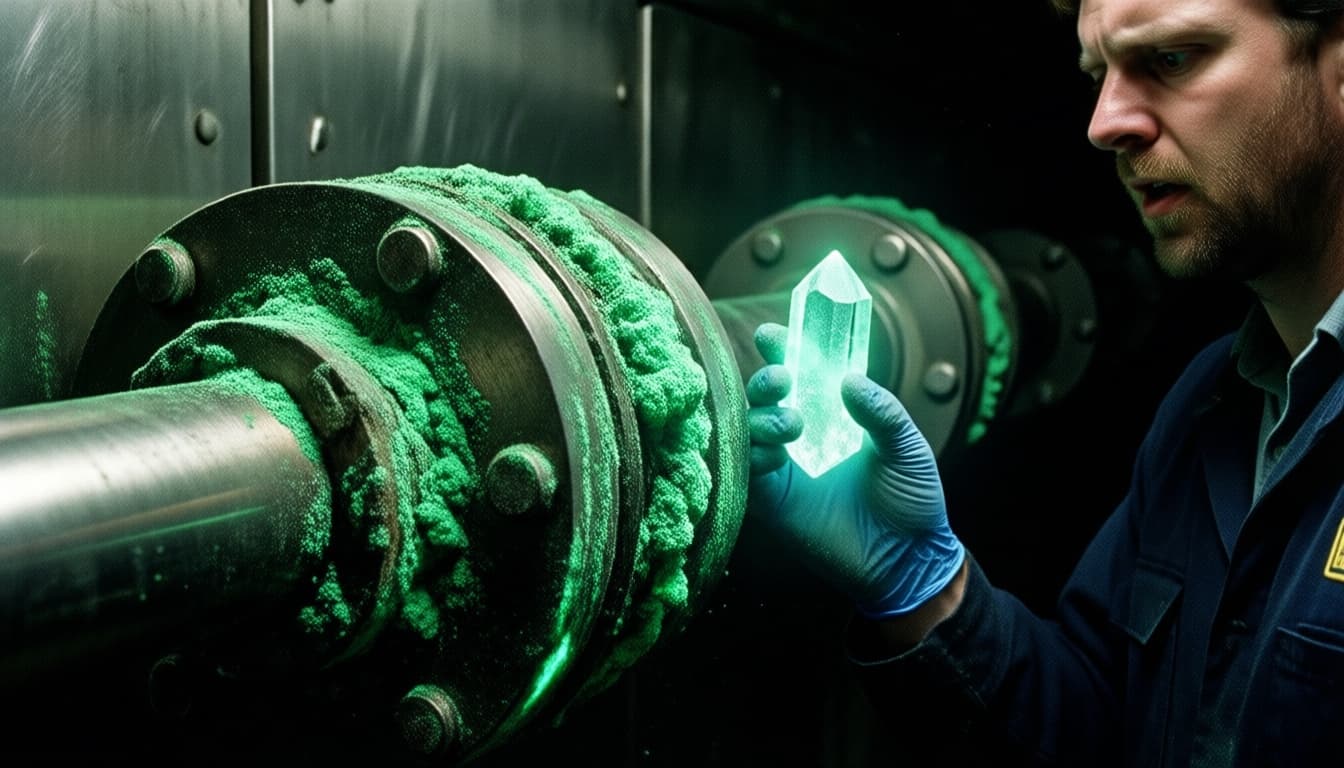
Industrial exhaust fans at both ends of the tunnel roared at maximum capacity, yet the mist refused to drift with the air currents. Utterly ignoring the powerful suction of the vents, it crept along the floor tiles, crawling against the draft directly toward my boots. The nitrile tip of my glove grazed the creeping vapor; it instantly dissolved into a tar-like black sludge that adhered to my skin. Even through the dual-filter respirator cartridges, an overwhelming stench of wet lead-acid batteries and stagnant bog rot flooded my nasal passages.
My field of view distorted. The acrylic visor of my gas mask frosted over instantly under the thermal shock, fracturing into an opaque spiderweb of cracks. The digital oxygen sensor plummeted straight to zero. This was not a chemical dispersant. Filling every crevice and scaling the vertical conduits with deliberate, pulsing intent, the entity resembled an expanding visceral organ, swelling to ingest whatever fell into its path.
I threw myself toward the service ladder. Below, the automatic pneumatic isolation hatch registered a catastrophic pressure drop and began grinding shut. My lower limbs felt as heavy as lead. When I glanced down at my boots, blood drained from my face. The mist had not pooled passively. Swallowing the heavy leather work boots, the emerald mass was steadily expanding and contracting—throbbing in perfect, agonizing unison with my own panicked breathing.
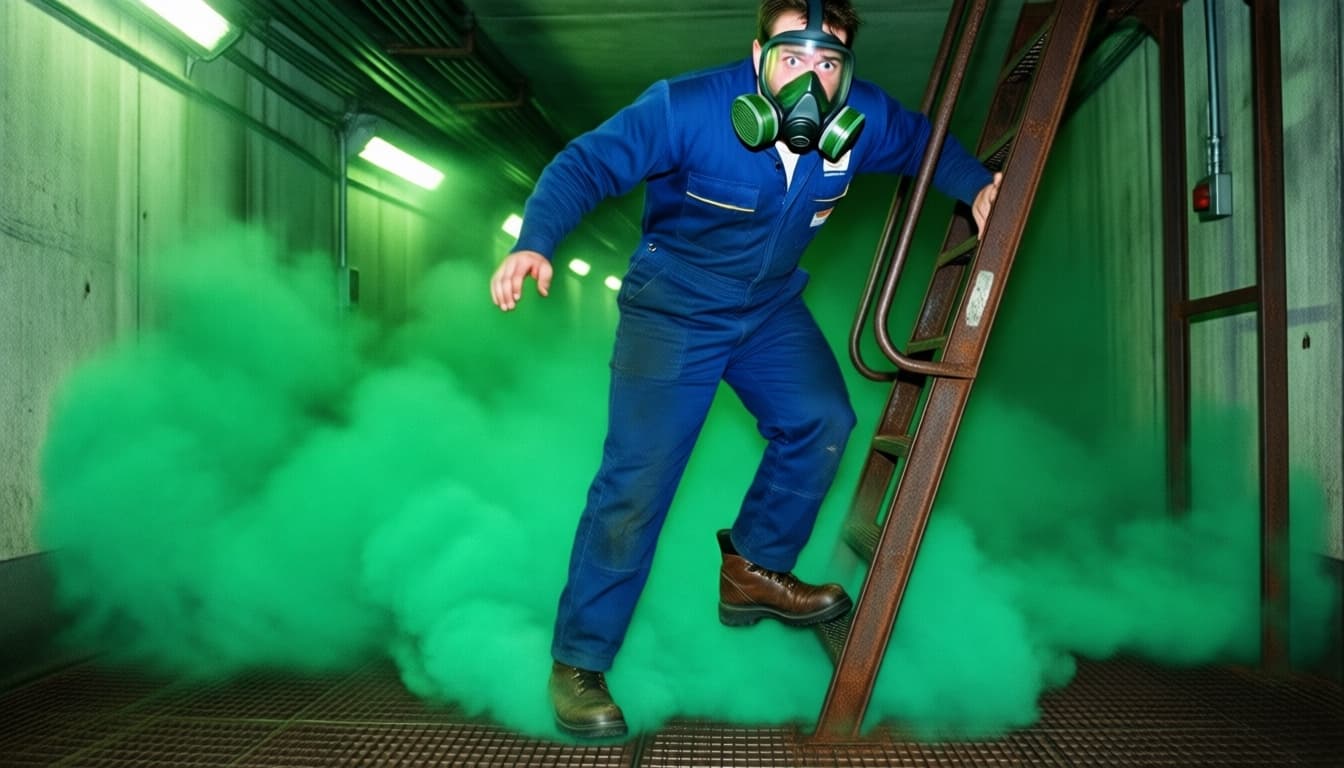
Dragging my deadened legs across the rim of the service hatch, I pulled myself onto the concrete floor of the terminal utility zone just as the steel door slammed shut behind me. No alarm sounded through the public terminal. Yet within four hours of my escape, unmarked vans and an anonymous containment crew in silver chemical hazmat gear had cordoned off the entire subterranean access. They did not evacuate the terminal. Instead, a fleet of concrete mixer trucks pumped over 300 tons of fast-setting structural grout straight into the Concourse D plenum. On paper, it was filed away as a standard 'runway subgrade stabilization project.'
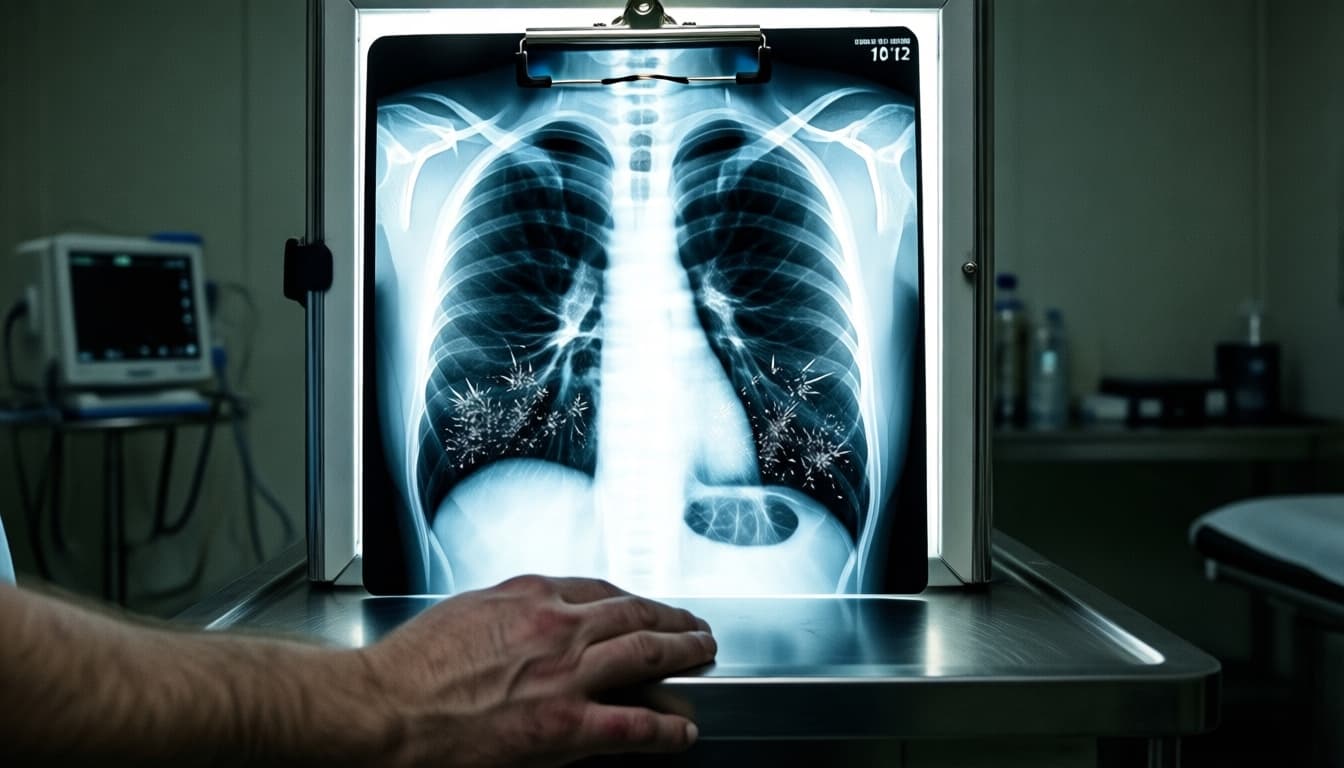
The boots I discarded that night still bear a bleached, ghostly green pallor; their soles crumble into brittle dust at the slightest touch. But what I cannot discard is what took root within me. Every morning, the phlegm I hack up carries the sharp, metallic tang of sulfuric battery fluid and copper dust. And on the chest X-ray taken last week, scattered across the lower lobes of my lungs, were identical, chillingly uniform shadows of microscopic green crystals—the exact anomaly noted on Arthur Vance's 1996 autopsy report.
[ CLASSIFIED VERDICT ]
[ACCESS LOG - SOURCE FILE]
This story is inspired by the mysterious 1996 runway shutdown at Baltimore/Washington International Airport (BWI) and persistent urban legends regarding classified military hazmat caches buried beneath airport concourses that cause unexplained pulmonary crystallization in maintenance workers.