The Mark of Ogbanje
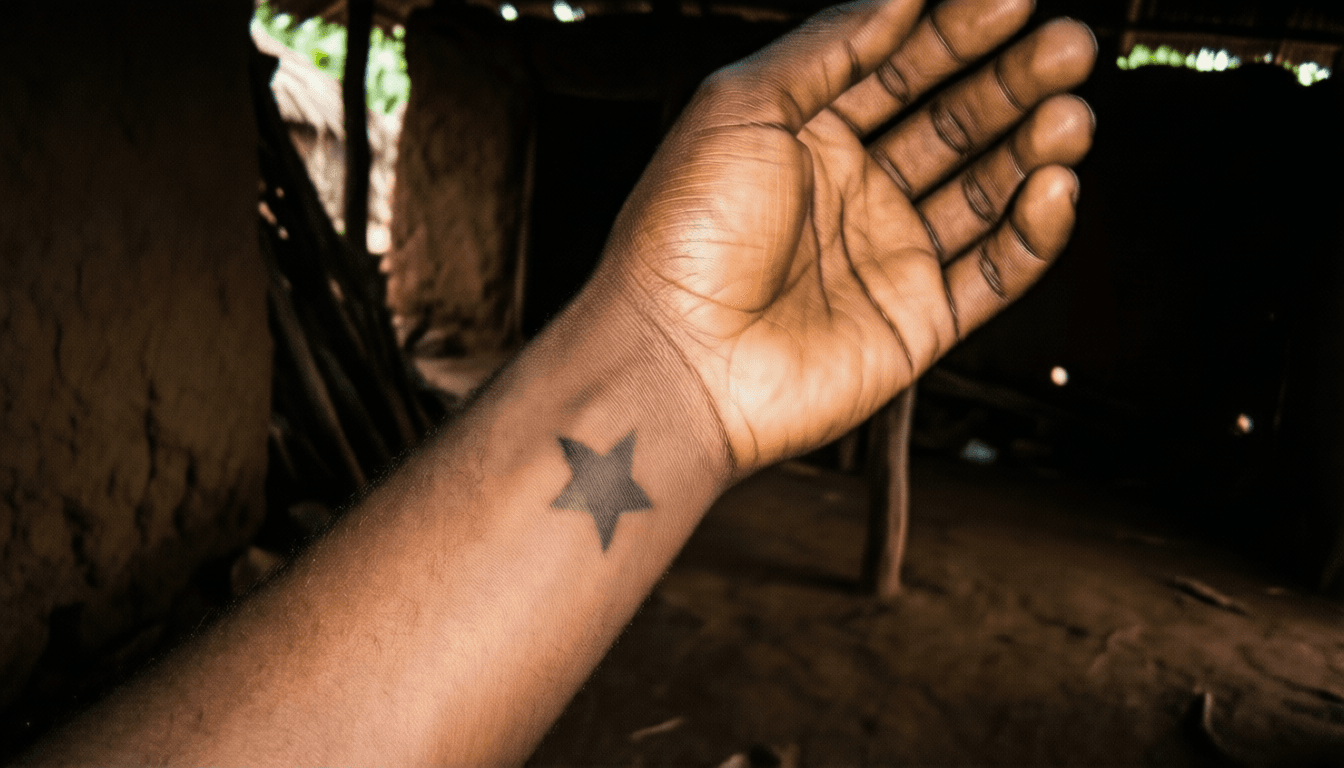
A study conducted by the Department of Demography and Social Statistics at the University of Port Harcourt, Nigeria, uncovered a shocking anomaly while analyzing child mortality rates in remote rural areas. Official birth and death records in Ogwatula village showed that over the past 20 years, children born sequentially in at least seven households shared the same uncommon name. Despite being born years apart, these children were often recorded with the same unique characteristic – a faint star-shaped birthmark on their left clavicle – and all tragically died between the ages of 3 and 5. While official reports dismissed these as "data entry errors" or "superstitious naming practices," the slim statistical probability and local whispers of "Ogbanje" spreading through online forums and local news aggregators highlighted the need for deeper investigation. My own research began with such an anomaly anonymously posted on a Nigerian folklore blog.
I journeyed deep into the Niger Delta, to Ogwatula village. It was a place reachable only after a long drive down winding dirt roads and a final river crossing. The air was humid and muggy, mixed with the scent of earth and burning wood. The suffocating heat felt even heavier here. The village was small, old, and steeped in deep traditions. The residents' eyes were full of wariness. Throughout the village, ancient silk-cotton trees, known as Nne Mmiri, 'Mother of Water,' guarded the meandering Ikwerre River. Most houses were made of mud bricks with corrugated iron roofs, and by the riverbank was a small, overgrown cemetery, where several identical gravestones stood in a row, bearing the same name but different dates of death.
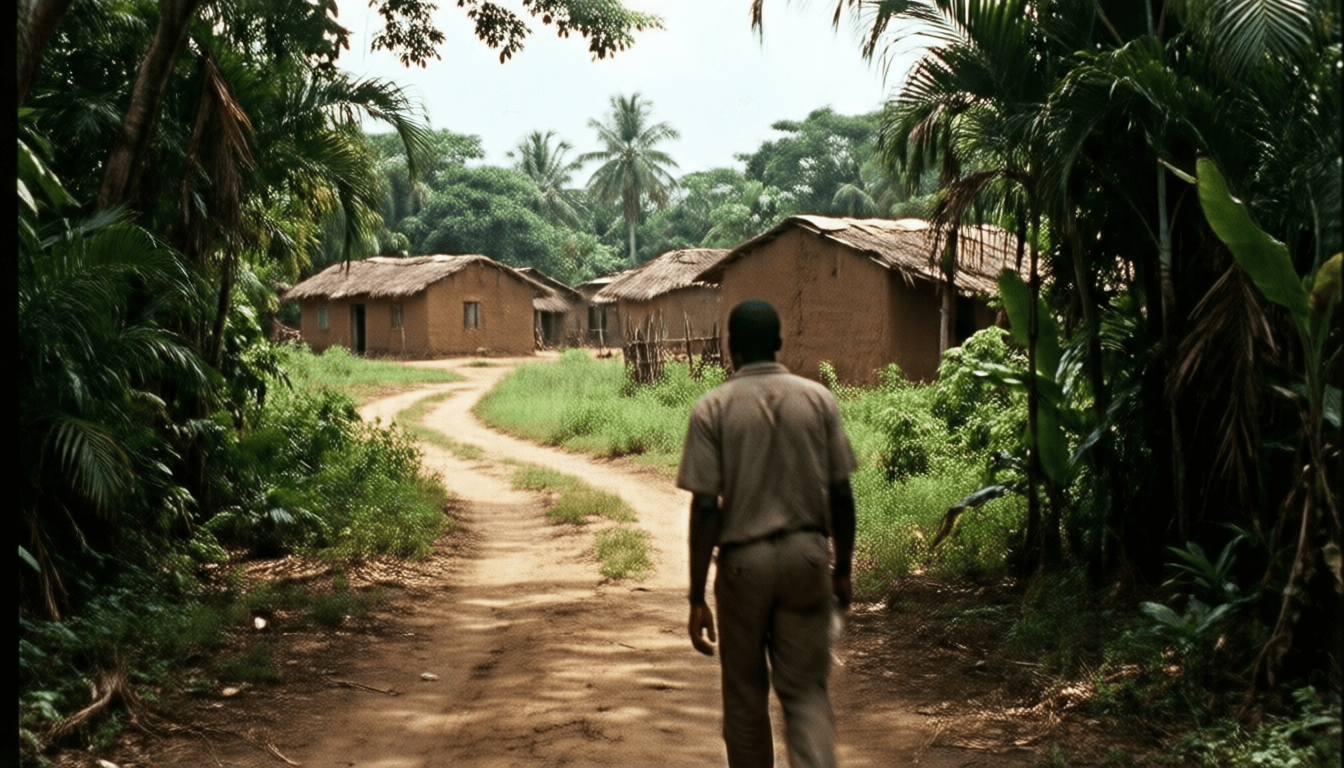
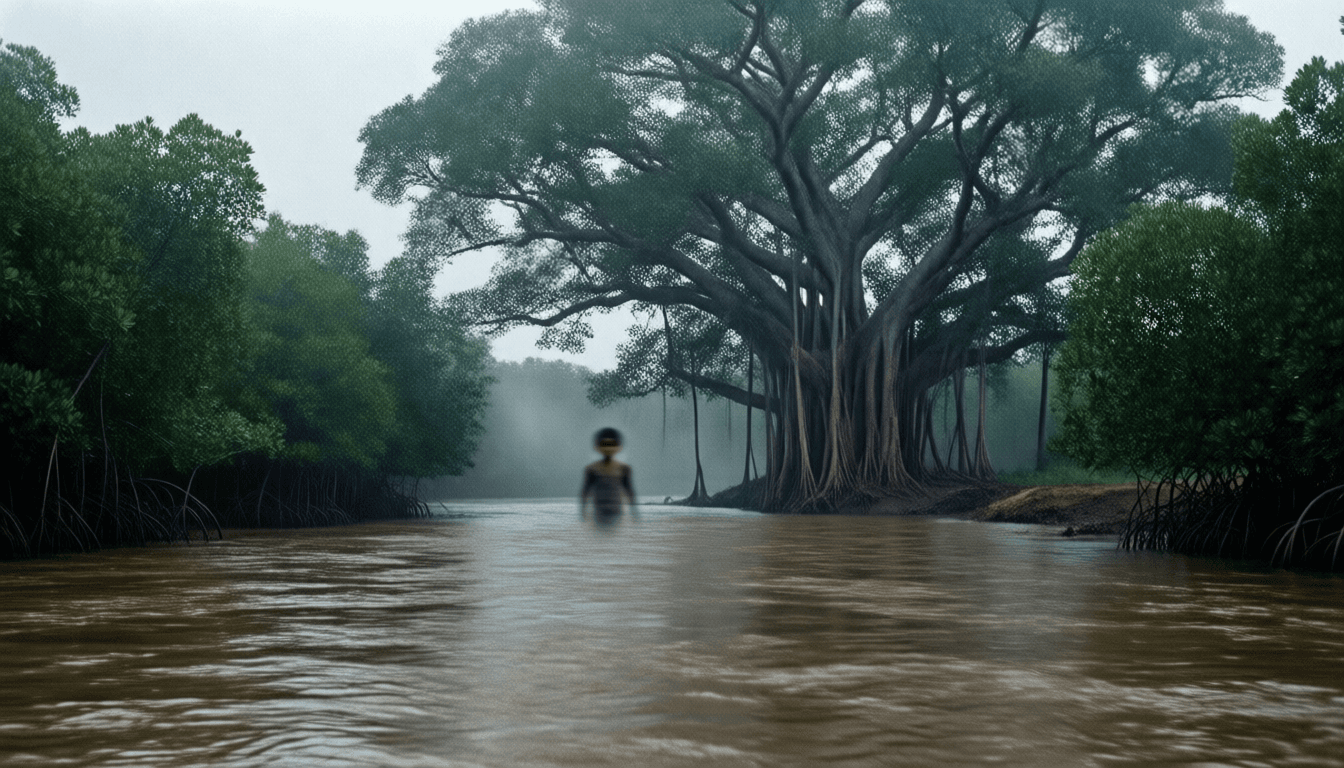
While conversing with an elder by the river, the faint sound of a child's laughter echoed from the usually deserted mangrove forest, then abruptly cut off. The ensuing silence was unnatural. This phenomenon repeated several times, each time momentary, each time from an impossible location. With every step, a small, indistinct figure, always that of a child, flickered at the edge of my vision. It would vanish behind trees or blend into shadows, but when I turned my head to look directly, there was nothing. Once, as I gazed at the river, the fleeting image of a child with unusually large, dark eyes shimmered on the water's surface, only to disappear as soon as I tried to focus.
As I approached the Nne Mmiri tree, the air became unnaturally cold, defying the tropical heat. Occasionally, my breath even misted. Although I had observed it several times, the Ikwerre River, generally a fast-flowing river in one direction, at that specific spot had small currents swirling against the main flow or unnaturally stagnant amidst strong currents. Insects seemed to avoid the area. Near the tree or the cemetery, the compass needle spun erratically.
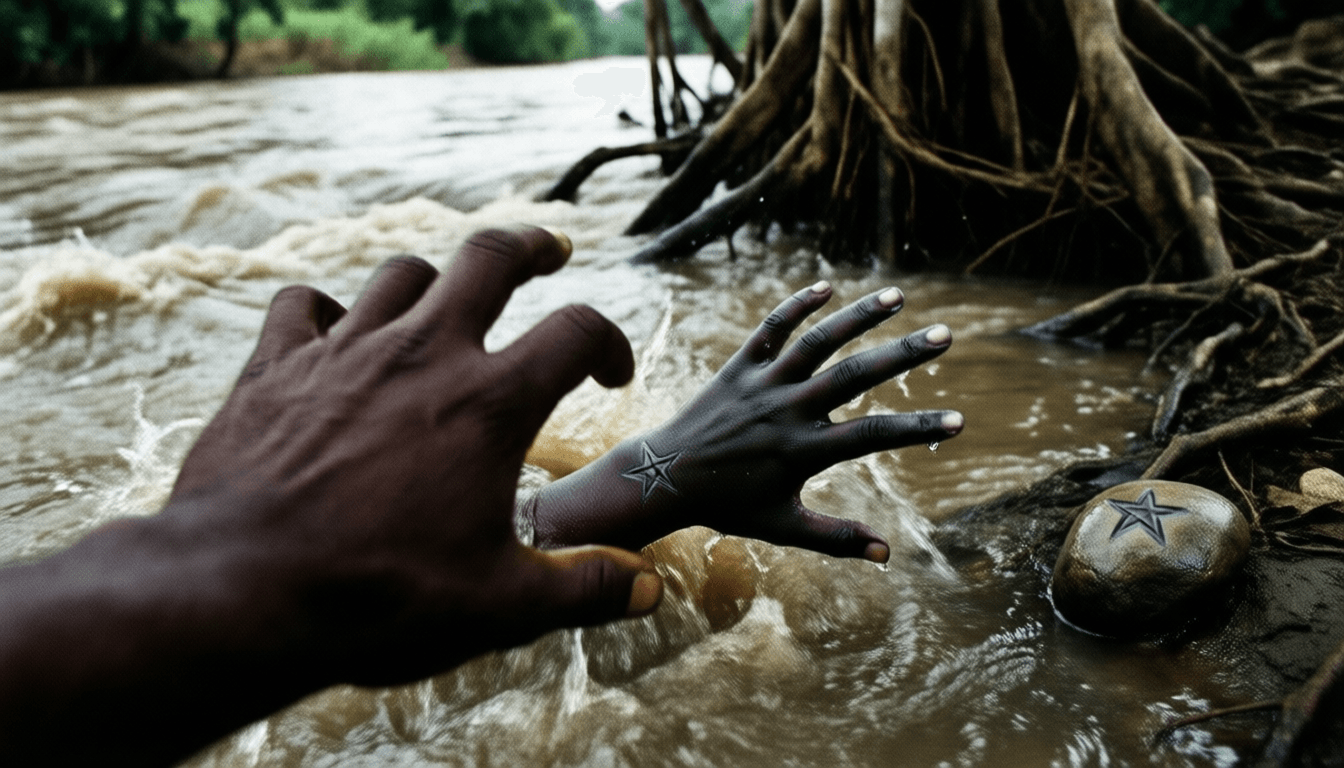
Following directions from a reluctant village shaman, I located a nearly forgotten, secret space by the riverbank, beneath the roots of the Nne Mmiri tree. Half-buried in the damp soil was an ancient, palm-sized stone. Its surface was delicately etched with a star-shaped pattern. It perfectly matched descriptions of an 'iyi-uwa,' a sacred object that binds an Ogbanje to its cycle of rebirth and death. The moment my fingers gripped the stone, the surrounding environment reacted violently. The air turned glacially cold, and my vision blurred with condensed breath. The calmly flowing Ikwerre River began to change strangely in that indentation. Beyond merely swirling, the river subtly receded from its banks, as if pulled by an unseen force, then violently surged forward, forming a vortex directly targeting the stone in my hand, trying to drag me in.
The ground beneath my feet became unstable and began to sink rapidly, like quicksand. From within the swirling water and sinking earth, a shrill scream erupted, distinctly that of a child, yet filled with malevolent fury. The sound seemed to resonate within my head. From the vortex emerged a small, dark, incredibly cold hand. A star-shaped mark was clearly etched on its wrist. The hand reached for the iyi-uwa stone I held, then the next moment lunged at my wrist. As its cold, bony fingers brushed against my skin, a tearing cold, like frostbite, flared up. I instinctively recoiled, fiercely threw the iyi-uwa stone into the violently thrashing vortex, and scrambled backward along the collapsing riverbank. As I stumbled away, the entity's scream intensified, and the ground beneath me still trembled, as if trying to drag me down. I ran at full speed towards the village until I was out of the tree's shadow, the impossible cold and ear-splitting screams pursuing me.
Eventually, I returned to civilization, but I carried profound shock and an internal cold that no warmth could dispel. The experience in Ogwatula left a subtle, unsettling imprint. I re-examined my research notes, the university's official study, and the anonymous blog post. Now, the patterns were not mere anomalies. They were evidence. Ogbanje was not a myth. It was a sentient, malevolent force, tied to the earth, possessing a will beyond life and death, actively resisting interference.
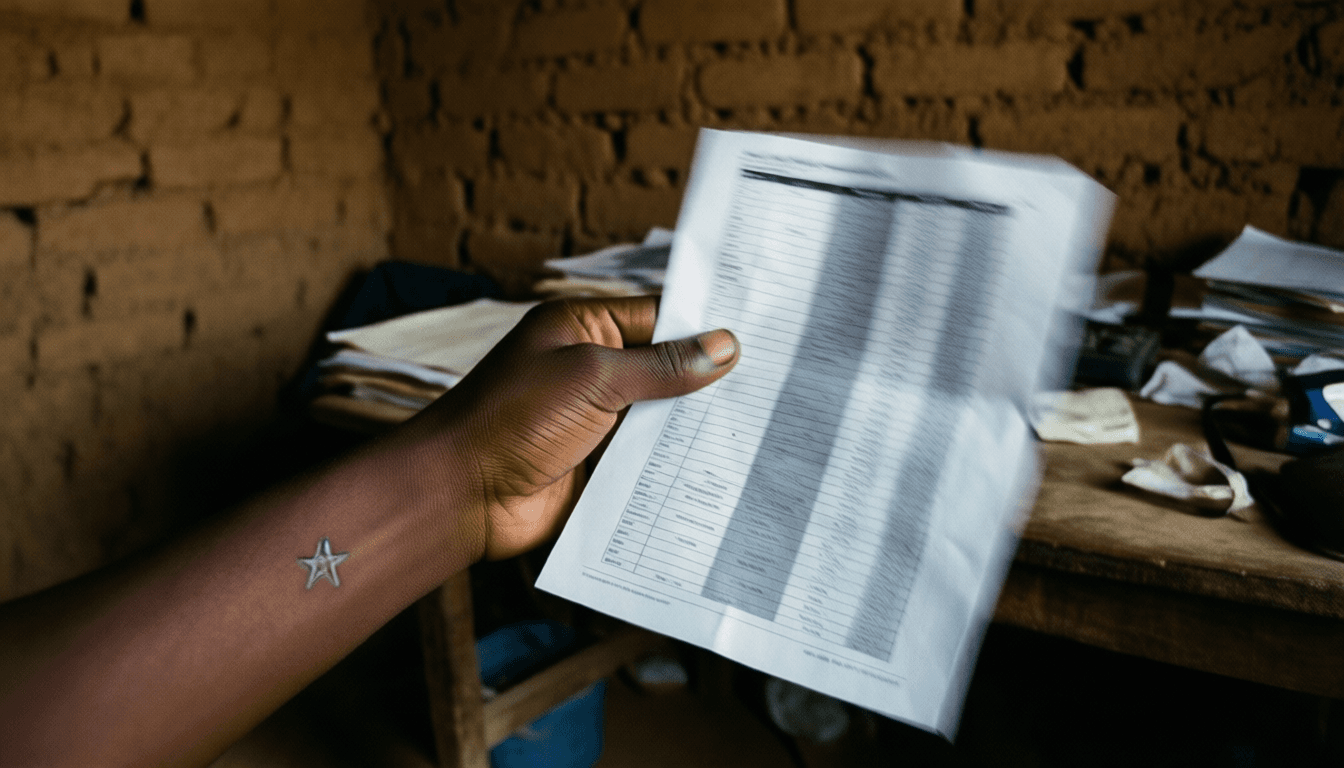
Days later, meticulously organizing field photos taken in Ogwatula village, I paused. In a blurry wide-angle photo of the Ikwerre riverbank near the Nne Mmiri silk-cotton tree, a faint star-shaped mark was visible on the inner side of my left wrist. It perfectly matched the recurring mark mentioned in the records and the one I had seen on the entity's hand. It certainly hadn't been there before I went to Ogwatula. A cold dread seeped into my bones. I was no longer a mere observer. The contact was not simply a struggle to seize an object. It was a reciprocal act. Far from being broken, the cycle had now swallowed me, beyond mere observation. I hadn't just documented the Ogbanje; I had been marked by it. The true horror lay not in the impossibility, but in the secret, quiet implication that the children of endless return were no longer content with their own loop.
[ CLASSIFIED VERDICT ]
[ACCESS LOG - SOURCE FILE]
"Ogbanje" is a myth from the Igbo people of Nigeria, referring to children who are repeatedly born and die at a young age. These children are believed to torment their parents by moving between the spirit world and the living, and are tied to this cycle through a sacred stone called 'iyi-uwa.' This story is a fictionalized account of research and personal experience based on the Ogbanje myth.