The Lost Knowledge of Alhambra Palace
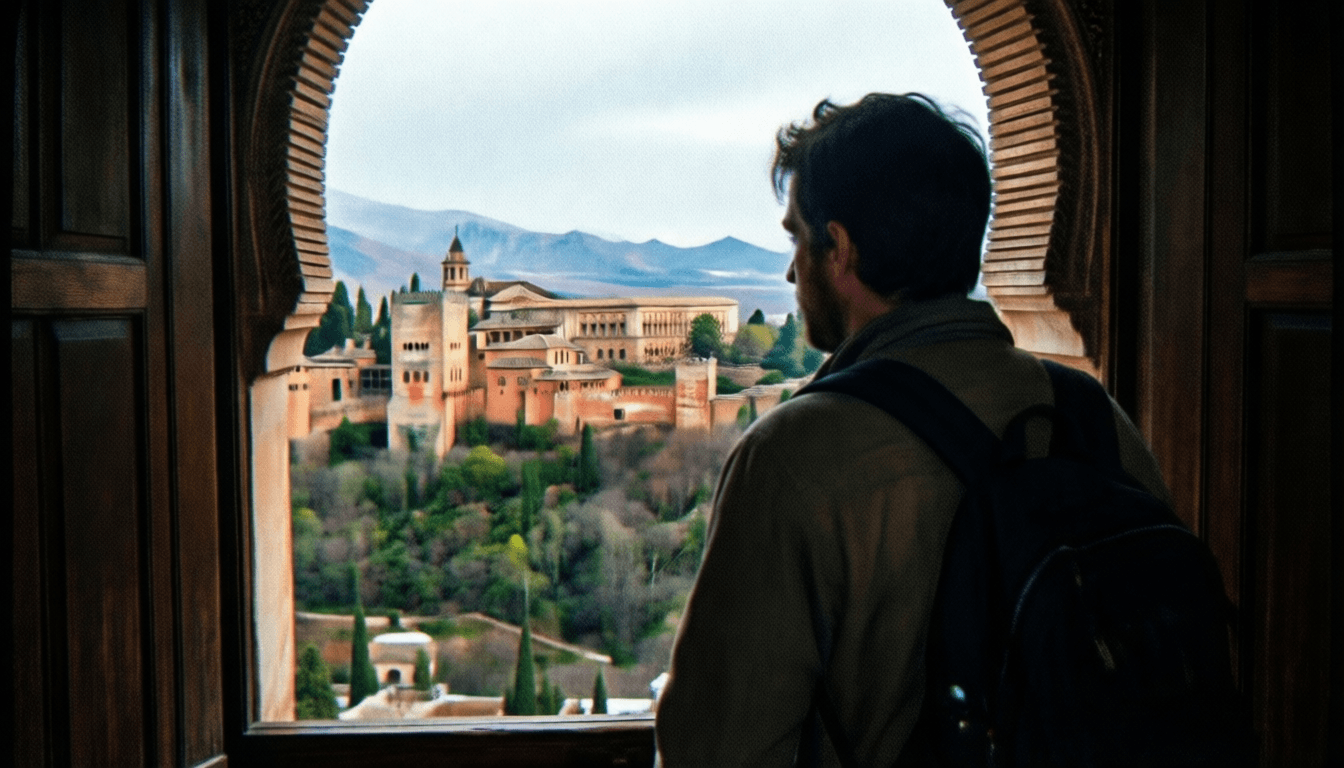
Perched atop Sabika Hill, on the rugged foothills of Spain's Sierra Nevada mountains, stands the Alhambra Palace – a colossal fortress built from rose-hued stone. More than just a fortress or palace, it is an architectural marvel testifying to the final glory of a kingdom. Its intricate design defies simple explanation. Walking through its sun-drenched courtyards today, one immediately encounters a paradox: built for temporal power, yet infused with a celestial beauty that seems to whisper of paradise. But look closer, listen carefully, and that whisper reveals not just poetic beauty, but a deep, ancient enigma. How could a besieged kingdom, on the verge of collapse, construct a geometrically precise, acoustically perfect, and environmentally sophisticated complex that still baffles engineers and scholars centuries later? The Alhambra is not merely a ruin; it is a living question etched in stone, water, and shadow.
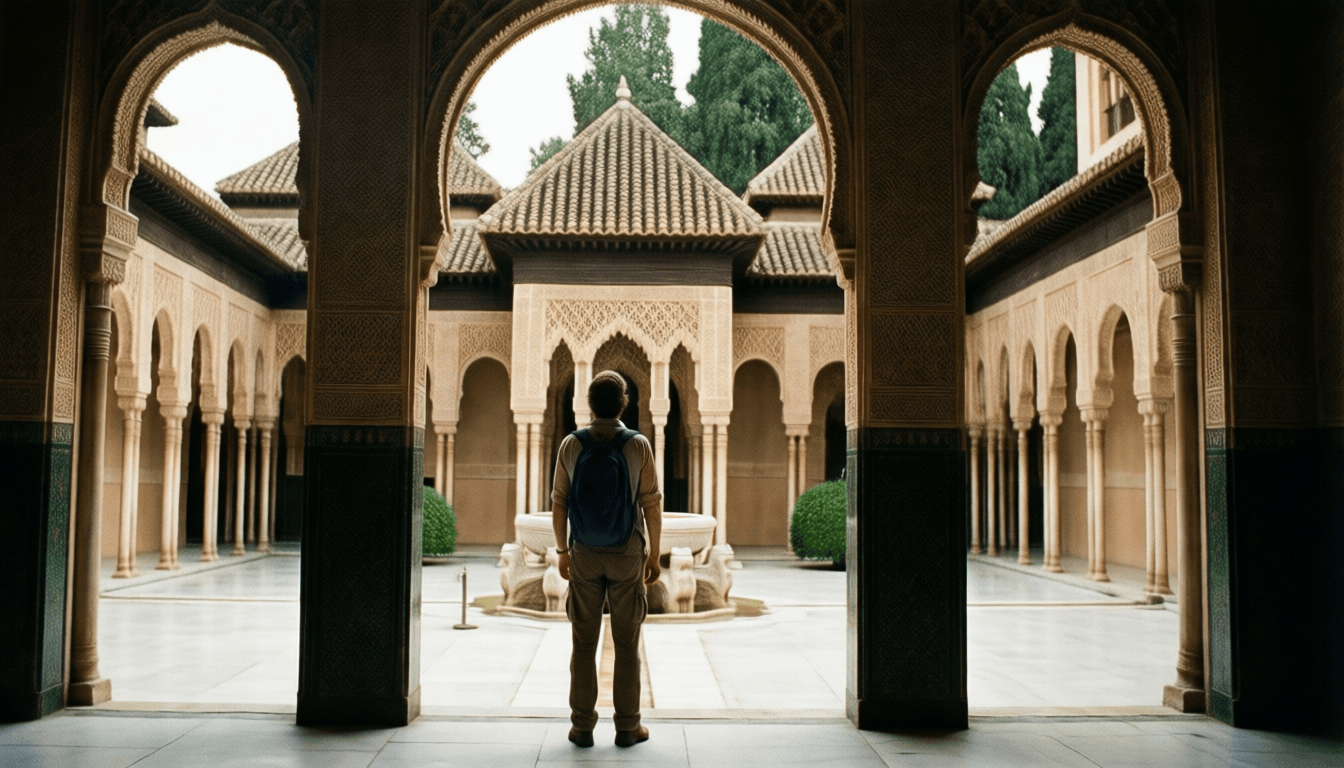
The journey into the Alhambra begins not with historical dates, but with sensory immersion. First, we encounter the Generalife, the Sultan’s summer palace. Water, drawn from distant mountains, defies gravity as it gushes in symmetrical jets and flows along narrow channels, irrigating gardens of breathtaking serenity. Then, we enter the heart of the enigma: the Nasrid Palaces. Here, carved stucco work blossoms into muqarnas – stalactite-like ceilings that seem to drip light. Every surface is adorned with intricate patterns, calligraphy, and endlessly repeating geometric forms, each seemingly leading into an infinite continuum. The Court of the Lions, with its central fountain supported by twelve sculpted beasts, is a marvel of hydraulic engineering itself, its waters flowing through an awe-inspiringly sophisticated system. Yet, this is not merely beauty; this is a structure built with an astonishingly advanced understanding of fluid dynamics, acoustics, and optics for its time.
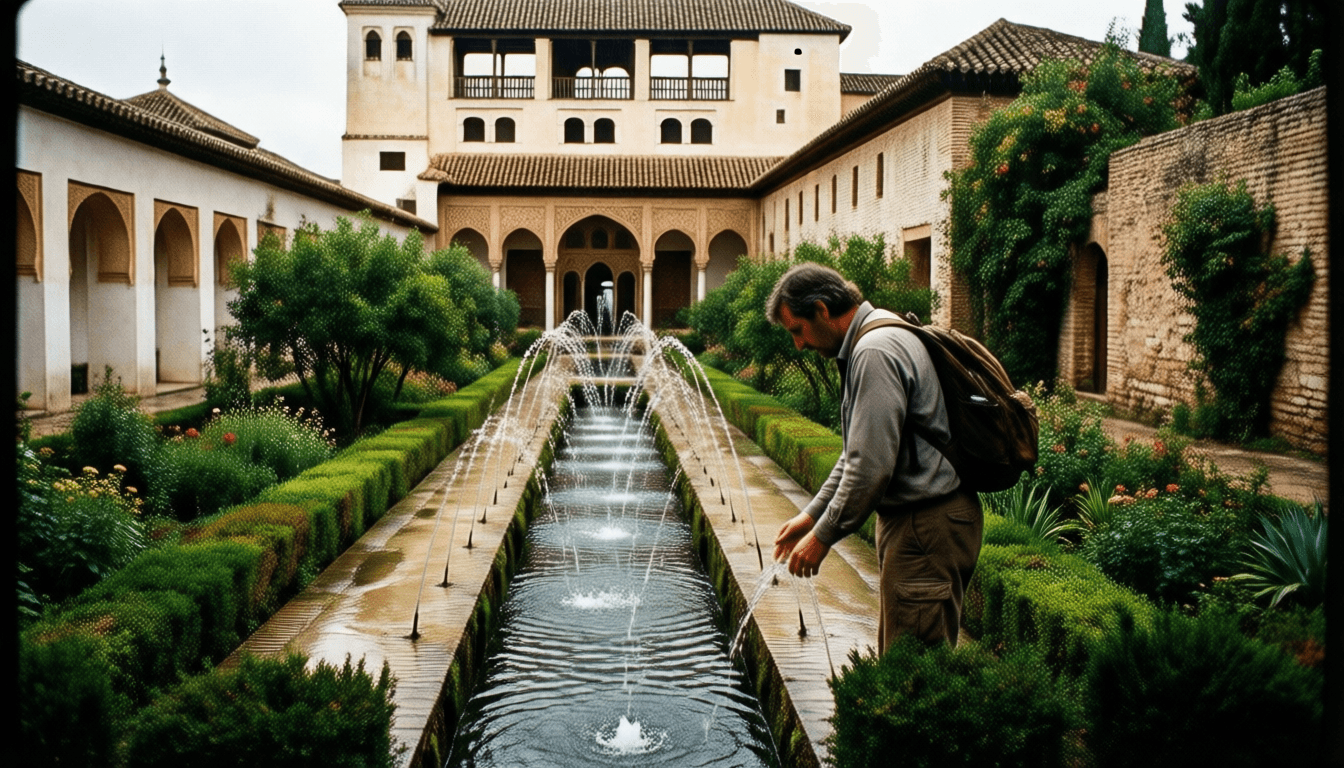
The deeper one delves, the more rational explanations begin to blur. Modern acoustic engineers analyzing the Alhambra’s chambers have discovered astonishing sound control techniques. In certain halls, a whisper at one specific point can be heard with perfect clarity across the room, while other conversations nearby are almost imperceptible. How was this achieved without modern instruments? Was it due to precise calculations of volume, shape, and materials, or perhaps an intuitive, even mystical, understanding of sound waves? Furthermore, the elaborate hydraulic system that brings water from the Darro River miles away, across hills to every fountain, garden, and pond, remains an engineering marvel. It is a large-scale pioneering system of modern plumbing, relying solely on gravity and a complex network of channels and pipes, balancing flow, pressure, and distribution with astonishing precision, all without pumps. The precise placement of windows and courtyards creates a sublime interplay of light and shadow, shifting with the hours, deliberately framing views and illuminating specific inscriptions, suggesting symbolic or even calendrical purposes.
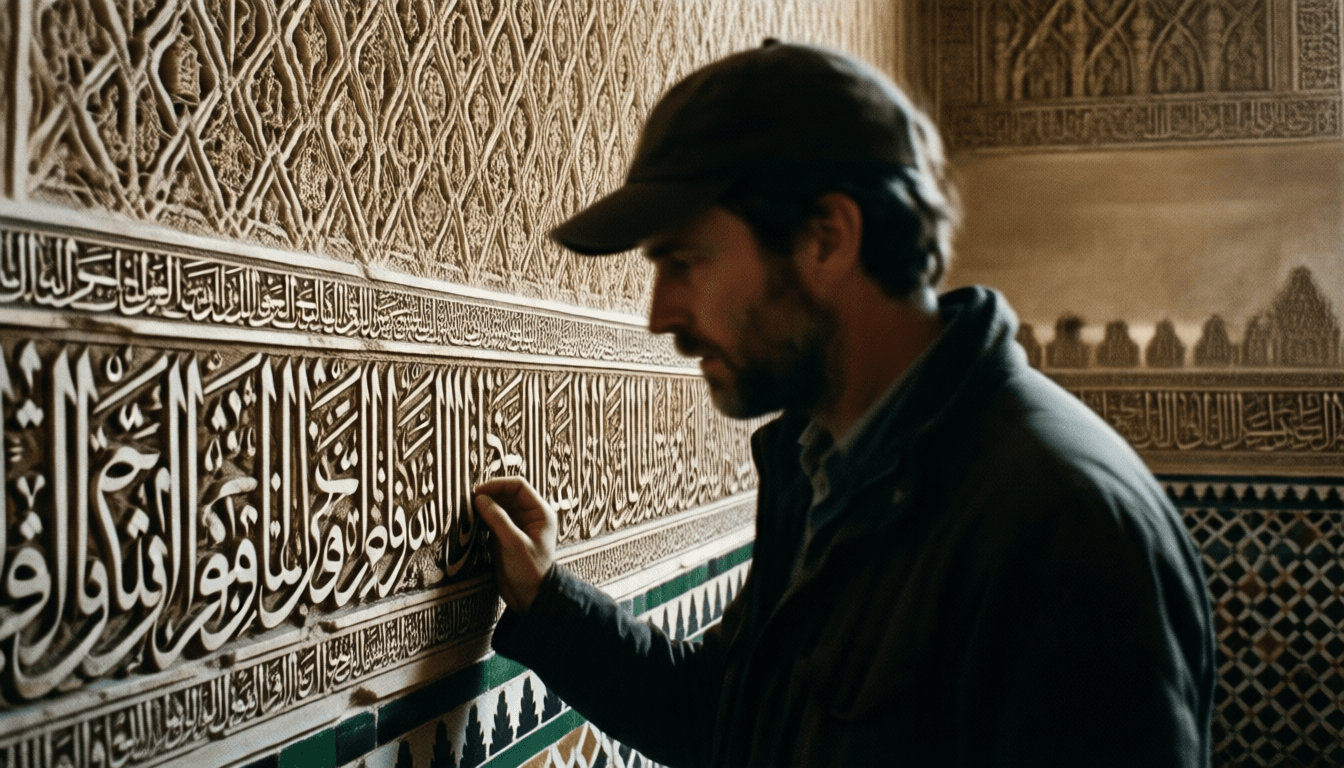
The most profound anomaly lies not just in how these feats were achieved, but what they truly mean and why they were built. Scholars today are still deciphering the layers of meaning embedded within the Alhambra. The geometric patterns adorning its walls are not mere decoration; they are complex mathematical equations, intricate tessellations that repeat infinitely, reflecting Islamic philosophical concepts of unity and divinity. Interwoven with these patterns is calligraphy, often consisting of poetry, prayers, and philosophical musings, with many inscriptions describing the palace itself as a living entity, a "garden of paradise." Legends speak of hidden chambers beneath the fortress, secret passages, and alchemical knowledge inscribed within the very architecture—knowledge sought by the Nasrid kings, perhaps intended to empower or protect a fading kingdom. Was the Alhambra an encyclopedia of lost wisdom? A cosmic blueprint designed to resonate with celestial harmony? Or an elaborate time capsule of profound scientific and spiritual knowledge, deliberately encrypted within its structure to endure beyond the brief reign of kings?
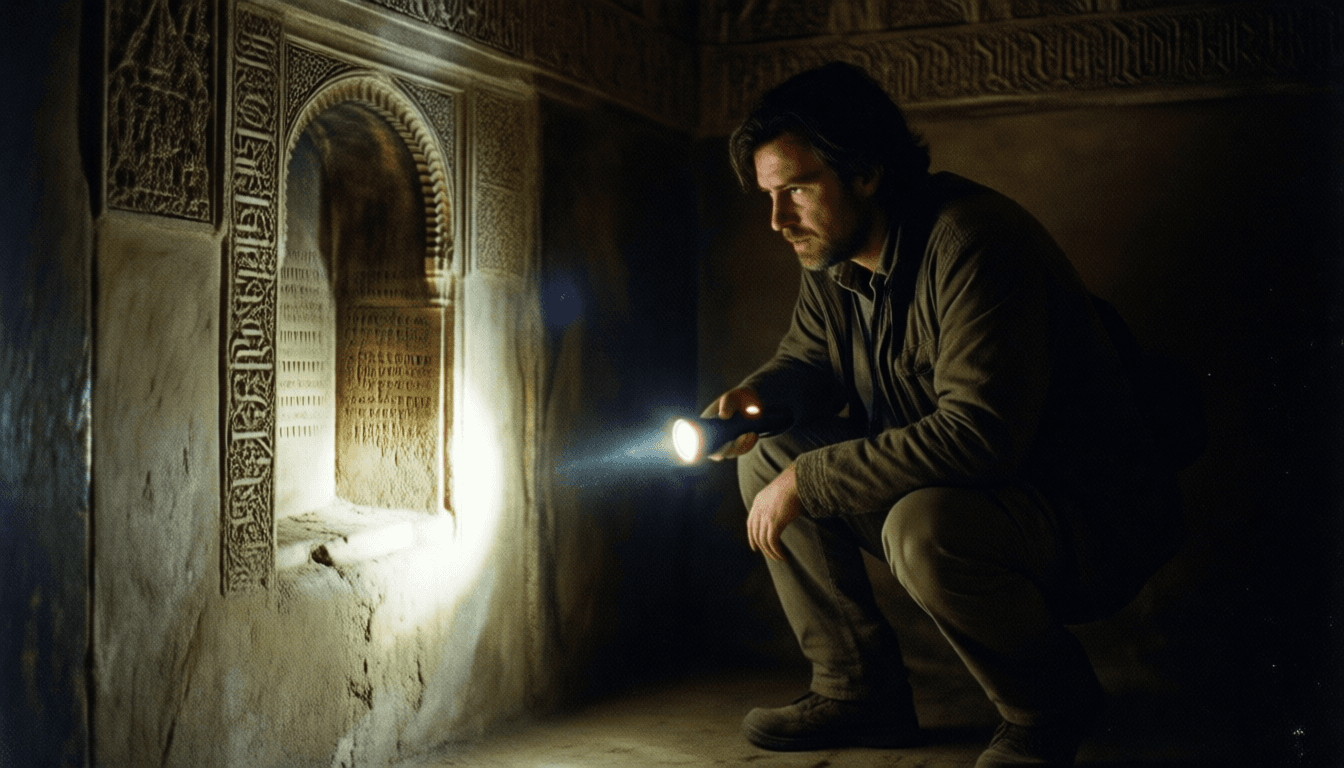
Centuries have passed since the last Moorish Sultan departed the Alhambra, yet its legacy continues to captivate and confound. Despite extensive archaeological excavations, scientific analyses, and historical inquiries, the deepest secrets of this fortress-palace are stubbornly guarded by its whispering walls and dancing waters. We can admire its beauty, marvel at its engineering, and interpret its symbolism. But the full extent of its builders' knowledge, their ultimate intentions, and the precise principles behind its inexplicable perfection continue to elude us. The Alhambra stands as a monumental enigma, a silent testament to a lost golden age, reminding us that some human achievements transcend simple historical context, remaining as profound and awe-inspiring question marks etched onto the canvas of time.
[ CLASSIFIED VERDICT ]
[ACCESS LOG - SOURCE FILE]
The Alhambra Palace, built by a declining kingdom, possesses architectural precision, acoustic perfection, and an elaborate hydraulic system that are difficult to explain for its era. Modern scholars still struggle to fully decipher its construction techniques and hidden meanings, leading to legends that it contains lost knowledge or served a mysterious purpose.