Namibia's Fairy Circles: The Desert's Enduring Mystery
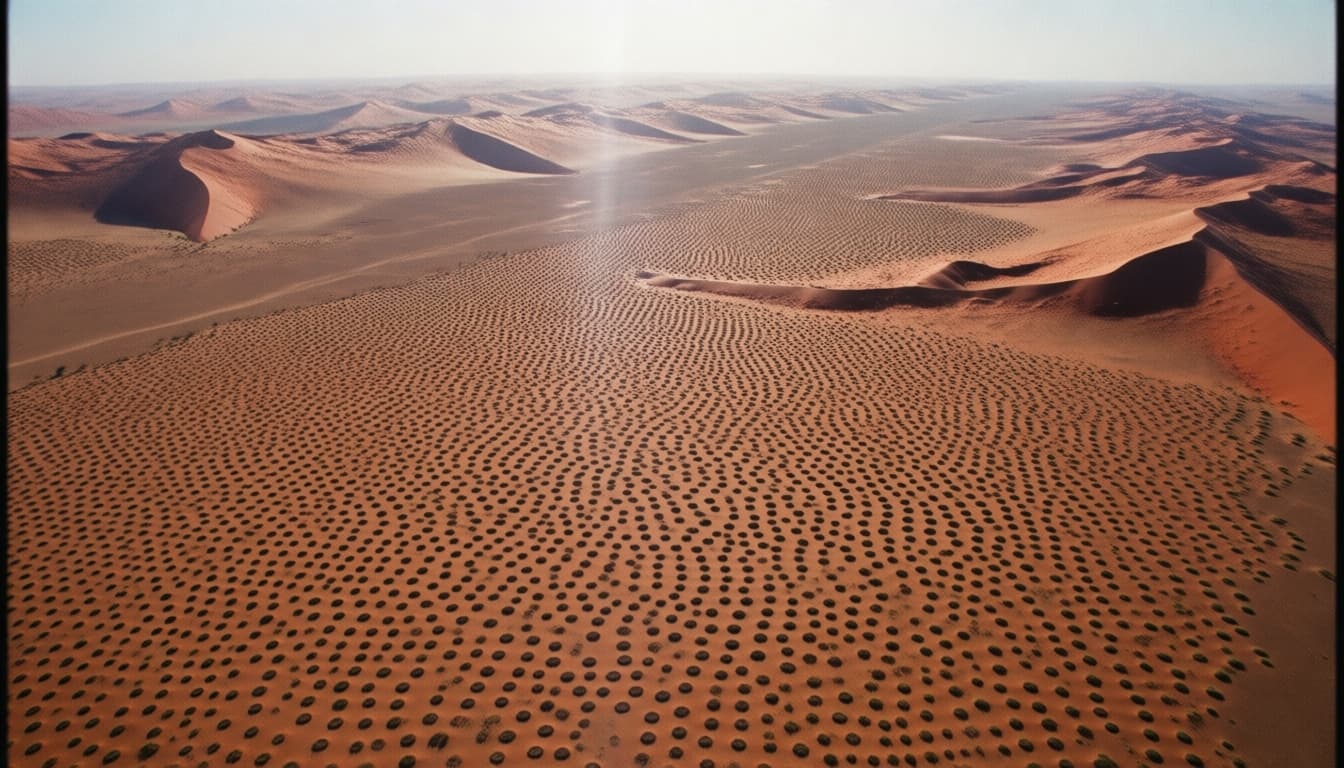
Thousands of feet above the ancient red dunes of Namibia, a spectacular sight unfolds across the vast, arid Namib-Naukluft National Park. Stretching for hundreds of kilometers, the sparsely vegetated grasslands are dotted with barren, circular patterns, each perfectly round and precisely spaced.
These are the 'Fairy Circles,' a phenomenon so geometrically regular and breathtakingly widespread that they appear like alien script etched into the Earth's oldest desert. For decades, these enigmatic patterns have baffled scientists and captivated observers, remaining a silent, eternal question carved into the very landscape of the desert, challenging our understanding of natural order that defies easy explanation.
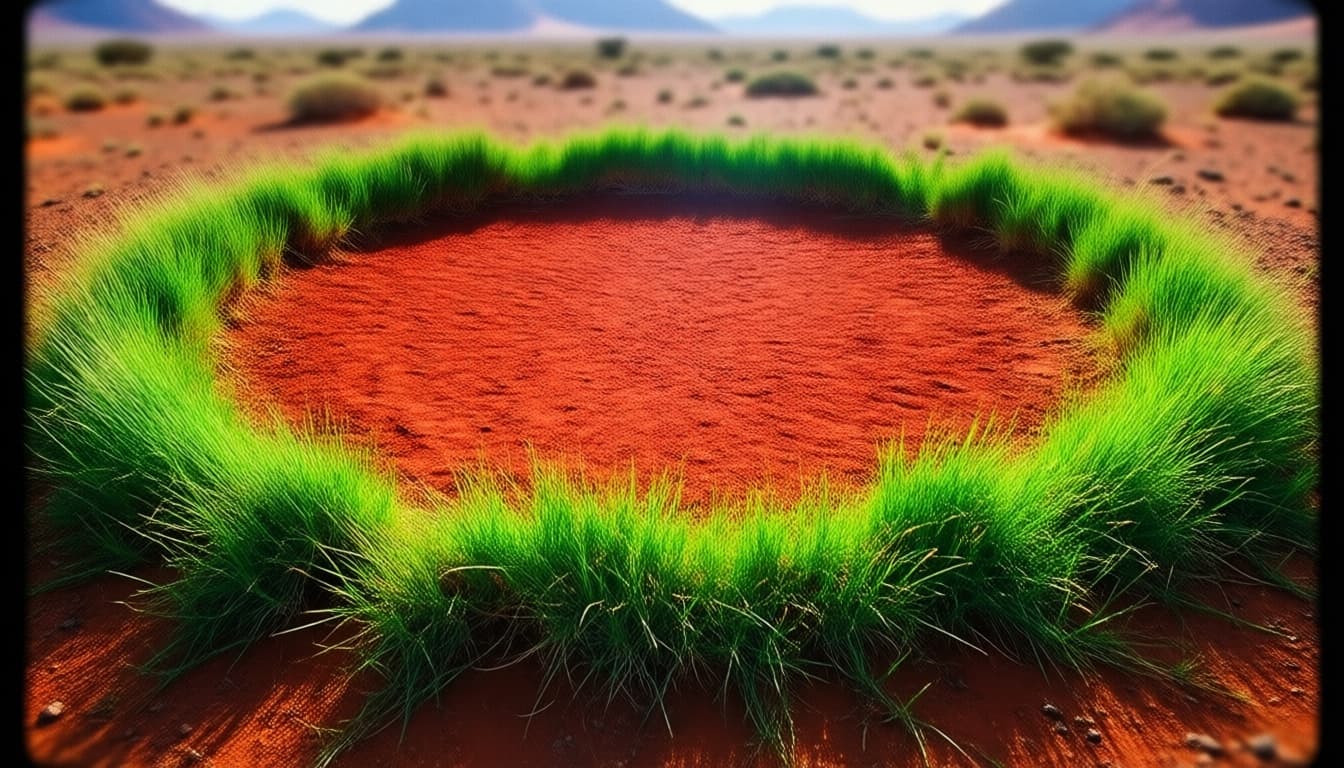
Descending closer, the natural marvel becomes even more distinct. Each Fairy Circle typically features a barren, nutrient-poor soil center, ranging from 2 to 15 meters in diameter, creating a stark contrast with the vibrant ring of tall, healthy grasses that tightly encircles it.
These are not isolated occurrences but part of a colossal network extending from southern Angola to South Africa. Early explorers and the local Himba people explained these patterns as ancestral spirits or the breath of a mythical dragon, but their true scale and astonishing uniformity of distribution only became apparent through modern aerial photography and satellite imagery.
Researchers meticulously traverse this harsh, remote terrain, documenting the circles' mysterious appearance, growth, and eventual disappearance over decades—taking soil samples, analyzing plant genetics, and measuring their dynamics.
Armed with advanced ecological models and remote sensing technologies, the scientific community has focused on two primary hypotheses to explain the Fairy Circles. One theory posits them as the result of fierce competition among plants for scarce water resources in an extremely arid environment.
The fringe grasses benefit from water flowing into the barren center, inhibiting growth within the circle, and thus, the grasses themselves create the patterns. The other prominent theory attributes their formation to the activity of subterranean termites (specifically the species *Psammotermes allocerus*).

As termites construct their underground nests and tunnels, they consume vegetation within their habitat, creating barren patches while simultaneously increasing water and nutrient availability in the surrounding soil, thus promoting grass growth at the edges. Both theories present compelling evidence, from isotopic analysis of water uptake to the presence of termite activity within the circles.
However, neither hypothesis fully accounts for all the characteristics of this colossal design. Where science struggles to provide a complete explanation is in describing the sheer, persistent regularity and uniformity of the Fairy Circles across such vast and varied terrain.
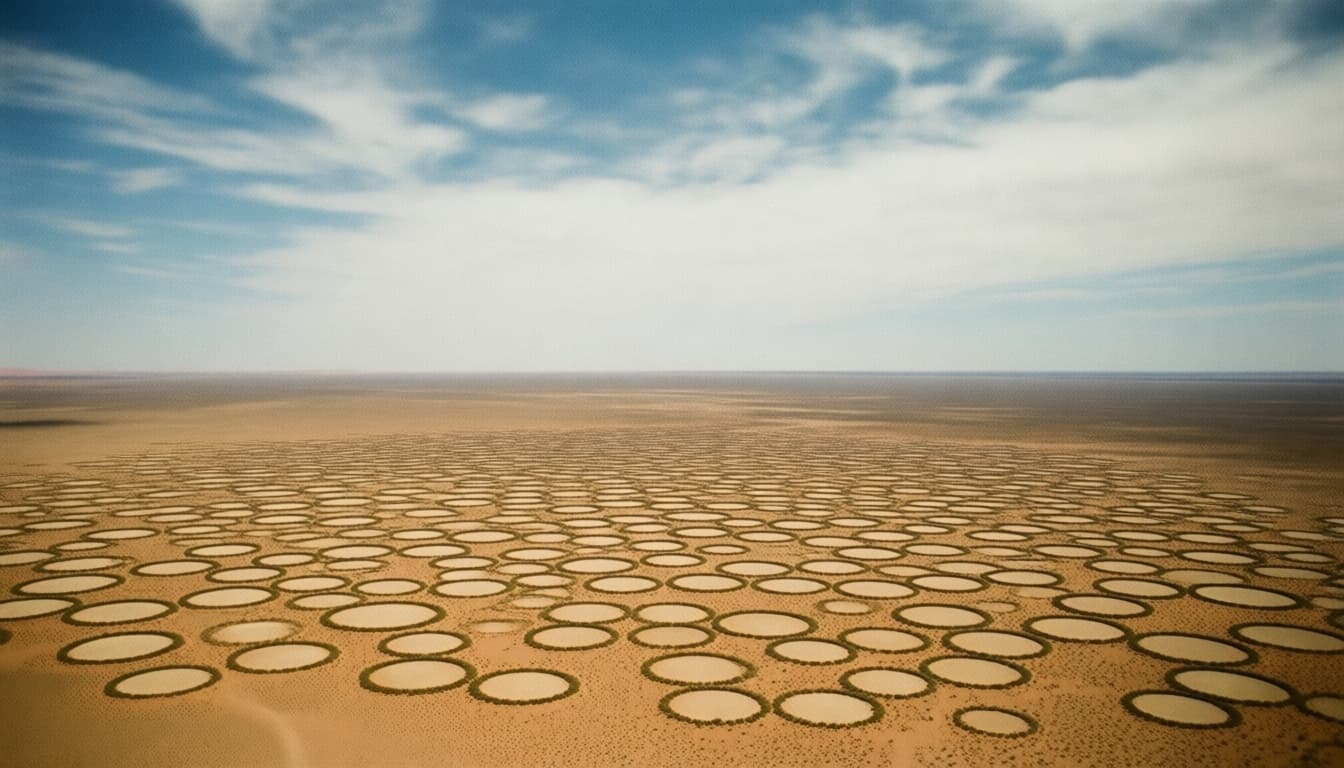
Their almost perfect hexagonal arrangement, consistent size distribution, and clear demarcation between barren center and vibrant edge are far from the randomness often associated with natural ecological processes. If it's due to plant competition, why do such precise circular patterns emerge over such extensive areas? And why are almost identical patterns not found in other similarly arid regions worldwide?
If termites are the sole architects, how do these tiny insects coordinate their activity with such geometric precision over hundreds of kilometers, maintaining consistent spacing and regeneration cycles over human generations? The phenomenon, with some circles vanishing and new ones appearing over time, like a breathing entity, suggests a dynamic, self-organizing system operating with a scale and elegance we do not yet fully comprehend.
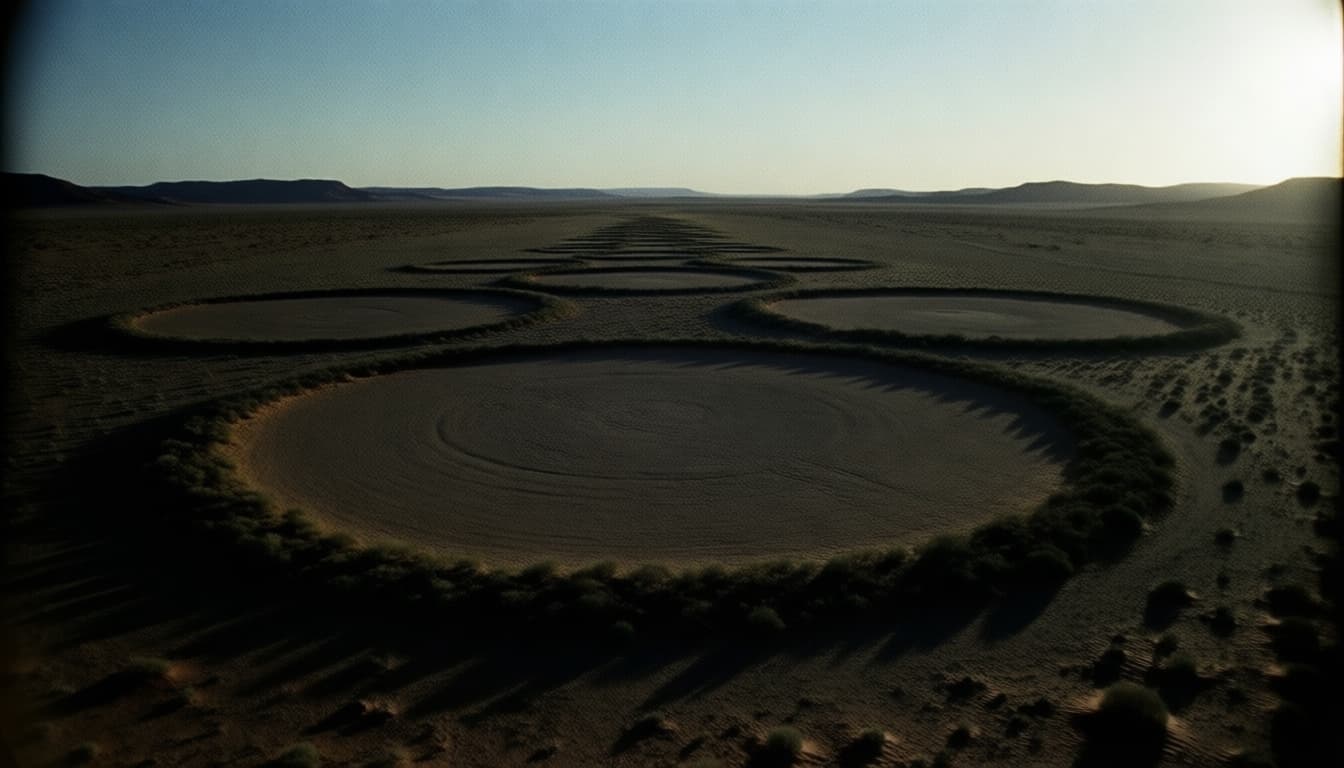
It is this profound 'tuning'—whether it's plant intelligence, insect cooperation, or the interaction of unknown forces—that remains the most captivating and inexplicable aspect.
Today, Namibia's Fairy Circles remain one of Earth's most impressive and enduring ecological enigmas. Despite decades of intensive research, including satellite data, drone imagery, and arduous field observation, the precise, unified mechanism of their formation and persistence continues to elude us.
They stand as a testament to the profound complexity of natural systems, a colossal living artwork in the desert operating by rules we have yet to fully decipher. As the sun rises and sets over the Namib, casting long shadows across this ancient, patterned land, the Fairy Circles continue their slow, majestic dance, an awe-inspiring and constant reminder that even in the world's most thoroughly studied corners, wonders exist that defy complete understanding, inviting us to ponder the vast and intricate intelligence of nature itself.
[ CLASSIFIED VERDICT ]
[ACCESS LOG - SOURCE FILE]
In the Namibian desert, a mysterious phenomenon known as 'Fairy Circles' manifests as perfectly circular barren patches regularly distributed over hundreds of kilometers. Local Himba people explain them as ancestral spirits or the breath of a mythical dragon, a natural mystery whose exact origin still eludes scientists despite various theories.