The Inverted Medusa: Whispers of Yerebatan Sarayı
Beneath the ceaselessly vibrant bustle of modern Istanbul, a city where the grandeur of the Byzantine Empire intersects with the magnificence of the Ottoman, lies a deep and secret story. Just a few steps from the soaring domes of the majestic Hagia Sophia, beneath the busy streets where merchants hawk their wares and tourists snap photos, exists a hidden world. Descending a narrow staircase, the blinding sunlight and the cacophony of the historic Sultanahmet district fade, giving way to a realm of eternal twilight and whispering echoes. This is no forgotten catacomb or humble underground passage; it is a vast, water-filled subterranean palace, almost inconceivable in its scale: the Yerebatan Sarayı, or Basilica Cistern. Accidentally rediscovered centuries after its construction, this monumental wonder challenges our understanding of ancient engineering and whispers of a hidden purpose. It is a silent giant of stone and water, hidden in plain sight.
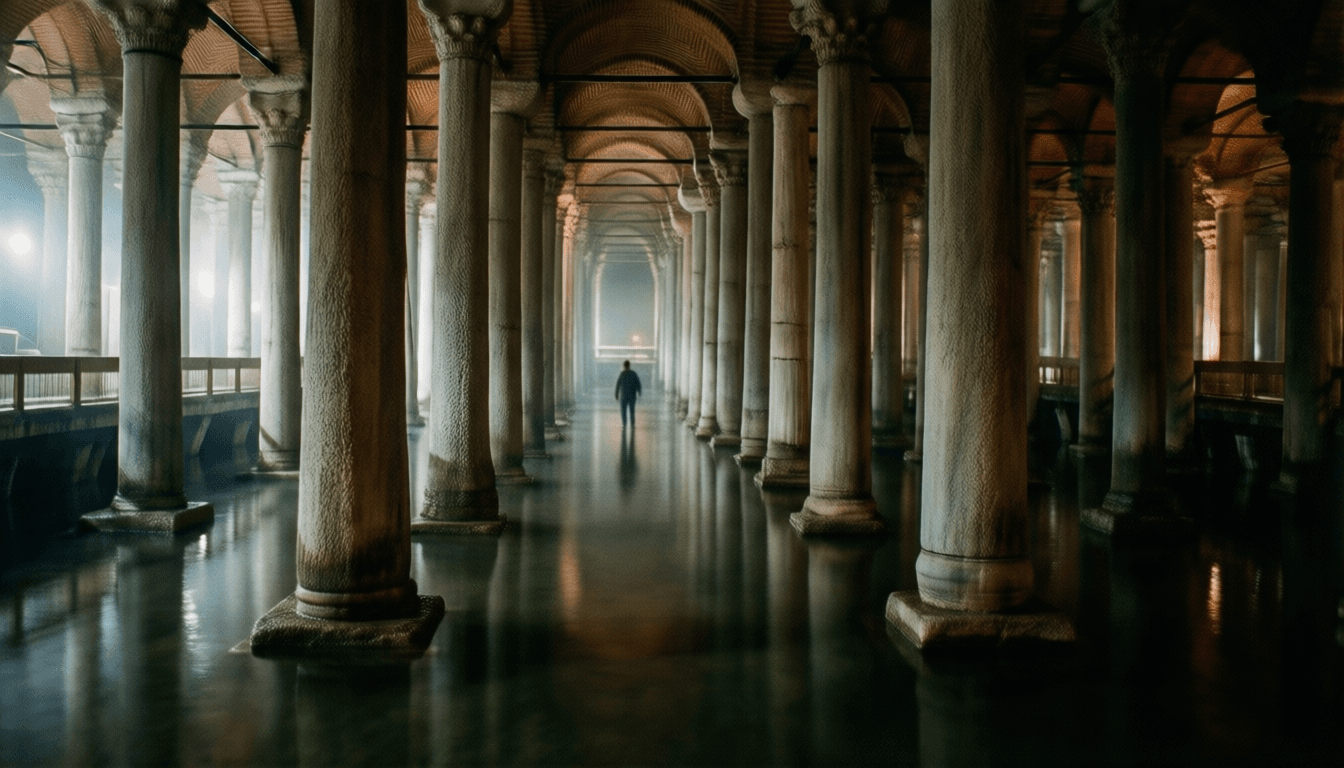
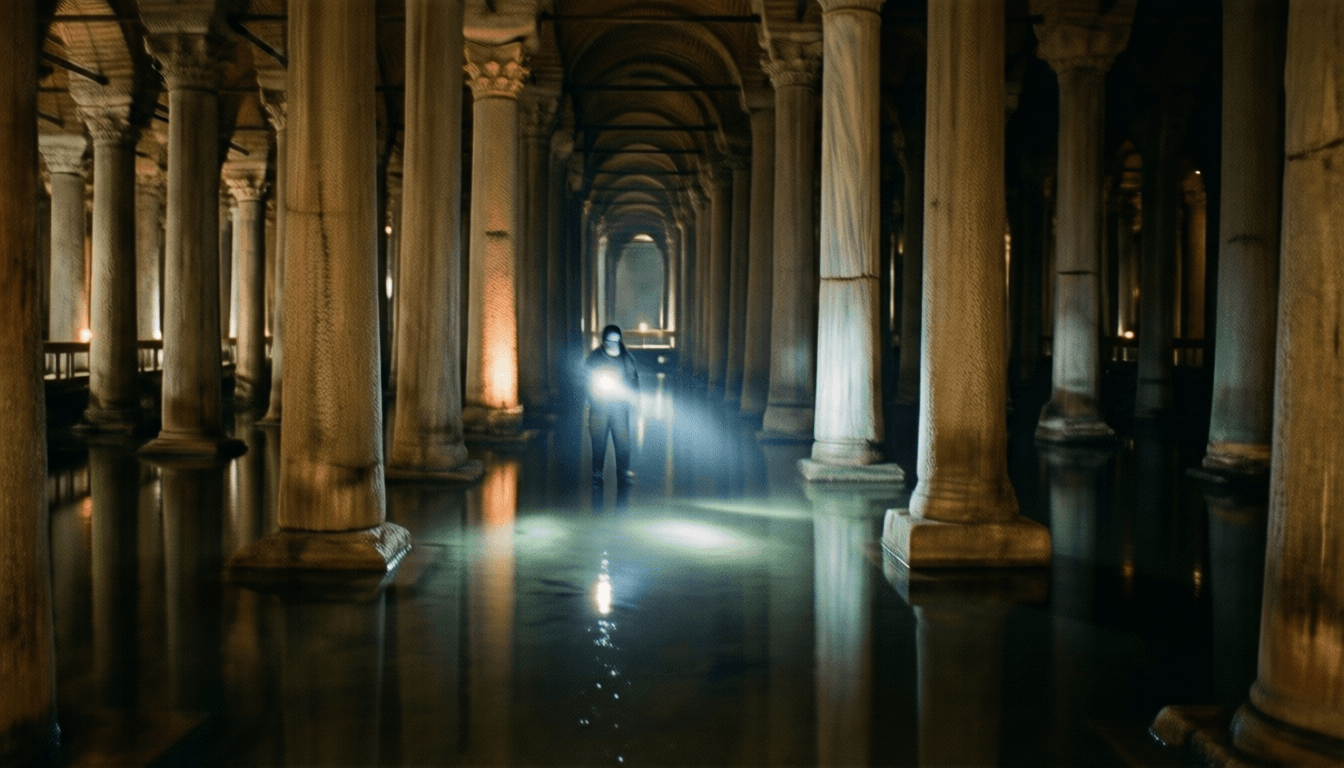
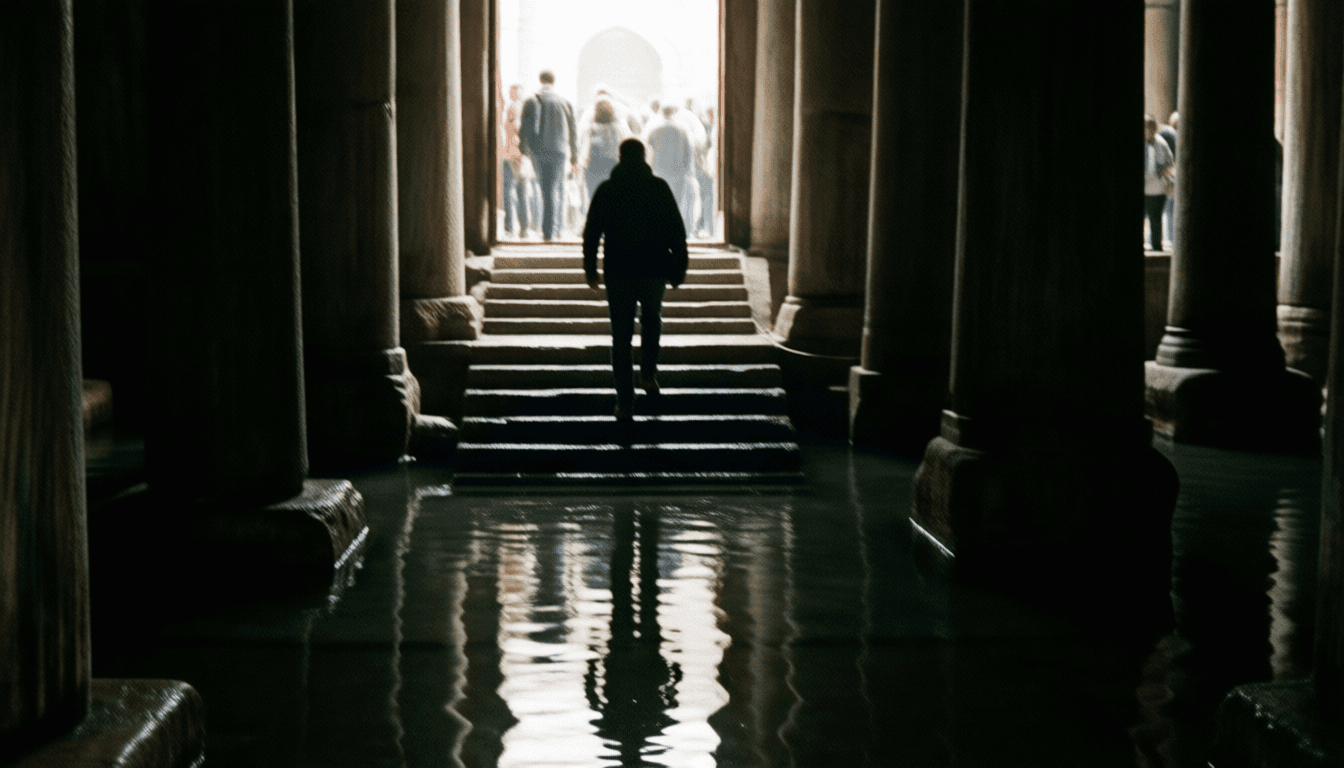
The moment one steps into Yerebatan Sarayı, it feels akin to entering a subterranean cathedral. The air immediately cools, thick with the scent of damp earth and ancient stone. Before one's eyes can adjust to the dim, golden illumination, the sheer scale of the place overwhelms the senses. The seemingly endless space is supported by an astonishing forest of 336 marble columns rising from a still, reflective expanse of water. Arranged in 12 rows of 28, these columns disappear into the gloom, casting long, slender shadows that dance with the rippling water. The immediate observation is the mixture of styles: Doric, Ionic, and Corinthian, alongside fluted and smooth columns. This is not uniform architecture; it is an exquisitely organized collection of recycled architectural fragments gathered from across the Byzantine Empire. Each column, each supporting arch, silently testifies to a monumental undertaking, yet the unified vision of the place is breathtakingly beautiful.
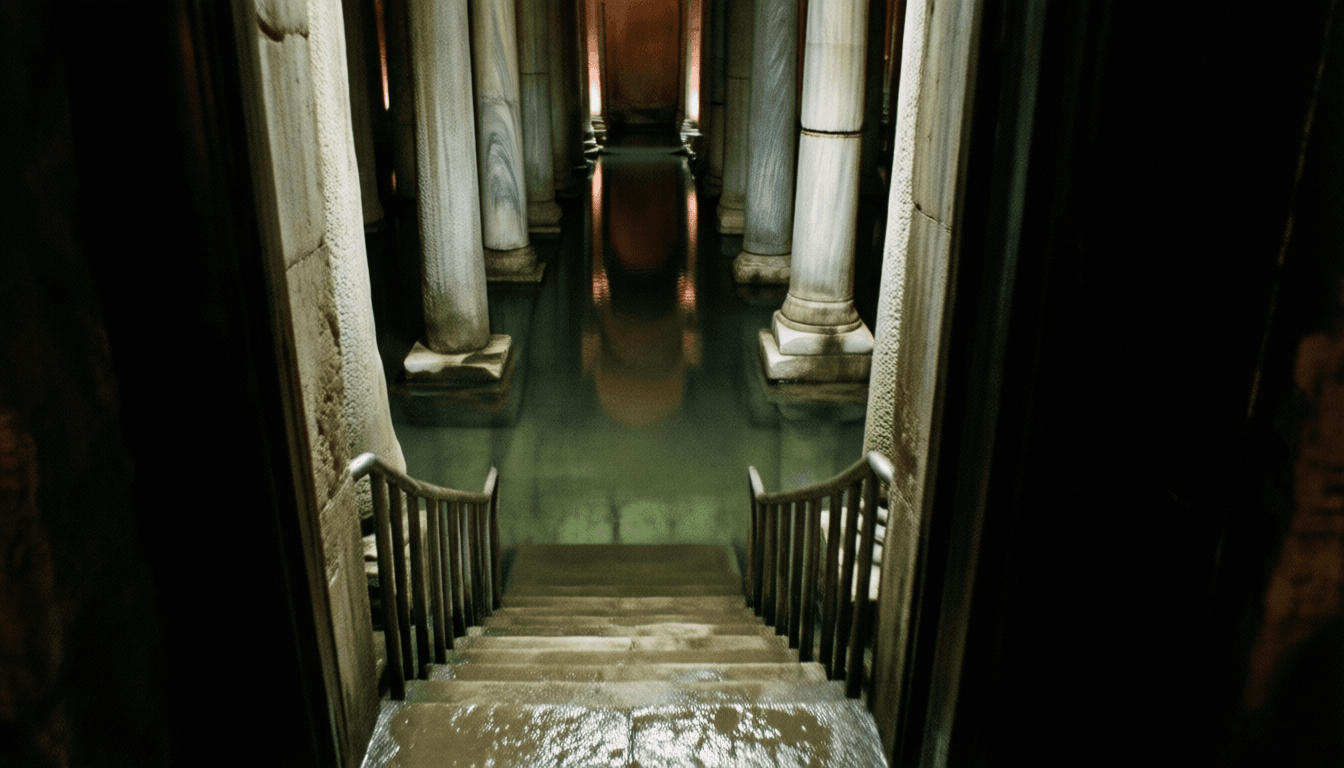
Standing within, the question naturally arises not merely of 'what' it is, but 'how' such a colossal structure could have been built with 6th-century technology. Commissioned by Emperor Justinian I, this magnificent underground cistern was designed to supply water to the Great Palace of Constantinople and surrounding imperial buildings. Its construction involved the excavation of approximately 80,000 cubic meters of earth, followed by the meticulous application of waterproof mortar. The columns themselves, standing 9 meters tall, had to be sourced, transported, and precisely positioned from hundreds of miles away. This logistical feat alone demonstrates an organizational capacity and engineering prowess that is difficult for modern minds to fully comprehend.
Furthermore, this cistern was linked to an extensive aqueduct system, stretching over 120 kilometers into the Thracian forests, channeling fresh water into this hidden reservoir. For centuries after the Ottoman conquest in 1453, the Yerebatan Sarayı, along with its purpose, was largely forgotten, only to be rediscovered in the 16th century when a Dutch traveler observed residents drawing water from holes beneath their homes. The very fact that such a colossal structure could vanish from collective memory only deepens its enigmatic aura.
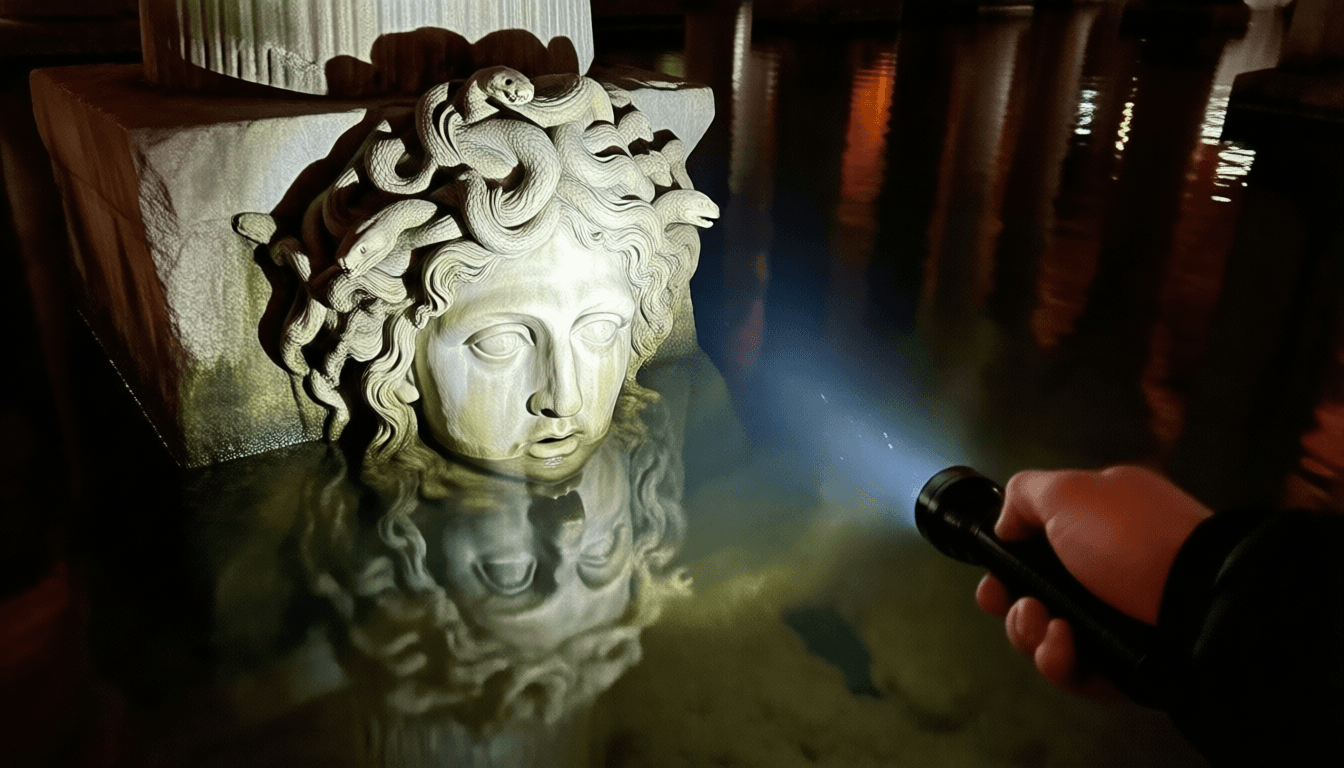
Amidst the hundreds of orderly columns, two particular anomalies capture visitors' attention in the northwest corner of the cistern. Here, two colossal Medusa heads, intricately carved from marble, serve as the bases for columns. One is inverted, its serpent hair pointing downwards into the water, its stony gaze fixed on the subterranean floor. The other is rotated 90 degrees, lying on its side, its face turned away from the main axis of the cistern. Their placement is distinctly different from any other column, standing out as intentionally profound and symbolic.
Historians and archaeologists have proposed various theories, ranging from practical reasons—that they were simply the right size and shape for column bases, and their orientation was merely to make them fit—to superstitious beliefs, suggesting they were placed upside down or sideways to neutralize the Gorgon's petrifying gaze. However, neither explanation feels entirely convincing. Why these specific, powerful mythological figures? Why only these two amidst hundreds of other, unadorned bases? Their presence injects elements of the ancient pagan world into a Byzantine Christian structure, creating a profound, unresolved tension, an intentional discord within a harmonious space, unlike anything else found there.
Upon leaving the cool, tranquil embrace of Yerebatan Sarayı and ascending to ground level, the sounds and sights of modern Istanbul once again dominate the senses. Yet, the images of the vast underground hall, the echoing drip of water, and especially the enigmatic gaze of the inverted Medusa, remain deeply etched in the mind. The Yerebatan Sarayı stands as an enduring monument to the ingenuity, scale, and mystery of ancient civilizations. It is a place where engineering marvel meets unexplained symbolism, where practical function intertwines with profound, perhaps even mystical, intent.
While we can measure its size, trace its history, and even marvel at its construction, the motivations behind its grandest anomalies, the subtle whispers of forgotten lives, remain elusive. The Yerebatan Sarayı, a silent marvel submerged beneath a bustling world, guards its secrets, inviting us to perpetually ponder the depths of human achievement and the eternal enigmas that some ancient stones will never surrender.
[ CLASSIFIED VERDICT ]
[ACCESS LOG - SOURCE FILE]
Deep beneath Istanbul, the colossal Basilica Cistern (Yerebatan Sarayı), a vast underground water reservoir built during the Byzantine Empire, holds a profound mystery. Within this subterranean palace, two Medusa head column bases—one inverted and one sideways—have been discovered, sparking numerous urban legends and theories regarding their purpose and meaning. From suggestions that they were placed to neutralize Medusa's petrifying gaze to theories of them being remnants of ancient pagan beliefs, their unresolved symbolism continues to captivate visitors to this day.