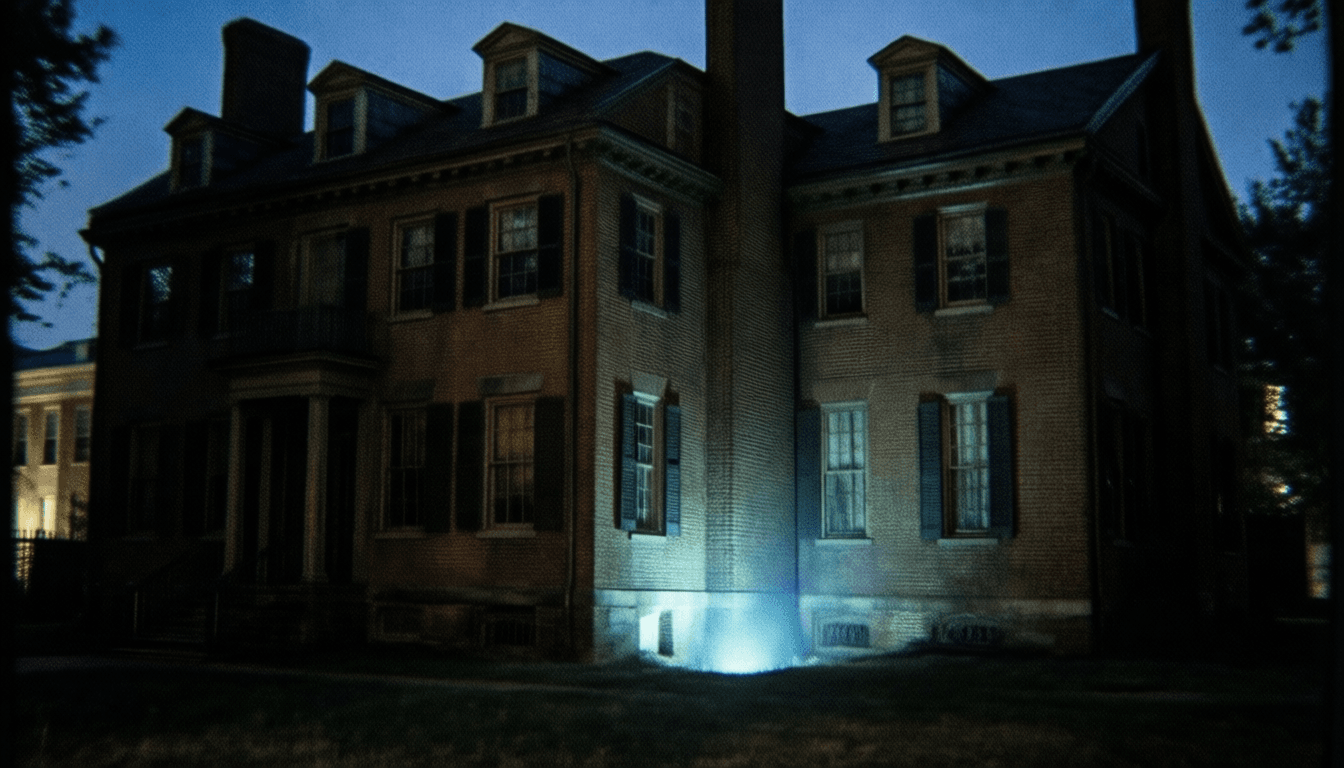
The Hole That Swallows Silence
Official records of the Lincoln assassination have been analyzed countless times, yet historical passages untouched by light still exist. Beyond the well-known story of John Wilkes Booth and his conspirators, chilling whispers persist among Ford's Theatre staff and Petersen House preservationists. These whispers, never recorded in official reports, have been passed down through generations by those who guarded the buildings bearing the marks of that night. This is a story about the Petersen House, specifically a long-sealed section beneath the back stairs in the basement, deemed structurally unstable. The legend speaks not of ghosts, but of an anomalous acoustic phenomenon, where sound utterly vanishes in a specific spot. The cold there was said to be so profound it felt like a physical presence. People often dismissed it as an eccentricity of an old building or the exaggerated imagination of night watchmen.
However, a recently verified unofficial discovery brought these whispers into stark and unsettling reality. A faint, hand-drawn diagram, purportedly from a lesser-known stonemason contractor involved in the Petersen House's foundation work in the 1860s, surfaced at a private collection auction. The diagram eerily depicted a small, unlabeled empty space within the rear basement foundation wall. Where solid stone should have been, there was nothing. This was precisely the spot where rumors of a "sound dead zone" had circulated. Barely legible text was etched along the diagram's edge, bearing a single, chilling phrase: "It breathes silence." This diagram was no ghost story. It was engineering proof of something *missing* from the foundational structure, hinting at an intentionally concealed unknown beneath the very ground where a nation's fate was irrevocably altered.
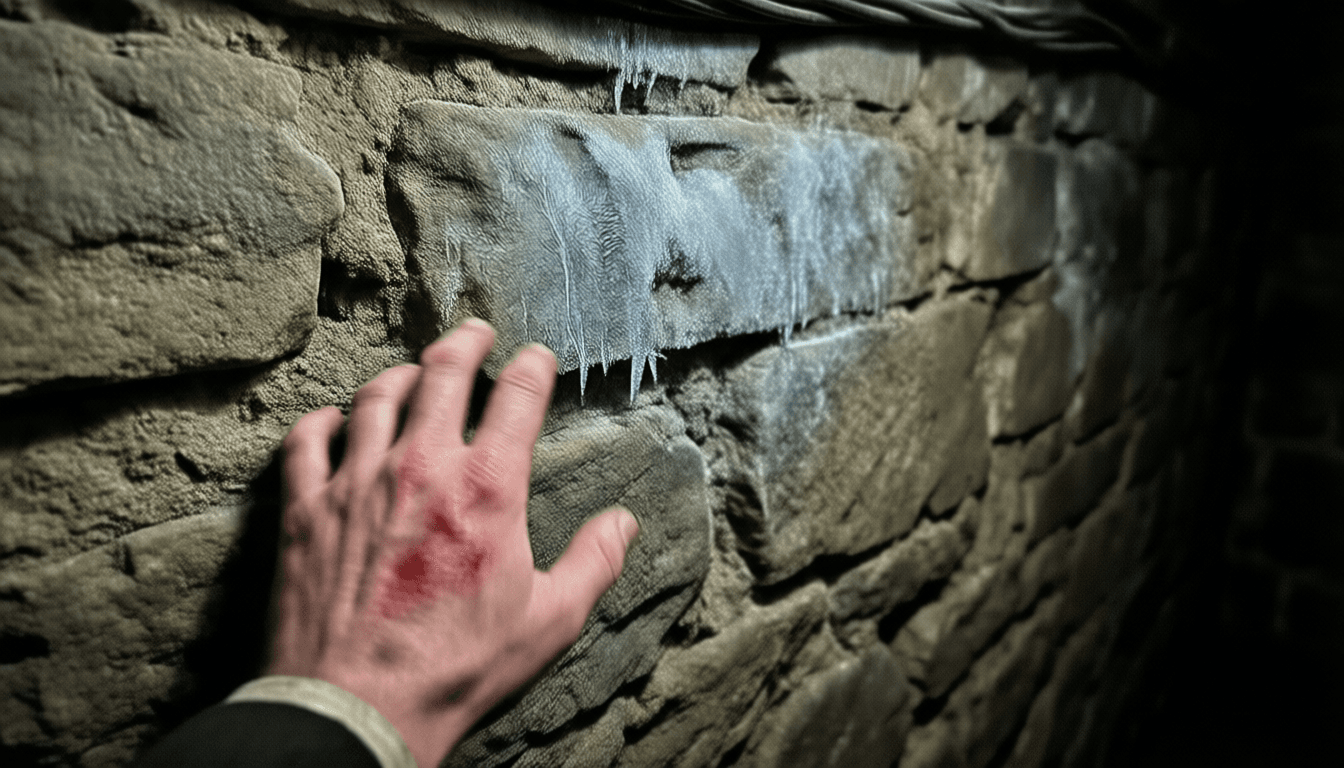
To access the sealed basement area, I leveraged my academic credentials, presenting a pretext of "archaeological investigation into period construction techniques." The moment I descended the stairs, the air shifted. It was a heavy, damp smell of earth mixed with trapped dust. The basement was a low-ceilinged labyrinth of rough stone and exposed bedrock, perpetually shadowed despite auxiliary lighting. My calibrated instruments, sensitive to subtle environmental changes, registered an immediate and measurable drop in ambient temperature. It was a localized, persistent anomaly, defying the building's internal climate control systems. As I progressed toward the rear wall, guided by the contractor's diagram, the cold pulsed with a regular rhythm, like a slow heartbeat. The stones there were different. Unlike the precision of the surrounding foundation, there were clear traces of hastily applied mortar. This was not merely a sealed space; it was a *concealed* one.
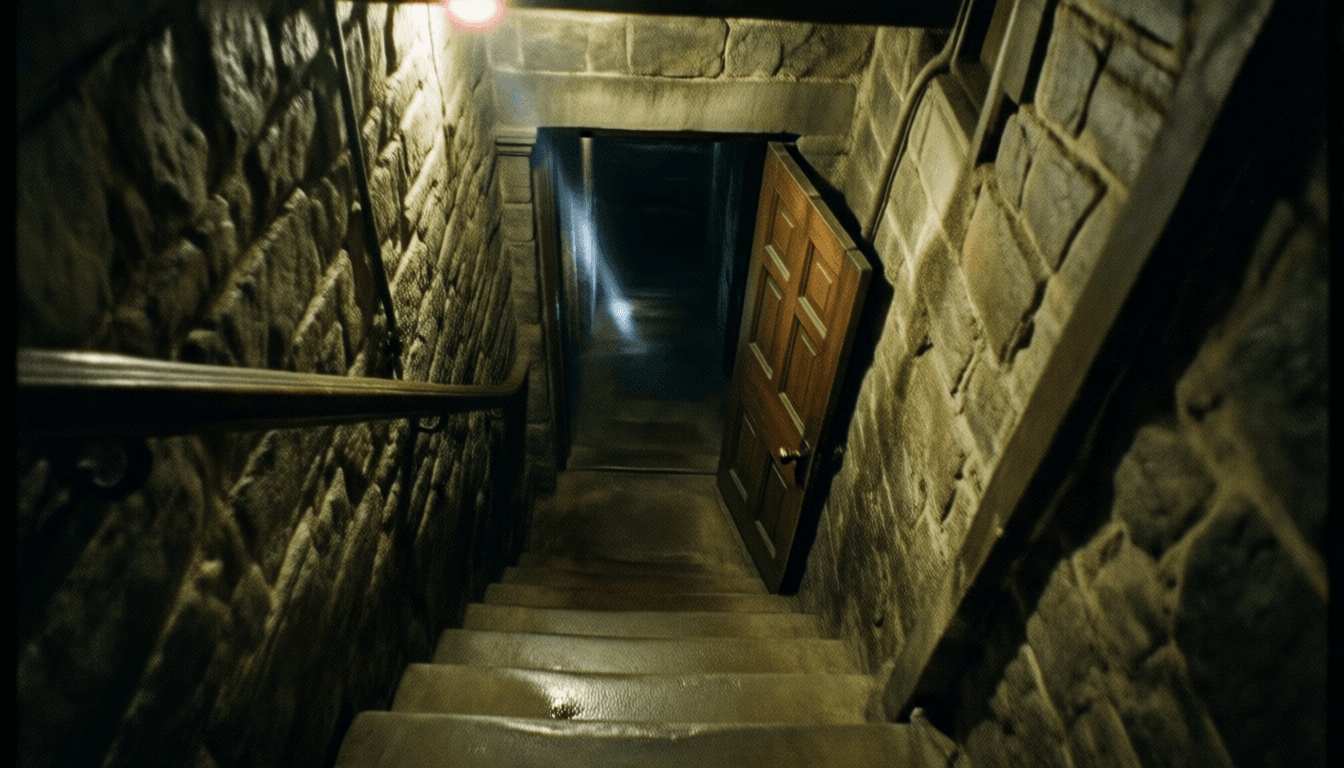
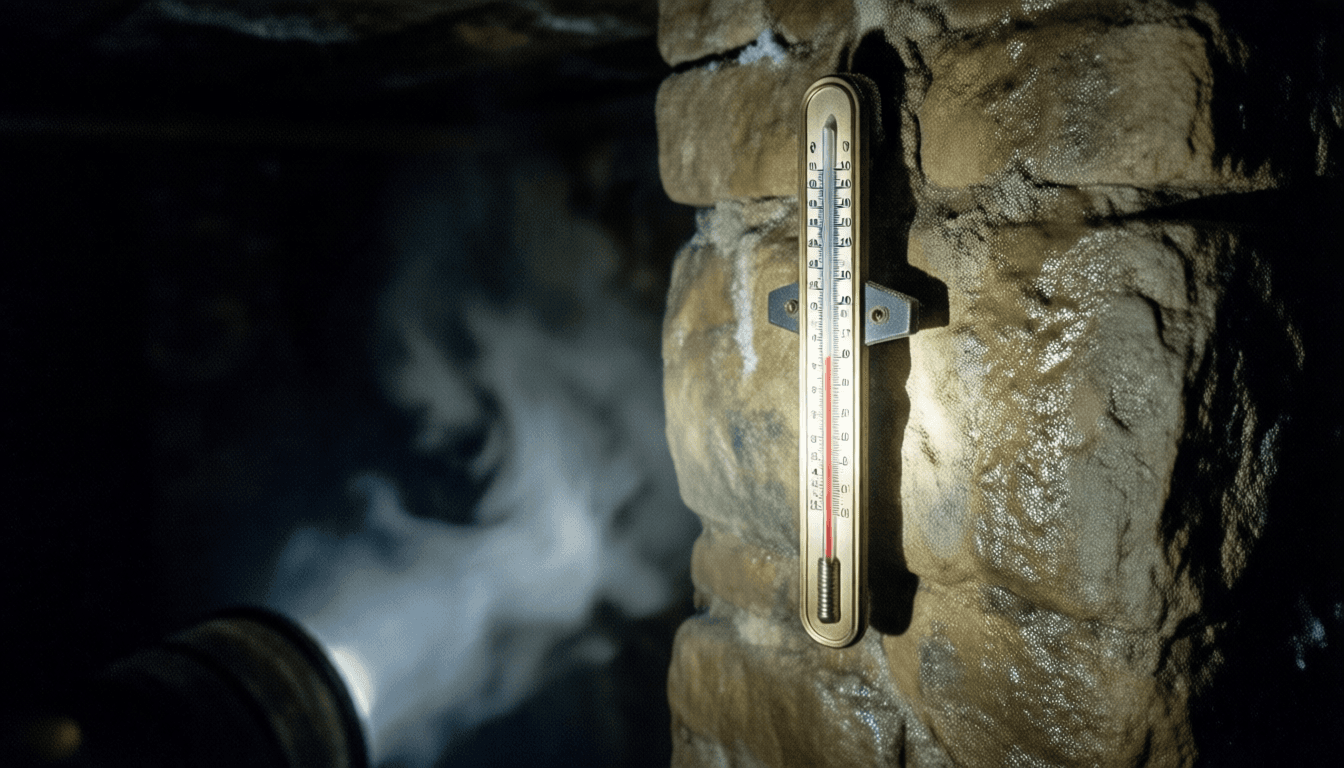
The temperature drop intensified into a chill that penetrated my protective gear. A cold without dampness or movement, as if the air itself had been stripped bare. As I approached the specific area marked on the diagram, the micro-thermometer plummeted further. I tapped the wall lightly with a geological hammer. The sound was not muffled or dull; it was *swallowed*. The sharp 'clang' was instantly absorbed, meeting an impossible death mere inches from its origin, without echo or resonance. It was like tapping on a void. I set up an acoustic sensor and activated a low-frequency hum. The sound wave analysis revealed a bizarre pattern: complete absorption within precisely one cubic meter of space. It was as if the laws of physics governing sound propagation were themselves being violated. No reflection, no dispersion. Only total annihilation. I dislodged a loose stone, revealing a narrow crevice. An ear-splitting pressure was felt. A silent vacuum seemed to press inward, almost drawing the breath from my lungs. The cold beyond the gap intensified unbearably, and the silence was absolute. It was not merely the absence of sound, but an actively consuming void. My flashlight beam vanished into it, illuminating nothing beyond the gap. It wasn't darkness. It was *non-light*.
Driven by an investigator's compulsion, I carefully pried another stone, widening the crevice. The pressure on my ears was excruciating, like being submerged at an impossible depth. The silence, beyond merely deafening, was *pulling*. Microscopic dust particles from outside the wall began to subtly *draw inward* into the gap, defying the basement's stable atmospheric pressure. I pushed a small borescope camera into the void. The screen displayed only an impenetrable, uniform gray. No surface, no end could be discerned.
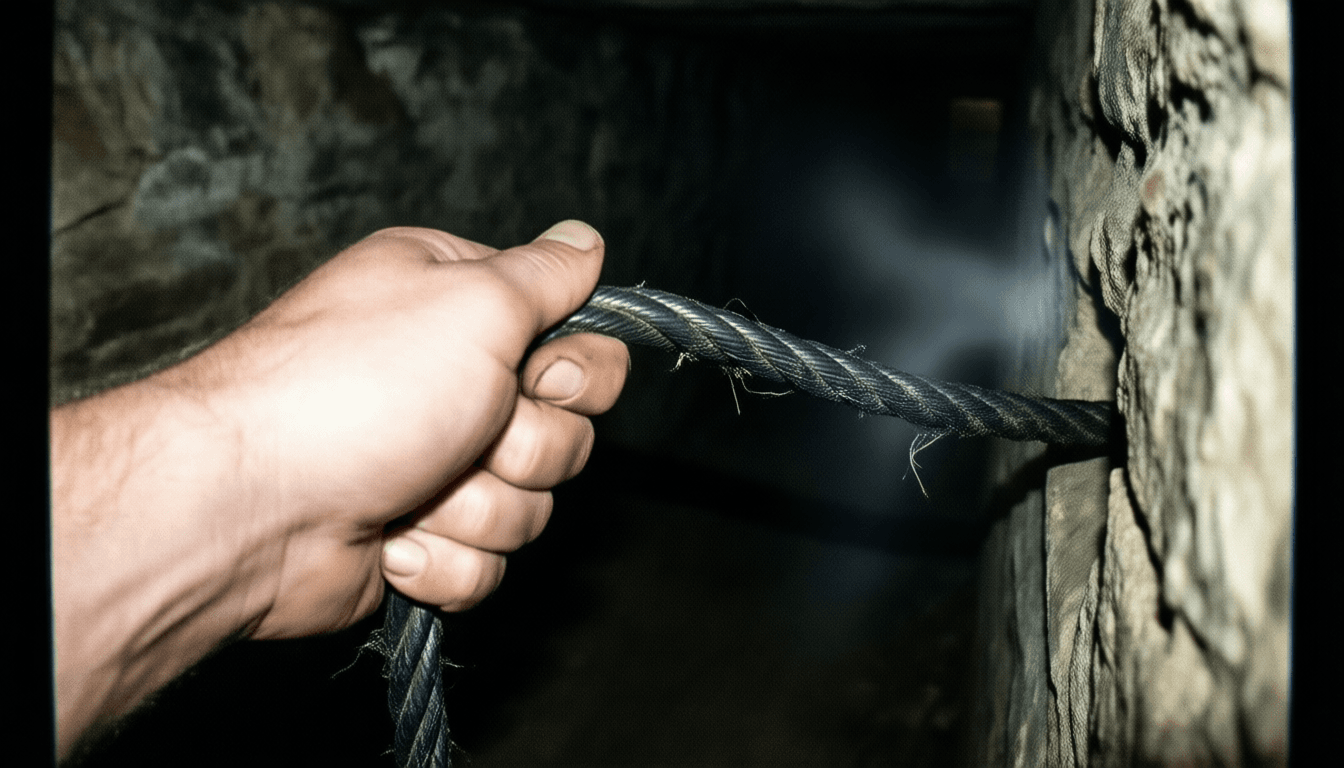
Then, the camera feed flickered and distorted with an unknown force, and the cable suddenly *tautened* with powerful, persistent resistance. It wasn't a mechanical grip; it was a fundamental suction emanating from the void, an impossible gravity. My extended arm, holding the cable, was pulled forward, the force increasing exponentially. I dug my heels into the damp earth floor, fighting against the profound, silent pull. It was *trying to take* the camera, and my arm, into that incomprehensible space. My vision blurred from the pressure, and a silent scream erupted from within my body, echoing in my ears. In the gray, I saw a ripple of distortion, not a form, but a *negative impression*, a tangible absence almost reaching out towards the camera lens.
With a desperate surge of strength, I yanked the cable, severing it, the sharp, frayed end digging into my palm. The camera vanished into the void without a whisper. The crevice, as if sensing my retreat, seemed to shudder, and the loose stones around the crack began to shift and slide. It was as if an unseen hand was methodically replacing them, the gap resealing itself with unnatural precision. The pervasive cold receded, and the pressure in my ears subsided, leaving a dull ache. The wall was almost perfectly restored, leaving no trace of the hidden opening.
My breath hitched, my pulse erratic. My hand throbbed, a cold, persistent ache spreading from the wound of the severed cable. The camera, a sophisticated piece of equipment, was utterly gone. There was no physical trace left of the violent struggle. The only exception was the distinct, ceaseless chill that clung stubbornly to my left arm, the skin that had wrestled against the void's pull. I exited the basement outwardly composed, submitting a concise, vague report citing "anomalous geological features" preventing deeper investigation.
Back in my office, re-examining the official records of the Lincoln assassination, the pieces began to fall into place. The inconsistencies, the hastily drawn conclusions, the curiously convenient ends of certain witnesses. These were no longer characteristics of desperate human conspirators attempting to cover their tracks. They were desperate, chaotic attempts to obscure something far grander, far colder. The conspiracy wasn't about who manipulated Booth. It was about *what* created the environment in which Booth could exist, act, and succeed. The void beneath the Petersen House was not a portal to another dimension, nor a ghostly presence. It was something else entirely. A localized fracture in fundamental reality, a fixed point, a focal lens for impossible physics. It might have been intentionally crafted, or naturally occurring and simply *utilized*.
The true horror wasn't the death of a president. It was the chilling realization that the carefully constructed facade of human political intrigue might have been nothing more than a convenient smokescreen. A staged play performed by unwitting actors, designed to distract from the true architect of chaos—the unseen entity that breathed silence and patiently waited beneath the very soil of the nation's capital. And it was still there. The cold ache in my hand was a constant reminder, a whisper from the void that had brushed against me, an unspeakable secret now bound to my flesh.
[ CLASSIFIED VERDICT ]
[ACCESS LOG - SOURCE FILE]
Rumors circulated about a sealed section in the basement of the Petersen House, where the Lincoln assassination occurred, exhibiting abnormal acoustic phenomena. It's said that sound completely vanishes at a specific point, and a deep cold, like a physical presence, permeates the area. A recently discovered 19th-century diagram describes this section as 'breathing silence,' hinting at a much darker and more fundamental truth than mere building eccentricity, possibly connected to the very assassination itself.