
The Low-Frequency Hum of 'The Haven': Jonestown's Hidden Experiment
On November 18, 1978, over 900 people lost their lives in the Jonestown Massacre. Despite the official explanation of a mass murder-suicide orchestrated by cult leader Jim Jones, questions have persisted for decades. Researchers, independent journalists, and online communities have focused on strange anomalies within the infamous 'Jonestown death tape' (Q042). Beyond Jones's chilling pronouncements and the dying screams, some audio analyses claim to have uncovered a deeper, more unsettling layer: a persistent, low-frequency hum, often obscured by crowd noise and the speaker's voice. This hum was reported to fluctuate with a rhythm distinct from mere electrical interference. Furthermore, a lesser-known but widespread testimony exists: Deborah Layton, a former Peoples Temple devotee, recounted strict 'loyalty tests' and 'endurance training' in isolated camps before the full relocation to Guyana. These involved sleep deprivation, psychological pressure, and prolonged exposure to monotonous, repetitive sermons delivered via concealed loudspeakers. As these disparate claims—the death tape hum and structured psychological manipulation training—converged, a chilling speculation emerged: that Jonestown was a crucible of advanced psychological conditioning for forced obedience, and the hum on the tape was not accidental, but a core instrument.
A clue emerged from an obscure, partially redacted declassified document found amidst a pile of Freedom of Information Act releases pertaining to 'domestic cult activity' in the 1970s. It described an abandoned agricultural community in a remote part of Mendocino County, California. Known as 'The Haven,' the facility operated in the early 1970s, preceding the Peoples Temple's full relocation to Guyana. Among former residents, rumors circulated that it was not a utopian sanctuary but a 'proving ground' where early recruitment and loyalty tactics were perfected.
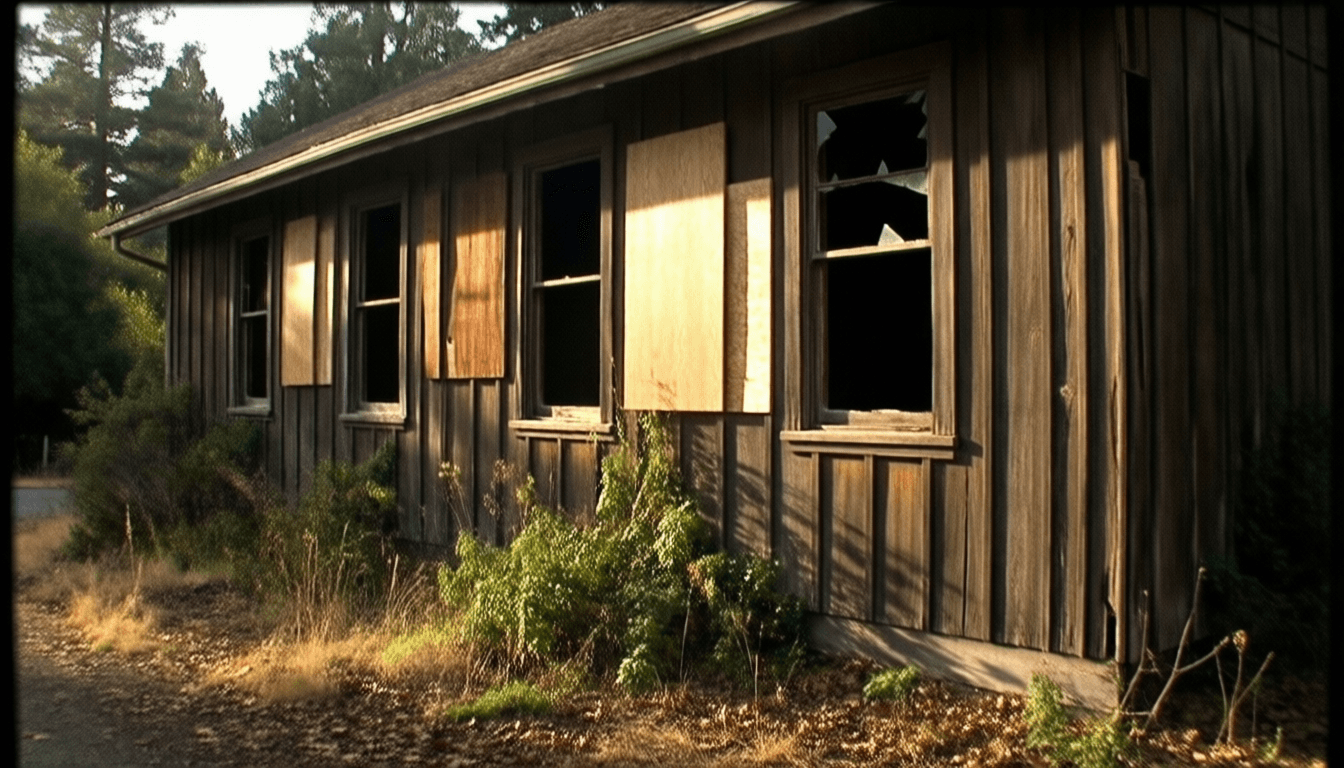
Equipped with a professional-grade audio recorder, a spectrum analyzer, and high-definition camera gear, I pushed through the overgrown access road. The air was unnaturally still, the only sound the crunch of dry leaves underfoot. 'The Haven' consisted of several dilapidated structures: a communal hall, smaller cabins, and a barn. The buildings were weathered, but their decay had a strange uniformity. For instance, the windows of the communal hall weren't just broken; they showed signs of having been systematically sealed and then shattered outwards.
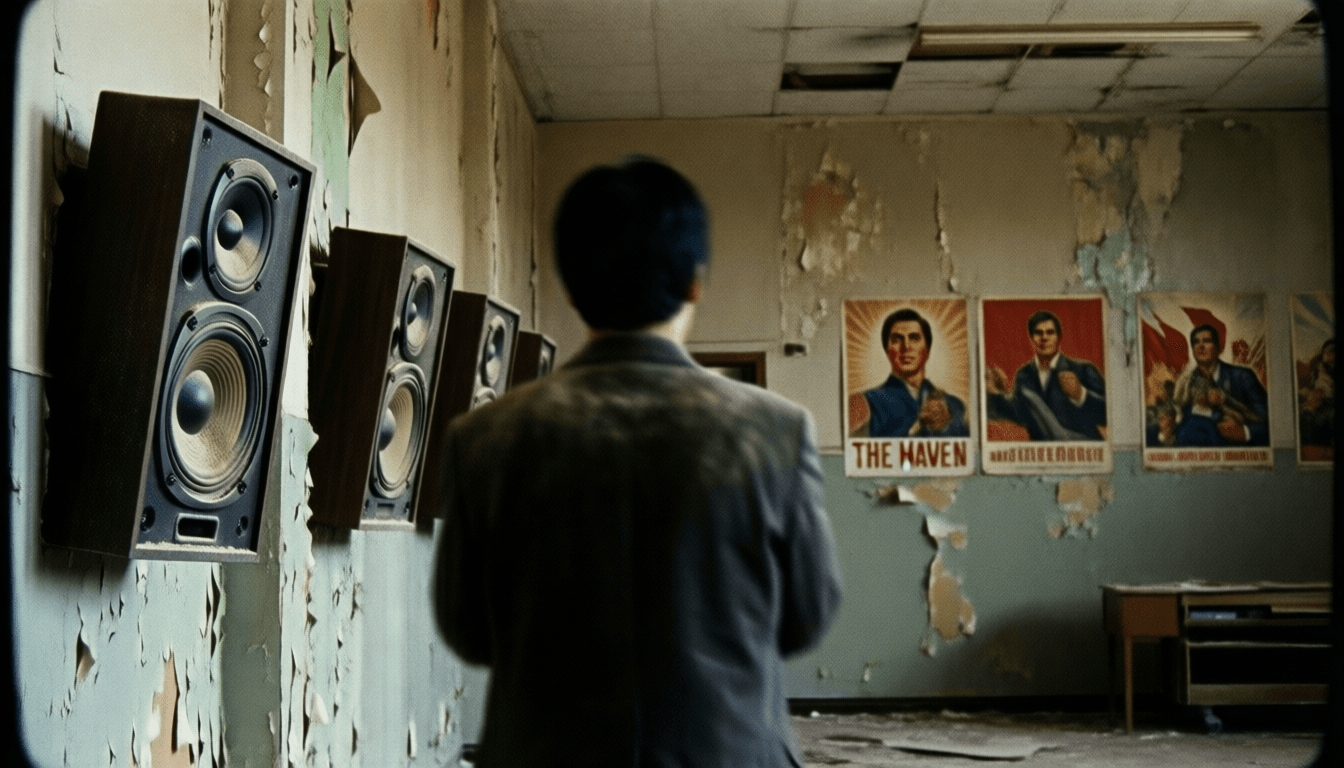
Inside, thick dust lay everywhere, covering hastily abandoned belongings. Faded propaganda posters peeled from the walls, but what truly caught my attention was the remnants of a crude speaker system. Not typical audio equipment, but robust, custom-made speakers, precisely and equidistantly spaced within the communal hall. They were angled towards the center of the room, as if designed to project sound to a specific focal point.
My spectrum analyzer initially read ambient noise, but soon began to detect a faint, steady low-frequency signal. Barely audible to the human ear, but undeniably present. It pulsed with a subtle rhythm, like a slow, deliberate heartbeat, seeming to emanate from the building itself. The acoustics inside the communal hall were deeply unsettling. Despite its size, sound felt dead and absorbed, yet my footsteps echoed with an unnatural, delayed resonance, as if the space itself played tricks on perception. A persistent pressure, similar to altitude sickness, built in my ears, despite no physical elevation. It was then I noticed small, almost imperceptible indentations on the wooden floor in the center of the room – circular marks, as if numerous chairs had been fixed there for extended periods. A faint metallic taste began to develop on my tongue, and the edges of my vision blurred.
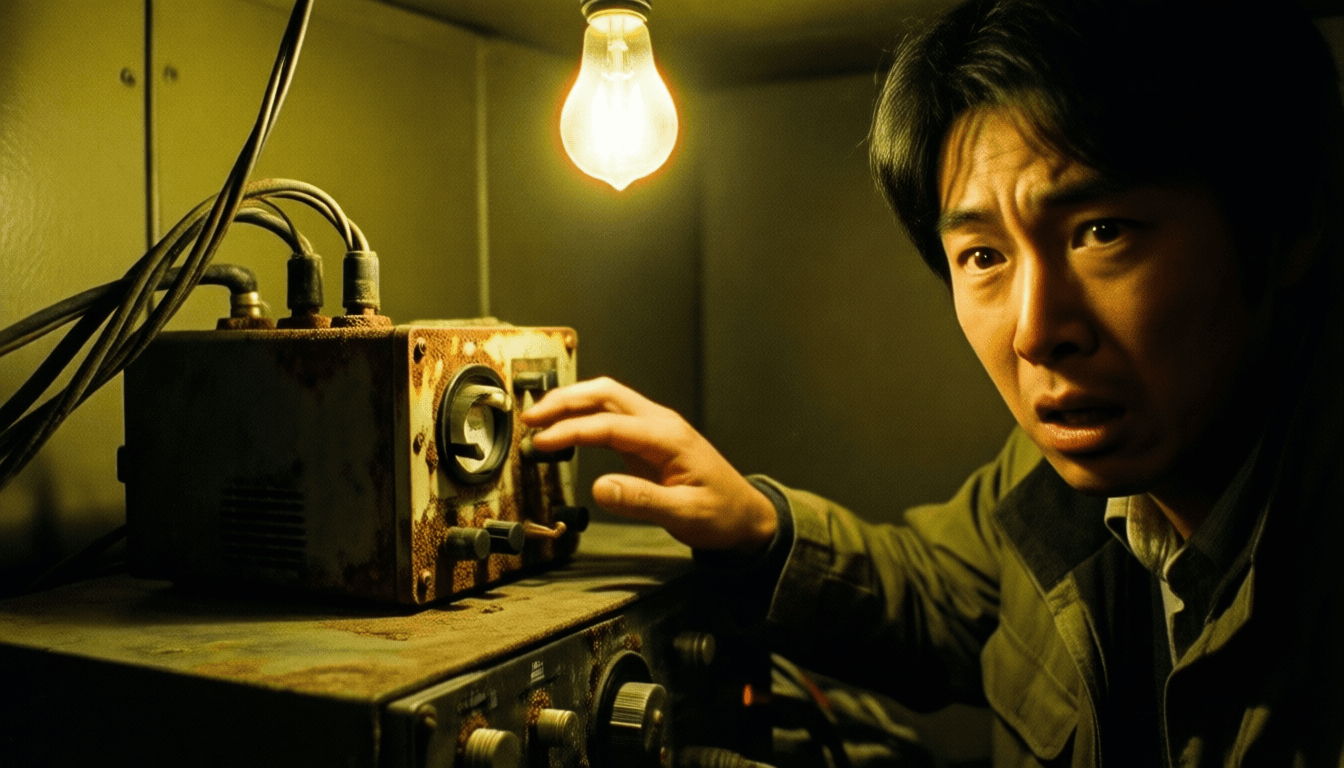
Adjacent to the communal hall, I discovered a small, reinforced room. Its walls were lined with thick soundproofing foam. Inside, rusted, ancient electronic equipment lay scattered: dials, vacuum tubes, coils. At its center sat a corroded, custom-built oscillator, connected by thick cables to the communal hall's speaker system. The low hum from my devices grew stronger. This wasn't just an abandoned building; it felt like a massive instrument, quietly dormant, waiting for something.
The moment I reached to photograph the oscillator, my hand brushed against a loose wire. A brief spark. Then, a low, thick vibration rumbled through the floorboards, through my chest. Defying all logic, the ancient machinery shuddered to life. A single, dilapidated lightbulb hanging from the communal hall ceiling flickered, then held, casting a sickly yellow glow. The low-frequency hum, once a whisper, became a palpable force. It resonated deep within my bones, a physical vibration that blurred my vision and stole the air from my lungs. The reinforced room door slammed shut behind me. Not from wind. It was heavy, deliberate, its mechanism groaning as if reactivated by an unseen force. Panic surged. I tried the handle, but it wouldn't budge.
The hum intensified, rising slightly in pitch, then shifting into a rapid, rhythmic pulsation – like hammers striking my temples. My thoughts fractured, invaded by fragments of unfamiliar phrases: 'loyalty,' 'unity,' 'paradise.' The metallic taste on my tongue grew acrid, and a dizzying nausea washed over me. I stumbled, clutching my head. The rhythmic sound overwhelmed all other senses. My fingers twitched involuntarily, trying to claw at my own skin. The air pressure dropped sharply, my eardrums aching. Something was 'working' on me. A resonant frequency, not for communication, but for disintegration. The physical pain was secondary to the horrifying sensation of my will eroding. My knees buckled. I heard myself gasp, but the sound felt distant and alien. The hum pushed, pressed, demanded surrender, and though I fought with every fiber, my body grew heavy, compliant. My mind was no longer entirely my own.
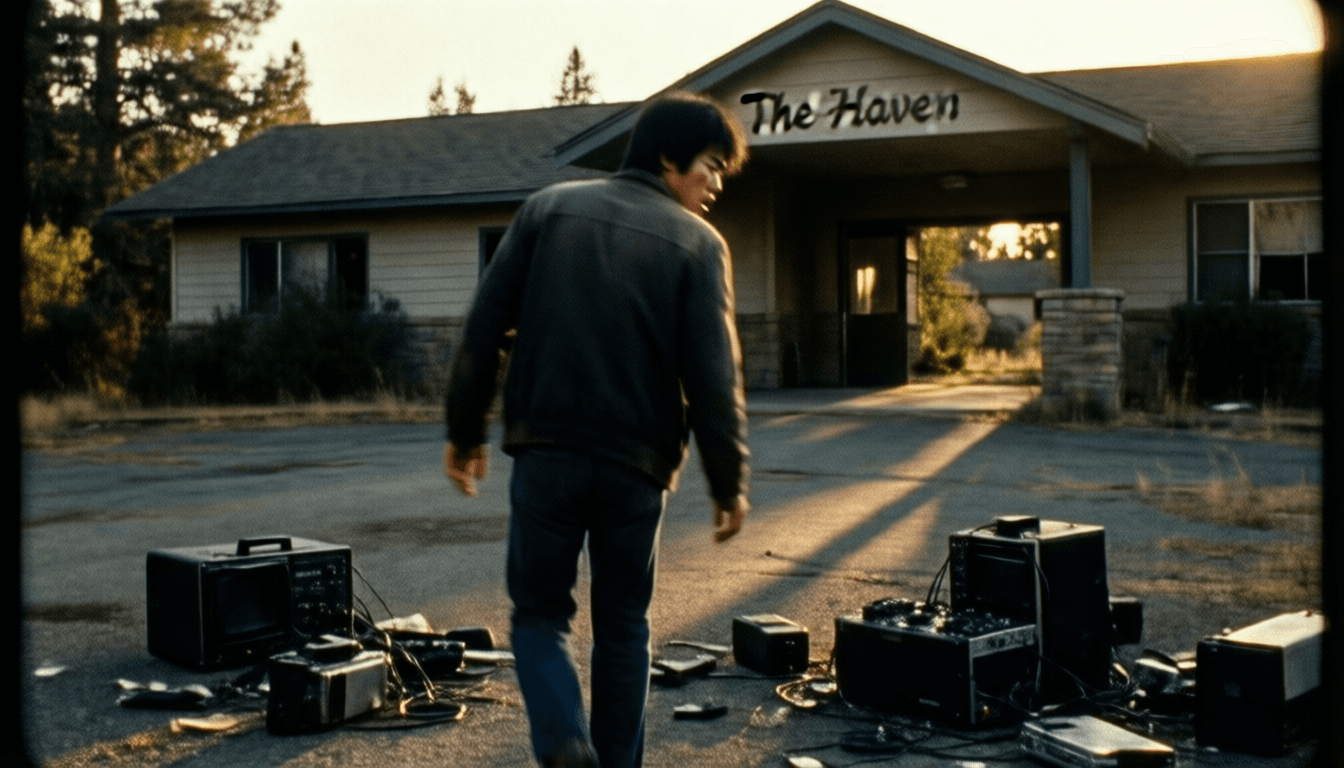
I don't remember how I got out. The next clear memory is stumbling out beyond the compound gates, gasping for air. My mouth tasted of rust, but also something else, bitter and chemical. My equipment was shattered, useless. The car was just a blurry landscape.
In the days since, the after-effects have lingered, subtle and insidious. The low hum is no longer physically present, yet it feels etched into my auditory memory. It manifests unexpectedly: an almost imperceptible vibration in the stillness of my apartment, a pressure behind my eyes when I try to focus. Sleep comes uneasily, punctuated by vivid, repetitive dreams of crowded rooms, insistent voices, and the overwhelming weight of collective will. My thoughts sometimes feel like echoes, not entirely originating from within my own head. I find myself unconsciously tapping my fingers in a peculiar rhythm, a pattern I don't know the origin of, but feel compelled to maintain.
Yesterday, reviewing the damaged video files from the site, I caught a brief, unbroken audio loop just before the footage cut out. Not the hum, but a faint fragment of a speech. It repeated subtly, with an almost imperceptible delay, then cut. Just before the static swallowed the recording, one word, spoken with clear, deliberate tone: "Obey." That word resonates still. A cold, hollow echo deep within my mind, like a subtle suggestion that never fades.
[ CLASSIFIED VERDICT ]
[ACCESS LOG - SOURCE FILE]
This story is based on the enduring mysteries surrounding the 1978 Jonestown Massacre, specifically the alleged low-frequency hum detected in the infamous 'Jonestown death tape' (Q042) and former member Deborah Layton's testimony about rigorous 'loyalty tests' and 'endurance training' conducted by the Peoples Temple before their move to Guyana. It delves into the chilling speculation that the Jonestown tragedy could have been the culmination of advanced psychological conditioning for forced obedience, using these real-world elements as its foundation.