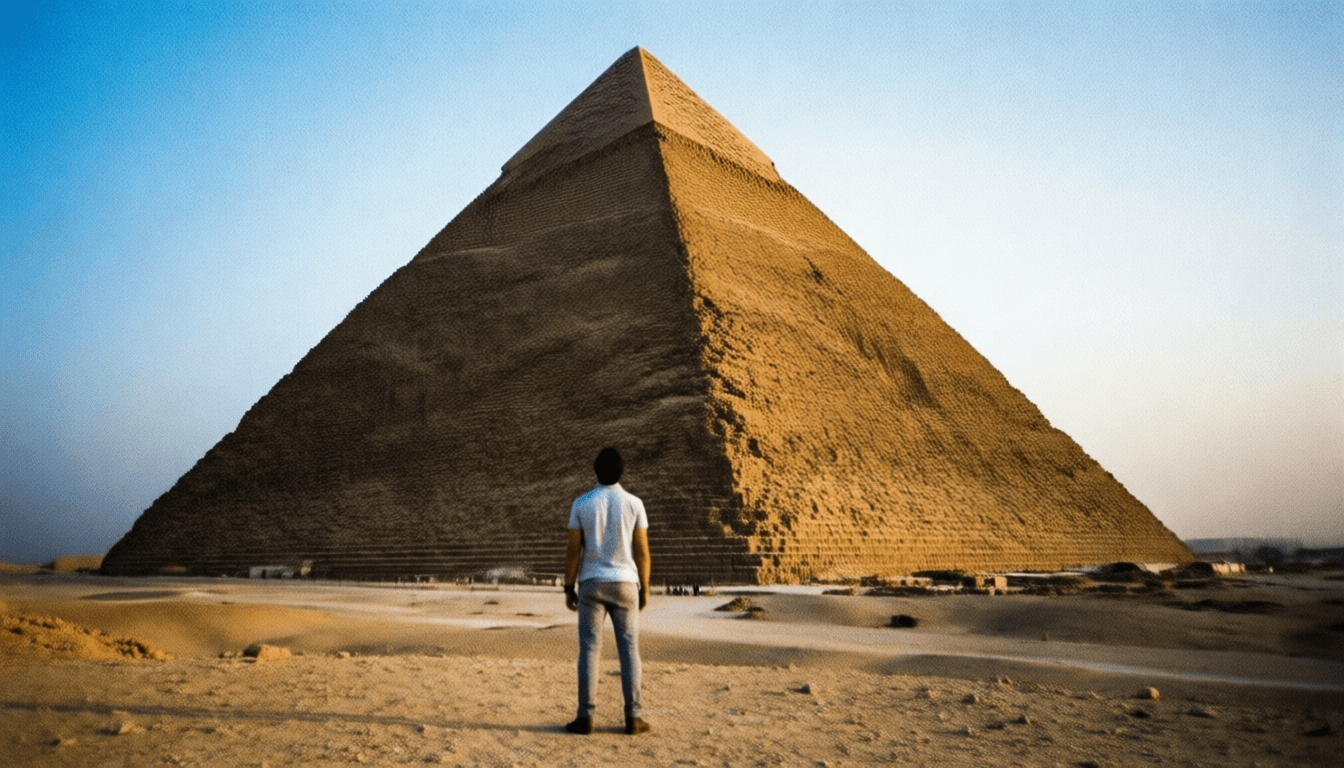
The Great Pyramid of Giza: Mystery of Time
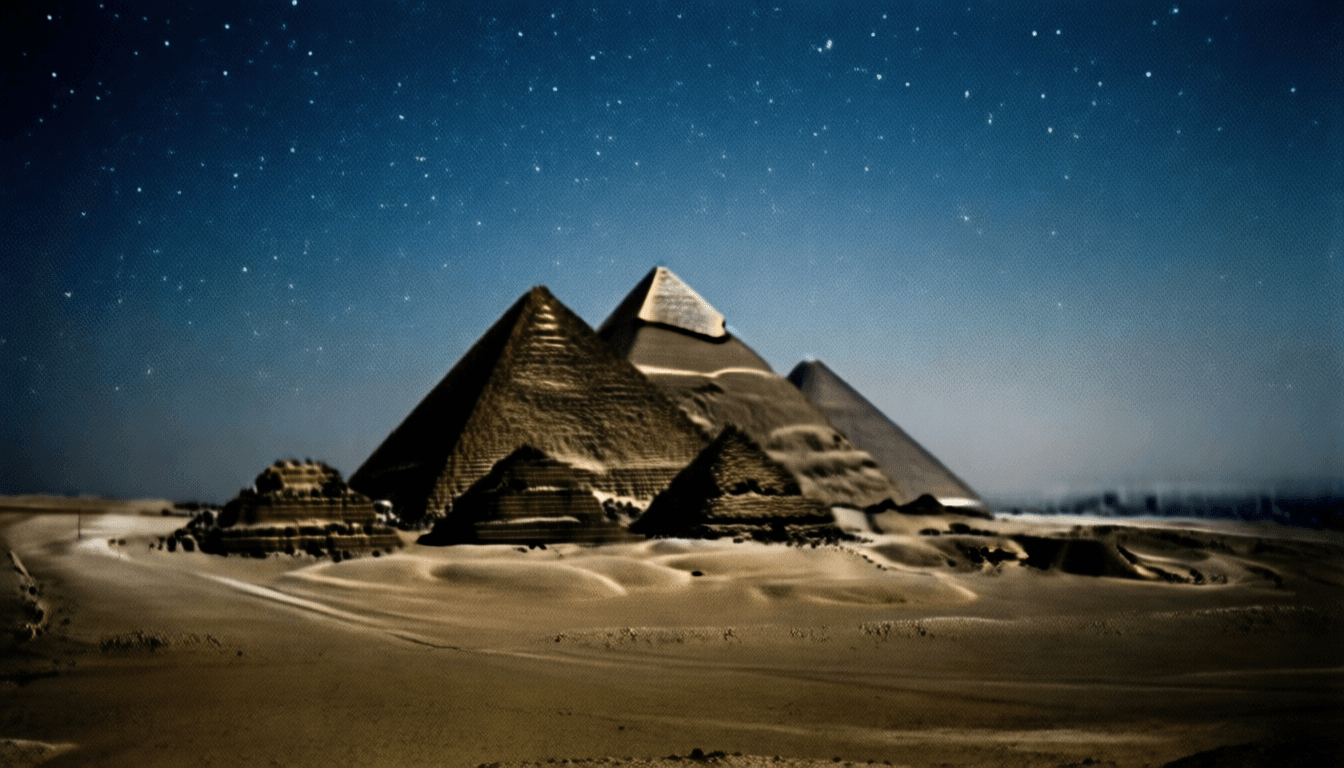
For almost four millennia, a structure stood tall against the desert sky, the highest on Earth. It was not merely a testament to power, but a colossal enigma. An estimated 6 million tons in weight, composed of 2.3 million intricately carved blocks, some weighing as much as 80 tons. Our understanding of ancient civilization's capabilities falters before the precision and scale of its construction. The Great Pyramid of Giza exists as a profound question etched into the foundations of human history, its true methods of construction and ultimate purpose still profoundly shrouded in mystery.
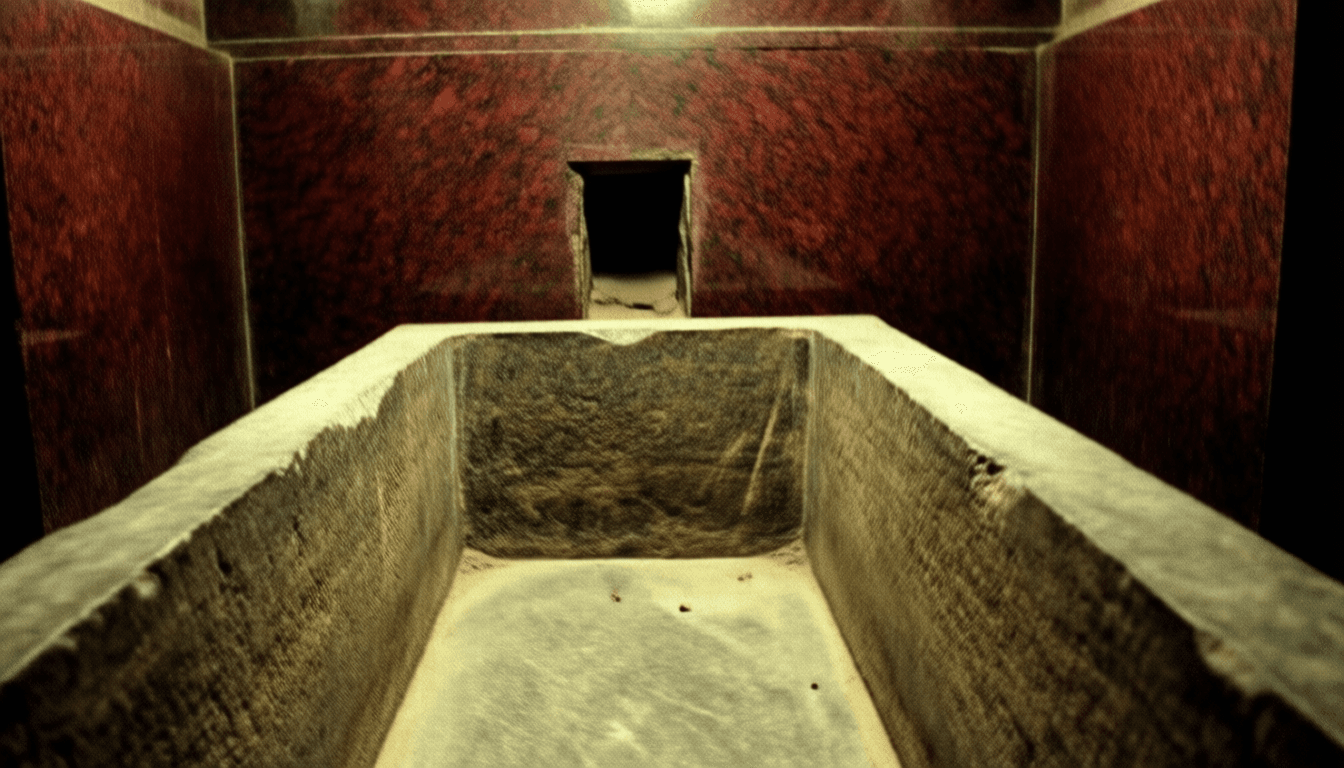
Standing before the Great Pyramid of Giza is to confront the impossible. Tracing the perfectly aligned seams of limestone blocks, so precisely interlocked that not even a razor blade could penetrate, one is awestruck by the fact that each block weighs more than a modern SUV. At its heart, the Grand Gallery ascends steeply, a marvel of corbelled masonry leading to the Pharaoh's Chamber. Here, walls of solid red granite, quarried hundreds of kilometers away, embrace a single, seamless sarcophagus. We gaze up at narrow passages, termed 'ventilation shafts,' which bore through hundreds of feet of solid masonry, astonishingly aimed with pinpoint accuracy at specific constellations—Orion, Sirius, Thuban—as they appeared in the sky millennia ago. Its purpose notwithstanding, the sheer logistical and engineering audacity of the entire undertaking is breathtaking.
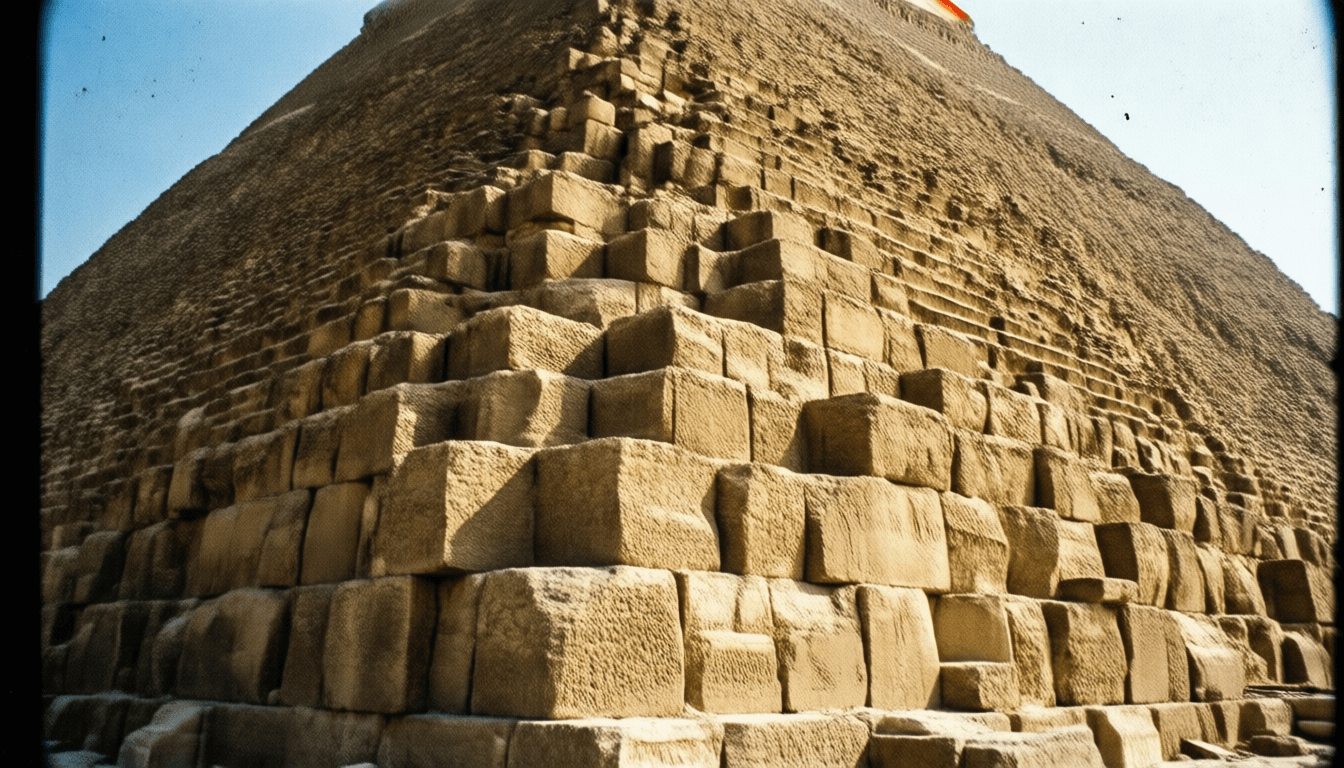
Traditional archaeological theories posit construction using ramps, sleds, and immense human labor. However, countless experiments attempting to replicate even a fraction of this feat with the tools of that era have consistently failed, unable to explain the colossal scale, astronomical precision, and impossibly short construction period. Consider the estimates of its completion in just 20-30 years. This would have required a 2.5-ton block to be quarried, transported, and precisely placed every two minutes, relentlessly, for decades. No clear blueprints, no detailed engineering designs from that time remain, only this enigmatic monument. And then there are the anomalies within: a constant internal temperature of 20°C, regardless of the scorching desert heat or bitter night cold, and the inexplicable preservation of organic matter within its chambers. These are not mere coincidences; they suggest a design beyond simple burial.
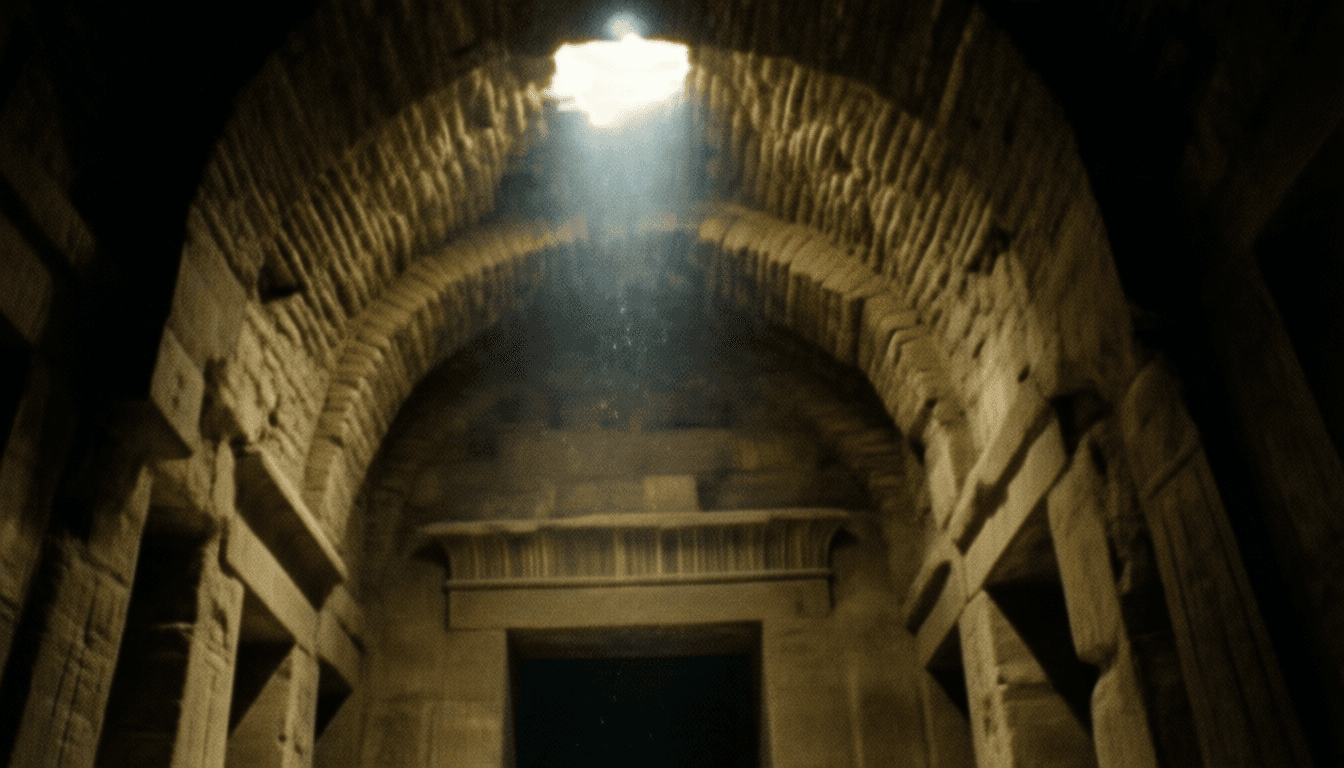
But where the Great Pyramid truly transcends the known is in its mathematical properties and orientation. It points to true north with higher accuracy than many modern observatories. Dividing its perimeter by twice its height yields a value remarkably close to Pi (π). Extending the length of its base nearly matches the Earth's equatorial circumference. And repeatedly encoded within its dimensions is the Golden Ratio (Phi, φ). Was this a serendipitous geometric coincidence, or did a civilization we deem primitive deliberately encrypt ancient knowledge? The granite sarcophagus in the Pharaoh's Chamber also presents a final, eerie paradox: it is too large to have been transported through the current passages. It must have been installed during construction, implying a level of foresight and planning that defies our understanding of ancient logistical capabilities. The precisely cut and placed granite itself raises questions about tools and techniques seemingly beyond the scope of the Bronze Age.
Millennia have passed, empires have risen and fallen, and our technology has advanced marvelously. Yet, the Great Pyramid of Giza still stands sentinel in the desert silence, an eternal question mark on the landscape of human history. It shakes not only our understanding of ancient engineering but our very perception of humanity's intellectual capacity in the distant past. Was it a tomb, a power generator, an observatory, a repository of forgotten knowledge, or something else entirely? The Pyramid offers no easy answers, only an invitation to wonder. It stands as profound evidence of the unknown and a monumental whisper from a forgotten age, reminding us that echoes of ancient wisdom still await full decipherment beneath the sands of time.
[ CLASSIFIED VERDICT ]
[ACCESS LOG - SOURCE FILE]
The Great Pyramid of Giza is known as the pinnacle of ancient Egyptian civilization, yet its construction methods and true purpose remain profound mysteries. Its immense scale, astronomical precision, and inexplicable internal phenomena raise questions about ancient wisdom far exceeding known technological capabilities, or even hint at the possibility of extraterrestrial involvement.