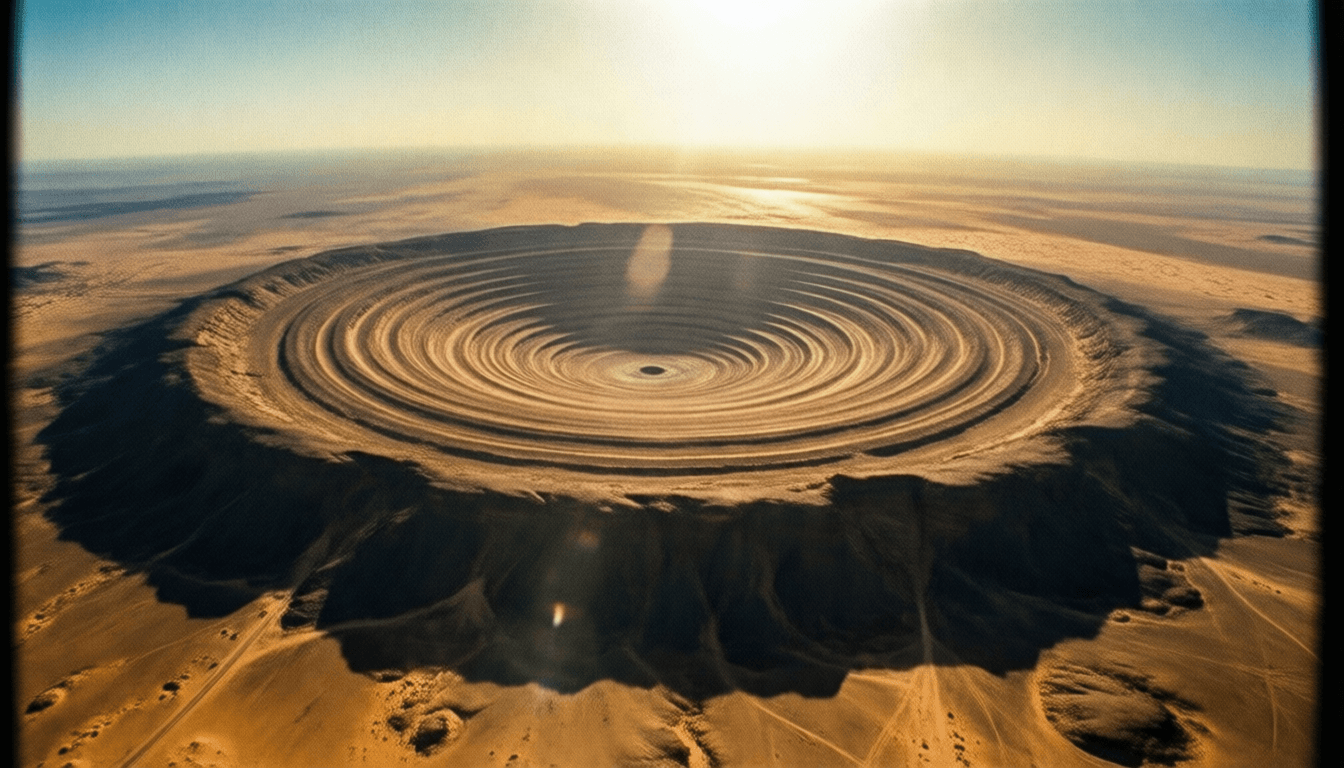
The Eye of the Sahara: The Mystery of the Perfect Circle
Above the desolate horizon of the vast Sahara Desert, a colossal bullseye clearly visible even from space asserts its presence. The Richat Structure, approximately 50 kilometers in diameter, boasts an overwhelming scale, serving as a distinct landmark even for astronauts orbiting Earth. For decades, its precise origin has remained shrouded in mystery, silently challenging humanity to decipher ancient, complex secrets, like a colossal 'eye' gazing up at the sky.
Descending from a cosmic perspective to the dusty plains of Mauritania, the Richat Structure reveals itself not as a single impact crater, as early theories suggested, but as a series of concentric valleys and plateaus composed of various rock types. Geologists initially classified it as an 'astrobleme,' a scar from a celestial impact. However, thorough ground research soon challenged this hypothesis. There was no evidence of impact-metamorphosed or melted rocks, commonly found in meteoritic impacts. Instead, the exposed strata consisted of sedimentary, igneous, and metamorphic rocks, showing evidence of uplift followed by erosion. Consequently, the dominant scientific consensus shifted. The Richat Structure was concluded to be a deeply eroded, uplifted geological dome, perhaps the result of a massive igneous intrusion that never breached the surface.
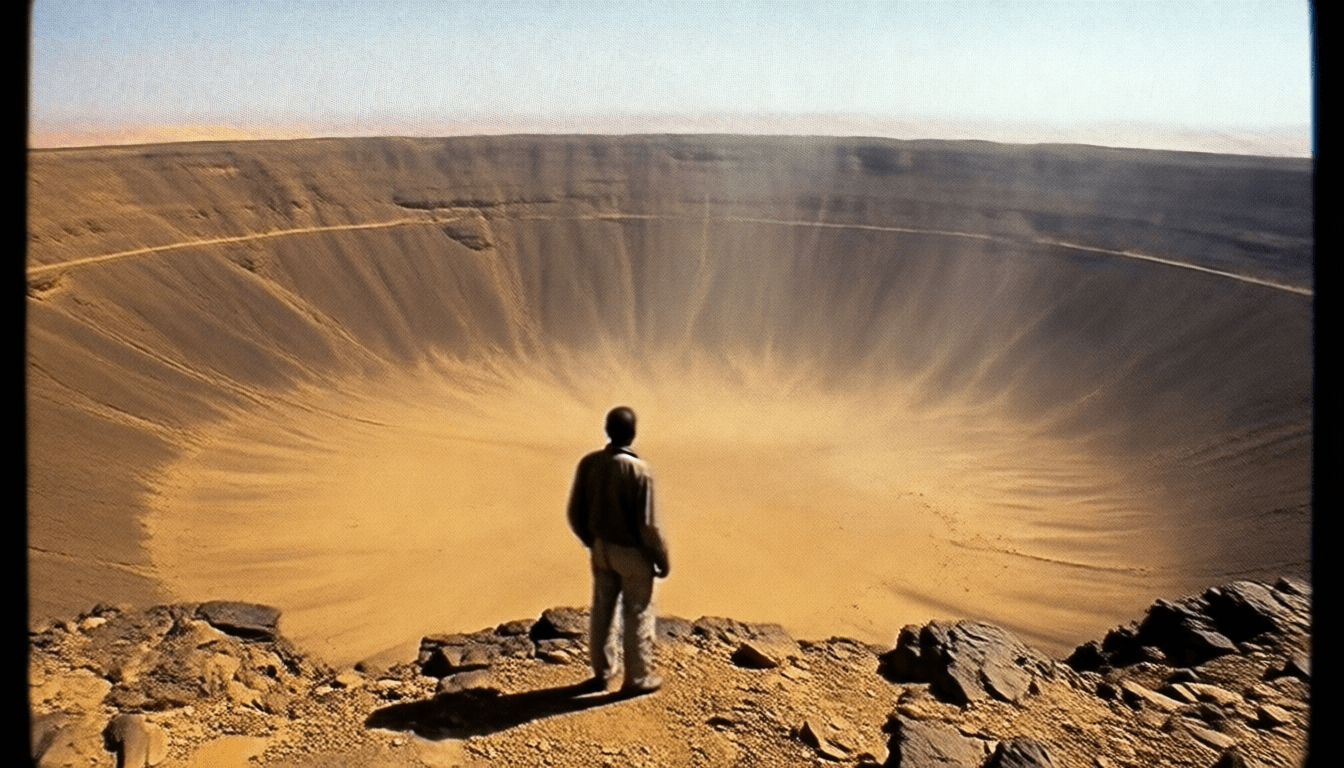
Yet, while this geological classification provides a formation mechanism, it fails to fully explain the structure's most profound characteristics: its nearly perfect circular shape and astonishing concentric symmetry. Even with erosion sculpting the landscape, it is rare for such precise, almost artificial, geometric perfection to unfold over tens of kilometers. Typical geological domes or anticlines often exhibit elliptical shapes, but it is highly unusual to see such a complex bullseye pattern. Furthermore, despite the central dome containing igneous rocks, there's no clear evidence of explosive volcanic activity or large-scale catastrophic events that would violently deform the surrounding landscape into such a symmetrical form. The concentric patterns are too regular, and the transitions between different rock layers within each ring are too smooth, making it feel as though it was meticulously planned by forces beyond our comprehension.
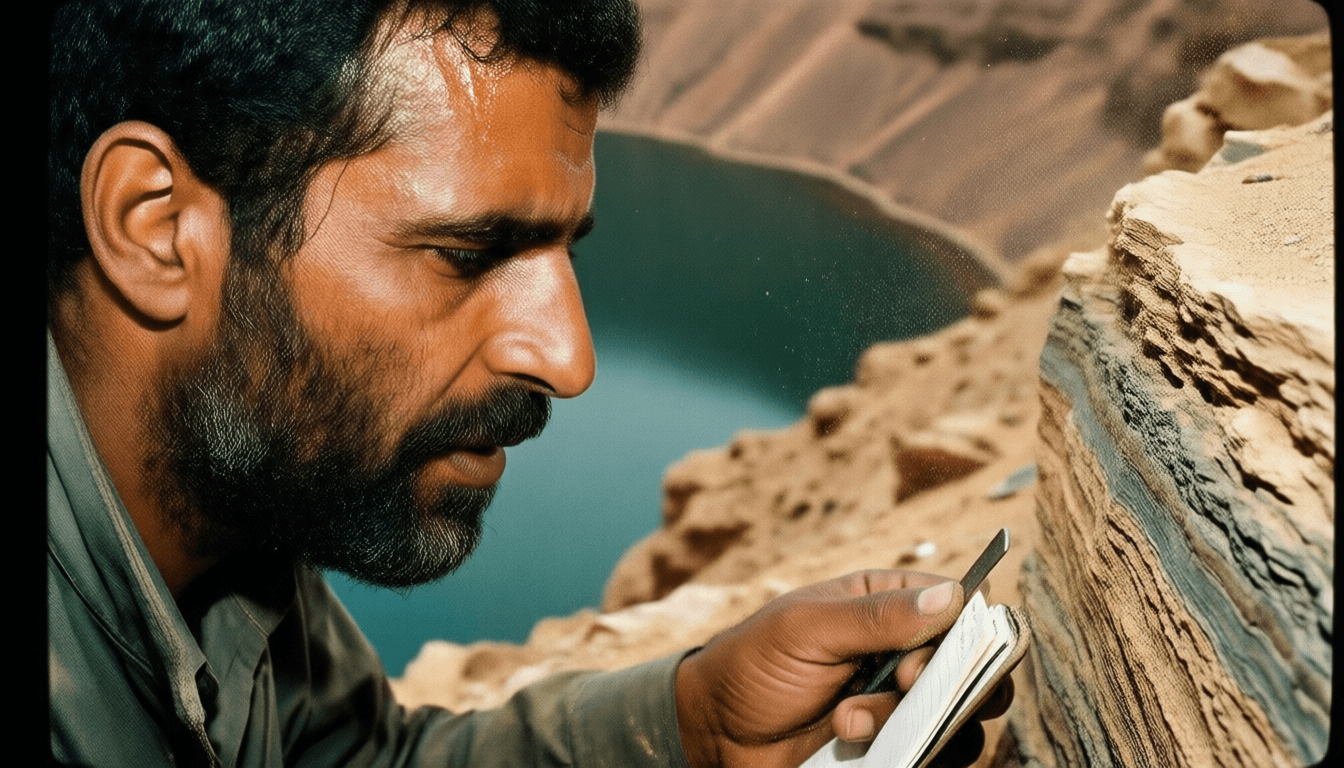
The true marvel of the Richat Structure lies in this unparalleled geometric precision. How could natural crustal uplift, combined with millennia of wind and water erosion, result in such a perfect, multi-ringed spectacle? Each ring reveals ancient rock layers of varying composition and age, yet maintains an almost uniform distance from the structure's center. This is a geological anomaly rarely seen on Earth at this scale. A colossal, intricate mandala carved in stone without an apparent sculptor or catastrophic event. It defies the randomness typically attributed to natural formations, remaining as evidence of geological processes operating with an almost impossible order.

Today, the Richat Structure continues to baffle and fascinate us, standing like a silent sentinel in the desolate heart of the Sahara Desert. While scientific theories offer plausible explanations for its general formation as an eroded dome, they fall short of fully accounting for the sheer scale of its geometric perfection and the astonishing symmetry of its concentric rings. It remains one of Earth's most breathtaking geological mysteries, an eternal reminder that even in an age of advanced satellite imaging and geological understanding, our planet holds secrets that continue to challenge the limits of human comprehension. The 'Eye of the Sahara' stares back, its ancient secrets still locked within its stony gaze, a profound and beautiful testament to the unfathomable artistry of the natural world.

[ CLASSIFIED VERDICT ]
[ACCESS LOG - SOURCE FILE]
The Richat Structure, a 50-kilometer diameter geological formation in the Sahara Desert, resembles a colossal eye visible even from space. While geologists explain it as an eroded dome, its perfect circularity and concentric symmetry remain a mystery beyond typical natural formation processes. This enigmatic shape has sparked intriguing hypotheses, suggesting it could be a trace of an ancient civilization or even an alien construction.