The Eternal Whispers of Lascaux Cave
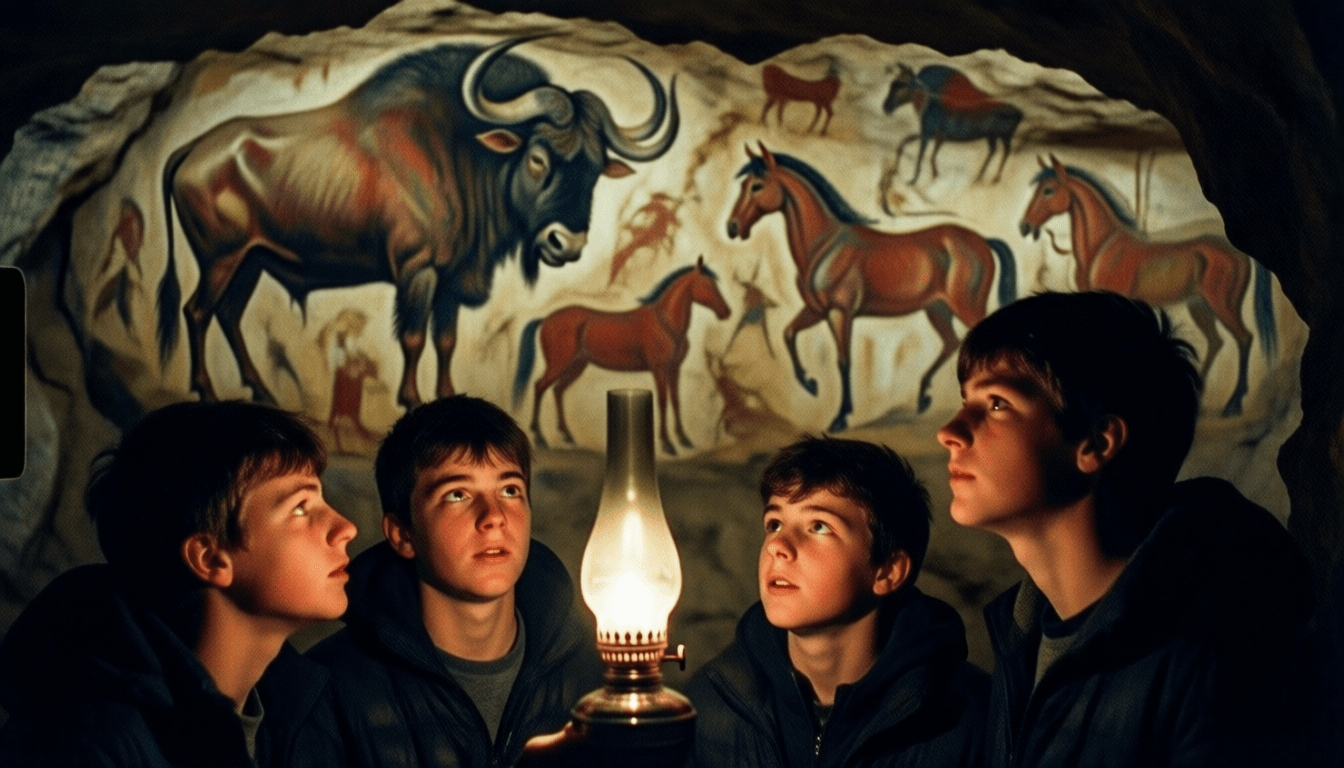
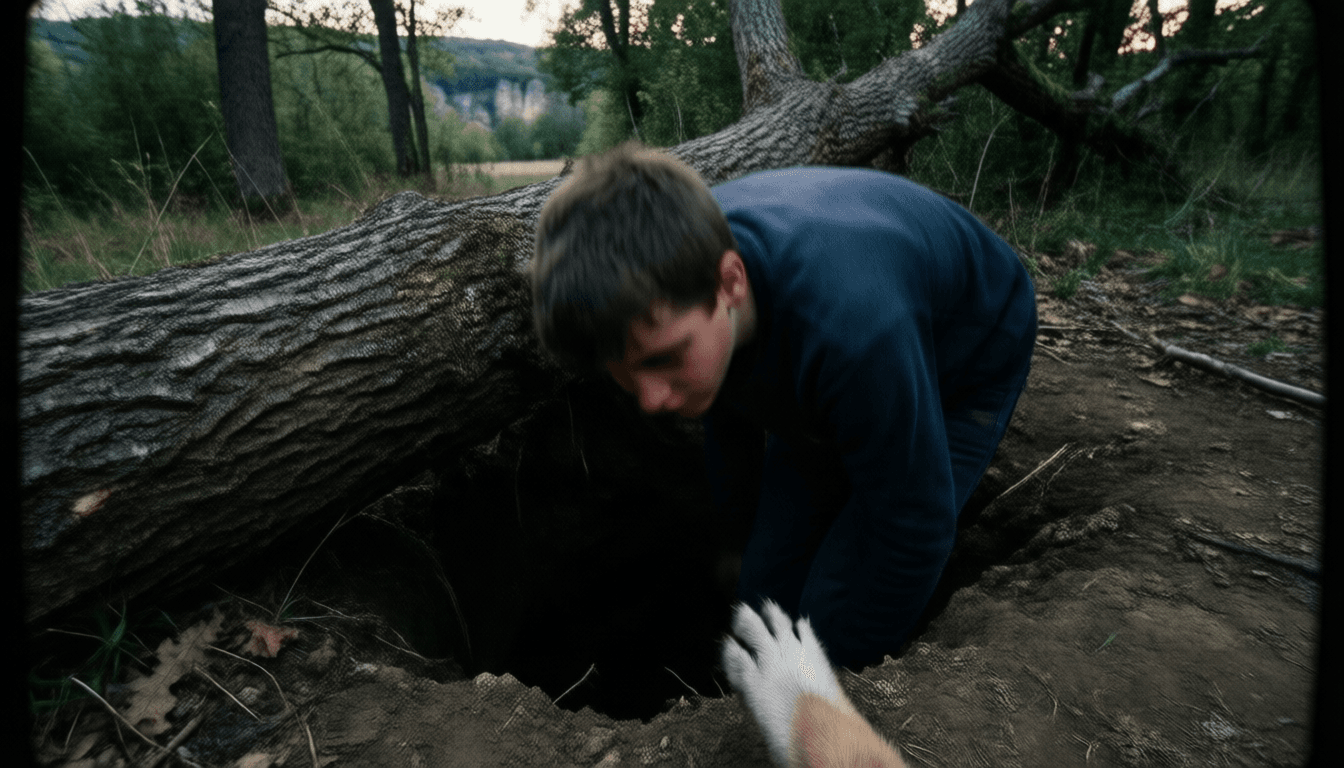
In the autumn of 1940, in the peaceful countryside of the Dordogne region in southwestern France, four teenage boys and their dog, Robot, stumbled upon a secret that would redefine our understanding of human history. While chasing a rabbit, Robot tumbled into a deep, concave hole left by a fallen tree. As the boys widened the opening and one by one slid into the dark, cool abyss, a simple pet retrieval transformed into a journey through millennia. The flickering light of their oil lamp cut through the primeval darkness, revealing not just cavern walls, but a vast, breathtaking panorama of color and form. A colossal gallery of bison, horses, stags, and enigmatic symbols, drawn with astonishing vitality and sophistication. Here lay some of the most magnificent prehistoric art ever discovered, preserved perfectly for approximately 17,000 years. The purpose of these vivid records left by our Magdalenian ancestors remains one of humanity's most profound and beautiful mysteries.
To step into the replica cave, known as Lascaux IV, or to view the meticulously preserved original images through academic records, is to enter a world frozen in time. The cave itself is a labyrinth of interconnected chambers, its limestone walls serving as canvases. The interior is still and cool, alive with the palpable aura of ancient times. These artists, who lived millennia before the advent of writing or agriculture, skillfully utilized mineral pigments – ochre for reds and yellows, manganese for blacks and browns – grinding them down and applying them with remarkable dexterity using moss pads, primitive brushes, and even their bare hands. Traces of their illumination, such as oil lamps made from hollowed-out stones, and tools for scraping and engraving, have also been found.
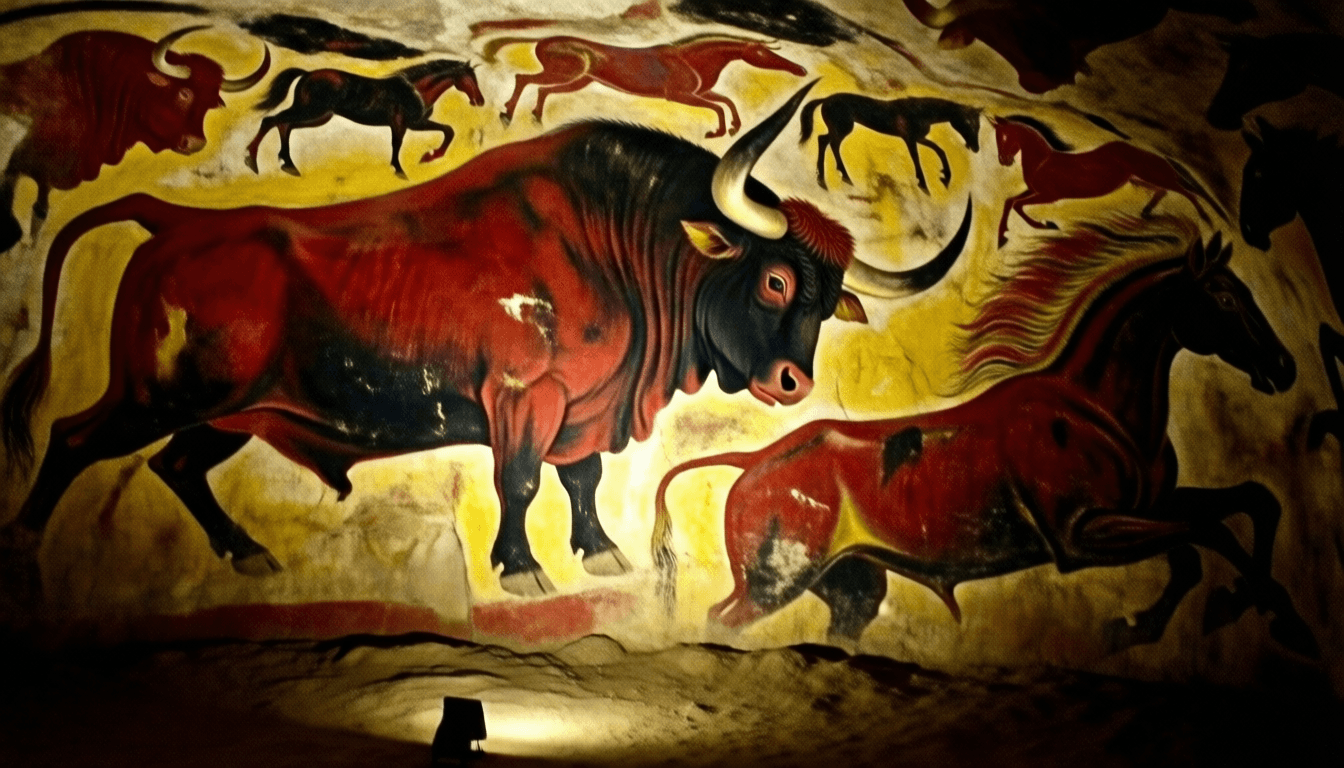
The sheer scale of the paintings immediately humbles any human presence. In the 'Great Hall of Bulls,' colossal aurochs, some over five meters long, dominate the curving walls, creating an illusion of movement through their dynamic and superimposed forms. In the 'Axial Gallery,' horses gallop with incredible grace, their musculature delicately rendered and expressions vivid. Deeper within the 'Apse' and 'Nave' are hundreds of animals, abstract signs, and even rare, enigmatic human figures. The cave environment itself dictated the art; the natural contours of the rock were often integrated to give the animals a three-dimensional quality, demonstrating a profound understanding of the medium.
Despite decades of intensive archaeological and art-historical research, the fundamental purpose of the Lascaux paintings remains elusive. There is no evidence of long-term habitation in the cave; no hearths or domestic refuse have been found, suggesting it was not a dwelling space, but rather possessed a specialized, perhaps sacred, function. The placement of many paintings further amplifies the enigma. Some are in extremely difficult-to-reach crevices, requiring the artists to rely on primitive scaffolding and flickering lights to ascend to high points or contort themselves into narrow passages to paint. Why undertake such arduous creation in places barely touched by natural light?
The animals depicted were not simply those hunted for food; indeed, some of the most prominent, like the giant aurochs, were immensely dangerous to confront. The composition of the murals also resists interpretation as mere hunting narratives. Many animals appear to float, are superimposed without logical connection, or turn their backs to one another. Human figures are almost entirely absent, save for a single, profoundly bizarre and unique scene in the deepest, most inaccessible part of the cave – the 'Shaft of the Dead Man.' This scene depicts a bird-headed man falling or lying prostrate before a charging bison, its intestines spilling out, while a rhinoceros appears to observe the scene. Next to the man lie a bird-headed staff and a barbed spear. This deeply symbolic painting, unlike any other at Lascaux, carries an intense, visceral narrative that defies any singular, utilitarian explanation for the cave's existence.
The 'Shaft of the Dead Man' scene points to Lascaux's central anomaly: it suggests a profound, ancient cosmology beyond mere artistic expression. Many archaeologists and ethnologists now propose that Lascaux was not merely a gallery, but a ritualistic space for Paleolithic shamans, perhaps even a portal to a spiritual realm. The act of entering the deep, silent darkness, lit only by flickering lamps and surrounded by powerful animal spirits, would have been an immersive, almost hallucinatory experience. Sensory deprivation, chanting, and perhaps even the ingestion of psychotropic plants could have induced altered states of consciousness.
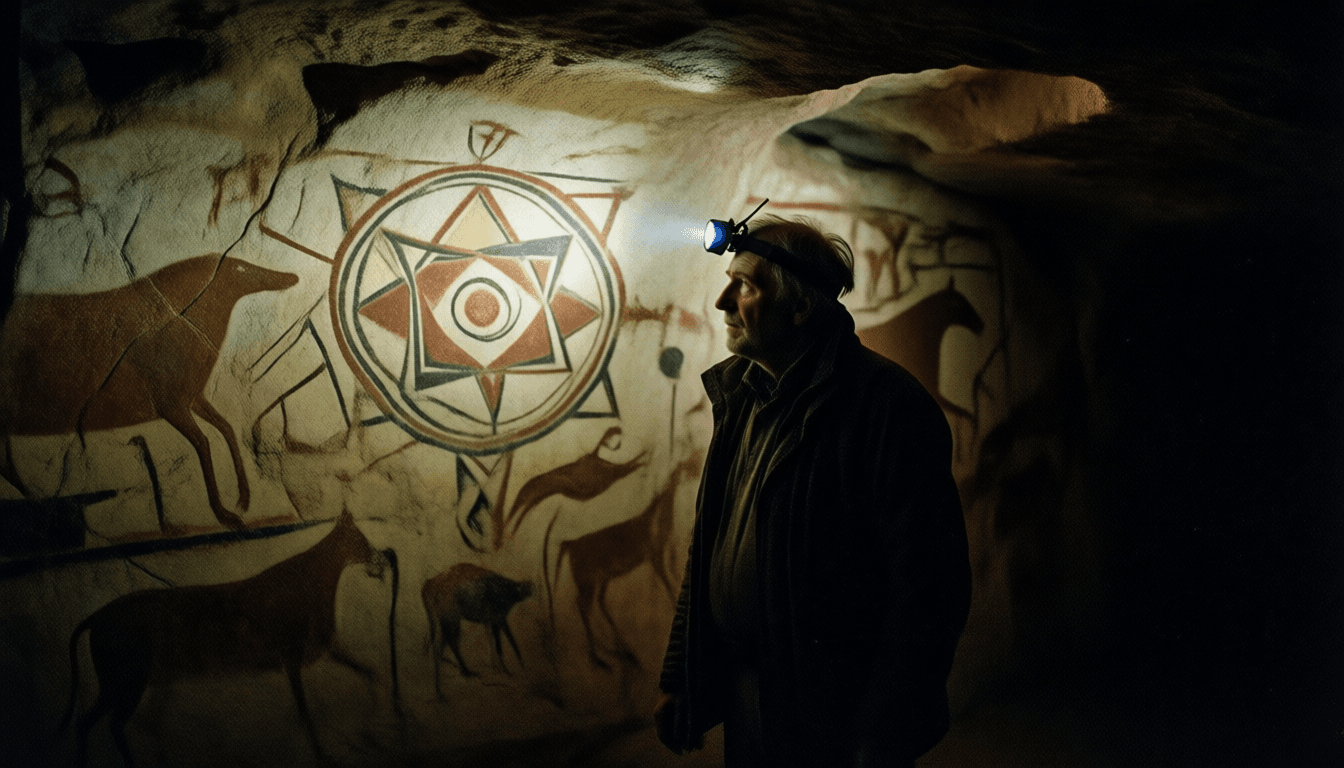
This theory gains considerable traction from the recurrent appearance of abstract geometric symbols – dots, grids, zigzags, nested forms – known as 'entoptic phenomena.' These patterns are universal visual experiences reported by individuals entering a trance state across various cultures, often preceding more complex hallucinations. Was this a shamanic journey, a visible representation of an inner, fantastical world? The 'bird-headed man' in the Shaft is often interpreted as a shaman in transformation or a trance state, further supporting this hypothesis. In this view, the cave becomes a physical manifestation of the Paleolithic mind's spiritual exploration – a place where the boundaries between reality and illusion, human and animal, terrestrial and divine, were blurred and transcended.

Now protected from human contact to preserve its delicate existence, the Lascaux Cave remains a testament to the unsolved mysteries of our oldest ancestors. It is not merely ancient art but a direct, powerful communication from an era before recorded history, a window into a consciousness distinctly different from our own, yet undeniably human. What drove these people, tens of thousands of years ago, to descend deep into the earth and paint with such extraordinary skill and spiritual fervor? Was it to commune with animal spirits, to heal, to foretell hunts, or simply to map the intricate, unseen landscape of their inner world?
Lascaux challenges our modern assumptions about 'primitive societies,' revealing a depth of artistic sophistication, symbolic thought, and spiritual engagement that resonates across millennia. We realize, before these powerful images, that we are witnessing the fundamental human impulse to create, to connect, and to seek meaning beyond the material. Yet, the true intentions of the Lascaux painters remain locked within the ancient stone, a silent, profound whisper carried across the ages, forever hinting at the vast, unexplored territories of the human spirit that constantly transcend our understanding.
[ CLASSIFIED VERDICT ]
[ACCESS LOG - SOURCE FILE]
The Lascaux Cave paintings in France, accidentally discovered in 1940, are a treasure trove of prehistoric art. Despite the astonishing preservation and scale of the paintings, a profound mystery remains as to whether the cave was merely a dwelling or a ritualistic, sacred space. The core of this story revolves around the enigma of this ancient art's true purpose.