The Room of Distorted Truth: Gungjeong-dong Safe House
In a Korean political history forum discussing the tumultuous period surrounding the assassination of President Park Chung-hee in October 1979, strange rumors not present in official records constantly resurfaced. These were accounts of anomalous acoustic phenomena experienced by low-level security and administrative staff in the ‘Enhanced Facility Room’ — officially designated as a mere utility room — located in the basement of the Gungjeong-dong safe house. The sounds there were said to go beyond simple echoes. Testimonies described them as being abnormally delayed, sometimes playing in reverse, and even overlapping past and future versions of the same sound, creating sickening auditory distortions. Anonymous reports were often dismissed or deleted as stress-induced hallucinations, but a few withdrawn or ignored academic papers attempted to propose theories involving specific material compositions or geological anomalies. However, the story always ended with an eerie implication: the room was not merely a soundproof chamber. It was a place where sound, and perhaps time itself, was warped, forever trapping the unresolved truth of that night in a confusing loop.
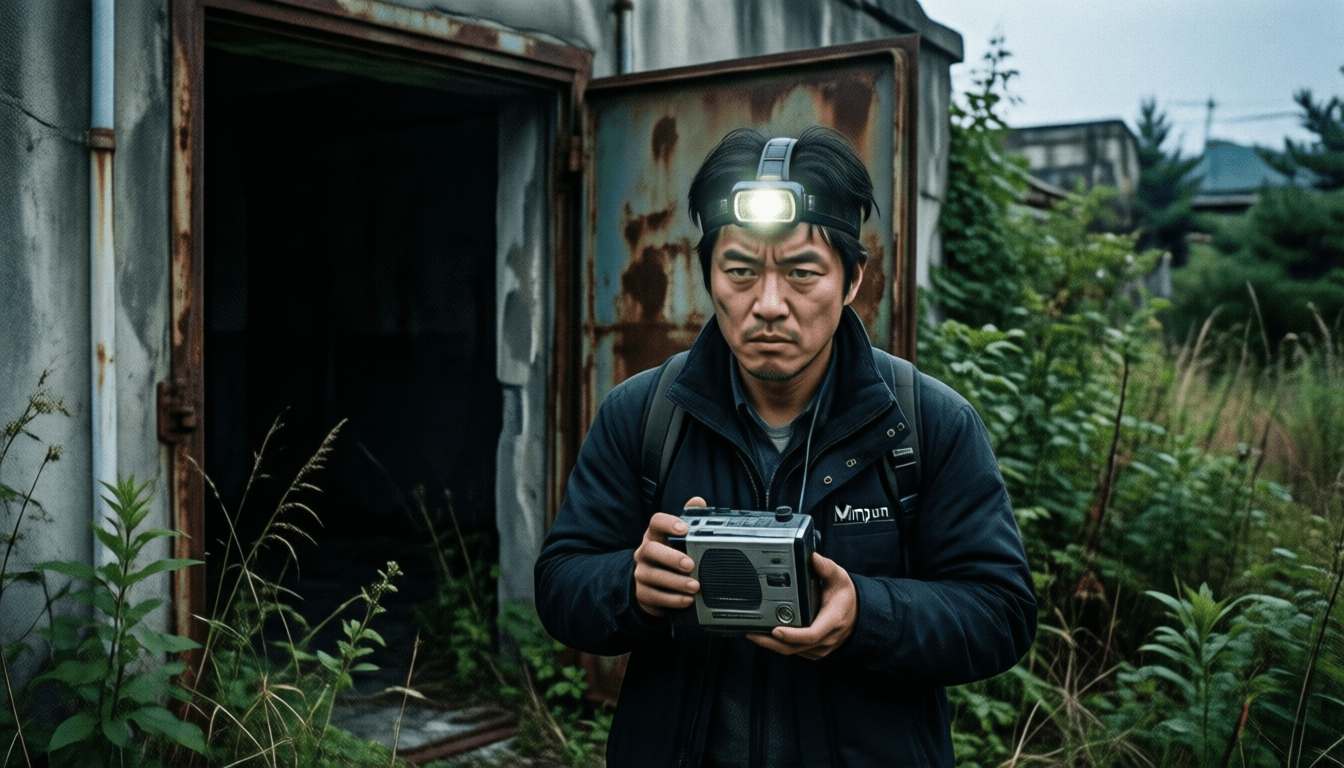
Minjun, a freelance investigative journalist, had built his career by tracking the gaps in official narratives. Over several months, he cross-referenced fragmented testimonies, meticulously scoured declassified blueprints and old satellite images, and finally located a structural anomaly corresponding to the rumored room amidst the ruins of the Gungjeong-dong safe house. Armed with a high-performance audio recorder, a portable light, and a healthy dose of professional skepticism, he illegally entered the compound, which was overgrown with weeds and littered with debris.
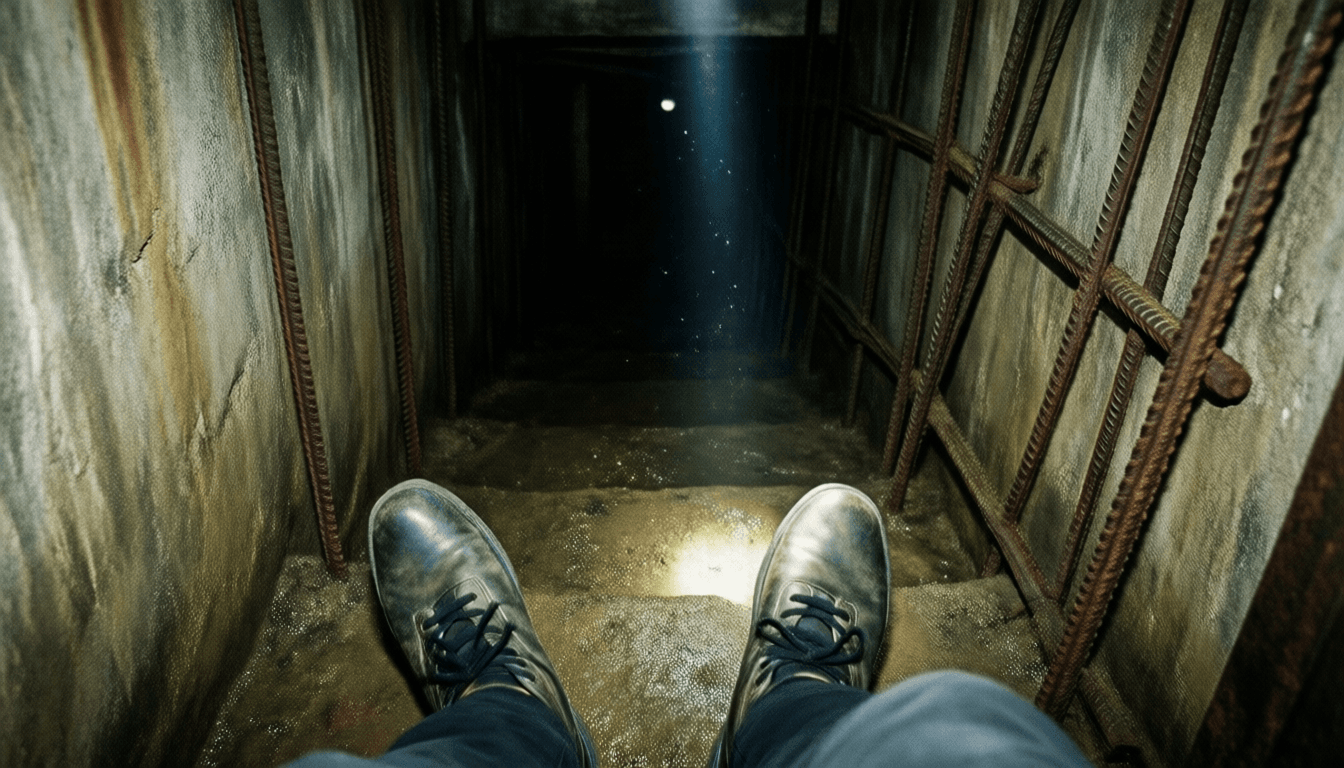
The entrance was a rusted service hatch partially obscured by crumbled debris. It led to a narrow, vertical passage, at the end of which was a heavy, reinforced steel door embedded in a concrete wall. The air below was heavy and stagnant, a mixture of damp earth, old concrete, and a subtly metallic scent. The silence was deep and oppressive, swallowing even the slightest sounds from his equipment, leaving an uneasy void. Surprisingly, the door was unlocked. As Minjun pushed it open, a dark, bare concrete room — the isolation chamber — was revealed.
As he stepped inside, the door closed behind him with a soft thud, the sound almost instantly absorbed and vanishing. Even his whispered name scattered too quickly, leaving an unsettling emptiness. He tried again, a little louder. This time, he heard no echo. Instead, there was a faint, almost imperceptible reverberation. It wasn't his voice returning, but rather a sensation of his voice being momentarily 'held' in the air before it had even fully left his lips. It was a subtle, yet deeply unsettling auditory illusion. He began a systematic investigation, sweeping his flashlight across the room, meticulously noting every crack and stain on the concrete walls. Somewhere deeper within the confines, a faint, rhythmic dripping sound could be heard. He extended his recorder to capture it. Playing it back immediately, the dripping sound was distinctly earlier than when he actually heard it, subtly distorted as if through some filter. He tried again, snapping his fingers sharply. The actual sound was crisp and immediate. But the delayed 'echo' that followed was faint and muffled, arriving a full two seconds later, sounding eerily like a 'click' from a much older, degraded recording device. A profound sense of disorientation began to set in. His internal clock felt warped, his spatial perception subtly twisted. The profound silence between the delayed sounds added to his unease, making him question if he was hearing phantom sounds or if the absence of sensory input was inducing hallucinations. Despite being in an air-filled room, he felt a pressure in his ears, as if he were diving deep underwater.
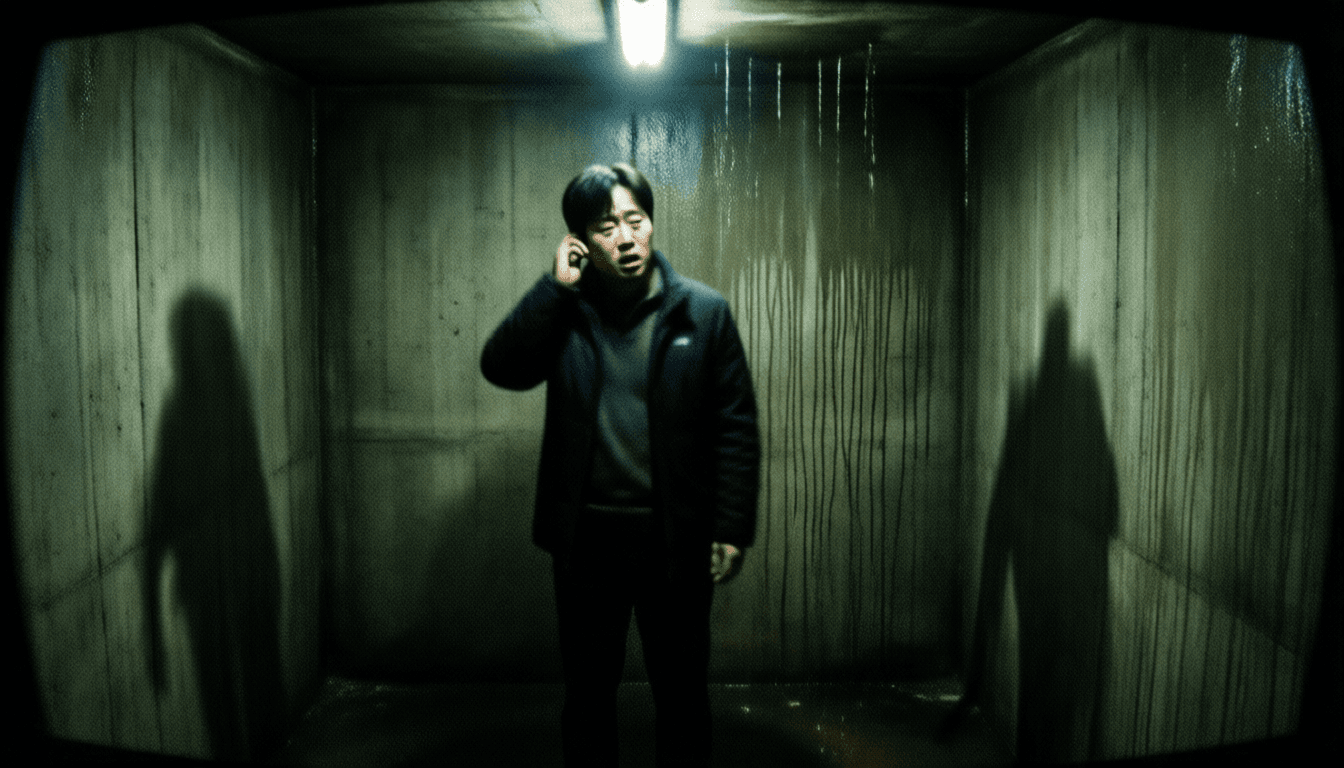
As Minjun reached the approximate center of the room, the heavy steel door through which he had entered slammed shut with an ear-splitting metallic clang. It wasn't just one clang, but resonated repeatedly, each iteration subtly offsetting the previous, creating an impossible cacophony. He rushed to the door, twisting and pulling the handle, but it was firmly jammed. Trapped.
The acoustic phenomena were no longer subtle. The room filled with disjointed, overlapping sounds. Muffled voices spoke in Korean, but the words were jumbled, clipped, seemingly played in reverse, then forward, then reverse again. He recognized fragments of characteristic coughs and sharp, authoritative tones he'd heard in recordings of figures associated with the historical record. Then, a sharp gunshot rang out, but it wasn't a single shot. It was like a ripple, echoing from multiple directions, seemingly arriving at different times. It was as if the same gunshot was fired simultaneously from the past, present, and future. Screaming voices were heard. He couldn't pinpoint whose, but high-pitched, guttural screams layered upon each other, stretching and compressing into an impossible shriek. The sounds were no longer merely auditory. They became physical. The air vibrated violently. Minjun felt the pressure waves of phantom gunshots against his chest, and the screams inflicted physical pain on his eardrums. He staggered, the concrete floor seeming to subtly undulate beneath him, causing him to lose balance. He collapsed, clutching his head. His skull felt like it would explode from the impossible auditory assault. He was immersed in a twisted, eternal loop of the assassination. An unwilling participant in the raw, unresolved truth of that night. A cold, intangible presence pressed down on him. Not a ghost, but the pure, condensed trauma of the event, an unbearable pressure that felt like the materialization of unresolved questions, an acoustic shackle forcing the air from his lungs. He was physically overwhelmed, teetering on the brink of unconsciousness.
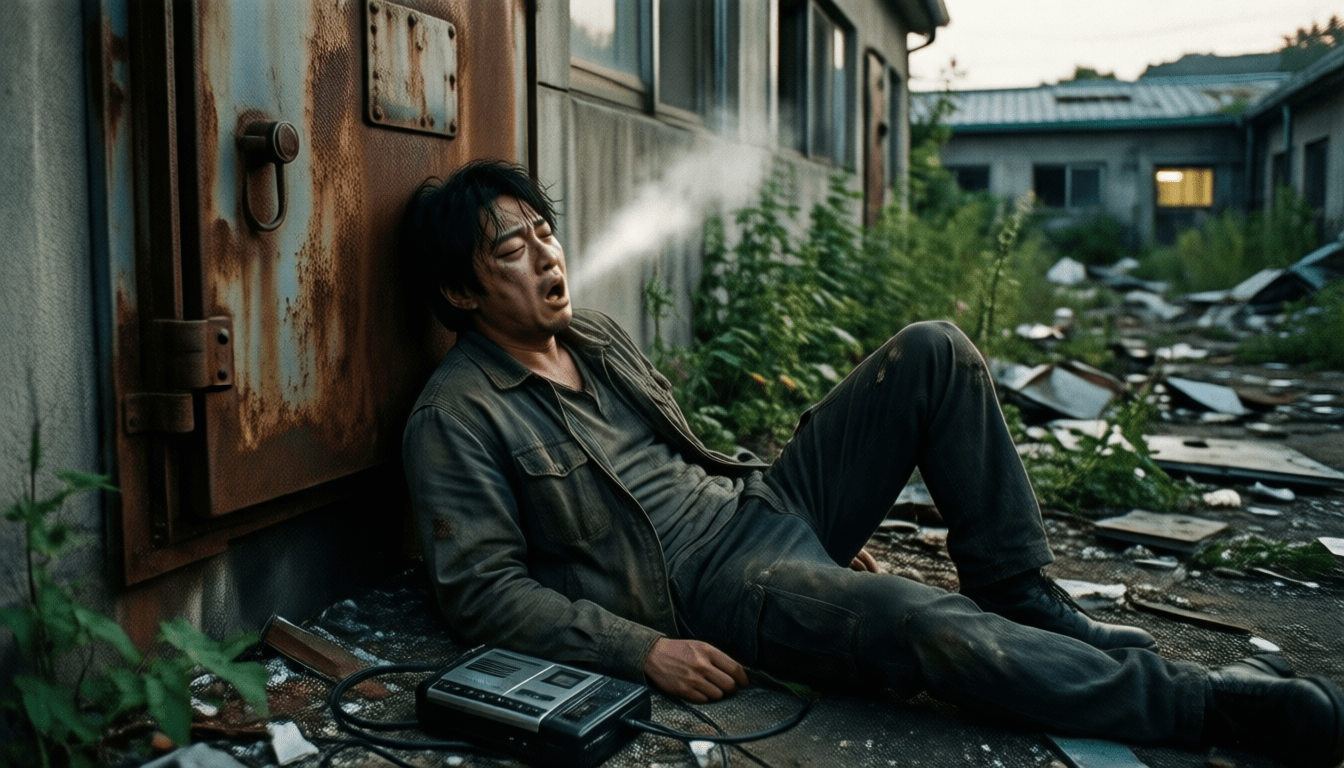
Much later, Minjun regained consciousness, collapsed by the service hatch outside the isolation chamber. He had no clear memory of his escape, only a vague impression of desperately crawling amidst the impossible noise. His equipment was damaged. The audio recorder was cracked, but miraculously, the last few minutes on the memory card were intact. He played back the recording. It was a chaotic mass of mangled static, clicks, and distorted, unintelligible noise. More akin to digital corruption than an actual recording of events. Yet, he recognized the feeling of that distortion, the impossible echoes, and the eerie sensation of temporal events overlapping.
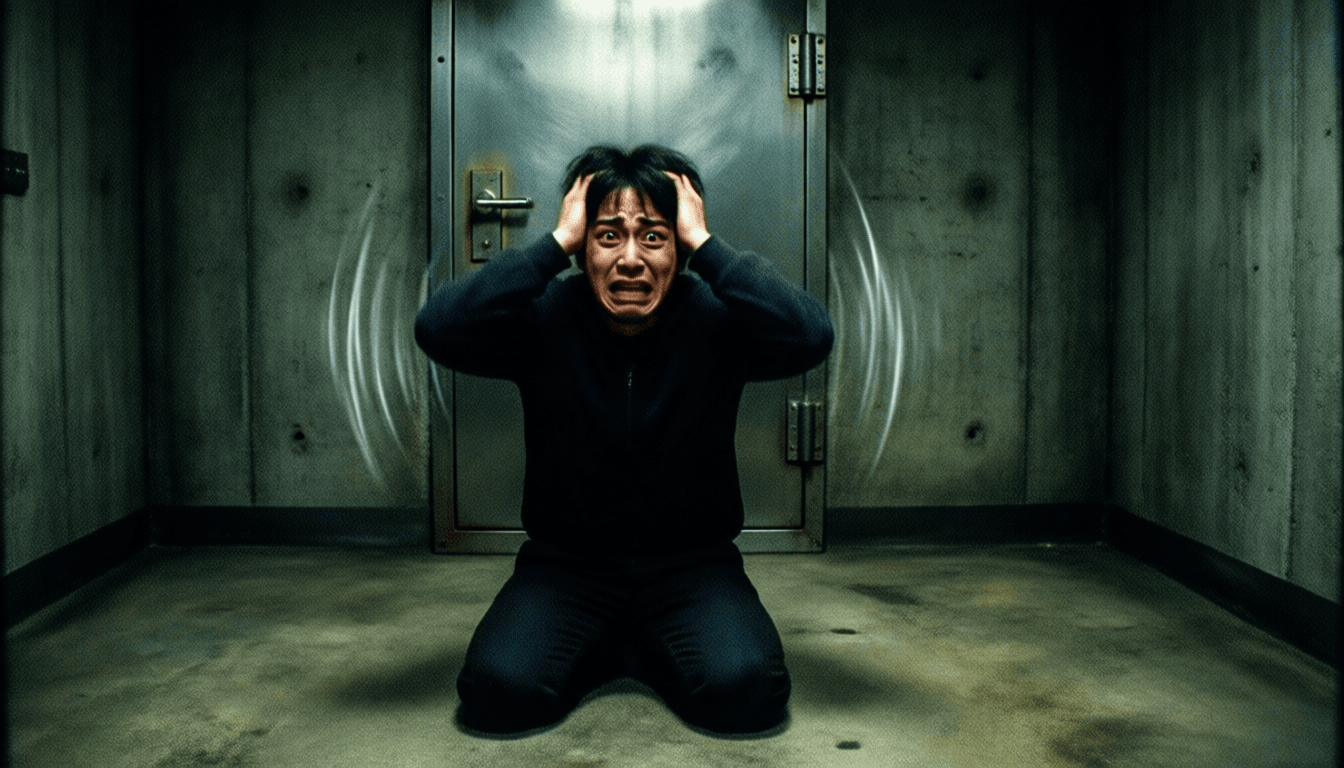
He was traumatized. Not by ghosts, but by the subtle, persistent anomalies manifesting in his own hearing. Now, everyday sounds seemed subtly warped to him. A car horn in the distance would briefly sound before it actually rang, and his own voice would sometimes feel as if it arrived a fleeting moment after he had spoken. The silence in a quiet room was no longer peaceful. It was filled with the possibility of delayed, phantom echoes from an unknown past. He knew what he had experienced was real, but he would never be able to prove it. The impossibility of explaining it forever trapped him in his own private, echoing room of horror, where the truth of that night and all its unresolved questions continued to reverberate beyond his sanity.
[ CLASSIFIED VERDICT ]
[ACCESS LOG - SOURCE FILE]
The Gungjeong-dong safe house, where President Park Chung-hee was assassinated in 1979, is one of the most controversial locations in modern Korean history. This story is based on unofficial rumors about the facility's basement during that time. These rumors suggest the existence of a 'prison of time' – a room that was not merely soundproof, but one where sound and time were distorted, forever trapping the unresolved truth of that night in a confusing loop.