
The Design of Silence
In August 2019, the official announcement of Jeffrey Epstein's death was concise: suicide by hanging. But within hours, the details began to unravel, transforming into a knot of entangled contradictions that fueled global suspicion. The two guards assigned to him reportedly fell asleep, later charged with falsifying records. Surveillance cameras outside his cell were reported to be malfunctioning; mysteriously restored footage was later deemed "unusable" or simply vanished. His cellmate, who could have offered crucial insights, was inexplicably transferred hours before the incident. According to some experts, forensic findings described injuries inconsistent with self-inflicted hanging, fueling whispers of strangulation. For a man with a high flight risk, under suicide watch, and incarcerated in one of America's most secure facilities, the cascade of failures was unbelievable. This was no mere incompetence; it was a meticulously orchestrated silence, an invisible hand guiding a fatal outcome. The question wasn't whether he was murdered, but how, and more chillingly, who ensured his silence.
Eleanor Vance, a journalist who had built her career on uncovering uncomfortable truths, initially dismissed these theories as sensational gossip. However, an anonymous data packet delivered via untraceable encrypted channels shifted her perspective. It contained fragments of communication logs from the Metropolitan Correctional Center (MCC) in the days leading up to Epstein's death, mentioning an obscure external contractor, 'Chronos Logistics Inc.,' alongside 'Maxwell Protocol review.' According to the data, Chronos was responsible for managing and maintaining the digital infrastructure of several federal detention facilities, including MCC's surveillance network. Their registered headquarters was a derelict office complex on the outskirts of Baltimore, a ghostly presence among glass buildings.
On Tuesday, Eleanor arrived at the Chronos Logistics building, posing as a rental inquiry. The building appeared a relic from the late 90s. Its exterior was stained with grime, and its windows reflected only the grey sky. Dust motes danced in the faint sunlight filtering through the cracked lobby glass. The reception desk was empty, covered in a thin layer of dust. From deep within the building, a faint, almost imperceptible hum resonated. She bypassed a broken security panel, finding a service entrance barely ajar, held open by rusted rebar. The air inside was stagnant, heavy with the stale scent of electronics and mildew. She was looking for a specific server room, mentioned in the fragmented logs as the primary hub for MCC surveillance data management.
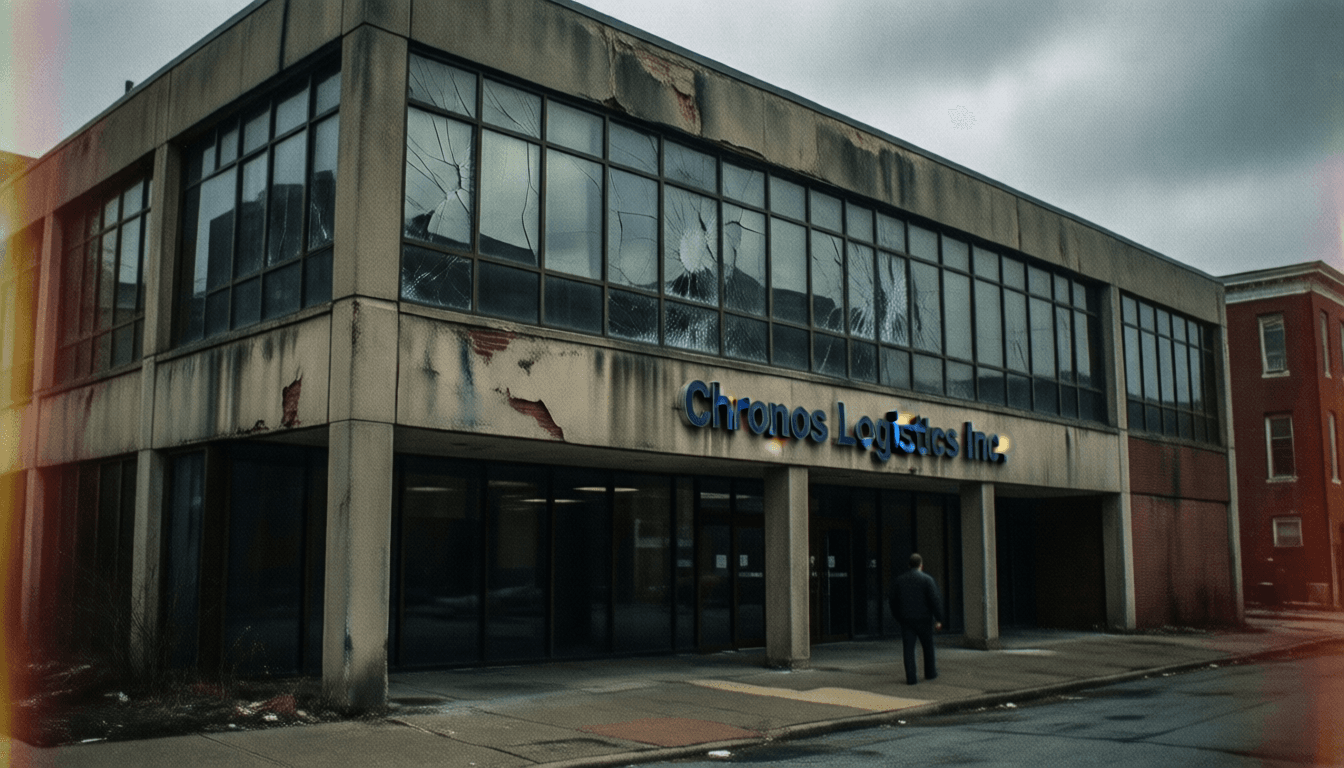
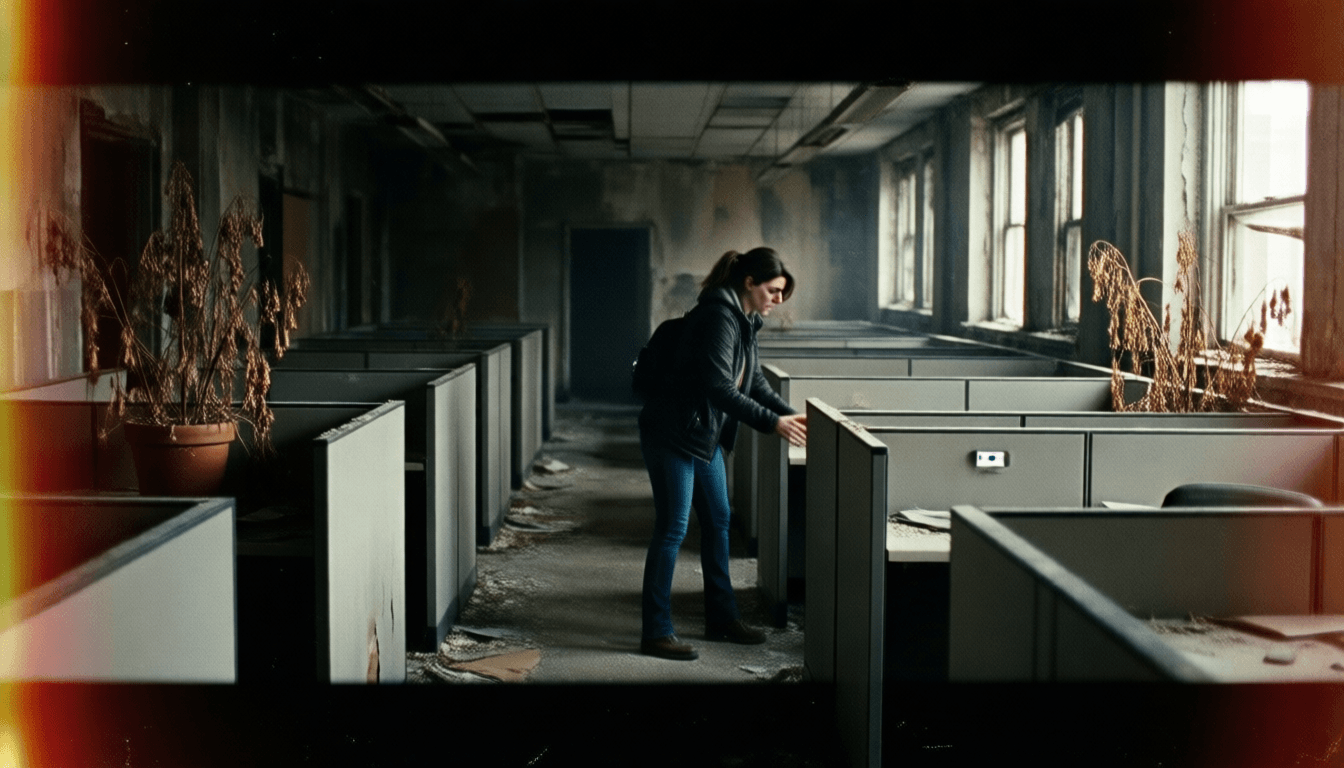
Following the faint hum, Eleanor navigated dark corridors. Empty office cubicles lined the way, forgotten potted plants long since withered. The sound grew stronger, leading her to a heavy fire door marked 'Server Farm - Level 3 Access Only.' The keycard reader was non-functional, but the door was unlocked. Stepping inside, the room was filled with the cold, dry air of an active data center, a stark contrast to the rest of the building. Server racks lined the walls, emitting rhythmic indicator lights, their fans producing a hypnotic, metallic whir. Despite the visible activity, the silence around the sound was unnatural. There was no distant traffic, no wind whistling through vents, only the mechanical symphony of the machines.
She located the specific rack mentioned in the data packet, Rack 17. Plugging in her portable diagnostic tool, she began analyzing network traffic, looking for anomalies. Data streams flickered across her screen. Then, an unusual pattern emerged: sudden, illogical jumps in archive timestamps for MCC surveillance feeds. Five minutes of footage would skip six hours ahead, then snap back in seconds. Entire blocks of data for the date of Epstein's death appeared overwritten by blank packets, yet system logs recorded no such activity. More unsettling, her diagnostic tool began to show intermittent packets tunneling into Rack 17 from outside the Chronos network, but with no identifiable source IP. It was like tracing water flowing uphill against its own current. The system wasn't just passively deleting; it was actively obfuscating itself. A chill colder than the server room's AC trickled down her spine. The silence beyond the hum felt less like an absence and more like deliberate suppression.
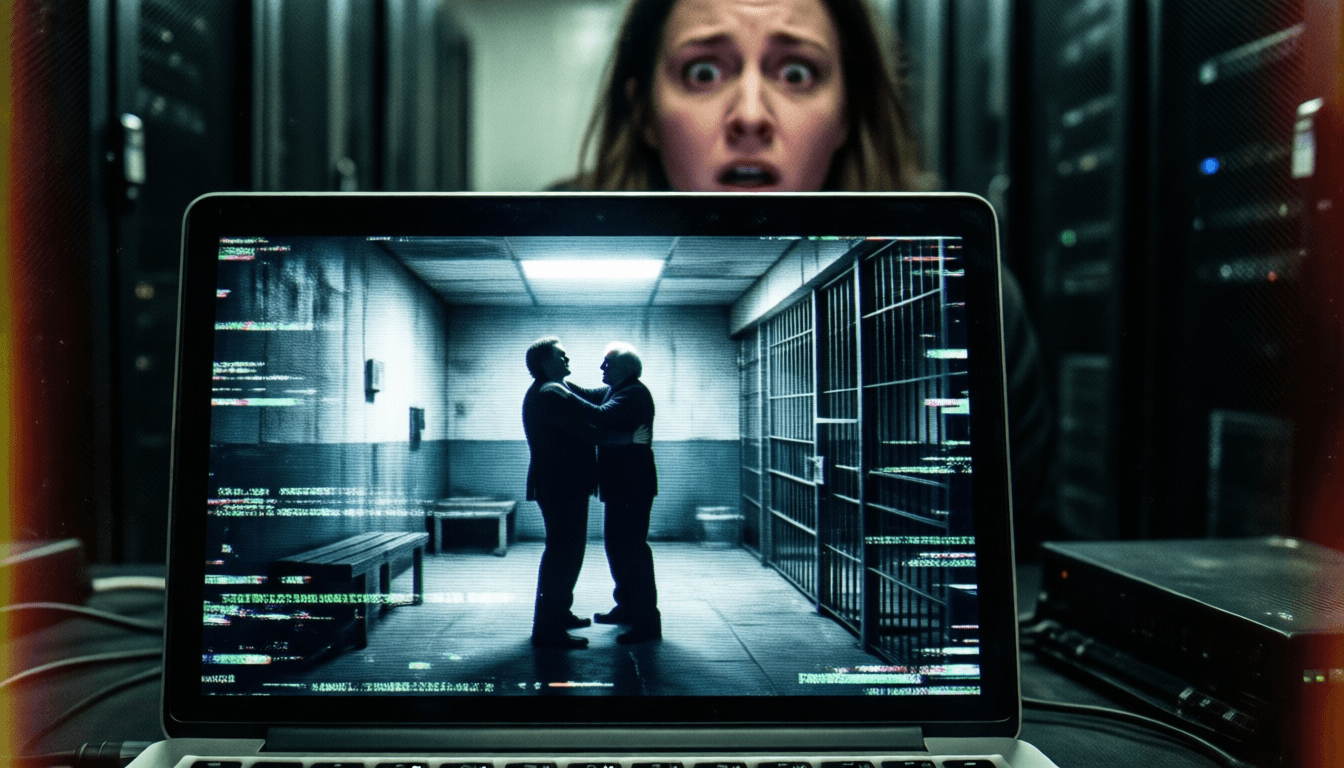
Eleanor managed to bypass one of the deeper layers of obfuscation, gaining access to a raw data feed. What flashed across her screen was not video, but a high-resolution still image from inside Epstein's cell, timestamped approximately an hour before the official time of death. It wasn't Epstein, but a burly, silhouetted man, his hand clamping over Epstein's mouth, another arm tightening around his neck. The image was fleeting, immediately corrupted by a cascade of denial-of-service attack packets that flooded in, attempting to sever her connection.
Suddenly, the ambient hum of the server farm shifted. It intensified, pulsating with an erratic rhythm. Simultaneously, the heavy fire door of the server room slammed shut with a resounding thud. The emergency lockdown sequence, designed to activate in case of fire or severe intrusion, had been triggered. A calm, synthesized voice echoed through the room's PA system: "Unauthorized access detected. Commencing Level Alpha Containment. All exits sealed. Oxygen depletion protocol initiating in 60 seconds."
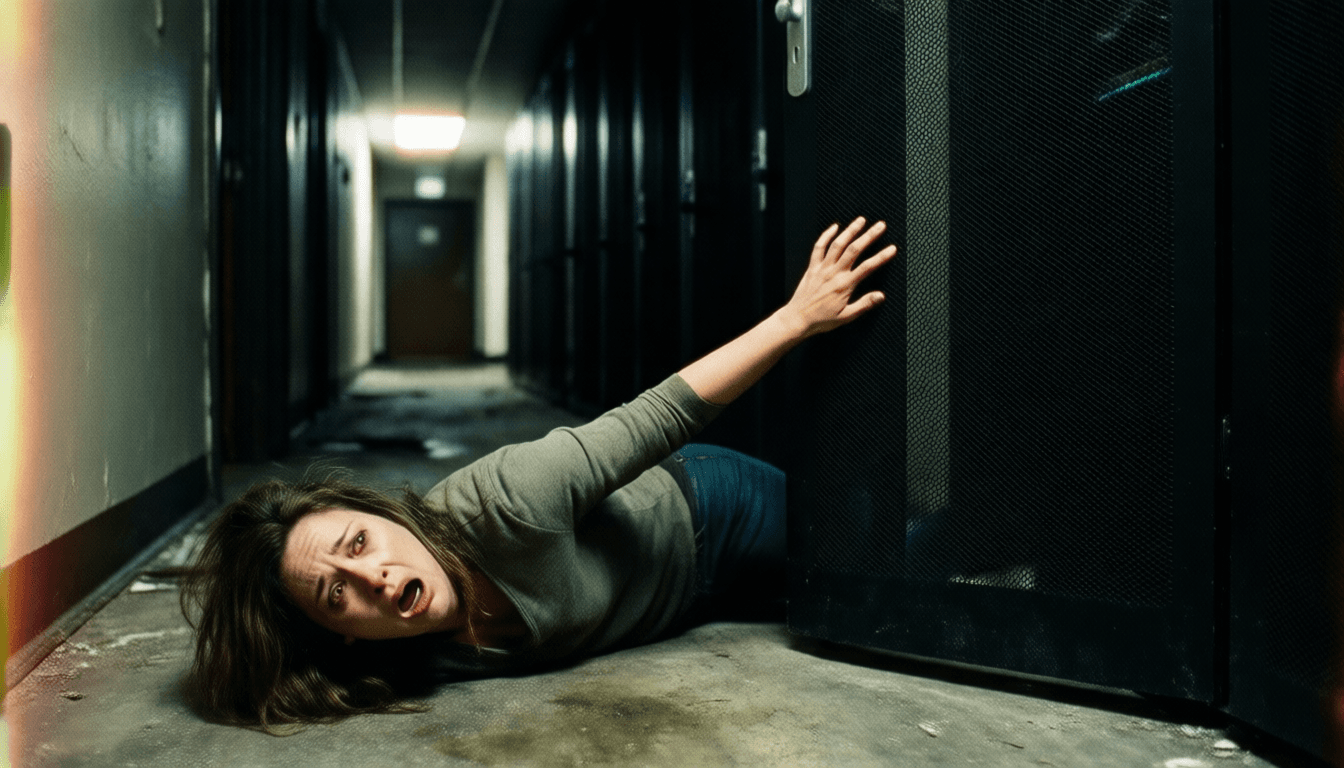
The air grew heavy, thick. Eleanor abandoned her laptop, her gaze darting for an override panel. The room temperature dropped even more sharply, the machines growling as if in protest. The PA voice continued its countdown, devoid of emotion. She could feel her breathing grow shallow. The physical impossibility of the lockdown activating without a single alarm, without an external trigger, in a dead building, crashed over her. This wasn't a malfunction; it was a targeted response. The forces that orchestrated Epstein's demise had now turned their gaze on her. She spotted a robust emergency release lever on the door, designed for catastrophic failures, but it would demand immense strength and a clear head. Oxygen was thinning, her vision starting to tunnel. She felt the system's heavy hand closing in, slowly, inexorably. Fueled by the imprinted image in her mind, a desperate surge of adrenaline, she threw her entire weight onto the lever. With a groan, the door creaked open, and as the room blurred, she stumbled out into the silent, dark corridor just as the synthesized voice reached "zero." Relief was instantaneous, but a metallic taste of dread lingered on her tongue.
Eleanor lay on the grimy floor, gasping for breath. Her lungs burned, the server room's chill still clinging to her skin. She had escaped, but not unscathed. There was nothing left but the fleeting image seared into her memory and the corrupted fragments of data on her now-compromised laptop. She knew with chilling certainty that her presence had been detected, and her actions had triggered a response designed to ensure permanent silence.
She stumbled out of the Chronos building. The dead air outside felt almost alien after the suffocating cold of the server room. The anonymous data packet had led her to a piece of the truth, but that piece demanded more than she yet realized. The surveillance cameras, the compromised systems, the chillingly efficient lockdown protocol—these were not isolated failures. They were components of an invisible, adaptable infrastructure designed to control narratives and eliminate liabilities.
Back in her apartment, the silence that followed her was deeper than any she'd experienced in the Chronos building. She stared at her laptop screen, now just a dark mirror reflecting her dazed, frightened eyes. The corrupted files, the impossible timestamps, the phantom in the machines that had tried to suffocate her—all spoke of a power too vast, too intertwined with the very fabric of surveillance, to merely rewrite reality. Epstein's death wasn't an isolated incident of prison incompetence; it was a demonstration, a chilling proof-of-concept for those who understood its true meaning. Eleanor had seen the shadows behind the curtain, and that knowledge was poison. The remaining question wasn't what she had seen, but who had seen her. She was alive, but the very air she breathed now felt subtly, menacingly thin. The official narrative remained undisturbed, but for Eleanor Vance, the world had become a far more fragile, terrifying place.
[ CLASSIFIED VERDICT ]
[ACCESS LOG - SOURCE FILE]
This story is based on the numerous conspiracy theories and suspicions that arose after the official announcement of Jeffrey Epstein's suicide in August 2019. Various suspicious circumstances, such as malfunctioning surveillance cameras, perjured testimonies from guards, and contradictory injury reports, fueled global doubt and supported claims that he was murdered to silence him. This story expands upon these suspicions, imagining a vast, organized conspiracy behind it all.