The Curse of the Dry Breath
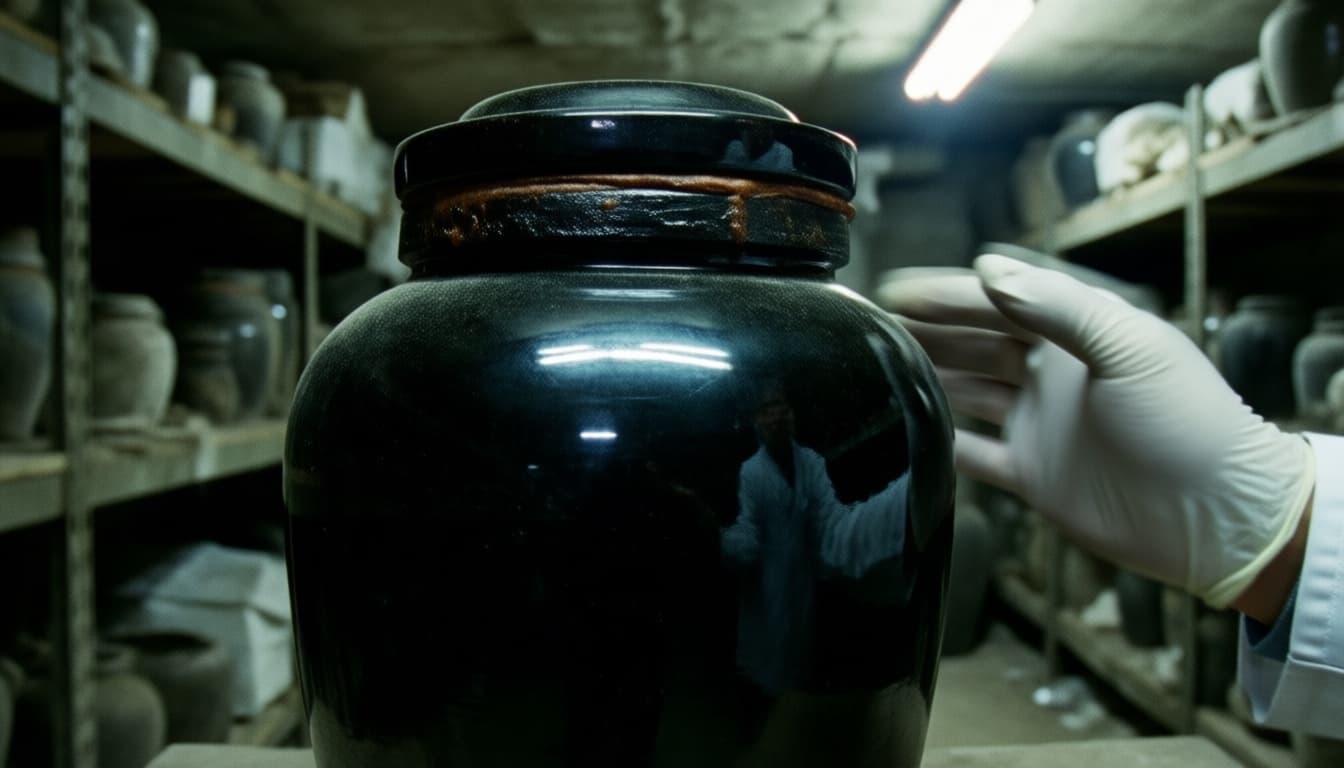
The records of the local natural history museum, for those who know how to look, whisper a subtly disturbing truth. For nearly two decades, this museum has quietly housed an unremarkable artifact among its collection of Egyptian antiquities: a black obsidian canopic jar, roughly the size of a human skull. Acquired in the late 1990s under unusual circumstances, the very record of its discovery in a previously unplundered minor tomb fragment was anomalous. Though not on public display, a very specific and localized string of misfortunes associated with this unassuming jar continued to circulate in hushed whispers among local history forums and veteran museum staff.
Over a decade, three incidents stand out. In 1999, Dr. Alistair Finch, the meticulous senior curator who directly oversaw the jar's acquisition and authentication, succumbed to an acute and undiagnosable respiratory illness. Doctors were baffled by the onset and rapid progression, and he died within four months with a diagnosis that his lungs had literally “mummified.” In 2007, Sarah Jenkins, an assistant archivist tasked with cataloging the jar and its provenance, suffered a gruesome and unprovoked attack. She was found in the Egyptian exhibit room with her face severely disfigured by a swarm of aggressive, stinging hornets—unprecedented in the region. She survived but never returned to work, suffering from acute psychological trauma and a recurring phobia of dry air. Most recently, in 2019, Mark Evans, a young night security guard known for his diligence and calm demeanor, was found in a catatonic state in the Egyptian exhibit room. His internal monologue, recorded by his bodycam (the video feed inexplicably cut out), was a chilling mixture of incomprehensible pleas. Later analysis by a visiting Egyptologist confirmed fragmented phrases of Ancient Egyptian, related to "dryness," "breath," and "returning sand," despite Evans having no prior exposure to the language. He remains institutionalized, occasionally whispering about "dry breath" and "returning sand," vaguely gesturing to his own throat. Following the Evans incident, the jar, designated "Obj. 77-A, Canopic Jar," was removed from public display and sealed in the museum's rarely accessed underground storage—deemed simply "too problematic."
My investigation began with Evans's linguistic anomaly—a clue too specific to be mere coincidence. After difficult-to-obtain authorization, I descended into the museum's underground storage. It's primarily used for long-term preservation and pest control. Immediately, the air felt oppressive. A stale scent of old paper and dust, and something else—a faint, metallic stagnation—pervaded. My footsteps echoed unnaturally under the low, uneven fluorescent lights, their sound decaying too quickly, swallowed by the thick silence. Despite climate control and hermetically sealed conditions, a fine, almost imperceptible layer of dust coated every surface.
Navigating the labyrinthine mobile shelving units, I reached the section housing the Egyptian collection. The temperature seemed to drop a few more degrees. On Shelf 7, Compartment 11, was the problematic canopic jar. It was obsidian black and smooth, sealed with a resin that appeared incredibly intact for its age. Yet, it felt strangely cool and damp to the touch, in stark contrast to the pervasive dryness of the room. The attached archival notes confirmed the paucity of information regarding its origin, making the preceding misfortunes feel even more unsettling.
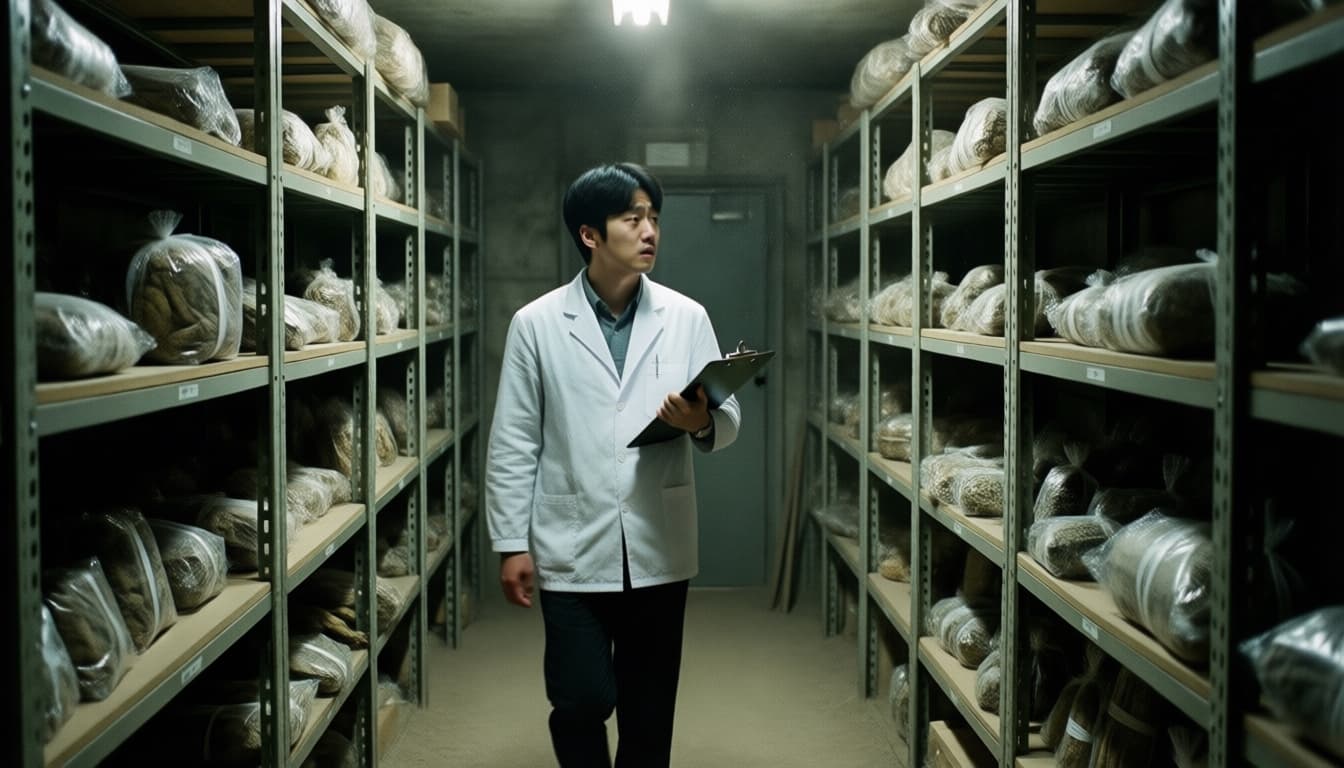
As I began to document the jar and its surroundings, a faint, almost imperceptible rasping sound seemed to resonate from within the jar itself. It was a muffled, internal sound, like something being dragged over coarse fabric. I dismissed it as old building dust or an auditory illusion. But the chill that permeated my bones was not merely from the ambient air; it felt as though it emanated from the object itself.
The rasping continued, growing steadily more distinct. Even when I moved to examine other unrelated documents on an adjacent table, a rhythmic "ssss-thump" emanated from the jar. It felt as if it were following me. The air pressure in the basement began to subtly shift, and I felt a faint, dull thudding in my ears. I attributed it to the deep subterranean environment. At that moment, a loose index card I had placed on a metal shelf fluttered upwards, caught in an impossible updraft, before falling back down. I instinctively checked the overhead vents, but they were sealed and caked with thick layers of dust.
When I muttered to myself, my voice sounded subtly delayed and distorted, as if passing through a thick, dry medium. Echoes were unnatural, either dying too quickly or returning warped and metallic. The fine powdery dust I had noticed earlier now seemed to be moving on its own. Despite the air being perfectly still, it shifted in subtle ripples across the metal shelves and concrete floor—barely noticeable. It was too fine to be stirred by any draft and too pervasive to be accidental.
My peripheral vision began to betray me. Ambiguous, faint outlines appeared in the deep shadows between the shelves. They were like heat shimmers, yet the environment was extremely cold. The silence was not empty; it felt deeply occupied. My rational mind struggled to categorize these anomalies, but the accumulating psychological intensity was overwhelming. I tried to record my observations on a digital recorder. Later, upon playback, unintelligible whispers were intermittently audible beneath my voice—dry, guttural, ancient language. The rasping from the jar grew more violent; it was now unmistakably the sound of something scratching, struggling, trying to escape against the inner obsidian walls.
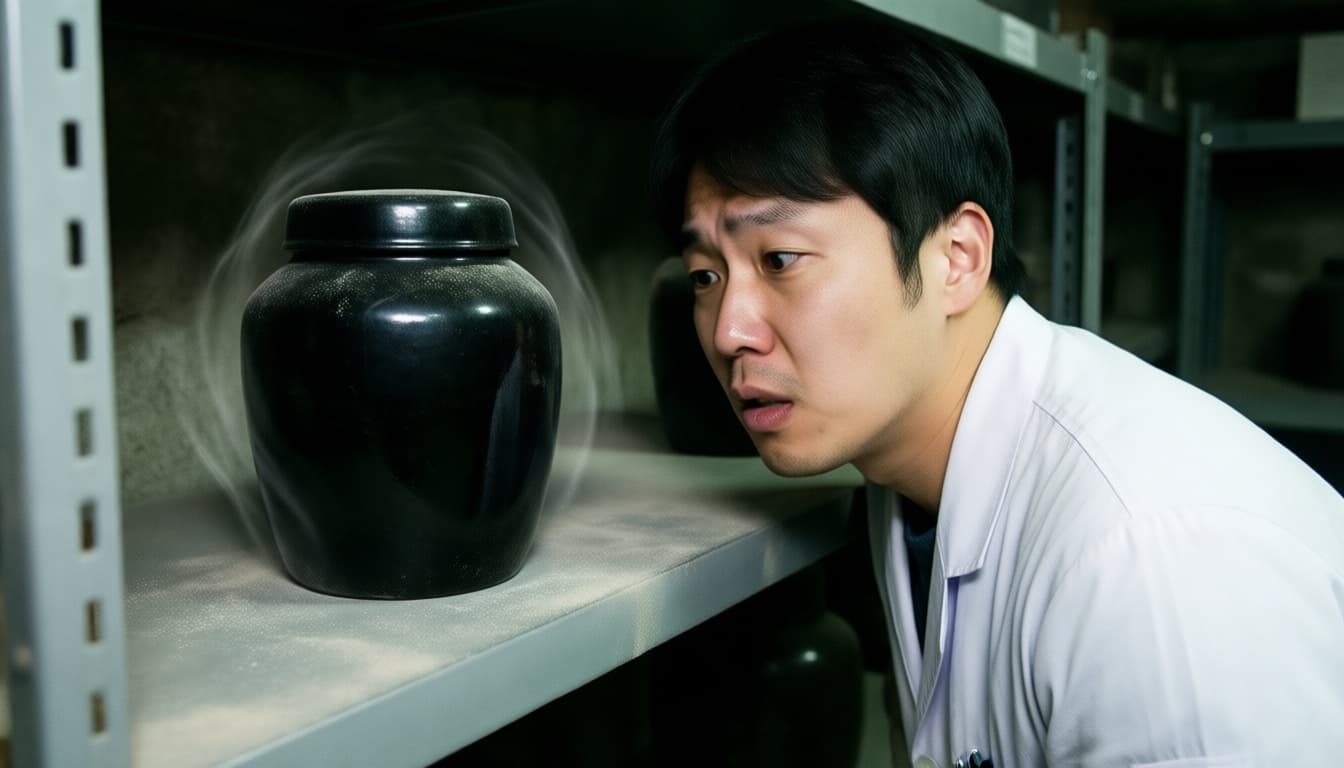
Overwhelmed, a primal urge to flee seized me. I turned towards the heavy steel access door. At that moment, a low, guttural growling sound reverberated from behind me, distinctly near the canopic jar. The door, which I had left slightly ajar, slammed shut with a deafening, final sound that echoed horribly along the concrete walls. An internal lock clicked into place with a sickening thud. I was trapped.
The fluorescent lights flickered violently, plunging parts of the basement into temporary darkness. In the intermittent flashes, I saw the fine dust on the concrete floor rising and coalescing into swirling, vaguely human-shaped forms. They were not solid, but vortices of dust imbued with malevolent intent. They moved with unsettling speed, encircling me, their forms constantly shifting, contracting, and expanding.
The canopic jar on Shelf 7 began to vibrate violently, a deep hum resonating through the metal. With a distinct click, the seemingly immutable resin seal began to crack—an impossibly loud sound in the enclosed space. A thick, dry and hot breath seemed to exhale from the jar itself, and the air around it immediately shimmered and warped like desert heat. The rasping was now an unbearable tearing shriek, bypassing my eardrums, resounding directly in my skull. It was the sound of ancient fury personified.
One of the dust entities lunged, a surprisingly cohesive swirling malice. The contact was not cold, but like being hit by a wave of condensed heat and immense pressure, instantly cutting off my breath. I stumbled, desperately trying to inhale air that suddenly felt like fine sand. My lungs burned. I was violently slammed against a metal shelving unit. The entity, despite its intangible form, exerted immense physical force, attempting to force open my mouth. It was a terrifying physical struggle, as if trying to put something ancient and dry inside me. The sensation was of being filled and choked by invisible, microscopic particulate matter. I thrashed my arms, trying to tear away at the intangible yet immensely strong force. My throat constricted, and my vision blurred.
In a desperate, adrenaline-fueled moment, I broke free from the suffocating grasp and lunged for the emergency fire alarm. The piercing shriek of the alarm temporarily disoriented the entities, and they momentarily scattered. The access door inexplicably clicked open, and I barely managed to squeeze through. I stumbled out of the museum, leaving the cacophony of the alarm and the now even more violent rasping of the jar behind me. Disoriented and physically spent, but outwardly unharmed.

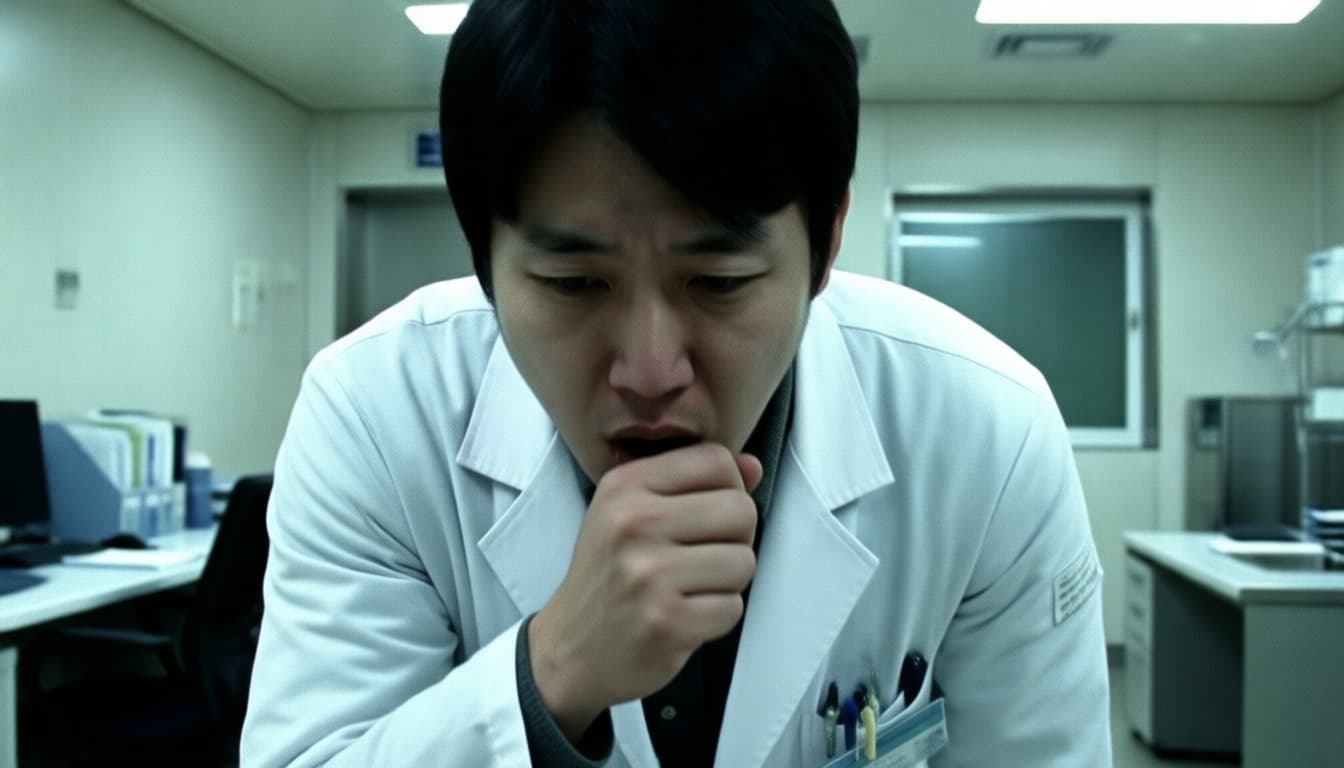
Subsequent medical examinations found no physical injury, yet I have been plagued by constant, unexplained respiratory distress ever since. My lungs always feel dry, with an internal irritation. Occasionally, I unconsciously cough up what feels like fine, gritty particulate, though nothing visible to the naked eye.
My dreams are now filled with vivid, ominous figures in ancient Egyptian attire. They speak a language I do not understand, yet I feel an inexplicable compulsion to learn it. I find myself drawn to arcane linguistic texts and funerary artifacts.
After my report was officially dismissed as stress-induced delusions and carbon monoxide exposure, the digital recorder retrieved from the basement storage by the museum's security team now functions perfectly. All other files recorded that night were inexplicably corrupted, but one short, chilling fragment remains: the distinct rasping sound from the jar, followed by a dry, guttural, whispering hissing sound in an ancient language. And then, my horrified gasp cuts off abruptly.
Weeks later, the canopic jar was re-examined by a new team of museum staff. They found the jar entirely undamaged, its resin seal perfectly intact, with no sign of cracks or compromise. Yet, the faint, almost imperceptible scent of dryness and stagnation still lingers in the basement storage, occasionally accompanied by the sound of fine sand seeming to sift through unseen fingers. And the senior archivist who accompanied them has recently developed a persistent, nagging dry cough he can't shake. A constantly irritating tremor deep in his lungs. He blames it on the dust.
[ CLASSIFIED VERDICT ]
[ACCESS LOG - SOURCE FILE]
This story is based on urban legends surrounding ancient Egyptian canopic jars and mummy curses. Rumors persist about the misfortunes brought by looted artifacts, and the curse of spirits sealed within jars being unleashed to absorb the lives of those around them or mummify them.