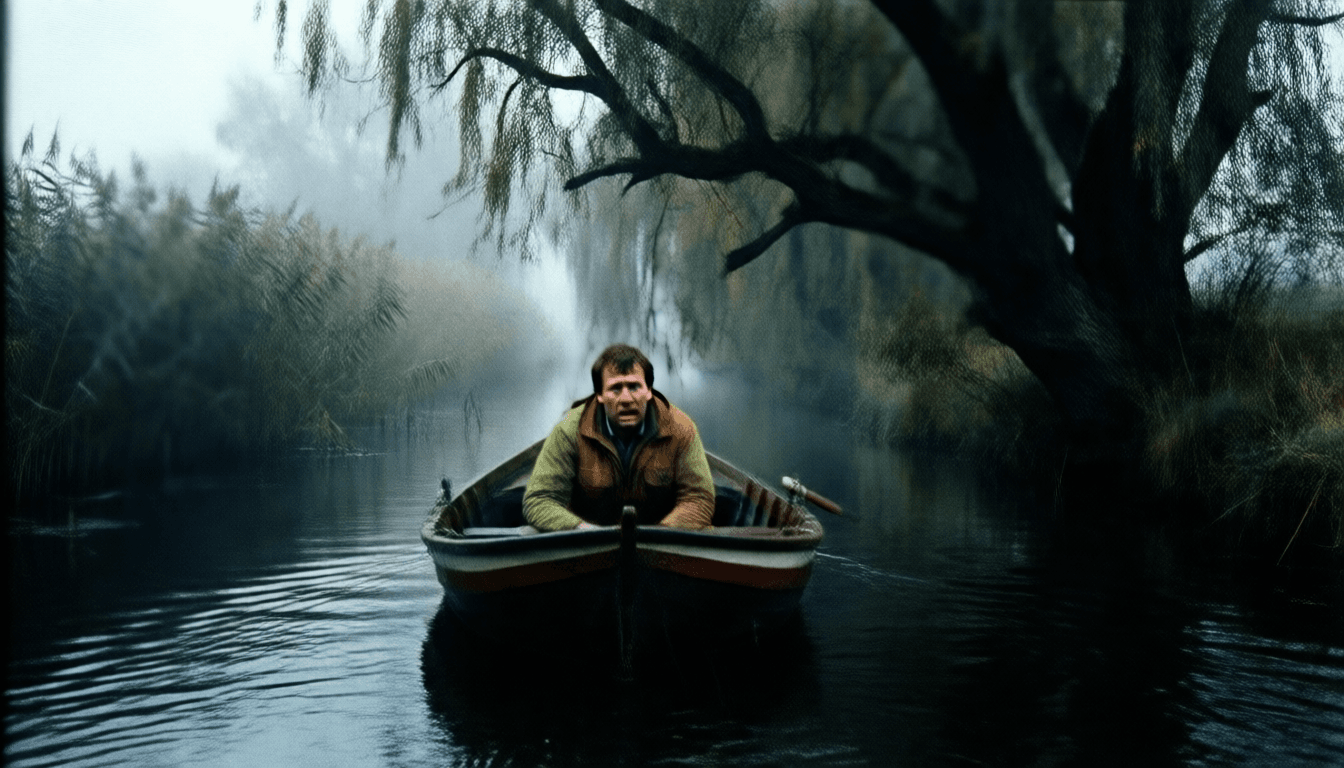
The Curse of Spreewald: The Whisper of the White Lady
Germany's Spreewald, a UNESCO biosphere reserve in Brandenburg, is known for its labyrinthine waterways, traditional Kahn boats, and unique ecosystem. However, beneath its tranquil surface, a story has been whispering for centuries: the legend of the 'White Lady (Weiße Frau)'. She is said to appear in the foggy waterways, luring the unwary to a watery death. For a long time, this story was dismissed as mere folklore.
However, in the autumn of 2023, the whispers grew louder. Three disappearances in two months shattered the region's peace. First, Klaus Richter, an experienced local kayaker, vanished without a trace near the Lehde district. His kayak was found overturned 3 km upstream from his last sighting, despite the calm current and no signs of struggle. Two weeks later, the Müller couple, on vacation, failed to check out of their Lübbenau accommodation. Their rental car remained in the parking lot. Police launched a search, but cited the possibility of getting lost in the dense forest or an unfortunate accident.
Official explanations were hard to believe. An anonymous post, now deleted, appeared on a local online forum, offering an eerie counter-argument. It included a highly pixelated night-vision photo taken near the 'Schlangengraben' (Snake Ditch) canal, close to the disappearance sites. Though blurry, the image showed a tall, pale figure standing knee-deep in the water, back to the camera, its silhouette impossibly thin and elongated. The accompanying text read: "Mrs. Müller's phone was found near the old willow. This is the last photo. Don't go near the water when the fog lies low." The image was quickly removed by moderators for being unverified. My investigation began there.
Arriving in Lehde, I deliberately kept a low profile. Autumn draped Spreewald in a thick shroud of damp air and decaying leaves. The smell of marshland and ancient trees clung to everything. I rented a traditional Kahn boat, choosing to navigate the complex waterways myself instead of relying on a local ferryman. My equipment was standard for field analysis: a high-resolution thermal camera, a directional microphone, an underwater drone, and a GPS-based mapping device loaded with detailed hydrological data.
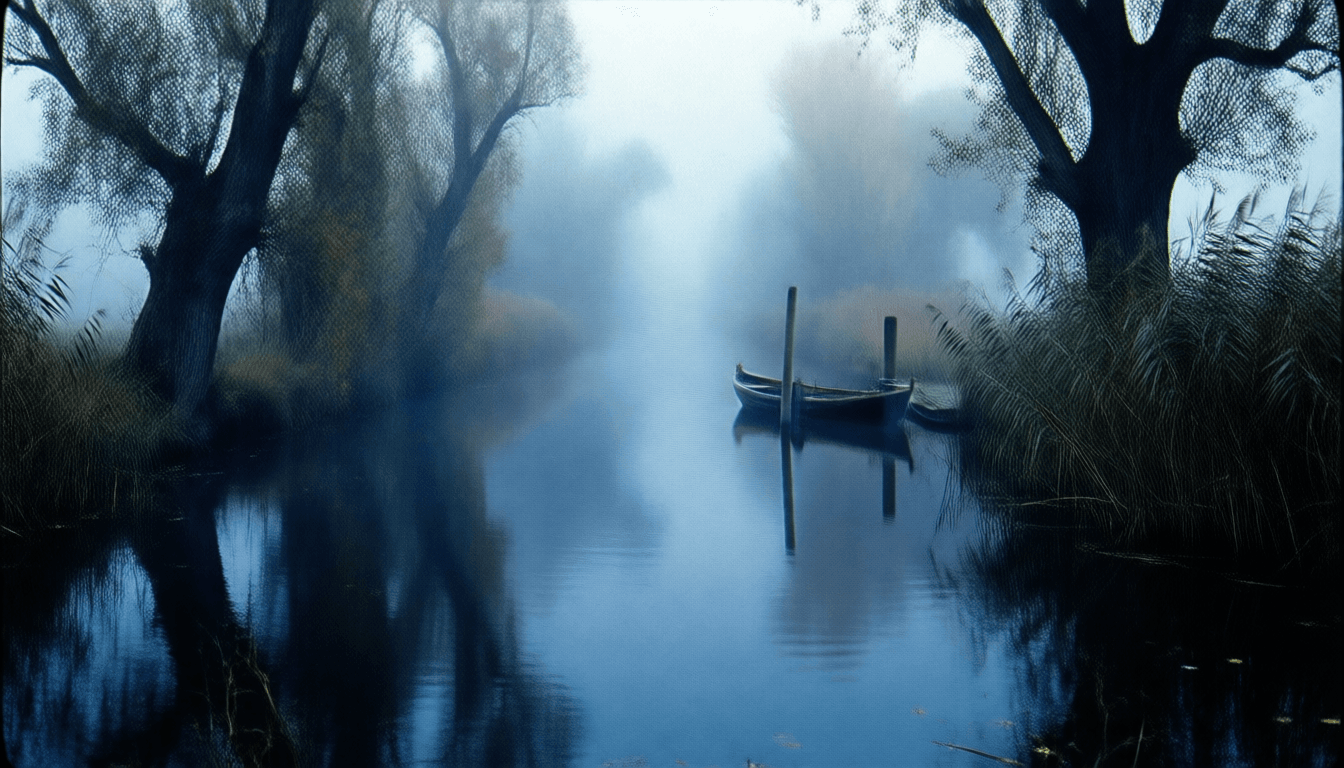
My destination was the Schlangengraben canal section near a twisted, centuries-old willow tree, mentioned in the forum post and local legends as a significant marker for the 'White Lady' stories. The air was already thick with fog lying low to the ground, adding a mystical aura to the scene. The forest's usual sounds of rustling leaves and distant bird calls were replaced by a profound silence, broken only by the soft dip of my paddling pole into the tannin-stained water. The narrow canal walls, overgrown with reeds and low-hanging branches, quickly swallowed all sense of perspective.
As I ventured into the deeper, less-frequented sections of the Schlangengraben, subtle anomalies began almost immediately. The GPS indicated a consistent, almost imperceptible current flowing north. Yet, at precise points, often where the canal narrowed or sharply bent, my Kahn boat seemed to resist the flow. It felt as if there was a localized pull acting in the opposite direction. My equipment detected no changes in the main current, but I had to exert significant effort to maintain my course.
The ambient sounds grew increasingly unsettling. I periodically recorded the surrounding audio. Initially, even bird calls were absent, but deeper in, the silence became more intense. Even the sound of my paddle seemed absorbed, barely echoing through the dense foliage. Occasionally, faint, drawn-out 'whispers' would register on the directional microphone. They sounded like wind rustling through reeds, yet there was no discernible wind. Too regular, too resonant. Visual cues were also disturbing. The fog, instead of dissipating, seemed to coalesce into strangely form-like, moving curtains. At one point, I thought I saw a fleeting, pale shadow on the still water. A vertical flicker that vanished as I tried to fix my gaze, which I attributed to an optical illusion of light and fog.
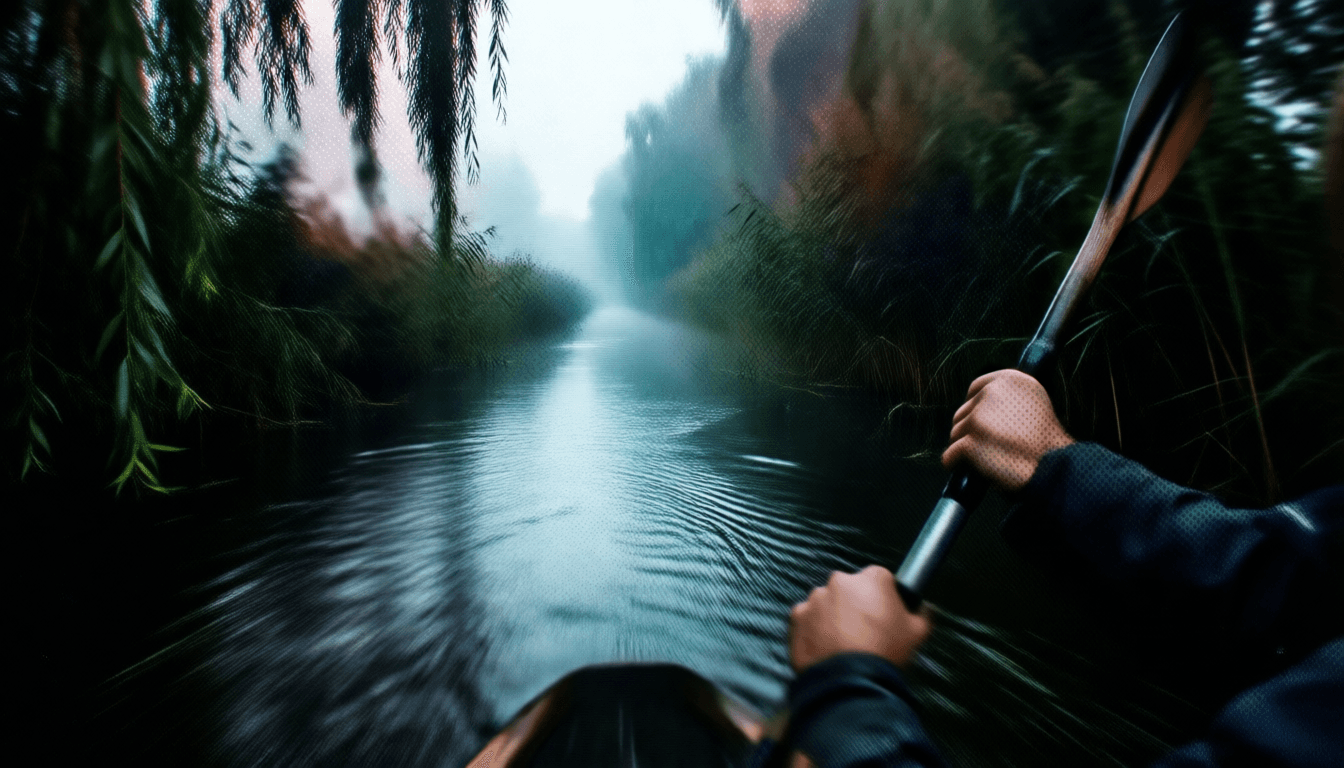
As I neared the ancient willow, where its colossal, drooping branches brushed the water, the water itself began to take on an eerie stillness. My paddling pole moved through the water with less resistance than natural, almost as if pushing through viscous oil. Yet, the water ahead of my Kahn boat began to gently ripple, against my direction of travel, without any wind or other physical disturbance.
Reaching the ancient willow, I found a small, almost imperceptible indentation in the muddy riverbank obscured by roots. A distinct footprint, half-filled with water, from a small boot. Too small for Klaus Richter, but potentially belonging to one of the Müllers. The moment I knelt to photograph it, the air abruptly, violently, turned cold. So sharp was the temperature drop that my lungs burned.
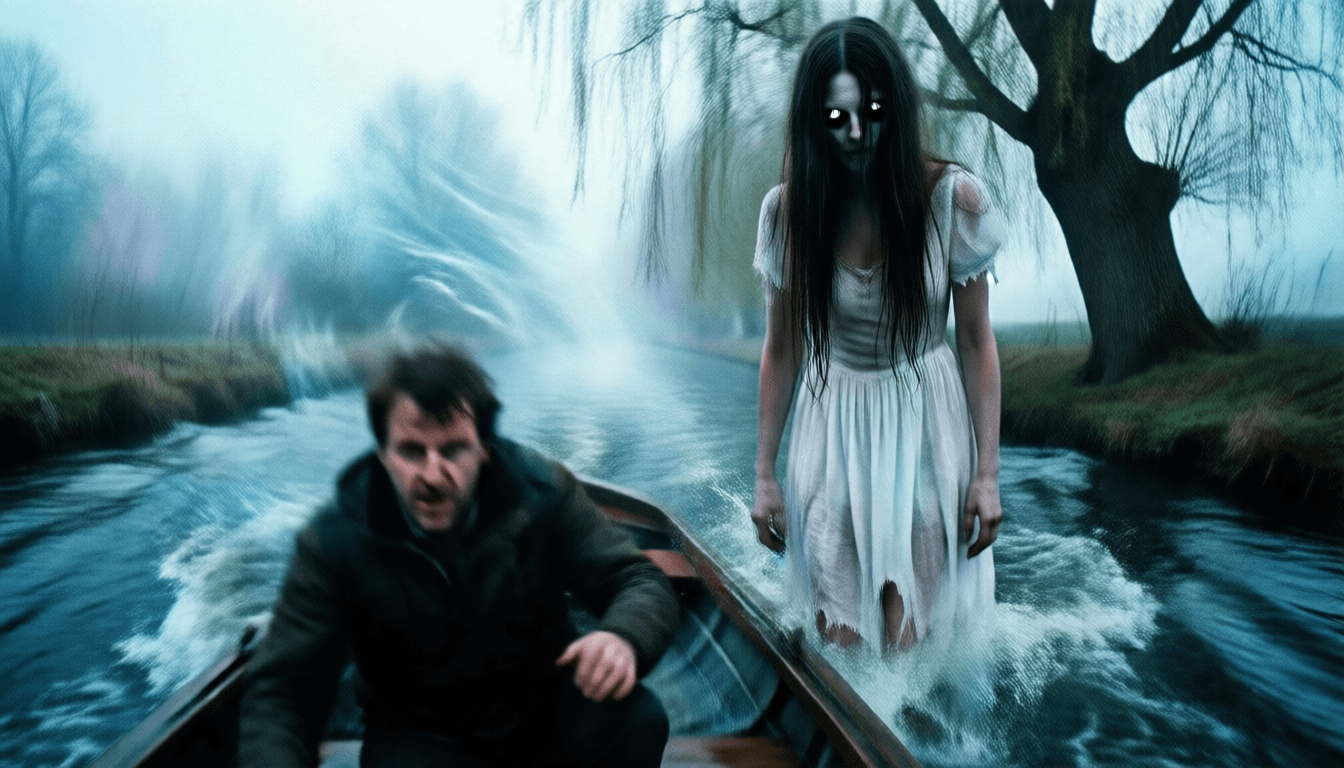
Then, from behind the willow, where the fog was densest, she appeared. It wasn't a reflection. It wasn't an optical illusion of light. It was a figure. She was tall, impossibly slender, shrouded in what looked like a damp, tattered white dress. The garment seemed to absorb even the meager light penetrating the fog. Her skin, even in the gloom, had an unnatural pallor, almost translucent. Long, dark hair clung to her face, obscuring features I instinctively knew I didn't want to see.
The water around her, which had been still, began to writhe. It wasn't currents. Miniature whirlpools, pulling at reeds and even the roots of the ancient willow, twisted up in localized spasms. My Kahn boat, seized by an invisible force, no longer drifted but began to accelerate directly towards her, my efforts with the paddling pole rendered utterly useless. An immense pressure settled on my chest, a physical terror that stole my breath.
As the Kahn boat closed the distance, she raised a hand. Her movement was fluid yet unnaturally deliberate, her palm facing me. The water directly beneath my Kahn boat suddenly surged upwards, violently and silently, tearing at the hull with a force that split the bow. I was thrown into the freezing canal. The water immediately transformed into a suffocating weight. It was less a current than a grasping hand, pulling at my limbs with impossible strength. Then I saw her. Standing directly above me, her face still obscured, but two deep, dark pinpricks of eyes stared into mine. My mind screamed at the impossible pressure and the cold that felt like fire. I thrashed, feeling my fingernails rake and draw blood from my arm even through my thick jacket. As the water pulled me deeper under the wreckage of the Kahn boat, a desperate, primal wave of adrenaline jolted me. Not against the pulling water, but carried by an unexpected surge, as if appearing from nowhere, away from her grasp and the overturned Kahn, into even colder depths.
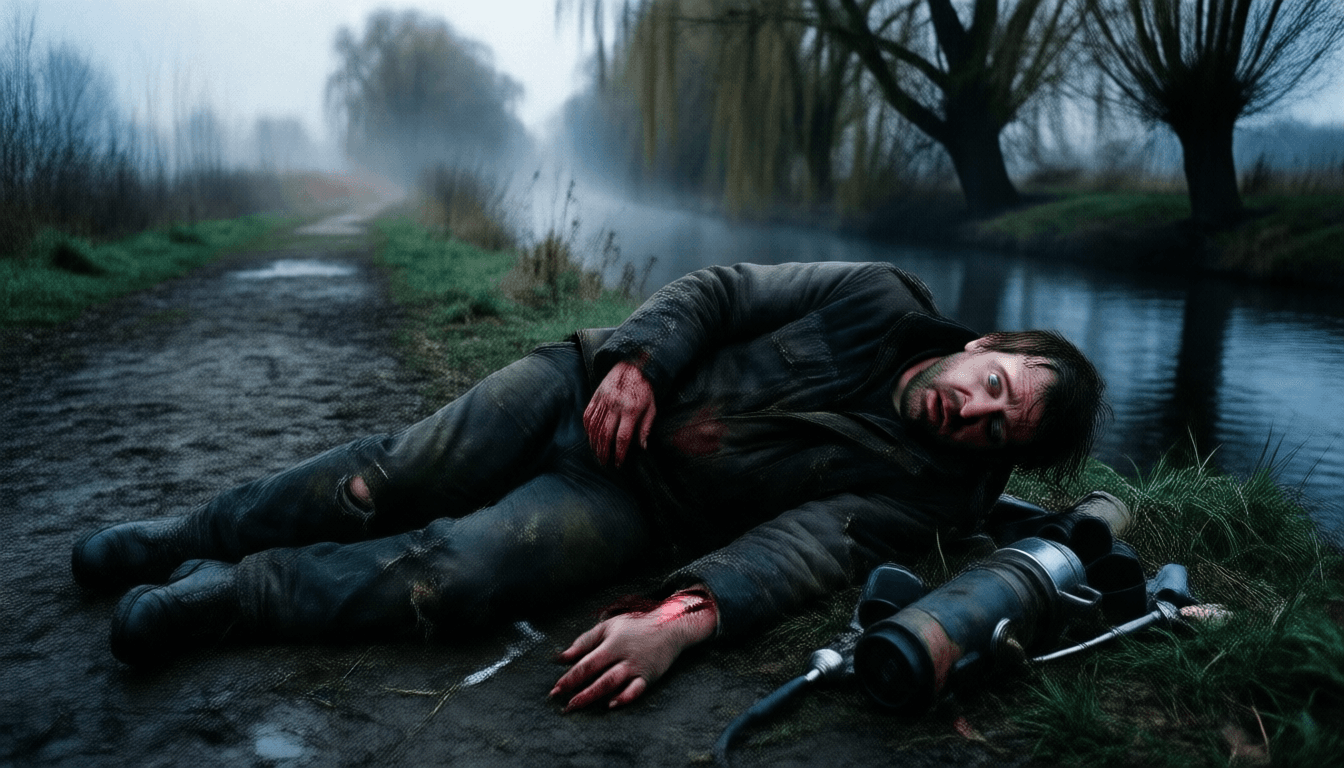
I eventually surfaced, gasping, kilometers away. Carried by a sudden, swift current, which was both a blessing and a new terror. My body was battered, hypothermic, and my left forearm bled from several deep lacerations. They looked like claw marks. I crawled onto a muddy riverbank near a forgotten path, my equipment scattered and damaged.
The camera's memory card was partially corrupted. Most of the early ambient recordings were intact, but the files from the climax were fragmented. One audio file, however, played a horrifying, high-pitched wail, inexplicable by any animal or natural phenomenon, before abruptly cutting off. The thermal camera retained one blurry still image: a faint, humanoid thermal signature, impossibly cold compared to its surroundings, standing where the Kahn boat capsized, then vanishing into nothingness at the very end.
The most disturbing evidence wasn't in my equipment. It was the wounds on my forearm. The lacerations were shallow, but weeks later, they remained unnaturally cold to the touch. My sleep was plagued by the sensation of crushing water and the deep, silent darkness of those pinprick eyes. And sometimes, whenever I stood by still water – a pond, a forgotten well – I could feel that faint, opposing pull. It was the phantom current that had haunted me in Spreewald, a subtle, constant reminder, an unyielding cold echo. The true horror wasn't simply escaping; it was realizing something had come with me. The whispering dominance of the 'White Lady,' the lingering chill. And on moonless nights, when the wind howled low, I could almost hear that distant wail. Not from Spreewald, but somewhere closer. My reflection, when I looked unwarily, sometimes seemed just a fraction too pale, too still.
[ CLASSIFIED VERDICT ]
[ACCESS LOG - SOURCE FILE]
This story is based on the legend of the 'White Lady (Weiße Frau)' of Spreewald, a UNESCO biosphere reserve in Brandenburg, Germany. She is said to appear in the foggy waterways, luring the unwary to their watery deaths, a tale long dismissed as mere folklore.