The Cold Gaze of Via Fani
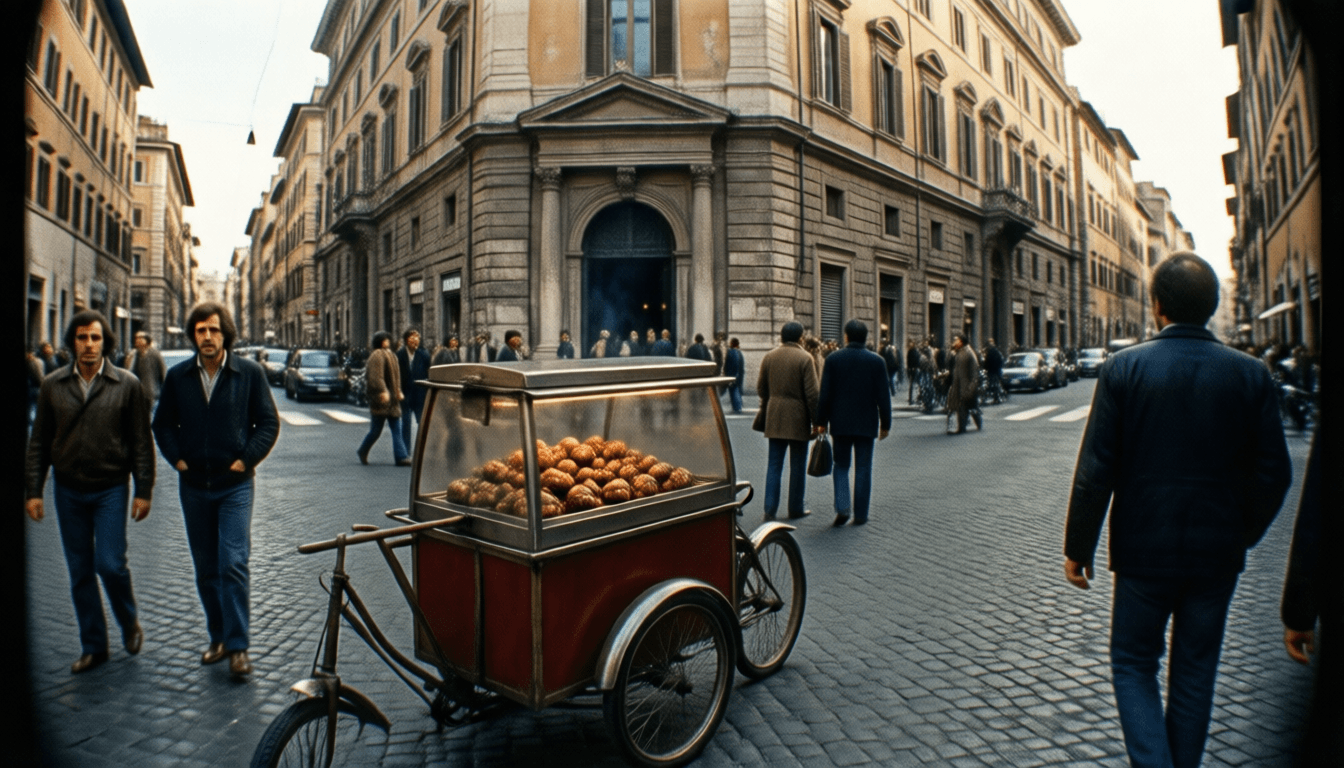
In the autumn of 2017, an interview record, belatedly brought to light from the belongings of an Italian journalist, drew public attention. The subject of that interview, conducted in the late 1990s, was a retired Carabinieri warrant officer who had been part of the initial investigative team at Via Fani during the Aldo Moro kidnapping. In the record, he mentioned the unusual placement of an unlicensed chestnut vendor's cart—a roasted chestnut cart—which typically occupied the Via Fani intersection on the day of the incident. He claimed the cart was subtly repositioned from its usual spot, perfectly obscuring a crucial line of sight towards Via Stresa at the moment the kidnappers' ambush began. In a cracking, trembling voice, he described it as "an act like a stage prop... creating a perfect blind spot exactly where it was needed," before abruptly ending the interview, citing "a chill that hasn't left for 20 years." Officially dismissed as the delusions of an old man, this unverified assertion, coupled with suspicions of internal complicity behind the kidnapping's chillingly precise planning, long fueled a low, ominous sense of doubt. It suggested not mere non-intervention, but active manipulation of the scene itself.
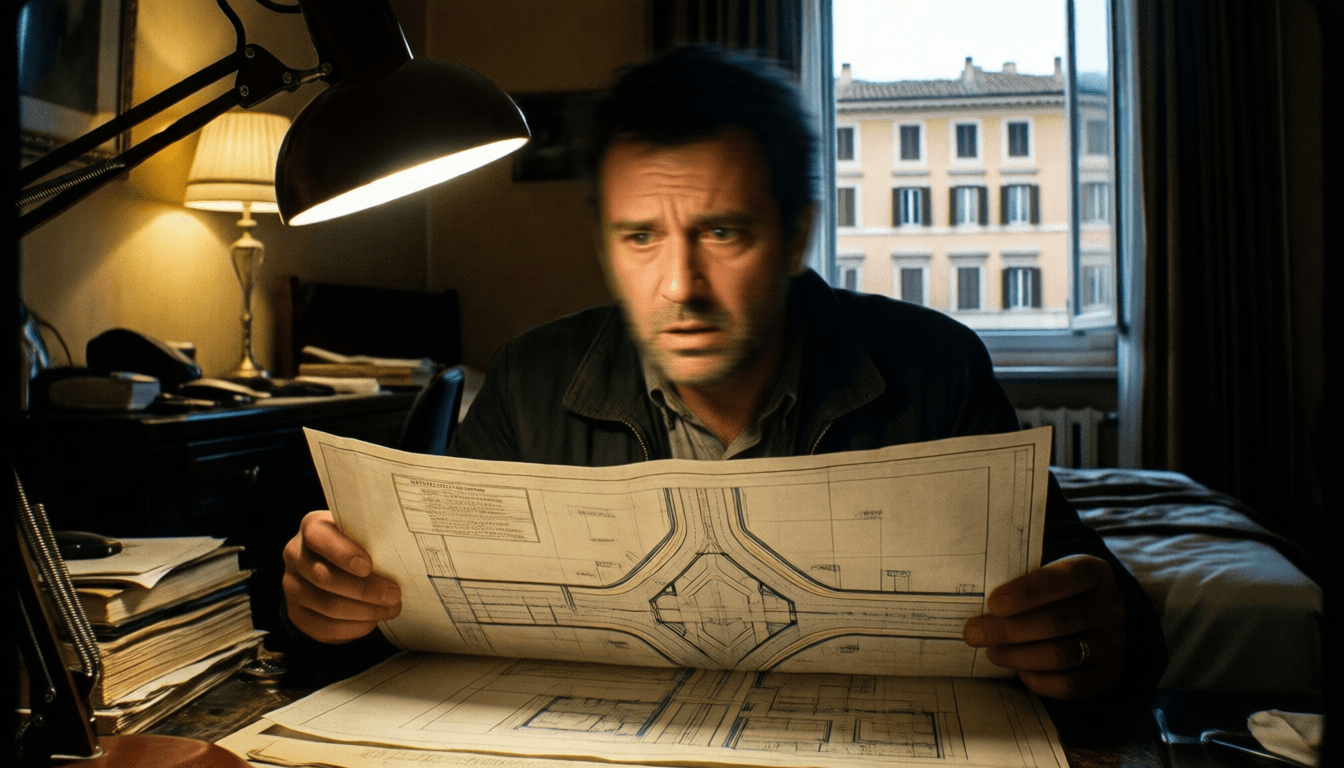
As an independent investigator of historical anomalies, my attention immediately fixed on that chestnut vendor's cart. That seemingly minor detail pointed to deliberate intervention. I obtained detailed blueprints of the Via Fani intersection from 1978 and cross-referenced them with architectural plans and photographs from the period. My goal was to confirm whether the cart's alleged placement indeed created an undocumented blind spot. In late October, I visited Via Fani, the air clear and cold, much like that fateful March morning. Though a bustling street now, it still bore the traces of history. I meticulously walked the street, consulting maps, photos, and even the weather forecast for that day. The physical details—subtle slopes, road curvatures, limited sightlines from specific access points—were precise. I focused on the cart's hypothetical position, carefully mapping potential lines of sight. My initial findings were shocking. Despite being unverified, the warrant officer's claim objectively aligned with a strategically vital vantage point. It was a sophisticated, almost surgical, obstruction.
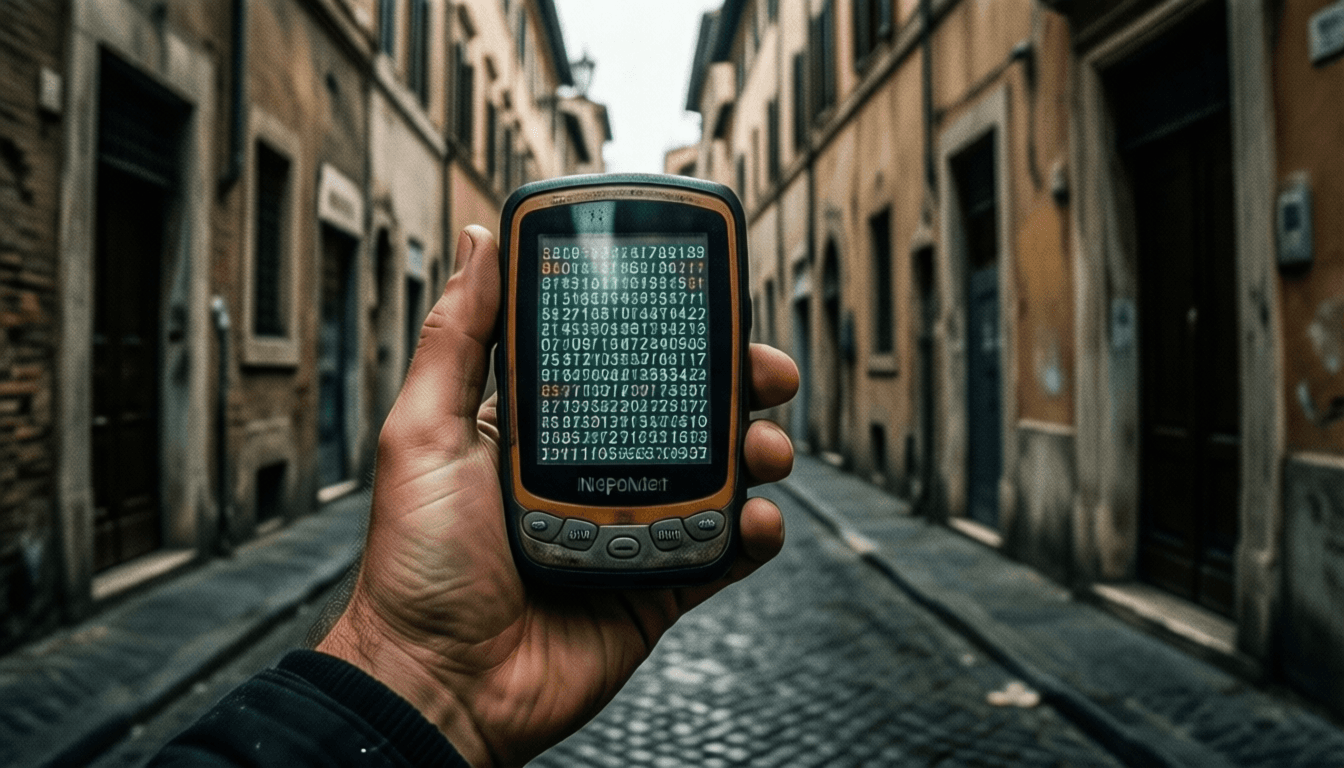
As I reconstructed the scene over several days, a strange sensation began to grow, as if the environment itself were alive. In the narrow alleyways beside Via Fani, peculiar echoes stretched and distorted unnaturally, as if the air itself refused to properly transmit sound. While measuring angles near the fateful intersection, my usually precise portable GPS suddenly fluctuated wildly, erratically dragging my position across the street. Then, it settled back to a spot several meters away in a 'subtle discrepancy'. Later, reviewing old photographs of the apartment buildings on the street, I noticed a distinctive, almost imperceptible discoloration on an upper-story exterior wall. This matched the outline of a special antenna array long since removed, a detail never mentioned in any official report. Most unsettling was the distinct, artificial stillness that occasionally settled over the street, the usually loud urban din subsiding into a distant murmur. It was as if the city itself held its breath, waiting for something. On the fourth night, faint scratch marks, absent the day before, were discovered on the bolt of my locked hotel room. In that moment, abstract paranoia about being watched transformed into concrete certainty.
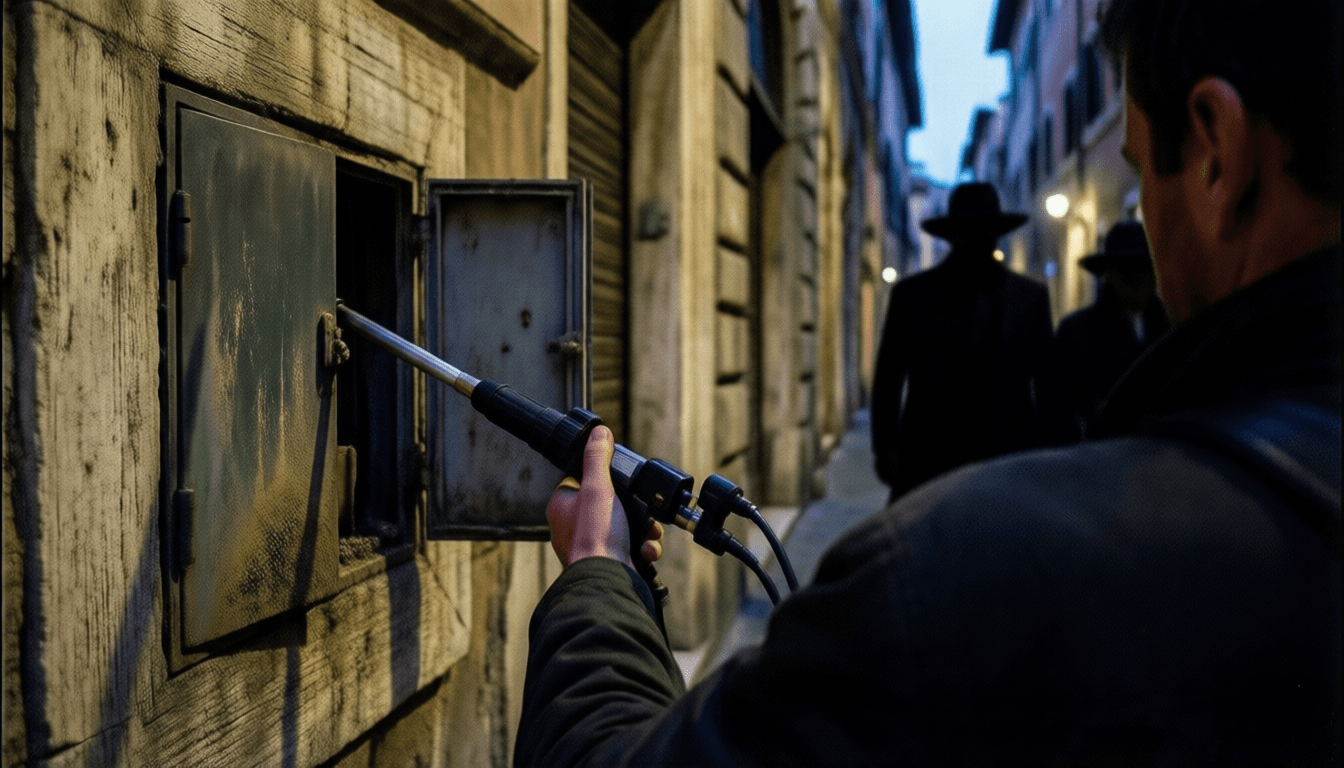
Drawn by the accumulating anomalies, I returned to Via Fani one last time. This time, I focused on a recessed utility access panel directly opposite where the Red Brigades had initiated their ambush, a panel consistently overlooked in official photographic evidence, obscured by vines and urban grime. A fragment from the retired warrant officer's interview, "Something... was embedded," echoed in my mind. Using a rented industrial endoscope, I threaded its flexible camera into a narrow crevice near the panel's hinge. The screen was grainy but clear: a small, lead-shielded box, not standard equipment. Its archaic design suggested a 1970s origin, precisely positioned to intercept communications or activate localized jamming signals.
The instant the endoscope transmitted that image, a faint, almost inaudible 'click' echoed from an alley behind me, completely out of sync with the city's murmur. The unnatural stillness I had felt before returned, deep and absolute. A shadow detached itself from a recessed doorway, then another emerged. They moved with an almost supernatural fluidity and coordination. Not a crowd. Dressed in dark clothes, faces obscured by wide-brimmed hats, two figures approached silently as twilight deepened. Their gait was profoundly different from ordinary citizens: too precise, too controlled. They were closing off the street. The heavy metal grate of a nearby manhole vibrated with a low hum, then incredibly, slowly lifted from below, blocking my escape route towards the street. I was trapped between the approaching figures in the alley and the impassable manhole. It was a chillingly efficient pincer movement. I detected a faint metallic tang, the smell of ozone, in the air. The figures didn't speak, made no gestures. Their intent was conveyed solely through their unwavering, converging movement.
As the first figure closed in on me, a hand, clad in a black leather glove, reached for the endoscope. Its speed defied human reflexes—a blurred movement, as if it passed through the air itself. The instant the endoscope was violently twisted out and its screen shattered, a sudden, sharp pain shot through my wrist. The world seemed to warp for a moment, and the city's noise returned as a violent, ear-splitting din, disorienting me. I stumbled, losing my balance.
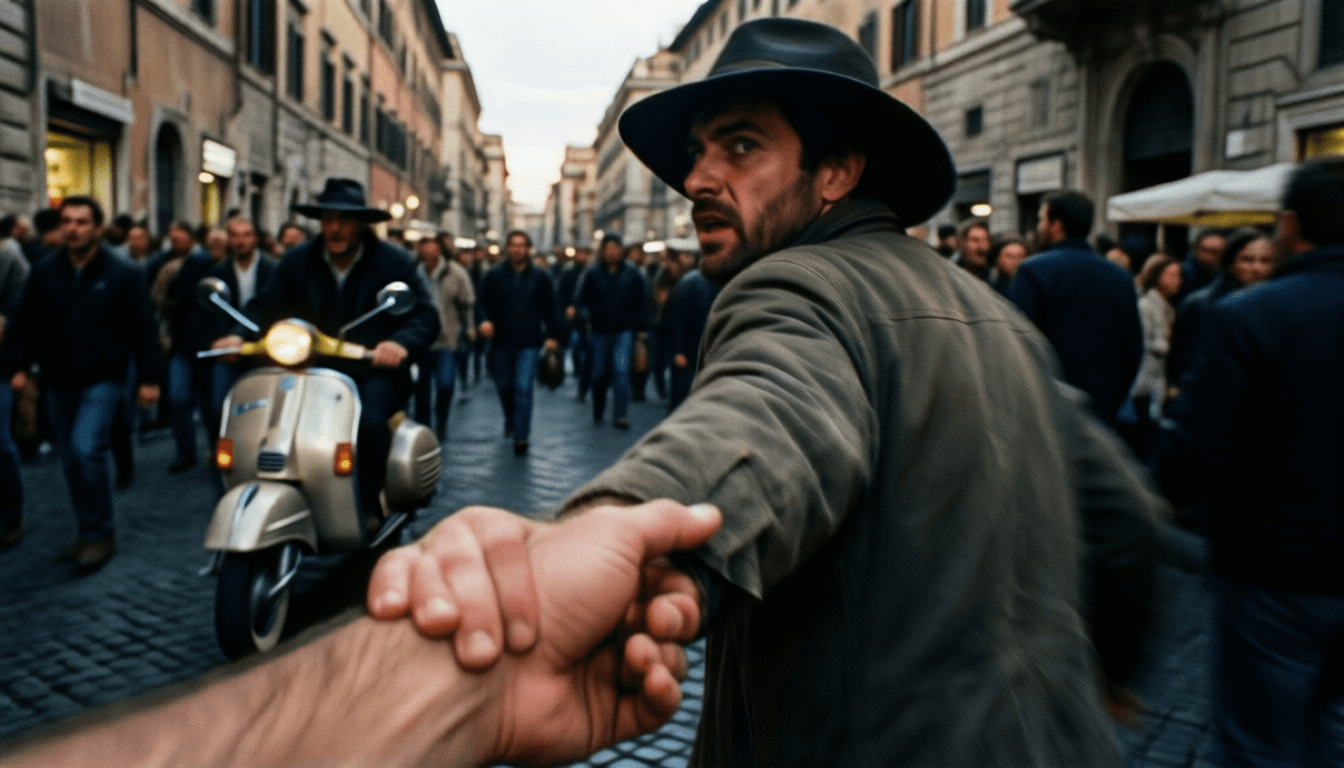
The precise sequence of events afterward remains a blur. Only fleeting afterimages linger: the sudden roar of a Vespa scooter, an unexpected surge of pedestrians from a side alley, and a brief, chaotic melee that created a momentary fissure in the figures' impossible precision. I ran, not daring to look back. Adrenaline surged through my veins, a cold shock, and my wrist throbbed. The endoscope was gone, and all the images were lost. My escape was a mere stroke of luck, a glitch in their calculated execution.
Back at the hotel, the city's sounds returned, but they offered no solace. Every distant siren, every sudden screech of brakes, felt like a potential prelude. My investigation had confirmed the chilling whispers: a hidden mechanism existed, a meticulously orchestrated 'stage prop' operated by forces beyond just the Red Brigades. That knowledge had already seeped deep into my core. It was a terrifying realization, transcending documents and theories. It was in the absolute, silent efficiency of those figures, their inhuman coordination, and the way the environment itself seemed to bend to their will. It wasn't just a conspiracy. A deeper, more expansive power existed, capable of warping even the perceived reality of a bustling Roman street. The physical evidence was gone, but the certainty was etched into my mind as an icy truth.
The "chill" the old warrant officer spoke of was no longer a metaphor. It was the profound cold that comes from knowing the greatest horrors are often perpetrated not by visible monsters, but by unseen hands moving with an eerie precision that defies the very laws of the world. The investigation was over, but the consequences of knowing had only just begun.
[ CLASSIFIED VERDICT ]
[ACCESS LOG - SOURCE FILE]
The 1978 "Aldo Moro Kidnapping" in Italy was a shocking incident where the Red Brigades abducted and murdered the former prime minister. This story is based on an unverified claim that a chestnut vendor's cart, unusually placed at the Via Fani intersection during the incident, obstructed the investigators' line of sight. It's an urban legend-like suspicion suggesting deliberate manipulation of the crime scene, going beyond mere coincidence.