The Chorus of Stillborns
In South Korea, the concept of ‘baby ghosts’ is not unfamiliar. Stories often link them to children lost too soon through miscarriage, abortion, or early death, who were never properly mourned. They usually manifest as faint cries, a chilling cold, or an inexplicable sense of unease. However, a particular variation of this baby ghost narrative has been chillingly emerging across specific online communities and local rumour boards in the Gyeonggi Province. The story focuses on a maternity clinic in Seongnam, abruptly closed in 1998 amidst financial scandals and vague rumours of ‘irregularities in treatment.’ Over the past five years, four young women, ranging from late teens to early twenties, have vanished without a trace from the vicinity of this clinic. Initially dismissed as simple runaways, these disappearances began to form a chilling pattern as a common thread emerged: all the women were in the early stages of pregnancy before they vanished. The most unsettling commonality stems from witness testimonies. Days before each disappearance, friends, family, and even passersby reported hearing faint, high-pitched cries. Described variously as 'like a trapped cat,' 'a baby crying but too distant to be real,' or 'just the wind sounding strange,' these consistently reported sounds were dismissed by authorities as auditory illusions or mere coincidence. Yet, the consistency among unconnected witnesses was undeniable. Online forums now whisper of 'the chorus of stillborns,' suggesting baby ghosts lure pregnant mothers to their forgotten resting place. Our office initiated preliminary inquiries to investigate the environmental factors and reported auditory anomalies behind these rumours.
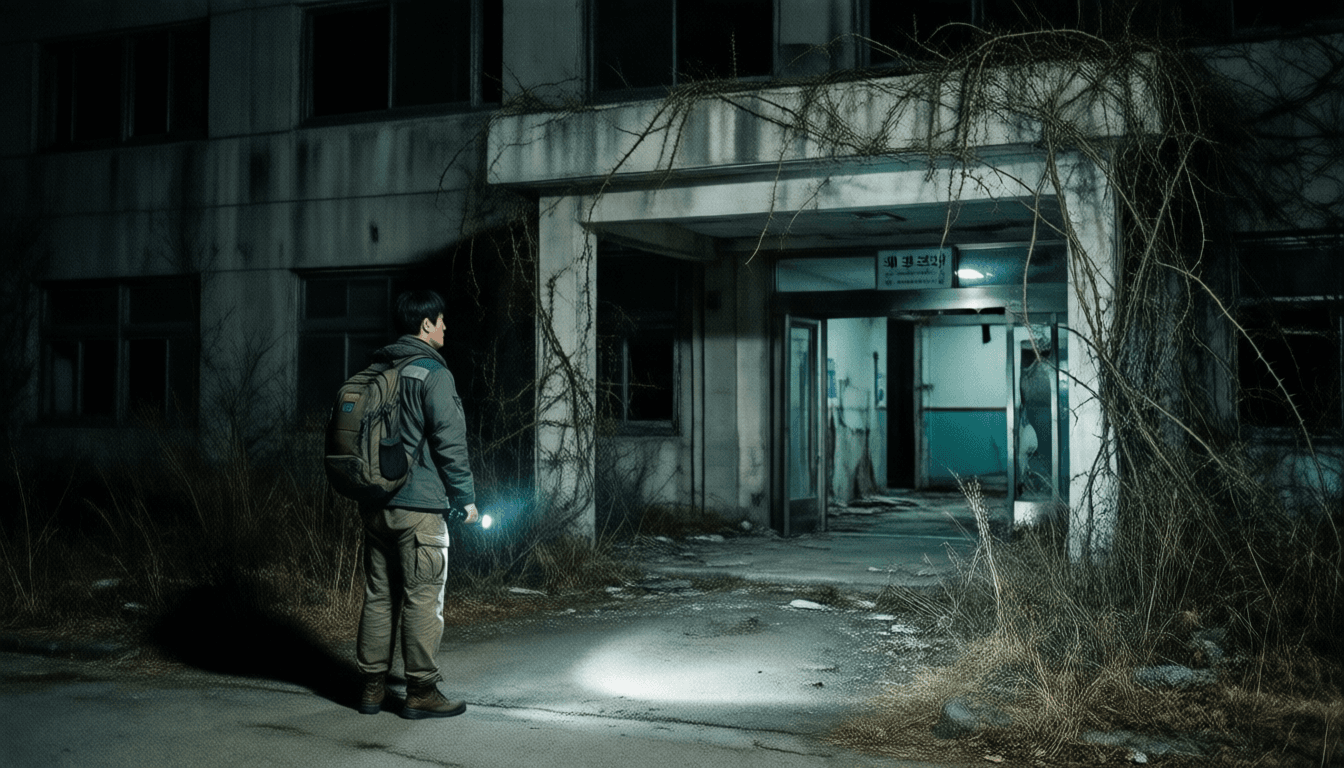
The Seongnam Maternity Clinic stood as a testament to urban decay. Its facade was peeling, windows obscured, and the once pristine entrance was choked with thorny vines. Entry was gained through a damaged rear service access, a common route for delinquents and urban explorers.
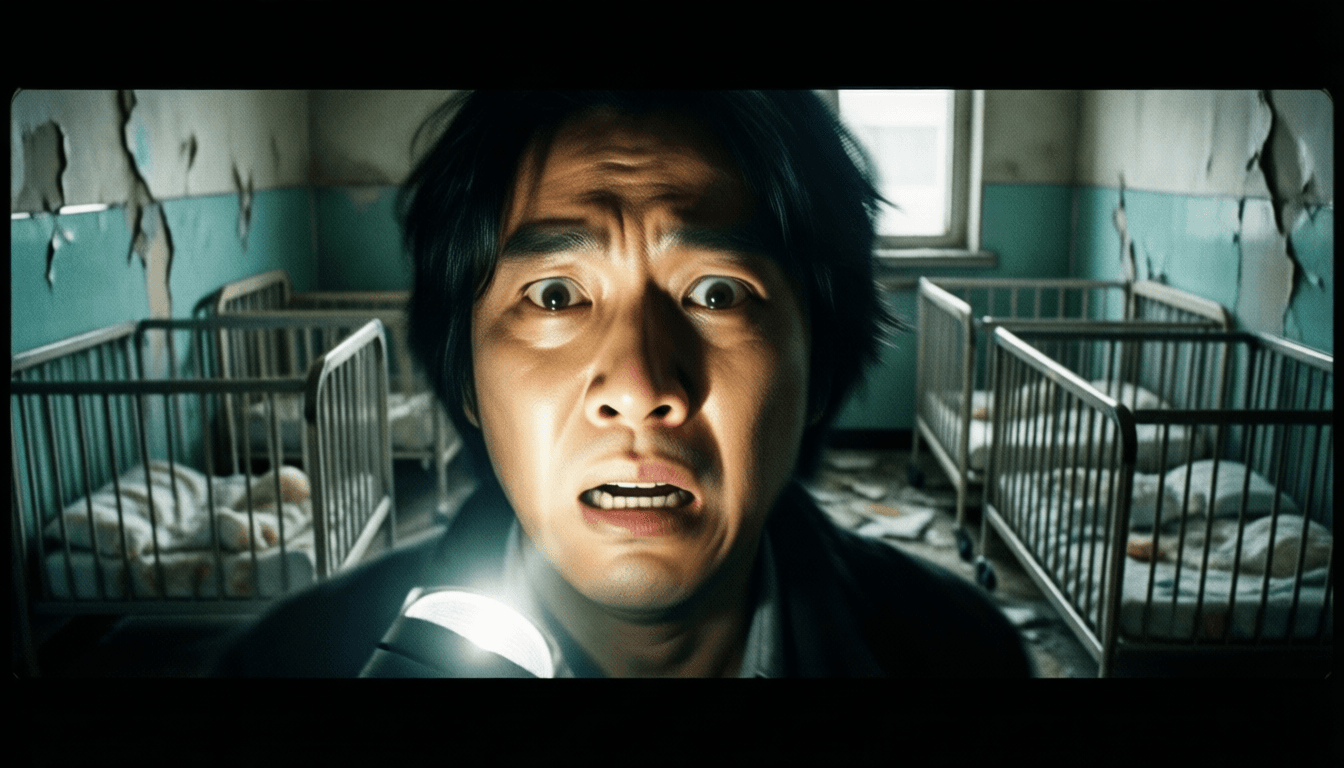
Inside, the air was immediately colder than the late autumn night outside. The metallic scent of rust mingled with a sickly sweet, decaying odour, assaulting the nostrils. Thick motes of dust, like fine ash, danced in the few strands of moonlight that pierced through shattered windows. The interior structure was typical: a reception, waiting rooms, examination rooms, and a second floor housing the obstetric ward. Every surface was covered in a fine, undisturbed layer of grime. In what was once a baby nursery, walls with faded, peeling depictions of cartoon storks and smiling infants flaked away. Overturned and broken cribs lay scattered like fallen dominoes. Amidst the debris were rusted IV stands, broken commodes, and patient charts, their ink faded beyond legibility.
The silence was profound, unnatural. Sound seemed absorbed rather than echoed. My footsteps, muffled by debris, landed with a dull thud and vanished almost immediately, as if the very air itself were stuffed with cotton. I activated a small, handheld audio recorder, calibrated to capture ambient sounds. Its tiny red light glowed like a lonely beacon in the gloom. The objective was to systematically explore the upper floors, specifically the obstetric ward and the baby nursery, seeking environmental anomalies, particularly auditory ones, that might align with 'the chorus of stillborns.'
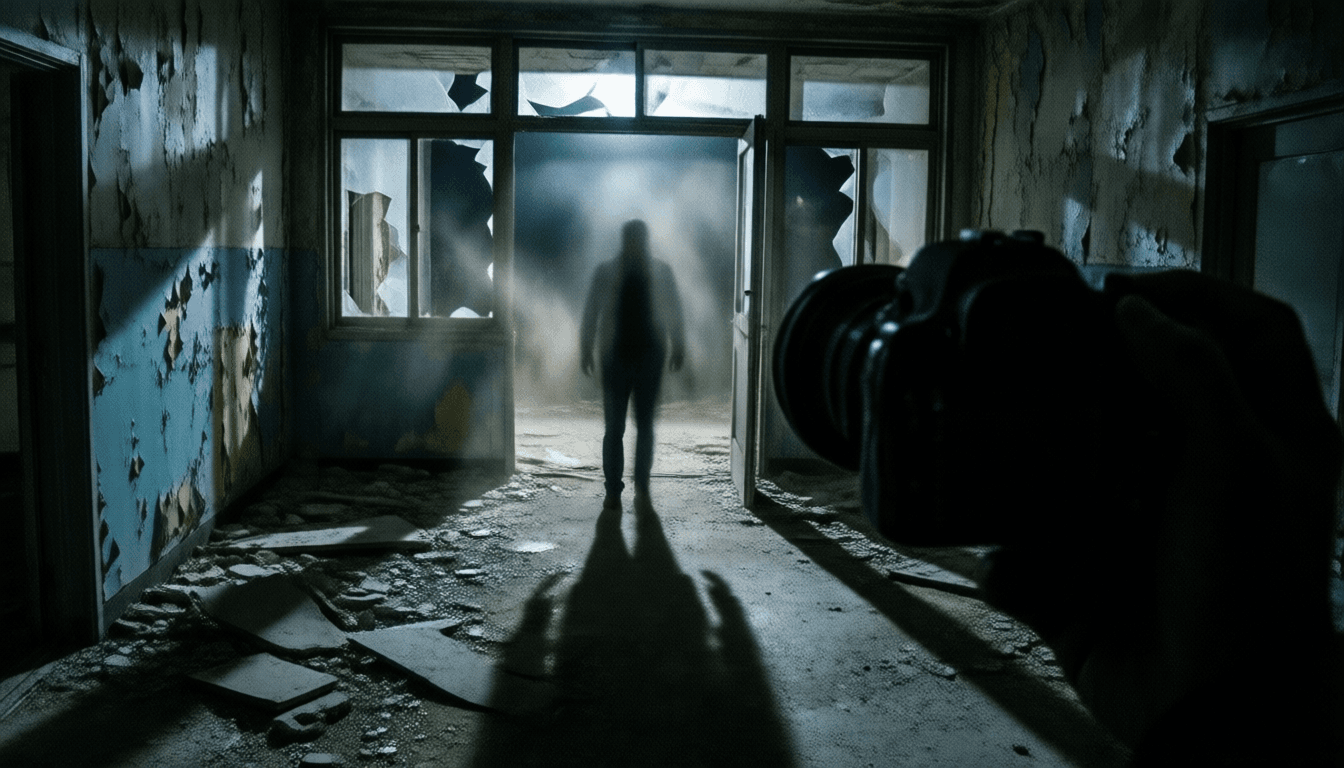
The first anomaly was thermal, not auditory. In what appeared to be a former delivery room, a distinct pocket of cold descended. It wasn’t the general chill of an abandoned building. It was a focused, bone-deep cold, seemingly originating from the centre of the room, raising goosebumps through thick clothing. Despite the ambient temperature not being particularly low, my breath visibly fogged. A handheld thermometer confirmed an almost eight-degree drop within a two-meter radius.
Then, I heard it. Faint. Imperceptible at first. Like static, or wind sighing in the distance, a whisper on the very edge of perception. It vanished as quickly as it appeared. I paused, listening intently. Nothing. In the silence, my mind dismissed it as internal auditory processing, making patterns.
As I approached the baby nursery, the air grew heavy, almost viscous. A subtle pressure began to build behind my ears, like a rapid change in altitude. My head ached faintly. Here, the cribs were more numerous, more damaged. One, in particular, was twisted into an impossible shape, its metal frame bent inwards as if crushed by an immense, localized weight.
Then I heard it again. Clearer this time. A soft, almost stifled sob. It seemed to emanate from beneath that impossibly twisted crib. I knelt, shining my powerful flashlight into the gloom. Nothing but shattered wood and dust. The sound vanished, only to reappear from behind, then from the hallway, shifting its position. Never quite clear, always on the verge of exact identification, playing a cruel game with my spatial awareness. My heart began to pound. The audio recorder, which I quietly checked, showed a flat line, recording nothing but ambient hum. This discrepancy was deeply unsettling. The cries continued intermittently. Soft gurgles, faint sniffles. Always just out of reach of my full attention, always vanishing when I turned. The psychological intensity was immense. The building wasn’t just silent; it was lying.
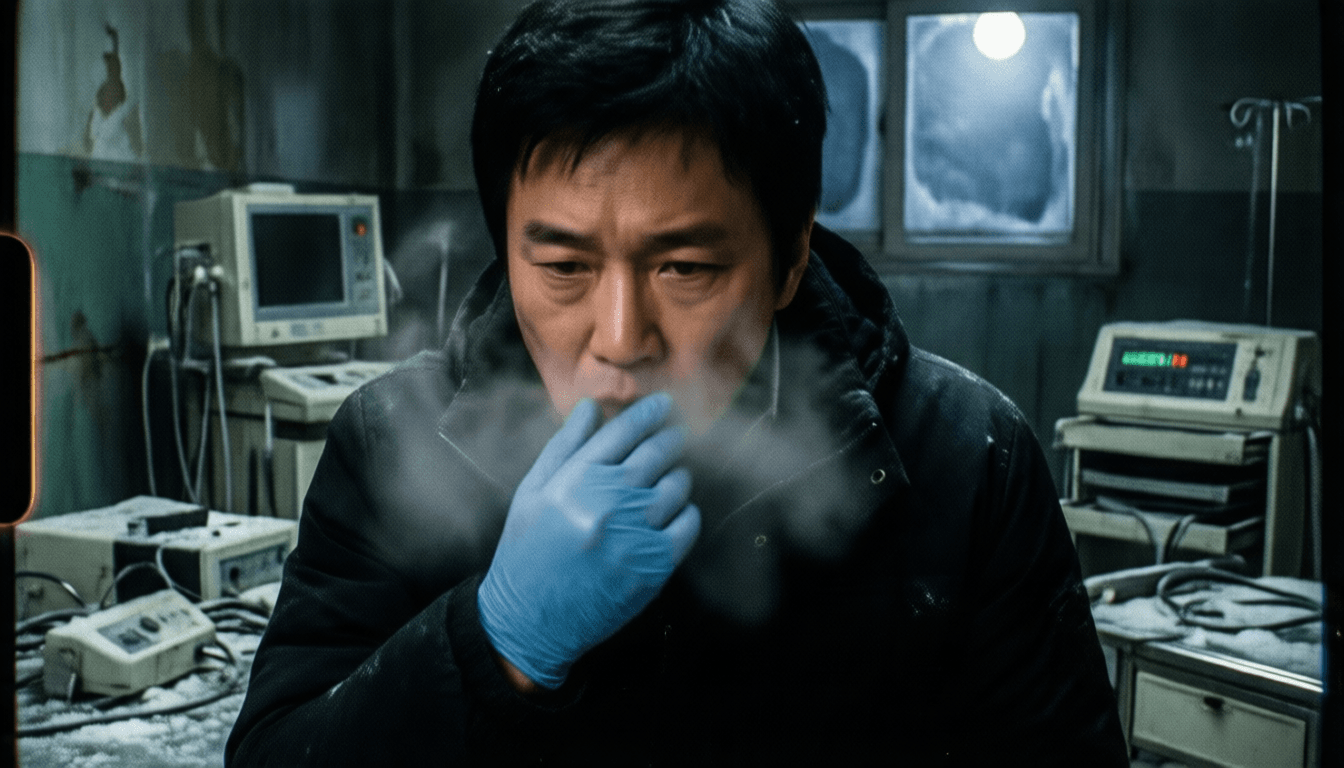
In a corner of the nursery, hidden behind an overturned cabinet, I found it. A small, carefully folded baby blanket. Faint blue, adorned with tiny yellow ducks, impossibly clean compared to the surrounding filth. It was an object of such purity and pathos in this decay. As my gloved hand reached for it, a sudden, sharp drop in temperature enveloped me completely. Colder, more intense than anything before. The air froze instantly, an absolute chill that burned my lungs.
And then the wailing began. Not faint whispers, but raw, desperate baby cries assaulted my ears from all directions simultaneously. It wasn’t merely loud; it reverberated inside my head, vibrating my skull, paralyzing thought. My own cry of alarm, a shriek that tore from my throat, was utterly absorbed by the overwhelming din, vanishing as if it had never left my lips.
The decrepit floorboards beneath me groaned violently. Not from my weight, but as if something massive and unseen had abruptly settled upon them. My balance faltered, my knees buckling. A chilling sensation of multiple, small, ice-cold fingers gripping my ankles, then calves, pulling me down with unbelievable force. No visible entity, just a suffocating pressure and impossible grip.
I fell. Thrashing against the invisible force, struggling to regain balance, to breathe. The wailing grew more intense, now a single, unbearable scream that seemed to rip reality itself. My vision blurred. I felt myself being dragged, slowly but inexorably, towards the twisted crib. My backpack, containing my equipment, was torn from my shoulder. A physical, impossibly intimate, yet predatory sensation of a small, cold forehead pressing against my cheek, followed by a cold, open mouth against my ear, became vivid. These were not mere specters. They were physical, possessive presences.
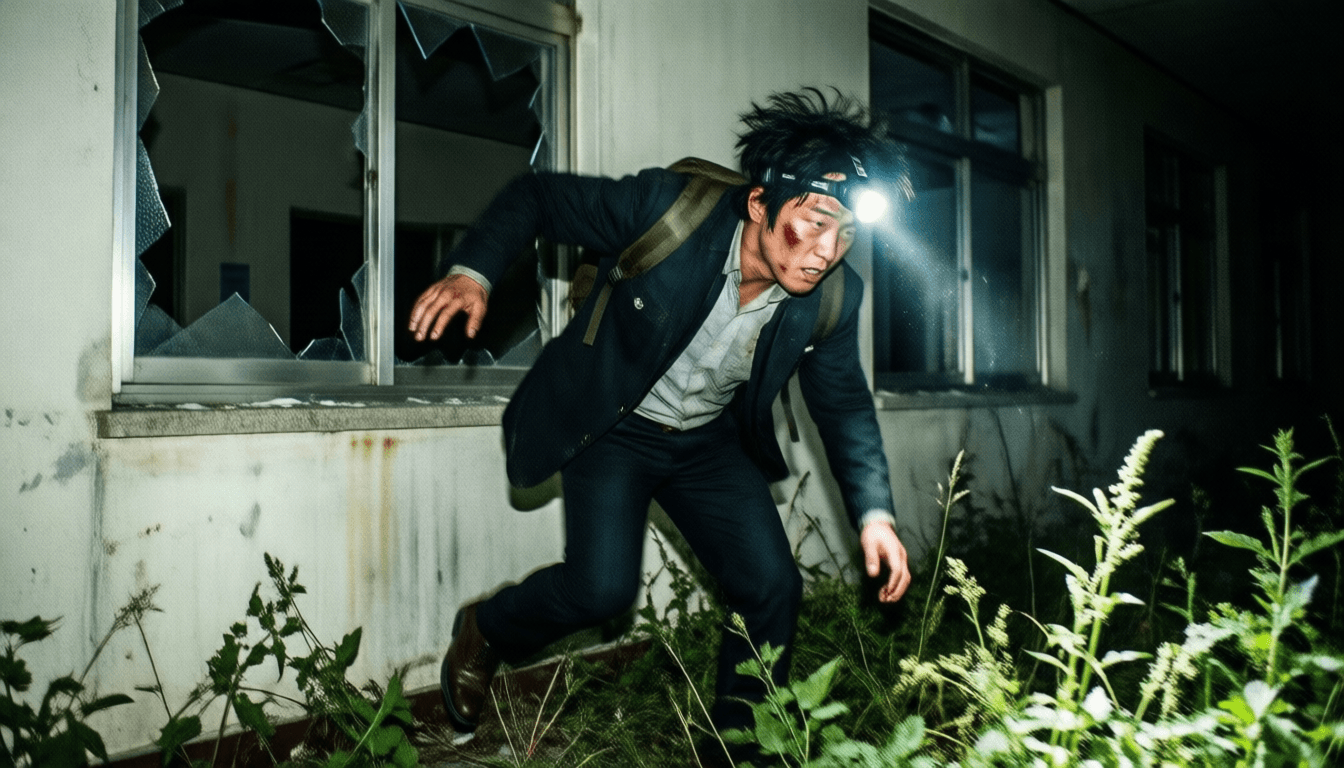
With a final, desperate surge of adrenaline, I kicked blindly. My foot connected with something incredibly solid yet yielding. The sensation on my legs loosened slightly. I stumbled, rolled, gasping for air. My lungs burned. The wailing diminished slightly, morphing into a low, guttural growl that vibrated through the floorboards. Vision swimming, I scrambled, ignoring the pain in my ankle. I burst out through a rotten window, landing roughly on the overgrown weeds below, thankfully inhaling normal night air.
I returned battered. My right ankle was badly sprained, my throat raw as if I'd been choked. The sensory overload was immense. The memory of the cold, the wailing, the pressure, the feel of unseen presences on my skin remained chillingly vivid. The next day, my audio recorder, retrieved via a discreet contact (I couldn't re-enter the building), showed nothing recorded during the climax, save for static. However, reviewing my helmet camera footage, there was a nearly imperceptible, brief flicker in the frame just before I fell. A subtle disturbance of dust particles suggested something that did not reflect light had moved.
A week after my escape, local news broke. Another young woman, reportedly in early pregnancy, had vanished from the Seongnam area. A friend, briefly interviewed, mentioned hearing faint, high-pitched baby cries near the old maternity clinic the day before she disappeared. "The sound was so sad, it just drew her in," she stressed.
My recovered backpack held one final, chilling piece of evidence. Embedded in an outer pocket, which I had meticulously checked before entering the clinic, was a small, faded blue button. Clearly from baby clothing, its smooth surface was cold to the touch. It had not been there when I entered.
The Seongnam Maternity Clinic remains abandoned, its secrets unyielding. The official police theory for the disappearances still leans towards a serial abductor—a human predator. But I know otherwise. The cries aren't merely a warning. They are an invitation. The vanished women weren't just taken; they were chosen. And somewhere, in the cold, quiet rooms of that forgotten clinic, the chorus of stillborns continues. Waiting for new listeners, their tragic lullaby luring the unwary, the innocent, to join their eternal, unseen chorus of sorrow. Baby ghosts are not mere specters. They are a persistent, possessive force, forever seeking what was denied to them. And sometimes, they find it.
[ CLASSIFIED VERDICT ]
[ACCESS LOG - SOURCE FILE]
In Korea, 'baby ghosts' are a familiar concept, referring to the souls of children lost early due to miscarriage or abortion. This story's variation builds upon an urban legend where these baby ghosts lure pregnant women in their early stages into their forgotten resting places. They are said to manifest through faint cries and sudden coldness.