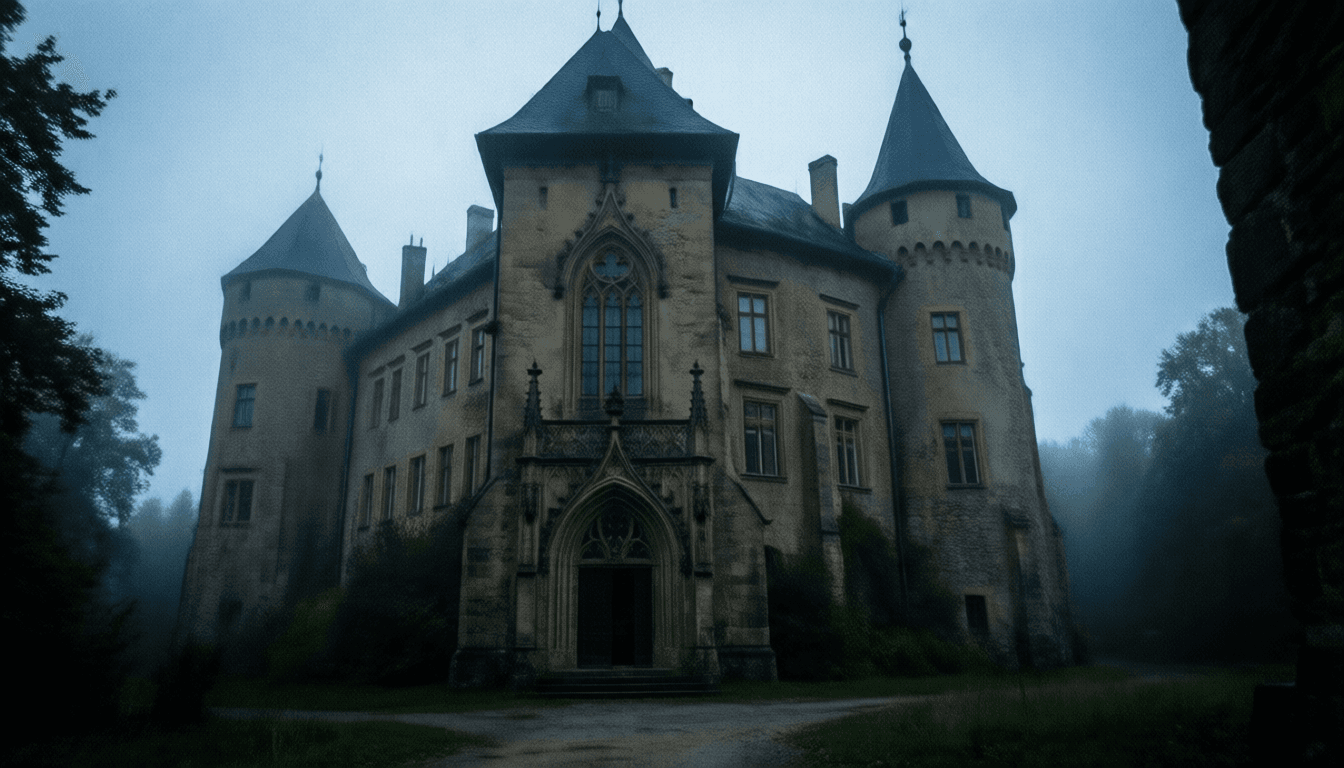
The Castle That Swallows Time
The official guidebooks for Houska Castle, nestled deep within the Bohemian Forest of the Czech Republic, speak of its peculiar architectural style. They describe it not as a Gothic fortress built for strategic defense, but rather to imprison something. They highlight the chapel, where the altar is built directly over a deep fissure locally known as the 'Gate to Hell.' While historians dismiss this as mere folklore, its strange architectural contradiction continues to raise questions. Why build a sturdy castle and chapel over an uninhabitable void? Records from the late 17th century mention inexplicable disappearances of livestock from the surrounding forests, coinciding with costly renovations to reinforce the chapel's foundations. Most recently, in 2018, a popular vlogger known for exploring ruins, posted a series of increasingly frantic updates from the castle grounds. His last post was an unintelligible audio file titled “Beneath the Chapel,” filled with static, pierced by a deep, resonant 'hum.' Independent spectrum analysis later revealed this sound to be an ultra-low frequency, consistent with severe seismic activity not officially recorded in the region at the time. He has been missing ever since.
Drawn by this confluence of historical anomalies and recent unexplained disappearances, I too made my way to Houska Castle. Posing as an architectural preservation specialist, I secured access and, under the guise of documenting the chapel's unique arched ceilings, obtained the rare opportunity for an overnight stay. The castle itself felt less like a monument and more like something sealed. The air within its stone walls was unnaturally still, absorbing sound rather than reflecting it. My boots on the stone floors produced only a dull 'thud' instead of the expected echo in ancient halls. The deeper I ventured, the colder the air grew, a chill emanating from the stone itself, localized to specific areas regardless of external temperatures. My gear bag, filled with sensors, felt leaden. My objective was the chapel, specifically the space beneath the altar where the void was rumored to reside. Here, the stones were different: larger, rougher, bearing numerous signs of reinforcement, as if hastily driven in. The silence here was absolute. My breathing sounded impossibly loud in the oppressive vacuum of sound, yet strangely distant at the same time.
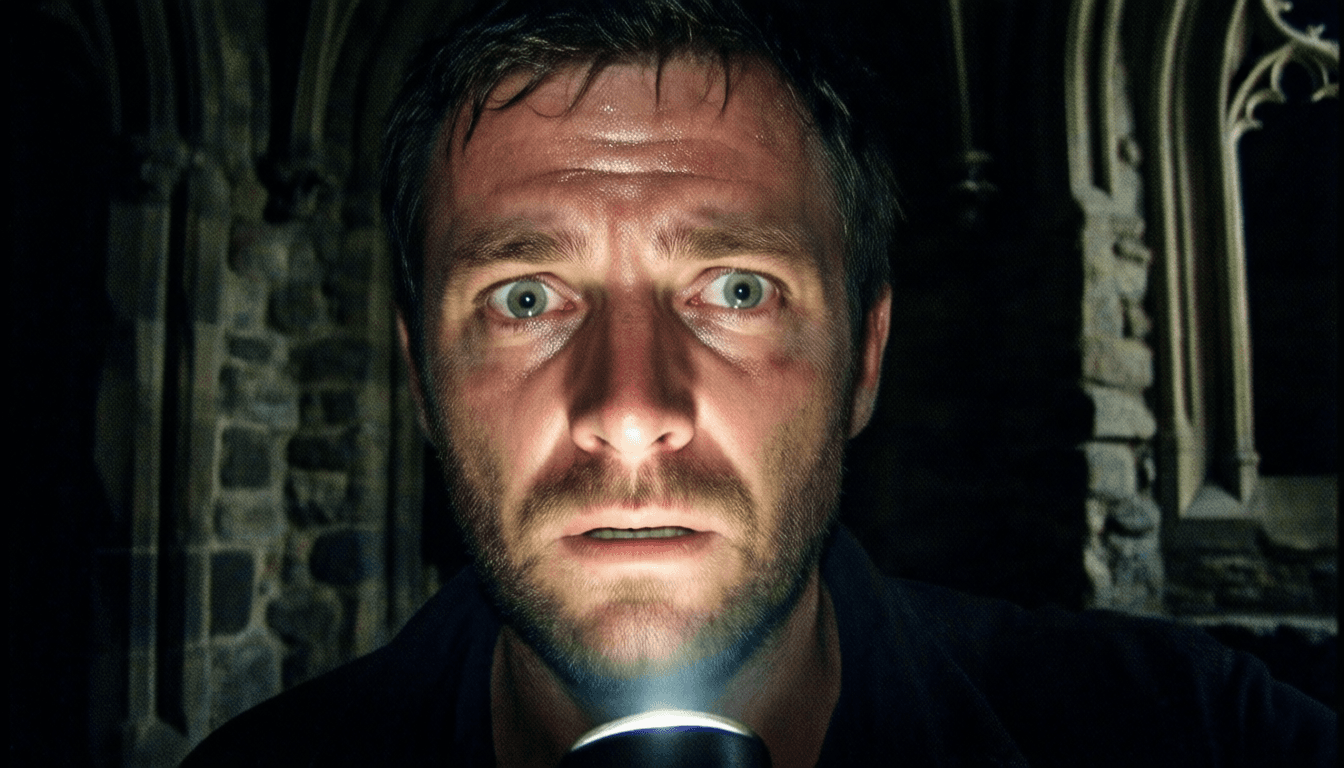
I began setting up environmental sensors and calibrating my ultra-low frequency detector. The surrounding silence was excruciatingly deep. Yet, my thermal camera picked up erratic cold spots, drifting and swirling without any discernible air current. My flashlight beam, which usually cut sharply through the darkness, seemed to lose intensity; the light itself appeared dimmer, as if the air itself were a physical barrier. Then, a subtle shift in the room's physical properties registered. A small pebble dislodged from my boot and struck the stone floor with a 'click.' I heard that faint 'click.' And for a brief, uncanny moment *before* the stone hit the floor, a second, subtly fainter echo. My heart dropped. This was no auditory illusion. It was an undeniable, momentary distortion of time. The ultra-low frequency detector, designed to pick up sounds below human hearing, began to glow an intense red, its display showing unprecedented patterns of deviation, like the rhythmic beat of a colossal, buried heart. A faint smell, a mix of damp earth and metal, began to permeate the air, growing denser and heavier, accompanied by a faint, almost imperceptible hum felt not in my ears, but in my chest.
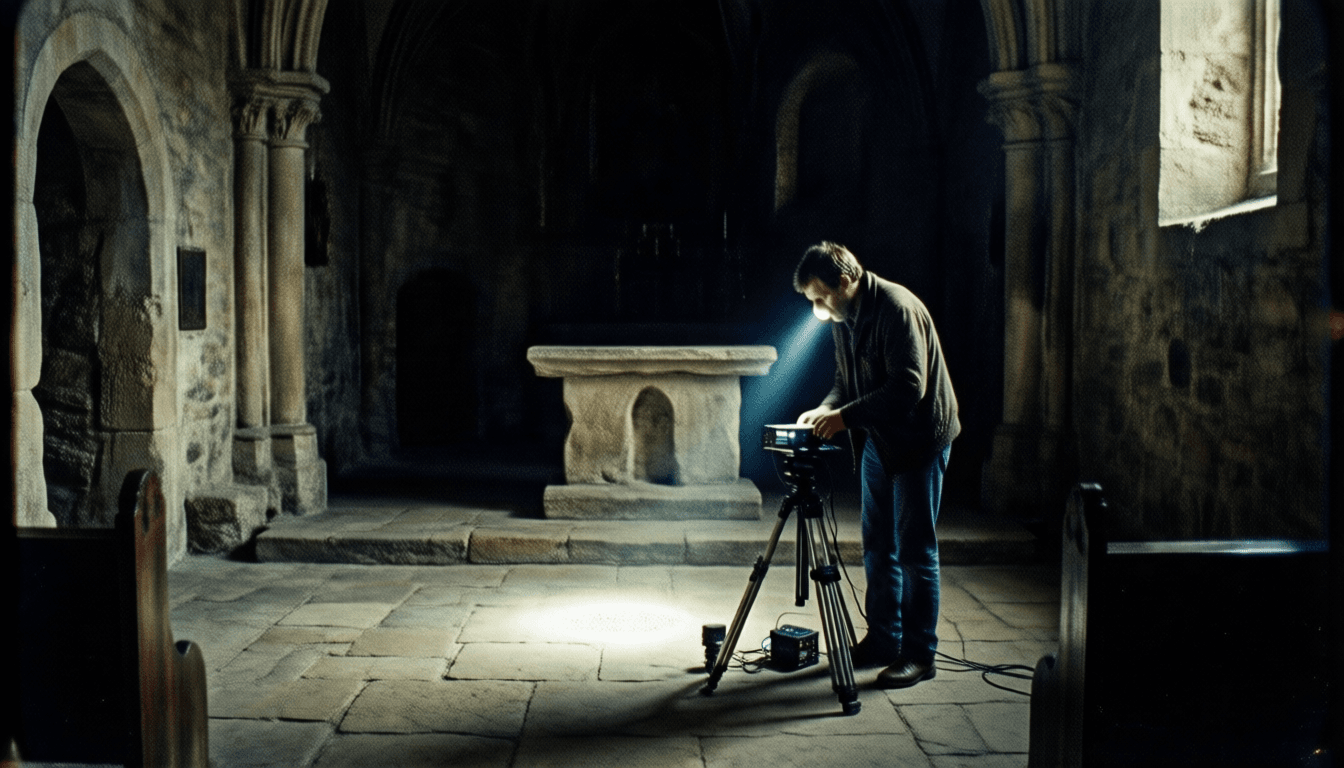
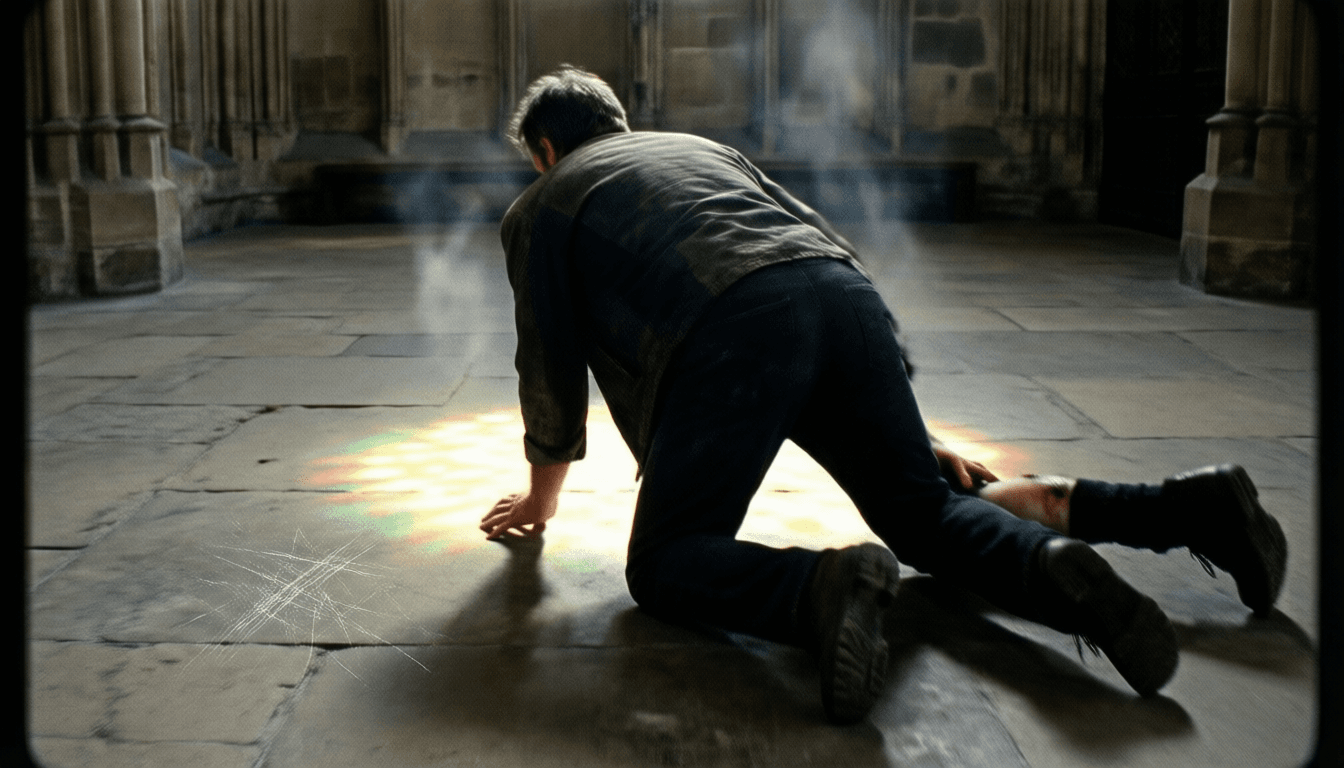
I set up a seismograph at the vlogger's last known location, where the chapel floor was notably colder and sounded hollow when tapped. As I knelt to initiate the scan, the air above that very spot began to noticeably shimmer, not from heat, but from distortion, as if viewing through thick, uneven glass. The hum in my chest intensified, transforming into a physical pressure. And then, the impossible happened. A localized collapse of auditory space: my breathing, previously so loud, became a distant whisper, as if happening miles away. The ambient sounds of the castle reversed, turning into an all-consuming vacuum. A sudden, overwhelming pulling force from the shimmering distortion. My equipment bag, lying on the floor, slid towards the glowing spot with unnaturally rapid speed, as if gravity itself were concentrated at that single point.
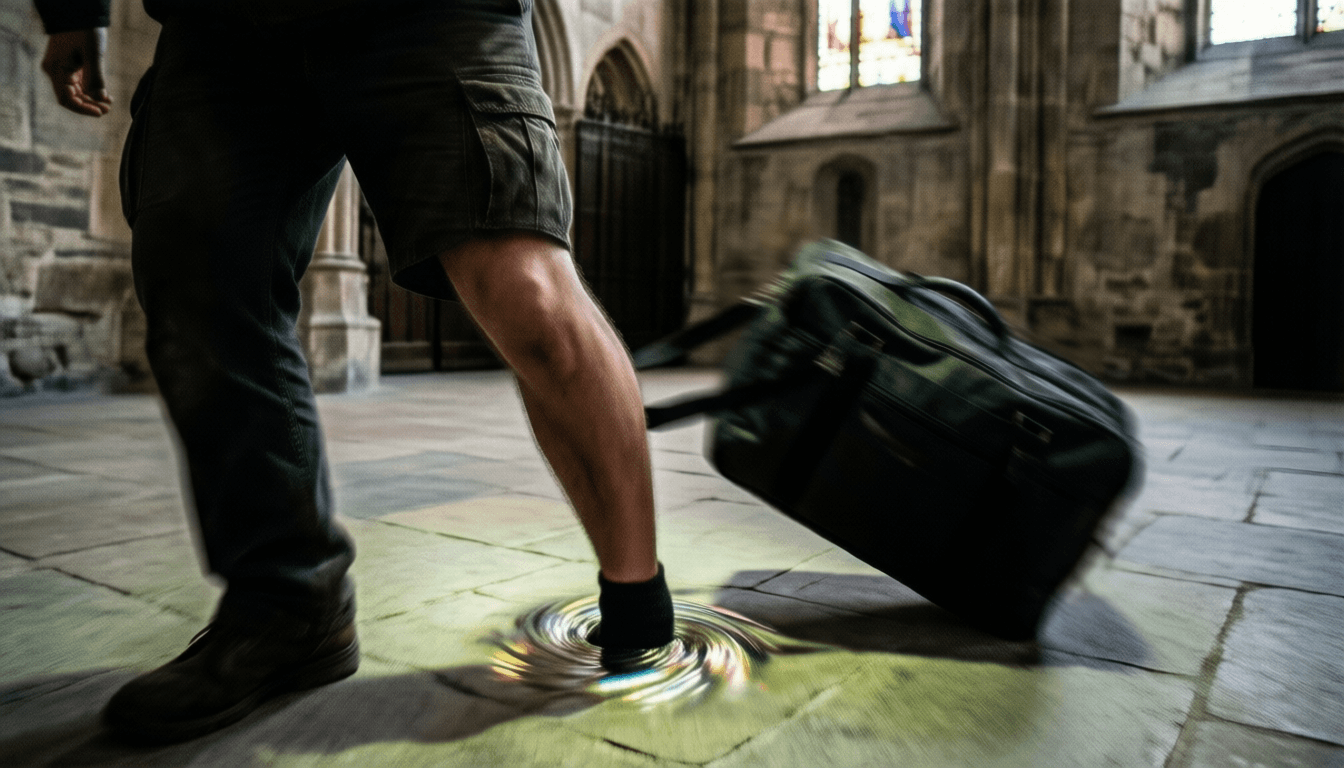
Before I could react, the distortion reached out. It wasn't a tendril or a limb, but a concentrated force, an invisible implosion of space, that latched onto my left leg. I was flung forward, my face hitting the cold stone floor, the air instantly knocked from my lungs. The force wasn't merely pulling me; it was twisting me. Forcing my leg into impossible directions, I felt flesh and bone stretch with a sickening shriek. My vision narrowed. I gasped for air, but the surrounding space felt incredibly dense, like breathing underwater. I could feel the stone floor beneath my cheek vibrating with the ultra-low frequency hum, which was now a deafening roar within my bones. Primal fear surged, and I desperately twisted backward, clawing at the mortar in the stone cracks, trying to break free from its grip. The invisible force pulled harder, and a sharp, burning pain shot through my ankle. With a raw, animalistic cry, I gave one last desperate twist and tore free, a piece of my boot's sole remaining embedded in the stone as if exposed to impossible pressure and heat. My leg screaming and my heart hammering against my ribs, I scrambled backward, away from the glowing void. I was consumed by the certainty that the gate hadn't simply opened; it had actively tried to grasp me.
I escaped Houska Castle that night, a chaotic blur of terror-fueled adrenaline and excruciating pain. While the superficial wounds healed and bruises faded, a deep ache in my leg persisted, particularly when the weather shifted or when a sudden, inexplicable cold spot would linger in my apartment for hours before dissipating. My seismograph, recovered from the chapel floor with the help of local authorities, was shattered, its internal components twisted into impossible shapes. The ultra-low frequency detector, though malfunctioning, yielded a single damaged audio file. Played through forensic audio analysis software, it revealed not static, but my panicked gasps at the climax, played in reverse, synchronized with the deep, rhythmic 'thump' that perfectly matched the initial ultra-low frequency readings. But what truly chills me isn't the sound itself, but the frequency of that 'thump': a perfectly uniform 0.73Hz. An extremely low wavelength traveling through hundreds of miles of earth and rock, the frequency typically associated with the deepest, slowest seismic tremors. And sometimes, mostly in the deep silence of night, I feel it. A faint, almost imperceptible vibration in my apartment floor, a deep, rhythmic pulsation, as if the earth beneath my feet is quietly, patiently, breathing. I know now. The gate isn't merely a place. It's a connection. And once a channel is opened, it might not close so easily.
[ CLASSIFIED VERDICT ]
[ACCESS LOG - SOURCE FILE]
Houska Castle, located deep in the Bohemian forest of the Czech Republic, is unlike ordinary castles; legends say it was built not for defense, but 'to contain something.' Specifically, the castle's chapel is said to be built directly over a deep chasm known as the 'Gate to Hell,' leaving its peculiar architectural purpose a mystery. This narrative reflects a long-standing fear of an enigmatic presence hidden beneath the castle.