The Beast of Gévaudan: Shadow of Valençay
The Beast of Gévaudan has, for centuries, been relegated to a peculiar historical footnote in French folklore for most people. The over 100 deaths between 1764 and 1767 in the remote mountainous region of the former province of Gévaudan were simply attributed to an exceptionally fierce wolf or a serial killer. Even after royal hunters, the military, and professional wolf hunters were dispatched, and the 'beast' was officially shot and displayed, the attacks did not cease; instead, they became even more intense.
However, historical records tell a far stranger tale. Descriptions speak of a 'massive body,' 'reddish fur,' 'powerful jaws,' and eyes possessing 'abnormal intelligence.' Victims were typically found with cruel and precise wounds to the head and neck, partially disfigured, but not usually consumed for flesh. Even more chillingly, many survivors testified that the creature 'was not a wolf.' They spoke of abnormal agility, an ability to disarm traps, and an 'immunity to conventional musket balls,' a point repeatedly noted by skilled hunters. The persistence of the attacks, the extraordinary methods, and the consistent eyewitness accounts of 'bizarre and supernatural' characteristics defied conventional zoological explanation.
My current investigation began with a series of ominous reports suggesting a reincarnation of this centuries-old terror. They were occurring in the heart of the Gévaudan region, specifically in the remote Valençay Valley. Approximately six months ago, there was an increase in livestock disappearances, followed by two hikers vanishing without a trace. Local authorities attributed it to predatory wolves or stray bears, but the descriptions from the few witnesses who claimed to have seen something chillingly matched historical accounts: a swift red blur, an abnormally large build, and a silence incongruous with its size. One farmer, after a non-fatal encounter, described it as 'eyes that stared, not hunted.' My goal was to visit Valençay, survey the terrain, and see if I could find a credible modern explanation for the echoes of a fear from centuries past.
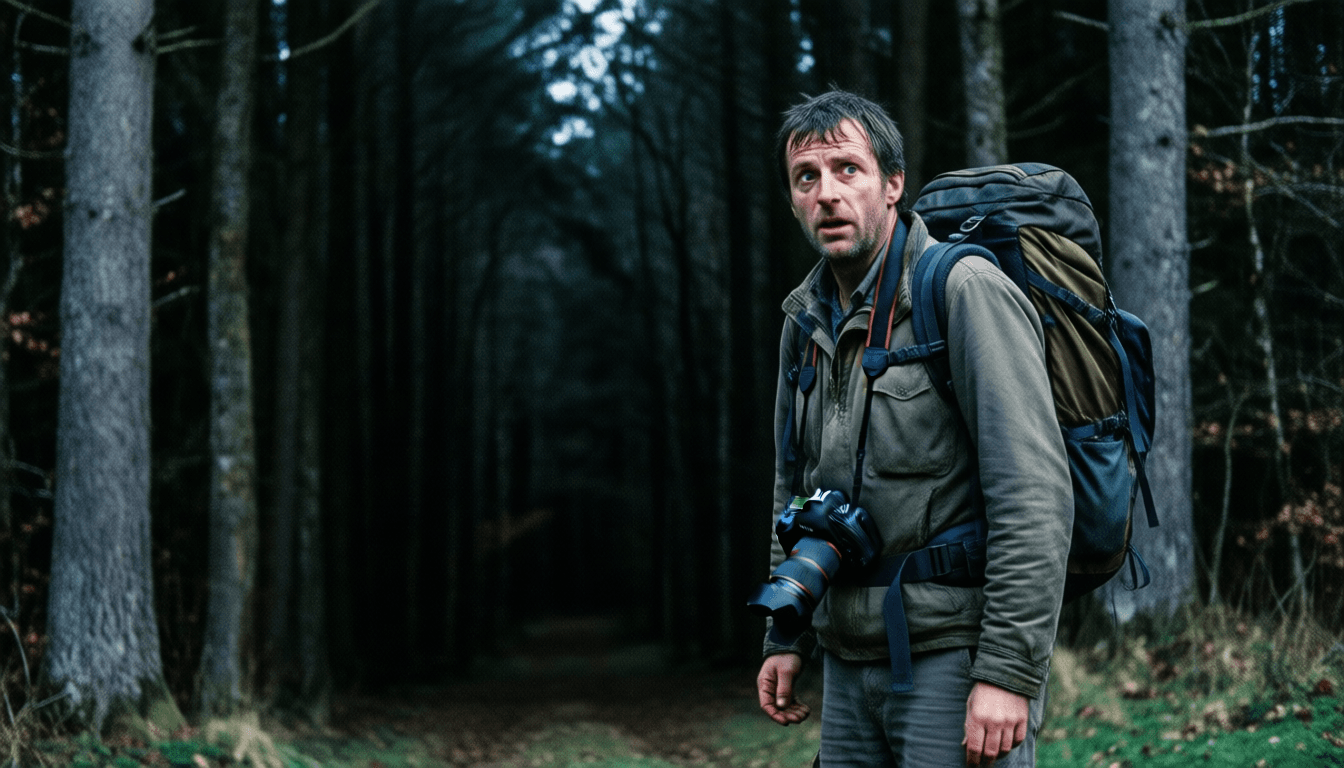
I arrived at the edge of the Valençay forest, a place historically notorious for some of the Beast of Gévaudan's most brutal attacks. The air was unnaturally still, and ancient pine trees formed a dense canopy, creating pockets of impenetrable darkness even in midday. My equipment consisted of thermal binoculars, high-sensitivity recorders, a reconnaissance drone for aerial scans, and basic field gear. The first few hours were uneventful, but that only deepened my unease. The forest floor was strangely devoid of typical wildlife signs. No squirrels chattered, no birds sang except for a distant, mournful cry. The thermal scanner detected no large animals, yet the feeling that someone was watching me was almost physical.
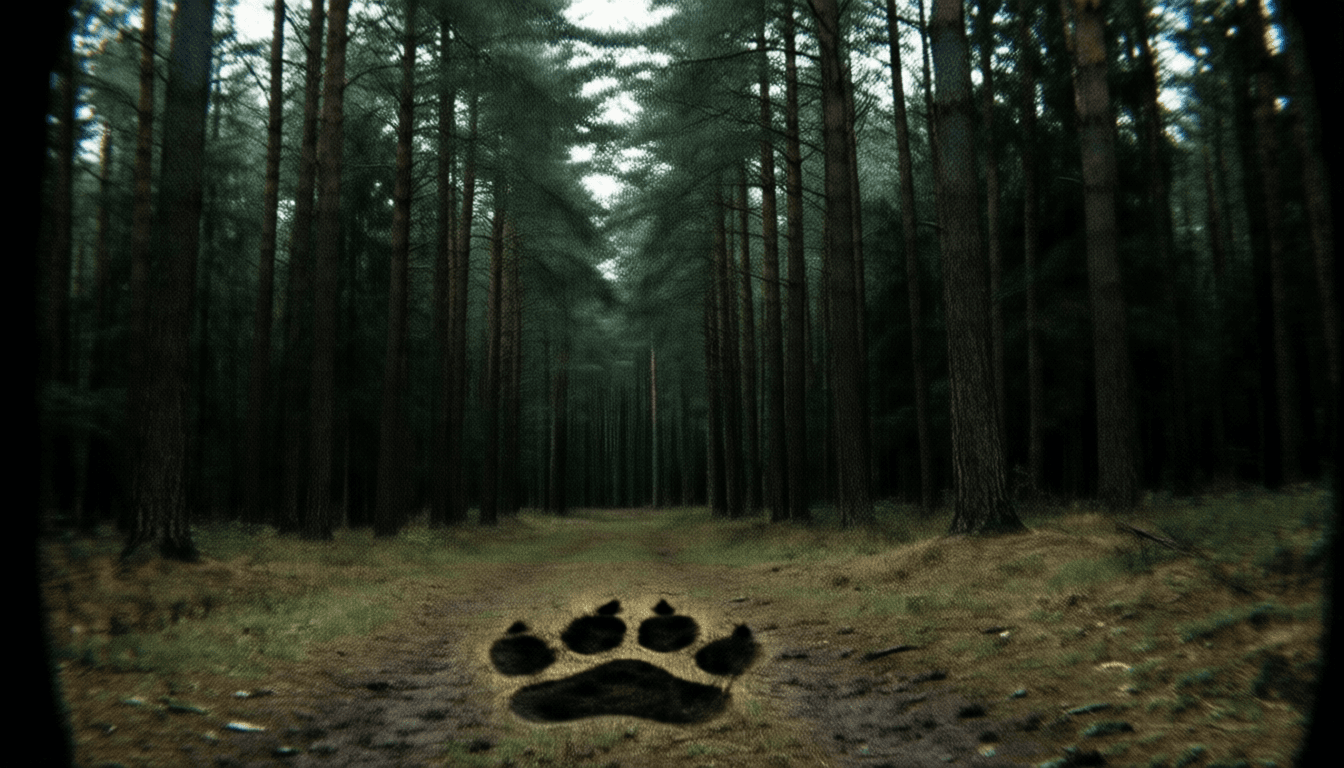
I began tracking what appeared to be exceptionally large canine paw prints, far too big for local wolves. The tracks led deep into a particularly dense part of the forest, into a small, rocky valley with a flowing stream. The prints abruptly stopped at a steep rock face, as if the creature had simply vanished. A quick drone search revealed nothing. This was the first, subtle crack in the surface of rationality.
As twilight approached, the stifling silence of the forest deepened. The valley grew colder, shadows longer and sharper. I set up passive recorders to catch sounds imperceptible to human ears. It was then that subtle anomalies began. The stream, which flowed freely down the valley, seemed to drag at certain points, pooling as if against its natural gradient, before resuming its course. Echoes of my own movements, caught on my directional mic, would return an impossible fraction of a second late, or from a direction perpendicular to the source of the sound. It was disorienting, a feeling of subtle distortion in the known laws of physics.
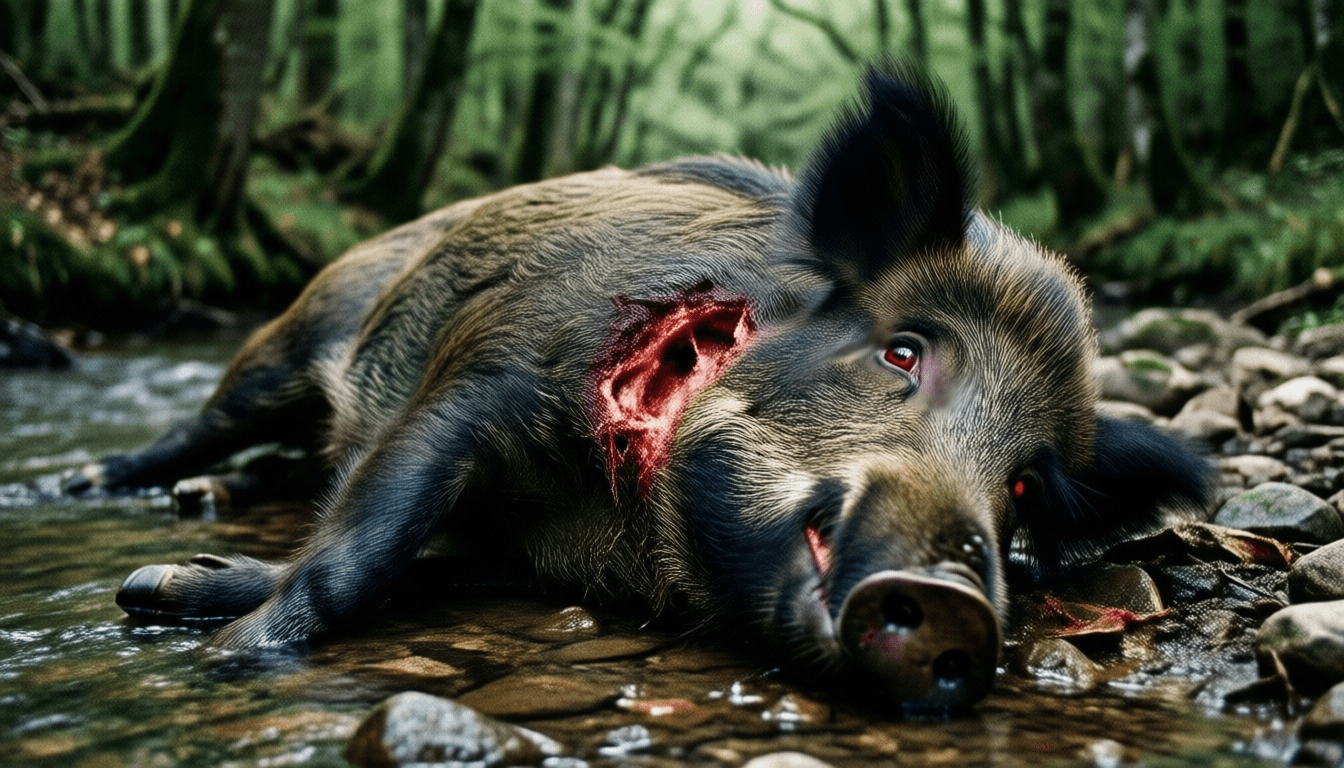
Then I found it. In a shallow cave beneath an overhang, there was a recently deceased kill. Not a hiker, thankfully, but a wild boar. Its size suggested a fierce struggle, yet its massive body lay completely still. Its neck was torn with the precision I had read about in historical accounts: a clean, devastating wound. More unsettlingly, the boar's eyes were wide with terror, and though clearly dead, its body was still warm despite the cooling evening air. This hunt was not for food; the carcass was largely intact save for the fatal injury.
Playing back my recorders, perfect stretches of silence were punctuated by faint, raspy sounds, distorted as if recorded underwater or through thick earth, interspersed with the ragged breathing of something immense. The breathing rose and fell in pitch, almost rhythmically. The pattern sent a cold shiver down my spine. The feeling of being watched was no longer a mere sensation; it was a certainty. A chilling realization washed over me: whatever killed this boar, whatever moved through this valley, knew I was here.
Night had fully descended, an inky blackness barely pierced by my headlamp. The air grew heavy with the smell of damp earth and something else—metallic, savage. I was attempting to backtrack as silently as possible. Then, the subtle distortions of reality intensified. The trees around me seemed to sway, shadows coalesced and stretched impossibly. The ground beneath my feet felt uneven, as if the very terrain of the valley subtly shifted.
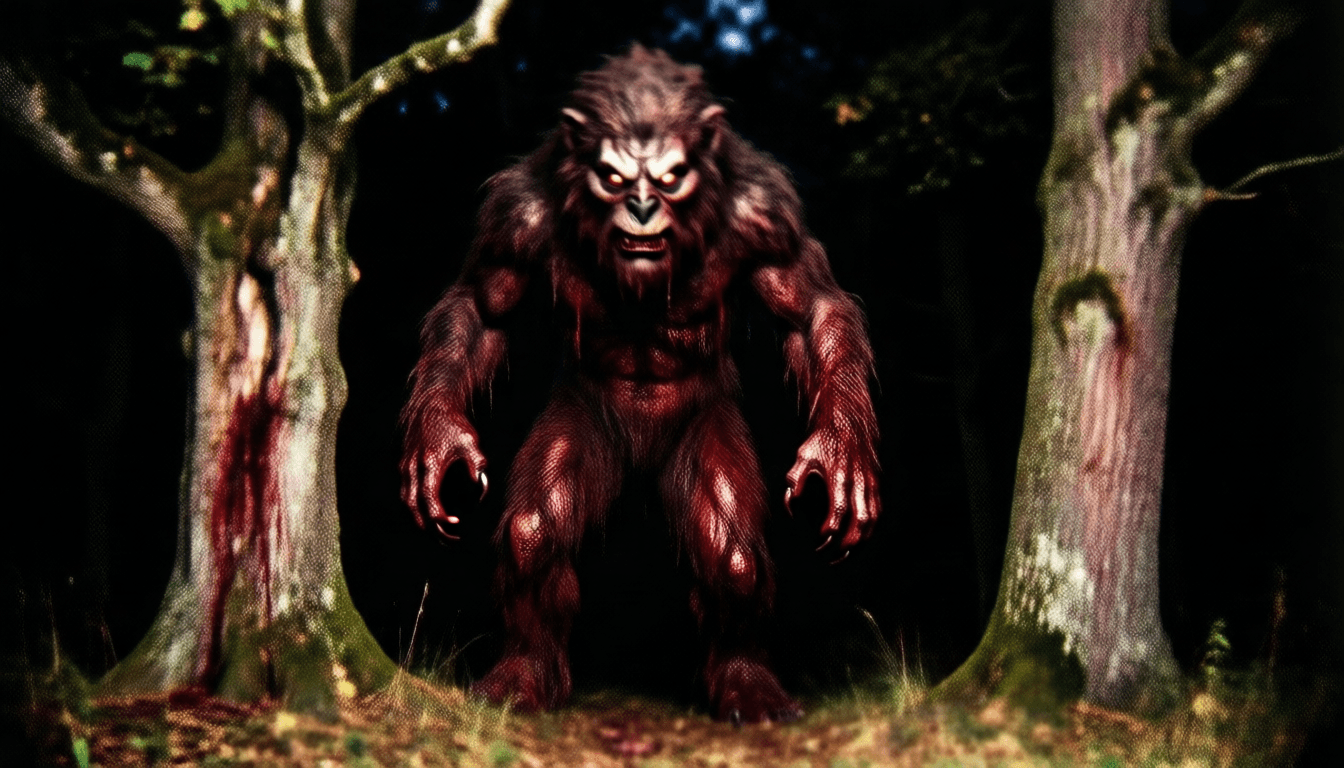
A low growl erupted. It didn't come from one point; it resonated through my chest as if the air itself vibrated. My headlamp flickered and died, plunging me into absolute darkness. Heart pounding, I fumbled for my backup light. When the beam cut through the dark again, I caught a flash of movement. Not a blurry movement. A instantaneous repositioning. One moment, nothing. The next, a massive, shaggy form stood silently between two ancient oak trees, less than twenty feet away. Its fur was dark, reddish-brown, matted with what looked like dried blood. Its eyes, caught in the headlamp's beam, burned with malevolent intelligence. They were not the eyes of an animal; they pierced the darkness like embers.
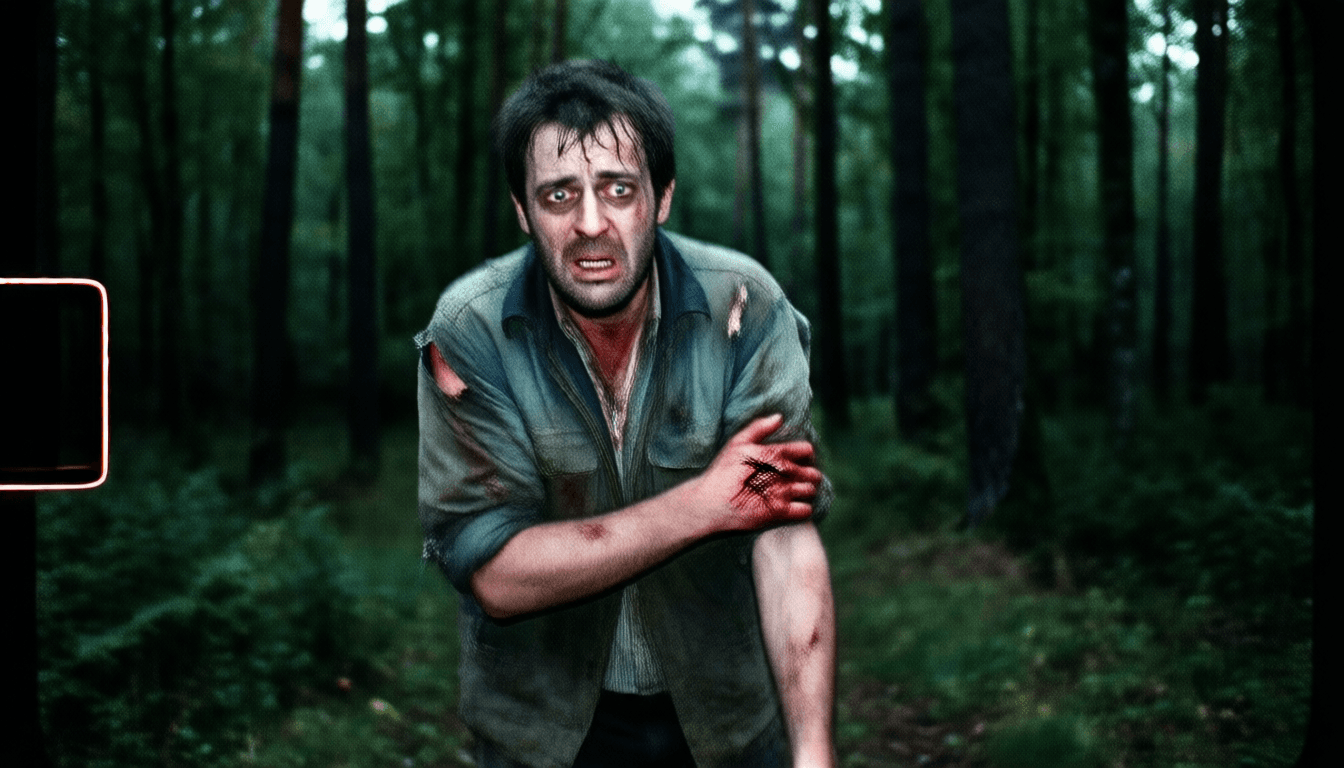
It moved. Not with the frenzied rush of a predator, but with an eerie, controlled grace. One moment it was there, the next it was behind me. Hot breath brushed my neck. The growl was now a guttural rumble that vibrated through my bones, paralyzing me. A colossal, clawed paw, far larger and more powerful than a wolf's, slammed into my camera bag, tearing the strap and sending my expensive equipment flying. The impact spun me, sending me stumbling into a thicket of thorns. A burning pain shot up my arm as I fell to the ground.
As I struggled, a heavy weight descended onto my back, pinning me. I could feel its immense, abnormal bulk, the coarse fur against my exposed skin. Its jaws snapped shut inches from my ear, the stench of old decay and something unknown filling my nostrils. I heard a gruesome 'crack' nearby, a branch effortlessly ripped apart. This wasn't a hunt. It was a demonstration. Its hot, ragged breath washed over my face, and for one terrifying moment, those intelligent, cold eyes stared directly into mine, inches away. It didn't intend to kill me immediately. It was toying with me, conveying an unspoken message. Then, as quickly as it appeared, the immense weight vanished. The air grew cold again. The growl didn't recede; it simply ceased. I thrashed, bloodied and trembling, seeing only the faintly swaying shadows of the trees. It was gone. Or perhaps, it had chosen to let me go.
I emerged from the Valençay Valley hours later, disoriented, my arms and torso deeply gashed from my desperate escape through thick undergrowth. My initial report to the gendarmerie was met with polite skepticism. 'Perhaps a large, territorial boar, sir. Likely agitated.' They noted the depth of my lacerations, inconsistent with typical animal attacks in the region, but attributed it to 'shock and exaggeration.' No large animal tracks or signs of struggle were found where I described.
I returned home, physically recovered but mentally scarred. My thermal camera was shattered beyond repair, my recorders gone. But one piece of equipment, though damaged, survived: a small, sturdy GoPro mounted on my chest. It had been accidentally recording in low-power mode during the climax. The footage was static, almost imperceptible due to the deep forest and low light, but it contained a brief, horrific moment of clarity. It showed the beast descending on me, its colossal size undeniable in a quick, blurry frame of a massive paw coming down. Even more chillingly, the last second of the clip, just before the camera was ripped away, captured a fleeting glimpse of its face. Those intelligent, ancient eyes staring straight into the lens. The image was pixelated and distorted by movement and shadow, but the eyes were unmistakable. I showed it to colleagues, to zoologists. No one could definitively identify the creature. Too large for a wolf, different facial structure, too coarse fur. One expert reluctantly admitted, 'An anomaly. Perhaps a very rare, large hybrid.'
But I know. The immense weight, the unnatural cold it exuded, the sheer malevolence in those eyes—it was something that transcended any known animal. Now, the quiet moments in my apartment are filled with phantom echoes of that impossible growl. Shadows around my periphery seem to sway and coalesce. I constantly find myself checking locks, scanning the darkness outside my windows. The Beast of Gévaudan is not a historical curiosity or a myth. It is a living, patient entity, residing in the deep, biding its time. And I, the investigator who sought to uncover it, am now merely a survivor. Living with the chilling knowledge that it knows my scent, and that it chose to let me live. For now.
[ CLASSIFIED VERDICT ]
[ACCESS LOG - SOURCE FILE]
This is a true story about an unknown beast that killed over 100 people in the Gévaudan region of France in the mid-18th century. At the time, people attributed it to a large wolf or a serial killer, but eyewitness accounts and its extraordinary hunting methods created a strange terror that could not be explained by ordinary animals. This story explores the reappearance of that historical horror in modern times.