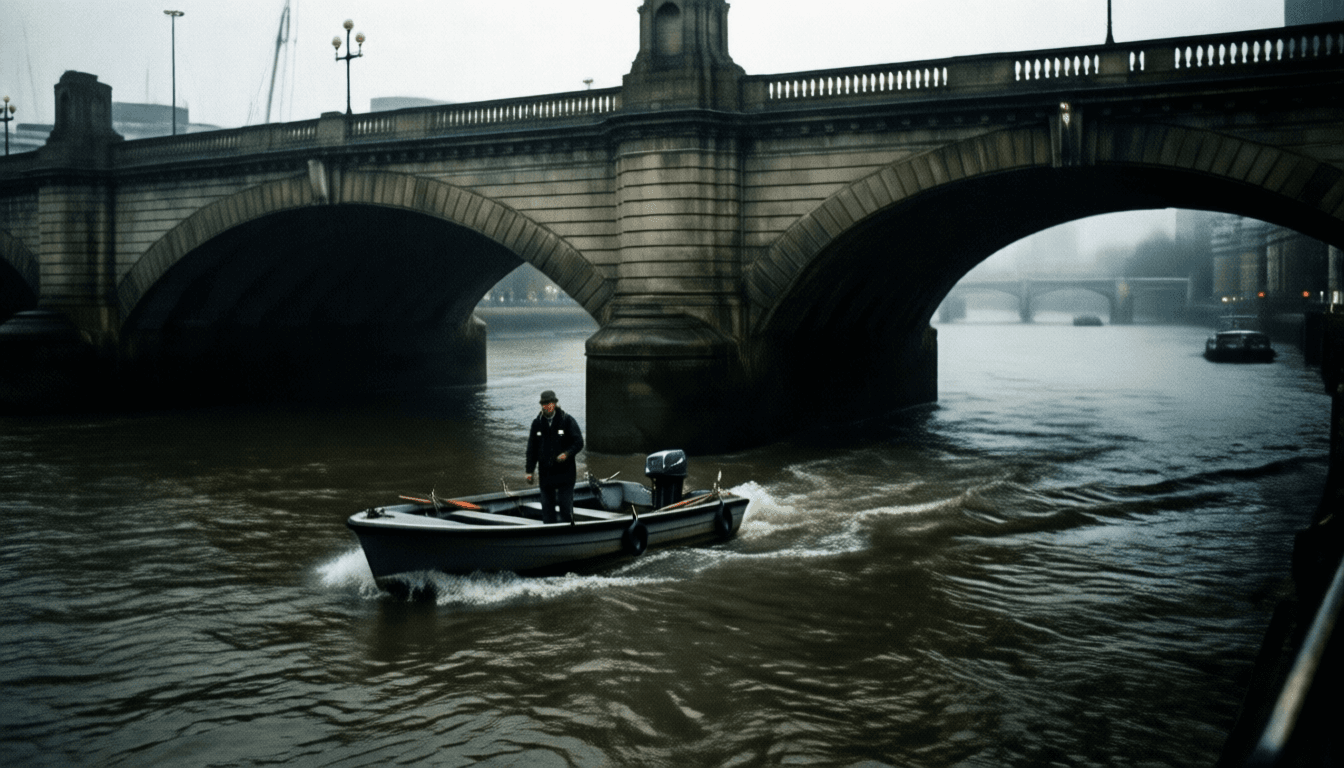
The Banker's Pull Beneath Blackfriars Bridge
One of the most frequently accessed files in my archives is a record titled "Calvi, R. – Blackfriars Bridge." Only the Dyatlov Pass incident and the persistent whispers of Bodie Island Lighthouse have garnered more attention. Online forums dedicated to unsolved mysteries and conspiracy theories are ablaze, re-analyzing every detail of June 18, 1982. The official announcement, initially ruling it a suicide and later amended to "death by hanging under circumstances which may not be fully explained," only fueled the fire. But what truly captivated my interest wasn't the mafia ties or the P2 Lodge. It was a recurring, almost folkloric detail. For years, among the dredge operators and night fishermen who knew the Thames' currents better than anyone, a story circulated: beneath the third pier on the north bank of Blackfriars Bridge, an "unnatural current" flowed. It wasn't a change in water speed or depth, but a peculiar, localized *resistance* felt when their boats passed, especially during certain lunar phases, particularly around the anniversary of Calvi's death. It was as if the water itself resisted the flow, pulling backward – they called it "The Banker's Pull." It was a tale too specific and persistent for anyone who knew the river to easily dismiss.
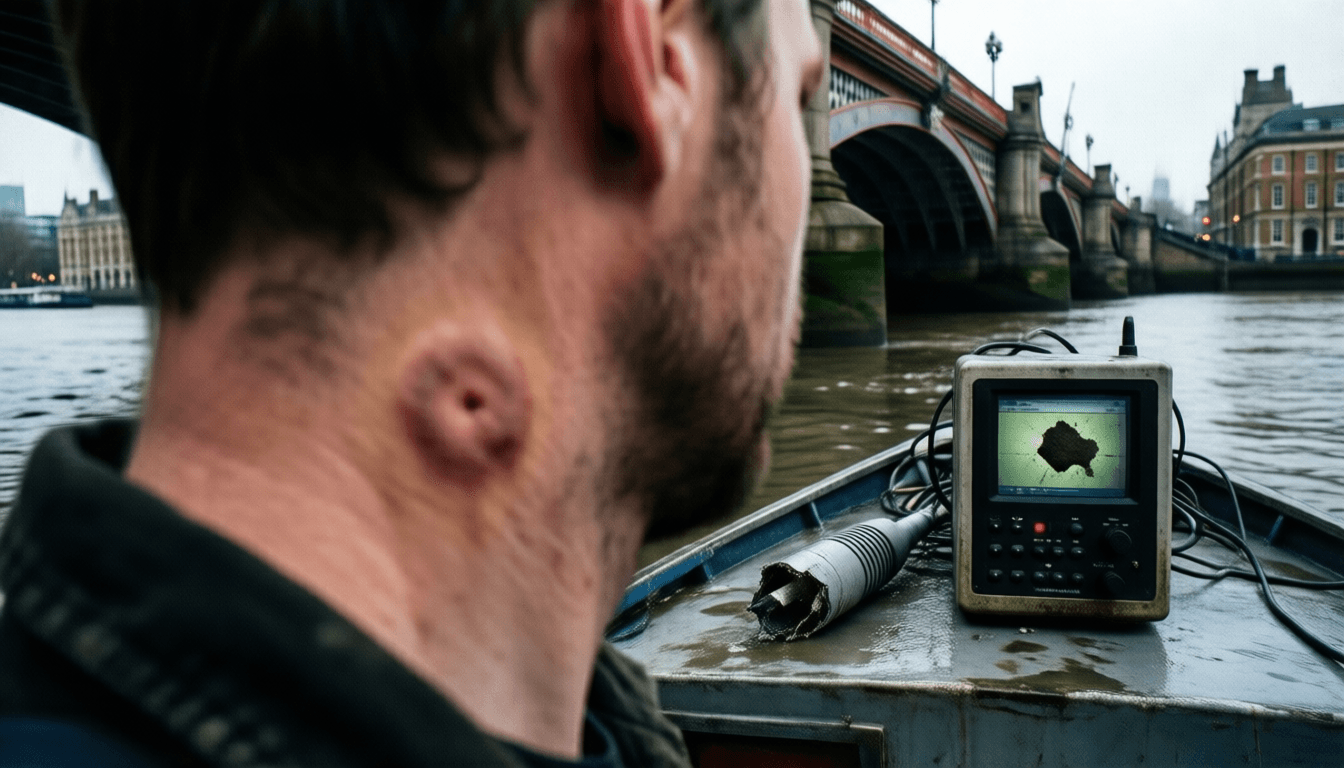
Armed with a high-sensitivity hydrophone, a portable sonar, and historical tide charts meticulously detailing the ebb and flow of the summer of '82 minute by minute, I headed to Blackfriars Bridge under the veil of a cool, cloudy dawn. My objective was simple: to map the subtle hydrological patterns around the third support pier, confirming if 'The Banker's Pull' had any measurable basis. The bridge itself, massive and utilitarian, felt less like an architectural marvel and more like a fixture permanently embedded in London's gritty subconscious. Traffic noise already hummed in the distance, but beneath the arches, where the stone was perpetually damp with ancient moisture, another world existed. From a small rental boat, I carefully positioned the hydrophone near the designated pier column, its sensors dipping into the murky Thames. Initial readings were as expected: the steady murmur of the river, the distant pulse of boat engines, the subtle creak of the bridge's ironwork. I began logging data, marking any anomalies.
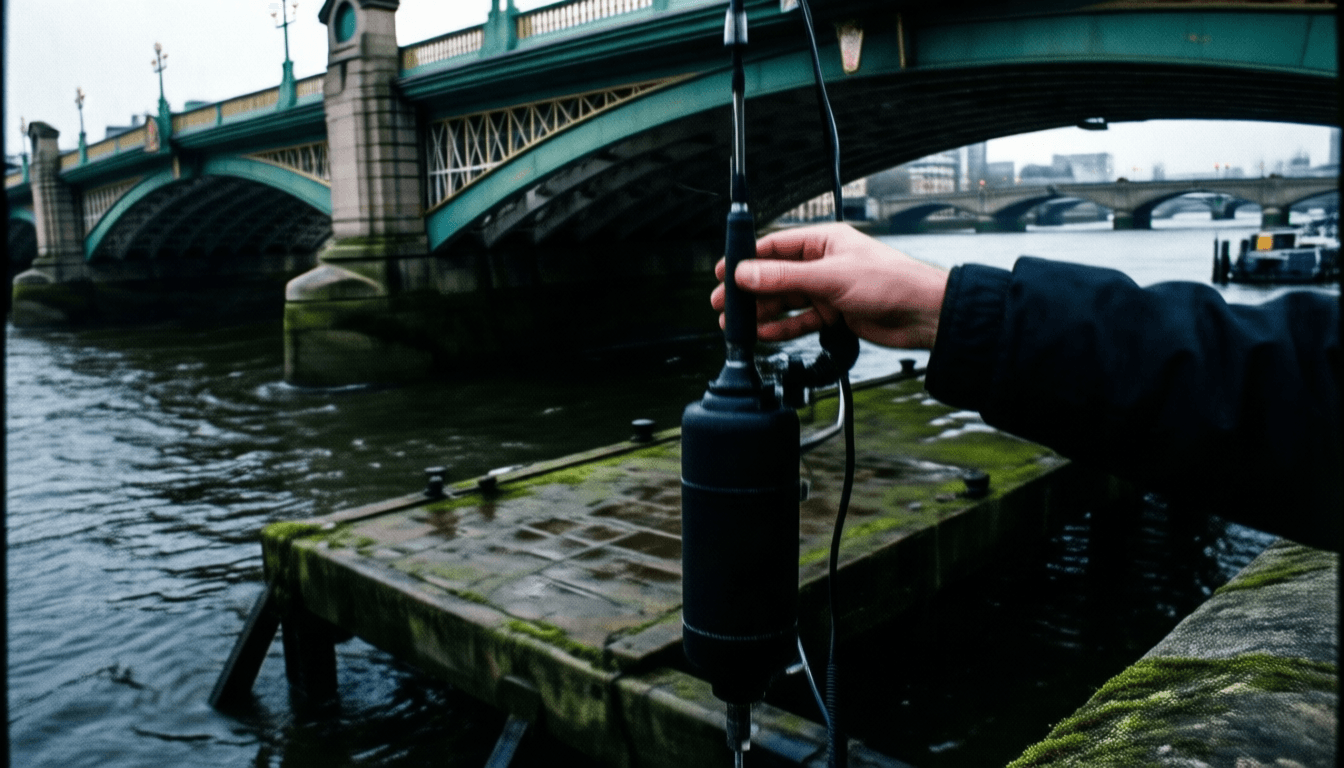
It began subtly. The hydrophone, calibrated to filter out ambient noise, picked up a faint, almost rhythmic *slapping* sound, distinct from the river's natural movement. Initially intermittent, it soon became more consistent, focused precisely at the depth where Calvi's body would have been submerged at high tide. The sonar, scanning the depths, showed unusual localized turbulence around the pier's underwater base – a vortex defying the usual current. It was a circulation that shouldn't exist. I leaned closer to the stone, feeling a coldness seep into my bones, far more alien than the morning chill, confined solely to that one pier. The distant hum of traffic began to recede, as if a buffer of silence was forming around me. The air grew heavy. I ran my hand over the damp, rough stone of the pier. Despite visible grit and moss, it felt strangely slick, almost oily. The rhythmic slapping from the hydrophone intensified, sounding less like water and more like… a *struggle*. A faint, desperate thrashing from beneath the surface, followed by a low, rasping *gasp* that pierced my chest. My rational mind screamed 'reflections!' 'interference!', but my primal brain knew it was wrong. Now, the silence around the pier was complete, an unnatural void.
I was jolted from my stupor by a sudden, sharp tug on the rope securing my boat to the pier. The previously taut rope was now violently yanked, threatening to pull the small boat straight into the stone. I struggled to untie it, but the current around the pier had dramatically intensified, no longer a subtle vortex but a powerful, localized suction. The rhythmic slapping from the hydrophone had transformed into a furious churning. I felt undeniable pressure against the boat's hull, as if something immense was moving just beneath the surface, directly below me. The air grew incredibly heavy, stifling. The low *gasp* from the hydrophone became a tearing, desperate choking sound, as if echoing from the very stone of the pier. Then, with a sickening lurch, the boat was pulled sideways, not by the current, but by something unseen that had twisted its mooring rope with immense force. I lost my footing, stumbled, and my hand scraped painfully against the cold, oily stone as I tried to regain balance. The water around the pier began to *froth*, black, unnatural bubbles rising like dreadful snakes. An invisible grip clamped firmly around my ankle, dragging me towards the edge of the boat, towards the frothing black water. An icy, cold pressure tightened around my throat, not from outside, but *from within*, crushing my windpipe. The phantom weight of bricks seemed to sink into my pockets, pulling me down, down, into the Blackfriars current. I thrashed, I gasped, I struggled desperately. My vision blurred, and the sounds of choking and suppressed struggle now thundered in my ears. I wasn't drowning in the river; it was a deep abyss forged from the *memory* of a victim.
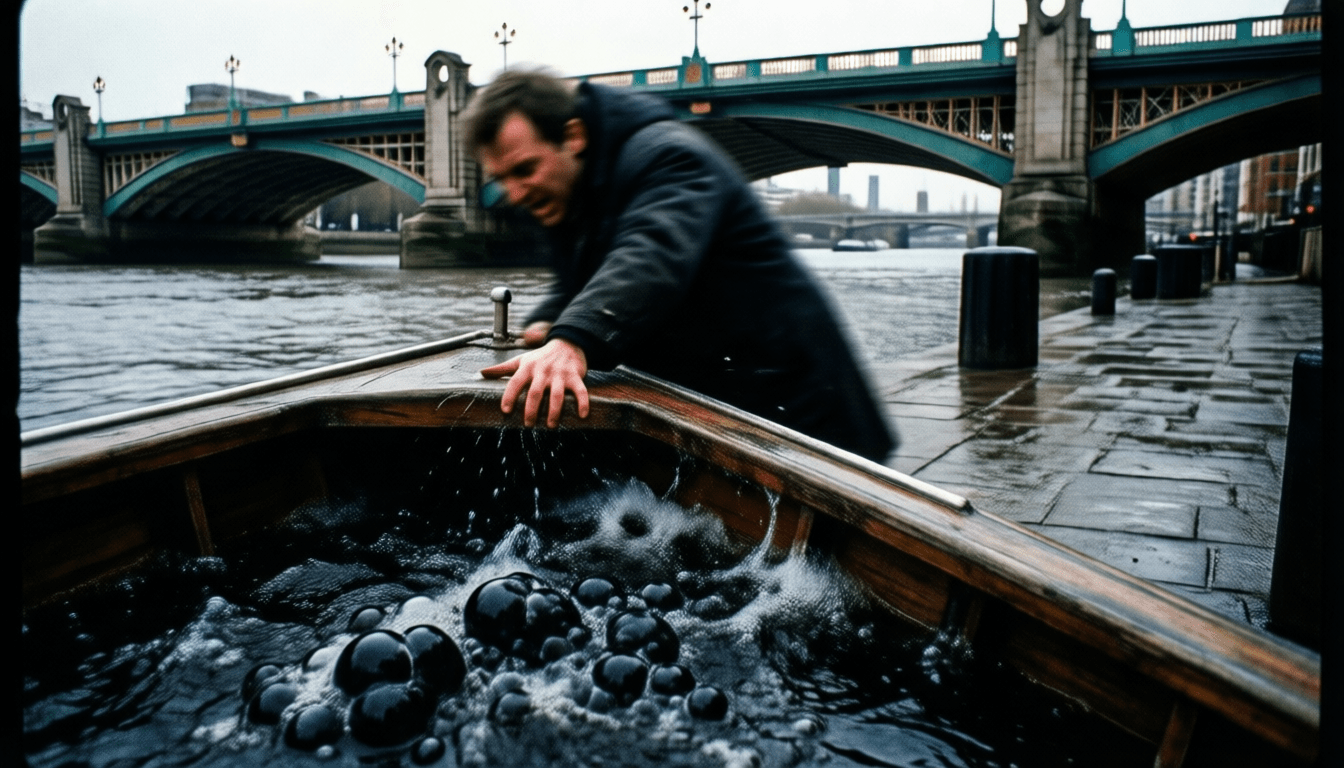
I don't remember how I broke free. Only the cold impact of my head hitting the bottom of the boat, the salty taste of Thames water, and the searing pain in my throat remain vivid. Shaking uncontrollably, I barely managed to return to the dock, clothes drenched, hands raw from gripping the pontoon rope. The rental company was puzzled. The boat's mooring rope was frayed and snapped in two places, as if twisted apart by immense, localized pressure. The hydrophone, difficult to retrieve, was broken. But the sonar's memory card yielded an eerie relic. The final 15 seconds not only showed erratic turbulence but also dark, irregular masses forming and repeatedly dissipating around the pier's base, moving against the current at impossible speeds. Even more shocking was the audio track. After the initial thrashing and rasping gasps, there was a brief, almost inaudible clip. Separated and amplified, it unmistakably contained the sound of metal striking stone, followed by a faint, resonant *splash*. And just before the recording cut out, a single, distorted word, pronounced in a deep, hoarse voice, eerily sounded like "Vendetta." I still bear a faint, circular bruise on my neck, a phantom rope mark that only appears when I'm cold. And sometimes, late at night, when the city outside my archives falls silent, a faint, distant, rhythmic *slapping* sound grows louder and louder from the direction of the river.
[ CLASSIFIED VERDICT ]
[ACCESS LOG - SOURCE FILE]
This story is set against the backdrop of the mysterious death of Roberto Calvi, an Italian banker found dead under London's Blackfriars Bridge in 1982. Although his death was ruled a suicide, it fueled numerous conspiracy theories and rumors of mafia involvement, remaining a mystery. The eerie tale is further amplified by local fishermen's old stories about peculiar currents beneath the bridge.