The Bone Reef: The Phantom Whistle 82 Meters Beneath Munseom Island
On September 14, 2021, an unsettling incident report was quietly filed into the classified acoustic archives of the Korea Hydrographic and Oceanographic Agency (KHOA). A commercial remotely operated underwater vehicle (ROV), mapping seabed cable routes at a depth of 82 meters south of Munseom Island in Seogwipo, suddenly lost its signal. When retrieved, the ROV's titanium frame was completely intact, but its internal high-pressure lithium-ion battery housings were meticulously crushed inward—not by hydrostatic pressure, but by high-amplitude acoustic cavitation. The elderly haenyeo (female free divers) of Seogwipo pointed to the exact location on the chart without even glancing at the technical log. They called that submerged reef 'Golcho'—The Bone Reef.
Before deep mixed-gas diving was strictly restricted in the area, technical divers frequently reported hearing an eerie underwater mimicry: the sharp, whistled exhalation of surface haenyeo, known as sumbisori, reverberating precisely off the ocean floor. Divers who mistook that sound for an ascent marker and followed it downward never contracted decompression sickness. Their bodies surfaced days later, bobbing at regular intervals along the current with intact buoyancy and fully functional gear—except that their eardrums had been cleanly ruptured from the inside out.
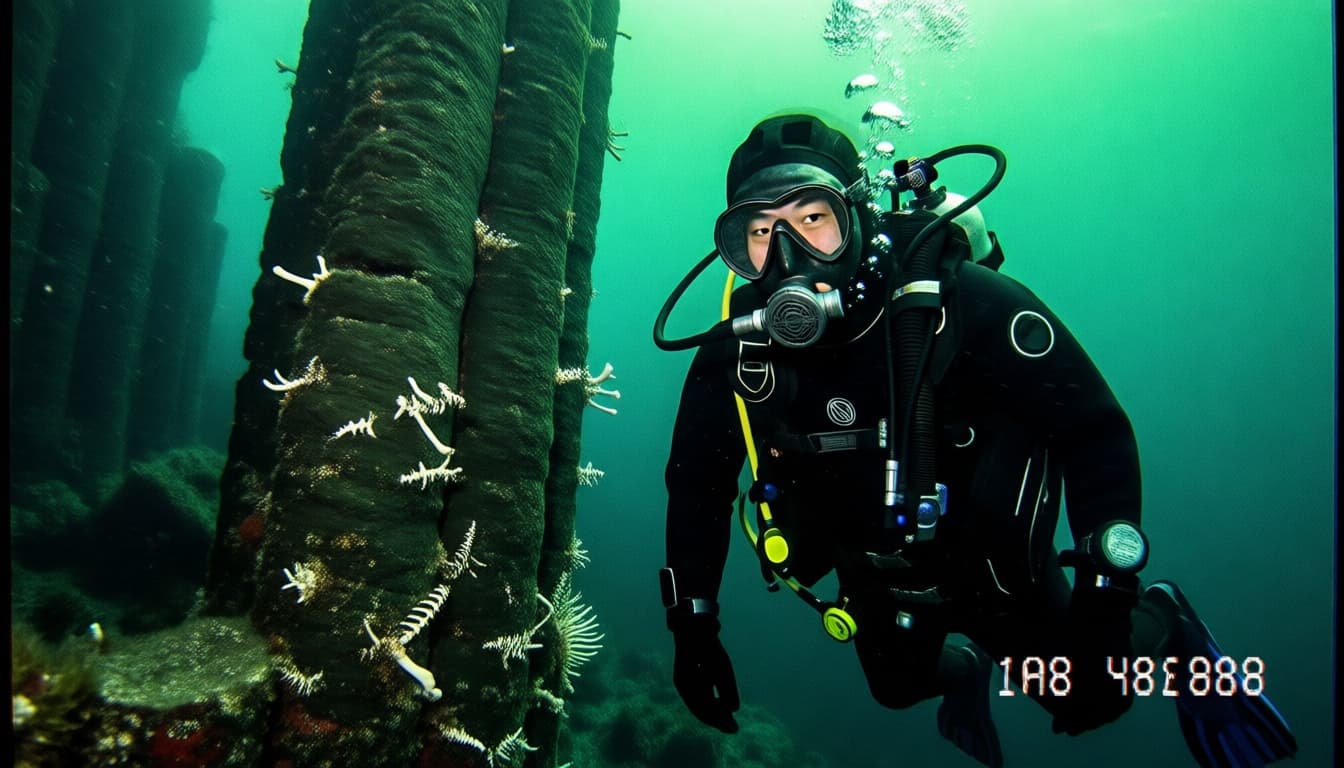
As an underwater acoustic engineer and commercial saturation diver, I descended along the southern submerged cliffs of Munseom Island carrying a closed-circuit rebreather (CCR) to survey the seabed for a communications cable. Passing the 40-meter recreational diving limit and plunging into the pitch-black 70-meter abyss, my diving light cut through the dark to reveal colossal basalt columnar joints. What encrusted the massive stone pillars was not the vibrant soft coral typical of Jeju's waters. It was a dense, unnervingly pale forest of calcified needle-like spicules resembling petrified spinal cords and skeletal neural networks.
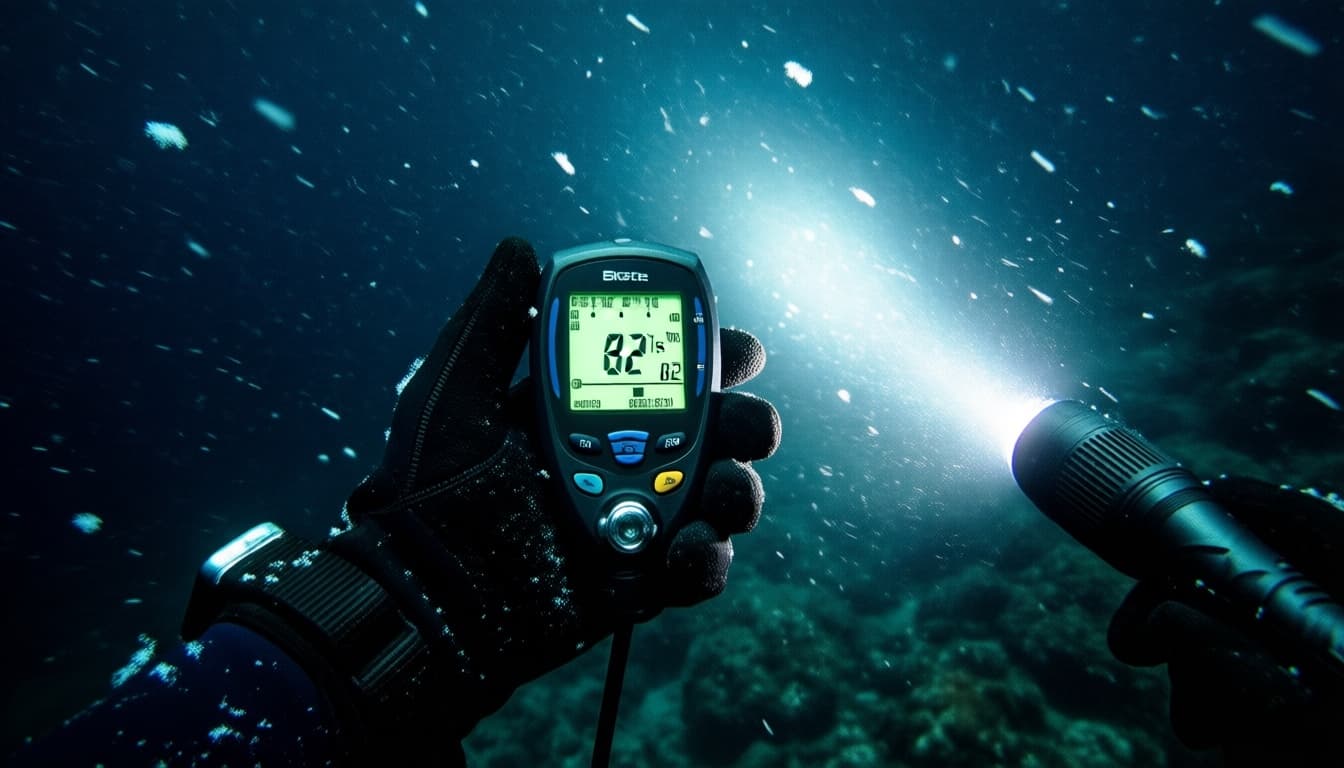
The strangest phenomenon was the water itself. The violent southern Jeju coastal current, normally ripping at 3 knots, was completely dead within a ten-meter radius of the stone columns. Particulate matter hung rigidly suspended in the open water like dead insects trapped in transparent amber. The digital depth gauge on my wrist console began vibrating in millimeter increments. My depth was not changing; the ambient hydrostatic pressure itself was throbbing in unnatural waves.
It is basic physics that sound travels four times faster in water than in air, making directional acoustic localization difficult. But the laws of physics were warped in that zone. When I lightly tapped my titanium slate with my fingernail, the sound struck the rock wall five meters ahead and returned only after a full two-second delay. It wasn't a metallic click. It returned as a damp, resonant thud, like the heartbeat of a massive visceral organ.
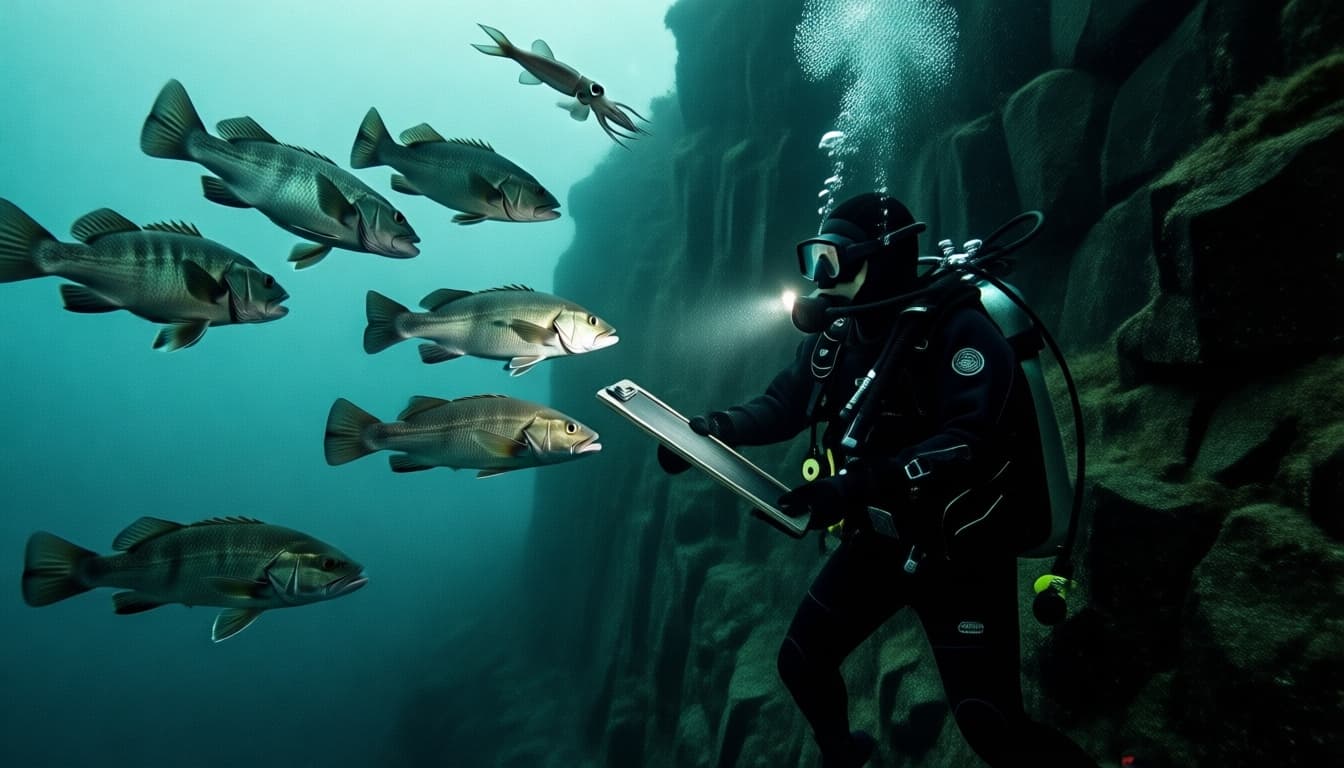
My fingers went numb as I swept my dive light across the expanse. Dozens of black rockfish and oceanic squid hovered motionless in mid-water. They didn't flee, nor did their gills flare. The lateral lines of every single fish were stiffened like compass needles, locked unwaveringly toward the epicenter of the columnar joints. They were trembling at an imperceptible micro-frequency, resonating in tandem with the reef's inaudible hum.
Suddenly, the steady mechanical rhythm of the CCR scrubber tower strapped to my back fractured. The metallic click of the solenoid valves no longer responded to the rebreather's computer. An external acoustic pulse had seized control of the machine's cadence. A searing pain shot deep through my lower jaw. A 19-Hz infrasound wave, transmitted through the dense saltwater, was hammering directly into my mandible and rattling my entire cranium.
The reef was not inert rock. The entire basalt formation was a colossal, living acoustic phased-array apparatus. The millions of white calcified spicules coating the columns retracted inward simultaneously. Even without an apparent water current, a tremendous acoustic radiation pressure struck my chest like an invisible palm, pinning me hard against the central stone face.
My dive computer registered 14 degrees Celsius, yet the 85-meter-deep sea before my eyes began to boil violently into a frenzy of acoustic cavitation bubbles. Through the milky vapor, thousands of rigid fish cascaded downward in a synchronized swarm. It was not an attack. Like a living carpet, they draped over my limbs and torso, locking their scales edge-to-edge with mechanical precision to bind me fast against the petrified stone.
Through the thick neoprene of my drysuit, the white calcified needles began piercing through fabric and skin like ultrasonic scalpels. The silicone diaphragm in my regulator mouthpiece shattered under the harmonic stress. As brine threatened to flood my airway, sheer panic drove my numbed hands to wrench open every exhaust valve on my suit. Fighting the acoustic pressure, I deployed my emergency high-buoyancy lift bag.
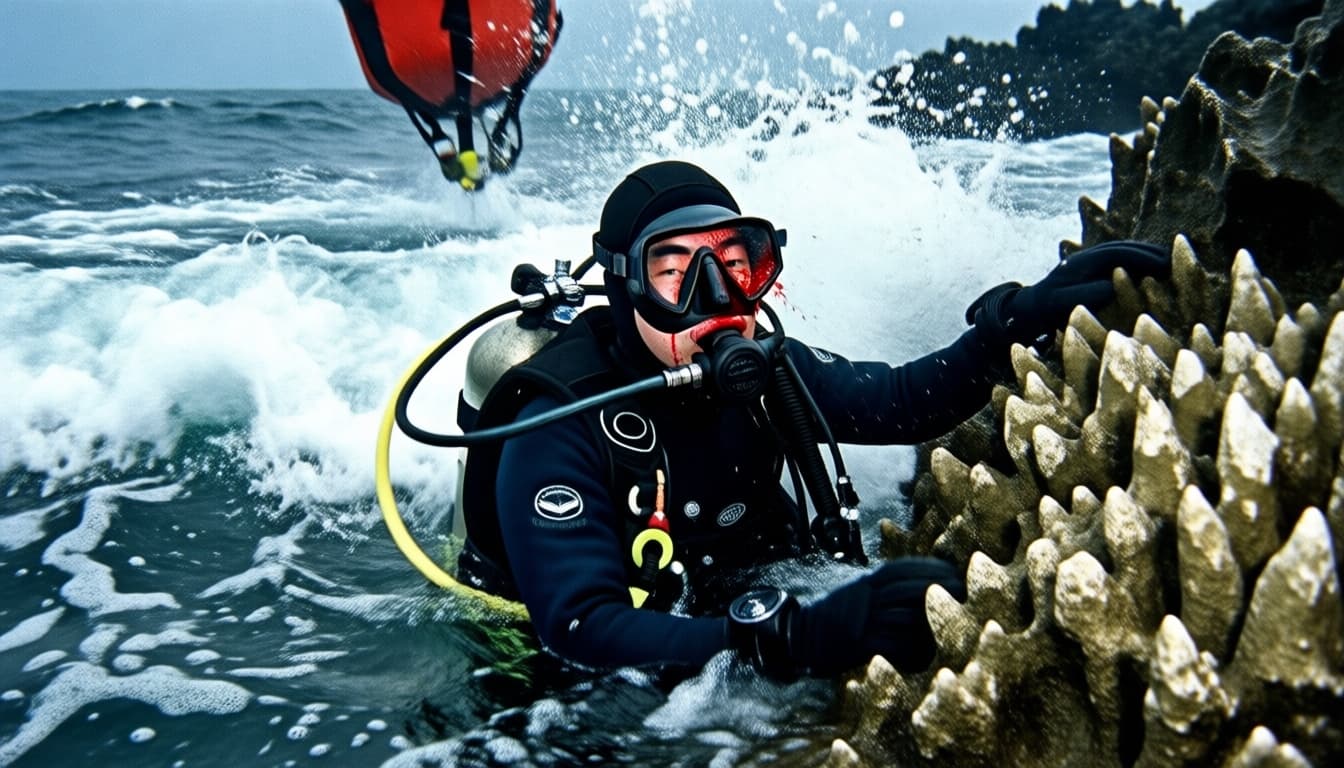
The deploying nylon bag jerked upward with violent force. Flesh tore free from the reef's grip just as a piercing burst detonated inside my ears. Decompression stops were impossible. With warm blood filling my diving mask and turning the viewport crimson, I rocketed toward the surface, barely conscious through the blinding agony of explosive decompression sickness.
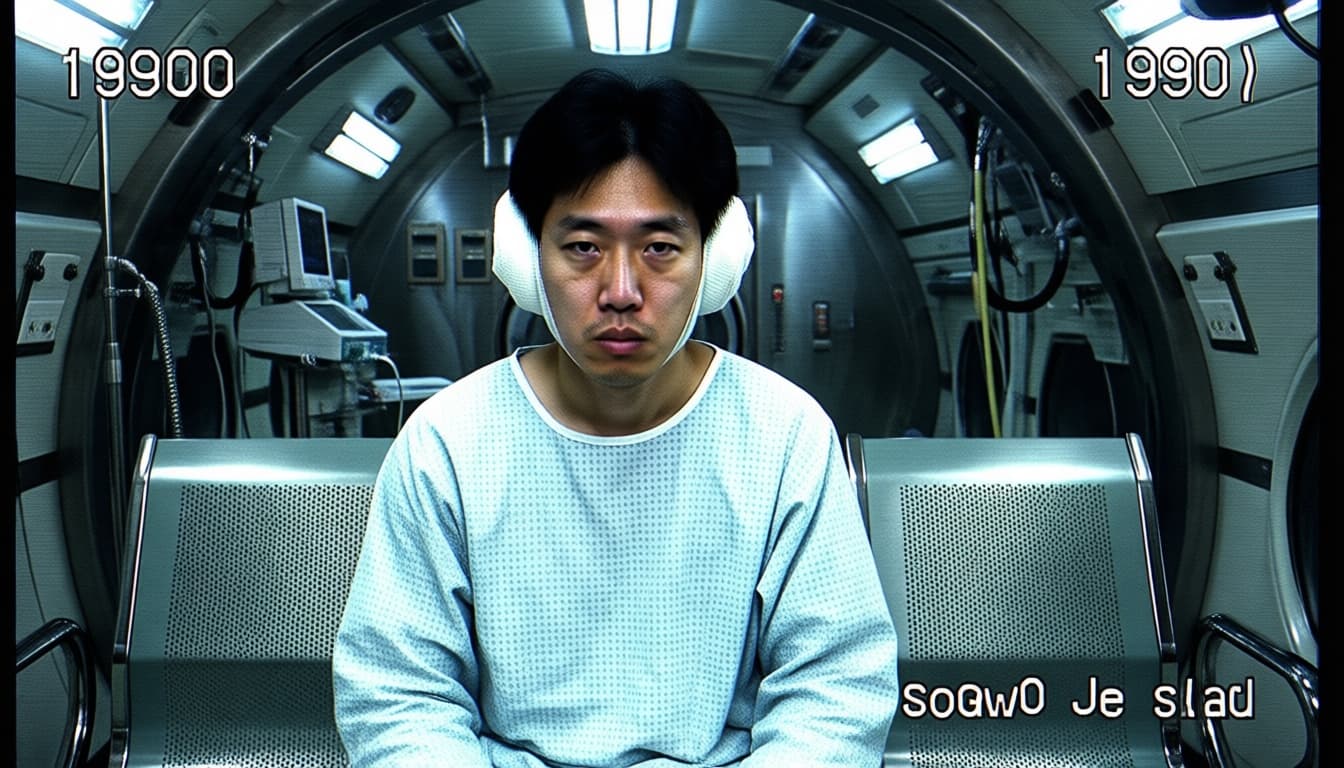
When I finally woke inside the multiplace hyperbaric chamber at Seogwipo Medical Center, both of my tympanic membranes were utterly destroyed. While there was no primary brain hemorrhage, high-resolution CT scans left the medical staff speechless. Deep within the petrous temporal bone surrounding my cochleas—the densest bone in the human skeleton—microscopic, symmetrical geometric fractures were etched, blooming outward like branching roots or artificial neural pathways.
In the quiet of the night ward, whenever a nurse placed an electronic stethoscope beneath my jawbone, the device screeched with high-pitched acoustic feedback. In the profound silence of my permanent deafness, what vibrates through my jawbone is not mere tinnitus. From far beneath the thick hospital concrete, rising through the deep waters, something breathes—rhythmically gasping in precise, mechanical mimicry of an old haenyeo's whistling sumbisori.
[ CLASSIFIED VERDICT ]
[ACCESS LOG - SOURCE FILE]
Based on local diving folklore and mysterious underwater acoustic phenomena around the perilous submerged drop-offs of Munseom Island in Seogwipo, Jeju, where lost divers allegedly hear the phantom whistling breath (sumbisori) of haenyeo free-divers luring them to horrific depths.