Royal Shadows: The Sealed Truth
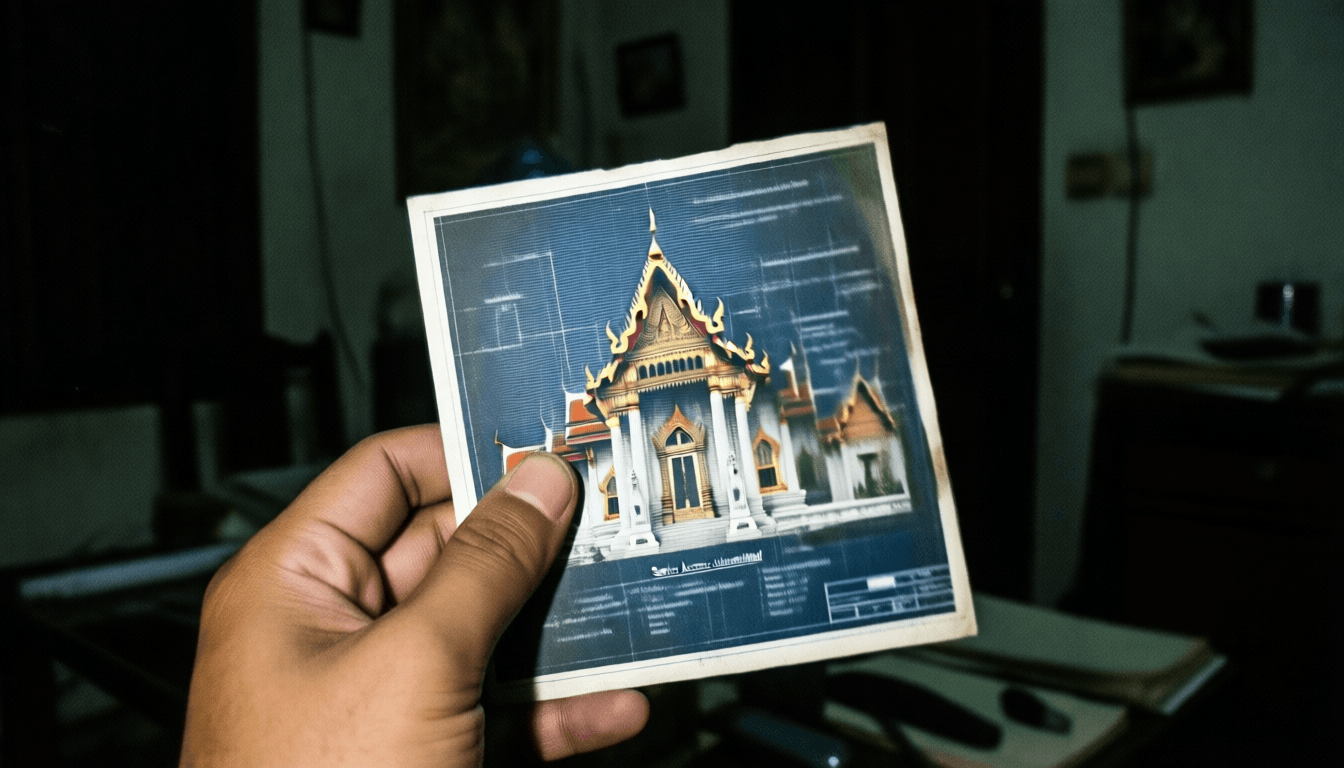
An anonymous digital space sometimes leaks fragments of forbidden knowledge. What caught my attention was a post on a now-defunct, old historical conspiracy theory bulletin board. It mentioned 'abnormal preservation blueprints' for the Boromphiman Throne Hall, where King Ananda Mahidol (Rama VIII) of Thailand died. The anonymous poster, using a temporary VPN, claimed that these blueprints, believed to be from early 1940s renovation plans, contained structural elements that did not align with any published palace plans. He called it a 'hidden ventricle where blood flows backward.' The post disappeared within hours, but I managed to secure an attached, cropped pixelated image – a blurry corner of a floor plan vaguely marked 'Service Access – Unspecified.' This wasn't mere historical curiosity; it felt like a deliberate trace left by someone who knew the danger.
Legitimate access to documents related to the Boromphiman Throne Hall is almost impossible. My investigation led me to the National Archives' 'Restricted Architectural Collection,' an almost unused underground space dealing exclusively with pre-war government structures. I carefully cultivated a relationship with a retired archivist, known for discreetly aiding 'independent researchers,' securing limited access under the guise of studying water resource infrastructure plans.
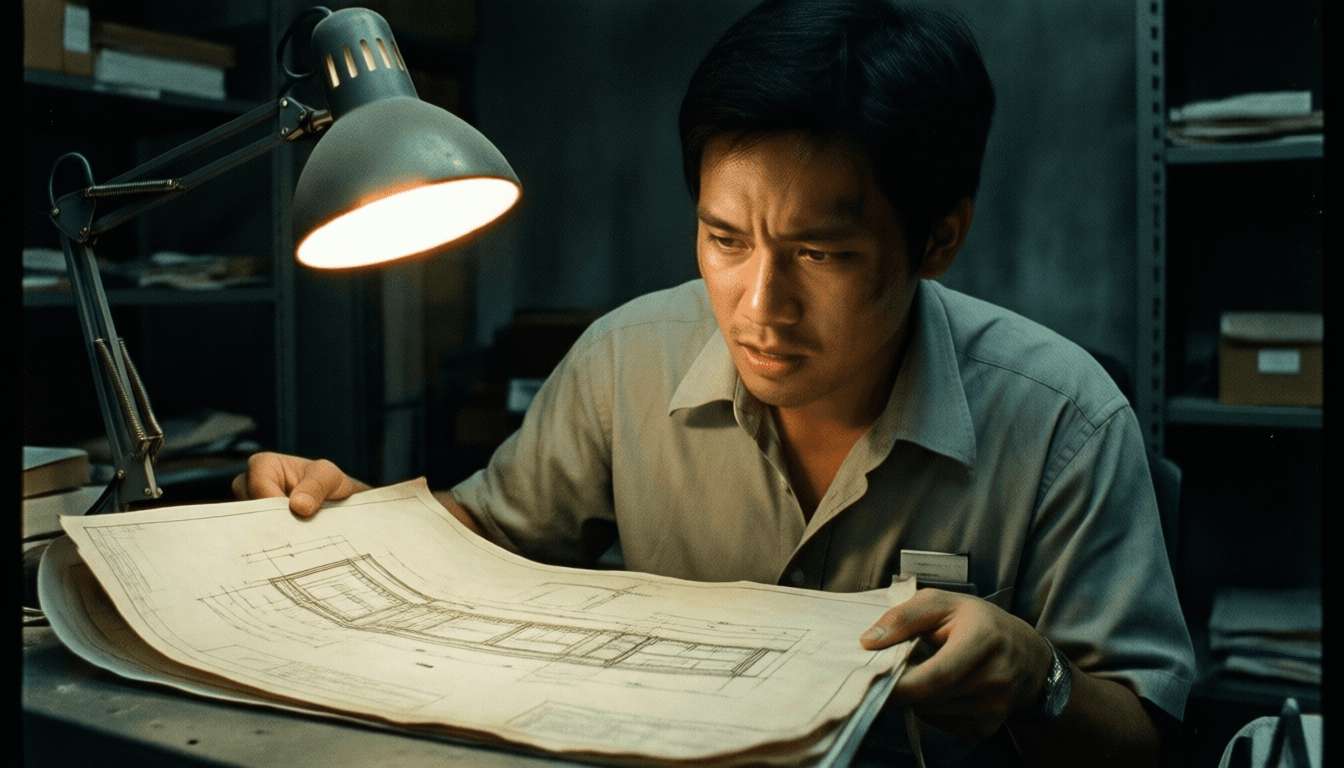
My designated archives area was a dark, concrete labyrinth of corridors, faintly smelling of mold and ozone. Fluorescent lights above hummed sickly, casting long, distorted shadows between tightly packed metal shelves. My assigned desk was tucked in a corner, illuminated by the pale light of a single task lamp. The files were mostly innocuous drainage and electrical diagrams, heavy, rustling, and old. The silence in this section was profound, broken only by faint, distant sounds from the main building, which served to amplify my sense of isolation.
Hours bled into a dull ache in my neck as I sifted through countless similar, faded documents. Then, it began. The silence deepened, the air itself seemed to thicken, sucking in all ambient sound. My own breathing sounded eerily loud, hissing in an overwhelming vacuum. I adjusted my task lamp, its light revealing microscopic dust motes suspended in the air, unnaturally still. It was too quiet. I tapped my pencil on the desk. The sound was swallowed, reaching my ears as a dull thud without normal resonance.
While poring over revised early 1940s electrical diagrams for the palace's west wing – the same area as the online image – I noticed a subtle, recurring anomaly. The overhead lights flickered microscopically, almost imperceptibly. Not a power outage, but a deliberate darkening, like an eyelid blinking. Each flicker lasted only a fleeting instant, yet it seemed to occur precisely whenever my gaze lingered on the 'Service Access – Unspecified' section of the blueprints. Once, after a flicker and the return of light, a faint, almost transparent blur appeared over a crucial section, momentarily rendering tiny lettering unreadable. A chill permeated the already cool room, unrelated to air conditioning. I felt a palpable presence, as if the weight of vast historical surveillance pressed down on me.
Ignoring a growing dread, I continued sifting through the stacks. Finally, there it was: a full-scale architectural blueprint meticulously detailing the exact dimensions of the Boromphiman Throne Hall residential quarters. And within it, clearly marked, was the 'Service Access – Unspecified' passage. It was a narrow, hidden corridor, accessible only from a rarely used administrative office on the ground floor, leading directly to a small antechamber beside the King's upper-floor bedroom. A route that bypassed every official security point, a clandestine entry, a perfect security breach. The implications were immediate and chilling. The official narrative shattered.
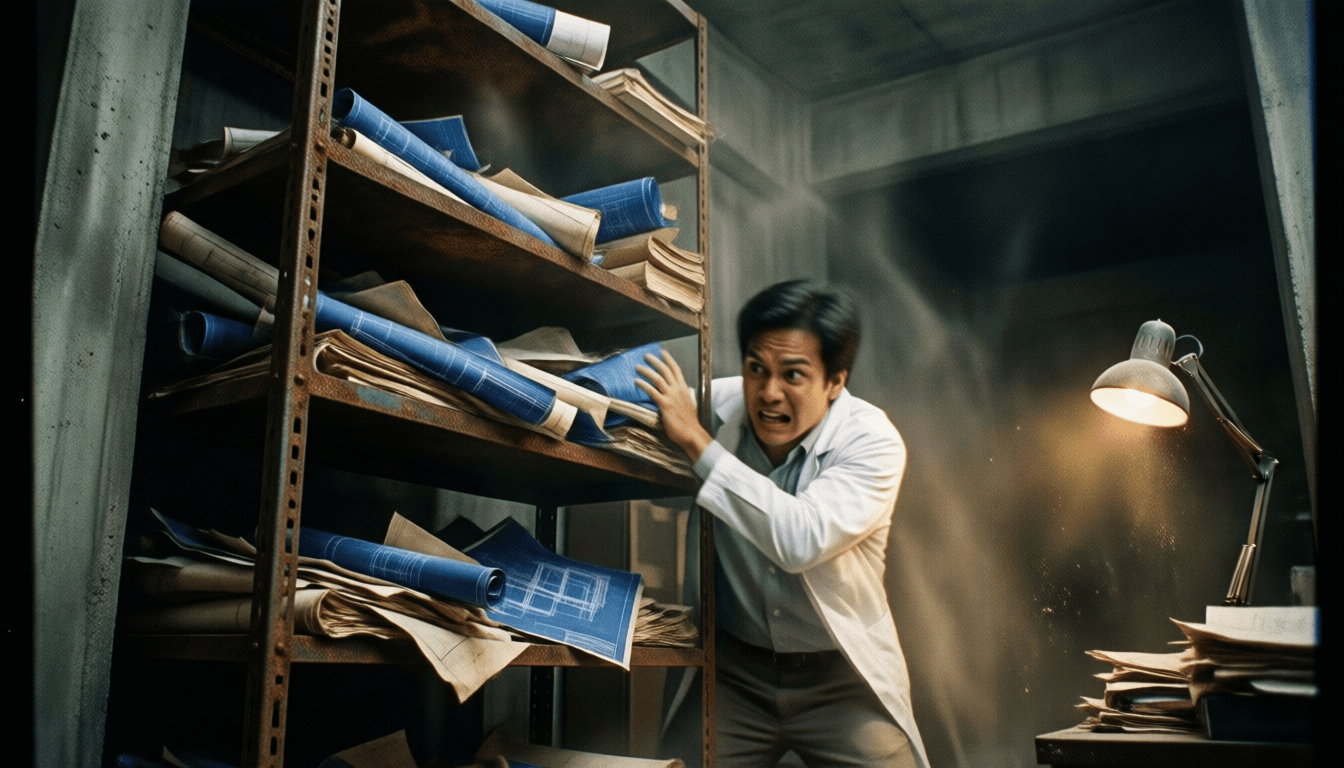
The moment my finger traced the hidden passage on the thin, fragile parchment, the oppressive silence intensified, becoming a physical force, pressing on my eardrums, making my head throb. The single task lamp on my desk flickered, then died, plunging my corner into near-perfect darkness. Before I could react, the old, rusted metal shelf to my left, loaded with hundreds of kilograms of brittle blueprints, groaned. When I looked up, it began to tilt slowly, deliberately, as if pushed by an unseen hand. The groan escalated into a metallic shriek. I grabbed the blueprint and dove, just as the entire shelf collapsed with a deafening crash, narrowly missing my head and spewing dust and crumpled papers onto my desk.
Before the reverberations died, the massive, thick steel door at the end of the corridor – the only marked exit from this section – slammed shut with a sickening final 'THUD.' The sound of the deadbolt locking was unmistakable. I was trapped. The air grew colder, and an inexplicable, localized pressure enveloped me. It wasn't a physical cause but felt as if the space itself was contracting. I felt squeezed, my lungs struggling for air. I stumbled. A brief, overwhelming push against the wall, an unseen force pressing me into it, then vanished instantly.
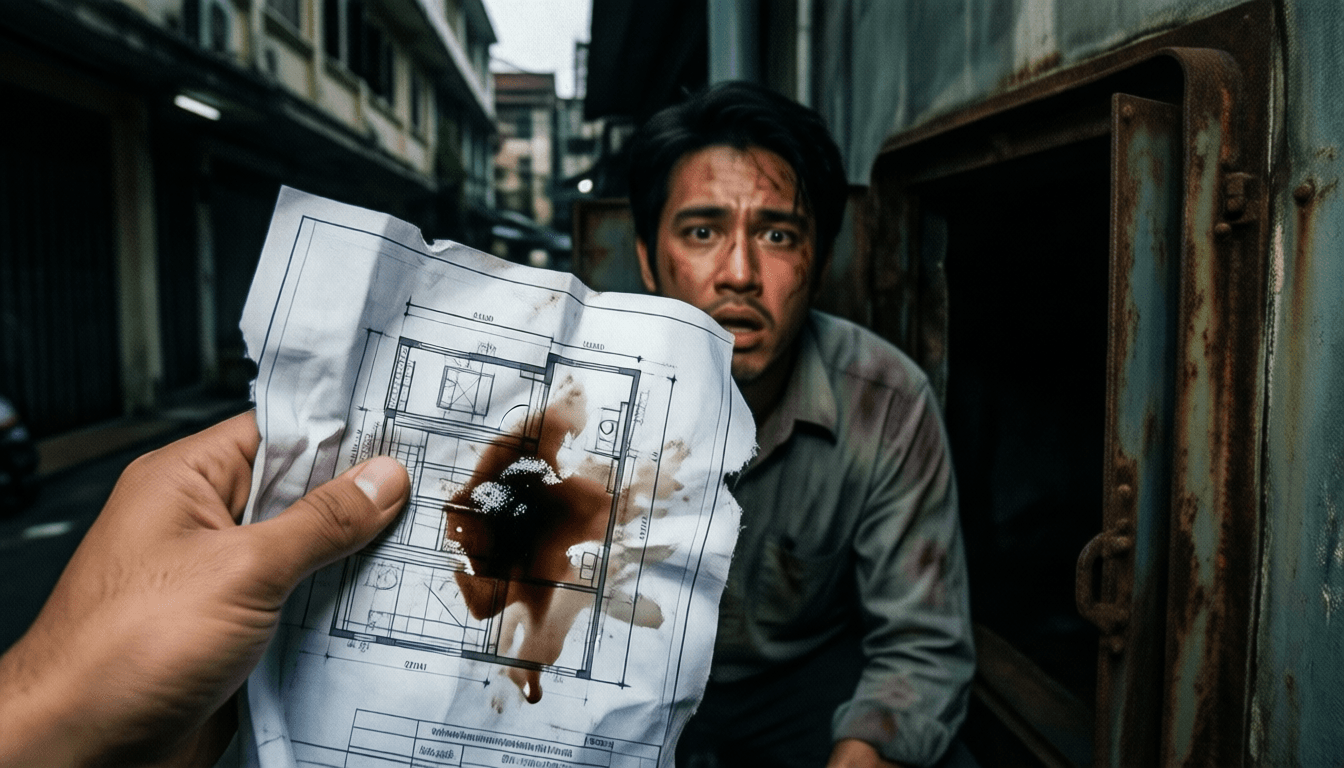
My escape was desperate. I scrambled over the collapsed shelf, finding a small, rusted maintenance hatch half-hidden behind it, leading to a disused utility shaft. I clawed my way through it, emerging bruised and disoriented into a deserted alleyway behind the archives. The distant hum of city traffic was a jarring reentry into the normal world. In my hand, I clutched the crumpled, torn architectural blueprint. The crucial 'Service Access' details were partially obscured by a fresh, unidentifiable stain. The previous faint, shifting blur now seemed permanently etched over the key entry point.
I survived, but the encounter left me branded. Incomplete and damaged, the knowledge I held became a corrosive weight. In the days that followed, the world felt subtly askew. A black sedan parked in my neighborhood for hours, its tinted windows impenetrable. My phone calls were punctuated by short, precise bursts of static. Strangers on the street held my gaze longer than usual. The feeling of being watched never entirely dissipated; it merely receded to the periphery, a constant, chilling hum beneath the surface of everyday life. The truth of King Ananda's death was not just a historical mystery. It was a living entity, a terrible secret protected by an active, unseen hand reaching across time. I had glimpsed its face, and now it knew mine. Framed and hidden, that blueprint became a silent monument to a devastating truth that could never fully be revealed – for fear of being swallowed by the very force that had imposed the initial silence.
[ CLASSIFIED VERDICT ]
[ACCESS LOG - SOURCE FILE]
The death of King Ananda Mahidol (Rama VIII) of Thailand remains one of the most mysterious events in Southeast Asian history. Found dead from a gunshot wound in Boromphiman Throne Hall, Bangkok, in 1946, various conspiracy theories, including suicide and assassination, have emerged, leaving the truth still shrouded in mystery. This story is inspired by rumors of secret architectural plans and hidden passages related to his death.