The Soul-Crushing Oak Staircase
In 1936, a photograph taken by Captain Provand and Indre Shira on the grand oak staircase of Raynham Hall, England, was more than just an image. Known as 'The Brown Lady', the photo has long been at the center of debate as one of the strongest pieces of evidence for an inexplicable phenomenon. The faint, hooded figure, seemingly captured by chance during the shoot, descended the stairs, emitting a subtle light that captivated viewers. Despite counter-arguments of lens flare, double exposure, or an accidental bystander, the image remained a persistent mystery, earning its place in history. Driven by an almost obsessive desire to verify these persistent claims within an established framework was Dr. Elias Thorne, a meticulous archivist and investigator of historical anomalies. He had recently gained renown for debunking similar 'ghost photographs' and saw the Raynham Hall case as a new challenge to test his scientific rigor.
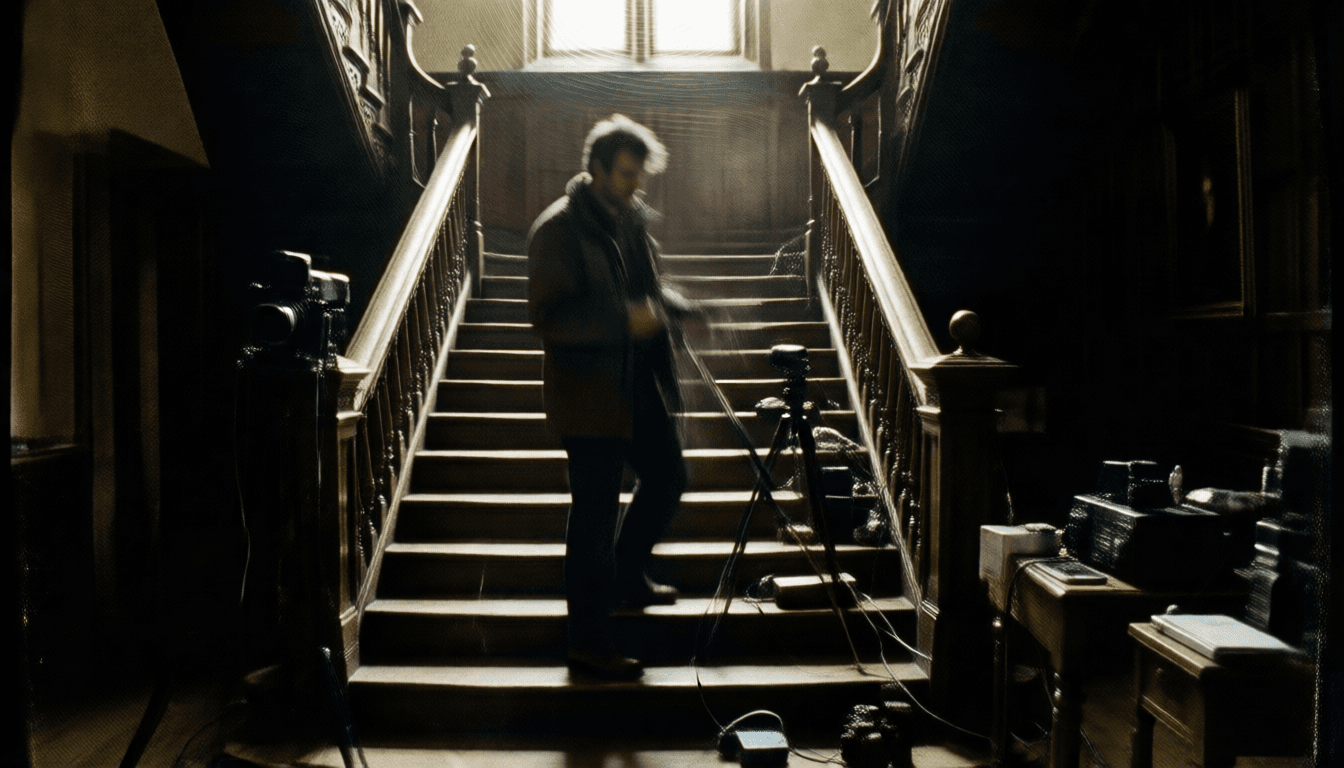
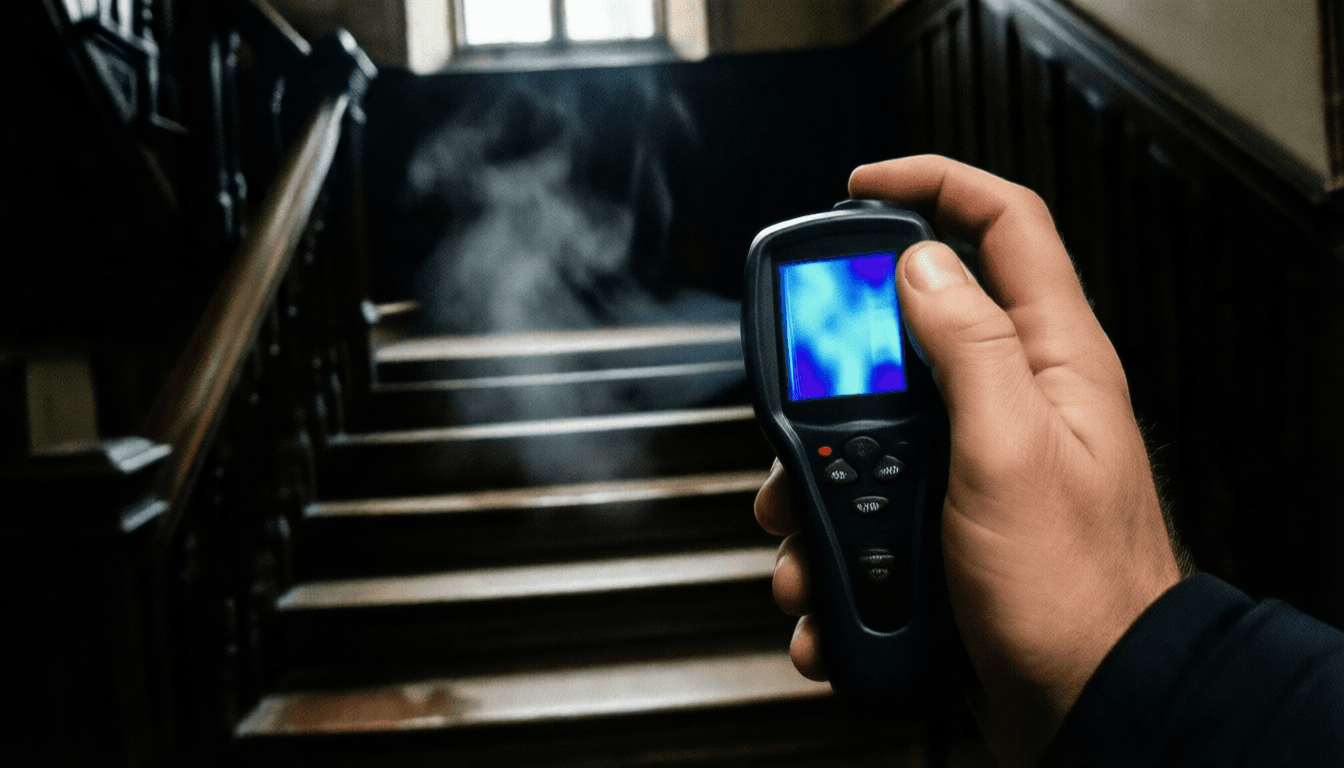
Dr. Elias Thorne was granted unprecedented solo access to investigate the infamous oak staircase of Raynham Hall. As he stepped into the ancient hall, an oppressive silence enveloped him, seemingly swallowing every ambient sound. The air hung heavy with centuries of dust and an unknown metallic scent. The staircase was immense, its dark wood grain polished, adorned with intricate carvings and clearly showing the marks of time. It felt less like a functional structure and more like a monument. Elias meticulously set up his equipment: a high-resolution camera on a tripod, a thermal imager, an electromagnetic field detector, and sensitive directional microphones, positioning them around the staircase. His movements were precise, and only the faint hum of his equipment barely disturbed the profound silence. He noted a subtle yet distinct chill. Unrelated to drafts or windows, pockets of cold air throughout the staircase registered as subtle temperature fluctuations on his thermal camera, which Elias dismissed as structural peculiarities, making a note of it.
As darkness fell and Elias continued his systematic scans, the subtle anomalies grew more pronounced, creating an unsettling discomfort that permeated his entire being. The silence deepened further, as if absorbing all external sounds. Even distant wind or the cries of wild animals sounded muffled, then faded away. His audio recorder intermittently picked up faint, mournful sighs, or the rustle of heavy fabric. He tried to dismiss these as old building noises or auditory illusions, but the sounds remained faintly in the background throughout the recording. Occasionally, whiffs of old potpourri and damp earth would assault his senses, only to vanish instantly. The cold spots became clearer and more localized, slowly moving along the staircase as if tracing an invisible path. In a few isolated pockets, his breath misted faintly.
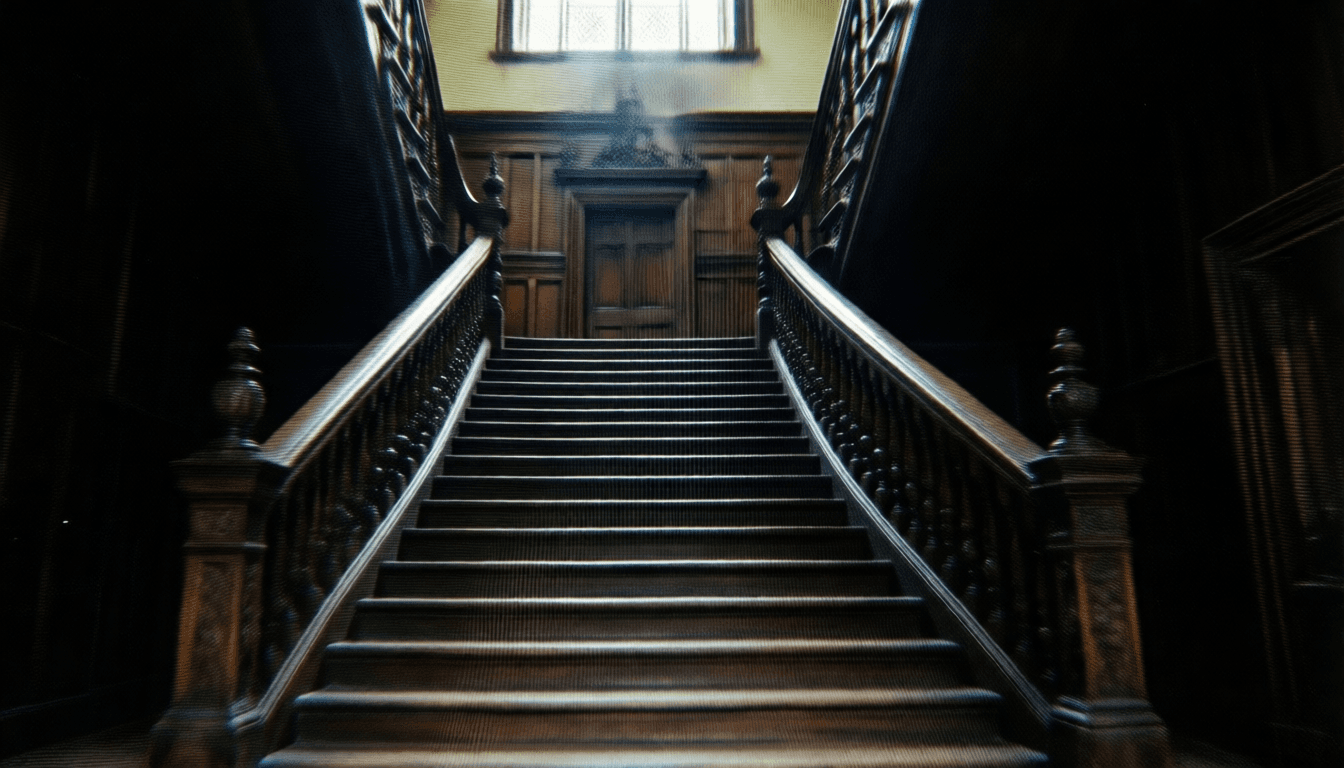
His peripheral vision constantly played tricks on him. The shadows cast by the intricate carvings seemed to deepen and lengthen, irrespective of the diminishing light. At the edge of his sight, he would glimpse something formless, a darker stain within the darkness, but when he turned to look directly, it would always be gone. As he took a close-up photograph of a worn step, known for the Brown Lady's frequent appearances, the tiny dust particles dancing microscopically within the thermal camera's beam 'froze' in mid-air for exactly one second before resuming their chaotic movement. It was an impossible, momentary suspension of microscopic physics. Elias felt a faint static electricity in the surrounding air. He tried to dismiss it as a sensor malfunction but made a note. The air itself felt heavy, as if moving through a viscous fluid.
Elias was standing in the middle of the staircase, continuing his investigation on a step with a distinctive wear pattern, known for the Brown Lady's frequent appearances. Suddenly, the thermal camera violently flickered. An overwhelming chill, as if piercing through his limbs, seeped into his very bones. The surrounding air visibly shimmered. The scent of rotten potpourri became nauseatingly intense, almost choking him. Then, an enormous weight pressed down on his shoulders, pinning him to the spot, rendering him utterly immobile. It wasn't a physical grasp, but an enveloping pressure, as if submerged in a vast depth. Under the invisible burden, he heard the creaking of the old wooden stairs. A rough, deep whisper, devoid of breath or resonance, struck his ear directly. It wasn't words. It was the reverberation of profound sorrow and betrayal—pure despair itself. It pierced his mind, temporarily numbing all his senses.
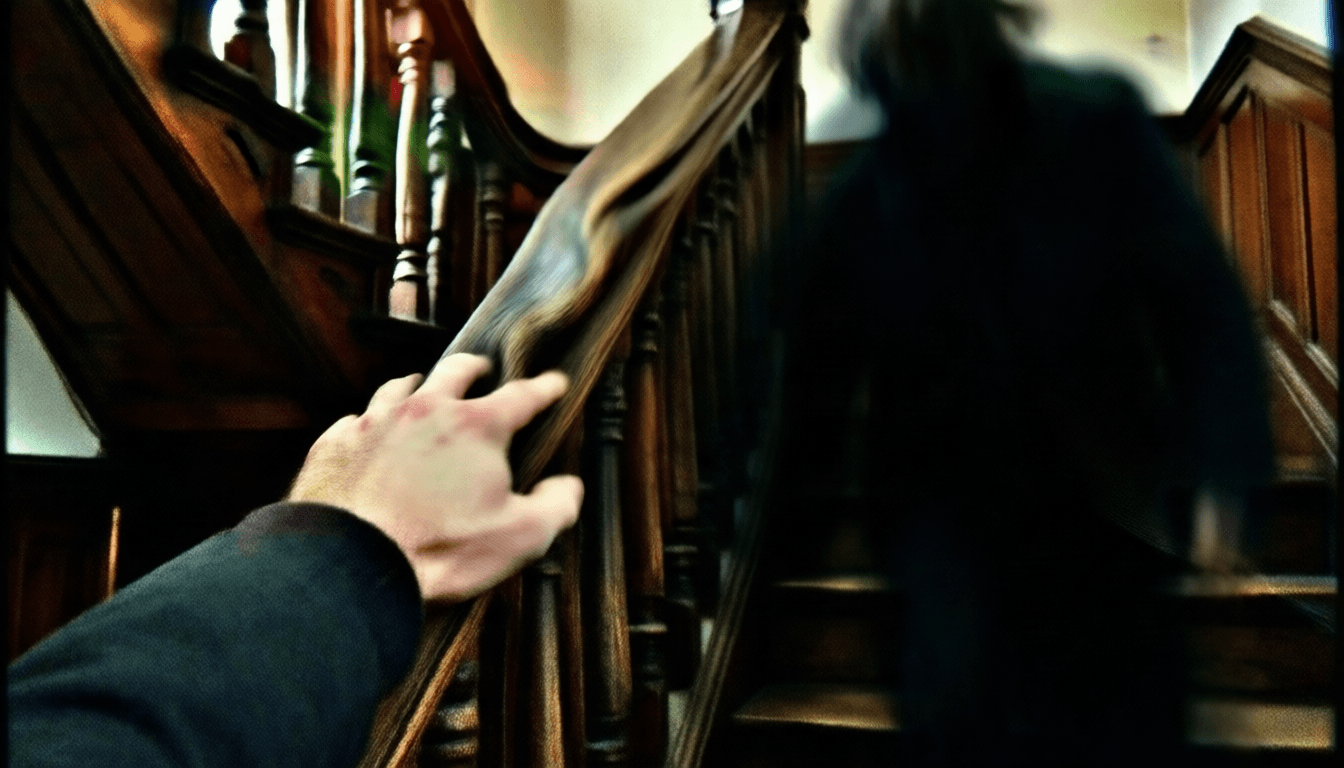
Struggling against the invisible weight, Elias's hand reached out to grasp the ancient oak banister for support. In that instant, the smooth, solid wood of the banister 'softened' in his grip. The delicate carvings seemed to squirm and liquefy, giving way to a flesh-like, pulpy sensation for a moment, before returning to solid wood with an eerie 'crack'. It wasn't merely a distortion of perception. The material reality of the banister had transformed within his hand. In that moment of terror, at the edge of his vision, a shadow passed—too dense, too real. It wasn't a translucent form. It was a figure condensed from pure darkness, devoid of features, but implying the shape of a woman in a heavy dress through its deep, shadowed folds. It wasn't 'stepping' down the stairs, but rather passing 'through' them, as if the wood offered no resistance. The silent scream of despair intensified in his mind. Mustering his last ounce of adrenaline, he twisted free from the pressure. He tumbled backwards a few steps, a sharp crack echoing as his ankle twisted. He scrambled away, desperate to escape. The memory of the living wood and the suffocating despair were deeply etched into his very being.
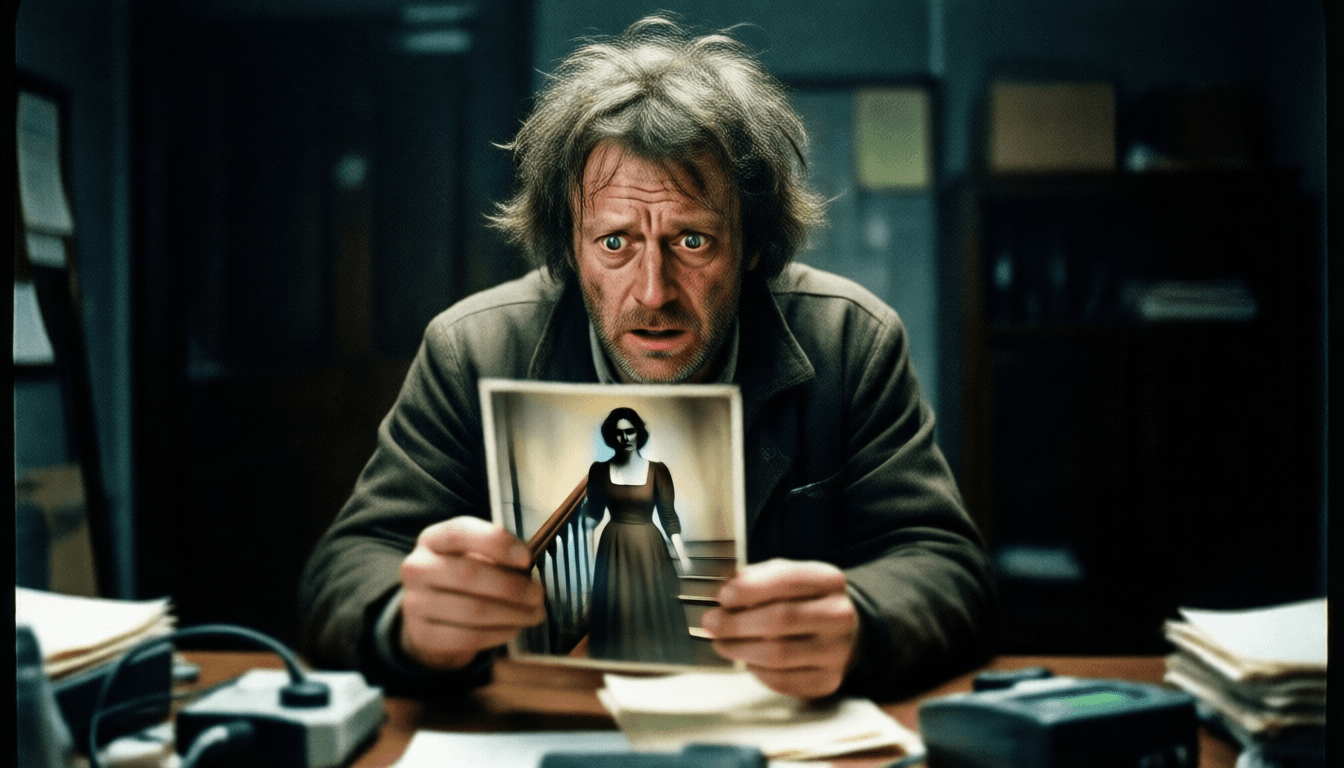
After receiving treatment for his ankle injury and returning to his office, Elias, disheveled, reviewed his records. There was no visual footage capturing a tangible entity. However, a series of photographs taken at a specific step showed an inexplicable distortion of light and shadow, which could not be attributed to motion blur or lens aberration. In one frame, on the banister where his hand had rested, something darker than a shadow was faintly, almost translucently stained.
The thermal data recorded a temperature change at that precise moment: an impossible plummet to sub-zero temperatures, then an equally impossible spike, before returning to normal. The silence recorded by the directional microphone was mostly perfect, but at the peak of the climax, it contained a bizarre, deep, distorted sound, lasting exactly 10 seconds, impossible to classify as human or animal. The sound abruptly cut off. And beneath it, a faint but distinct, almost subconscious sound, like heavy, damp fabric dragging over rough stone, lingered for several minutes before fading away.
The meticulous archivist, Elias Thorne, was noticeably changed. His precision remained, but beneath every movement lay a tremor of terror. He looked at that 1936 photograph again. This time, he saw no lens flare or tricks of light. Instead, he saw the heavy, static despair that was both an echo of the sorrow he had directly experienced and an intrinsic part of the image.
A faint but persistent scent of old potpourri and damp earth clung to his clothes and hair. It followed him. He never spoke directly about the wood that had softened. But sometimes, when his hand touched a solid oak surface, he would hesitate. A deep unease flickered in his eyes, as if remembering how easily reality could unravel. His meticulous notes on the banister's "softening" had been deleted, leaving only a cryptic entry: "Unexplained material inconsistency under localized stress." The knowledge he carried was too vivid, too impossible to be truly documented.
[ CLASSIFIED VERDICT ]
[ACCESS LOG - SOURCE FILE]
The 1936 'Brown Lady' ghost photograph, taken at Raynham Hall in England, has long been considered one of the most famous ghost photographs. The photo features a faint, hooded female figure seemingly descending a staircase, which many believe to be Dorothy Walpole, a ghost said to haunt Raynham Hall. This incident has consistently been at the center of debates about supernatural phenomena.