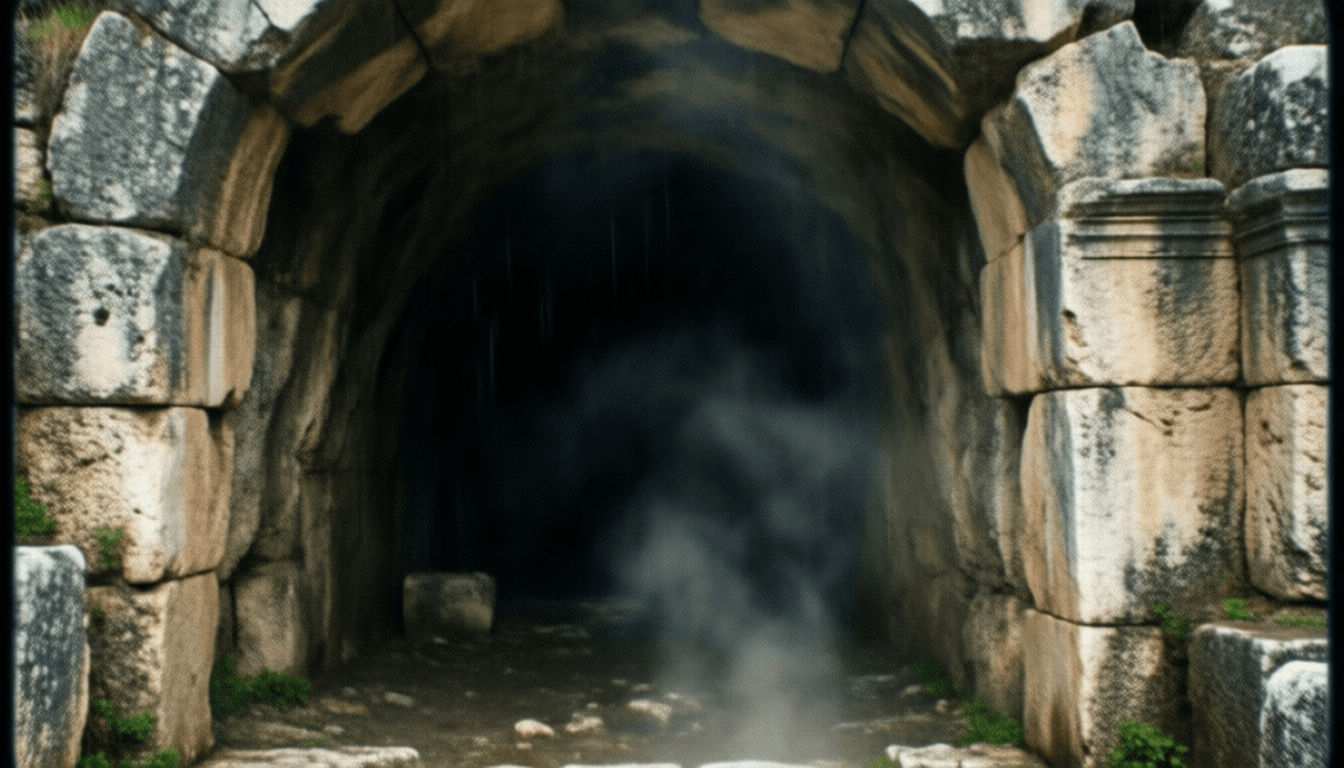
Pluto's Gate: The Sanctuary Permeated by Death
A remarkable sight defying geological expectations rises from the high plateaus of southwestern Turkey. Here, a colossal, dazzling white fortress, sculpted over millennia by mineral-rich thermal waters, stretches across the landscape – this is Pamukkale, meaning 'Cotton Castle'. Its travertine terraces shimmer under the Anatolian sun, forming turquoise natural hot springs, a UNESCO World Heritage site. For over two millennia, this natural wonder has drawn seekers of healing and marvel. Yet, beneath its brilliant, almost surreal beauty, lies a darker, more profound secret: a primordial gateway to the underworld, revered and feared by ancient civilizations, where life ended instantaneously, yet priests walked unharmed amidst its deadly breath.
The physical grandeur of Pamukkale is overwhelming. Hot, calcium-rich thermal waters, emerging from deep within the earth at temperatures ranging from 35 to 100 degrees Celsius, flow down the mountainside, depositing calcium carbonate. Over tens of thousands of years, this process has sculpted magnificent terraced basins, stalactites, and calcified waterfalls, each shimmering pool reflecting the vast blue sky. This geological marvel was not merely an object of admiration; it was the sacred heart of the colossal Greco-Roman city of Hierapolis, built directly atop the thermal springs.
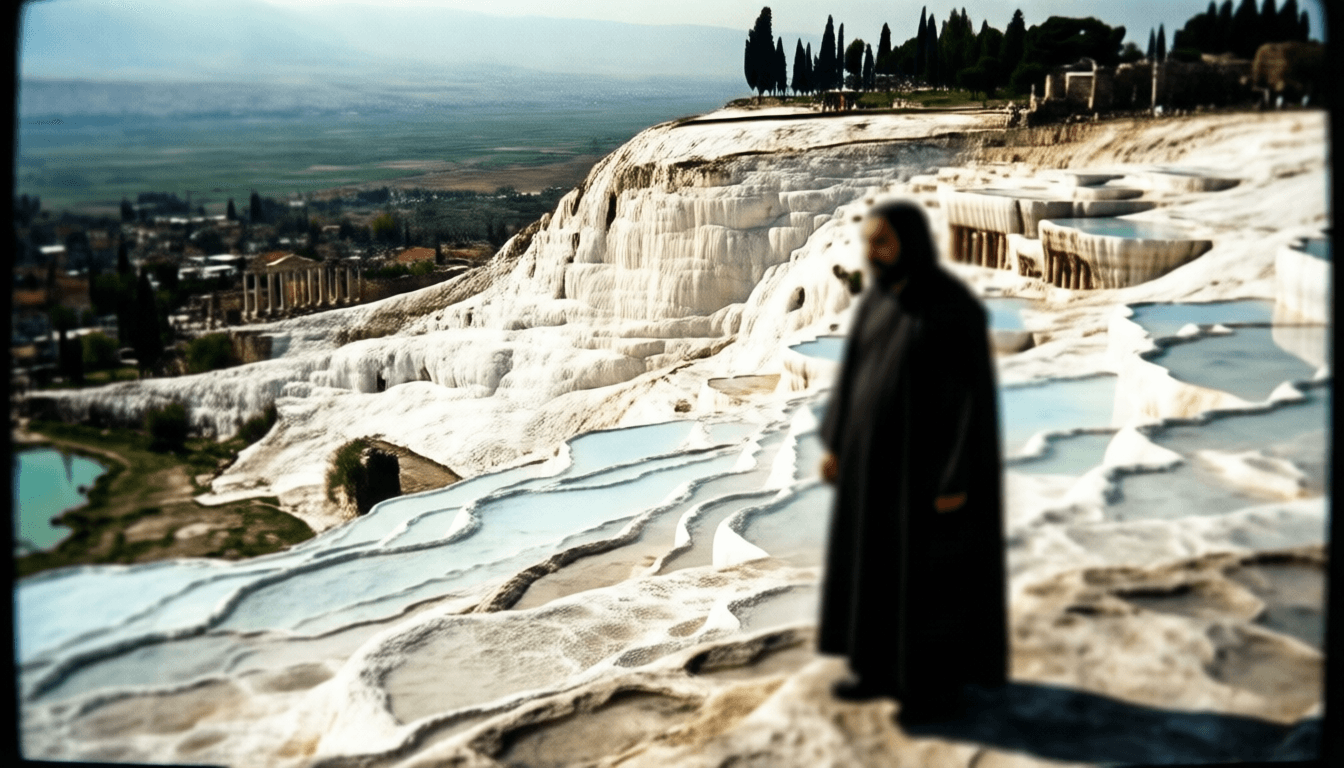
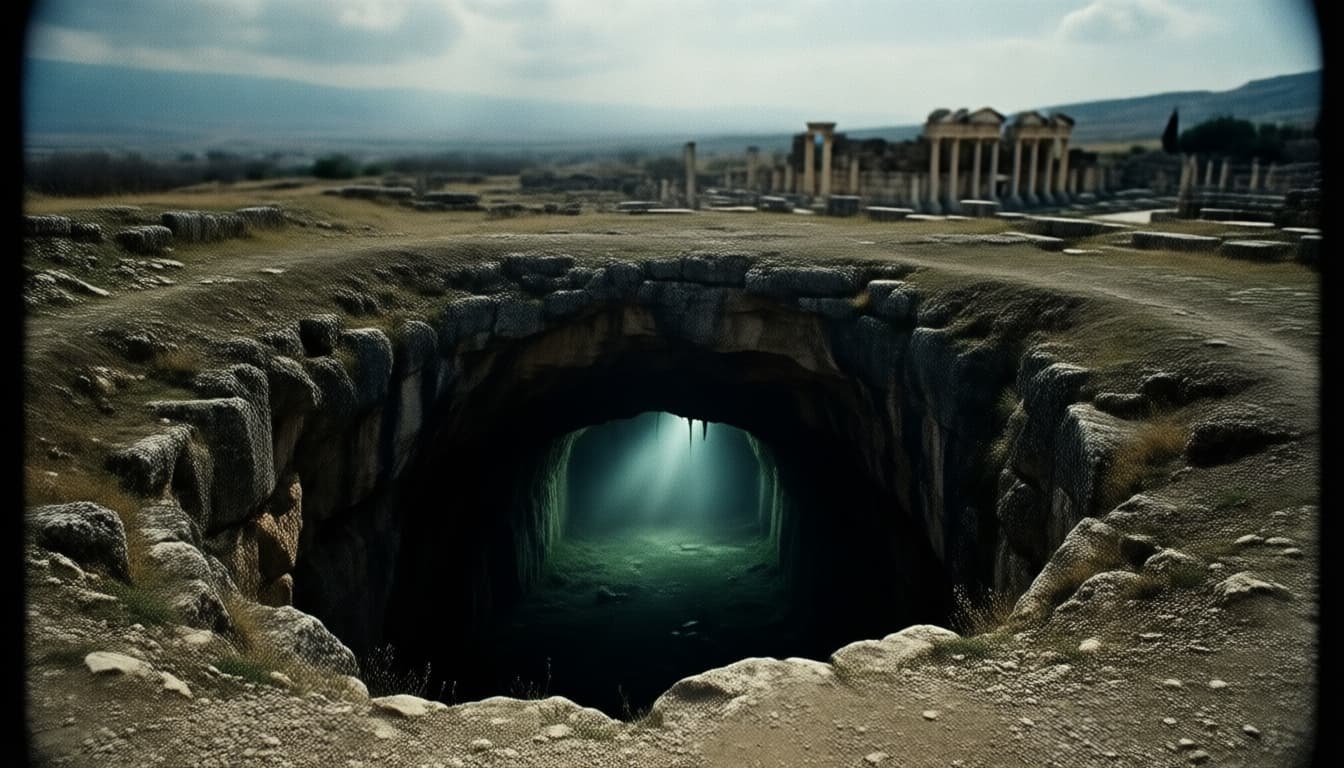
Archaeological excavations at Hierapolis reveal a vast metropolis dedicated to healing and spirituality. Visitors from across the ancient world flocked to its extensive bathhouses, revered temples, and monumental theatre to partake in the life-giving properties of the thermal waters. They sought cures for ailments, divine connection, and the purifying embrace of the sacred springs. Yet, amidst the ruins, a particular place stands out, starkly different from the healing waters: a small, unassuming cave known as the Plutonium, or Pluto's Gate.
Ancient geographers and historians like Strabo and Pliny the Elder documented the Plutonium as a place of terrifying power. They spoke of a fissure emitting a "dense, vaporous breath" that would "cause instant death to any animal passing inside." Birds attempting to fly over it would lose their life-force and fall from the sky. This was no mere folklore; modern atmospheric analysis of the cave confirms an astonishingly high concentration of carbon dioxide (CO2), proving this gas to be an instant killer in such confined spaces.
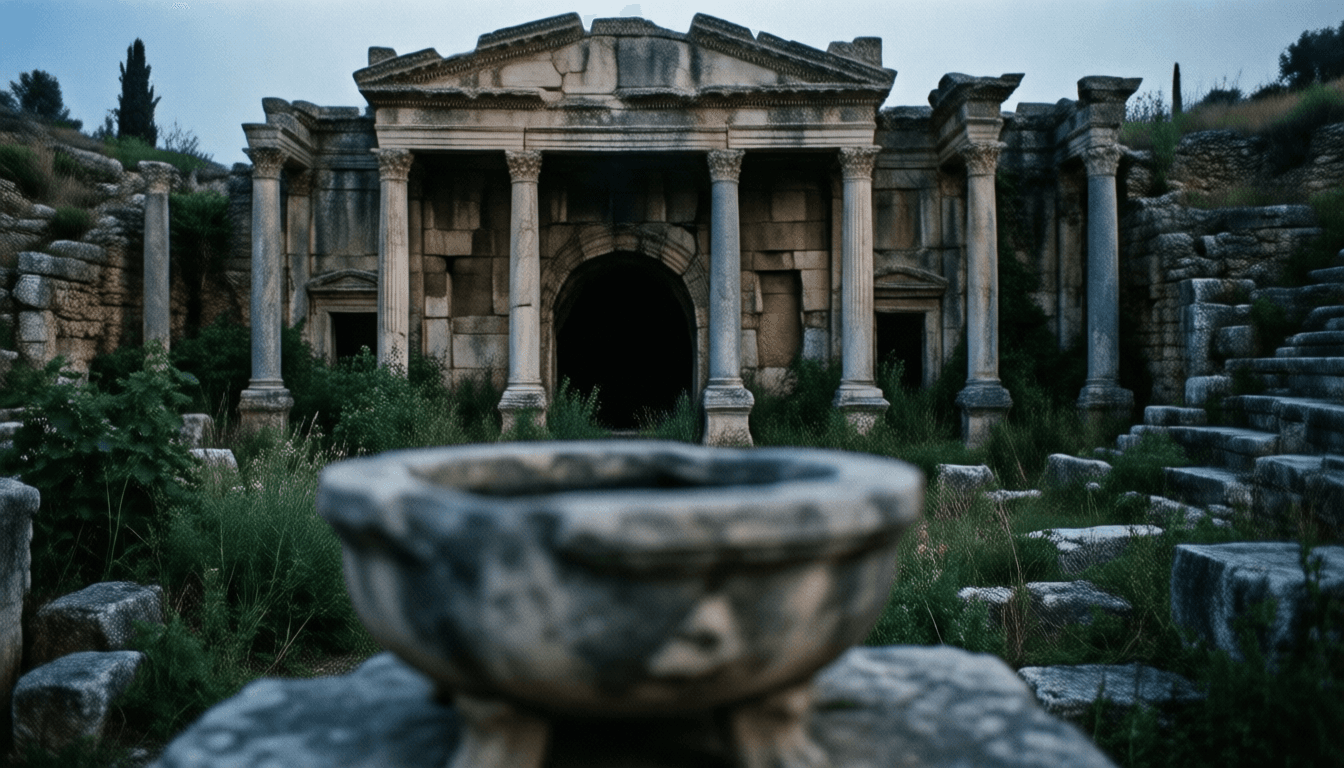
The enigma deepens when considering the elaborate cult rituals performed at this site. Hierapolis was not just a center of healing but also a place of worship for the gods of the underworld, particularly Pluto. The Plutonium was understood as a direct gateway to his realm, a tangible link between the living and the dead. The mystery lies not in the lethality of the gas – that has been empirically proven – but in the astonishing human interaction with such power. How could ancient priests conduct ceremonies inside this deadly sanctuary, lead animals to their sacrifice, and even claim to receive oracles?
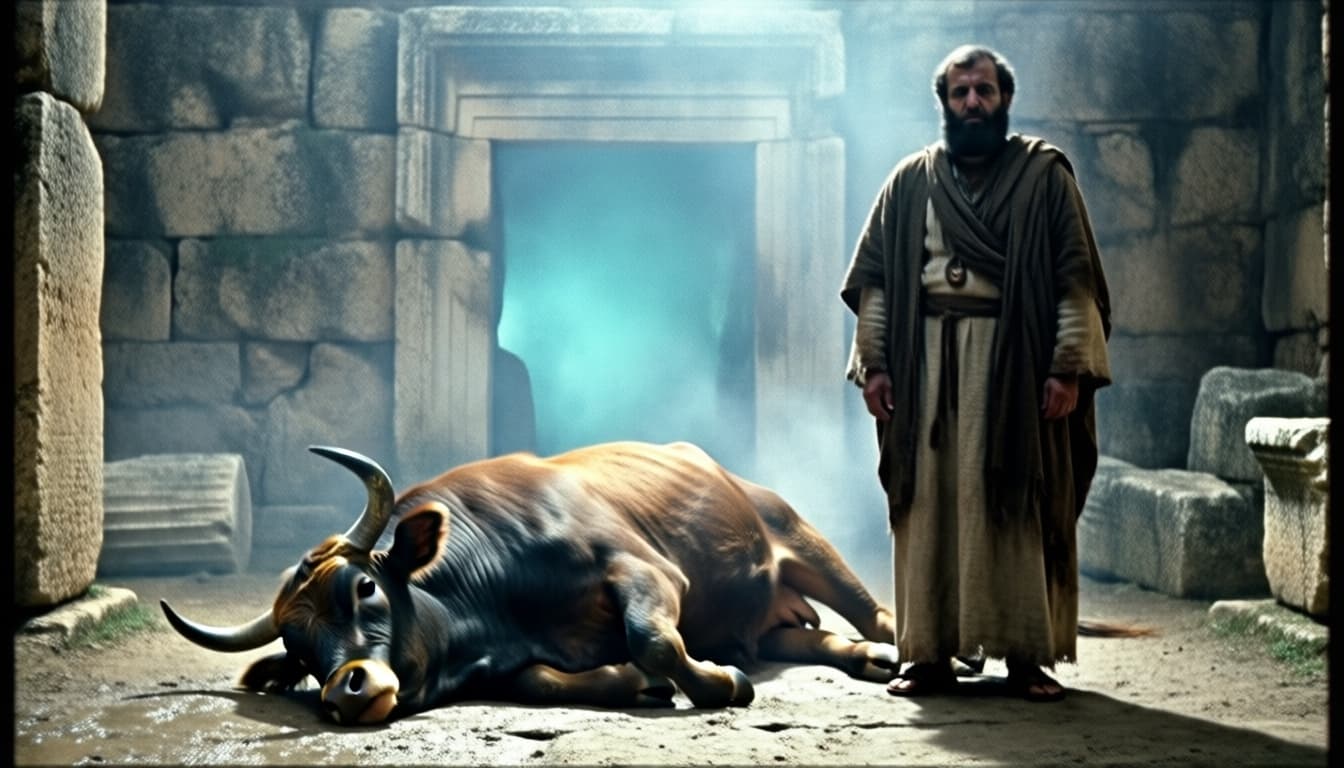
The most profound anomaly lies in the documented immunity of the Plutonium priests. Historical accounts detail priests leading sacrificial animals, typically bulls, into the cave, where the animals would collapse and die, yet the priests would emerge unharmed, seemingly protected by divine favor or supernatural insight. Modern researchers have proposed various explanations: the priests may have known that the gas was heavier than air and held their breath or stayed above the deadly CO2 layer near the floor as they navigated the cave. They might have exploited specific ventilation patterns or even had access to substances that counteracted the effects.
However, while partially plausible, these explanations do not fully account for the consistent performance of complex rituals over thousands of years in such an environment. The sheer confidence and ritualistic control over a highly dangerous natural phenomenon suggest a level of practical understanding and perhaps a deep, specialized knowledge of the natural world largely inaccessible to us today. The Plutonium was not merely a cave; it was a stage for a perilous theological drama where the boundaries of life and death blurred, and priests seemingly commanded the very breath of the underworld.
Today, Pamukkale's dazzling white terraces continue to draw millions, a testament to Earth's artistic power. The thermal waters still flow, carrying minerals and the ancient promise of rejuvenation. And amidst the shadowed ruins of Hierapolis, the Plutonium still exhales its silent, invisible breath, a constant reminder of the untamed, primordial forces that captivated and terrified our ancestors. While science can explain the geological formation of the 'Cotton Castle' and the chemical composition of its deadly air, the vast narrative of humanity's deep interaction with these extremes – the life-giving waters and the instant death offered by Pluto's Gate – leaves us with an awe-inspiring realization: some ancient wisdom, honed in direct confrontation with Earth's most potent mysteries, remains forever beyond our grasp, whispered only by the wind through ancient stone fissures and the eternal flow of sacred springs.
[ CLASSIFIED VERDICT ]
[ACCESS LOG - SOURCE FILE]
In the ancient city of Hierapolis in Pamukkale, Turkey, there is a cave known as 'Pluto's Gate'. This cave emits deadly carbon dioxide, yet ancient priests are said to have performed rituals and sacrificed animals within its lethal breath without harm. This suggests a lost ancient knowledge and a mystery that cannot be fully explained by simple scientific understanding alone.