Pluckley's Living Cold
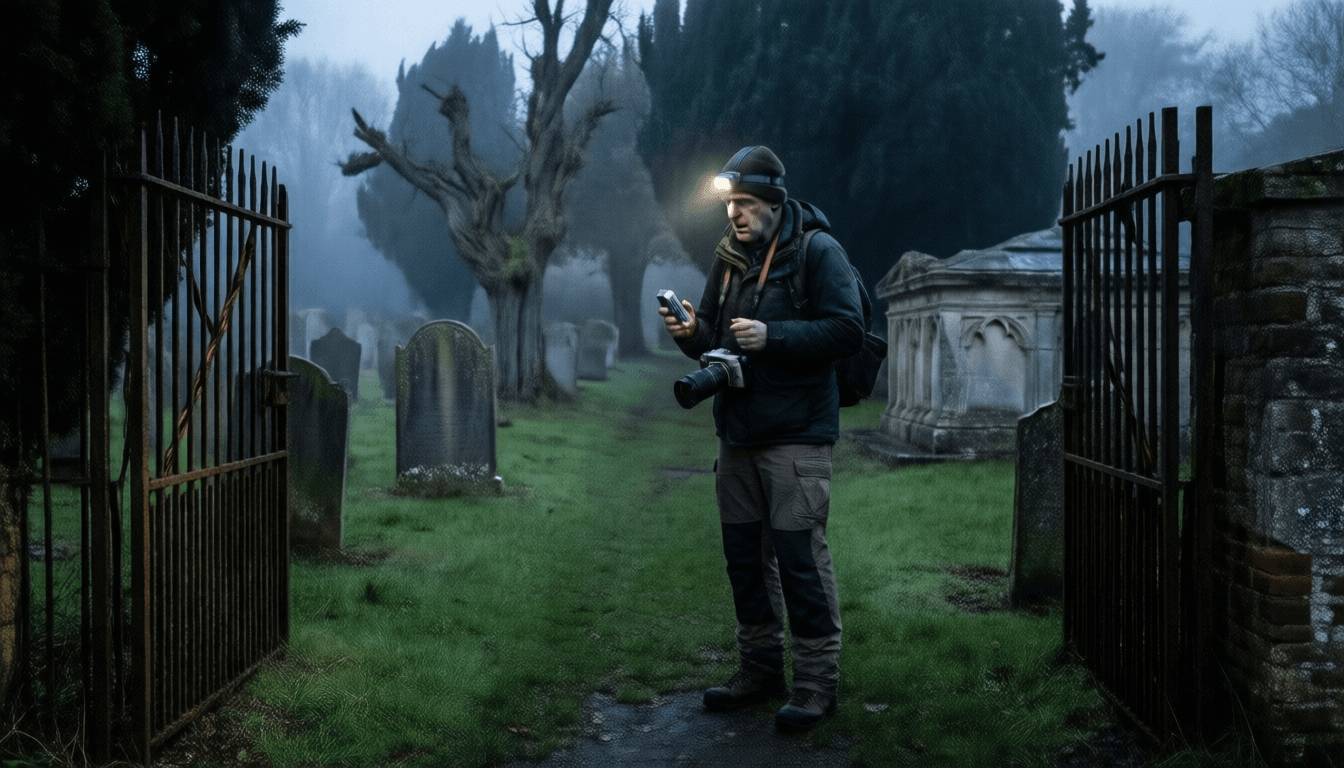
For decades, the village of Pluckley in Kent, England, has been reporting meteorological phenomena distinctly different from ordinary fog. Testimonies found in web forums and local history communities, often accompanied by photos, consistently described an unusually cold fog confined to specific areas, regardless of ambient humidity or weather. Witnesses claimed this phenomenon occurred particularly in St. Nicholas Churchyard, Dering Wood (also known as the Screaming Wood), and even inside abandoned buildings—a bizarre occurrence inexplicable by conventional atmospheric physics.
Unlike ordinary fog, this strange mist possessed an abnormal density and extreme cold, appearing and vanishing with unnatural speed. Long-time residents and local historians unanimously suggested it hinted not merely at moisture, but 'some presence.' Initially dismissed as mere folklore, the consistent, repetitive, and anomalous deviation of these atmospheric events provided a clear reason for our research team to be deployed to the site.
We arrived in Pluckley village at dusk in late autumn. The air was filled with the smell of damp earth and burning wood, but otherwise, nothing seemed out of the ordinary. No fog was visible. After checking our equipment—directional microphone, thermal camera, electromagnetic field meter, portable atmospheric sensors—we headed towards St. Nicholas Churchyard. The area around the old yew trees and unmarked gravestones was identified as a primary occurrence zone. The old iron gate of the cemetery closed with a much louder clang than expected, its sound echoing far into the quiet air. Sensors recorded stable readings: ambient temperature 8.2°C, humidity 88%, electromagnetic field normal.
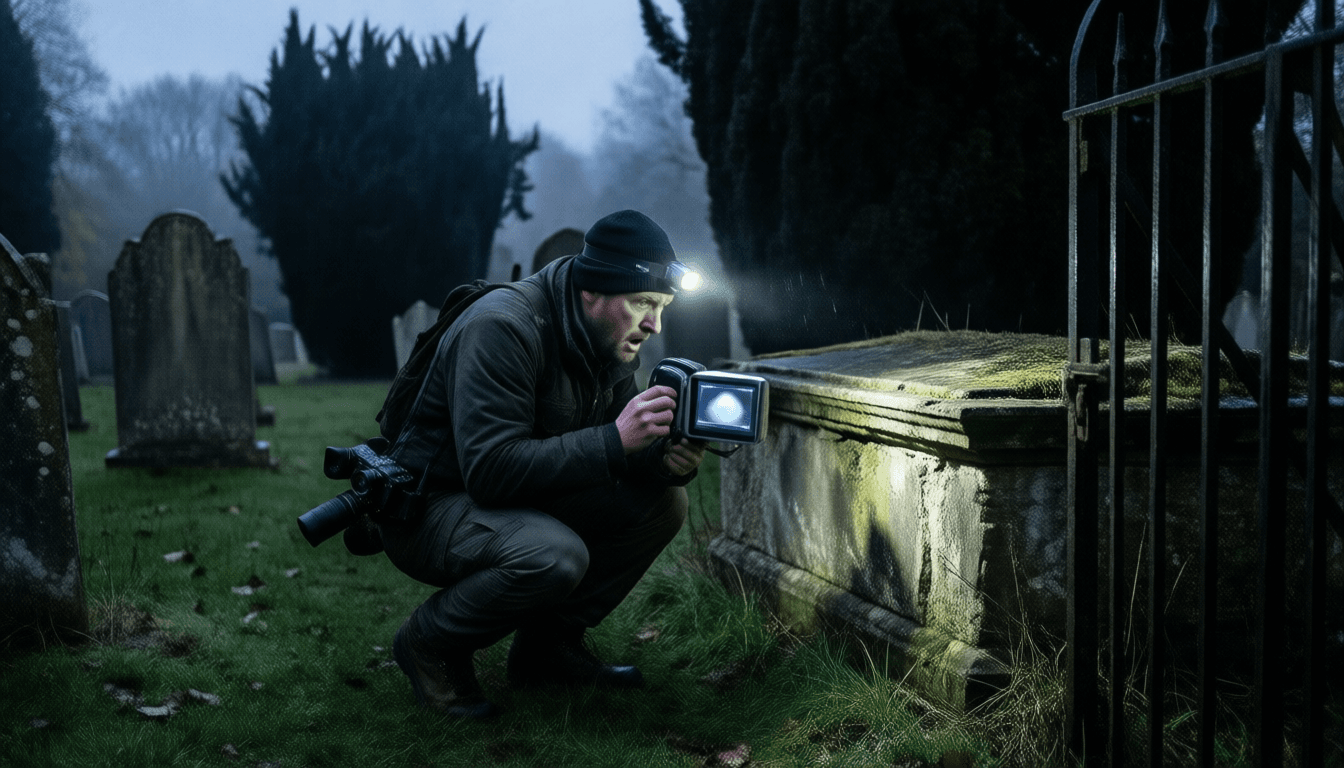
However, around 6:37 PM, the first anomaly was detected. Near a crumbling crypt, a thermal camera recorded 3.1°C in a specific area of approximately 2 square meters, while the surrounding air remained at 8.0°C. There was no visible fog, but the air in that spot was distinctly denser and colder. The faint sounds of the village slowly receded, and a sense of isolation began to pervade the entire churchyard.
Around 6:55 PM, the localized cold near the crypt began to materialize. It wasn't a gradual thickening of fog. Transparent space instantly turned grey, as if suddenly condensed from the air itself. It wasn't uniform; within the overall mass, darker pockets writhed as if alive. The light from my headlamp scattered immediately, making it difficult to see even 0.5 meters ahead. Shadows within the fog became exaggerated and indistinctly wavering.
The silence became unnaturally profound. Even distant dog barks or car sounds were completely absorbed. My own breathing and footsteps sounded unnaturally muffled. The directional microphone only picked up faint, formless murmurs from somewhere 'within' the fog. The temperature plummeted, transforming from mere cold into a painful chill that immediately penetrated clothing. The fog began to flow with internal movement, independent of the faint external wind. It thickened around my position, seemingly intentionally encircling me, blocking my line of sight to what appeared to be an exit. An eerie sensation that someone was 'watching' me soon morphed into a deep sense of being completely trapped.
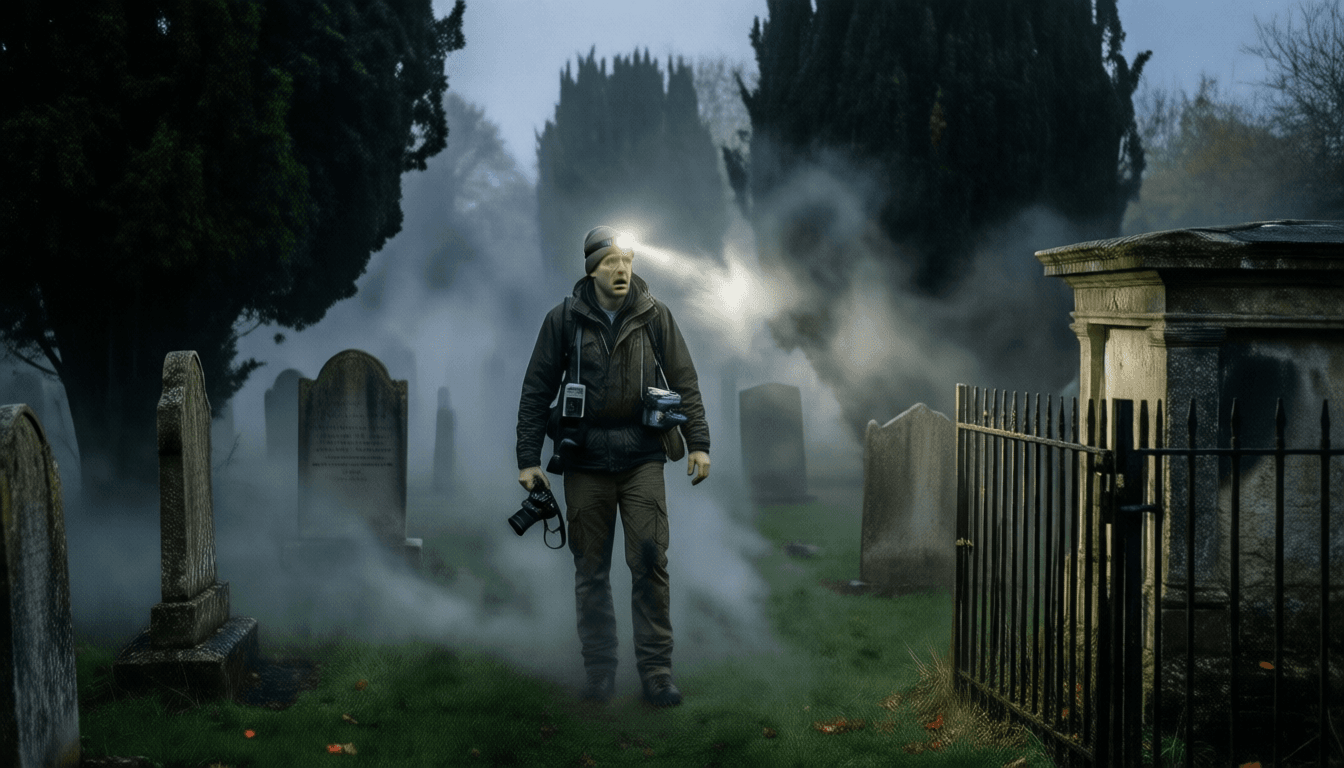
The fog reached its maximum density. Nothing was visible beyond my immediate vicinity. The thermal camera appeared to be operating outside its range, displaying a uniform deep blue or failing to detect temperature differences entirely. My breath instantly misted and froze inside my mask. The fog was no longer a simple meteorological phenomenon. It exerted pressure from all directions, as if a colossal, physical wall was pushing against me. Beyond merely engulfing me, it seemed to deliberately restrict my movements, tightening its grip. I felt pushed from behind, then pulled from the front.
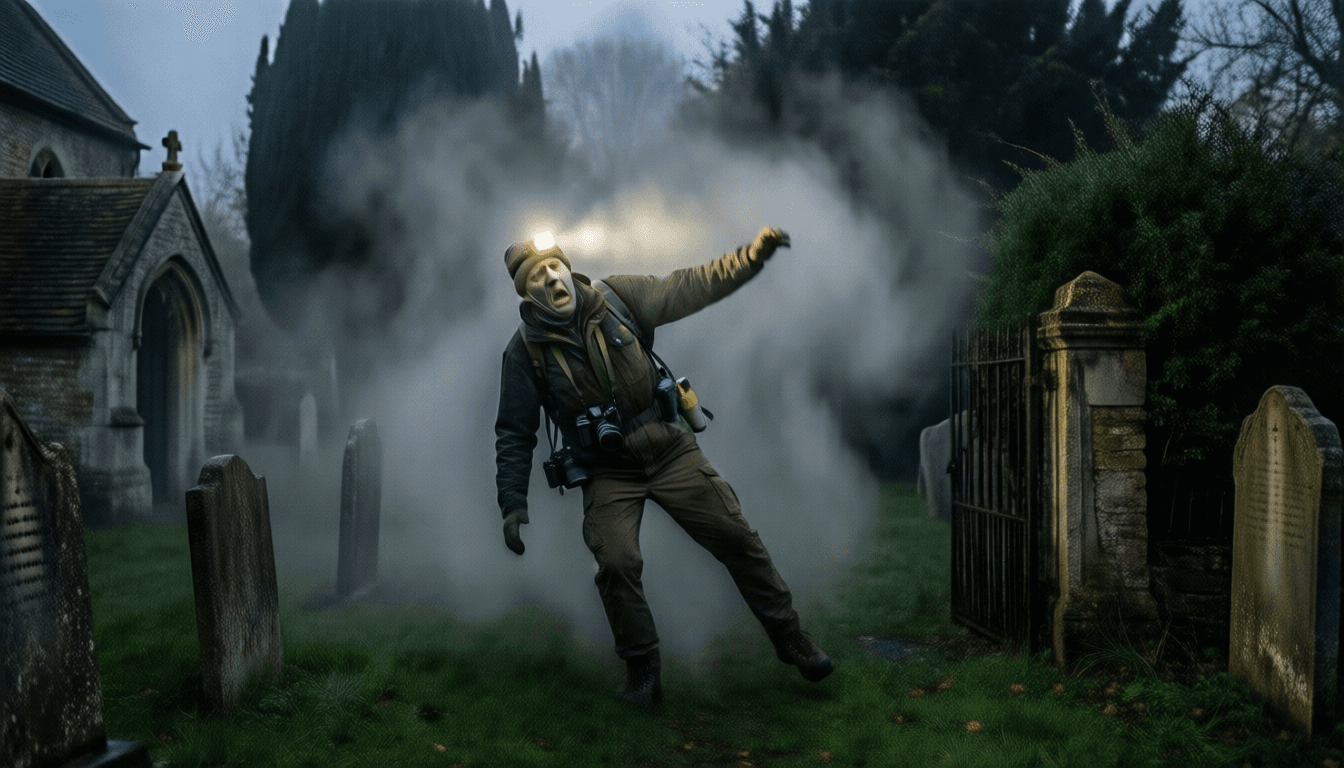
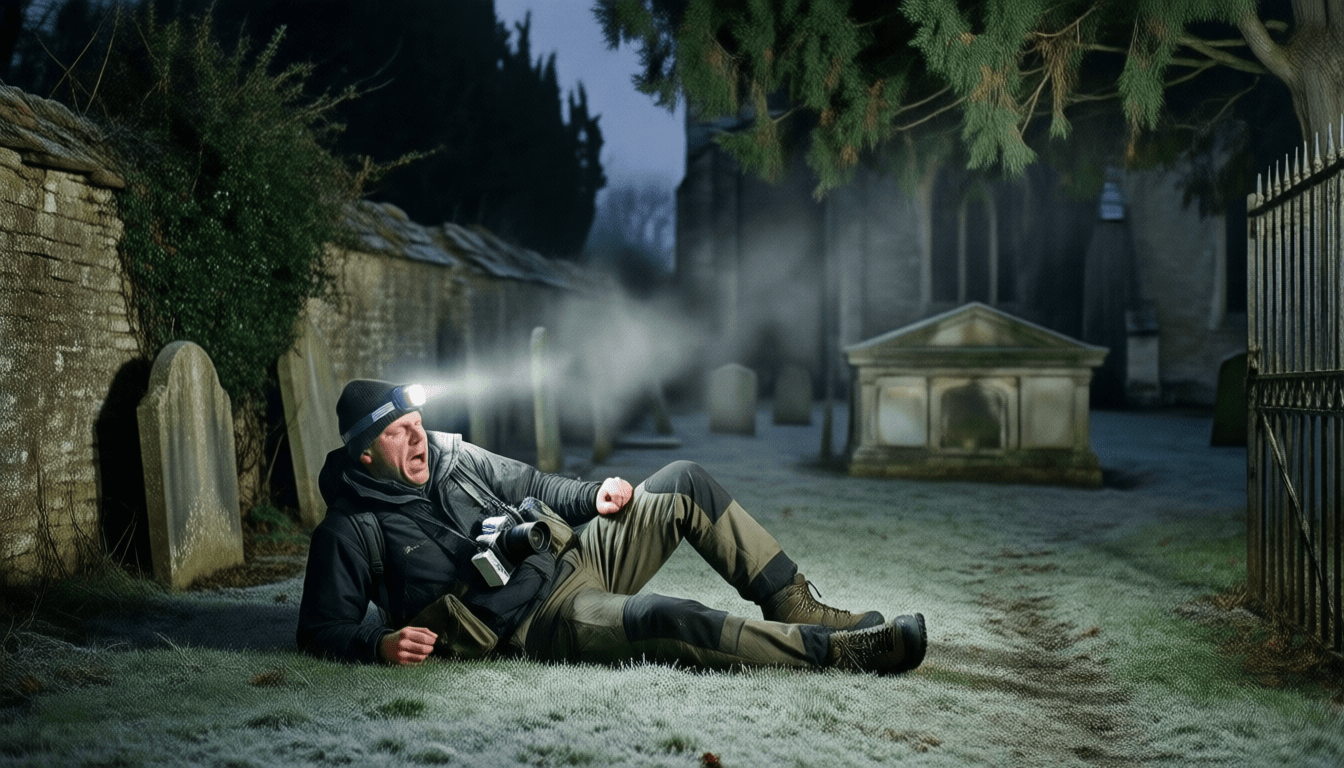
Then, right in front of me, a thick, wet breath, seemingly inhuman, erupted. It was echo-less, like a sound in an anechoic chamber, penetrating only my brain without any surrounding reverberation. Simultaneously, an enormous pressure crushed my chest. I was thrown backward, losing balance as if hitting an invisible wall of ice. My left arm was gripped by an impossibly cold hold and dragged downwards. I fell onto the frozen ground. The pressure on my chest intensified, making breathing painful. The air around my face felt thin, as if deprived of oxygen.
I thrashed desperately, disoriented. My fingers touched something in the fog that was both firm and soft, like densely packed ice crystals yet strangely organic in its resistance. The cold gripping my arm felt bone-deep, and my consciousness began to fade. My vision blurred, perhaps due to lack of oxygen and the extreme cold. In a final, pure survival instinct, I managed to break free from the direct grip and blindly stumbled forward.
I stumbled and crawled through the suffocating density. As if intentionally, the fog thinned slightly just ahead, briefly revealing a fragment of dark, clear sky. Gasping for air, I burst through it and immediately collapsed onto the frozen ground just outside the churchyard wall. Behind me, the periphery of the phantom fog was contracting and vanishing with incredible speed.
The paramedics who arrived on scene confirmed severe hypothermia and severe frostbite-like lesions on my left arm and hand. There was no logical explanation for the localized extreme cold or the specific pattern of damage. My primary thermal camera was lost inside the churchyard. The atmospheric sensor, recovered later by the retrieval team, recorded a final reading of -28°C before its internal circuits failed. The sensor's reinforced polymer casing showed distinct, shallow indentations, consistent with extreme localized pressure.
The 'frostbite' on my arm exhibited unique characteristics: deep, almost purplish discoloration, and persistent phantom pain inexplicable by nerve damage or tissue necrosis. The skin in that area still maintains an unnatural coldness to the touch, weeks later. The microscopic crystalline residue clinging to my clothes and equipment was not ice. Analysis results were inconclusive; it rapidly dissolved upon exposure to laboratory conditions, leaving only trace amounts of unusual mineral salts, different from common atmospheric particulates.
The profound silence of that day, the skin-shredding cold, and the thick, coarse 'breath' left indelible marks on my senses. The physical pressure also remains. This encounter left no clear, scientific 'proof' of any entity, yet the precise and localized extreme cold, unnatural atmospheric phenomena, physical assault, and the indelible marks on my body defy all conventional explanations. Pluckley's eerie fog was not just a phenomenon. It was an active, malevolent environmental force. It remains there, trapped yet waiting, its essence fundamentally alien, its true purpose unknown. The mark on my arm remains cold, a persistent chilling testament that something unseen yet tangible pierced the veil of reason.
[ CLASSIFIED VERDICT ]
[ACCESS LOG - SOURCE FILE]
The village of Pluckley in Kent, UK, is known as 'Britain's most haunted village,' with decades of continuous reports of strange fog phenomena appearing with abnormal cold. Unlike typical weather events, this fog is localized to specific areas and is sometimes rumored to move like a 'living entity.'