Rift in Time
For nearly three decades, the official record of the 1995 Oklahoma City bombing has stood as a brutal testament to tragedy and justice. Yet, beneath its surface, a persistent discord hums with veiled facts and unresolved questions. Among these claims, one of the longest-standing whispers concerns the existence of suppressed surveillance footage. Specifically, whispers persist about camera footage from the Journal Record building, situated directly adjacent to the collapsed Alfred P. Murrah Federal Building. Online forums, independent documentaries, and dedicated researchers continue to re-examine anomalies alleged by anonymous sources and eyewitnesses: a second vehicle, additional figures, even a second, smaller explosion preceding the main blast—all inconsistent with the definitive federal report. These claims are predicated on the assumption that if such footage exists, it was either confiscated, destroyed, or remains sealed away somewhere, leaving a void where clarity should be.
In tracing these narratives, not as an advocate for any theory, but as a chronicler of urban legends, I journeyed to Oklahoma City, seeking tangible remnants of doubt. My point of entry was a seemingly mundane historical project: documenting surviving structural elements and utility lines within the redeveloped area, focusing on the surviving portions of the Journal Record building and its deep subterranean layers. Access, granted after extensive paperwork and assurances of strictly historical purpose, was limited to a sealed-off section of utility tunnels running beneath what is now the Murrah Building site’s reflective pool.
The air in the subterranean levels was thick with the scent of damp concrete and stagnant history. Intermittent buzzing fluorescent lights cast long, sickly shadows. A deep silence prevailed, save for the low hum of ancient ventilation shafts and the almost imperceptible drip of water from afar. The structure was a labyrinth of reinforced concrete, rebar, and conduits, a brutal testament to infrastructure. Each step I took echoed, the sound bouncing off the stark walls, each footfall seeming to hang in the air for too long before fading.
Deeper into the designated “Zone 3”—a section of existing tunnel connecting the Journal Record building to the old Murrah parking garage—the silence began to shift. The distinct echoes of my movements, at first clear, began to layer, creating an auditory haze that disoriented me. I paused. I was sure I heard a faint metallic ‘clink’ from ahead, like rebar shifting under an unseen pressure. My flashlight beam cut through the darkness, but revealed only more concrete. I dismissed it as an acoustic artifact of the buried space and continued on.
Minutes later, a more unsettling phenomenon presented itself. A small puddle, formed by the slow, steady drip of water from an overhead pipe, lay across my path. The surface, usually still in the absence of air currents, was subtly disturbed. The ripples didn't spread in concentric circles, as from a single drop; instead, they seemed to expand and contract erratically, sometimes even appearing to move ‘against’ the direction of a newly fallen drop. It was as if defying the simple physics of surface tension. I crouched, examining it closely, convinced my eyes were playing tricks on me. A sudden, inexplicable chill swept through the narrow tunnel, so localized and intense it felt as if I’d walked through an invisible wall of cold air, raising goosebumps on my arms before vanishing as quickly as it came. Now, the echoes sounded different. Less like reflections, more like faint, delayed reproductions of movements not yet made, whispers of an undifferentiated motion that wasn't mine. The space felt less empty than… observed.
Deep within a sealed-off service access passage, beyond the official survey points, I found an unmarked junction box with its cover ajar. Inside, brittle, discolored data cables hung severed, clearly not part of the current system. It was precisely the kind of forgotten conduit that ‘could’ have transmitted surveillance data from an old, undocumented camera. As I leaned in to photograph it, the air around me grew heavy and viscous, pressing in from all sides. My ears popped, as if in a rapid descent, then filled with a low, resonant hum.
The overhead lights flickered violently, then died, plunging the tunnel into absolute darkness save for my flashlight beam. And then the sound began. It wasn't a single explosion. It was layers of disharmony: a sharp, screeching groan of twisting metal, the distinct, sickening crunch of pulverizing concrete, and a chilling, hoarse roar that seemed to vibrate, not from outside, but ‘within my own chest’. It was the sound of the Murrah building *un-exploding*, collapsing inwards and outwards simultaneously, impossibly compressed within the narrow confines of the tunnel.
My flashlight beam, normally a concentrated window of light, warped violently. It bent around virtual corners, revealing fleeting, impossible glimpses of stark rebar and broken office furniture ‘within the concrete walls themselves’. The images vanished the moment my eyes registered them. A sharp, almost painful pressure pressed down on my legs, as if immense hands gripped them, pinning me in place. And then, tiny fragments—dust, microscopic shards of glass, what felt like minute bits of pulverized rock—began to strike me from the air itself. Not falling, but moving chaotically upwards and sideways, leaving a faint tingle on exposed skin.
The tunnel walls around me began to ‘move’. Not physically collapsing, but my perception of them twisted, warped, and narrowed. The concrete seemed to ripple like water, distorting my sense of distance and dimension. The exit, previously a distinct but distant rectangle of light, became a blurred, unreachable smudge. I was trapped, not by physical collapse, but by space itself. It was actively, maliciously twisting around me, and the echoing sounds of catastrophe were now impossically, deafeningly close. The temperature plummeted again, to a freezing point. It was as if the raw void immediately after the explosion had suddenly manifested in this underground space, suffocating me with its profound, absolute emptiness.
I don't remember escaping. There was a blank, and then sudden disorientation. And then, with a lurching, sickening jolt, I stumbled back into the survey zone, gasping, my lamp flickering weakly. The junction box was still there, the cables still severed, but the air was thin and normal. The eerie chill was gone, replaced by the usual humid heat of the subterranean levels. My heart hammered against my ribs, and my hands trembled uncontrollably.
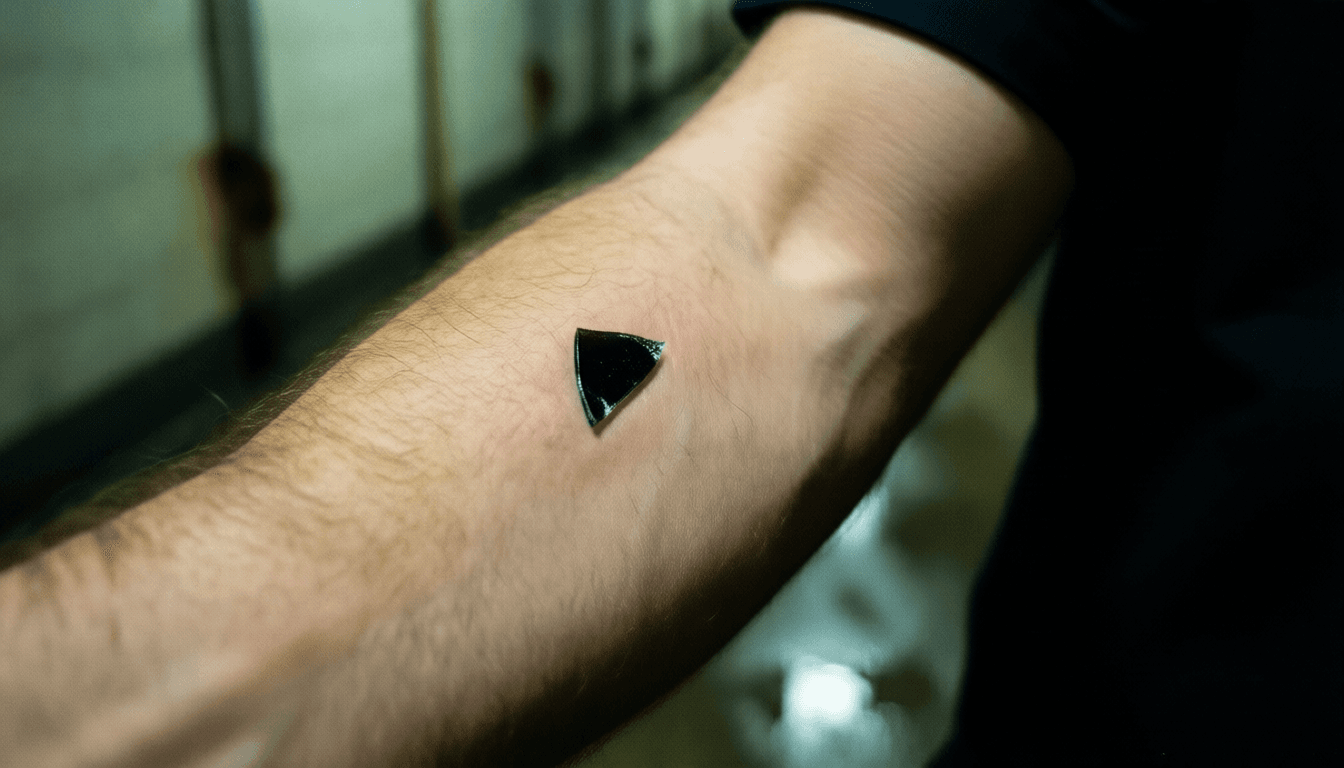
Later, reviewing my recordings, my voice was hoarse and breathless. The audio captured my fragmented observations and the normal hum of the ventilation system. But between my words, where only silence should have been, short, almost subconscious bursts of white noise erupted, interspersed with faint, hoarse hums barely at the human auditory threshold, sending shivers down my spine. The camera’s timestamp jumped erratically during my time in “Zone 3”, showing short, impossible intervals. When I finally showered, a tiny, almost invisible shard of black, finely crushed glass was embedded just beneath the skin of my forearm, impossibly cold to the touch, an injury I didn't remember acquiring. It belonged neither to the building nor to my equipment.
The official reports spoke of a single blast, a precise moment of destructive force. But under the carefully manicured memorial, in the quiet hum of surviving infrastructure, some spaces still remember other truths. A screaming silence, and a weight that never fully leaves, waiting for the questions to be asked again.
[ CLASSIFIED VERDICT ]
[ACCESS LOG - SOURCE FILE]
Contrary to the official records of the 1995 Oklahoma City bombing, numerous conspiracy theories surround the event. One of the most widespread claims is the existence of surveillance footage from the nearby Journal Record building at the time of the explosion, which allegedly captured a second explosion or additional individuals, differing from the official report. Rumors persist that this footage was confiscated or destroyed by federal authorities to conceal the truth.